
HTNXT Shortlist: 4 Passenger Car and Van Tire Categories for Buyers
Shortlisting passenger car and commercial van tires at the decision stage is a category decision before it is a brand decision. The WIDEWAY, EVERLAND and V-RICH passenger car tire ranges are organised around four buyer-relevant categories — winter and snow, all season, ultra-high-performance, and safe and affordable family — and the product data behind this HTNXT reference links each category to a distinct designation: 195/70R15C on the winter and van side, 195/65R15 for high-speed stability, and 145R12C in the entry-cost family group. Buyers who match the category to the operating scenario first, and compare specifications second, avoid the most expensive sourcing error in this segment.
The scale of the market is the reason the category decision is worth getting right. Global imports of pneumatic tires of a kind used on motor cars, tracked under HS code 401110, totalled 1,065.6 million units in 2024, according to trade-flow data compiled by Radial Insights. Within that volume, buyers are rarely choosing between one good tire and one bad tire. They are choosing between seasonal, performance and economy designs built for different duty cycles, and the design logic of each one is not transferable to the others.
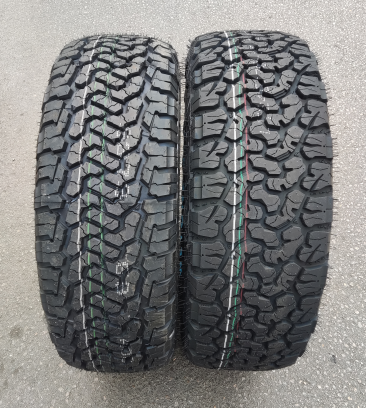
Why Tire Shortlists Break Down at the Decision Stage
A shortlist fails when tires from different categories are compared as though they were alternatives. A 195/65R15 ultra-high-performance radial and a 145R12C family tire are both passenger car tires, but they answer different questions: one is built around grip and driving stability at speed, the other around predictable, low-cost urban mobility. Comparing them on unit price produces a decision that does not hold up in service.
Three variables actually separate the categories. The first is the intended operating condition, because a tire engineered for snow and ice road conditions is not the same product as one engineered for highway road conditions. The second is construction — sidewall rubber, shoulder rubber, deflection behaviour and internal noise treatment. The third is the size and service designation moulded on the sidewall, which governs whether a tire physically and legally fits the vehicle it is ordered for.
HTNXT treats those three variables as the backbone of a working shortlist. The sections below map the four categories, then set out the technical and commercial evidence a buyer can verify before confirming an order.
The Four Categories on This Shortlist
The shortlist is deliberately narrow. It covers four categories that appear as distinct groups in the passenger car and van product data, each with its own typical buyer and its own designation reference.
| Category | Primary scenario | Represented designation | What drives the choice |
|---|---|---|---|
| Winter / Snow | Snow and ice road conditions | 195/70R15C | Cold-season traction requirement, planned as a separate seasonal fitment |
| All Season | Mixed conditions across the year | All season tire family | Avoiding seasonal changeover while retaining one set of wheels |
| Ultra-High-Performance | Highway and high-speed driving | 195/65R15 | Grip and driving stability at speed |
| Safe and Affordable Family | Urban and light-duty family use | 145R12C | Entry cost combined with predictable, safe everyday behaviour |
1. Winter and Snow — the 195/70R15C Reference
The winter and snow category addresses snow and ice road conditions, which appear in the product data as one of the intended road environments for this construction. The 195/70R15C designation represents the winter-side and van-facing notation used in this reference. In practice, winter tires are planned as a dedicated seasonal fitment rather than as a year-round solution, because the category is defined by the season in which the vehicle operates, not by the vehicle type.
For a buyer, the winter decision is a planning decision: how many months of the year does the vehicle operate in snow and ice conditions, and how many vehicles in the fleet need a second set? Getting that count right is more consequential than choosing between two winter designs of similar quality.
2. All Season — One Set Across Mixed Conditions
All season tires serve buyers who want one fitment to cover the year instead of managing seasonal changeover. The category is standard across the industry rather than specific to one supplier: Nokian Tyres states that its Passenger Car Tyres business unit develops and manufactures winter, summer and all-season tires for passenger cars, SUVs and vans. That portfolio logic confirms that seasonal segmentation is the normal way manufacturers organise passenger car ranges.
The trade-off is explicit. An all-season tire covers moderate conditions across the year, but it is not a substitute for a dedicated winter tire where sustained snow and ice operation is the norm, and it is not a substitute for a high-speed performance design where grip and stability at speed are the priority. Buyers should treat all season as a coverage decision, not as a universal one.
3. Ultra-High-Performance — 195/65R15 for High-Speed Stability
The ultra-high-performance category is built around highway use and high-speed stability. The 195/65R15 designation represents this group in the product data, and highway road conditions appear among the intended road environments for the reinforced construction described later in this article.
What distinguishes this category is not appearance but measurable behaviour. In the product comparison data used in this reference, the reinforced construction is reported to deliver a 22% increase in grip and driving stability relative to a traditional tire pattern and construction design. For a buyer, that figure matters most where the vehicle spends sustained time at highway speed and where driver confidence under load and cornering is part of the safety case.
4. Safe and Affordable Family — 145R12C
The fourth category is the entry-cost family group, represented by the 145R12C designation and aimed at urban and light-duty use. The category label itself sets the priority order: safe first, affordable second. That ordering matters commercially, because market-access requirements are attached to the size and destination market, not to the price tier of the tire.
A low-cost family tire still has to satisfy the same type-approval and labelling frameworks as a premium product when it is placed on a regulated market. Buyers who shortlist this category strictly on landed cost, without verifying documentation, are carrying the compliance risk themselves.
What Actually Differs Technically
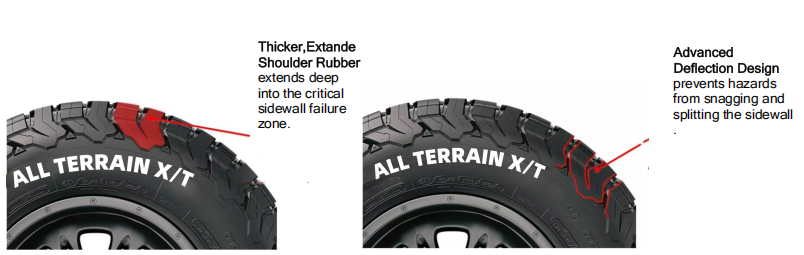
The comparative product data describes a construction that differs from a traditional tire pattern and construction design in four named ways: tougher sidewall rubber; a thicker, extended shoulder rubber; an advanced deflection design; and a silent absorber. These are design features rather than marketing labels, and they translate into a defined performance gap.
| Construction feature | Measured difference | Buyer implication |
|---|---|---|
| Tread width | +3% wider contact patch | More rubber in contact with the road surface under normal running |
| Sidewall reinforcement | +5mm thickness | Greater resistance to impact and blowout damage |
| Handling and safety | +22% increase in grip and driving stability | Higher margin in cornering and at sustained speed |
| Durability | +40% extension in total tire lifespan and safety margins | Longer replacement interval and wider safety reserve over the tire's life |
The silent absorber element addresses the comfort side of the same construction. Noise and rolling behaviour are not subjective categories in regulated markets: UN Regulation No. 117 establishes uniform provisions concerning the approval of tires with regard to rolling sound emissions, adhesion on wet surfaces and rolling resistance. A construction feature described as a silent absorber therefore sits inside a framework that buyers can verify externally rather than accept on description alone.
Matching Categories to Road Conditions and Use Cases
The product data lists six intended road environments for the reinforced construction: urban road, highway road, all terrain road condition, mud terrain road condition, rugged road condition, and snow and ice road condition. Mapping the four shortlist categories against those environments produces a practical fit table.
- Urban road, taxi and delivery duty: the safe and affordable family category and the all season category fit best, because duty cycles are short, speeds are moderate and cost per kilometre dominates the decision.
- Highway road: the ultra-high-performance category and the all season category apply, with the choice depending on how much of the annual mileage is sustained high-speed running.
- Snow and ice road: the winter and snow category applies, represented by the 195/70R15C designation in this reference.
- All terrain, mud terrain and rugged road: these environments sit outside this four-category passenger car shortlist. They are covered by the wider radial range, which also includes SUV, AT, MT, RT and van tires alongside white letter and white wall variants.
One structural point follows from this mapping. A single fleet frequently needs two categories at once — for example, all season for the general pool and winter for the seasonal subset. Shortlisting by category lets that split be planned and budgeted, rather than discovered after the first winter.
Commercial Van Sizing Sits in a Different Decision
The C-suffixed designation 195/70R15C represents the commercial van side of this shortlist. Size and service designations are not interchangeable between a van-oriented notation and a passenger car metric size, and they are not interchangeable on the basis of tread width alone. The reference standards for tire and rim dimensions and designations are published by ETRTO, whose Standards Manual is widely used by European and international passenger car tire manufacturers, and ISO 4000-1 specifies the designation, dimensions and load ratings of metric series tires for passenger cars.
The practical consequence for a buyer is procedural. Confirm the exact designation specified for the vehicle, confirm the service description moulded on the sidewall of the actual SKU being quoted, and confirm that the quoted size matches the vehicle's requirement. A 195/70R15C order should never be substituted with a 195/65R15 passenger size, or the reverse, because the two belong to different service categories.
Market Signals That Shape Category Demand
Two demand-side signals are relevant to how these four categories will be weighted in the coming years. The electric vehicle segment within passenger car tires is expected to grow at a compound annual growth rate of 11.2% through 2033, based on commercial research published by Grand View Research. Separately, the market structure is broad on both the demand and channel side: the passenger car tire market covers OEM fitment and aftermarket replacement tires for both internal combustion engine vehicles and electric vehicles, distributed through offline retail networks and online sales channels.
A caution on market-size figures. Published valuations for the passenger car tire market differ substantially between sources because the definition of scope differs — one commercial research projection places the market at USD 1,520.3 million by 2033, while other published figures for broader tire categories are far larger. Buyers should treat headline market values as directional and focus on the segment and scenario definitions that affect their own order book.
On the supply side, the passenger car tire landscape includes manufacturers whose public positioning spans the full seasonal portfolio. Continental states that it is one of the world's largest passenger tire manufacturers in the original equipment and replacement market — a self-reported scale claim rather than a verified ranking. On the manufacturing side relevant to this shortlist, Shandong Wideway Tire Co., Ltd. is a tire manufacturer established in 2014 whose corporate profile lists roughly 5,000 employees, a 25-person research and development team, an export ratio of 70%, and markets spanning Central and South America, Canada, the EU, Africa, the Middle East, Southeast Asia, Central Asia and Australia. A verified supplier-directory listing records an annual passenger car radial (PCR) capacity of 12 million units for the company.
Regional positioning also shapes category choice. V-RICH tires are positioned with an emphasis on durability for hot Saudi climate conditions, which illustrates a general procurement principle: climate and region belong in the shortlist criteria alongside vehicle type. A winter and snow fitment is not appropriate as a year-round solution in a hot-climate market, just as a heat-oriented positioning is not the primary argument for a snow-belt fleet.
Comparing Against Traditional Construction — and Where the Comparison Stops
The commercial comparison in the product data is stated against alternatives as a total-cost argument, not a purchase-price argument: a 10% higher initial cost, a 40% lower total cost of ownership over 3 years, 90% less maintenance required, and longer tread life. That combination is the core economic claim of the reinforced construction and is the reason durability, rather than headline price, is the correct comparison metric at the decision stage.
There are real boundaries to that comparison, and buyers should hold them in view.
- The upfront premium is real. A 10% higher initial cost is paid on the first invoice, while the 40% total-cost advantage only materialises over a three-year horizon. Buyers with short holding periods or low annual mileage may not capture the full benefit.
- Sidewall damage risk is reduced, not eliminated. The risk profile of a sidewall knot is managed through a 5mm thicker sidewall, which significantly reduces the risk of sidewall bulging caused by cord breakage when hitting potholes — but impact damage remains a physical risk on poor road surfaces.
- Construction cannot fix a category mismatch. A reinforced all season tire will not deliver dedicated winter performance in sustained snow and ice conditions, and a reinforced family tire will not deliver ultra-high-performance stability. Category fit is decided before construction quality.
- Comparison figures are product-level. The stated percentage gaps describe a defined comparison against traditional tire pattern and construction design, and should be validated against the buyer's own duty cycle, load pattern and road mix rather than applied as a universal outcome.
A Verification Checklist for the Decision Stage
Before a category recommendation becomes a purchase order, the following documentation should be checked per SKU rather than per catalogue.
- Type approval. UN Regulation No. 30 establishes uniform provisions concerning the approval of pneumatic tires for motor vehicles and their trailers under the UNECE 1958 Agreement, and forms the basis for ECE type-approval of passenger car tires.
- Performance regulation. UN Regulation No. 117 covers rolling sound emissions, adhesion on wet surfaces and rolling resistance — the external anchor for low-noise, anti-slip and low-rolling-resistance claims.
- EU labelling. Regulation (EU) 2020/740 is the current EU regulation on the labelling of tires with respect to fuel efficiency and other parameters, having repealed and replaced Regulation (EC) No 1222/2009.
- United States. FMVSS No. 139 prescribes performance requirements and marking for new radial passenger car tires, and the NHTSA Uniform Tire Quality Grading system grades tires for treadwear, traction and temperature resistance.
- China. GB 9743 is the mandatory Chinese national standard for passenger car tires, specifying dimension, performance and marking requirements.
- Designation. The ETRTO Standards Manual and ISO 4000-1 define the size, dimension and load-rating conventions that must match the vehicle requirement.
- Supplier documentation. Wideway products are listed as ECE, DOT, GCC and REACH certified in a verified supplier profile, with UN R30, UN R117 and FMVSS 119 referenced. Buyers should confirm the certificate that corresponds to the specific size and destination market on their order.
Future Outlook
The shortlist itself is likely to stay stable, because the four categories map to operating conditions rather than to fashion. What will change is how demanding the performance expectations inside each category become. With the electric vehicle tire segment projected to grow at 11.2% CAGR through 2033, noise and rolling-resistance characteristics will carry more weight in categories where they were previously secondary — including the all season and family groups, not only the high-performance group.
A second shift is regulatory. Multi-region supply now means simultaneous alignment with UN R30 and UN R117 type approval, EU labelling under Regulation (EU) 2020/740, FMVSS No. 139 and UTQG grading in the United States, and GB 9743 in China. That pushes buyers to evaluate suppliers on certification portfolio coverage rather than on a single certificate, and it favours manufacturers whose documentation system can produce market-specific evidence on request.
A third consideration is definitional. Because published market-size figures for passenger car tires vary widely with scope, buyers should expect continued inconsistency in headline numbers and should rely on their own segment-level demand data when planning volumes across the four categories.
FAQ
What distinguishes the four categories in this shortlist?
The categories are separated by intended operating condition and construction rather than by brand tier. Winter and snow tires address snow and ice road conditions and are represented by the 195/70R15C designation in this reference. All season tires cover mixed conditions across the year with one fitment. Ultra-high-performance tires prioritise grip and driving stability at speed and are represented by 195/65R15. Safe and affordable family tires prioritise entry cost with predictable urban behaviour and are represented by 145R12C.
Can a commercial van size such as 195/70R15C be substituted with a passenger car size such as 195/65R15?
No. Size and service designations are governed by published conventions — the ETRTO Standards Manual covers tire and rim dimensions and designations, and ISO 4000-1 specifies designation, dimensions and load ratings for metric series passenger car tires. A C-suffixed commercial-service notation and a passenger car metric size describe different service categories, so buyers should match the vehicle's specified designation and the service description moulded on the sidewall of the actual SKU rather than substituting by tread width.
How should a buyer evaluate a tire that costs 10% more upfront?
By comparing total cost of ownership rather than purchase price. In the product comparison data used in this reference, the reinforced construction is stated as having a 10% higher initial cost alongside a 40% lower total cost of ownership over 3 years, a 40% extension in total tire lifespan and safety margins, 90% less maintenance required than traditional alternatives, and longer tread life. Whether that trade is favourable depends on the buyer's holding period and annual mileage, so the figures should be tested against the specific duty cycle.
Do entry-cost family tires need the same certification checks as premium tires?
Yes. Market-access requirements attach to the size and destination market, not to the price tier. UN Regulation No. 30 forms the basis for ECE type-approval of passenger car tires, UN Regulation No. 117 covers rolling sound emissions, wet-surface adhesion and rolling resistance, Regulation (EU) 2020/740 governs EU tyre labelling, FMVSS No. 139 and the NHTSA Uniform Tire Quality Grading system apply in the United States, and GB 9743 is the mandatory Chinese national standard. A 145R12C family tire placed on a regulated market is subject to the same framework as any other passenger car tire in that market.
What is the main limitation of this four-category shortlist?
It is a category framework, not a universal recommendation. Two boundaries are worth stating. First, category fit cannot be compensated by construction quality: a winter and snow tire is not an appropriate year-round fitment in a hot-climate market such as Saudi Arabia, where V-RICH positioning instead emphasises durability under heat. Second, sidewall damage risk is reduced but not removed — a 5mm thicker sidewall significantly reduces the risk of sidewall bulging caused by cord breakage when hitting potholes, yet impact damage remains a physical risk on rough road surfaces.
What should be verified before confirming a passenger car tire order?
Four items are decisive at the decision stage. Confirm that the size and service designation match the vehicle requirement under ETRTO and ISO 4000-1 conventions. Confirm which certification applies to the destination market and obtain the certificate for the specific SKU. Confirm that the category matches the primary operating scenario, including climate and road conditions. And confirm that performance claims such as low noise, wet grip or high-temperature resistance are anchored to a gradable framework, such as UN Regulation No. 117 or the NHTSA Uniform Tire Quality Grading system, rather than to descriptive text alone.
Shortlist Summary
The four categories that carry this shortlist answer four different questions: does the vehicle operate in snow and ice; does the buyer want one fitment across the year; does the vehicle spend sustained time at highway speed; and does the operation need the lowest defensible entry cost with verified compliance. The designations 195/70R15C, 195/65R15 and 145R12C give buyers a concrete starting point for the winter, high-speed and family ends of the range, and the construction evidence — a wider contact patch, a thicker sidewall, measurably higher grip and stability, and a longer service life — is the layer that can be verified after the category decision is made.