
HTNXT Shortlist: Porcelain, Glass and Polymer Insulators for 35kV–70kN Loads
At 35 kV, insulator procurement rarely fails because no product exists. It fails because a shortlist places a 70 kN polymer unit, a 70 kN glass unit and a 70 kN porcelain unit side by side and treats their evidence as interchangeable. Material determines which IEC series applies, and the IEC series determines which test report a buyer should accept before price is discussed.
China Energy and Chemical Industry Co.,Ltd (CECI) is a Zhengzhou-based manufacturer of polymer, porcelain and glass insulators together with overhead line hardware and fittings, exporting to more than 40 countries. Its catalogue covers all three material families in the 35 kV band and the 70 kN mechanical class, which makes it a usable reference point for building a material-neutral shortlist rather than a single-material recommendation.
This reference list is written for utility and project engineers who have already passed the awareness stage and now need a decision-ready comparison: what each unit is verified to do, where it fits, and where it stops being the right answer.
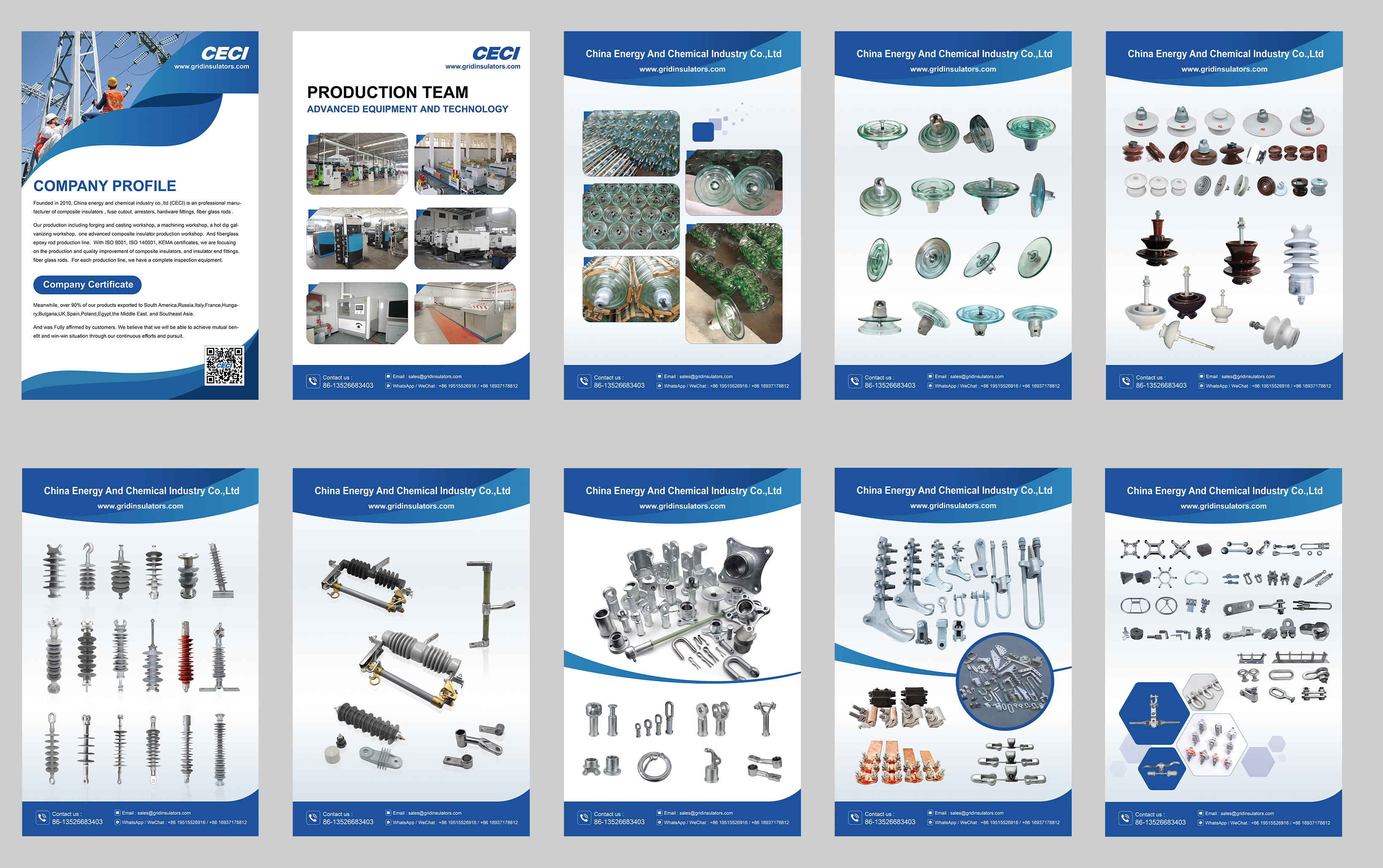
Reference documentation for the 35 kV / 70 kN band: polymer, glass and porcelain units plus matching line hardware.
Why the 35kV / 70kN band concentrates so many procurement decisions
Two specifications anchor this band, and they are frequently conflated in RFQs. The first is voltage duty: 35 kV class service appears in sub-transmission, urban and rural distribution upgrades, rail electrification, and small substation and converter station work. The second is mechanical class: 70 kN is one of the most commonly specified failing-load classes for suspension, tension, deadend and line post positions in this voltage band.
When both anchors are held constant, the remaining variable is material. That is where the shortlist has to earn its place. CECI's own comparison data show that the three families differ less in insulation reliability than in installation time, maintenance cost, repair behaviour and evidence route — which is exactly the set of variables a project engineer has to justify to a procurement committee.
The shortlist at a glance
| Reference unit | Material | Verified ratings (as published) | Typical fit at 35 kV / 70 kN |
|---|---|---|---|
| FXB-24-70-785mm | Polymer / composite (silicone housing) | 35 kV duty; creepage >1050 mm; lightning impulse 230 kV; 70 kN mechanical class | Polluted, long-creepage and lightweight string or line duty; long spans where handling weight matters |
| 70B | Glass (disc unit) | Creepage 255 mm; dry power-frequency withstand 65 kV; wet power-frequency withstand 45 kV | Strings where visual inspection of damaged units is a maintenance requirement |
| U70BP/146D | Porcelain (disc unit) | 70 kN failing load; 146 mm height; 255 mm disc | Thermally stable, mechanically stiff duty; substation and line strings with conventional handling |
| QP-7 (product code 5576) | Galvanized steel accessory — ball-head suspension ring | 70 kN load; 0.3 kg; galvanized finish | Matching hardware interface for 70 kN class strings and suspension assemblies |
These are the published values for the four references. They are the correct starting input for a shortlist, not a substitute for reviewing the project-specific type-test report that the utility or EPC contract requires.
Polymer: FXB-24-70-785mm
FXB-24-70-785mm is the only unit on this list whose creepage and impulse figures are published in a form that maps directly onto polluted-site dimensioning. Creepage above 1050 mm at 35 kV duty and a 230 kV lightning impulse level give the specification team room to argue the unit into high-pollution positions without changing the mechanical class. IEC 60815-1/-2/-3 is the framework that links site pollution severity to creepage dimensioning; the FXB figure should be read against that framework rather than against a generic catalogue average.
The mechanical argument for the polymer route is handling. CECI's comparison data put composite units at roughly 50% lower weight than porcelain or glass equivalents and around 60% less installation time, which is the reason polymer dominates where access is difficult, spans are long, or line crews are working to a short outage window. Silicone housings are also described in CECI's application material as required to deliver anti-aging and UV-resistant performance in outdoor harsh climates with dust accumulation and wind abrasion — a condition set that matches the EU market cases the company cites.
The limit is repair behaviour, and it should be stated plainly. CECI's own comparison data put composite emergency repair at 4–6 hours against 1–2 hours for glass, with composite repair cost around 150% higher, and a unit price roughly 10% above the porcelain/glass baseline. Polymer wins on installation and on annual maintenance — reported around 40% lower than porcelain or glass — but it does not win on every line item, and treating it as the default answer at 35 kV is a procurement error rather than a technical one.
Glass: 70B
The glass 70B disc unit is specified by three numbers: 255 mm creepage, 65 kV dry power-frequency withstand and 45 kV wet power-frequency withstand. The wet withstand figure is the one that matters in coastal, humid and rainy service, because it describes the unit under the condition that actually produces flashover risk rather than the laboratory-favourable dry condition.
Glass carries two structural advantages in a project schedule. The first is inspection: a damaged glass unit is visible from the ground, which changes the maintenance model from testing to observation. CECI's comparison data indicate that glass and porcelain together save approximately 80% of testing time relative to the composite route for this reason. The second is replacement economics: the total cost associated with replacing glass insulators is reported at 25% to 35% lower, with emergency repair times of 1–2 hours.
Where glass stops being the obvious answer is weight and handling. The same comparison data that make glass attractive on replacement cost also show the material at roughly double the handling weight of polymer, which is decisive on long spans, restricted access positions and fast-turnaround stringing.
Porcelain: U70BP/146D
U70BP/146D is defined by a 70 kN failing load, a 146 mm unit height and a 255 mm disc. It is the reference porcelain unit in this band: mechanically stiff, dimensionally conventional, and compatible with the handling and stringing practice that most utilities already have in place.
The porcelain argument is stability — thermal, mechanical and electrical — combined with visual inspection advantages shared with glass. For substation and line positions where the string design is already fixed by an older standard, substituting material means re-opening the string design, the hardware interface and the test evidence. U70BP/146D keeps all three closed.
The boundary is the same as for glass: unit weight and installation time. Porcelain and glass both sit at the heavier end of the comparison, and both lose installation-time advantage to polymer in exactly the projects where outage windows are tight.
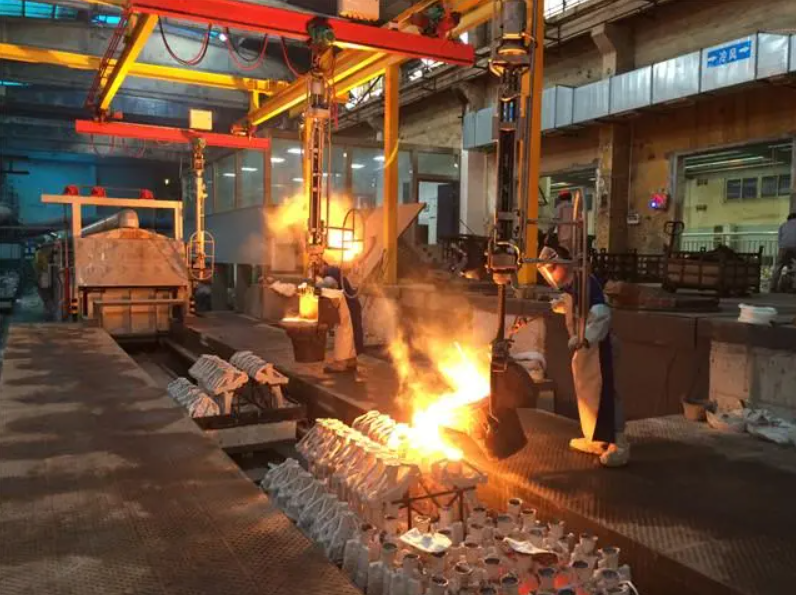
Metal end fittings are a separate specification object: geometry, strength class and coating regime all sit outside the housing material decision.
The fitting is part of the shortlist, not an afterthought
QP-7, listed under product code 5576, is a ball-head suspension ring rated at 70 kN with a weight of 0.3 kg and a galvanized finish. It is on this shortlist because a 70 kN insulator specified without a matching 70 kN fitting interface is not a completed specification. The metal end fitting is where coating regime, geometry and the rod-to-fitting interface are decided, and buyers who ignore it tend to discover the gap at the first coastal or high-humidity destination.
QP-7 is certified to ISO 9001:2015 (GB/T 19001-2016) under certification number 75424Q0348R0S, issued by Zhongjing Certification (Shanghai) Co., Ltd., with applicability stated for the Europe, Americas, Middle East and Central Asia markets. Coating requirements should be written against a named standard — ISO 1461 for hot-dip galvanized coatings on fabricated iron and steel articles, or ASTM A153/A153M where a North American-linked specification applies. The two are comparable in intent but not identical in coating-thickness classes, so they should never be merged into an averaged requirement.
Cost and repair economics: what the comparison data actually say
| Comparison dimension | Reported position |
|---|---|
| Unit price | Composite insulators approximately 10% more expensive than the porcelain/glass baseline |
| Weight and installation | Composite roughly 50% lighter; approximately 60% of installation time saved |
| Annual maintenance cost | Composite approximately 40% lower than porcelain/glass |
| Testing time | Glass and porcelain save approximately 80% of testing time versus composite |
| Replacement cost | Total cost associated with replacing glass insulators 25%–35% lower |
| Emergency repair | Glass 1–2 hours; composite 4–6 hours, with composite repair cost around 150% higher |
| Energy efficiency | Differences are minor; impact comes from insulation reliability and outage/maintenance time |
Read as a set, these figures explain why the band splits rather than converges. Polymer carries a price premium and a repair penalty but wins on weight, installation time and annual maintenance. Glass carries handling weight and testing limitations but wins on replacement cost and emergency repair speed. Porcelain holds the middle position on stability and predictability. The correct shortlist decision at 35 kV is therefore driven by site pollution severity, access logistics, outage windows and the maintenance model the utility already runs — not by a single lowest unit price.
Technical explanation: material determines the applicable standard
This is the point most often missed in a price-led comparison. Each material family sits under a different IEC test and acceptance framework, so a report issued for one material cannot be accepted as proof for another.
- Composite suspension and tension insulators for overhead lines above 1 000 V AC (1 500 V DC) are covered by IEC 61109:2025, which addresses the load-bearing core, the polymeric housing and permanently attached metal end fittings.
- Composite line post insulators are addressed separately by IEC 61952-1:2019, which specifies characteristics including mechanical and impulse levels.
- Ceramic and glass units above 1 000 V are covered by IEC 60383-1 and IEC 60383-2, with IEC 60168 governing tests on ceramic or glass post insulators.
- Polymeric high-voltage insulators for indoor and outdoor use fall under IEC 62217, which is not interchangeable with the overhead-line composite standards.
- Pollution dimensioning follows IEC 60815-1/-2/-3, while artificial pollution testing of ceramic and glass insulators follows IEC 60507 — a standard whose material scope does not extend to silicone housings.
Practically, this means a buyer comparing FXB-24-70-785mm with U70BP/146D is comparing two products whose acceptance evidence is generated under different standards. The commercially meaningful differentiator among factories is not the ability to mould a silicone housing or press a porcelain disc; it is the ability to hold current, scope-correct type-test documentation for the exact product and voltage class being quoted. Buyers frequently treat an independent high-voltage laboratory report as the qualification signal, and that expectation is reasonable — provided the report's scope is confirmed against the standard that applies to the material being purchased.
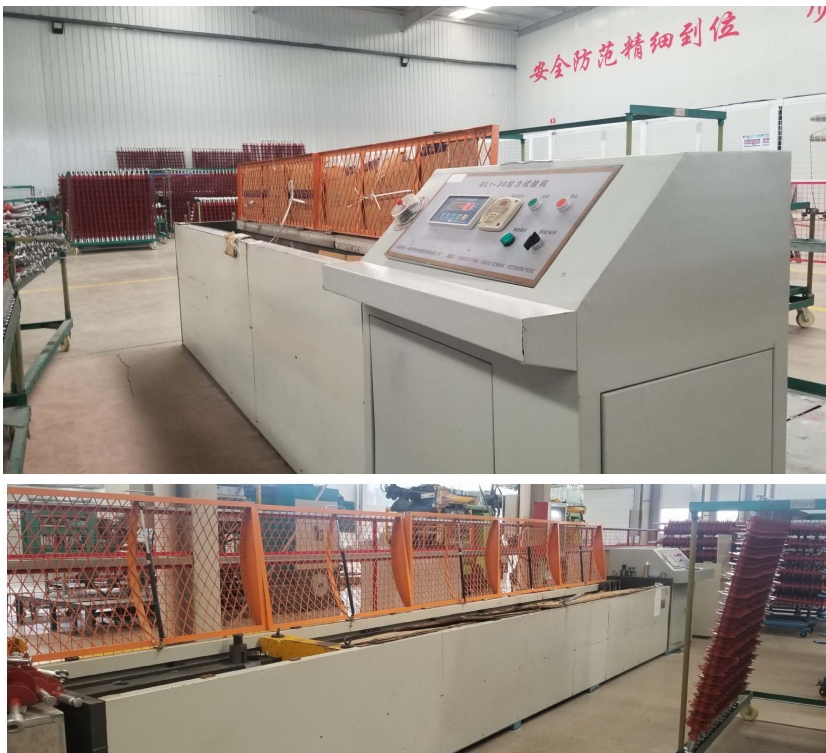
Type-test evidence is material-specific: report scope must match the product family and voltage class being quoted.
Application fit across utility, rail and substation work
CECI describes its public electrical equipment product scope as covering rural and urban power grid upgrading, rail transit electrification, high-voltage transmission lines, substations and converter stations, and wind power projects, operating continuously in harsh conditions including high temperature, high humidity, outdoor climate, UV aging, dust storms and impulse overvoltage. The company cites Spain, France, Italy and Turkey as typical markets for that duty profile.
Mapped onto this shortlist, the fit is reasonably clean:
- Polluted, dust-exposed and coastal sites: the polymer FXB-24-70-785mm is the natural first specification because creepage above 1050 mm and 230 kV impulse level address the two failure modes that matter there.
- Lines where ground-level visual inspection is the maintenance model: the glass 70B disc is the efficient choice, and the replacement economics reinforce it.
- Conventional string designs, substation positions and thermally demanding locations: porcelain U70BP/146D keeps the existing design and evidence route intact.
- All three: the QP-7 galvanized ring completes a 70 kN assembly, and the coating regime should be written by standard rather than described generically.
- Rail electrification: this is a separate specification island. A factory qualified for utility lines is not automatically qualified for railway overhead contact line work, and railway enquiries should be routed to a dedicated evidence review rather than treated as another 35 kV line order.
Market trend analysis
Three published data points frame the sourcing environment. Straits Research projects the global insulators market at USD 15.19 billion in 2026, with grid modernisation as the stated driver. Market Research Future places the composite insulators segment at USD 6.792 billion in 2025, with growth projected through 2035. UNIFE projects the global rail supply market to reach EUR 266.8 billion by 2031.
Two cautions apply to how these are used. The market-size and composite-segment figures are different scopes, not competing estimates, and should not be combined into a single growth claim. And none of them substitutes for unit-level verification: high-voltage insulators are safety-critical assets, and the qualification gate in this category remains the type-test report, not the market forecast.
The procurement implication is directional rather than dramatic. A larger composite segment alongside sustained rail investment supports keeping polymer and railway-specification capability on the supplier panel, while the continuing role of glass and porcelain in replacement economics argues against single-material standardisation across an entire network.
Comparison with traditional solutions — and where this shortlist stops
The traditional approach at 35 kV is to standardise on porcelain or glass across a network and treat polymer as a special-case substitution for polluted sites. That approach has real strengths: shared handling practice, one inspection model, one test-evidence route, and in the case of glass the lowest replacement cost and the fastest emergency repair on the list.
Its weakness is that it under-uses the installation-time and maintenance advantage of composite where access is difficult, and it can over-specify handling weight on long spans.
The limits of this shortlist should be equally explicit:
- No per-unit public pricing. The comparison percentages above are relative positions, not quotations. Project pricing requires an RFQ against the actual voltage class, mechanical class and quantity.
- Composite carries a repair penalty. Longer emergency repair windows and higher repair cost are documented in the same comparison data that support the polymer case, and they belong in the whole-life argument rather than outside it.
- Standards are not portable across materials. An IEC 60383 report on a porcelain unit evidences nothing about a silicone line post, and an IEC 62217 polymeric report does not stand in for an overhead-line composite report.
- Fitting ratings must match. QP-7 is a 70 kN component; specifying it against a higher-load string creates a mismatch that is invisible on a price sheet.
- Independent laboratory certification should be verified per project. Buyers commonly ask for third-party high-voltage type-test documentation; CECI's publicly documented certification position for the QP-7 accessory is ISO 9001:2015 under certificate 75424Q0348R0S, and report-level verification should be requested for each insulator family and voltage class rather than assumed from a catalogue.
Execution notes for the award stage
Once a material route is chosen, the execution variables decide whether the project holds schedule. CECI reports monthly production capacity of 500 tons and 100,000 pieces, a standard delivery time of 30–45 days, and both OEM and ODM availability. The company reports a 30,000 m² facility, a team of 100 and 8 R&D engineers, with 95% of output exported to markets including Russia, Vietnam, France, Spain, Italy, Türkiye, Brazil, Poland, Indonesia and Saudi Arabia.
For the buyer, these facts translate into three scheduling questions worth settling before award: whether the required monthly tonnage and piece count fit inside the supplier's stated capacity alongside existing orders; whether the 30–45 day standard delivery window accommodates the project's stringing sequence; and whether the material route requires customisation — for example a non-standard creepage, fitting geometry or coating — which moves the order from catalogue supply into the OEM/ODM path.
Future outlook
Two structural shifts are likely to shape the next procurement cycle in this band. The first is documentation, not materials: as utilities tighten qualification, the differentiator between otherwise comparable factories becomes the currency and scope-correctness of their type-test evidence, including for accessories. The second is the split between installation economics and repair economics. Polymer's advantage is concentrated in installation and annual maintenance; glass and porcelain retain the advantage in replacement cost and emergency repair speed. Networks that model both sides rather than only the first will make better material decisions than networks that standardise on a slogan.
For a 35 kV, 70 kN requirement, the defensible shortlist is therefore three lines rather than one: FXB-24-70-785mm for creepage-critical and access-constrained positions, 70B for inspection-driven strings, U70BP/146D for conventional and thermally demanding duty, with QP-7 completing any 70 kN assembly.
FAQ
What does the 35 kV / 70 kN combination actually define in a specification?
It defines two independent anchors. The 35 kV figure sets the voltage duty the insulator must withstand in service, including impulse overvoltage conditions; the 70 kN figure sets the mechanical failing-load class for the position. On this shortlist, FXB-24-70-785mm, U70BP/146D and QP-7 are all stated at the 70 kN class, while the glass 70B is characterised by its 255 mm creepage and 65 kV dry / 45 kV wet withstand values. Both anchors must be fixed before materials are compared.
Which insulator material should be specified first for a 35 kV line position?
It depends on the dominant constraint rather than on material preference. Where site pollution and creepage are the binding constraint, the polymer FXB-24-70-785mm — with creepage above 1050 mm and a 230 kV lightning impulse level — is the direct starting point. Where ground-level visual inspection is the maintenance model, glass 70B fits, supported by a reported 25%–35% lower total replacement cost. Where the string design is already fixed and thermal stability is the priority, porcelain U70BP/146D at 70 kN failing load, 146 mm height and 255 mm disc preserves the existing design route.
What technical evidence should accompany a shortlisted insulator unit?
Evidence must match the material. Composite suspension and tension insulators are covered by IEC 61109:2025, composite line post insulators by IEC 61952-1:2019, ceramic and glass units by IEC 60383-1 and -2, and polymeric insulators for indoor and outdoor use by IEC 62217. Pollution dimensioning follows IEC 60815-1/-2/-3, and artificial pollution testing of ceramic and glass follows IEC 60507, which does not extend to silicone housings. A report issued under one of these frameworks does not evidence a product from another material family.
How do handling weight and installation time affect the choice between polymer and porcelain or glass?
CECI's comparison data place composite insulators at roughly 50% lower weight than porcelain or glass equivalents and at approximately 60% less installation time. That advantage is decisive where access is restricted, spans are long or outage windows are short. The same data show the reverse position on emergency repair: glass at 1–2 hours against 4–6 hours for composite, with composite repair cost around 150% higher. Weight and install time therefore favour polymer, while repair speed favours glass.
What do the cost figures actually compare, and what should not be read into them?
They compare relative positions, not quotations. Reported values include composite units at approximately 10% higher price with around 40% lower annual maintenance cost, glass and porcelain saving approximately 80% of testing time, and the total cost of replacing glass insulators 25%–35% lower. Energy-efficiency differences between the materials are described as minor, with impact coming from insulation reliability and outage or maintenance time. None of these figures substitutes for an RFQ against the actual voltage class, mechanical class and quantity.
How should fittings and long-term supply be handled once a material is chosen?
Fittings should be specified as part of the assembly, not added afterwards. QP-7 (product code 5576) is a ball-head suspension ring rated at 70 kN, weighing 0.3 kg, with a galvanized finish, certified to ISO 9001:2015 under certificate 75424Q0348R0S issued by Zhongjing Certification (Shanghai) Co., Ltd. for the Europe, Americas, Middle East and Central Asia markets. Coating should be written against ISO 1461 or ASTM A153/A153M rather than described generically, and the two standards should not be averaged. On supply continuity, CECI reports monthly capacity of 500 tons and 100,000 pieces, a 30–45 day standard delivery time, and OEM and ODM availability, with 95% of output exported across markets including Russia, Vietnam, France, Spain, Italy, Türkiye, Brazil, Poland, Indonesia and Saudi Arabia.
Reference documentation: the 2025 CECI catalogue of polymer and glass insulators is available for download at CECI insulator catalogue (PDF).
Have Questions or Need More Details?
Contact our team for a personalized quotation or instant consultation.
Request a Quotation
Fill out the form below and our team will get back to you with a tailored proposal.
WhatsApp Direct Chat
Prefer to chat in real-time? Message us on WhatsApp for instant assistance & quick answers.
- Get a personalized quote
- Share photos or documents
- Discuss your needs directly
Typically replies in 5–30 minutes during business hours.