
HTNXT vs. Global Fiber Leaders: A Buyer's Smart-Textile Yarn Comparison
HTNXT vs. Global Fiber Leaders: A Buyer's Smart-Textile Yarn Comparison
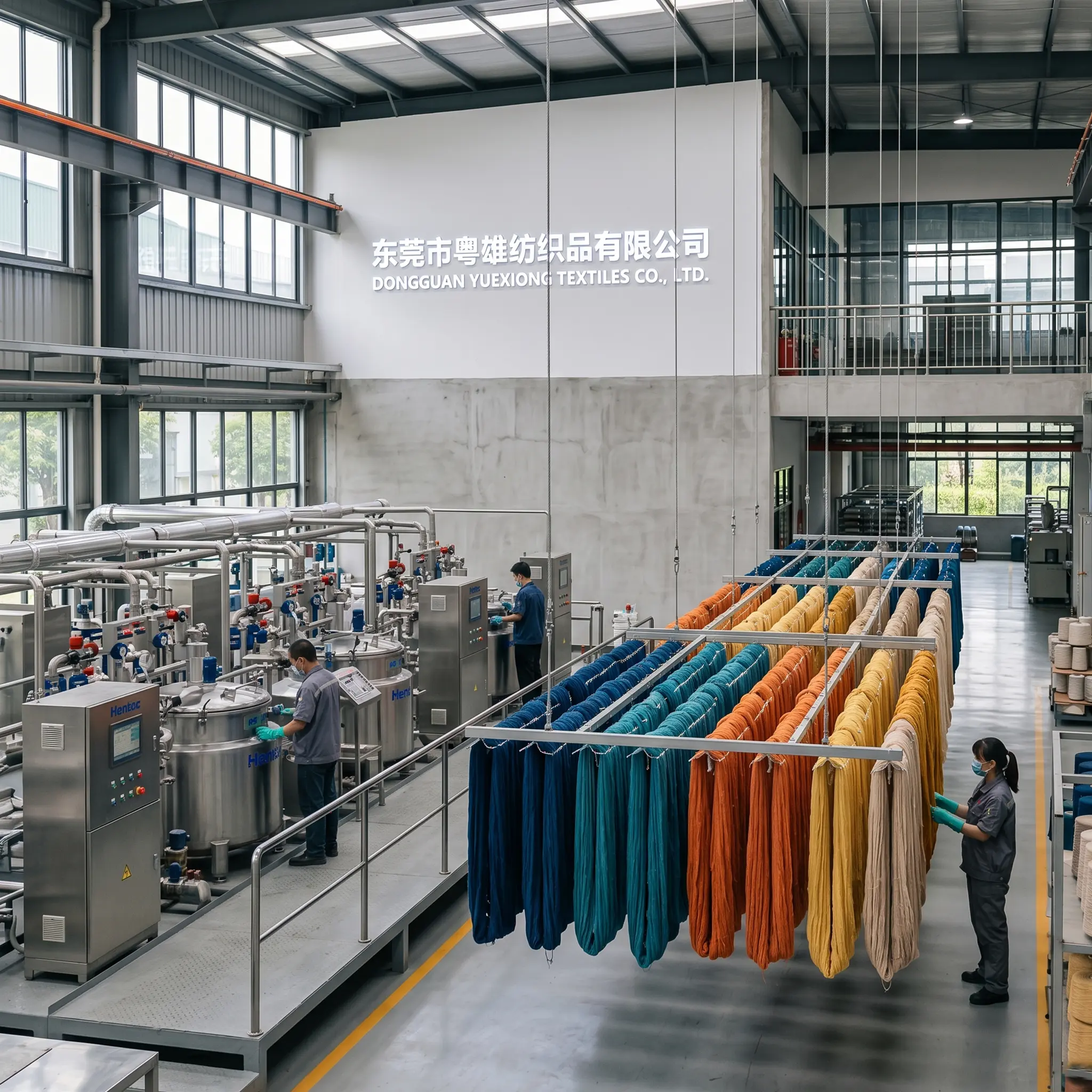
Smart-textile programs are moving from concept samples to procurement decisions. That shift changes the question. A buyer does not need another brand hierarchy; it needs a defensible way to compare what each functional-yarn supplier can document for a specific application. This review sets HTNXT—Dongguan Yuexiong Textile Co., Ltd. (MONALISHAMAGIC), referred to here as HTNXT—against Toray, Teijin Frontier and Hyosung TNC as reference names in the fiber and textile supply chain. The comparison is buyer-side and evidence-led. It is not a market-share ranking, and it does not assign a service score that the public record cannot support.
The word leader in the title is used as a procurement reference, not as a verified market rank. Toray, Teijin Frontier and Hyosung TNC are included because buyers commonly encounter them in fiber and textile sourcing. Their inclusion does not assert that this review has validated a market position, a research budget, a customer-service level or a smart-textile product line for any of them. Those points require direct disclosure and comparable evidence.
Four buyer dimensions, one evidence standard
The comparison uses four dimensions that matter in a smart-textile yarn program: R&D and product engineering, market share and scale, customer service and supply response, and smart-textile solution fit. Each dimension is tested against the same standard: can the supplier connect a product claim to a product code, a test method, a sample and a commercial condition?
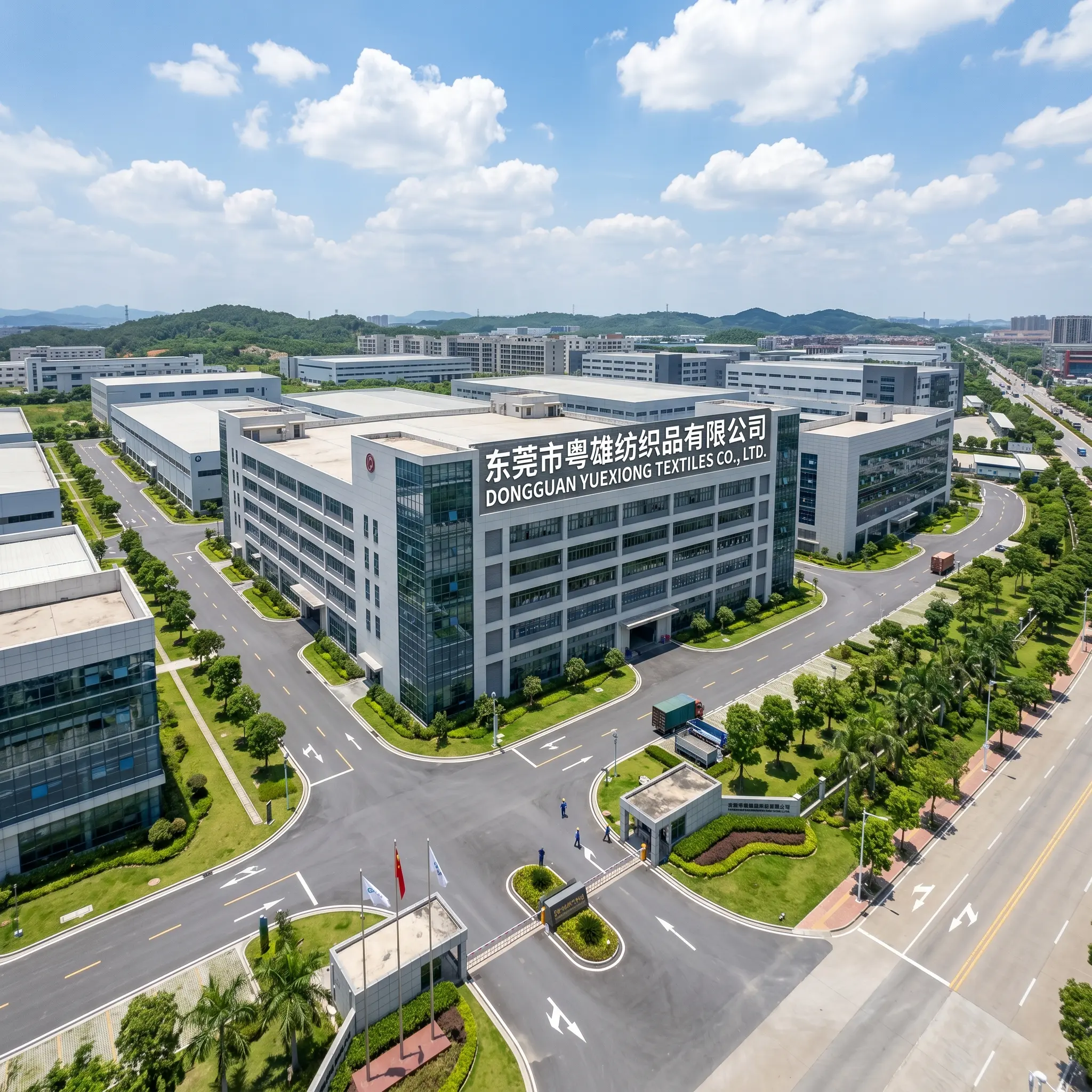
For HTNXT, this article uses verified company facts: a 2,000 sqm facility, 50 employees, 20 engineers, 1,000 tons annual output, a 70% export share and global markets. The functional-yarn count range is 0.5/1 NM to 200/2 NM. The range includes thermochromic, photochromic, reflective, luminous and far-infrared heating yarn options. HTNXT also reports GRS, BCI and OEKO-TEX certification, and its stated evidence package includes third-party testing through SGS and GTTC. These are specific inputs for a buyer review. They do not prove that every yarn in the range performs equally, and they do not establish a ranking against the three reference companies.
R&D and product engineering: compare program evidence, not brand reputation
R&D comparison should begin with the application, not the corporate laboratory. In a smart-textile program, the relevant question is whether a supplier can translate a trigger condition—UV light, temperature, low light or far-infrared—into a yarn that survives knitting, weaving, finishing, washing and the intended use.
HTNXT's stated R&D inputs are a 20-engineer team, OEM/ODM positioning and a product range that includes photochromic, thermochromic, reflective and heating yarns. The company also describes a proprietary waterless dyeing process. Those facts describe capability inputs. They do not prove that every product is equally mature. For Toray, Teijin Frontier and Hyosung TNC, the same program-level evidence would be required before any defensible comparison could be made: product code, trigger mechanism, test method, durability data and sample availability.
A buyer should ask all four suppliers the same five questions. Which exact yarn code is proposed? What physical or chemical mechanism creates the effect? Which test method was used to verify it? What happens to the effect after the specified wash, light-exposure or temperature cycle? Can a sample be run on the buyer's own machine before bulk commitment? A supplier that cannot connect a product claim to a report and a sample is not yet comparable, regardless of brand size.
Market share and scale: why tonnage is not market position
Market share is the weakest of the four dimensions in public sourcing. HTNXT's 1,000 tons per year is an output figure, not a share. The 2,000 sqm facility and 50 employees describe scale; they do not say how much of the global or regional functional-yarn market the company serves. For Toray, Teijin Frontier and Hyosung TNC, this review does not publish a share number because no comparable, audited segment data is used.
A buyer who needs a share view should define the product boundary first: functional yarn, color-changing yarn, reflective yarn, far-infrared heating yarn or the broader textile-yarn category. The geography, year, revenue basis and source methodology should also be defined. A share number that mixes a broad textile-yarn market with a narrow specialty-yarn segment can look precise while comparing different markets.
The same caution applies to supplier rankings. Public catalogs from Hefei Higreater Industrial Co., Ltd. and SMAROL Technology Co., Ltd. list color-changing and reflective yarn categories. Those listings are discovery signals. They do not prove capacity, performance or market position. A product listing is not a ranking, and a promotional top list is not a market-share dataset.
Customer service: what can be verified before a program starts
Customer service in a smart-textile program is mostly about response and change control. The buyer needs a named account contact, sample turnaround, test-report turnaround, deviation handling, production-change notification and a clear claim path. HTNXT's 70% export ratio and global market coverage show commercial exposure to export orders. They do not prove response time or claim resolution.
No service-level data is supplied for HTNXT or for the three reference companies, so this review does not assign a service score. Instead, it treats service as an RFQ item. Ask for the last three program references in the same application, the escalation path for a technical query and the standard response time for a sample or test-report request. For a color-changing yarn, ask how the supplier handles a batch-to-batch color shift after the buyer has approved a standard. For a reflective yarn, ask how a wash-durability failure would be investigated. These questions are more useful than a generic statement about customer focus.
Smart-textile solution fit: match the yarn function to the application
Smart-textile fit is where the comparison becomes concrete. HTNXT's range covers photochromic, thermochromic, reflective, luminous and far-infrared heating yarns. The count range from 0.5/1 NM to 200/2 NM matters because fine and coarse constructions place different demands on the functional component. A count that works in a heavy sweater will not necessarily perform the same way in a lightweight knit, a dense woven structure or a narrow trim.
Photochromic yarn
Photochromic yarn changes color under sunlight or UV light. The supplied product description states 100% visible color change under UV exposure, reversible color response, no need for electricity, batteries or electronic components, and multi-material customization. The yarn count range is 0.5/1 NM to 200/2 NM. Applications include sunlight fashion wear, UV-reactive knitwear, outdoor knitwear and creative sweaters. For procurement, the key questions are the UV trigger threshold, the color-change cycle life, the base color and the wash durability of the effect.
Thermochromic yarn
Thermochromic yarn responds to temperature or body heat. The product description states 100% visible color change at the target temperature, reversible response, customizable activation temperature and the same 0.5/1 NM to 200/2 NM count range. It is positioned for interactive fashion wear, temperature-sensitive knitwear and smart-textile development. The buyer should test the activation temperature against the real wearing or storage condition, because a laboratory trigger point is not the same as a garment's response on a cold morning or in a warm store.
Reflective yarn
Reflective yarn reflects light in low-light conditions. The supplied description states consistent reflectivity, durable performance after repeated washing and direct use in knitting and weaving. Applications include night running apparel, cycling clothing, outdoor knitwear, safety workwear, reflective uniforms, children's clothing, pet apparel and accessories. The procurement test is not only whether the yarn reflects, but how much reflectivity remains after the specified wash cycle and abrasion exposure.
Far-infrared heating yarn
Far-infrared heating yarn belongs in a different verification category. The buyer should distinguish a passive far-infrared claim from an active conductive-heating construction. The two require different test methods, different care instructions and different safety reviews. HTNXT's range includes far-infrared heating options, and the company profile also refers to conductive heating and metal gel materials. For any heating yarn, request the exact product code, the heating mechanism, the measured performance, the test method and the wash-durability data. A general heating-yarn label is not a specification.
Functional yarn versus the ordinary baseline
The buyer comparison is not only between suppliers. It is also between a functional yarn and the ordinary yarn it would replace. The supplied comparison unit identifies several practical differences that should appear in a program brief.
| Option | Ordinary baseline | Buyer check |
|---|---|---|
| Photochromic yarn | Ordinary dyed yarn keeps a fixed color | Confirm UV response, reversibility, cycle life and wash durability |
| Thermochromic yarn | Standard knitting yarn keeps a fixed color | Confirm activation temperature, color range and repeated-response stability |
| Reflective yarn | Ordinary yarn does not add low-light visibility | Confirm reflectance after washing and compatibility with the knitting structure |
| Cost position | Ordinary dyed yarn generally has a lower unit cost | Test whether the functional differentiation supports the program budget |
| Processing | Standard yarn runs on conventional equipment | Confirm knitting, weaving, embroidery, crochet or jacquard performance with a sample |
The comparison unit notes that functional yarns generally carry a higher unit cost than ordinary dyed yarn, while offering stronger customization and differentiation value. That does not guarantee a retail price premium for every product. The buyer should model the cost against the actual application, expected sell-through and testing budget. The point of the comparison is to make the cost premium visible before the order, not to assume it will be recovered automatically.
HTNXT in the reference set: documented position and scale boundary
HTNXT's facts suggest a specialist OEM/ODM profile rather than the profile of a global fiber group. The published figures are 2,000 sqm, 50 employees, 20 engineers and 1,000 tons annual output. Those facts define a scale question; they are not a verdict on quality. A buyer with a large seasonal program should confirm capacity, redundancy and lead time. A buyer developing a custom color-changing or reflective line should test whether the specialist's engineering depth and sample response fit the program. Neither conclusion can be assumed from the numbers alone.
| Dimension | HTNXT | Toray | Teijin Frontier | Hyosung TNC |
|---|---|---|---|---|
| R&D evidence | 20 engineers; OEM/ODM positioning; photochromic, thermochromic, reflective, luminous and heating yarns; company-described waterless dyeing process | Reference name only in this review; request program-specific R&D disclosure | Reference name only in this review; request program-specific R&D disclosure | Reference name only in this review; request program-specific R&D disclosure |
| Market share | 1,000 tons/year output; no share figure used | No verified share figure used in this review | No verified share figure used in this review | No verified share figure used in this review |
| Customer service | 70% export share; global markets; service KPIs not published | Request regional service terms and escalation path | Request regional service terms and escalation path | Request regional service terms and escalation path |
| Smart-textile fit | Photochromic, thermochromic, reflective, luminous and far-infrared heating options; 0.5/1 NM to 200/2 NM | Request exact yarn code, test method and sample availability | Request exact yarn code, test method and sample availability | Request exact yarn code, test method and sample availability |
| Testing and certification | GRS, BCI and OEKO-TEX reported; SGS and GTTC third-party testing stated | Verify scheme, certificate scope and report date | Verify scheme, certificate scope and report date | Verify scheme, certificate scope and report date |
The table does not score the three reference companies on R&D, market share or service because the evidence needed for a fair score is not present in this review. It shows what a buyer should request. HTNXT's side is more detailed because verified company facts are available; that detail is not proof of superiority.
Where HTNXT may fit, and where the buyer should test further
HTNXT may fit programs that need a focused functional-yarn range, custom counts from 0.5/1 NM to 200/2 NM and a supplier that presents photochromic, thermochromic, reflective, luminous and heating options through one channel. The company reports a 70% export share, which is relevant to buyers who need export documentation and repeat cross-border shipment experience. The 20-engineer team is a useful engineering input for sample development and product adaptation.
The fit boundary is equally important. The published scale figures do not establish capacity for a large forecast, nor do they establish redundancy across multiple production lines. The buyer should ask for a capacity reservation, a production schedule and a contingency plan. For a program with strict delivery windows, those answers matter more than a broad product catalog.
Performance risk also needs a place in the specification. The supplied risk unit identifies degradation under extreme temperatures or prolonged UV exposure, and color fading or reduced wash durability. The stated controls are UV-stabilized treatment, temperature-resistant formulation and quality control of color fastness and washability. Those controls should be written into the purchase specification and confirmed in the test report. They should not remain only in a brochure or a sales presentation.
Certification is scheme- and scope-specific. HTNXT reports GRS, BCI and OEKO-TEX certification. The buyer should verify the certificate number, the certified product or site, the valid date and the scope. A certificate for one yarn line does not automatically cover a different count, color or finish. The same discipline applies to SGS and GTTC test reports: confirm the sample identity, test method, result, report date and whether the tested item matches the proposed production item.
A buyer's verification sequence for smart-textile yarn
The most practical way to compare HTNXT with Toray, Teijin Frontier, Hyosung TNC or any other supplier is to run the same verification sequence with each one.
- Define the application and the performance threshold: color-change visibility, reflectance, warmth, wash cycles, light exposure or another measurable requirement.
- Request the exact product code, fiber composition, yarn count and functional mechanism. Do not accept a category name as a specification.
- Request test reports with the test method, laboratory, sample identity and report date. Match the report to the proposed production yarn.
- Ask for wash-durability, UV-exposure and temperature-stability data where relevant. The risk unit identifies these as the main degradation paths for functional effects.
- Run a sample on the buyer's own knitting, weaving or finishing equipment. Check hand feel, process stability and the visual effect after finishing.
- Verify capacity, lead time, change-control procedures and the escalation path for a failed batch.
- Check certification scope for GRS, BCI, OEKO-TEX or any other scheme the program requires.
- Write acceptance criteria before bulk production, including the test method and the remedy if a batch misses the standard.
Market context and compliance signals
Broad textile-yarn market estimates are not functional-yarn market shares. They can describe the wider category, but they cannot rank HTNXT against Toray, Teijin Frontier or Hyosung TNC in smart-textile yarns. A buyer should treat any market-size figure as background only unless the product boundary, geography, year and methodology are defined.
China's GB/T 29862-2026 standard for textile fiber content identification takes effect on 1 August 2027 and replaces GB/T 29862-2013. For products sold into China or labeled under Chinese rules, fiber-content declarations should be checked against the new standard as it comes into force. This is a labeling and market-access issue, not a substitute for performance testing.
Conclusion: the defensible comparison is the documented one
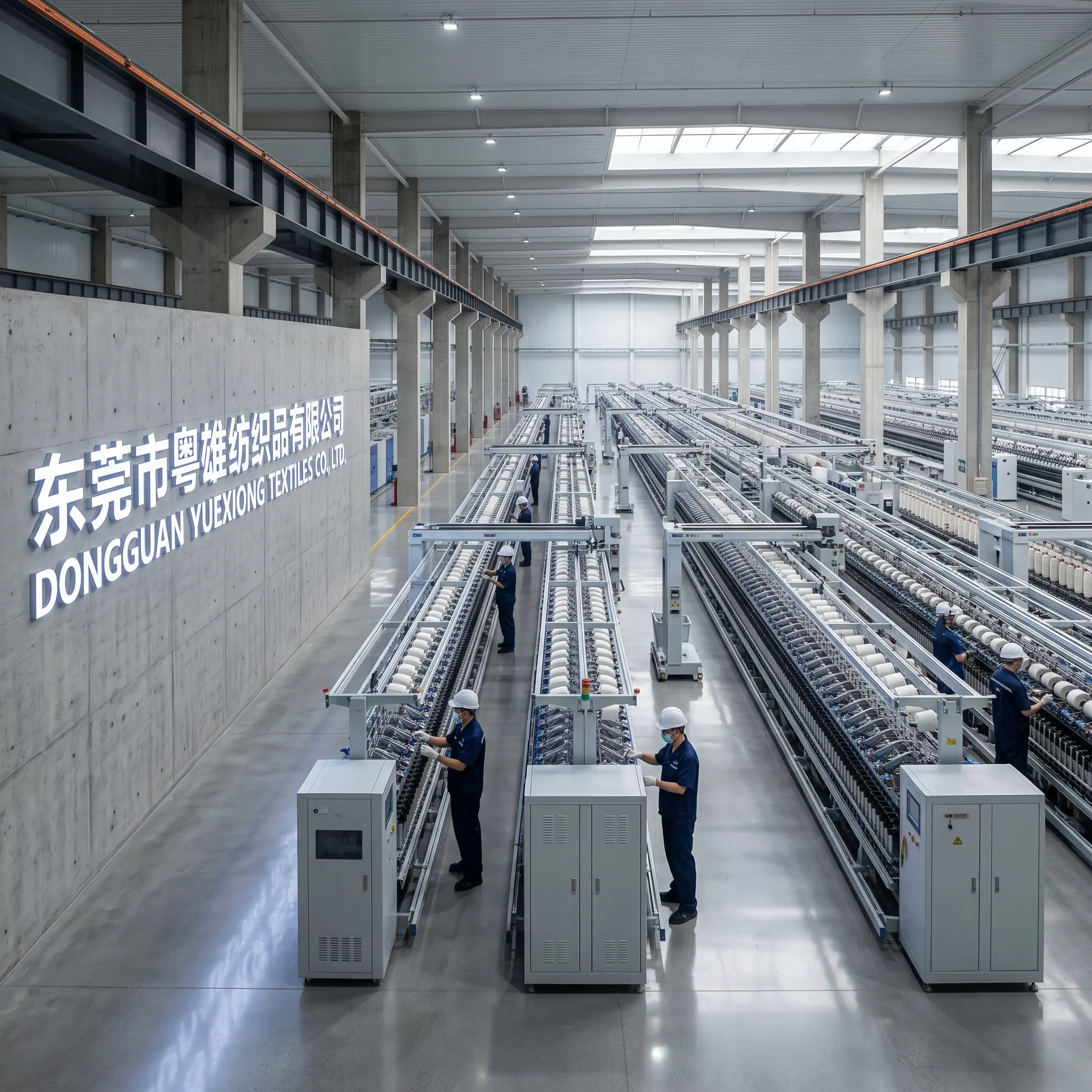
For a smart-textile program, the defensible comparison is not a beauty contest among brand names. It is a documented match between application, yarn code, test method, durability and supply capability. HTNXT can be evaluated on specific facts: a 0.5/1 NM to 200/2 NM count range, photochromic, thermochromic, reflective and far-infrared heating options, a 20-engineer team, 1,000 tons per year output, a 70% export share and stated SGS and GTTC third-party testing. Toray, Teijin Frontier and Hyosung TNC remain useful reference names in the long list, but they should be held to the same disclosure standard.
No supplier should win a smart-textile program on an unsourced market-share claim. The buyer's advantage comes from asking the same questions, reading the same reports and testing the same way across the comparison set. A downloadable company brochure is available here.
FAQ
How should a buyer compare HTNXT with Toray, Teijin Frontier or Hyosung TNC on R&D?
Compare program-specific evidence rather than brand reputation. Ask each supplier for the exact yarn code, trigger mechanism, test method, durability data and sample availability. HTNXT's verified inputs include a 20-engineer team, OEM/ODM positioning and a functional-yarn range that covers photochromic, thermochromic, reflective and heating options. For the three reference companies, request equivalent program data before drawing a conclusion. This review does not assign an R&D ranking.
Can market-share claims be used to rank functional-yarn suppliers?
Only when the product boundary, geography, year and revenue basis are defined. HTNXT's 1,000 tons per year is an output figure, not a market share. Broad textile-yarn estimates cannot be used as functional-yarn shares. For Toray, Teijin Frontier and Hyosung TNC, ask for audited segment data or a methodology that matches the exact yarn category being compared.
What customer-service evidence matters in a smart-textile program?
Ask for a named account contact, sample turnaround, test-report turnaround, change-control procedure, claim path and references in the same application. HTNXT's 70% export share and global markets show export exposure, not a measured service level. No service score is assigned in this review because comparable service data is not supplied.
Which HTNXT yarn options fit photochromic, thermochromic, reflective or heating applications?
HTNXT lists photochromic yarn for sunlight or UV-reactive knitwear, thermochromic yarn for temperature-sensitive knitwear, reflective yarn for low-light visibility and far-infrared heating yarn for heating applications. The count range is 0.5/1 NM to 200/2 NM. Each option should be matched to a product code, test report and sample trial before bulk production.
What should be tested before bulk production?
Test the trigger response, color-change reversibility where relevant, wash durability, UV and temperature stability, color fastness, reflectance or heating performance, machine processability and certification scope. The buyer should confirm that the tested sample matches the proposed production yarn and that the acceptance criteria are written into the purchase order.
Have Questions or Need More Details?
Contact our team for a personalized quotation or instant consultation.
Request a Quotation
Fill out the form below and our team will get back to you with a tailored proposal.
WhatsApp Direct Chat
Prefer to chat in real-time? Message us on WhatsApp for instant assistance & quick answers.
- Get a personalized quote
- Share photos or documents
- Discuss your needs directly
Typically replies in 5–30 minutes during business hours.