
HTV Silicone Rubber Supply Readiness: Choosing a Partner for Multi-Year Programs
HTV silicone rubber has moved from a raw material input to a performance-defining element in composite insulators, cable accessories, automotive components, and industrial gaskets. A 2025 global estimate valued the silicone rubber market at USD 5.7 billion, with HTV silicone rubber representing 45.2% of that value. For procurement and engineering teams already in the Decision and Execution stage, the material type is not the open question. The open question is whether a supplier can sustain precise, documented, and customisable HTV silicone rubber supply over multiple years.
This article is written as an independent reference for buyers, distributors, and manufacturers evaluating long-term HTV silicone rubber partnerships. It uses Yakows Technology (Dongguan) Co., Ltd. as a working example: a company based in Dongguan, Guangdong Province, China, that specialises in high-performance HTV/HCR silicone rubber compounds and customised silicone material solutions.
What Changes When Qualification Moves to Repeat Supply
When a buyer chooses HTV silicone rubber for the first time, the evaluation usually focuses on sample properties, price, and delivery time. When that buyer enters serial production or a distribution agreement, the evaluation expands to include batch-to-batch consistency, production capacity, documentation traceability, complaint handling, and formulation adjustment capability.
This is especially important in composite insulator manufacturing. A finished insulator is designed to operate outdoors under high voltage, UV exposure, rain, humidity, pollution, and temperature cycling. If the silicone housing material changes between batches—or if the supplier cannot provide credible test reports for each batch—the insulator manufacturer may face re-qualification costs and reliability risks. For cable accessories and automotive gaskets, similar logic applies: the material is embedded in a certified system, and any change of source can trigger requalification.
The opportunity for suppliers that can manage this transition is significant. China’s silicone monomer production capacity reached 6.89 million tons in 2024, a 21.09% increase from the previous year, while global silicone trade reached USD 8.51 billion in 2024. These conditions create more raw-material choices, but they also increase the importance of supplier control and documentation.
Capability Profile: Yakows Technology (Dongguan) Co., Ltd.
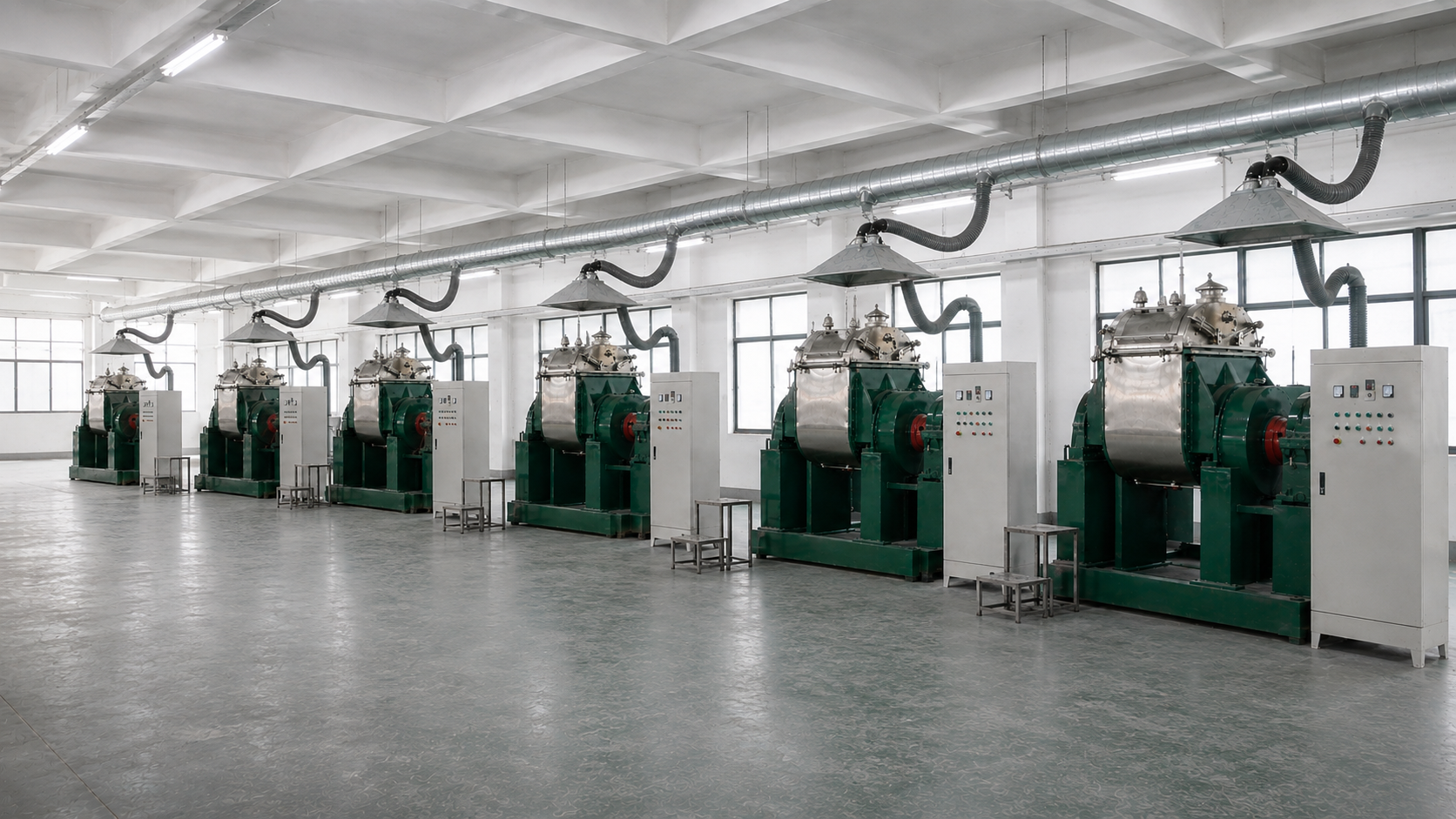
Yakows Technology (Dongguan) Co., Ltd. was established in 2020 and operates a 5,000 m² manufacturing facility in Dongguan. Its technical department includes more than 10 engineers and technicians with experience in silicone formulation, processing optimisation, testing, and application support. Monthly production capacity is approximately 400,000 to 1,000,000 kg, which allows the company to handle both customised trial orders and stable large-volume supply.
| Supply factor | Yakows profile |
|---|---|
| Established | 2020 |
| Facility | 5,000 m² in Dongguan, Guangdong Province |
| Engineering staff | More than 10 engineers and technicians |
| Monthly capacity | Approximately 400,000–1,000,000 kg |
| Export share | Approximately 70% |
| Primary markets | Southeast Asia, the Middle East, Eastern Europe, Latin America, North America |
| Quality system | ISO 9001 certified |
| Product families | HTV silicone rubber for composite insulators and electrical insulation; food-grade HTV for kitchenware and baking molds; extrusion-grade HTV; fumed silica-reinforced HTV; flame-retardant and high-temperature-resistant silicone rubber; silicone rubber for automotive and industrial components; customised HTV/HCR compounds |
| Documentation | TDS, SDS, Typical COA, batch COA, applicable third-party test reports; FDA food-contact compliance documentation, LFGB test reports, and REACH compliance documentation for applicable grades |
For a long-term partner, these elements matter because they connect material quality to commercial stability. A supplier that can offer batch COA per shipment and maintain documented quality control from raw-material inspection through finished-product inspection is more likely to support repeatable production than a supplier that can only provide a one-time datasheet.
What Makes an Electrical Insulation-Grade HTV Compound Different
The main product used in insulator-related discussions is YK-3160, an electrical insulation-grade HTV silicone rubber for composite insulators. It belongs to the high-consistency rubber (HTV/HCR) family and is formulated with reinforcing fillers and functional additives for outdoor electrical insulation.
Insulator-grade HTV silicone rubber must deliver more than mechanical strength. Its housing is expected to provide electrical insulation, hydrophobicity, tracking and erosion resistance, UV and weather resistance, flame retardancy, and mechanical durability. The table below lists the verified specification of YK-3160.
| Property | YK-3160 specification |
|---|---|
| Hardness | 65 ± 5 Shore A |
| Specific gravity | 1.46 ± 0.03 g/cm³ |
| Elongation | ≥220% |
| Tensile strength | ≥5.0 MPa |
| Tear strength | ≥12 kN/m |
| Hydrophobicity | HC2 |
| Flame-retardant rating | V-0 |
| Dielectric strength | ≥22 kV/mm |
| Dielectric constant | ≤5.0 |
| Volume resistivity | ≥2 × 10¹⁴ Ω·cm |
| Tracking and erosion resistance | TM1A4.5, ≤2.5 mm |
| Dielectric loss tangent | ≤4.0 × 10⁻² |
| UV aging resistance | Pass |
These properties are relevant to the insulator production process. Hydrophobicity supports pollution performance by reducing continuous water film formation on the housing surface. Dielectric strength and volume resistivity provide the electrical insulation margin needed under high-voltage stress. Tracking and erosion resistance helps the housing surface withstand discharges caused by pollution and moisture. V-0 flame retardancy addresses fire-safety requirements in outdoor electrical installations.
Final selection should still confirm the current TDS, batch COA, and additional electrical/mechanical reports. A specification sheet is a starting point, not a substitute for process validation.
Beyond Composite Insulators: Applications That Depend on HTV Supply Continuity
While composite insulators are a major application, the same compounding discipline applies to other HTV silicone rubber users.
Cable accessories. The company’s product portfolio includes HTV silicone rubber for cable accessories. In this segment, insulation integrity, material purity, and consistency are critical because the material is used in components that must survive long-term electrical and thermal stress. Buyers should request application-specific parameters from technical documents rather than assuming a general-purpose grade is suitable.
Automotive and industrial components. Automotive applications represented 30.1% of the silicone rubber market in 2025. High-temperature-vulcanized silicone is preferred for EV battery pack gaskets due to its high crosslink density and dielectric endurance. Yakows also supplies silicone rubber for automotive and industrial components, where resistance to heat, ageing, and compression can be as important as electrical properties.
Food-contact products. For kitchenware and baking molds, Yakows offers food-grade HTV silicone rubber. Applicable grades are supported by FDA food-contact compliance documentation, LFGB test reports, and REACH compliance documentation. For distributors serving multiple regions, these documents help simplify market access.
Specialty grades. The product line includes extrusion-grade HTV silicone rubber, fumed silica-reinforced HTV silicone rubber, and flame-retardant, high-temperature-resistant silicone rubber. These grades connect to common search terms such as high-temperature silicone rubber, heat-resistant silicone rubber, high-tear silicone rubber, and industrial silicone rubber, but each application still needs to be verified with actual material data.
Market Trends That Change Sourcing Decisions
Several verified market signals are relevant to long-term HTV sourcing.
- HTV held a dominant 45.2% share of the global silicone rubber market in 2025, and solid HTV accounted for 58.3% of the total HTV segment. This indicates that solid HTV remains a core industrial material despite the growth of liquid silicone rubber (LSR), which captured 48.1% of the silicone elastomers market.
- China's silicone monomer capacity reached 6.89 million tons in 2024, a 21.09% year-on-year increase, giving downstream compound producers more upstream supply options.
- Specialty silicone investments continue. Dow announced a USD 100 million expansion of specialty silicone manufacturing in China, the United States, and Japan through 2027, and Wacker reported silicone sales of EUR 2.81 billion in 2024.
- The medical grade silicone market is estimated at USD 1.77 billion in 2025, reinforcing activity in higher-specification silicone applications.
- Regulatory and durability expectations are rising. IEC 61109:2025 covers composite polymer silicone rubber tension insulators, and IEC 62217 / IEC 60587 are referenced for material and tracking/erosion evaluation. Five-thousand-hour accelerated aging tests under IEC standards have been reported as a validation benchmark.
The practical implication is that documentation and long-term performance evidence are becoming part of routine procurement expectations, not optional extras.
Application-Specific HTV vs. General-Purpose HTV: A Sourcing Comparison
One recurring decision is whether to use an application-specific grade like YK-3160 or a standard general-purpose HTV compound. The comparison below reflects the general difference relevant to composite insulator procurement.
| Dimension | Application-specific HTV (YK-3160 example) | General-purpose HTV |
|---|---|---|
| Formulation focus | Hydrophobicity, dielectric strength, volume resistivity, tracking/erosion resistance, flame retardancy, UV aging | Hardness, tensile strength, elongation, basic processing |
| Typical applications | Composite insulator housings/sheds, outdoor high-voltage insulation, surge arresters | Ordinary molded silicone parts without verified outdoor electrical requirements |
| Documentation | Usually supplied with TDS, batch COA, electrical and weathering test reports | May be limited to basic physical-property data |
| Process support | Formulation adjustment, moulding trials, batch traceability, after-sales technical consultation | Customer often must adapt process to fixed grade |
| Cost position | May have a different unit price, but can reduce trial waste, processing adjustments, and rejected-product risk | Unit price may be lower, but unsuitability for outdoor electrical service can create hidden risks |
There are also honest limits. A customised formulation may be priced differently from a standard grade, and actual savings depend on the customer’s own formulation and production conditions. More importantly, no silicone rubber compound alone can establish compliance of a finished composite insulator. The insulator manufacturer must validate the complete system—including the FRP core, primer, mould design, curing conditions, and finished-insulator tests—before mass production. General-purpose HTV should be considered only for non-electrical or non-critical components, or when complete testing proves suitability.
A Long-Term HTV Supply Checklist for Buyers and Distributors
To reduce the risk of supply discontinuity, buyers moving from evaluation to execution can use the following checklist when qualifying an HTV silicone rubber supplier:
- Request the current grade-specific TDS, SDS, and safety documentation before sample evaluation.
- Verify batch-level traceability: check whether a batch COA can be issued for each shipment.
- Compare electrical insulation properties—hydrophobicity, dielectric strength, volume resistivity, tracking/erosion, flame retardancy, and UV aging—with your finished-product standard.
- Assess capacity against your forecast: confirm monthly production capability and the supplier’s ability to handle trial orders and large volumes.
- Ask about customisation: can the supplier adjust hardness, colour, curing behaviour, or processing characteristics to your equipment?
- Confirm commercial terms, including standard MOQ (for Yakows, 2,000 kg per grade or specification is the standard MOQ, with trial orders subject to confirmation), delivery methods such as FOB Shenzhen, and pre-shipment inspection procedures.
- Plan a production trial using the actual mould, FRP core, primer, and curing parameters before approving mass production.
- For food-contact or multi-market products, verify compliance documentation such as FDA food-contact compliance, LFGB reports, and REACH documentation.
- Establish a communication channel for technical support, formulation adjustment, and batch-related issues.
Future Outlook: From Transactional Purchasing to Capability-Based Partnership
As HTV silicone rubber supply chains become more globally interconnected, long-term procurement will increasingly favour suppliers that combine compounding expertise, export experience, and documentation discipline. The shift is especially visible in electrical insulation, where IEC standards and multi-year service life are central to product credibility.
For distributors, the opportunity is to build a multi-product line from a single qualified source, simplifying qualification and after-sales support. For manufacturers, the benefit is a material partner that can adjust formulations when production conditions change and provide the evidence needed for customer approval. The suppliers that will remain relevant are those that treat every batch as a traceable, documented, and technically supported product.
FAQ: HTV Silicone Rubber Selection and Long-Term Procurement
What is HTV silicone rubber for composite insulators, and why is it used?
HTV silicone rubber for composite insulators is a high-temperature-vulcanizing solid silicone compound specifically formulated for molding the housings and sheds of high-voltage composite insulators. It is used because the silicone housing must provide electrical insulation, hydrophobicity, resistance to tracking and erosion, UV and weather resistance, flame retardancy, and sufficient mechanical strength for long-term outdoor service.
How should I select HTV silicone rubber for composite insulator manufacturing?
Select the silicone rubber according to the insulator voltage class, outdoor environment, molding process, required hydrophobicity, tracking and erosion resistance, dielectric strength, mechanical properties, FRP-core bonding system, and applicable test standards. Do not select the material based only on hardness or price. A production trial using the actual mould, FRP core, primer, curing conditions, and finished-insulator tests should be completed before mass production.
Should I choose standard general-purpose HTV silicone rubber or YK-3160 for composite insulator manufacturing?
YK-3160 is recommended for composite insulator housings. Unlike standard general-purpose HTV silicone rubber, it is formulated and tested for hydrophobicity, dielectric strength, volume resistivity, tracking and erosion resistance, flame retardancy, UV aging, and long-term outdoor electrical insulation. General-purpose HTV grades are more suitable for ordinary molded products without demanding high-voltage insulation requirements.
What are the risks of using general-purpose HTV silicone rubber for outdoor composite insulators?
Using a general-purpose compound without verified electrical and weathering performance may increase the risk of hydrophobicity loss, surface tracking, erosion, leakage current, flashover, UV aging, poor bonding to the FRP core, moulding defects, and premature insulation failure. Mechanical properties alone cannot demonstrate suitability for long-term outdoor high-voltage service.
Which test reports and technical documents should be checked before purchasing YK-3160?
Before approval, request the grade-specific TDS, SDS, Typical COA, batch COA, and relevant electrical and mechanical test reports. Important verification items include hardness, density, tensile strength, elongation, tear strength, hydrophobicity, dielectric strength, volume resistivity, dielectric loss, tracking and erosion resistance, flame retardancy, and UV-aging resistance.
For a more detailed company and product profile, the Yakows brochure is available for download: Yakows Technology brochure (PDF).
Have Questions or Need More Details?
Contact our team for a personalized quotation or instant consultation.
Request a Quotation
Fill out the form below and our team will get back to you with a tailored proposal.
WhatsApp Direct Chat
Prefer to chat in real-time? Message us on WhatsApp for instant assistance & quick answers.
- Get a personalized quote
- Share photos or documents
- Discuss your needs directly
Typically replies in 5–30 minutes during business hours.