
HZ6001DW to HZ87102RB: Four Barber Chairs Compared
HZ6001DW to HZ87102RB: Four Barber Chairs Compared
Choosing between four barber chairs from a single manufacturer is not a matter of ordering the largest one. The HZ6001DW, HZ8801, HZ8796C and HZ87102RB are documented with different dimensions, different product classifications and, at the frame level, different construction materials. Those differences decide which chair belongs at which station, in which market and under which purchase terms.
This comparison is written from the buyer's side of the table. It sets out what the published model record establishes, separates the shared material layer from the distinctions that actually change a decision, and closes with the commercial terms and acceptance criteria worth fixing before a purchase order is raised. Where the record stops short — hydraulic ratings, per-model component breakdowns, reclining angles — the gap is stated as a question to put to the supplier rather than filled with an assumption.
The four models in one view
Each model carries three recordable facts: a three-figure dimension set in centimetres, an upholstery and padding description, and a product classification that signals intended use. Read together, they show a range built around a shared comfort layer and a widening structural envelope.
| Model | Published dimensions | Documented materials | Documented role |
|---|---|---|---|
| HZ6001DW | 45 × 25 × 70 cm | PU leather, high-density sponge, wood, iron | Compact barber chair |
| HZ8801 | 90 × 60 × 90 cm | PU leather, high-density sponge | Styling chair |
| HZ8796C | 110 × 72 × 100 cm | PU leather, high-density sponge | Barber salon chair |
| HZ87102RB | 111 × 66 × 118 cm | PU leather, high-density sponge | Heavy duty barber chair |
Two conclusions follow directly from the table. PU leather and high-density sponge appear across all four models, so they are the common layer of the range rather than a reason to prefer one chair over another — unless the supplier confirms a difference in leather grade or foam density at model level, which the published record does not. What genuinely separates the models is scale: HZ6001DW is recorded at 45 × 25 × 70 cm, while the other three begin at 90 cm on their first figure. Treating these four as interchangeable options at four price points would misread the range.
Dimensions read as station footprint
The compact model is the outlier. At 45 × 25 × 70 cm, HZ6001DW is smaller on every published figure than the other three chairs, and smaller by a wide margin on the first two. For a buyer planning a tight floor plan, a second row of stations or a mobile or secondary chair, that envelope is the deciding advantage; the same figures make it the wrong specification for a full-service barber station where the chair must accommodate a reclined client and a working barber in the same footprint.
HZ8801, at 90 × 60 × 90 cm, is the smallest of the three larger chairs and is classified as a styling chair. It sits at the entry point of the standard-sized group: large enough to read as a fixed station chair, and still the least demanding of the three on floor area.
The most instructive pairing is HZ8796C against HZ87102RB. The two are almost identical on their first published figure — 110 cm against 111 cm — and clearly different on the other two. HZ8796C carries the larger second figure (72 cm against 66 cm), while HZ87102RB carries the larger third figure (118 cm against 100 cm) and is the tallest chair in the comparison. This is precisely where a single 'size' judgement fails: one chair offers more of one dimension, the other more of another, and which matters depends on how the station is laid out and how much vertical presence the room can absorb.
Local rules can override chair-level arithmetic entirely. North Carolina's barber shop rules, for example, require a minimum of five linear feet of space between the centre of each barber chair (21 N.C. Admin. Code 06L .0102). A buyer working in that jurisdiction plans station density from the regulation first and the chair envelope second; buyers elsewhere should check the applicable local rule rather than assume a universal spacing standard.
Materials: a shared upholstery layer, a shifting frame
PU leather and high-density sponge are documented on all four chairs. That is the layer the client actually contacts, and it is consistent across the range — a useful fact for a buyer furnishing several stations at different sizes who wants a uniform look and cleaning routine. What the published record does not give is foam density, leather thickness or leather grade, so those three values should be requested in writing if they are part of the tender.
The structural side is where the models diverge. HZ6001DW is documented with wood and iron among its materials, while the range's larger chairs are where aluminium alloy enters the construction. For a buyer, that shift has practical consequences in handling weight, in how the base and frame are maintained, and in what the chair demands during delivery and installation. What the record does not contain is a load rating, a durability test or a service-life comparison for either construction — so the material shift should be treated as a specification and handling difference to confirm model by model, not as a proven longevity advantage. 'Aluminium alloy' is also a family rather than a grade: ask which alloy, and which components — base, frame, arms, footrest — actually use it.
All four models are part of the range produced by Ningbo Hongzi Beauty & Hairdressing Equipment Co., Ltd., a manufacturer established in 2012 and operating a 22,000 m² production facility in Yuyao, Ningbo, Zhejiang. The company describes itself as export-oriented, with North America and Europe as its stated main markets; those are company-reported characteristics and a reasonable basis for a first qualification conversation rather than independent verification of capacity or export share.
Model-by-model buyer notes
HZ6001DW — the compact option
At 45 × 25 × 70 cm with PU leather, high-density sponge, wood and iron in the documented material set, this is the chair to specify when floor area is the binding constraint. Two questions belong in the RFQ. First, which components are wood as opposed to iron or upholstered board, since the answer affects both weight and the inspection points at acceptance. Second, whether the compact envelope still delivers the movement set implied by the product classification; a smaller chair can carry a shorter stroke or a reduced recline range, and that should be confirmed rather than assumed.
HZ8801 — the styling chair
At 90 × 60 × 90 cm, HZ8801 is the smallest of the three larger chairs and the only one in the comparison classified explicitly as a styling chair. Buyers should read that label as a use signal: confirm whether the model reclines, and to what angle, before placing it at a barber station that requires a reclined shave or beard service. Where the station is primarily a cut-and-style position, the smaller envelope is an efficient choice.
HZ8796C — the wide barber salon chair
At 110 × 72 × 100 cm and classified as a barber salon chair, HZ8796C carries the largest second figure in the group. For stations where lateral room around the client matters — a barber working from both sides, or a trolley parked alongside — that 72 cm figure is the number to weigh against the neighbouring station, subject to the local spacing rule. It is also the model to compare directly against HZ87102RB when the decision comes down to a wider footprint versus a taller one.
HZ87102RB — the heavy-duty chair
At 111 × 66 × 118 cm and classified as a heavy duty barber chair, HZ87102RB is the tallest model in the comparison by 18 cm over HZ8796C. 'Heavy duty' is a positioning claim that should be evidenced rather than accepted: request the load rating, the hydraulic or mechanical specification, and any cycle or endurance test record for this model. If the answer is documentation rather than a description, the classification becomes a genuine procurement criterion; if not, it remains a label.
Classification, movement and trade paperwork
Barber and similar chairs are classified under HS 9402.10, the subheading covering dentists', barbers' or similar chairs having rotating as well as both reclining and elevating movement. That definition is about a movement set, not about the word 'barber' on a catalogue page. Importers should therefore confirm, model by model, which movements each chair actually provides — rotation, recline and elevation — and make sure the declared classification matches the goods being shipped. A mismatch between the declared movement set and the physical chair is avoidable with one line in the specification sheet.
Hydraulic and reclining checks before commitment
The published record for these four models does not state a pump rating, a recline angle or an elevation stroke, so these are verification items. Two reference points help frame the questions. Fact.MR's salon chair research projects hydraulic chairs at 63.4% of the segment in 2026, which reflects how dominant hydraulic mechanisms are in professional use. The same research reports that commercial-grade hydraulic pumps are typically rated for load capacities of 350–400 lbs and for more than 100,000 cycles.
Those figures are an industry benchmark, not a specification of the HZ models. Their value is as a comparison line in the RFQ: ask what load the pump is rated for, whether a cycle test record exists, whether the mechanism is hydraulic or manual, and what the spare-pump and seal replacement path looks like. For a high-traffic shop, the answers to those four questions say more about five-year cost than the purchase price does.
Commercial terms that belong in the quotation
Published marketplace listings for this supplier show a minimum order quantity of 5 pieces on at least one barber-chair product. That is a listing-level figure, not a universal term: confirm MOQ per model and, separately, for orders that include logo or colour customisation.
On price positioning, the supplier's own comparison material states an initial cost about 10% higher than the alternatives it benchmarks against, and pairs that with full-range product matching and flexible delivery. That is a company-reported position, useful for setting expectations and useless as a market benchmark until it is tested against a model-specific quotation and a landed-cost calculation that includes freight, duty under the declared classification and packaging. Listing prices across different models should not be averaged into a range; they describe different products under different conditions.
Delivery terms worth writing into the order are the process controls the supplier describes: a pre-order review that locks the delivery cycle, daily and weekly progress tracking against the production plan, a three-day advance warning threshold for deviations, and delivery achievement tracked in performance evaluation. Quality control follows a similar structure — graded inspection of incoming materials, manufacturing processes and finished goods, monthly reviews to optimise standard operating procedures, and a traceability chain across the product. Before shipment, finished units are subject to functional and aging testing; packaging is standardised by product, with full factory inspection, screened carriers and a traceable arrival-acceptance step. After-sales issues are handled on a 24-hour response basis with closed-loop rectification.
An acceptance checklist for the purchase order
The checklist below converts the gaps in the published record into acceptance criteria. Each line is something a buyer can attach to the order rather than discover at installation.
- Dimensioned drawing per model, stating axis order and whether armrests, footrest or the reclined position are included in the figures.
- Material breakdown per model: leather grade and thickness, foam density, alloy designation, and which components are wood, iron or aluminium alloy.
- Movement set confirmed in writing — rotation, recline range, elevation stroke — and checked against the declared HS 9402.10 classification.
- Mechanism documentation: pump or manual mechanism type, load rating, and any cycle or endurance test record held for that model.
- Pre-production approval, where a sample or first-article unit is available, before the balance of the order is released.
- Factory test evidence: confirmation that functional and aging testing was performed on the finished units in the shipment.
- Packaging and carriage terms: the protective packaging specification, carrier requirements, and the arrival-acceptance and traceability procedure.
- Delivery schedule with the agreed advance-warning threshold and a named escalation contact.
- After-sales terms: response commitment, spare-parts list including the pump or mechanism, and the warranty period as quoted.
- Landed-cost sheet covering unit price, freight, duty under the declared classification and packaging, so the models are compared on delivered cost rather than FOB figures.
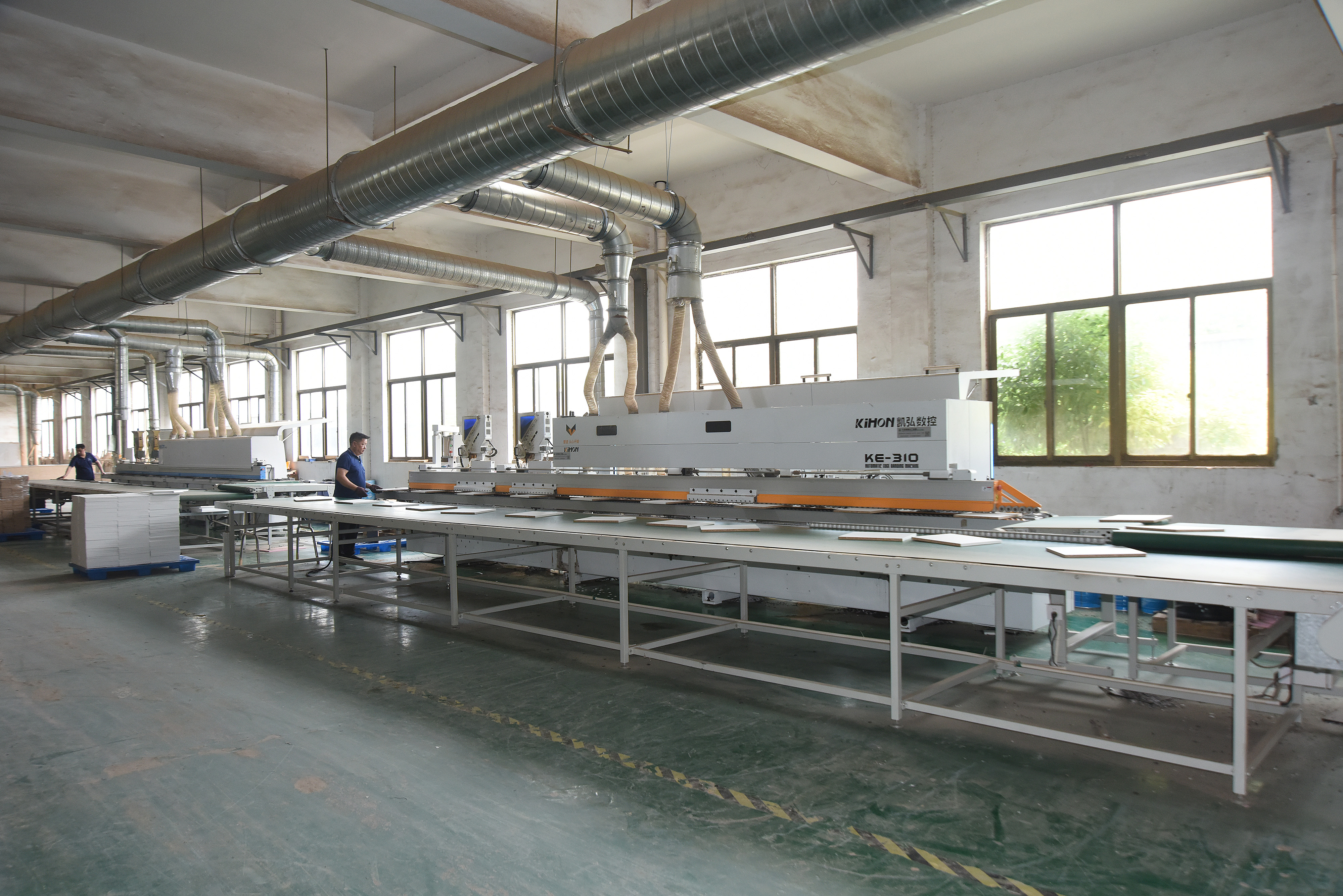
Production environment associated with the HZ range; inspection and testing records should be requested per model at quotation.
The decision path
Read in sequence, the four models answer a simple set of questions. If floor area is the constraint, HZ6001DW at 45 × 25 × 70 cm is the only candidate in this group. If a standard-sized station is needed at the smallest envelope, HZ8801 at 90 × 60 × 90 cm is the entry point — with the styling-chair classification checked against the services actually offered. If lateral working room matters more than height, HZ8796C at 110 × 72 × 100 cm carries the larger second figure. If vertical presence and a heavy-duty classification matter, HZ87102RB at 111 × 66 × 118 cm is the taller chair, subject to load and test documentation.
What no dimension settles is the material question, and that is the point where this comparison should end in a written request rather than a decision. The shared PU leather and high-density sponge layer is consistent across the range; the frame moves from wood and iron in the compact model toward aluminium alloy in the larger chairs. Once the per-model breakdown, the movement set and the mechanism documentation are on paper next to a landed-cost figure, the four chairs stop being a size ladder and become four defensible purchasing decisions.
FAQ
What are the published dimensions of the four HZ barber chairs?
HZ6001DW is published at 45 × 25 × 70 cm, HZ8801 at 90 × 60 × 90 cm, HZ8796C at 110 × 72 × 100 cm and HZ87102RB at 111 × 66 × 118 cm. The order of the three figures — length, width and height — is not stated in the published sets, and it is not stated whether armrests, a footrest or a reclined position are included in the measurement.
Do all four models use the same upholstery materials?
PU leather and high-density sponge are documented on all four models, so the contact surface and padding layer are consistent across the range. Leather grade, leather thickness and foam density are not published at model level, and the structural materials differ: HZ6001DW is documented with wood and iron, while the larger chairs are where aluminium alloy enters the range's construction.
Which model is the most compact for a small barber station?
HZ6001DW is the most compact of the four, at 45 × 25 × 70 cm, and is smaller on every published figure than the other three chairs. It is the appropriate specification where floor area, station count or a secondary chair position is the deciding constraint. For a full barber station with a reclined client, the larger envelopes of HZ8801, HZ8796C or HZ87102RB are the relevant comparison.
How can a buyer verify hydraulic and reclining performance before ordering?
The published record for these four models does not include a pump rating, recline angle or elevation stroke, so verification has to be requested. Ask for the mechanism type, the load rating, any cycle or endurance test record held for that model, and the spare-pump and seal replacement path. As a reference point, industry research reports that commercial-grade hydraulic pumps are typically rated for 350–400 lbs and more than 100,000 cycles; that is a benchmark for comparison, not a specification of these chairs.
What should an acceptance checklist include for a barber chair order?
An acceptance checklist should cover a dimensioned drawing with axis order defined, a per-model material breakdown including leather grade, foam density and alloy designation, the confirmed movement set checked against the declared HS 9402.10 classification, mechanism and load documentation, factory functional and aging test evidence, the protective packaging and carrier specification, the arrival-acceptance procedure, an agreed delivery schedule with an advance-warning threshold, after-sales response terms with a spare-parts list, and a landed-cost sheet covering freight, duty and packaging.
A PDF catalogue of the manufacturer's salon furniture range, including the barber chair models discussed here, is available for download: Ningbo Hongzi product catalogue (PDF).
Have Questions or Need More Details?
Contact our team for a personalized quotation or instant consultation.
Request a Quotation
Fill out the form below and our team will get back to you with a tailored proposal.
WhatsApp Direct Chat
Prefer to chat in real-time? Message us on WhatsApp for instant assistance & quick answers.
- Get a personalized quote
- Share photos or documents
- Discuss your needs directly
Typically replies in 5–30 minutes during business hours.