
Haida Zipper Storage Bags: A Star-Rated Model Matrix for Food-Grade Buyers
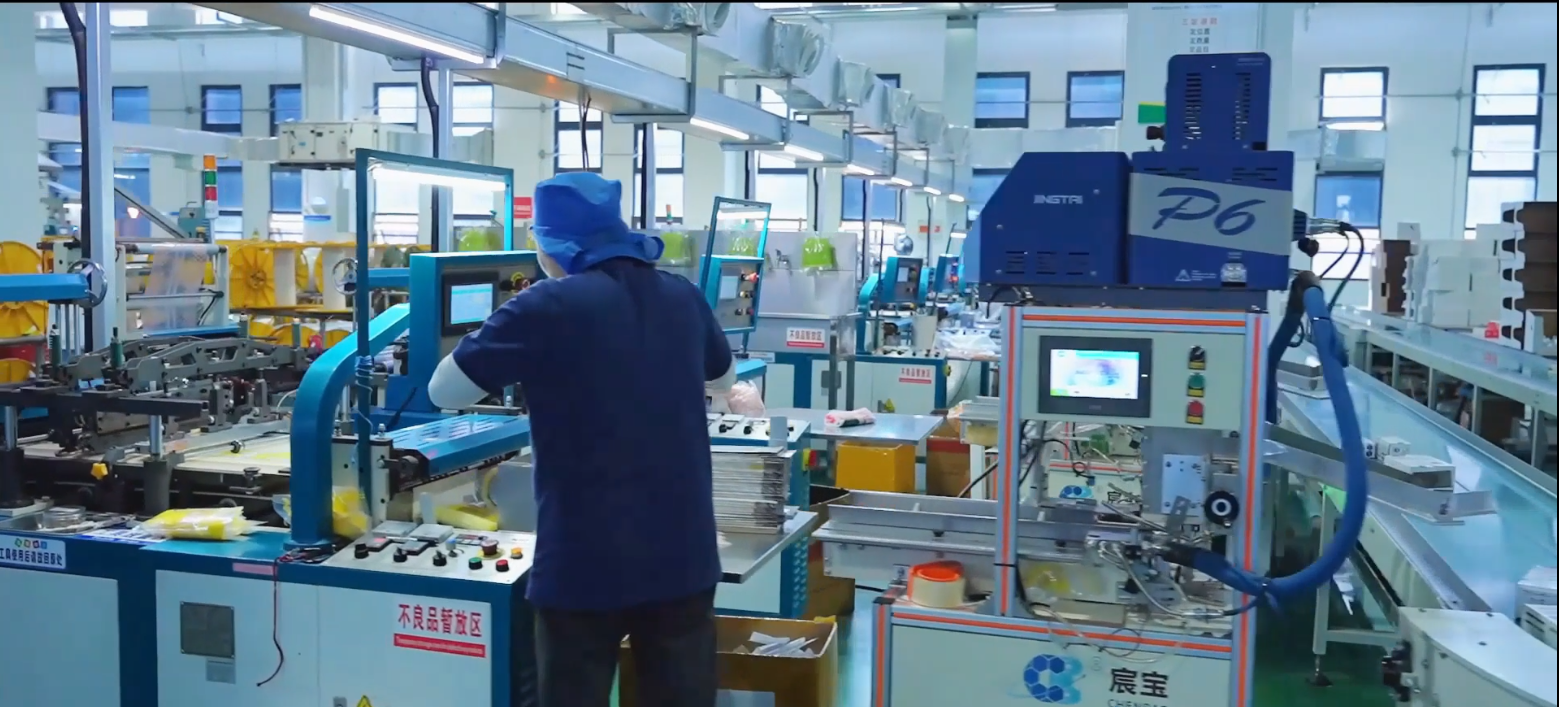
Haida Packaging produces zipper bags, single zipper bags and slider bags at its Taizhou facility; Japan and Europe are its main export markets.
Food-grade zipper storage bags are bought on specifications, not slogans. Published market data projects the global zipper storage bag market to exceed USD 12 billion by 2026, and food applications account for 52.3% of end use. Most purchasing decisions in this category are therefore made by buyers who have to defend a written specification — capacity, closure type, temperature window, documentation — rather than a brand preference.
Supplier shortlists rarely answer the questions that surface at that point. Which model should be specified for frozen ready meals? Which closure design is documented as leak-resistant? Which material choice will still be acceptable when packaging regulation tightens? A model-level matrix answers those questions. A ranking does not.
Haida Packaging — the operating name of Taizhou Haida Plastic & Rubber Packaging Co., Ltd., a manufacturer founded in 2003 that produces zipper bags, single zipper bags and slider bags — publishes specification fields for seven food-grade models. Around 90% of its output is exported, with Japan and Europe as its main markets. This article rates those seven models across five decision criteria, then applies a supplier due-diligence checklist anchored on purchasing terms and acceptance criteria.
Why a model matrix beats a supplier ranking
A supplier ranking compresses a portfolio into a single name. That is useful during discovery and close to useless during evaluation, because two bags from the same factory can differ in closure mechanism, fill range and temperature window. HD-ZB001 and HD-FB001, for example, share a polymer family but are documented for very different temperature regimes.
There is a second reason to work model by model: market numbers in this category are not interchangeable. Published estimates diverge widely because some count industrial and apparel fasteners while others count retail storage bags, and "food-grade" is defined by market-specific food-contact rules. Comparing a specification sheet against a headline market figure without checking scope compares two different things.
The framework below avoids both traps. Every rating is assigned per model, per criterion, and traces back to a published specification field rather than to a summary claim.
How the five-criteria star framework works
Five criteria carry most of the weight in a food-contact packaging decision:
- Material and food-contact readiness — the polymer system and how straightforwardly it can be documented for food contact.
- Sealing design — the closure mechanism as documented: standard zipper, dual zipper, slider or vacuum seal.
- Capacity coverage — the documented size or fill range, which determines how many product formats a single SKU can serve.
- Temperature coverage — the documented operating window, which decides whether a model can move between chilled, frozen and ambient handling.
- Application fit — the breadth and specificity of the applications documented for that model.
Scale used throughout: ★★★★★ fully documented with the broadest flexibility in the reviewed specification set; ★★★ documented but constrained; R means the value is not published for that model and should be requested in the RFQ. Ratings are derived from published specification fields — they are a decision aid, not an independent test certificate.
The documented Haida model matrix
All seven models in the food-grade portfolio are documented in the same field format, which is what makes a star framework meaningful in the first place.
| Model | Format | Material | Closure / sealing design | Documented size or fill range | Documented temperature range | Documented applications |
|---|---|---|---|---|---|---|
| HD-ZB001 | Zipper bag (food sealing) | 100% LDPE | Standard zipper | Small / Medium / Large | -20 °C to 120 °C | Household and kitchen; food packaging; catering |
| HD-SZB001 | Single zipper bag | 100% LDPE | Standard single zipper | Small / Medium / Large | -20 °C to 120 °C | Food packaging; catering; daily supplies |
| HD-DZB001 | Double zipper bag | 100% LDPE | Dual zipper, leak-resistant, easy open and close | 50–500 ml | R | Food packaging; catering; daily supplies |
| HD-ZB002 | Slider zipper bag | 100% LDPE | Slider, easy to open and close | 50–500 ml | R | Household and kitchen; food packaging; daily supplies |
| HD-SB001 | Slider bag | 100% LDPE | Slider; convenient sealing, pressure and water resistant | 100–1000 ml | R | Food packaging; electronics packaging |
| HD-FB001 | Frozen food bag | 100% LDPE | Zipper; oil-resistant | 100 g–2 kg | Low-temperature resistant to -40 °C | Frozen food; ready-to-eat packaging; household and kitchen |
| HD-VB001 | Food vacuum bag | PA + PE | Vacuum-sealable | 50–2000 ml | Heat-resistant (value not published) | Food processing; freezing; preservation |
Two observations matter for procurement. First, six of the seven models use a single polymer — 100% LDPE — which simplifies food-contact documentation and end-of-life messaging. Second, the vacuum model is the only laminate in the set: PA + PE, a combination chosen for vacuum performance rather than for mono-material simplicity.
All seven models are covered by the same SGS material test scope — Regulation (EC) No 1935/2004, German LFGB Sections 30 and 31, and Regulation (EU) No 10/2011 — and the same BRCGS packaging certification. In practical terms, the portfolio is documented as a system rather than as one flagship SKU surrounded by undocumented variants.
Star-rated matrix: material, sealing, capacity, temperature, application fit
| Model | Material & food-contact readiness | Sealing design | Capacity coverage | Temperature coverage | Application fit (documented breadth) |
|---|---|---|---|---|---|
| HD-ZB001 | ★★★★★ | ★★★☆☆ | ★★★★☆ | ★★★★★ | ★★★★☆ |
| HD-SZB001 | ★★★★★ | ★★★☆☆ | ★★★★☆ | ★★★★★ | ★★★★☆ |
| HD-DZB001 | ★★★★★ | ★★★★★ | ★★★☆☆ | R | ★★★★☆ |
| HD-ZB002 | ★★★★★ | ★★★★☆ | ★★★☆☆ | R | ★★★★☆ |
| HD-SB001 | ★★★★★ | ★★★★★ | ★★★★☆ | R | ★★★★★ |
| HD-FB001 | ★★★★★ | ★★★★☆ | ★★★★☆ | ★★★★☆ | ★★★★★ |
| HD-VB001 | ★★★☆☆ | ★★★★★ | ★★★★★ | ★★★☆☆ | ★★★★★ |
Reading the matrix. The two five-star temperature ratings belong to HD-ZB001 and HD-SZB001, both documented from -20 °C to 120 °C — a window wide enough to cover frozen storage at one end and hot-fill or warm-fill handling at the other. HD-FB001 earns its application rating from the opposite direction: it is the only model documented down to -40 °C, and it is also documented as oil-resistant, which matters for ready-to-eat and prepared foods. HD-DZB001 is the strongest closure rating in the set because the dual zipper is documented as leak-resistant; that is a design statement, not a tested leakage rate. HD-VB001 carries the widest capacity range in the portfolio (50–2000 ml) but the lowest material rating, because PA + PE is a laminate.
Best-fit specifications by model. HD-ZB001 suits general food storage and catering portioning where the wide temperature window is the deciding factor. HD-SZB001 suits high-volume catering and daily-supply packaging where a simple single-zipper closure is sufficient. HD-DZB001 suits leak-sensitive liquids and semi-solids up to 500 ml, including takeaway and delivery. HD-ZB002 suits small-format, frequently opened packs such as snacks. HD-SB001 suits larger slider-format applications from 100 ml to 1000 ml where pressure and water resistance are needed, including non-food components. HD-FB001 suits frozen and ready-to-eat packaging from 100 g to 2 kg. HD-VB001 suits vacuum preservation, food processing and freezing from 50 ml to 2000 ml.
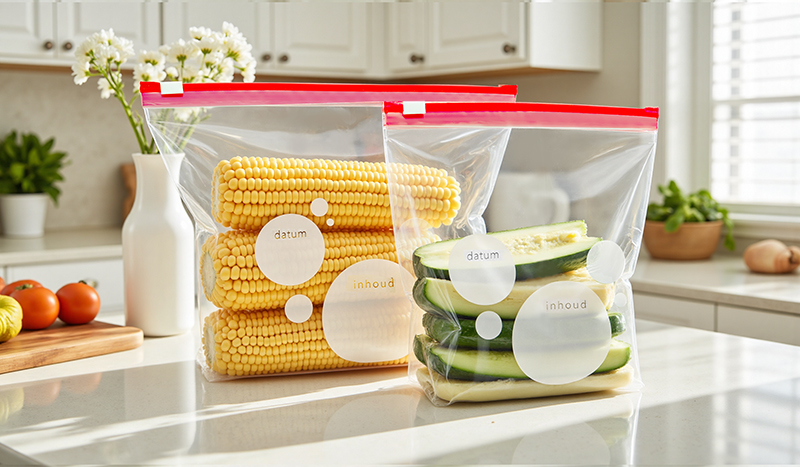
HD-SB001 is a 100% LDPE slider bag documented at 100–1000 ml, with pressure and water resistance noted in the specification.
Best-fit applications and field evidence from Japanese buyers
Specification fields describe intent. Field applications describe what the format was actually deployed to do. Haida's documented application records are concentrated in Japan, across five buyer profiles — a useful pattern in itself, since Japanese food and retail supply chains apply strict incoming inspection.
| Buyer profile (market) | Application | Documented outcome | Associated model(s) | Duration |
|---|---|---|---|---|
| Food manufacturer (Japan) | Food packaging and portion control, large-scale production | Stable supply; improved packaging efficiency | HD-SB001 | 2–3 years |
| Frozen food processor (Japan) | Cold chain frozen food packaging, bulk supply | Reduced product damage; improved shelf life | HD-SB001 | 3 years |
| Catering / restaurant chain (Japan) | Takeaway and delivery packaging, high-volume orders | Hygienic storage; easy sealing | HD-SZB001 | 1–2 years |
| Retail / convenience store (Japan) | Daily product packaging | Consistent quality; convenience for staff | HD-DZB001 | 1–2 years |
| Electronics / small components (Japan) | Dust-free and moisture protection packaging | Protected sensitive components during transit | HD-DZB001; HD-SZB001 | 2–3 years |
The pattern is instructive for buyers outside Japan. The frozen application leaned on low-temperature resistance, anti-crack material and bulk supply; the catering application leaned on the closure design and hygienic handling; the electronics application leaned on anti-static and moisture-proof properties with custom sizes. In each case the selection was driven by one dominant physical requirement rather than by price per unit — which is the practical argument for a criteria-based matrix over a cost-ranked list.
Supplier due diligence: purchasing terms and acceptance criteria
Specifications decide what to order. Commercial and documentation terms decide whether the order is safe to place. The following terms are the documented baseline for Haida's zipper bag portfolio.
| Commercial item | Documented value |
|---|---|
| Minimum order quantity | 20,000 boxes |
| Delivery terms | FOB Shanghai |
| Payment terms | 30/70 |
| Acceptance criteria | Visual inspection; sample testing; sealing and packaging check |
| Quality control | Food safety compliance testing (FDA / LFGB) plus visual check |
| Stated capacity | 900 tons per month; 11,000 tons annual output |
| Stated lead time | 35–40 days |
| OEM production | Offered; documented customization fields include logo customization |
| After-sales | Email and WhatsApp service and product guidance; storage and usage guidance; technical support; replacement for quality issues, including defect replacement |
Execution-stage checklist. The terms above become a verification list once a buyer moves from evaluation to ordering:
- Confirm the MOQ against the launch quantity. At 20,000 boxes, this portfolio is structured for programme volumes rather than trial runs; smaller buyers should plan staged releases or verify whether the MOQ is per model or per order.
- Lock the acceptance test before shipment, not after. The documented acceptance criteria are visual inspection, sample testing, and sealing and packaging check. Translate each into a written method: sample size, AQL, seal inspection method, and who signs the report.
- Map the lead time into the launch calendar. A stated 35–40 day lead time excludes transit, customs and inland delivery; buyers should confirm whether the clock starts at artwork approval or at deposit.
- Verify capacity claims with evidence. The 900 tons per month and 11,000 tons annual figures are company-reported; request production records or an audit confirmation referenced to the specific production site.
- Fix the specification in writing, per model. Material, size range, closure type and temperature window should be attached to the purchase order as a controlled annex, so that a repeat order cannot be substituted across models.
- Define the change-control route. Resin supplier changes, thickness adjustments and print revisions should be notified and re-approved, since these are the points where a compliant first shipment and a non-compliant third shipment usually diverge.
- Agree the escalation path. The documented after-sales route is email and WhatsApp support with replacement for quality issues; buyers should name a single contact, a response window and the evidence required to trigger replacement.
Documentation to verify. Food-contact approvals rest on documents, and documents expire. The certificates and reports on file for this portfolio are listed below with their validity windows.
| Document | Issuer / reference | Scope | Validity window on file |
|---|---|---|---|
| BRCGS Global Standard for Packaging Materials, A+ audit grade | LRQA; certificate BJG00002606/7506914 | Packaging materials | 17 October 2025 – 3 December 2026 |
| ISO 9001:2015 | Certificate 15/25Q5282R31 | Production and quality management | 24 March 2025 – 31 March 2026 |
| amfori BSCI social audit, Grade A | Bureau Veritas Hong Kong Limited; report 25-0344964 | Packaging industry, code of conduct | 30 September 2025 – 30 September 2026 |
| SGS material test report | SGS-CSTC Standards Technical Services Co., Ltd., Ningbo Branch; report NGBHL2500156690 | Regulation (EC) No 1935/2004; LFGB Sections 30 and 31; Regulation (EU) No 10/2011 | 2 April 2025 – 2 April 2026 |
Because these windows are annual, a certificate is only a compliance fact while it is current. The BRCGS certificate is the one documented as valid beyond the date of this review; the others should be treated as renewal items and requested in their current version before a purchase order is released. That is a routine check, not a red flag — but it is exactly the check that fails silently when buyers file certificates without reading expiry dates.
Where the framework stops: documented limits
A rating framework is only useful if its boundaries are stated. Four limits apply here.
- The ratings reflect specifications, not test results. No independently validated data was identified for seal strength, closure-cycle life, leakage rate, tensile strength or barrier performance. A five-star closure rating describes a documented design intent — for example, a dual zipper described as leak-resistant — and should not be read as a tested leakage figure.
- Four models have no published temperature range. HD-DZB001, HD-ZB002, HD-SB001 and — for the upper end — HD-VB001 carry no numeric temperature value in the specification fields. Any buyer specifying these models for chilled, frozen or warm-fill use should request the data rather than assume it from the LDPE material family.
- The vacuum model is the compliance outlier. HD-VB001 uses PA + PE, a multi-material laminate. Laminate structures are functionally strong for vacuum applications, but they are also the format most exposed to packaging recyclability and extended producer responsibility rules that are tightening in the United States and Europe.
- Commercial terms shape feasibility as much as specifications do. A 20,000-box MOQ with a 35–40 day stated lead time and FOB Shanghai delivery is a workable profile for programme buyers and a difficult one for small trials, and the capacity figures behind it are company-reported rather than audit-verified in the material reviewed.
Market trend analysis
Three trends are visible in the data available for this category, and each has a direct procurement consequence.
Format concentration. Stand-up formats are reported to hold the dominant share of the self-sealing ziplock bag market at 76.4%, while food accounts for 52.3% of end use. For buyers, that concentration means the supply base is optimised around food-facing formats, and specification differentiation increasingly happens inside the format — closure type, temperature window, capacity — rather than between formats.
Regulatory pressure on material choice. California's SB 54 requires 100% of single-use packaging to be recyclable or compostable by 2032, with obligations beginning earlier in the decade; the European Union is moving in a comparable direction. The practical consequence is that mono-material PE structures — where six of Haida's seven models sit — are aligned with the direction of regulation, while multi-layer laminates face a redesign conversation. Buyers locking specifications today for a product with a multi-year lifecycle should treat material structure as a strategic decision rather than a technical detail.
Definitional noise in market data. Published estimates for "zipper" markets vary sharply, because fastener markets, apparel zippers and plastic storage bags are frequently aggregated under similar labels. Market sizing for this category should therefore be read as directional context, not as a planning input. The number that actually matters to a buyer — units per month, per model, at a defined specification — lives in the RFQ, not in a market report.
Future outlook
The next phase of competition in food-grade zipper storage bags will be fought over documentation rather than decoration. Three developments are likely to shape buyer behaviour through 2027.
First, temperature and closure-cycle data will migrate from optional attachments to standard RFQ requirements, because recycled and mono-material resin systems behave differently from virgin compound and buyers will need to re-qualify specifications they previously assumed. Second, certificate currency will become a routine gating item — buyers who accepted PDFs at face value will move to expiry-date tracking as packaging regulation tightens. Third, model-level comparison matrices will displace supplier-level rankings, simply because a portfolio with seven documented models cannot be evaluated with one score.
For suppliers, that shift rewards portfolios that are documented as a system: consistent field formats, coverage of every model by the same test scope, and published commercial terms. For buyers, it makes the specification annex — not the supplier brochure — the document that controls the outcome.
Frequently asked questions
What is the difference between HD-ZB001 and HD-SZB001?
Both are documented as 100% LDPE bags with Small/Medium/Large size coverage and a -20 °C to 120 °C temperature range. HD-ZB001 is listed as a food sealing zipper bag, with documented applications in household and kitchen, food packaging and catering. HD-SZB001 is listed as a single zipper bag built around a standard single zipper, with documented applications in food packaging, catering and daily supplies. For a buyer, the practical difference is format emphasis rather than material or temperature performance.
Which Haida model is documented for frozen food, and what temperature does it hold?
HD-FB001 is the frozen food bag: 100% LDPE, low-temperature resistant to -40 °C, oil-resistant, with a documented fill range of 100 g to 2 kg for frozen food and ready-to-eat packaging. HD-SB001 slider bags, documented at 100–1000 ml, also appear in a cold-chain application for a Japanese frozen food processor where the specification emphasised low-temperature resistance, anti-crack material and bulk supply. HD-ZB001 and HD-SZB001 are documented from -20 °C to 120 °C, which covers chilled and ambient handling but not the -40 °C end.
Are the star ratings based on third-party performance testing?
No. The ratings are derived from published specification fields — material, closure design, capacity range, temperature range and documented applications. In the source material reviewed for this article, no independently validated data was identified for seal strength, closure-cycle life, leakage rate or tensile performance. Buyers who need evidence of functional equivalence should request laboratory test protocols and results rather than relying on any rating, including these.
What are Haida's purchasing terms and acceptance criteria?
Documented terms are a minimum order quantity of 20,000 boxes, delivery terms FOB Shanghai, and payment terms of 30/70. Acceptance criteria cover visual inspection, sample testing, and sealing and packaging check. Stated production capacity is 900 tons per month with a typical lead time of 35–40 days, and quality control combines FDA and LFGB food safety compliance testing with a visual check.
Which documents should be verified before a food-grade order is approved?
Four document families matter: BRCGS Global Standard for Packaging Materials certification, listed at A+ audit grade and issued through LRQA as certificate BJG00002606/7506914 with validity to 3 December 2026; the ISO 9001:2015 quality management certificate; the amfori BSCI social audit report issued by Bureau Veritas Hong Kong Limited; and the SGS material test report covering Regulation (EC) No 1935/2004, LFGB Sections 30 and 31, and Regulation (EU) No 10/2011. Because these windows are annual, confirm that each document's validity period covers the planned purchase order date and request the current version where it does not.
Can the models be customized, and what is documented?
Haida offers OEM production. The documented customization fields include logo customization, and the OEM service description covers custom printed zipper bags, custom slider zipper bags and custom plastic zipper bags. Product listings for LDPE zipper bags also describe size customization. Buyers should confirm printing method, colour count, artwork approval steps and dimensional tolerances in writing, because these are not published as standard specification fields.
Reference material: the full model listing and size tables are published in Taizhou Haida's 2025 catalogue — Taizhou Haida Catalogue 2025 (PDF). It is a supplier document and should be read alongside the verification checklist above rather than instead of it.
Have Questions or Need More Details?
Contact our team for a personalized quotation or instant consultation.
Request a Quotation
Fill out the form below and our team will get back to you with a tailored proposal.
WhatsApp Direct Chat
Prefer to chat in real-time? Message us on WhatsApp for instant assistance & quick answers.
- Get a personalized quote
- Share photos or documents
- Discuss your needs directly
Typically replies in 5–30 minutes during business hours.