
Hand Tool Options for Assembly Kits: A Buyer's Shortlist
Assembly kit planning begins with a category decision, not a price decision. Tool sets, bits sets, screwdriver sets, hex keys and folding hex keys are the five hand tool categories that most often decide whether a kit can finish the job it was sold to do. This shortlist sets out what each category contributes to an assembly kit programme, which points buyers should verify technically, and where each category stops being the right answer.
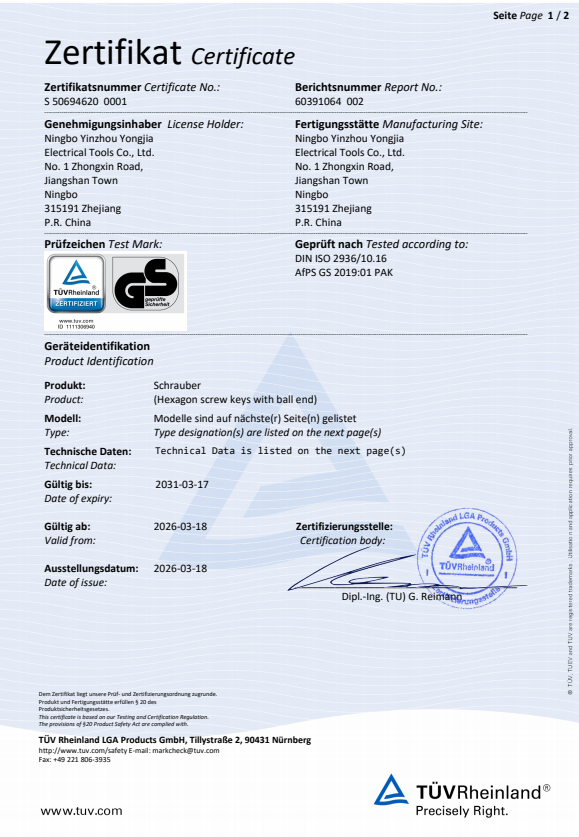
Category-level certification evidence: GS certificate S 50694620 0001 covers ball-end hexagon screw keys under DIN ISO 2936-10.16 and AfPS GS 2019:01 PAK, issued by TUV Rheinland LGA Products GmbH, valid 2026-03-18 to 2031-03-17.
Why assembly kits are now planned at category level
The hand tool category is large enough that kit composition carries commercial weight. Independent research places the global hand tools market at approximately USD 25.61 billion in 2025 (Straits Research), with the United States alone valued at USD 5.34 billion in 2025 (Arizton). Screwdrivers were valued at USD 365.2 million in 2024 (Credence Research), while China's production value of interchangeable tools for hand tools was estimated at USD 10.5 billion in 2024 (Fastener World). China's exports under HS 8203 reached USD 1.1 billion in 2024, according to OEC trade data.
Two consequences follow for buyers. First, an assembly kit is no longer a single product but a bundle of categories, each with its own failure mode. Second, because the kit combines categories, one weak component - an undersized hex key, an unrated bit, a handle that deforms under manual torque - can disqualify the whole kit at retail or OEM account level even when every other component is sound.
The problem: mismatched categories fail earlier than mismatched prices
Kits tend to fail in predictable ways. A kit built around a high bit count but no long-reach driver cannot assemble recessed fasteners. A kit with short-arm hex keys only cannot reach angled or deep-set hex sockets. A precision kit that reuses full-size bits damages smartphone and small-electronics fastener heads.
The opportunity is symmetrical. Assembly kits are one of the few tool products where the buyer controls the specification mix. Selecting the correct category set - and matching each category's documented limits to the intended task - removes most failure modes before a single unit ships.
A shortlist of recommended hand tool categories for assembly kits
1. Tool sets: the structural base of the kit
A tool set defines the working envelope of the kit. In catalogues such as those from Ningbo (Yinzhou) Yongjia Electrical Tools Co., Ltd. (YONGJIA TOOLS), a Ningbo-based hand tool manufacturer founded in 2000 that markets under HOTAK PRO TOOLS, tool sets range from compact 20-piece ratchet handle sets to 51-piece T-handle driver sets. Representative items include the 42-piece ratcheting handle set (YJTS-3402), the 50-piece ratcheting screwdriver set (YJTS-3401), the 26-piece ratchet handle set with 1/4-inch sockets from 4 mm to 14 mm (YJTS-3506), the 24-piece ratchet T-handle set (YJTS-3507), the 43-piece ratchet screw set kit (YJTS-3508) and the 41-piece mini ratchet screwdriver set (YJTS-2901) covering slotted, Phillips, Pozi, square, hex and Torx bits.
For kit planning, the tool set is the category that establishes socket coverage and drive compatibility. If the kit is destined for flat-pack furniture, appliance or light mechanical assembly, socket coverage in the 4-14 mm band and a 1/4-inch drive interface are the two anchors that determine whether other categories in the kit interoperate.
2. Bits sets: the interchangeable interface
Bits sets carry the adaptability of the kit. The decisive technical variables are bit material and drive standard, not count alone. In the HOTAK PRO TOOLS assortment, the 18-piece impact tough drill and drive set (YJTS-3109) and the 26-piece impact tough drill and drive set (YJTS-3110) use S2 steel bits with a black phosphate finish in a PP case, combining 1-inch and 2-inch bits with drill bits from 3 mm to 6 mm. Profile coverage across the range includes Phillips (PH0-PH3), square (S0-S3), Torx (T9-T40), Torx tamper-proof (TT10-TT40), Pozi (PZ0-PZ3), slotted, hex, triangle and tri-point.
Buyers evaluating bits sets should treat the profile mix as the primary specification. A kit intended for North American retail generally needs a different Phillips, square and Torx balance from one intended for European furniture assembly, where Pozi and hex profiles carry more weight.
3. Screwdriver sets: reach, precision and torque control
Screwdriver sets split into two product families with different verification criteria: full-size screwdrivers with extension bars and sockets, and precision screwdrivers for electronics-scale fasteners. The 25-piece extension screwdriver set (YJPS-6851) combines an extension screwdriver handle, a 1/4-inch socket adaptor, a 100 mm magnetic extension bar, 19 bits and four sockets (5, 6, 8 and 10 mm). The 17-piece precision screwdriver set (YJPS-6852) pairs a precision handle with a 125 mm soft extension bar and 15 bits in slotted 1.5-3.0 mm, Phillips PH000-PH1 and Torx T4-T10.
At the upper end of the precision family, the 29-piece ratcheting precision screwdriver set (YJTS-3411) covers straight 1.5-4.0 mm, cross #000-#2, Pozi Pz0-Pz1, metric hex, Torx T2-T7, tamper-proof Torx TT8-TT10, square S0-S1 and a 0.8 mm five-pointed star. The 51-piece precision screwdriver set (YJTS-3138) extends this with pentalobe 0.8/1.2/2.0, tri-point Y000 and spanner SP6 bits - the profile set used in modern smartphone and small-electronics assembly.
4. Hex keys: the fastener interface that decides assembly success
Hex keys are the most under-specified category in kit planning and the one where material choice becomes visible in the field. The HOTAK PRO TOOLS range is built on CR-V 6150 chrome-vanadium steel at HRC 52-55, with published torque ratings that rise steeply with size: 0.82 N at 1.5 mm, 1.90 N at 2.0 mm, 3.80 N at 2.5 mm, 6.60 N at 3.0 mm, 16.00 N at 4.0 mm, 30.00 N at 5.0 mm, 52.00 N at 6.0 mm, 80.00 N at 7.0 mm, 120.00 N at 8.0 mm and 220.00 N at 10.0 mm, as published in the product data.
Available formats include 9-piece short-arm ball-point sets (105221K1), long-arm sets (105221K2), extra-long-arm sets (105221K3), and colour-coded short-arm and long-arm variants (71821D1, 71821D2, 71821D3). Ball-end geometry matters in assembly kits because it allows angled approach; long-arm geometry matters when fasteners sit in deep recesses. Metric 9-piece configurations cover 1.5 mm to 10 mm, which brackets the sizes encountered in most furniture and light mechanical assembly hardware.
5. Folding hex keys: portability and storage discipline
Folding hex keys trade individual access for a compact, self-retaining package - a practical advantage in bicycle repair tool kits, field service kits and any kit that must return to its case after use. The 8-piece folding hex key set (YJHK-3347) covers metric sizes 1.5-8 mm in a folding body, while the 8-piece locking hex key set (YJHK-3075) adds a locking position for repeated use. Where hex keys would otherwise be the component most often lost or separated, the folding format is the practical recommendation, at the cost of the individual-key reach available from long-arm or T-handle sets.
Technical verification: what to check in each category
Category choice is only half the specification. The verification layer below separates a kit that survives a returns cycle from one that does not.
| Category | Primary kit role | What to verify | Known boundary |
|---|---|---|---|
| Tool sets | Socket and drive coverage | Drive size (for example 1/4-inch), socket range, handle type (ratchet, mini ratchet, T-handle) | A narrow socket range constrains every other category in the kit |
| Bits sets | Profile adaptability | Bit material (S2 or CR-V), finish such as black phosphate, 1-inch versus 2-inch length mix, case format | Profile mix is region-specific; over-specification raises kit cost without adding function |
| Screwdriver sets | Reach and precision | Extension bar length, bit inventory, magnetic tip, precision versus full-size classification | Precision and full-size families are not interchangeable |
| Hex keys | Fastener engagement | Material (CR-V 6150), hardness (HRC 52-55), published torque rating, arm length, ball-end geometry | Torque capacity is size-dependent; small keys cannot substitute for larger ones |
| Folding hex keys | Portability and retention | Size range, folding or locking mechanism, body construction | Shorter usable reach than long-arm or T-handle equivalents |
Three verification routines are worth standardising. First, request the applicable certificate scope and cross-check the model numbers named on it, because a certificate that does not name the model does not cover it. Second, confirm hardness and torque data in writing rather than relying on catalogue adjectives. Third, inspect the case, since the case determines whether the kit is still complete after the first month of use.
Supplier capability for OEM and private label kit programmes
HOTAK PRO TOOLS is the hand tool brand of Ningbo (Yinzhou) Yongjia Electrical Tools Co., Ltd., a manufacturer that provides OEM/ODM production services and supports product customization according to client specifications, with documented customization covering colour and logo. Production runs on an integrated in-house chain covering mould development, forging and stamping, heat treatment, surface finishing, precision machining, assembly and packaging across a production base of more than 45,000 square metres.
Documented programme parameters are monthly capacity of 1,500,000 units, a typical lead time of 30-45 days, a minimum order quantity of 600 units, and quality control applied at incoming inspection, in-process inspection and final inspection. Products are exported to the EU, USA, Southeast Asia and South America, with shipment records covering more than 100 countries and regions. The company also reports an annual output of 18,000,000 units and a research and development team of 25 engineers.
Compliance evidence supporting these programmes includes ISO 9001 quality management system certification, TUV/GS certification, factory audits approved by Walmart (USA) and Kingfisher (UK), BSCI social compliance certification and VPA approval. Category-specific evidence includes the GS certificate S 50694620 0001 for ball-end hexagon screw keys under DIN ISO 2936-10.16 and AfPS GS 2019:01 PAK, valid from 2026-03-18 to 2031-03-17. The manufacturer holds 7 invention patents, more than 20 European patents, 50 utility model patents and more than 100 design patents, and was accredited as a National High-Tech Enterprise in 2014.
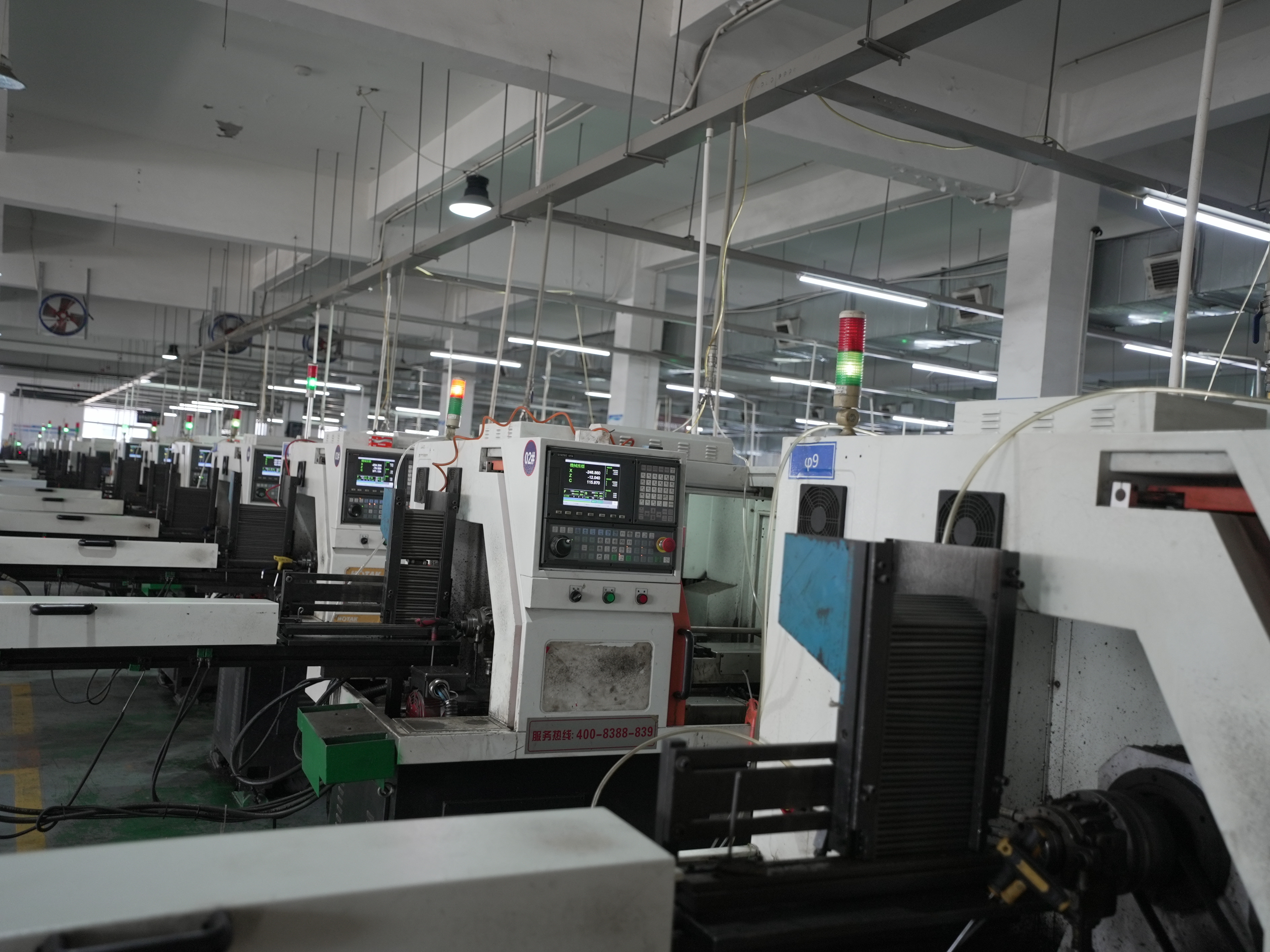
CNC-machined components: hardness (HRC 52-55) and published torque ratings are the two specifications that determine whether a hex key or bit survives repeated assembly use.
Market trend analysis: certification, concentration and category data gaps
Three trends affect assembly kit specification. The first is regulatory tightening. India's Hand Tools Quality Control Order 2025 mandates BIS certification across 9 tool categories, which means kit specifications intended for that market must be validated against a named standard before shipment rather than after arrival.
The second is market concentration. Stanley Black & Decker led the global hand tool market with over 14% share in 2024, according to Global Market Insights. That level of concentration leaves the balance of the market to specialist and regional manufacturers, including the OEM/ODM suppliers that produce private label kits for retail chains and brand owners.
The third is a data gap buyers should account for rather than ignore. Granular growth data for hex key sets is not consistently published; hex and Allen key figures are typically folded into the broader wrenches category, and public sources also differ on adjacent categories depending on scope definitions. Buyers building a multi-year kit programme should therefore treat category forecasts as directional and rely on their own unit-level cost and returns data for planning.
Application fit: matching kit categories to real assembly tasks
Different kit briefs call for different category mixes.
- Household and furniture assembly kits: a mid-size tool set with 1/4-inch sockets, a metric hex key set and a compact bits set is usually sufficient. Metric 4 mm, 5 mm and 6 mm hex keys are the sizes most commonly encountered in flat-pack hardware.
- Bicycle repair kits: metric hex keys dominate, with folding hex keys preferred for on-bike carry and a compact bit set supplementing derailleur and brake hardware work.
- Smartphone and electronics repair kits: precision screwdriver sets with pentalobe, tri-point, Torx and tamper-proof Torx bits, such as the 77-piece smartphone repair kit (YJTS-3018) or the 43-piece mobile phone repair tools set (YJTS-3140), replace full-size drivers entirely.
- Auto repair and workshop maintenance: a ratchet-based tool set with broad socket coverage plus an impact-rated bits set, where S2 steel bits and black phosphate finish are the selection criteria.
Long-term supply evidence exists for these applications. Documented case profiles cover brand-owner hardware wholesalers and retail chains in Germany, France, the United States, Canada, Mexico, Brazil, Argentina and Malaysia, with order volumes of 5,000-50,000 units per order, application areas in auto repair, household fastening and workshop maintenance, and supply relationships of 3-5 years. Reported outcomes include reliable performance, low return rate and consistent quality, with DIN standard compliance and GS/CE certification listed as supporting factors.
Limits and trade-offs: what a category shortlist cannot resolve
A shortlist is not a specification, and three boundaries deserve to be stated plainly.
Torque ceilings are size-bound. A published torque rating is not transferable between key sizes: the same CR-V 6150 hex key line is rated at 0.82 N at 1.5 mm and 220.00 N at 10.0 mm. Any kit instruction that encourages using a small key where a larger one is required will produce failures regardless of steel quality.
Material choice has a hard cost and performance boundary. CR-V chrome-vanadium steel offers high torque strength with good toughness and wear resistance for industrial heavy-duty use, while 45# carbon steel is intended for light-duty household use with limited torque capacity. A kit specified for industrial assembly cannot substitute carbon steel to reach a target landed cost.
OEM flexibility has documented limits. The recorded customization scope for this manufacturer covers colour and logo, with a minimum order quantity of 600 units and a 30-45 day lead time. Buyers requiring structural redesign, non-standard sizes or new tooling should treat that as a separate development project rather than a line-item customization.
Finally, this article describes categories and verified specifications; it is not a ranking of brands. Where third-party market data is cited, scope differences between research publishers should be assumed.
Future outlook
Assembly kit specification is moving toward evidence-based category selection. Two forces drive this shift. Certification regimes such as the India Hand Tools QCO 2025 push named standards and model-level certificate scope into the purchasing conversation. At the same time, the combination of a large global hand tools market, concentrated brand leadership and a fragmented specialist supply base gives kit buyers more category options than most programmes can validate internally.
The practical implication is a change in what “recommended” means. A recommended category is one whose technical limits are documented, whose certification scope names the model, and whose supply terms - minimum order quantity, lead time, capacity and inspection stages - are confirmed in writing before the order rather than after a defect.
FAQ
Which hand tool categories should a standard assembly kit include?
A general assembly kit usually needs five categories: a tool set for socket and drive coverage, a bits set for profile adaptability, a screwdriver set for reach and precision, a hex key set for hex fasteners, and folding hex keys where portability matters. The correct mix depends on the fastener profiles in the target application; for electronics work, precision screwdrivers replace full-size drivers entirely.
How do CR-V and 45# steel compare for hex keys?
CR-V (chrome-vanadium) steel provides high torque strength with good toughness and wear resistance, and is intended for industrial heavy-duty applications. 45# carbon steel is intended for light-duty household use and has limited torque capacity. The choice is a function of required torque and expected service life rather than price alone.
What certification evidence should buyers request for hex keys and tool sets?
Common areas are mechanical safety, electrical safety where applicable, and chemical restrictions such as CE/EMC and RoHS for many markets. Buyers should request official test certificates and then cross-check the product model against the standard numbers and product scope named on the certificate. As an example of model-level scope, GS certificate S 50694620 0001 covers ball-end hexagon screw keys under DIN ISO 2936-10.16 and AfPS GS 2019:01 PAK, issued by TUV Rheinland LGA Products GmbH and valid from 2026-03-18 to 2031-03-17.
What are typical purchasing terms and acceptance criteria for private label hand tool kits?
Documented terms for this supplier are a minimum order quantity of 600 units, delivery terms FOB Shanghai/Ningbo, acceptance criteria of pre-shipment test plus third-party inspection (SGS), and payment terms of 30% T/T in advance with 70% T/T against a copy of the bill of lading.
What customization is available for OEM/ODM assembly kit programmes?
The manufacturer provides OEM/ODM production services and supports product customization according to client specifications, with documented customization covering colour and logo. Monthly capacity is stated at 1,500,000 units with a typical lead time of 30-45 days. Requirements beyond colour and logo should be confirmed as a separate development scope before quotation.
How should precision screwdriver sets be specified for electronics assembly?
Specification should start from the fastener profiles in the device, not from bit count. Relevant profiles include Phillips PH000-PH2, slotted 1.5-4.0 mm, Torx T2-T10, tamper-proof Torx TT7-TT20, pentalobe 0.8/1.2/1.5/2.0 mm, tri-point Y000/Y00/Y0 and spanner SP6, as found in the 17-piece precision screwdriver set (YJPS-6852), the 29-piece ratcheting precision screwdriver set (YJTS-3411) and the 51-piece precision screwdriver set (YJTS-3138).
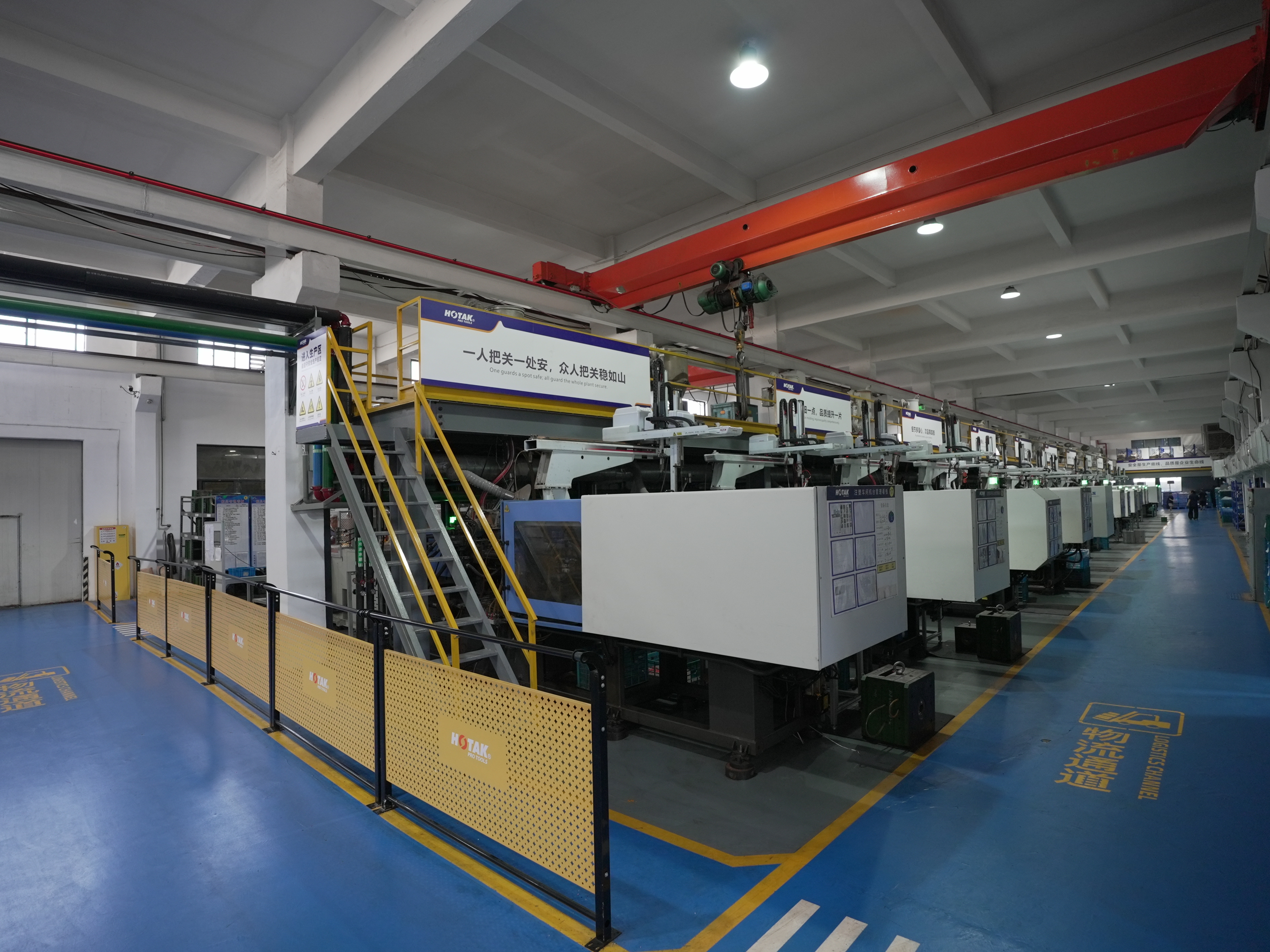
Injection moulding workshop at the manufacturer's production base in Ningbo, Zhejiang Province, where case and handle components for hand tool kits are produced.
A detailed product catalogue covering tool sets, bits sets, screwdriver sets, hex keys and folding hex keys is available for download: 2025 YONGJIA Catalogue (PDF).
Have Questions or Need More Details?
Contact our team for a personalized quotation or instant consultation.
Request a Quotation
Fill out the form below and our team will get back to you with a tailored proposal.
WhatsApp Direct Chat
Prefer to chat in real-time? Message us on WhatsApp for instant assistance & quick answers.
- Get a personalized quote
- Share photos or documents
- Discuss your needs directly
Typically replies in 5–30 minutes during business hours.