
Handheld Garment Steamer OEM: What Certification and Specifications Really Cover
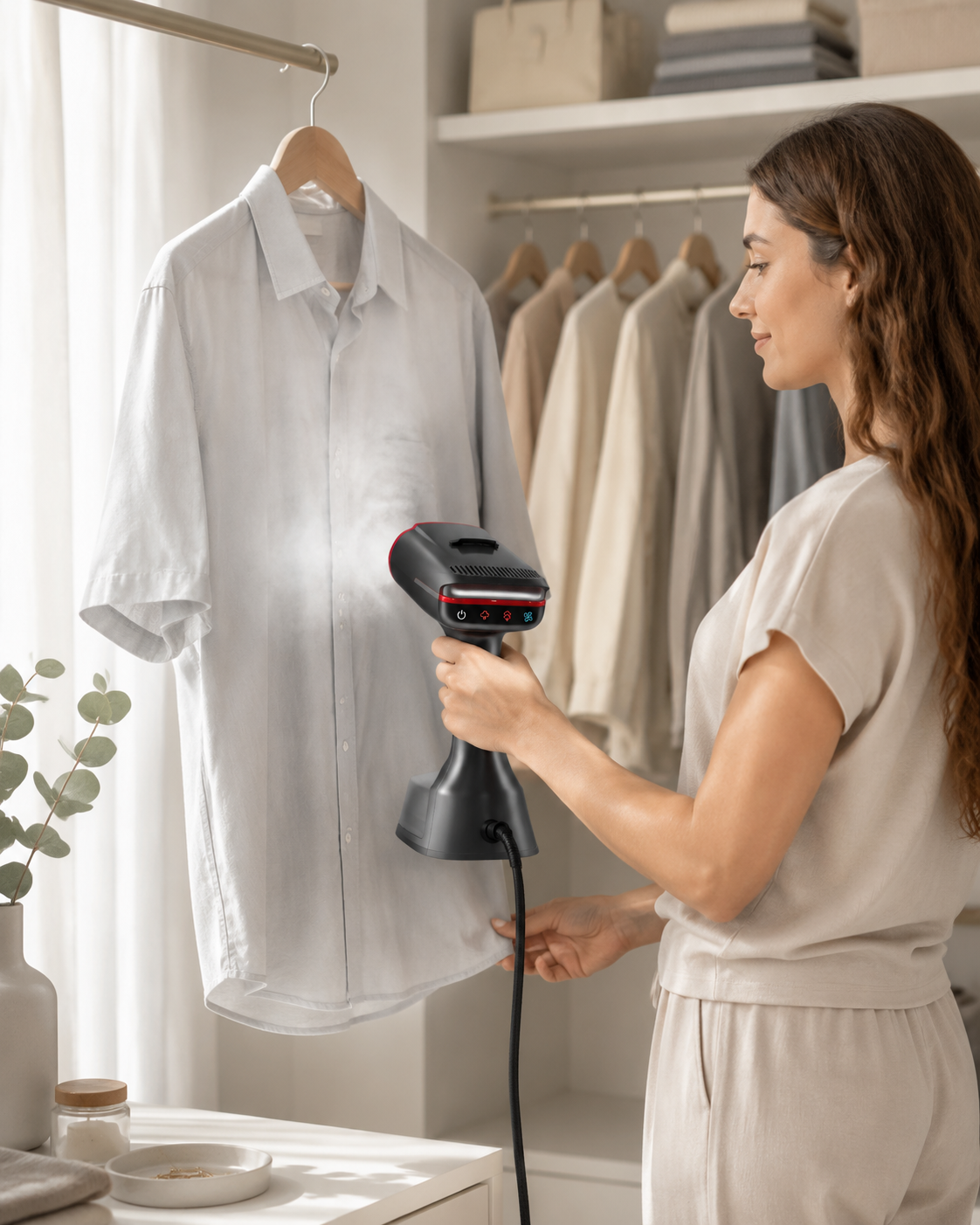
Handheld garment steamer OEM/ODM is often described as a manufacturing service. In procurement practice, it is a documentation and specification-matching exercise. A buyer evaluating a handheld garment steamer for a private label or retail program has to answer three separate questions: which model fits the market, which certificate covers that exact model and voltage, and which commercial terms apply to the order. The answers do not always sit in the same document.
Huaguang Electric Appliance Group Co., Ltd. (HUAGUANG Steam Appliances) is a Cixi, Zhejiang-based OEM/ODM manufacturer founded in 1985. The company reports a 38,600 m² factory, 450 employees, 100+ R&D staff, and annual output of more than 5,000,000 units, with about 80% of products exported to markets including the EU, USA, Japan, Korea, the Middle East, and Africa. Its garment-care range includes handheld garment steamers, standing garment steamers, steam irons, lint removers, steam cleaners, and steam mops, alongside coffee machines.
Problem and Opportunity: The Gap Between a Certificate and a Retail SKU
The opportunity is visible in category data. Grand View Research valued the global garment steamer market at USD 3.0 billion in 2023 and projected the handheld segment to reach a 58.0% share by 2036. Europe accounted for 34.5% of 2023 revenue in the same source. Those figures are directional, not a procurement plan. They explain why more importers, e-commerce sellers, hotel suppliers, and retail chains are looking for handheld garment steamer OEM/ODM partners.
The constraint is that a handheld steamer is a compact appliance with compressed engineering trade-offs. Power, steam rate, tank capacity, runtime, heat-up time, soleplate material, suction, noise, and safety protection interact. A larger tank can add runtime but also weight and storage volume. A higher steam rate can improve wrinkle removal but may reduce operating time or require more power. A vacuum or suction function can hold fabric in place, but it adds airflow and noise considerations. The OEM buyer's task is not to pick the highest number on a sheet. It is to match a specification set to a market, a retail price band, and a compliance route.
Certification adds a second layer. A certificate is normally issued to a defined model, rating, standard, and market. It is not a factory-wide permission to sell every garment steamer the factory makes. This distinction is the main source of delay in handheld garment steamer OEM projects. A buyer may see a factory certificate and assume it covers the new private-label model. In practice, the certificate may cover different model names, a different rating, or a different market.
Brand Solution: Huaguang's OEM/ODM Scope for Handheld Steamers
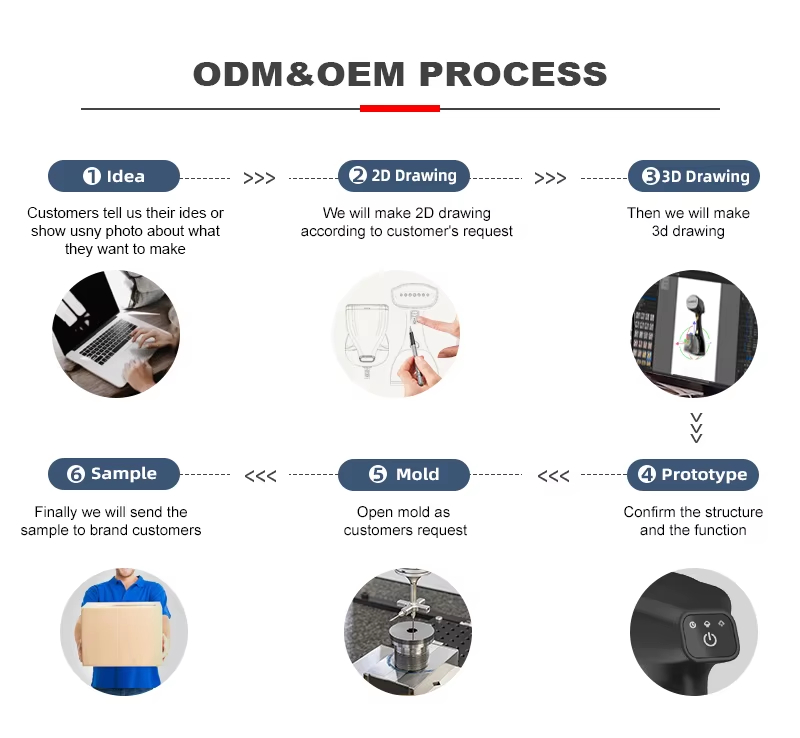
Huaguang's OEM/ODM model is built around made-to-order production rather than stock inventory. The company lists customization for color, voltage, power plug type, packaging design and language, and brand identity (logo). Its stated monthly capacity is 400,000 units, with a standard MOQ of 1,000 units and a lead time of 30–45 days. Quality control is described as 100% pre-shipment testing, third-party inspection, and safety certification across a list that includes ISO 9001, CETL, CB, GS, EMC, FCC, KC, CQC, GCC, CCC, SAA, UKCA, PSE, CE-LVD, RoHS, REACH, ETL, and PAHs, subject to the exact model and market.
After-sales support includes a one-year warranty, online troubleshooting, engineering support for steam appliances, and structured service documentation, user manuals, and maintenance guides. For a buyer in the Research to Evaluation stage, those terms are useful only when read together with the model-specific certificate scope and the product specification. Huaguang's product range gives the buyer several starting points: QH09, E19, T60 PRO MAX, E22, T35, and larger standing models such as GE01PRO and QZ66.
Technical Explanation: What the Handheld Specification Set Actually Controls
Handheld garment steamers share a common architecture: a water tank, a pump or gravity feed, a heating element or boiler, a steam path, a soleplate or steam head, controls, and safety protection. The differences that matter in OEM selection appear in the rated power, steam rate, heat-up time, tank volume, working time, steam levels, panel material, and whether the unit uses suction.
| Model | Type | Power | Steam rate | Heat-up | Tank | Working time | Notable data |
|---|---|---|---|---|---|---|---|
| QH09 | Handheld | 1500 W | 23±3 g/min | 25±5 s | 300 ml | 10–15 min | 2 steam levels; ceramic-coated aluminum panel; foldable handle |
| E19 | Handheld | 2100 W | max 35 g/min | 30±5 s | 230 ml | 10 min | 4 steam levels; cast aluminum panel; self-cleaning; static and water scarcity protection |
| T60 PRO MAX | Handheld vacuum | 1100 W | max 18 g/min | 45 s | 90 ml | 6–9 min | Cast aluminum panel; auto shut-off; removable tank; noise ≤70 dB |
| E22 | Handheld vacuum | 1200 W | 20 g/min | 25±5 s | 280 ml | 15 min | Cast aluminum panel; 54 m³/h airflow; auto shut-off; noise ≤70 dB |
| T35 | Portable small iron | 1300 W | 15±5 g/min | 30 s | 100 ml | Not listed | Dual-voltage travel design; 90° rotatable handle; dry and wet ironing; self-cleaning; stainless filter |
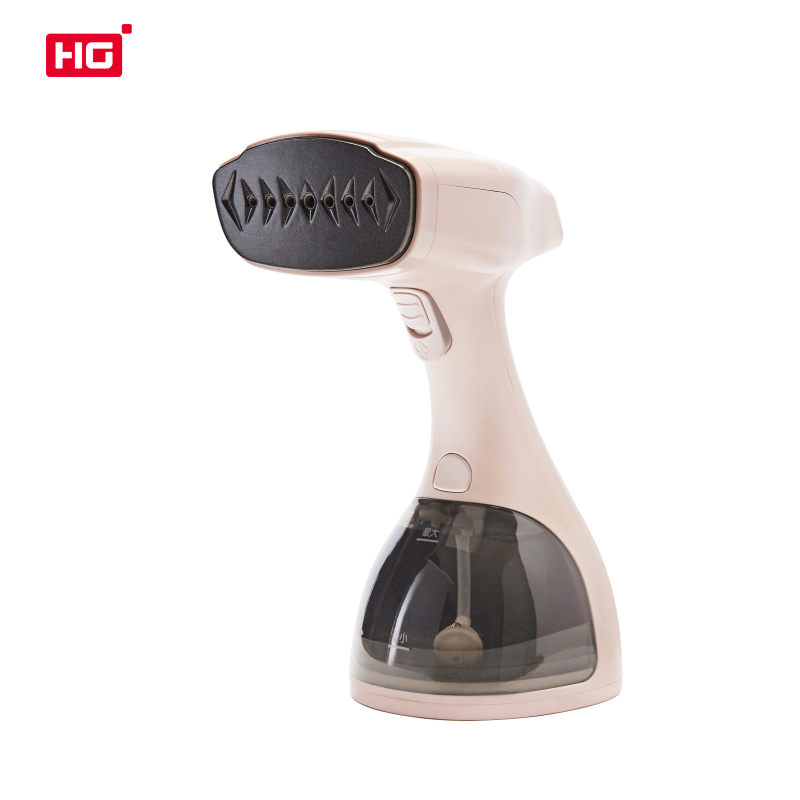
These figures are manufacturer-reported product data. They are useful for building a product brief and a sample test plan. They are not a normalized benchmark because test conditions for steam rate, heat-up, and working time are not disclosed in the product data. A buyer should ask for the test method, the fill volume, the starting water temperature, the ambient condition, and the endpoint definition before comparing suppliers or models.
The trade-offs are practical. QH09 offers a 300 ml tank and 10–15 minutes of working time with 1500 W. E19 raises power to 2100 W and maximum steam output to 35 g/min, but the tank is 230 ml and working time is 10 minutes. T60 PRO MAX is a vacuum handheld at 1100 W with a 90 ml tank and 6–9 minutes of working time. E22 is a vacuum handheld at 1200 W with a 280 ml tank and 15 minutes. T35 is a travel-oriented portable unit with a dual-voltage design, a 100 ml tank, and a 90° rotatable handle. None of these is universally better. The correct choice depends on the retail price band, the use case, the voltage market, and the documentation the buyer can obtain for that exact model.
Certification Mapping: Model-Specific, Market-Specific, and Sometimes Narrower Than Expected
The certification record is the part of an OEM project that most often needs a separate review. The table below summarizes the main documents in the Huaguang material and what they do and do not cover.
| Document | Issuer and number | Market | Models covered | What it supports | What it does not cover |
|---|---|---|---|---|---|
| GS certificate | SGS Fimko Ltd., GS/23/HEL/01592 | EU | E15, E15E, E16 | Electrical safety under EN 60335-1 and EN 60335-2-45; AFPS GS 2019:01 PAK; EK1 527-12 Rev. 2 and EK1 649-19; 220–240 V, 50/60 Hz, 1800 W, Class 1; valid until 2027-12-22 | Not a CE or RoHS certificate; RoHS not listed; performance tests, custom voltage/plug, packaging drop tests, tank leak tests, self-cleaning reliability, and ceramic soleplate durability not listed |
| CB Test Certificate | SGS Belgium NV – Division SGS-CEBEC, BE-43672/M1 | Over 60 countries | T35, E22, T60 PRO MAX, E19 | IEC 60335-2-85:2002 and IEC 60335-1 editions; 800 W, 220–240 V a.c., 50/60 Hz, Class I; issued 2023-09-25 | National adoption and exact model rating still need checking |
| CE LVD Verification | SGS, LVD N8ES2009004802HS01 | EU | E15, E15E, E16 | EN 60335-2-85:2003 plus amendments; EN 60335-1; EN 62233:2008; 220–240 V, 50/60 Hz, 1800 W; issued 2023-09-25 | Model-specific; not a blanket approval for other models |
| UK EMC verification | SGS-CSTC, SHEM2305003191011SC | UK | E15, E15E, E15-1, E15E-1, E16, E16E, E16-1 | EN IEC 55014-1, EN IEC 55014-2, EN IEC 61000-3-2, EN 61000-3-3; issued 2023-06-09 | EMC only; not a safety or performance report |
| EU EMC verification | Intertek, 260100396HAN-V1 | EU | E1Q, EQ10K80, EZ2 | EN/IEC 55014 and 61000-3 series; issued 2026-03-09 | EMC only; not a safety or performance report |
| RoHS test report | Bureau Veritas, (6626)019-0319 | EU | E22 | 2011/65/EU and (EU) 2015/863; issued 2026-03-02 | Restricted substances for that model; not a safety certificate |
| PAHs risk assessment | SGS-CSTC Ningbo, NBES220900480202-M1/PAH | EU | E15, E15E, E16 | AfPS GS 2019:01 PAK; issued 2023-09-25 | Restricted substances; not a performance or safety certificate |
| EU Declaration of Conformity | Huaguang, LVD-260100395HZ-V1 and EMC-260100396HAN-V1 | EU | E15, E15E, E16, E1Q, EQ10K80, EZ2 | Safety and EMC standards; issued 2026-07-17 | Does not include test reports, QC records, batch traceability, packaging drop tests, or performance reports |
| ETL Authorization to Mark | Intertek, 4000776 | US and Canada | Steam mop models MA1-4, MA3-0, MB2-0, MB2-4, M0, MSPRO; brands H3 and TOPPIN | UL 499-2014 Ed.14 and CSA C22.2#64; issued 2022-07-15 | Not a garment steamer certificate in the provided record |
The practical reading is that a certificate should be matched to the SKU, the rated voltage, the plug, and the destination market. A GS certificate for E15, E15E, and E16 does not automatically cover E22, T35, T60 PRO MAX, or E19. A CB certificate covering T35, E22, T60 PRO MAX, and E19 supports multi-country use, but the buyer still has to check national adoption and the exact rating. The RoHS report in the record covers E22. The PAHs report covers E15, E15E, and E16. The EU DoC covers E15, E15E, E16, E1Q, EQ10K80, and EZ2. The ETL record in the file covers steam mop models, not garment steamers, so it should not be used as evidence for a handheld garment steamer without a separate garment-steamer ETL listing.
Application and Use Cases: Where Handheld Steamers Fit
Handheld steamers are used in homes, apartments, garment stores, hotels, showrooms, and textile workspaces. The main functions are wrinkle removal, garment steaming, fabric care, odor removal, and surface sanitization. The operating mode can be handheld, standing, or horizontal and vertical steaming depending on the model. The same product family can serve different channels: e-commerce, supermarket, hotel supply, and private label.
Several Huaguang case records show how buyers have positioned handheld models. E22 was supplied to a US online e-commerce platform in a 35,000-unit program over one year, for everyday garment care at home, in apartments, and while traveling. The model supports flat ironing and vertical steaming, and its detachable 280 ml water tank and suction function are relevant to one-handed use. T60 PRO MAX was supplied to a Saudi offline supermarket and hypermarket chain in a 40,000-unit program over one year, for home-appliance, seasonal-promotion, and travel-accessory sections. The recorded highlights include rapid heat-up, compact storage, leak-resistant design, and easy operation. QH09 was supplied to a Netherlands home appliance e-commerce seller in a 10,000-unit program over three years, with quick preheat, convenient wrinkle removal, and easy storage as the fit. T35 was supplied to a US offline supermarket chain in a 45,000-unit program over two years, for household use, business travel, student accommodation, and everyday garment care.
These cases show channel fit, not universal performance. A model that suits a supermarket promotion may not suit a hotel with continuous daily use. That is why the buyer should define the use case, duty cycle, voltage, and certification route before selecting the model. The application scene data for the category lists homes, garment stores, hotels, showrooms, and textile workspaces, with wrinkle removal, garment steaming, fabric care, odor removal, and surface sanitization as the main functions. The same source notes that indoor use in a well-ventilated area is required, the rated voltage must be used, the tank should not be filled above the MAX line, and perfume or unapproved chemicals should not be added.
Market Trend Analysis: Handheld Growth, Europe, and Power-Band Pressure
Three trends shape handheld garment steamer OEM decisions. First, the category is large enough to support specialist sourcing. Grand View Research valued the global market at USD 3.0 billion in 2023. Second, the handheld format is expected to grow. Grand View Research projects a 58.0% share by 2036, while other estimates differ, so the figure should be treated as directional. Third, Europe remains a major revenue pool, with 34.5% of 2023 revenue in the same source. Regulatory pressure is also visible: the EU Ecodesign Directive 2009/125/EC is cited as pushing garment steamer manufacturers toward 1200 W–1500 W models for energy efficiency. That does not mean every SKU must be in that band, but it does mean power selection is no longer only a performance question. It is also a market-access question.
Brand concentration sits alongside OEM opportunity. Groupe SEB held over 12% share of the garment steamer market in 2025, according to Global Market Insights. That kind of concentration does not remove the need for OEM/ODM suppliers. It raises the bar for documentation, model-specific certification, and private-label differentiation. For a buyer, the implication is straightforward: the supplier conversation should start with the target market and the exact model, not with a generic factory profile.
Comparison with Traditional Solutions: Where the OEM/ODM Model Has Boundaries
An integrated OEM/ODM manufacturer is not automatically the right choice for every buyer. Huaguang's model is made-to-order and does not hold stock inventory. The standard MOQ is 1,000 units, production normally takes 30–35 days after deposit and artwork confirmation, and peak season can extend to around 45 days. A buyer with a small test launch, an immediate replenishment need, or a very short season may find a stock-based distributor or a smaller initial order more flexible. The trade-off is that stock supply usually offers less control over color, voltage, plug, packaging, and logo.
Certification boundaries create a second limitation. The GS certificate in the record covers E15, E15E, and E16. It does not list RoHS in its scope, and it does not list performance tests such as steam-output consistency, heat-up time, tank leak, self-cleaning reliability, or ceramic soleplate durability. The EU DoC does not include test reports, quality-control records, batch traceability, packaging drop tests, or performance reports. The ETL record covers steam mop models, not garment steamers. These are not reasons to reject a supplier. They are reasons to request the exact document for the exact model, voltage, plug, and market before a purchase order.
Customization also has cost and threshold boundaries. The existing FAQ states that custom packaging is supported from 1,000 pcs, colors can be customized to a Pantone code, and injection molding and spray painting are available, with spray painting adding USD 1.20 per unit. Samples are available, with sample cost and freight normally covered by the buyer, sample production around 10–15 days, and support normally limited to a maximum of two units depending on model and order conditions. These terms should be confirmed in the quotation rather than assumed from a catalog.
Future Outlook: More Documentation, More Model-Level Proof
Handheld garment steamer OEM/ODM will likely become more documentation-intensive. As the EU market remains a major revenue pool and ecodesign pressure continues, buyers will ask for model-to-certificate mapping, voltage and plug verification, performance test methods, packaging drop-test evidence, and batch traceability. The suppliers that can provide clear, model-specific documents will be easier to qualify. The suppliers that rely on factory-level claims will face more questions.
Product differentiation is likely to continue around vacuum/suction, foldable handles, removable tanks, self-cleaning, ceramic or cast-aluminum panels, and adjustable steam. Each feature adds a test requirement. A buyer should not treat a feature label as proof of performance. The evaluation should include a sample test, a document review, and a commercial review of MOQ, lead time, tooling, packaging, and after-sales terms. Huaguang's current portfolio covers handheld, vacuum handheld, travel-oriented, and standing formats, which gives buyers a starting point for that evaluation. The final decision should still be based on the exact SKU, the destination market, and the written quotation.
FAQ
Q1. Which certifications should a buyer verify for a handheld garment steamer OEM order?
Start with the destination market and the exact model. For the EU, the record includes CE LVD documentation, GS certification for E15, E15E, and E16, RoHS for E22, PAHs for E15, E15E, and E16, and an EU Declaration of Conformity for E15, E15E, E16, E1Q, EQ10K80, and EZ2. The CB certificate covers T35, E22, T60 PRO MAX, and E19 for over 60 countries. The UK EMC verification covers E15, E15E, E15-1, E15E-1, E16, E16E, and E16-1. The ETL record in the file covers steam mop models, not garment steamers. Buyers should confirm the exact model, voltage, plug, and market before relying on any document.
Q2. Does a GS certificate cover every garment steamer model from the same factory?
No. GS certificate GS/23/HEL/01592 covers fabric steamer types E15, E15E, and E16. It does not list E22, T35, T60 PRO MAX, or E19. The certificate is not a CE or RoHS certificate, and its scope does not list performance tests, custom voltage, custom plug, packaging drop tests, tank leak tests, self-cleaning reliability, or ceramic soleplate durability. A buyer should obtain the certificate for the exact model and rating being purchased.
Q3. What is the MOQ and lead time for handheld garment steamer OEM/ODM?
The listed standard MOQ is 1,000 units. Production normally takes about 30–35 days after deposit and artwork confirmation, and peak season can extend to around 45 days. The stated monthly capacity is 400,000 units. Products are generally made to order rather than held in stock. Samples are available; sample cost and freight are normally covered by the buyer, sample production is around 10–15 days, and support is normally limited to a maximum of two units depending on model and order conditions.
Q4. Which specifications should buyers compare between handheld models?
Compare power, steam rate, heat-up time, tank capacity, working time, steam levels, panel material, suction or vacuum function, noise, and safety protection. Examples from the product data include QH09 at 1500 W, 23±3 g/min, 25±5 s, 300 ml, and 10–15 minutes; E19 at 2100 W, max 35 g/min, 30±5 s, 230 ml, and 10 minutes; T60 PRO MAX at 1100 W, max 18 g/min, 45 s, 90 ml, and 6–9 minutes; E22 at 1200 W, 20 g/min, 25±5 s, 280 ml, 15 minutes, and 54 m³/h airflow; and T35 at 1300 W, 15±5 g/min, 30 s, and 100 ml. These are manufacturer-reported figures and should be validated with a sample test.
Q5. Can a buyer customize voltage, plug, logo, and packaging?
Yes, Huaguang lists customization for color, voltage, power plug type, packaging design and language, and brand identity (logo). Custom packaging is supported from 1,000 pcs, colors can be customized to a Pantone code, and injection molding and spray painting are available, with spray painting adding USD 1.20 per unit according to the existing FAQ. The final customization scope should be confirmed in the quotation. Buyers should also check whether the certification covers the custom voltage and plug configuration, because the GS scope does not list custom voltage or custom plug testing.
Q6. What limitations should buyers expect in certification documents?
Certification documents usually support safety, EMC, or restricted-substance compliance, not every performance claim. The GS certificate does not list RoHS, performance tests, custom voltage, packaging drop tests, tank leak tests, self-cleaning reliability, or ceramic soleplate durability. The EU DoC does not include test reports, quality-control records, batch traceability, packaging drop tests, or performance reports. The ETL record covers steam mop models, not garment steamers. Buyers should request the exact report for the exact model and should not treat a factory-level certificate as a SKU-level approval.
Q7. What after-sales support is available?
Huaguang provides a one-year warranty and online troubleshooting support. The engineering team provides technical support for steam appliances, including system diagnostics, performance troubleshooting, and structural or electronic guidance. Structured service documentation, user manuals, and maintenance guides are available. Buyers should arrange local maintenance capability for their market. The existing FAQ notes that 1% free spare parts can be provided with an order, extra parts can be purchased, and parts compatibility must be confirmed by model.
Have Questions or Need More Details?
Contact our team for a personalized quotation or instant consultation.
Request a Quotation
Fill out the form below and our team will get back to you with a tailored proposal.
WhatsApp Direct Chat
Prefer to chat in real-time? Message us on WhatsApp for instant assistance & quick answers.
- Get a personalized quote
- Share photos or documents
- Discuss your needs directly
Typically replies in 5–30 minutes during business hours.