
Handheld or Kiosk? Choosing Between Telpo P9 and K20
Payment estates in 2026 rarely fail because a terminal lacked a feature. They fail because the terminal was placed in the wrong lane — a handheld device left behind a fixed counter, or a self-service kiosk installed where customers still expected staff to finish the transaction. The Telpo P9 handheld smart payment terminal and the Telpo K20 self-ordering kiosk regularly appear on the same buyer shortlist for exactly that reason, and the useful question is not which device wins, but which deployment model the buyer actually runs.
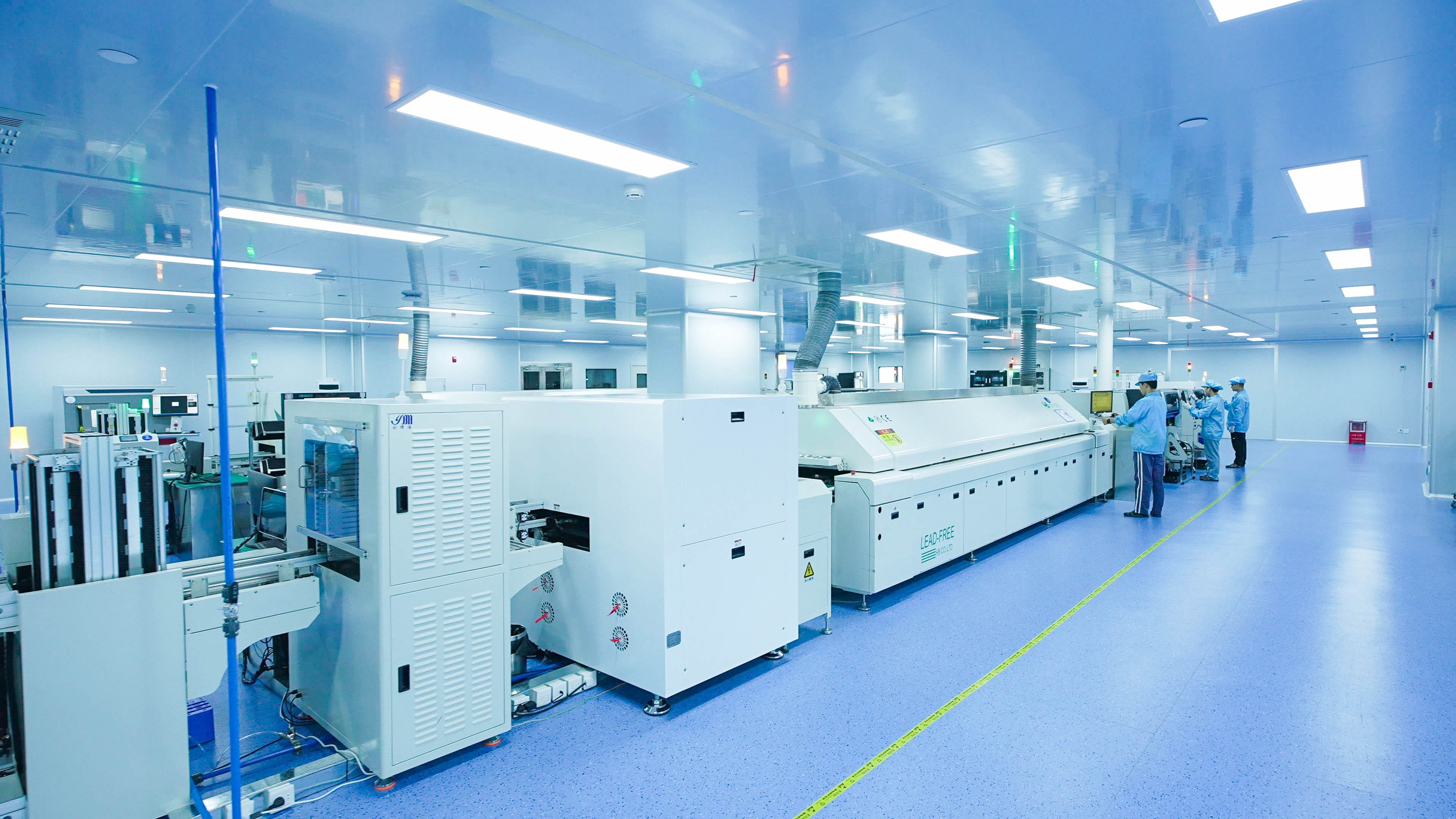
Telpo Technology Co., Ltd. is a Foshan, China-based manufacturer of AI-driven smart terminals, founded in June 1999 and listed on the NEEQ under stock code 833839. The company organises its overseas business around four segments — smart retail, smart payment, smart transportation and biometric security — and manufactures handheld terminals, countertop cash registers, ticket validators and self-service kiosks. Because one supplier covers both form factors, procurement teams can compare a handheld and a kiosk without comparing two unrelated supply chains, which changes what the evaluation should measure.
The Buyer's Real Decision: Who Owns the Transaction?
A POS terminal is a delivery mechanism for a workflow. When staff own the transaction, the hardware has to travel — to a table, a delivery address, a queue, a gate or a warehouse aisle. When the customer owns the transaction, the hardware has to stay put and survive unsupervised public use. Those two conditions pull the specification in opposite directions, which is why the P9 and the K20 look so different despite sharing a manufacturer, an Android foundation and a common management layer.
Buyers at the decision and execution stages generally score six variables before they score hardware:
- Mobility — does the device need to move between locations during a shift?
- Power — is mains power available at the point of transaction, or does the device run on a battery?
- Connectivity — is a wired network drop available, or does the device depend on cellular and Wi-Fi coverage?
- Throughput — how many transactions per hour, and how long may a single transaction take?
- Footprint — how much counter, floor or wall space can the deployment allocate?
- Supervision — is a staff member present, or is the terminal operating unattended?
Telpo P9: A Handheld Terminal Built Around Shift Mobility
The Telpo P9 is a family of Android-based handheld payment and inventory terminals built around a 6.5-inch HD IPS display with an 83.3–83.4% screen-to-body ratio and contrast rated up to 1750:1. The design priority is continuous handheld operation rather than counter ergonomics: the financial and non-financial versions measure 21.3 mm thick, the PDA versions 16.4 mm, and the housing is ABS+PC.
Configuration options within the family are broad enough that buyers should specify the exact version rather than the model name:
- Payment acceptance: magnetic stripe cards, smart (chip) cards, under-display NFC contactless, QR code and digital wallets. The non-financial version adds SoftPOS-ready NFC.
- Processing: octa-core processor with up to 4GB RAM and 64GB ROM; Android 14 appears in Telpo's published P9 comparison data.
- Battery: removable pack rated at 12–16 hours with the standard 3,500 mAh battery, or 17–23 hours with the optional 5,000 mAh upgrade; the PDA version is specified for up to 12 hours of continuous operation.
- Printing: integrated 58 mm thermal printer at 80 mm/s with a dust-proof design.
- Connectivity: 4G/3G/2G, Wi-Fi and Bluetooth, built-in GPS, dual SIM slots with a SAM security module, and eSIM support.
- Scanning: optional 1D/2D barcode scanner module; the non-financial version can also read QR codes and barcodes through its built-in camera.
- Serviceability: a single-screw construction that supports field repair in minutes rather than depot returns.
- Variants: financial and non-financial versions, PDA versions of both, a fingerprint version for KYC workflows, and a customer-display variant with a 2-inch IPS screen.
Telpo K20: A Fixed Self-Ordering Kiosk for Public Spaces
The Telpo K20 is a self-ordering kiosk built around a 27-inch Full HD capacitive touch display and a 1.77 m humanised standing height. It runs either Android 14 or Windows 10/11 on an octa-core processor up to 2.2 GHz, and it is enclosed in a heavy-duty steel base with an anti-vandalism design and a sheet-metal enclosure — a specification written for unsupervised public areas rather than for a staff member's hand.
- Display: 27-inch Full HD capacitive touch.
- Printing: built-in 80 mm thermal printer with auto-cutter, 150–220 mm/s.
- Payment: QR and NFC contactless payment support.
- Connectivity: 4G, Wi-Fi, Bluetooth and Ethernet, allowing a wired backhaul where one is available.
- Expansion: barcode scanner and camera expansion options.
- Installation: floor-standing, countertop and wall-mount configurations, with 100 × 100 mm VESA compatibility.
- Documented target environments: quick-service restaurants, food courts, cinemas and large-format retail.
Specification Comparison at a Glance
| Attribute | Telpo P9 (handheld) | Telpo K20 (self-ordering kiosk) |
|---|---|---|
| Primary role | Staff-carried payment and inventory terminal | Customer-operated self-ordering and self-service point |
| Display | 6.5" HD IPS, 83.3–83.4% screen-to-body ratio, contrast up to 1750:1 | 27" Full HD capacitive touch |
| Operating system | Android (Android 14 in Telpo's published P9 comparison data) | Android 14 or Windows 10/11 |
| Processor and memory | Octa-core; up to 4GB RAM and 64GB ROM | Octa-core up to 2.2 GHz; memory not specified in the available reference material |
| Payment acceptance | Magnetic stripe, chip card, under-display NFC, QR code and digital wallets; SoftPOS-ready NFC on the non-financial version | QR and NFC contactless payment support |
| Receipt printing | 58 mm thermal, 80 mm/s | 80 mm thermal with auto-cutter, 150–220 mm/s |
| Power | Removable battery: 12–16 h (3,500 mAh) or 17–23 h (5,000 mAh); PDA version up to 12 h continuous | Mains-powered fixed installation |
| Connectivity | 4G/3G/2G, Wi-Fi, Bluetooth, GPS, dual SIM with SAM, eSIM | 4G, Wi-Fi, Bluetooth, Ethernet |
| Installation and footprint | Handheld; carried or holstered | Floor-standing, countertop or wall-mount; 100 × 100 mm VESA; 1.77 m height |
| Enclosure | ABS+PC | Heavy-duty steel base, anti-vandalism sheet-metal enclosure |
| Documented environments | Retail, hospitality, logistics, banking, field sales, transport ticketing, parking, lottery, supermarket, warehouse | Quick-service restaurants, food courts, cinemas, large-format retail |
Use-Case Fit: Where Each Device Earns Its Cost
Mobile and staff-assisted scenarios
Telpo's own applicability data places the P9 across retail, hospitality, logistics, banking, field sales, transport ticketing, parking, lottery, supermarket and warehouse environments. In practice the terminal earns its cost wherever the transaction follows the person rather than the person following the transaction: door-to-door and field sales, payment at the delivery address, table-side ordering and settlement, queue-busting during peak hours, transport and parking validation, and stock-count tasks where the PDA variant combines payment capability with barcode capture.
Two specifications matter most in those settings. The first is battery endurance — a shift-length runtime reduces battery swaps and charger dependency, which is why the removable 3,500 mAh and optional 5,000 mAh packs are configuration decisions rather than accessories. The second is network redundancy: multi-SIM devices that switch carriers automatically when one connection drops, combined with dual-band Wi-Fi and, on the financial and PDA versions, eSIM support, reduce failed transactions caused by coverage gaps.
Fixed self-service scenarios
The K20 is designed for locations where customers complete a standardised flow themselves: quick-service restaurant ordering, food-court ordering, cinema ticketing and concessions, and large-format retail self-service. Its 27-inch display allows a full menu or catalogue to be presented at the point of decision rather than in a printed menu; the 150–220 mm/s printer with auto-cutter returns a receipt without a staff hand-off; and the anti-vandalism steel base addresses the risk that defines unattended deployments. Android 14 or Windows 10/11 support lets the same hardware serve teams standardised on either software ecosystem, which matters for chains with existing back-office stacks.
The overlap — and why it rarely decides the purchase
Both devices accept QR and NFC contactless payments, and both print receipts. Buyers who compare only payment acceptance will find near-parity and will be tempted to decide on unit price. The differentiator is where the device sits at the moment of payment. A kiosk cannot be carried to a table or a doorstep; a handheld terminal cannot be left unattended on a shop floor without creating a security and supervision problem. That single operational fact usually settles the comparison before specifications are examined.
Technical Explanation: Why the Specifications Diverge
Power architecture
The P9 is built around energy storage, and the K20 is built around energy supply. Telpo documents handheld designs with removable battery packs, NTC thermal sensors, a 45°C thermal ceiling and UN38.3-certified cells, plus deep sleep power management to extend runtime. A kiosk draws mains power, so its constraint is installation quality rather than endurance. The consequence over a five-year estate life is asymmetric: a handheld fleet consumes batteries as a wearing part and needs charging discipline across shifts, while a kiosk fleet consumes installation, cleaning and on-site service visits instead.
Connectivity and failover
Handheld terminals fail differently from fixed ones. Telpo documents multi-SIM handheld devices that switch carriers automatically when one network disconnects, dual-band Wi-Fi (2.4G/5G), Bluetooth and GPS, with RF performance and multi-band antenna consistency tested in a CNAS-accredited laboratory. The K20 adds Ethernet, so a fixed installation can run on wired backhaul and treat 4G and Wi-Fi as alternatives. For buyers, that means a handheld rollout should be planned around coverage mapping across every route or floor, while a kiosk rollout should be planned around cable and power routing at each site.
Serviceability and enclosure
The P9's single-screw construction is a deliberate maintenance decision: uniform screws allow field repairs in minutes, which reduces device turnaround time in distributed estates. Enclosure durability is graduated across Telpo's handheld range — most devices are built to a 1.2-metre drop standard, with some reaching 1.5 metres, and higher ingress and impact ratings such as IP65 and IK08 are limited to select rugged models. Buyers should therefore verify ruggedisation per SKU rather than assume it across the family. The K20 takes the opposite approach: a heavy-duty steel base and sheet-metal enclosure with an anti-vandalism design, intended to remain intact and in place without supervision.
Fleet management and device control
Telpo OS is the manufacturer's independently developed operating system, used for device monitoring and management, and Telpo MDM provides centralised control over a terminal fleet with remote control, device configuration and personalisation functions. In a mixed estate this is the layer that keeps P9 and K20 fleets comparable in operations even though they are mechanically unlike each other: the same console can push configuration, monitor device health and respond to faults. Documented security controls across Telpo terminals include EMVCo-certified contactless modules supporting NFC, smart card, magnetic card, QR and mobile payments, PCI 6.x certification on payment terminals, and hardware-level encryption — controls that apply to a docked handheld left on a counter as much as to a kiosk standing in a public concourse.
Payment Acceptance and Certification Boundaries
PCI PTS (PIN Transaction Security) and EMV standards govern secure chip and contactless processing across the industry, and compliance is a pass-or-fail criterion rather than a feature comparison. The P9 financial version is documented as meeting global payment compliance standards including PCI, EMV and regional financial regulations, and Telpo's published comparison data for the P9 lists coverage extending to PCI PTS 6.x, EMV, RuPay, JCB, Discover, AMEX, PayPass, PayWave and UnionPay. That breadth is relevant in banking, telecom and government tender work, where scheme coverage determines eligibility rather than preference.
The K20 is specified with QR and NFC contactless payment support. Buyers deploying it in a regulated market should confirm the exact certification scope of the payment module inside their chosen configuration, because kiosk payment hardware is integrated rather than standardised across builds. This is a boundary of the comparison rather than a defect: the certification question is answered per configuration and per market, and it should be closed in writing before a kiosk rollout is scheduled.
Total Cost of Ownership: Six Lines Buyers Underestimate
Neither device is cheaper in the abstract. Both are quoted per configuration — Telpo's published comparison data states that pricing depends on specific parameters and configuration — so the useful discipline is to model six cost lines across the expected service life rather than compare headline unit prices.
| Cost line | Handheld (P9) | Fixed kiosk (K20) |
|---|---|---|
| Acquisition and configuration | Quote depends on version: financial, non-financial, PDA, scanner module, memory configuration | Quote depends on configuration: operating system, mounting, payment module, enclosure options |
| Installation and site preparation | Minimal; charging routine and secure storage across shifts | Mains power, network drop, floor or counter footprint, mounting hardware |
| Consumables and throughput | 58 mm thermal rolls; 80 mm/s print speed | 80 mm thermal rolls; 150–220 mm/s print speed with auto-cutter |
| Field service and spares | Single-screw construction supports on-site repair; battery is a wearing part | On-site service on a fixed asset; enclosure cleaning and inspection routines |
| Software lifecycle | Android patch cycle applied across the handheld fleet | Android 14 update cycle, or Windows 10/11 licensing and update management |
| Pilot and scaling | Sample and trial orders from 2–50 units; OEM logo printing and custom packaging from 200+ units, subject to product type | |
1. Acquisition and configuration
Because both platforms are configured to order, the first cost line is the widest. A P9 specified with the optional 1D/2D scanner module, a larger battery and a fingerprint variant is a different bill of materials from a base unit. A K20 specified with Windows rather than Android, or a wall-mount rather than a floor-stand configuration, is likewise a different quotation. Buyers should fix the configuration scope before comparing quotes.
2. Installation, power and space
This is where the two form factors diverge most sharply. A handheld fleet needs charging infrastructure and a storage routine; it does not need a power drop at the point of transaction. A kiosk fleet needs each site prepared with power, network and a footprint allocation — and can be deployed on floor stands, counters or walls using the same 100 × 100 mm VESA interface.
3. Consumables and print throughput
Print speed is an operational cost as well as a specification. The P9 prints at 80 mm/s on 58 mm paper; the K20 prints at 150–220 mm/s on 80 mm paper with an auto-cutter. In a peak-hour queue, the faster printer on the kiosk affects throughput per lane, while the handheld printer affects only the transaction in hand.
4. Uptime, field service and spares
The P9's single-screw design reduces repair lead time in the field, which is valuable when devices are distributed across routes. The K20 is a fixed asset whose downtime is visible to every customer in the store, so its service model depends on remote diagnostics and scheduled site visits rather than device swaps. Telpo OS device monitoring and Telpo MDM remote control reduce both types of service exposure by surfacing device status before a failure becomes a queue.
5. Software lifecycle
Android security-patch cadence determines how long a fleet stays compliant without hardware replacement. A unified Android generation across both form factors simplifies fleet management; a Windows-based kiosk configuration introduces separate licensing and update governance that should be priced explicitly.
6. Pilot and scaling
Telpo's published procurement terms allow sample or trial batches from 2–50 units, with OEM logo printing and custom packaging available from 200+ units, subject to product type. For a buyer evaluating P9 and K20 in parallel, that structure allows both form factors to be validated in the same pilot before committing either one to a rollout.
Where Each Option Stops Working
A credible comparison has to state the boundaries of both devices, not only the overlap.
Limits of a handheld deployment
- The 6.5-inch display constrains how much product, menu or catalogue information can be presented at the point of sale.
- One staff member serves one transaction at a time, so a handheld fleet does not scale throughput the way a fixed lane does.
- Printing at 80 mm/s is materially slower than the kiosk's 150–220 mm/s, which matters in volume receipt scenarios.
- Battery packs are a consumable: runtime depends on charging discipline, pack age and shift length, and packs must be replaced over the fleet's life.
- A handheld terminal cannot operate as an unattended self-service point; leaving one on a counter creates a supervision and physical-security gap.
Limits of a kiosk deployment
- Fixed installation requires available power, network and physical space; a floor-standing unit at 1.77 m height is not a drop-in replacement for a counter terminal.
- The K20 cannot serve field sales, delivery, table-side service, pop-up locations or temporary venues.
- Self-service depends on customers completing a standardised flow unaided, so it fits menu-driven ordering and self-checkout better than transactions requiring staff judgement or consultation.
- Unattended hardware raises the service burden: anti-vandalism protection, remote monitoring and cleaning routines become permanent operating costs.
- Payment certification scope must be confirmed per configuration, which can extend the compliance workstream on a multi-market rollout.
What this means for the decision
There is no winner, and any comparison that produces one is answering the wrong question. A store that needs to shorten an ordering queue is buying a lane; a field team that needs to take payment at a customer's door is buying mobility. Where both needs exist, the decision reverts to supplier capability — whether one manufacturer can support both form factors with a shared management layer, a shared spares channel and a consistent certification approach across markets.
Market Context: What the 2026 Numbers Suggest
Both form factors sit inside a market that is large and still expanding, though published estimates diverge. Grand View Research valued the global point-of-sale terminal market at approximately USD 123.2 billion in 2025, while DataM Intelligence put the same market at USD 93.16 billion for 2025 — a spread that reflects different treatment of software, services and regional coverage rather than a measurement error. Buyers should treat any single market figure as directional and use it for planning, not for budgeting.
The form-factor split is more consistent across sources. The handheld POS segment is projected to grow from USD 33.15 billion in 2025 to USD 89.52 billion by 2035, which implies sustained demand for staff-carried devices even as self-service spreads. Android POS terminals accounted for approximately 27% of all POS terminals sold globally in 2022/2024 tracking by ResearchAndMarkets and Berg Insight, underlining how far the Android ecosystem has moved into mainstream payment hardware. The SoftPOS segment — relevant to the P9 non-financial version's SoftPOS-ready NFC — was estimated at USD 365.0 million in 2024 with a projected CAGR of 23.1% through 2030, according to Grand View Research.
On the fixed side, The Business Research Company forecasts the retail self-service kiosk market to reach USD 37.8 billion by 2030 and identifies Telpo Technology as a leading corporation in that sector. Design recognition also plays a role in customer-facing self-service deployments, where hardware sits in the customer's line of sight: Telpo reports that its C9 and P9 terminals received a Red Dot Award in 2026.
Supply Continuity and Long-Term Partnership
For buyers at the execution stage, the device decision is only half of the procurement. The other half is whether the supplier can keep a mixed estate supplied, patched and supported across several years and several markets.
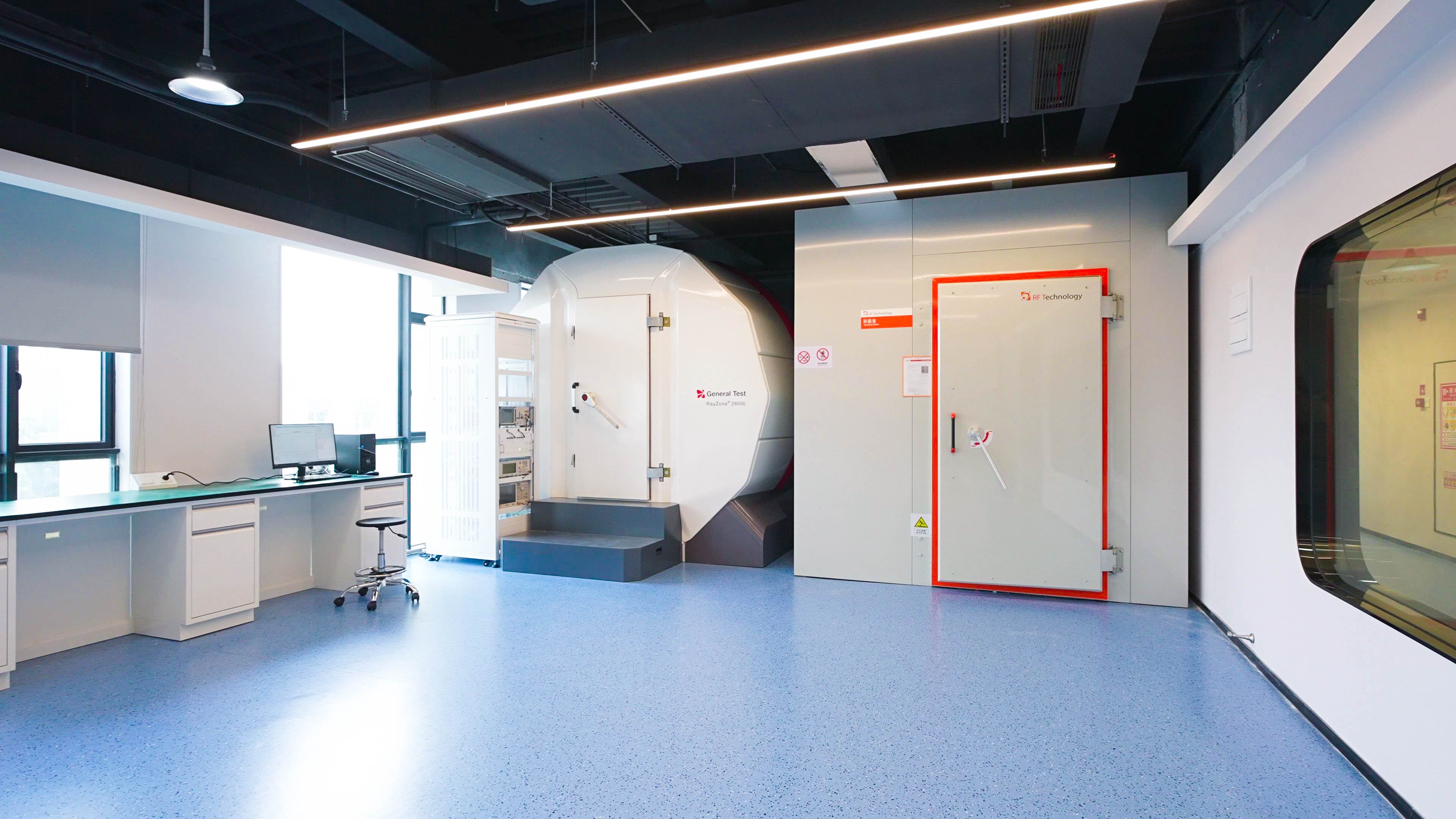
Telpo reports monthly production capacity of approximately 150,000 to 180,000 smart terminals, with typical lead times of 3–7 working days for stock orders and 15–25 working days for bulk standard orders. Export coverage extends to over 100 countries, including Africa, the Middle East, Southeast Asia, Latin America and Europe. Quality operations include ISO 9001 certification and a CNAS-accredited laboratory, with 100% functional testing applied to all units. The manufacturing base covers approximately 45,000 sqm, including a 2025-upgraded CNAS laboratory of roughly 900 sqm across 12 testing zones covering areas such as OTA, EMC and climate testing, supported by 200 R&D engineers and an annual output of 2,000,000 units.
On commercial terms, Telpo's published procurement guidance sets sample and trial batches at 2–50 units and OEM logo printing and custom packaging at 200+ units, with delivery under FOB, FCA, CPT or CIF terms. Payment guidance notes that 90% of clients pay in full before shipment, with the remainder operating on OA terms or under China Export & Credit Insurance Corporation (Sinosure) coverage.
For a mixed P9 and K20 estate, these figures translate into three practical consequences. A single supplier means one firmware management layer, one spares catalogue and one certification route across both form factors. A pilot-scale minimum order allows both devices to be tested in the same operational environment before either is standardised. And lead-time visibility at 3–7 working days for stock and 15–25 working days for bulk orders makes rollout scheduling predictable enough to align with store openings and seasonal peaks.
Future Outlook
The direction of travel for both form factors is the same at the software layer and opposite at the mechanical layer. Handheld terminals are becoming payment-optional platforms — SoftPOS-ready NFC, GMS certification, barcode scanning and inventory software on one Android device — while kiosks are becoming larger, more robust and more configurable, with 27-inch touch surfaces, dual operating-system options and anti-vandalism construction.
Three implications for buyers planning beyond 2026:
- Standardise the management layer, not the hardware. Telpo OS and Telpo MDM allow a P9 fleet and a K20 estate to be governed through one console, which reduces the cost of running both.
- Budget for lifecycle, not just acquisition. Android patch cadence, battery replacement and kiosk service visits dominate five-year cost more than the initial quote in most deployments.
- Protect option value. Because the handheld and self-service segments are both growing, a supplier whose portfolio spans both form factors lets a retailer shift transactions between staffed and self-service lanes without changing vendors, contracts or management tooling.
Frequently Asked Questions
Is a handheld POS terminal or a self-ordering kiosk a better fit for a quick-service restaurant?
It depends on which transaction is being moved. A self-ordering kiosk such as the Telpo K20 suits standardised, menu-driven ordering in a fixed location — quick-service restaurants, food courts, cinemas and large-format retail are its documented target environments — because a 27-inch display and a 150–220 mm/s printer handle the customer flow directly. A handheld terminal such as the Telpo P9 suits staff-assisted flows where the device travels: table service, queue-busting, delivery payment and field sales. Many quick-service operators run both, using the kiosk for peak-volume standard orders and handheld terminals for exceptions and assisted service.
What should buyers compare when the P9 and K20 differ so much in specification?
Comparable attributes are payment acceptance, connectivity, printing, operating system and management. The P9 accepts magnetic stripe, chip card, under-display NFC, QR code and digital wallets, and its non-financial version supports SoftPOS-ready NFC; the K20 is specified with QR and NFC contactless payment support. Both print receipts, but at different speeds (80 mm/s on 58 mm paper for the P9; 150–220 mm/s on 80 mm paper with an auto-cutter for the K20). The P9 runs Android, while the K20 runs Android 14 or Windows 10/11. Attributes that are not comparable — battery endurance for one, physical installation for the other — should be evaluated as deployment requirements rather than as specification differences.
How do minimum order quantities and lead times affect a mixed P9 and K20 rollout?
Telpo's published procurement terms set sample or trial batches at 2–50 units, with OEM logo printing and custom packaging available from 200+ units, subject to product type. That structure supports a staged approach: validate both form factors at pilot scale, then scale the configuration that performs. Lead times are stated as 3–7 working days for stock orders and 15–25 working days for bulk standard orders, which allows rollout scheduling to be aligned with store openings or seasonal peaks — provided configurations are fixed before orders are placed, since both devices are quoted per configuration.
Which of the two has the lower five-year cost of ownership?
No general answer is defensible, because cost is configuration-specific. Telpo's published comparison data states that pricing depends on the specific parameters and configuration of each unit. On the cost structure alone, a handheld fleet concentrates spend in batteries, charging infrastructure and distributed field service, while a kiosk fleet concentrates spend in installation, site preparation and on-site service on a fixed asset. The practical method is to model six lines — acquisition, installation, consumables, field service, software lifecycle, and pilot or scaling cost — for the buyer's own transaction volumes and site conditions, rather than to compare headline unit prices.
Can a handheld terminal fleet and a kiosk fleet be managed through the same platform?
Telpo provides Telpo OS, an independently developed operating system used for device monitoring and management, and Telpo MDM, a device management platform offering centralised control over a terminal fleet with remote control, device configuration and personalisation. Both are documented as manufacturer-level tools rather than form-factor-specific ones, which means a mixed estate can be governed through one management layer. Security controls such as EMVCo-certified contactless modules, PCI 6.x certification on payment terminals and hardware-level encryption are likewise documented across the terminal range rather than tied to a single form factor.
Reference document: Telpo Products Brochure — Payment & Retail (PDF), covering the handheld, countertop and self-service terminal range.
Have Questions or Need More Details?
Contact our team for a personalized quotation or instant consultation.
Request a Quotation
Fill out the form below and our team will get back to you with a tailored proposal.
WhatsApp Direct Chat
Prefer to chat in real-time? Message us on WhatsApp for instant assistance & quick answers.
- Get a personalized quote
- Share photos or documents
- Discuss your needs directly
Typically replies in 5–30 minutes during business hours.