
Haomen Sliding Doors & Windows for Coastal, Plateau and Rainy Climates
Sliding doors and windows are normally specified on aperture size, sightlines, hardware and finish. In coastal, plateau and rainy regions that logic is incomplete. A sliding system that behaves predictably in a temperate inland city can face chloride-laden air, wind-driven rain at high pressure, or a day-to-night temperature swing that works seals and hardware far harder. This reference looks at how Haomen sliding door and window profiles are specified for those three climate families, what the published performance figures mean at project level, and where the boundaries of those figures sit.
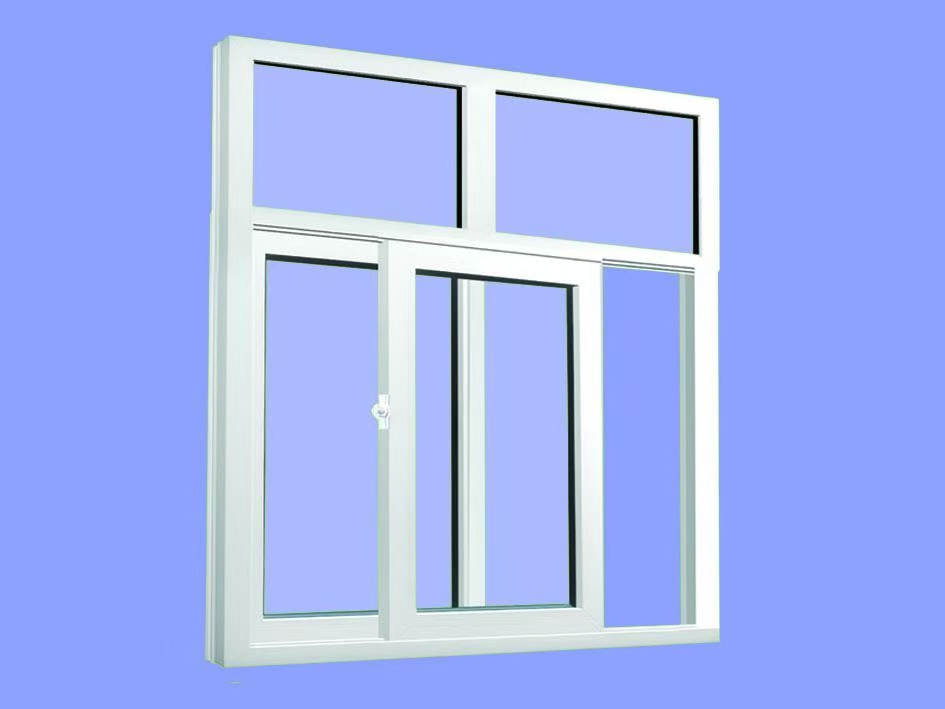
Why Climate Zone Matters More Than Aperture Size in Sliding Systems
Sliding systems seal differently from casement or tilt-and-turn systems. The sash travels inside a track rather than compressing against a fixed frame, so weather performance depends on three elements working together: the interlock between panels, the drainage path in the lower rail, and the resilience of the weatherstrip seals across thousands of operating cycles.
In demanding climates those three elements are stressed at the same time. Coastal air carries chlorides that attack the protective oxide layer on aluminium. Plateau environments combine intense ultraviolet radiation with large day-night temperature differences. Rainy regions deliver long-duration rainfall that keeps tracks wet and tests every drainage detail. A profile that is adequate in one condition may be marginal in another, which is why project teams increasingly ask suppliers for climate-specific evidence rather than a generic product sheet.
Three Climate Families, Three Different Failure Modes
Coastal exposure
Salt-laden air is a chemical problem before it becomes a mechanical one. Aluminium naturally forms an oxide layer that limits further attack, but chloride ions disrupt that layer and can accelerate pitting where the surface is unprotected. Wind-driven rain compounds the effect by pushing water past seals and into tracks, where it may sit against the profile. Coastal procurement therefore concentrates on two things: the corrosion protection of the surface treatment, and the water management of the assembled system under wind load.
Plateau exposure
At altitude, the two dominant stressors are ultraviolet intensity and thermal cycling. UV radiation degrades organic coatings and elastomeric seals over time. Large day-night temperature differentials cause repeated expansion and contraction of the frame, which gradually reduces seal compression and increases the load on rollers and hardware. Wind speeds are frequently high, so wind pressure resistance becomes a structural question rather than a comfort question.
Rainy exposure
In high-rainfall regions the challenge is duration rather than intensity. Water reaches the lower rail repeatedly, and any weakness in the drainage path shows up as ponding, mineral staining or water tracking inward. Air tightness and water tightness are closely linked here: a system that leaks air around the interlock will usually leak water in the same place.
The Haomen Sliding Door and Window Range
Shandong Haomen Aluminium Industry Co., Ltd. is an aluminium profile manufacturer based in Luozhuang District, Linyi City, Shandong Province, China, founded in 2004. The company operates a 270,000 m² production site with approximately 1,500 employees and an annual output of 100 thousand tons, and it describes its business as the research, development, design, production and sale of aluminium alloy architectural profiles and industrial materials. In 2019 a Shandong Provincial Technology Research Center was established at the company, which holds IATF 16949:2016, ISO 9001, ISO 14001 and ISO 45001 system certifications.
Within the architectural range, two product families are relevant here. The sliding window series HM-U001/HM-U002 and the sliding door series HM-U003/HM-U004 are both produced in 6063-T5 aluminium alloy. The sliding window series is documented as fully compliant with four national standards, GB/T 13326, GB/T 7106, JG/T 215 and GB/T 8484, which together cover general specifications, air and water tightness, wind resistance and thermal performance. Haomen states that this series has been tested on the three performance axes of air tightness, water tightness and wind resistance, and that its thermal performance is certified under GB/T 8484-2020.
The broader architectural profile range, identified as HM-U001, HM-S002 and HM-S003, is available in 6063-T5, 6061, 6005 and 6082 alloys, with mill finish, powder coated, anodized and wood grain transfer surface treatments and standard lengths of 4 to 6 metres.
Reading the Published Performance Ratings in a Climate Context
The sliding door series HM-U003/HM-U004 carries a published performance set. Read on its own, a figure such as air tightness at Level 6 or above says little. Read against a climate brief, each value answers a specific question a specifier has to resolve before approval.
| Parameter | Published value | What it addresses in a demanding climate |
|---|---|---|
| Air tightness | Level 6 or above | Limits uncontrolled air movement through the interlock; supports thermal performance and reduces draught issues on exposed elevations. |
| Water tightness | Level 4 or above (500 Pa or above) | Defines the pressure the assembly resists before water penetrates; central to driving-rain and coastal exposure. |
| Wind pressure resistance | Level 6 or above | Confirms the frame and panels resist deflection under design wind load, relevant to plateau sites and cyclone-exposed coastlines. |
| Thermal insulation | K value 2.5 W/m²·K or lower | Sets heat-transfer performance of the tested system and feeds into building energy calculations and green certification. |
| Sound insulation | 30 dB or above | Relevant to urban coastal corridors, transport-adjacent sites and compact residential layouts. |
| Opening and closing force | 50 N or lower | Governs usability and hardware load, particularly where large sashes are operated daily. |
| Repetitive opening and closing | 20,000 times or more | Indicates tested durability of rollers, tracks and seals across service life. |
| Planar deformation | ± 6 mm | Sets allowable deviation of the frame from plane, which influences seal contact and track alignment. |
Two of these deserve emphasis. The water tightness figure is expressed as a pressure, at least 500 Pa, rather than a qualitative description, which means it can be compared directly against the wind-driven rain pressure calculated for a specific facade. The thermal insulation figure of K ≤ 2.5 W/m²·K is a system-level value: it reflects the profile, the thermal break, the glass and the assembly together, not the aluminium extrusion alone.
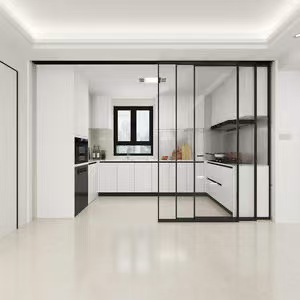
Design Envelope: Dimensions That Must Be Coordinated Before Order
Performance ratings only hold inside the dimensional envelope in which they were established. For the HM-U003/HM-U004 sliding door series, Haomen publishes the following working ranges:
- Sash height: 600–1,800 mm
- Sash width: 400–1,500 mm
- Sash thickness: 28–45 mm
- Opening width: 2 x sash width or greater
- Upper rail installation height: 650–1,850 mm
- Lower rail groove depth: 8–12 mm
- Window sash gap: 2–4 mm
- Glass thickness: 4–12 mm
These are not arbitrary figures. Sash width and height determine the panel's exposure to wind load and its mass on the rollers. Sash thickness and glass thickness determine the dead load the track must carry. The lower rail groove depth determines how much water the track can hold and drain before water reaches the inner seal. A specifier who pushes a sash beyond the published envelope, for example a very wide panoramic slider in a cyclone-exposed location, leaves the tested performance behind. The correct action in that situation is to discuss a different configuration with the manufacturer rather than assume the rating still applies.
Surface Treatment: Match the Finish to the Corrosion Class
Haomen offers mill finish, powder coated, anodized and wood grain transfer finishes across its architectural profile range. For coastal and high-humidity projects, the distinction between these options matters more than aesthetics. Mill finish is a bare extrusion surface and is not a corrosion-protection system; it is normally specified where the profile will receive further fabrication or where the environment is benign. Anodizing and powder coating are the finishes generally used where the profile must resist the atmosphere, while wood grain transfer is primarily a decorative treatment applied over a protective base.
Buyers working to coastal specifications should confirm the coating classification and thickness the project's corrosion category requires rather than accepting a generic powder coated description, because a coating system is defined by its measured performance, not by its name.
Application Scenarios: How the Range Maps to Each Climate Family
Coastal residential and resort projects
In coastal schemes the specification priority is a protected surface combined with reliable drainage under wind-driven rain. A sliding system with documented water tightness of at least 500 Pa and wind pressure resistance of at least Level 6 gives a design team a defensible starting point, particularly for mid-rise apartment blocks where large sliding openings face the sea. Anodized or powder coated finishes are the sensible base, and the lower rail groove must be deep enough to manage the water that reaches it.
Plateau and high-altitude buildings
At altitude the thermal and durability story dominates. A K value of 2.5 W/m²·K or lower helps reduce heating demand in a climate where night-time temperatures fall sharply, while the tested 20,000-cycle rating indicates how hardware and seals are expected to behave under daily use in a building closed against the cold for much of the year. UV-stable finishes are the practical requirement for outer faces.
High-rainfall regions
Where rainfall is frequent and prolonged, the decisive detail is often the track. Water tightness at Level 4 or above, combined with air tightness at Level 6 or above, addresses the two ways water normally enters a sliding assembly: past the interlock and around the seal line. Sound insulation of at least 30 dB is a secondary benefit in dense low-rise neighbourhoods where openings face streets.
Field evidence from a long-running OEM programme
One documented Haomen case involves a window and door manufacturer OEM in Brazil that has used the company's architectural profiles for door and window applications over a period of ten years, covering approximately 2,000 tons of profile. The reported outcome is stable operation, with the profiles described as solid and durable. South America is also listed among Haomen's principal export markets alongside Africa, and the company reports an export ratio of about 10% of output.
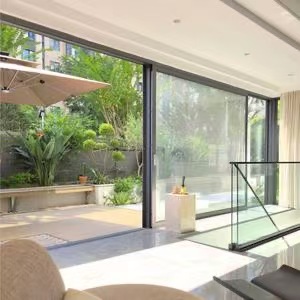
Market Context: Demand Is Moving Toward Performance-Specified Envelopes
Aluminium extrusion remains a large and expanding industrial category. Orion Market Research values the global aluminium extrusion market at USD 94.8 billion in 2024 and projects it reaching USD 230.2 billion by 2035. Grand View Research reports that Asia Pacific held a 71.7% revenue share of that market in 2025, driven primarily by construction and automotive demand in China. China's export trade in aluminium structures under HS 7610, a category that includes profiles and window and door frames, totalled USD 5.55 billion in 2024, representing 30.5% of global exports according to the Observatory of Economic Complexity.
The regulatory layer is tightening alongside the market. Architectural aluminium alloy profiles in China must comply with the mandatory GB/T 5237 series, Parts 1 to 6, which covers mill finish, anodizing, electrophoresis and powder or fluorocarbon coatings. In Europe, EN 755 governs hot extruded products and EN 12020 covers precision profiles in alloys 6060 and 6063. For buyers, the practical consequence is that performance claims are increasingly expected to trace back to a named standard rather than to a supplier's own description.
The Chinese supply base itself is large and layered. Industry-compiled rankings such as the 2024–2026 list published by Clinalu commonly name Xingfa Aluminium, Fenglu Aluminium, JMA Aluminium and China Zhongwang among the sector's larger participants, alongside a much wider group of regional and export-oriented manufacturers. For a project buyer, the differentiator is rarely the availability of extrusion capacity; it is whether a given supplier can produce documented system performance for the specific climate the project sits in.
Aluminium Sliding Systems Compared With Traditional Alternatives
Aluminium is not automatically the right answer for every facade, and the comparison is more useful when the trade-offs are stated plainly.
| Consideration | Aluminium sliding systems | uPVC | Timber |
|---|---|---|---|
| Strength-to-weight | High; supports large sashes with slim sightlines | Lower stiffness; larger frame sections required | Moderate; depends on species and section |
| Dimensional stability | Stable; does not absorb moisture | Subject to thermal expansion; can distort in strong sun | Moisture movement and swelling are ongoing concerns |
| Corrosion behaviour | Requires a specified protective finish in chloride environments | Not affected by chloride, but degrades under UV | Requires regular protective treatment, especially in wet climates |
| Thermal performance | Needs a thermal break to reach low K values | Inherently lower conductivity | Naturally insulating |
| Service life and recycling | Long service life; aluminium is recyclable | Shorter typical service life in high-UV regions | Long life if maintained |
| Maintenance burden | Low, provided the finish is appropriate | Low to moderate | High in exposed locations |
The clearest boundary is thermal. Aluminium conducts heat far more readily than uPVC or timber, so an aluminium system only achieves a competitive K value when it is built with a thermal break. The published figure of K ≤ 2.5 W/m²·K for the Haomen sliding door series applies to that assembled system, and a buyer comparing aluminium against uPVC or timber at the profile level alone will reach the wrong conclusion.
A second limitation is specific to sliding geometry. Because a sliding sash travels rather than compresses against a frame, its water tightness is typically lower than that of a well-executed casement or tilt-and-turn window at the same exposure. A water tightness of at least 500 Pa is a solid result for a sliding system, but on the most severely exposed facade of a coastal tower, project teams should check whether a sliding configuration is the right choice at all, or whether that elevation would be better served by a compression-seal window. Specification is a decision about the whole facade, not a single product.
Boundaries and What the Data Does Not Say
Three boundaries are worth stating openly. First, published ratings describe a tested assembly; if the glass, hardware or installation method on site differs from the tested configuration, the rating does not automatically transfer. Second, the documented figures cover air tightness, water tightness, wind pressure resistance, thermal insulation, sound insulation, operating force, cycle life and planar deformation. They do not include a quantified salt-spray duration, a coating thickness class or a seismic qualification, so buyers who need those should request them specifically. Third, the ten-year Brazilian reference is a single OEM programme involving 2,000 tons of profile for door and window applications; it is useful evidence of continuity, but it is not a statistical performance study across many sites.
Future Outlook
Two forces are likely to shape sliding system specification over the next several years. The first is regulatory drift toward envelope performance: as building energy codes tighten and green building certification schemes reward measured thermal performance, the K value of glazed assemblies becomes a design constraint rather than a marketing point. The second is climate adaptation. Coastal and high-rainfall regions are designing to higher wind-driven rain pressures, and plateau regions are paying closer attention to UV stability and thermal cycling. Suppliers able to connect a product to a named standard, a tested pressure value and a documented service reference will find procurement conversations easier, while buyers will increasingly treat unverified performance claims as a project risk.
FAQ
What is the difference between air tightness, water tightness and wind pressure resistance in a sliding system?
They measure three separate things. Air tightness describes how much air passes through the closed assembly and is reported as a level. Water tightness describes the pressure the assembly resists before water penetrates, and is reported both as a level and a pressure value; for the Haomen HM-U003/HM-U004 sliding door series this is Level 4 or above and 500 Pa or above. Wind pressure resistance describes how the frame and panels behave under design wind load, reported as Level 6 or above for the same series.
Are 6063-T5 aluminium profiles suitable for coastal projects?
The alloy itself is widely used in architectural applications. The deciding factor in coastal environments is the surface treatment, because chlorides attack unprotected aluminium. Haomen's sliding window and sliding door series are produced in 6063-T5, and the broader architectural range offers anodized, powder coated and wood grain transfer finishes. A coastal specification should state the coating performance required rather than relying on the finish name alone.
How are GB/T 13326, GB/T 7106, JG/T 215 and GB/T 8484 relevant to a project?
They cover complementary parts of the performance picture. Taken together, the four standards address general specifications, air and water tightness, wind resistance and thermal performance, which is why Haomen documents its sliding window series as compliant with all four, with thermal performance certified under GB/T 8484-2020. Buyers outside China should map these to the local equivalent, such as the EN 755 and EN 12020 series for extrusions in Europe.
What is the minimum order quantity and lead time for Haomen aluminium profiles?
Haomen publishes a minimum order quantity of 5 tons and a lead time of 20 days. Monthly capacity is stated as 8,000 tons, production is organised on an OEM basis with logo customization available, quality control is described as 100% testing, and after-sales support is provided remotely.
What service life should be expected from a sliding system rated for 20,000 opening cycles?
The 20,000-cycle figure is a tested durability value for repetitive opening and closing, not a statement of calendar life. Actual service life depends on sash mass, usage frequency, maintenance of rollers and seals, and exposure conditions. In coastal environments, periodic cleaning of tracks and inspection of seals is the practical measure that protects the tested performance.
Can Haomen adapt profile dimensions or finishes for a specific project?
The company operates an OEM production model with logo customization and states a customization capability that includes finish selection across mill finish, powder coated, anodized and wood grain transfer options, in standard lengths of 4 to 6 metres. Dimensional customization should be discussed against the tested performance envelope, because moving a sash outside the published ranges of 600–1,800 mm height, 400–1,500 mm width or 28–45 mm thickness takes the assembly beyond the conditions under which the ratings were established.
Full technical data on the architectural profile range, including alloy options, finish systems and standard lengths, is available in the Haomen product catalogue: E-Catalog of Shandong Haomen Aluminio (PDF).