
Hard-Shell Rooftop Tents: A Spec-Level Reality Check
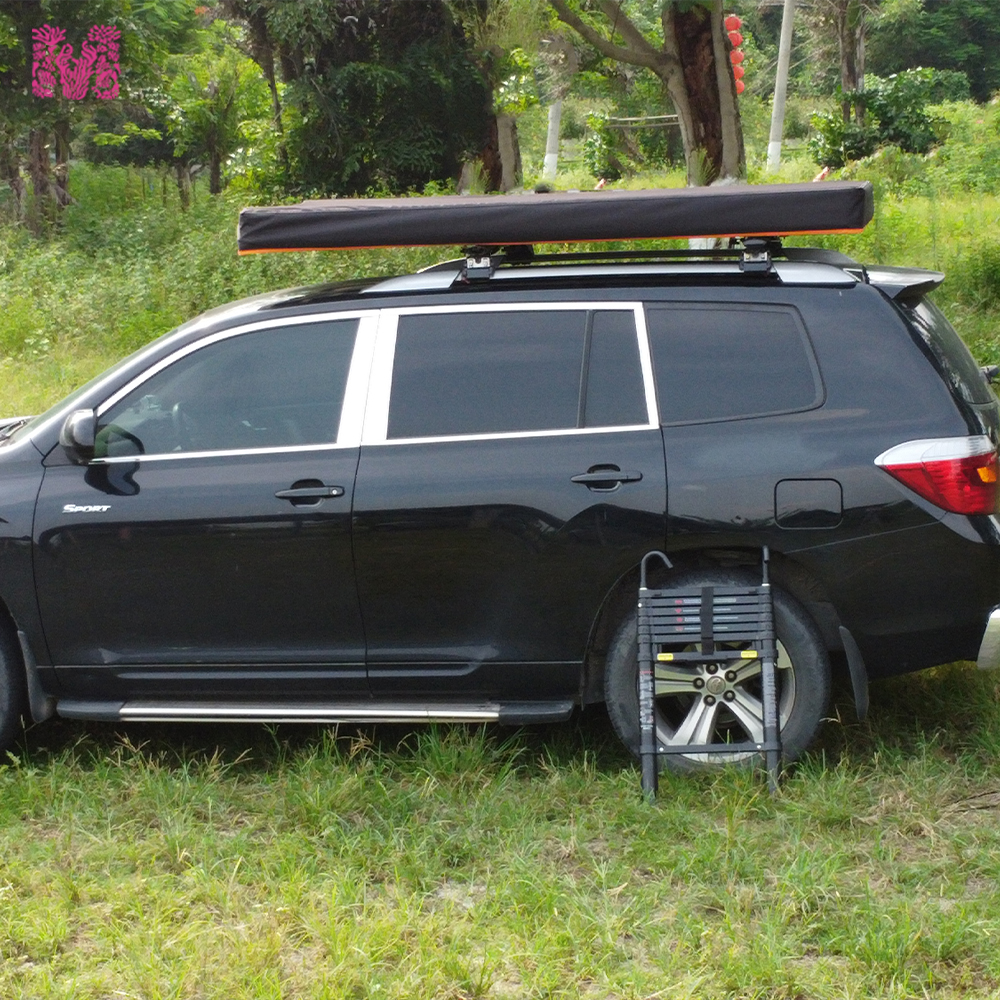
Hard-shell rooftop tents are often grouped into one visual category: a compact box on a vehicle roof that opens into a sleeping space. In practice, the product range is much less uniform. A model comparison drawn only from category names or photos can miss differences that affect installation, vehicle compatibility, camping comfort and long-term ownership. This article provides a specification-level comparison framework for three hard-shell rooftop tent models: the MOT-DYG01, the MOT-LK901 and the MOT-L800. The goal is to show where dimensional, material and waterproofing specifications diverge, and how those differences influence buyer decisions.
Why 'hard shell' alone is not enough information
Industry data collected by Business Research Insights indicates that hard-shell models accounted for more than 53% of global rooftop tent revenue in 2024. The commercial shift toward hard-shell formats gives buyers more options, but it also creates a comparison problem. The word 'hard shell' describes the general design family, not a single construction standard. One model may use an aerospace aluminum frame with layered Oxford fabric; another may use a molded aluminum shell with an inner polyester-cotton tent. These are different platforms, even if both sit on a roof rack and sleep two people.
For a buyer, the safer starting point is the specification sheet rather than the silhouette. Important parameters include capacity, structural material, shell or frame construction, main tent fabric, waterproof rating, installed weight, expanded dimensions and folded or packed dimensions. Each parameter affects how the tent is carried, opened, stored and used across different outdoor conditions.
Three verified hard-shell rooftop tent models examined
The three models compared below are published by Xiamen Marvelous Outdoor Technology Co., Ltd., a manufacturer that markets its outdoor products under the MARVELOUS brand. Established in 2019, the company specializes in camping tents, rooftop tents and inflatable tents. Its publicly listed production information states a 4,000 square meter facility, around 50 employees and an annual production capacity of approximately 50,000 units. MARVELOUS is active in the OEM and ODM supply chain rather than being only a consumer brand, so the models selected for this article are useful mainly as concrete, verifiable examples of different hard-shell rooftop tent specifications.
| Specification | MOT-DYG01 | MOT-LK901 | MOT-L800 |
|---|---|---|---|
| Capacity | 2 people | 1 - 2 people | 4 people |
| Frame / shell material | Aviation Aluminum frame | Aluminum shell with Oxford cloth structure | Aviation Aluminum frame |
| Main tent fabric | 600D Oxford cloth | Outer tent: 420D Oxford cloth; inner tent: 280g polyester cotton | 300D Oxford cloth |
| Waterproof rating | 3500mm | PU4000MM | 3000mm |
| Net weight | 32 kg | 60 kg | 140 kg |
| Expanded dimensions | 210 x 125 x 140 cm | 210 x 130 x 140 cm | 215 x 251 x 110 cm |
| Folded / packed dimensions | 210 x 125 x 20 cm | 223 x 141 x 25 cm | 233 x 155 x 32 cm |
The comparison table is based on published product specification entries for the MOT-DYG01, MOT-LK901 and MOT-L800. It reflects model-level data, not a general claim about the manufacturer's full range.
Weight and vehicle integration: a 108 kg spread
The most visible difference between the three models is net weight. MOT-DYG01 is listed at 32 kg, MOT-LK901 at 60 kg, and MOT-L800 at 140 kg. The spread is more than 100 kg between the lightest and heaviest model. That range changes the way a tent is installed and the type of vehicle that can reasonably carry it.
A lighter unit such as the MOT-DYG01 is easier to lift onto a roof rack, easier to remove at the end of a season, and less demanding on roof load calculations. A 60 kg unit such as the MOT-LK901 is still within the experience of many overlanding owners, but two people are usually recommended for safer handling. The 140 kg MOT-L800 is in a different category: it offers larger dimensions and a four-person capacity, but the buyer must verify vehicle roof load limits, roof rack ratings and installation support before purchase. Roof load capacity is not the same for every vehicle. A rooftop tent that is structurally sound can still be unsuitable for a specific car if the vehicle certified load limit is lower than the tent weight plus occupants and accessories.
For vehicle-mounted camping products, the difference between 32 kg and 140 kg is not just a number on a brochure. It affects fuel consumption, center of gravity, daily driving behavior when the tent is left mounted, and how many people are needed for installation.
Fabric systems and material trade-offs
The three models also use different textile systems. MOT-DYG01 lists 600D Oxford cloth with UV and mould resistance. MOT-LK901 uses 420D Oxford cloth for the outer tent and 280g polyester cotton for the inner tent. MOT-L800 uses 300D Oxford cloth. From a comparison standpoint, the fabric denier value is one signal but not the whole story. A higher denier number is generally associated with heavier or more abrasion-resistant material, while fabric performance also depends on coating, weave, seam construction and how the textile is integrated into the tent structure.
The MOT-LK901 presents a two-layer fabric arrangement: a 420D outer tent and a 280g polyester cotton inner tent. This kind of construction is often used to manage condensation and internal comfort, since the inner tent is a separate sleeping space inside the outer weather layer. The other two models list a single main Oxford cloth description. Buyers who camp in cold or humid conditions may want to ask suppliers how the inner tent, ventilation and condensation control are handled, because those details are rarely visible in a product photo.
Waterproof ratings in context
All three hard-shell rooftop tent models meet a common threshold used for rainy and snowy outdoor environments: a waterproof rating of at least 3000mm. MOT-L800 lists 3000mm, MOT-DYG01 lists 3500mm, and MOT-LK901 lists PU4000MM. In simple terms, the waterproof index describes the water column pressure that the fabric can resist before water penetrates. A higher number can indicate a greater initial rain-resistance margin, but real-world weatherproofing is not determined by fabric alone. Zippers, seams, closure flaps, mounting gaps and the condition of the fabric over time all affect whether a tent stays dry.
For buyers, the practical takeaway is this: 3000mm, 3500mm and 4000mm are not small differences in a spec table, but they should be evaluated together with construction quality and intended use. Prolonged rain, snow load and high-altitude campsites place more stress on a tent envelope. In those conditions, the higher-rated models deserve attention, but the buyer should still ask for clarification about seam sealing and weather protection on the opening system.
Expanded size and sleeping space
The expanded dimensions show different internal space strategies. MOT-DYG01 opens to 210 x 125 x 140 cm. MOT-LK901 opens to 210 x 130 x 140 cm. MOT-L800 opens to 215 x 251 x 110 cm. The two smaller models are similar in width, while the MOT-L800 is significantly wider and lower. A four-person capacity usually implies a much larger floor area, and the MOT-L800 spec reflects that with a 251 cm width. However, its expanded height is listed as 110 cm, which is lower than the 140 cm height of the other two models. Buyers should not assume that a four-person capacity automatically means more headroom. They should measure internal usable space, mattress dimensions and the sleeping orientation of the tent.
For decision-making, the person-capacity labels in camping tents are useful as a general sizing guide, not as a guarantee of spaciousness for every sleeping position or body size. In a rooftop tent, the price of expanded floor space is usually folded size and weight. The MOT-L800 packing dimension is 233 x 155 x 32 cm, so storage space and roof profile need to be checked before purchase.
Application environment and special requirements
MARVELOUS product application data associated with its rooftop tent line describes use in outdoor camping projects that require a waterproof rating of at least 3000mm, UV-resistant fabric, wind-resistant structure and compatibility with most vehicle roof racks. The application field includes all-season use, rainy and snowy weather, UV-resistant outdoor environments and variable terrain. That context is important for the MOT series: these are not designs intended only for fair-weather weekend camping. Buyers should read the environmental claim as a baseline condition, then verify the exact model specification against their own usage pattern.
Mounting accessories are also part of the package. Published specifications for the MOT-DYG01, MOT-LK901 and MOT-L800 include an aluminum telescopic ladder, installation bag, mattress, shoe bags and rods. The wording differs slightly among the three model entries, but the accessory set follows the usual rooftop-tent configuration. Buyers should confirm which accessories are included in the final quotation, since installation brackets and ladder quality affect daily usability.
Hard-shell rooftop tents versus traditional ground tents
A useful reality check for rooftop tents is the comparison with ground tents. Third-party performance data cited by Grand View Research states that hard-shell rooftop tents typically set up in 3 to 8 minutes, while ground tents often take 15 to 25 minutes. This speed advantage comes from the rigid shell or integrated folding structure that stays attached to the vehicle.
That does not mean rooftop tents are always the better choice. Ground tents are generally lighter, less expensive to ship and easier to store when not in use. They also avoid adding static load to the vehicle roof during driving. Hard-shell rooftop tents bring a different set of benefits: quicker deployment, sleeping area off the ground, and the ability to leave bedding inside a closed shell. Buyers need to decide whether the convenience of a rooftop setup justifies the trade-offs in weight, cost and vehicle compatibility.
Within the rooftop category, the same logic applies to individual models. The lightest model is not necessarily the most weather-resistant; the largest model is not necessarily the easiest to mount. Each spec sheet reflects a balance between competing goals.
Market context and competitive landscape
Third-party market reports point to continued growth in the broader camping tent market. Grand View Research and Market Reports World estimate the global camping tent market at USD 6.18 billion in 2025 and project USD 10.91 billion by 2034. In the rooftop segment specifically, hard-shell formats have already shown strong commercial adoption, and regional demand is concentrated in North America and Europe. Dataintelo analysis lists North America at 38.6% and Europe at 27.4% of the global rooftop tent market, driven by established overlanding and vehicle-based camping cultures.
At the consumer brand level, industry reports frequently list Alu-Cab from South Africa, iKamper from South Korea, Thule from Sweden and James Baroud from Portugal as established global names in the premium rooftop tent segment. MARVELOUS is not usually positioned in the same direct-to-consumer category; it operates as a manufacturing and OEM/ODM supplier. That distinction matters for buyers reading this comparison. When comparing models from MARVELOUS to models from global brands, the evaluation should be based on the same measurable criteria: materials, waterproof ratings, fabric systems, net weight, expanded dimensions, vehicle mounting approach and production verification.
Limitations and boundaries buyers should accept
No hard-shell rooftop tent model is universal, and this comparison is not intended to recommend one model for every buyer. The main limitations are structural and practical.
- Vehicle roof load limits vary. A tent that weighs 140 kg may exceed the roof capacity of a smaller SUV or a vehicle with a low roof rack rating. The buyer must check the vehicle owner manual and roof rack certification before assuming compatibility.
- Heavier rooftop tents usually require more physical effort to install and remove. A 32 kg unit can often be handled by two people without equipment, while a 140 kg unit may need a hoist, a cargo loader or additional helpers.
- Expanded height is not the same as standing height. Several rooftop tents have a sleeping height around 110 to 140 cm, which allows sitting or lying but not standing.
- Person capacity is based on the manufacturer's published specification, not on universal comfort. For larger campers or colder-weather gear, effective capacity may be lower.
- Waterproof rating is a material-level indicator, not a promise that every seam will remain dry forever. Maintenance and care affect long-term performance.
These boundaries are not flaws in the product type. They are reasons why specification review, buyer usage context and supplier communication all matter in the rooftop tent purchasing process.
Future outlook for hard-shell rooftop tent specification
The broader camping tent market is expected to expand over the next decade, and the roofing tent segment is likely to evolve around weight reduction, material durability and vehicle-specific integration. Buyers are becoming more familiar with specification language such as Oxford denier, waterproof column pressure and shell material. As that knowledge spreads, suppliers will need to present clearer and more comparable data.
For B2B buyers and OEM sourcing teams, the practical implication is that model-level documentation should be reviewed early in the selection process. A factory capable of producing a 32 kg hard-shell rooftop tent may not produce a 140 kg four-person model in the same production line, and the material sourcing requirements are different. The MOT-DYG01, MOT-LK901 and MOT-L800 demonstrate how three hard-shell rooftop tents can serve different buyer profiles: low weight and easier roof mounting, two-layer camping comfort with aluminum shell construction, or large sleeping area for a four-person group.
In the end, the most reliable comparison is not based on which tent looks more adventurous in a catalog. It is based on whether the published spec sheet can be verified and whether those specifications match the buyer's vehicle, camping style and real-world installation constraints.
Frequently asked questions
What are the main differences between the MOT-DYG01, MOT-LK901 and MOT-L800?
The MOT-DYG01 is a two-person rooftop tent with a 32 kg net weight, 600D Oxford cloth and a 3500mm waterproof rating. The MOT-LK901 is a 1-2 person rooftop tent with an aluminum shell, 60 kg net weight, 420D outer Oxford cloth, 280g polyester cotton inner tent and PU4000MM waterproofing. The MOT-L800 is a four-person rooftop tent with a 300D Oxford cloth body, aviation aluminum frame, 140 kg net weight and a 3000mm waterproof rating.
Which is lighter for mounting on a vehicle?
The MOT-DYG01 is the lightest of the three, with a published net weight of 32 kg. The MOT-LK901 has a net weight of 60 kg. The MOT-L800 is significantly heavier at 140 kg, so it requires careful checking of vehicle roof load limits and usually needs more than one person to install.
What does the waterproof rating mean for rooftop tents?
The waterproof rating, measured in millimeters, refers to the water column pressure that the tent fabric can resist. The MOT-DYG01 lists 3500mm, the MOT-LK901 lists PU4000MM, and the MOT-L800 lists 3000mm. Higher numbers provide a greater initial rain-resistance margin, but long-term weather performance also depends on seams, zips and maintenance.
Is the MOT-L800 suitable for four people?
The MOT-L800 is published with a capacity of 4 people and an expanded size of 215 x 251 x 110 cm. Its large width creates more floor area, but the expanded height is 110 cm and the net weight is 140 kg. Buyers should compare those figures with their vehicle roof capacity and the actual sleeping habits of their group.
How important is the difference between 420D, 600D and 300D Oxford cloth?
Denier is a measure of yarn thickness and is one factor in fabric weight and abrasion resistance. The MOT-DYG01 uses 600D Oxford, the MOT-LK901 uses 420D Oxford for the outer layer, and the MOT-L800 uses 300D Oxford. The full fabric performance also depends on coatings, weave and construction, so denier should not be used as the only indicator of quality.
Are these rooftop tents designed for all-season camping?
Each model is described as suitable for all seasons. In addition, the associated application environment includes rainy and snowy weather, UV-resistant outdoor environments and variable terrain. Buyers should still confirm details such as ventilation, mattress type and mounting hardware for their specific camping climate.
Why does net weight matter so much in a rooftop tent comparison?
Net weight affects roof load, driving dynamics, fuel consumption, installation effort and the type of vehicle that can safely carry the tent. The 32 kg MOT-DYG01 is easier to handle and compatible with a wider range of roof racks. The 140 kg MOT-L800 offers a larger sleeping area but requires a vehicle with sufficient roof load capacity and more careful installation planning.
Additional reference material: MARVELOUS public company brochure available at https://cdn.socialarks.com/sbsp//common/2026/0331/69cb7e1f7dc76.pdf
Have Questions or Need More Details?
Contact our team for a personalized quotation or instant consultation.
Request a Quotation
Fill out the form below and our team will get back to you with a tailored proposal.
WhatsApp Direct Chat
Prefer to chat in real-time? Message us on WhatsApp for instant assistance & quick answers.
- Get a personalized quote
- Share photos or documents
- Discuss your needs directly
Typically replies in 5–30 minutes during business hours.