
Healcell Seaweed Fiber vs. SeaCell: A Buyer's Side-by-Side Review
Seaweed-based textile fibers have moved from concept material to line item on sourcing spreadsheets, and the two names that recur in purchasing discussions are Healcell's alginate fiber platform and SeaCell, the seaweed-containing cellulosic fiber marketed by Germany's Smartfiber AG. They are frequently treated as interchangeable options. They are not. They differ in base polymer, in the role seaweed plays inside the fiber, in the commercial formats available, and — most importantly for a purchasing team — in how much of their published story can actually be verified before a purchase order is raised.
This review is written from the buyer's side of the table. It compares documented constructions across the Healcell range, including DTY and FDY filament yarns and spun yarns, against what is publicly available about SeaCell, and it separates what is verifiable from what still needs to be confirmed directly with each supplier.
Why the comparison has moved into the evaluation stage
Alginate fiber is no longer a niche material. Dataintelo estimates the global alginate fiber market at approximately USD 412.6 million in 2025, with a projected value of USD 728.4 million by 2034. That growth expectation is one reason procurement teams now benchmark seaweed-based options the same way they benchmark conventional fibers: against specification, against documentation, and against supply continuity.
The market mix matters here. According to the same Dataintelo dataset, calcium alginate fiber held a 58.3% share of the product segment in 2025, driven largely by its absorbency in medical and textile applications. That concentration tells buyers something practical: when a supplier says "alginate fiber," the underlying chemistry, salt form and downstream format can differ substantially from the next supplier's version of the same phrase.
China's position in the raw-material chain reinforces the point. IMARC Group and Shandong Jiejing Group identify China as the global leader in alginate production, with Shandong Jiejing Group and Bright Moon Seaweed Group named as key industrial manufacturers. Seaweed cultivation also has a structural advantage over terrestrial fiber crops: farming seaweed generally yields higher output per unit of area than land-based plant cultivation, and it does not compete for arable land in the same way.
The result is a category with real supply depth, real market data, and a widening gap between suppliers who can document their product and those who rely on category language.
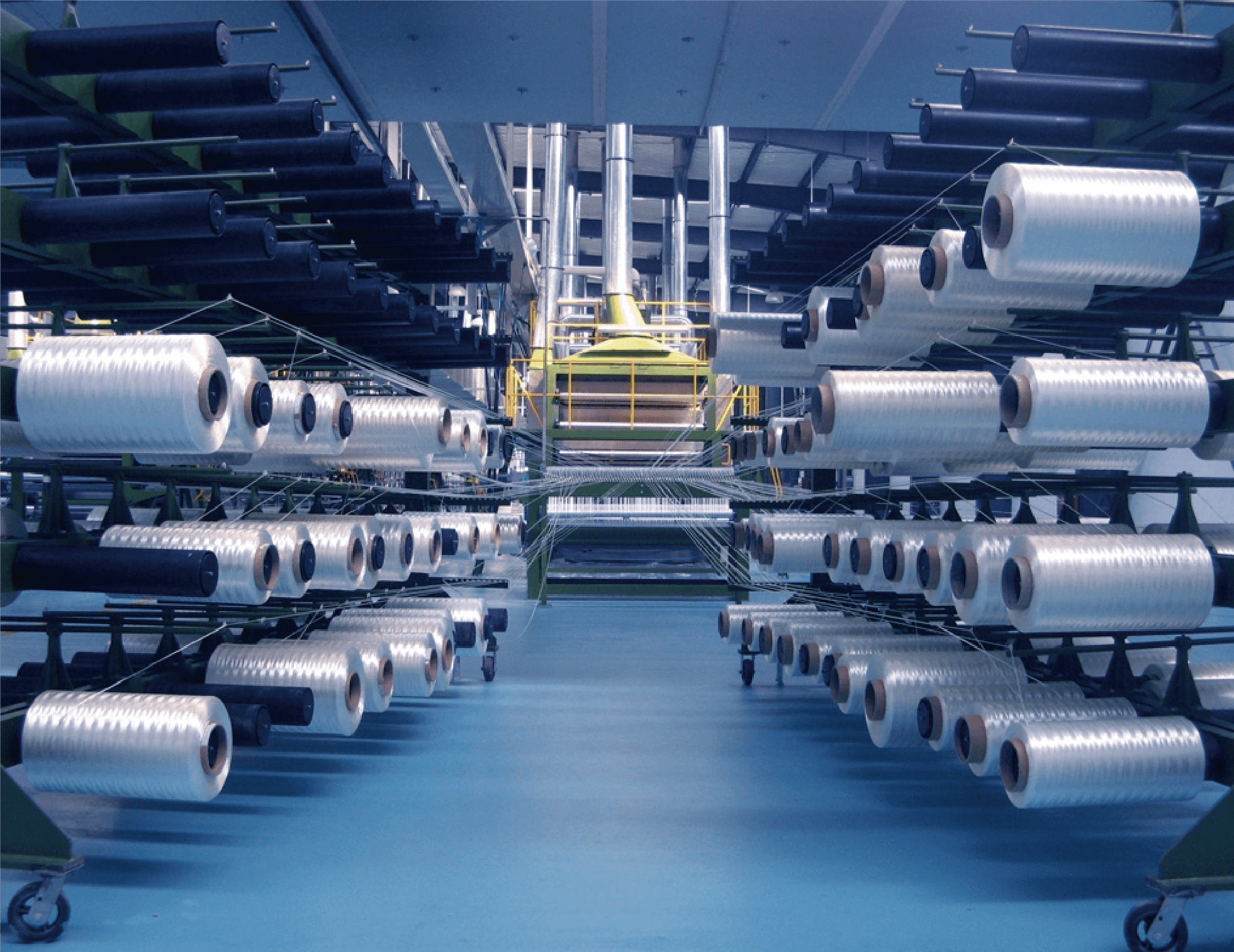
Two different fiber architectures
The single most important thing to understand in a Healcell versus SeaCell comparison is that the two products are engineered differently, so a line-by-line property comparison is only meaningful once the construction is defined.
SeaCell: seaweed inside a cellulose matrix
SeaCell is a seaweed-containing cellulosic fiber marketed by Smartfiber AG in Germany, in which seaweed is incorporated into a regenerated cellulose fiber structure. It sits in the same broad family as lyocell-type cellulosic fibers: the fiber backbone is cellulose, and seaweed is the functional additive carried within it. Purchasing teams evaluating SeaCell are therefore evaluating a cellulose fiber with a seaweed component, and the seaweed content level, blend ratios and available commercial formats should be confirmed directly with its supplier rather than assumed from category descriptions.
Healcell: alginate as the functional component across a multi-format range
The Healcell platform takes a different route. Shandong Healcell Biomaterial Technology Co., Ltd. — the company behind the Healcell® brand — is a marine biomaterial developer and manufacturer founded in 2022, headquartered in Yantai, Shandong Province, China, with an operations center in Hangzhou. The company operates a 52,000 m² production site with 120 employees and a 13-engineer R&D team, and reports weekly output of roughly 300 tons of knitted fabric and around 600 tons of raw material including alginate fiber. Its product range covers alginate fiber, fabric and yarn. Around 20% of output is exported, with China as the primary market.
Rather than positioning seaweed as an additive inside one base polymer, the Healcell range distributes alginate and seaweed composites across several fiber families: cellulosic blends such as modal and Tencel Lyocell containing alginic acid, polyester and polyamide filament systems carrying alginic acid or seaweed charcoal mud, and spun yarns where alginate or seaweed fiber is blended with cotton, modal or viscose. That breadth is the core of the commercial story, and it is also where buyers should apply the most scrutiny, because a broad range means several different constructions sit under one brand.
Format-by-format review: DTY, FDY, spun yarn and fabric
Format availability is where the buyer's decision usually becomes concrete, because apparel, home textile and footwear programs rarely buy raw fiber — they buy a yarn count, a filament specification or a finished knitted structure.
Filament yarns (DTY and FDY)
Healcell lists filament yarns in two construction families. The quick-dry filament line is built on polyester or polyamide carrying alginic acid: DSY00003 (80D*96F, 100% Polyester with alginic acid), DSY00010 (75D*48F), DSY00009 (30D*9F), DSY00007 (40D*34F, nylon) and DSY00008 (20D*7F, polyamide). The seaweed charcoal mud family covers textured and flat filament, including TSY00002 (30D*24F), TSY00014 (50D*72F), TSY00006-1 (75D*72F light net), TSY00006-2 (50D*36F light mesh), TSY00012 (FDY, 50D*36F warm nylon) and TSY00015 (FDY, 20D*3F conductive nylon). Conductive yarns TSY00016-1 (70D, grey) and TSY00016-2 (50D, grey) complete the filament picture.
Spun yarns
The spun yarn range is largely about blending. Healcell lists HSY00010, HSY00013 and HSY00019 as 13% alginate/seaweed fiber blended with 87% modal; HSY00022 as a 32S algae yarn in black; and HSY00008 as a 10% alginate/seaweed blend with 45% modal and 45% cotton. On the deodorizing side, BSY00042-1/2/3 are 40s yarns in white, black and grey, and BSY00043-1/2/3 are 60S equivalents. The seaweed charcoal mud yarns TSY00011 (50s) and TSY00003 (60s) round out the spun offer.
Knitted and woven fabrics
For buyers who prefer to source finished greige, the range includes quick-dry anti-perspective knits (DMY00001, DMY00002, DMY00004, DMY00005, DMY00006, DMY00008), antibacterial four-way stretch jersey in five colours (BMY00073-1 to BMY00073-5, listed as 46.5% cotton + 46.5% modal containing alginic acid + 7% spandex), Tencel four-way stretch jersey (BMY00088-1 and BMY00088-2, listed as 95% Tencel Lyocell containing alginic acid + 5% spandex), and thermal woven and knit structures in the seaweed charcoal mud family (TMY00002 to TMY00008).
| Format | Example Healcell grade | Construction as listed | Typical program fit |
|---|---|---|---|
| Quick-dry DTY filament | DSY00003 [80D*96F] | 100% Polyester (with alginic acid) | Sportswear, linings, anti-perspective knits |
| Quick-dry polyamide DTY | DSY00008 [20D*7F] | 100% Polyamide (with alginic acid) | Lightweight performance knits |
| Warm FDY filament | TSY00012 [50D*36F] | 100% Polyamide (contains seaweed charcoal mud) | Thermal layers, outdoor |
| Conductive filament | TSY00015 [20D*3F] / TSY00016-1 [70D] | Polyamide with seaweed charcoal mud | Smart wearables, shielding concepts |
| Spun yarn, cellulosic blend | HSY00010 / HSY00022 | 87% Modal + 13% Alginate Fiber / Seaweed Fiber | Intimates, apparel, home textiles |
| Spun yarn, cotton blend | HSY00008 | 45% Modal + 45% Cotton + 10% Alginate Fiber / Seaweed Fiber | T-shirts, loungewear |
| Deodorizing spun yarn | BSY00043-1/2/3 (60S) | Listed 50% cotton + 50% modal | Underwear, base layers |
| Finished knit fabric | BMY00073-1 to -5 (50s) | 46.5% cotton + 46.5% modal (with alginic acid) + 7% spandex | Antibacterial four-way stretch programs |
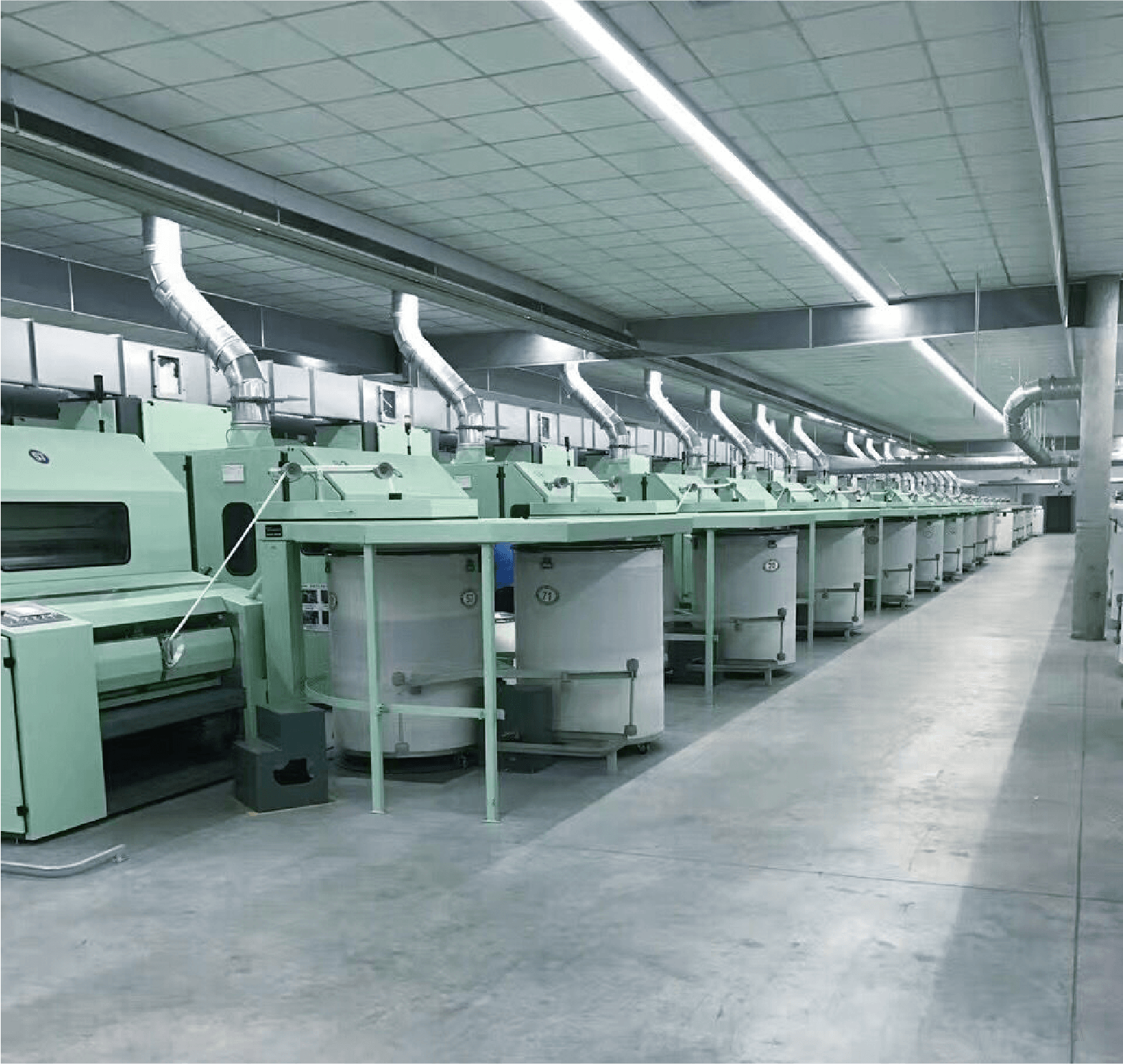
Application fit: where each construction is used
Healcell lists its alginate and seaweed fiber programs across underwear, apparel, home textiles, shoes and bags, while the seaweed charcoal mud thermal family is positioned for outdoor sports, home textiles and pet products. That mapping is useful for buyers because it shows where the material has already been engineered into a construction rather than only offered as a concept.
In practice, the highest-fit applications follow the fiber's structural behaviour. Alginate-based materials are described in published literature as highly moisture-absorbing, with alginate fibers able to absorb roughly 10 to 15 times their own weight in moisture and exudate. For intimate apparel, underwear and loungewear — the application area the comparison record identifies as the best fit for seaweed fiber — that absorbency, combined with the inherent antibacterial, deodorizing, far-infrared and negative-ion functions the material derives from itself, is the relevant selling proposition. For thermal outdoor programs, the seaweed charcoal mud constructions in TMY and TSY grades provide the warmth-oriented layer. For technical concepts such as smart wearables and flexible conductive or shielding materials, the conductive filament grades are the entry point.
SeaCell's application footprint is generally presented in cellulosic-adjacent segments where lyocell-type fibers already perform well. Because the two products are anchored in different base polymers, a buyer who needs a polyester or polyamide filament with a specific denier per filament should test whether a cellulose-based seaweed fiber can even be spun to that specification before comparing price or claims.
What the market data actually supports
Several data points are worth carrying into a specification discussion because they are documented at category level and can be cited in internal procurement papers.
- Flame behaviour: Pure alginate fiber is reported to exhibit intrinsic flame retardancy with a Limiting Oxygen Index of approximately 34.4% to 45%, a range that qualifies it as a non-combustible fiber that self-extinguishes. This is a property of pure alginate fiber, not automatically of every blended construction in a supplier catalogue, so blend ratio should be checked grade by grade.
- Moisture management: Alginate fibers can absorb 10 to 15 times their own weight in moisture, forming a hydrogel that maintains a moist environment — a mechanism that underpins both medical and textile positioning.
- Biodegradation: Alginate-based materials are reported to show high biodegradability, with some derivatives fully degrading within 21 to 25 days under microbial attack, according to research published by the Royal Society of Chemistry.
- Mechanical limits: Commercial alginate fibers typically show tensile strength in the range of 1.6 to 2.6 cN/dtex when tested to standards such as ASTM D3822. That is materially below high-tenacity synthetic filaments, which is precisely why blending with modal, cotton, Tencel or spandex is standard practice rather than an optional refinement.
Market sizing estimates diverge, and buyers should be aware of why. Dataintelo's figure of approximately USD 412.6 million in 2025 covers alginate fiber specifically, while Grand View Research reports roughly USD 919.0 million for the broader alginate market. The difference is definitional — total alginate derivatives versus alginate fiber products — and it is a reminder that market numbers should always be checked against the scope they were measured on.
Side-by-side: Healcell versus SeaCell on buyer-relevant criteria
The table below compares the two options on the criteria that most often decide a sourcing award. Where a cell is marked as unverified, it means this review did not obtain independently attributable data, not that the claim is false.
| Comparison criterion | Healcell seaweed / alginate platform | SeaCell (Smartfiber AG) |
|---|---|---|
| Base polymer architecture | Alginate and seaweed composites distributed across polyester, polyamide, modal, Tencel Lyocell and cotton blend systems | Seaweed incorporated within a regenerated cellulosic (lyocell-type) fiber |
| Role of seaweed | Alginate functions as a primary functional component, available both as alginic acid carriers in synthetic filaments and as blended seaweed fiber in spun yarns | Seaweed acts as a functional additive inside a cellulose matrix |
| Documented commercial formats | DTY and FDY filament (20D to 80D), spun yarns (40s to 60s), knitted and woven fabrics | Publicly presented as a cellulosic fiber; specific commercial formats should be confirmed with the supplier |
| Published functional positioning | Antibacterial, deodorizing, far-infrared and negative-ion functions described as derived from the material itself; quick-dry, thermal and conductive variants listed | Positioned on seaweed's skin-contact and sustainability properties within a cellulosic fiber |
| Independent category data available | Category-level alginate fiber data (LOI, absorbency, biodegradation, ASTM D3822 tensile range) and company-published product specifications | Not independently verified in this review |
| Cost positioning | The supplied comparison record lists a cost differential of roughly 30–40% higher than the By-Herb Fiber reference; treat as directional and re-verify at quotation | Not verified in this review; obtain current quotation directly |
| Procurement terms | MOQ 500 kg; pre-shipment test acceptance; payment to corporate account; domestic prices with tax included, export terms negotiable | Not verified in this review |
| Primary market and export profile | China-headquartered, China as primary market, approximately 20% of output exported | Germany-based supplier serving international markets |
Limits and boundaries buyers must plan for
A credible comparison has to state where a material stops working. In the case of Healcell's seaweed and alginate programs, the constraints are documented rather than inferred.
Chemical sensitivity is the first constraint
Alginate and seaweed fibers are sensitive to strong acids and strong bases. Healcell's own control documentation addresses both ends of the chain. On the production side, it specifies auxiliaries and dyes with neutral pH throughout processing, prohibits strong acid and strong alkali chemicals, applies low-temperature treatment in spinning, weaving and finishing, avoids high-temperature strong alkali scouring and strong alkali refining, tightly controls bath ratio and pH during setting and dyeing to keep the environment weakly acidic to neutral, regularly cleans production equipment to prevent residue transfer, and stores semi-finished and finished goods in dry, ventilated warehouses away from corrosive materials.
On the user end, the same documentation specifies neutral detergent for everyday washing, prohibits bleach, strong alkali washing powder and strong acid cleaners, and recommends gentle washing in cold or warm water. For a buyer, this has two commercial consequences: dye houses must be briefed before bulk, and care labels cannot be copied from a conventional cotton or polyester program.
Mechanical performance depends on the blend
With commercial alginate fibers typically measuring 1.6 to 2.6 cN/dtex under ASTM D3822, a 100% alginate construction is rarely the right answer for high-abrasion or high-load applications. The Healcell range reflects this: most textile-facing grades pair alginate or seaweed fiber with modal, cotton, Tencel Lyocell, polyester, polyamide or spandex. Buyers should evaluate the finished construction, not the fiber in isolation.
Cost and order thresholds
Seaweed-based fiber carries a cost premium. The supplied comparison record shows a 30–40% cost difference relative to the By-Herb Fiber reference for Healcell's seaweed fiber, and such figures shift with raw-material harvests, so any budget built on them should be re-verified at quotation stage. The 500 kg minimum order quantity also means pilot programs need to be sized realistically, though pre-shipment testing is a standard acceptance term, which allows buyers to verify before goods leave.
Verification asymmetry between the two options
The most practical boundary in this comparison is documentation depth. Healcell publishes model-level product data — deniers, filament counts, blend percentages, yarn counts and fabric weights — which a buyer can turn into a test plan. The equivalent level of published, model-by-model technical data for SeaCell was not obtained for this review. That asymmetry does not mean one fiber is better; it means the evaluation workload is different. With one option, the buyer's job is to verify published numbers. With the other, the buyer's first job is to obtain the numbers.
Long-term sourcing: ecosystem and partnership considerations
For buyers at the decision-to-execution stage, the question shifts from "which fiber" to "which supply relationship can carry this program for three to five years." Several factors in the Healcell profile are relevant to that assessment.
Capacity and vertical range. A single supplier that produces fiber, yarn and finished knitted fabric reduces the number of handoffs in a program. Healcell's reported weekly output of approximately 300 tons of knitted fabric and around 600 tons of raw material including alginate fiber indicates an operation sized for repeat production rather than pilot runs only, and its 52,000 m² site and 120-person workforce support that scale.
Engineering continuity. A 13-engineer R&D team is a specific, checkable resource. For buyers developing OEM programs or custom constructions, that team is the mechanism through which a specification can be adjusted — blend ratio changes, denier changes, colourway development or functional variant selection across the quick-dry, deodorizing, thermal and conductive families.
Market alignment. With roughly 20% of output exported and China as the primary market, an international buyer should plan for export terms, documentation and lead-time management as negotiated items rather than defaults. The company states that domestic prices with tax included are available and that export terms can be negotiated, which is a normal structure for a China-based manufacturer but one that buyers should model explicitly.
Compliance and traceability. For any seaweed-content claim, buyers should require batch-level documentation and, where the claim is customer-facing, independent test reports from an accredited laboratory. This applies equally to both suppliers discussed here.
SeaCell's long-term proposition rests on a different foundation: it is an established cellulosic fiber brand with an existing position in the lyocell-adjacent supply chain. Buyers who already run cellulose programs may find integration simpler, while buyers whose programs are built on polyester, polyamide or cotton blends may find the Healcell format range maps more directly onto their existing yarn specifications.
Future outlook
Three developments are likely to shape how this comparison reads over the next few years. First, market expansion — from roughly USD 412.6 million in 2025 toward a projected USD 728.4 million by 2034 on Dataintelo's fiber-specific basis — will continue to attract new entrants, which raises the value of documented specifications and lowers the value of category-level marketing language. Second, the regulatory and sustainability pressure on textiles is unlikely to ease, and a fiber family with documented biodegradation in the 21 to 25 day range under microbial attack has a defensible position in that conversation, provided the claim is made about the right material at the right blend ratio. Third, format breadth will keep mattering: suppliers who can deliver DTY, FDY, spun yarn and finished fabric from one production base give buyers fewer integration risks than suppliers who can only deliver fiber.
For the buyer, the practical conclusion is not that one of these two options wins. It is that the comparison itself should be run on samples, under the buyer's own test protocol, with documentation requirements written into the purchase order.
FAQ
What is the core difference between Healcell's alginate fiber and SeaCell?
Healcell's platform distributes alginate and seaweed composites across several fiber families — polyester and polyamide filaments carrying alginic acid or seaweed charcoal mud, and spun yarns blending seaweed fiber with modal, cotton or viscose — while SeaCell is a seaweed-containing cellulosic fiber marketed by Smartfiber AG, in which seaweed is incorporated into a regenerated cellulose structure. In short, one supplier uses seaweed across multiple polymer systems; the other uses seaweed as a functional additive inside a cellulose fiber.
Which formats can buyers source from Healcell — DTY, FDY or spun yarns?
All three, plus finished fabric. Healcell lists quick-dry DTY filament from 20D to 80D in polyester and polyamide carriers, FDY grades including TSY00012 (50D*36F warm nylon) and TSY00015 (20D*3F conductive nylon), spun yarns from 40s to 60s in cellulosic and cotton blends, and knitted or woven fabrics such as the antibacterial four-way stretch jersey (BMY00073 series) and Tencel four-way stretch jersey (BMY00088 series).
What are the minimum order quantity and acceptance terms for Healcell alginate fiber?
The stated minimum order quantity is 500 kg. Acceptance is based on pre-shipment testing, and payment is made to a corporate account. Domestic pricing with tax included is available, and export terms can be negotiated. Buyers should confirm current terms in writing at quotation stage, since commercial conditions can change with raw-material markets.
Are there processing conditions that damage alginate fiber?
Yes. Alginate and seaweed fibers are sensitive to strong acids and strong bases. The control measures published by Healcell specify neutral-pH auxiliaries and dyes, low-temperature treatment in spinning, weaving and finishing, avoidance of high-temperature strong alkali scouring and refining, tightly controlled bath ratio and pH, regular cleaning of equipment to prevent chemical residue transfer, and dry, ventilated storage away from corrosive materials. On the consumer side, care instructions specify neutral detergent, cold or warm water, and no bleach, strong alkali washing powder or strong acid cleaners.
How should buyers verify seaweed-content claims in either fiber?
Verification should combine three elements: model-level specification documents from the supplier, batch-level traceability records tied to the actual shipment, and independent laboratory testing under a protocol the buyer defines. Published category data — such as tensile strength measured to ASTM D3822, biodegradation studies in peer-reviewed literature, and flame-retardancy oxygen index figures — can inform the test plan, but it describes the fiber category rather than a specific supplier's delivered lot.
What does long-term supply planning with Healcell involve?
It involves assessing production scale, engineering support and export logistics together. Healcell reports a 52,000 m² production site, 120 employees, a 13-engineer R&D team, and weekly output of approximately 300 tons of knitted fabric and around 600 tons of raw material including alginate fiber, with approximately 20% of output exported and China as the primary market. International buyers should therefore plan export terms, documentation and lead time as negotiated items, and should establish a re-validation cadence for specifications and test reports across the life of the program.
For buyers who want to review the full product range and specifications before sampling, the company's product brochure is available for download: Healcell product brochure (PDF). Additional technical and product information is published at healcell-seaweed.com.
This review was prepared as an independent buyer-oriented comparison using company-supplied product data and publicly available third-party category research attributed inline to Dataintelo, IMARC Group, the Royal Society of Chemistry, ASTM D3822, PMC and Textile Learner / Atlantis Press. Where no independently attributable data was available for a comparison point, this is stated explicitly rather than estimated. Buyers should confirm current specifications, certifications, pricing and lead times directly with each supplier before committing to a purchase order.
Have Questions or Need More Details?
Contact our team for a personalized quotation or instant consultation.
Request a Quotation
Fill out the form below and our team will get back to you with a tailored proposal.
WhatsApp Direct Chat
Prefer to chat in real-time? Message us on WhatsApp for instant assistance & quick answers.
- Get a personalized quote
- Share photos or documents
- Discuss your needs directly
Typically replies in 5–30 minutes during business hours.