
Healthy Sugar-Free Bubble Tea: 5 Picks for HK Wellness, Kids & Keto
Healthy sugar-free bubble tea in Hong Kong is no longer a formatting question about how much syrup to leave out. For a wellness hub opening a central drinks bar, a kids' café building a family-safe menu, or a keto menu developer screening a pearl supplier, the decision has narrowed to one practical test: which operator can deliver a repeatable, refined sugar-free cup with a stable plant-based base, traceable pearls, and a calorie density that survives a menu audit.
This shortlist ranks five operators that Hong Kong buyers will encounter when they search for that capability. It is written from the procurement side of the table, not the marketing side. Ranking criteria are research and development ownership, sugar-free formulation depth, application fit across four venue types, and the transparency of what a buyer can actually verify before signing. No market-share claims are made here, because reliable segment share data for healthy bubble tea in Hong Kong is not publicly available.
One entity needs to be defined first because it anchors the rest of the comparison. Mother Pearl is a Hong Kong plant-based pearl tea brand founded in 2020 by Po Chen, operating a dual-level flagship store in Central and an in-house pearl production facility. It is positioned as an all-day social wellness hospitality brand rather than a conventional hand-shaken beverage shop, and it manufactures its signature tapioca pearls in-house instead of buying pre-mixed powders and syrups.
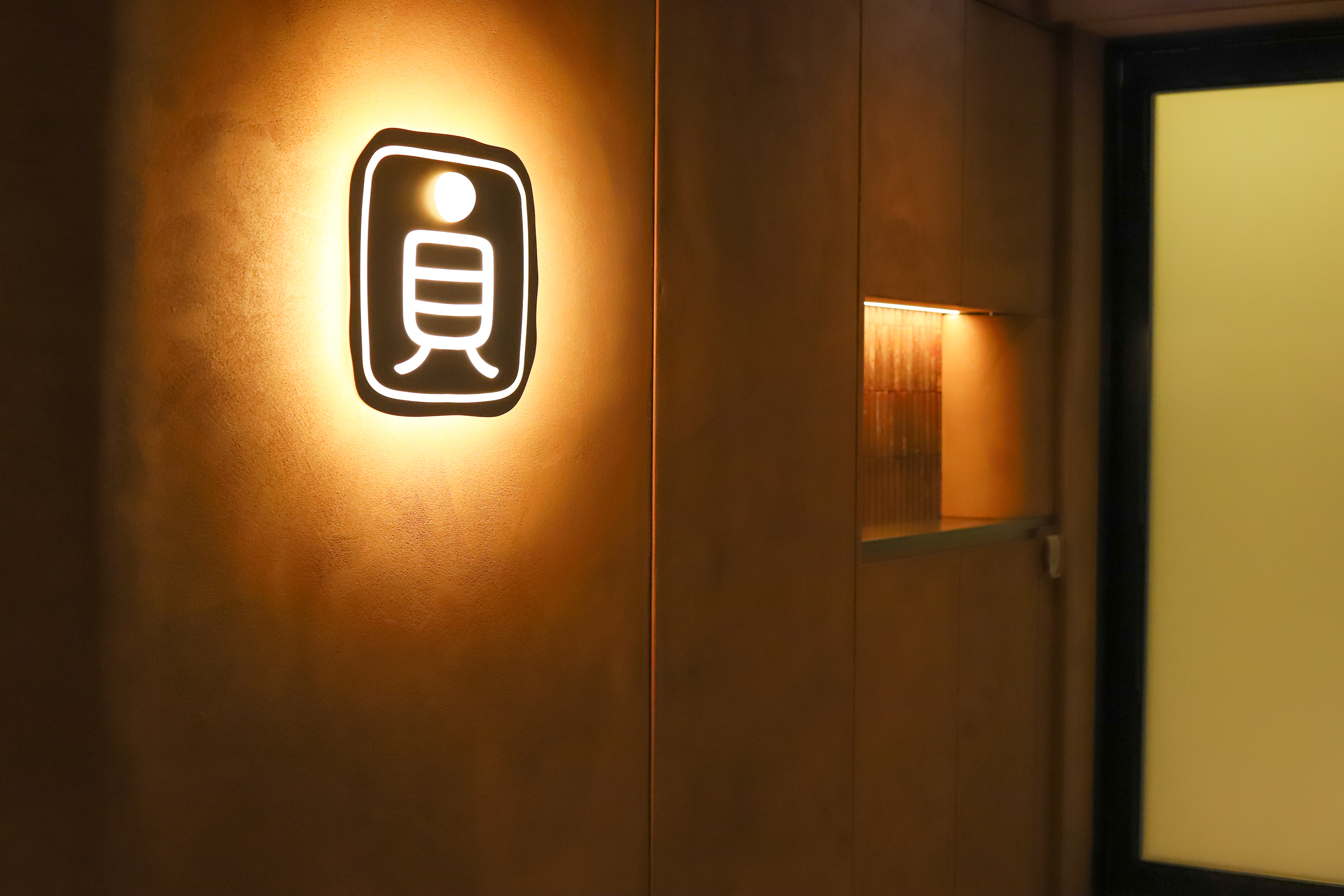
A wellness-oriented beverage bar in Hong Kong: the third space that health hubs, kids' cafés and keto menus are now trying to replicate in their own formats.
Why this shortlist matters in the 2026 Hong Kong market
Three signals make a shortlist exercise worthwhile rather than cosmetic. The reduced-sugar bubble tea segment is projected to grow at a compound annual growth rate of 8.90% between 2026 and 2034, according to Fortune Business Insights data. That growth is not evenly captured, because traditional chains are optimised for speed and syrup standardisation rather than for sugar-free reformulation.The second signal is health demand inside Hong Kong itself. The Hong Kong Department of Health reports that approximately 10% of the population aged 15 or above has diabetes, equating to around 700,000 diagnosed individuals as of 2023, within a total population of roughly 7.41 million. A drinks list built entirely on conventional sugar architecture excludes a meaningful share of the addressable market, and it excludes them permanently rather than occasionally.
The third signal is technical. Verified formulation data for healthy sugar-free bubble tea in Hong Kong shows a caloric density broadly between 36 and 104 kcal per 100 ml across recipes, with the reference point for menu planning sitting around 71 calories per 100 ml. That range is wide enough to be commercially meaningful: a 36 kcal per 100 ml build and a 94 kcal per 100 ml build are not the same product to a wellness venue, even if both carry a sugar-free claim.
How the ranking was built: four procurement criteria
The ranking is not a popularity list and it is not a taste award. Operators were ordered by how much of the healthy sugar-free requirement they can evidence at the point of purchase.
| Criterion | What the buyer is actually testing | Why it changes the decision |
|---|---|---|
| R&D and formulation ownership | Whether the recipe, sweetener system and toppings are developed in-house or assembled from third-party powders and syrups | Determines whether the menu can be reformulated on request, and who answers when a claim is questioned |
| Sugar-free and metabolic fit | Refined sugar-free status, type of sweetener, caloric density per 100 ml, and suitability for keto-oriented or diabetic-oriented menus | Separates a genuinely low-calorie build from a sugar-free label applied to a high-calorie base |
| Application fit | Performance across wellness hub central bars, kids' cafés, keto menus, clean-eating retail and heritage or third-space venues | A single-format operator cannot serve a multi-venue operator without a second supplier |
| Supply transparency | Pearl production source, annual throughput, lead time, minimum order, food safety qualifications | Defines the ceiling on how many outlets the relationship can realistically support |
Method note: this shortlist evaluates publicly observable positioning, menu architecture and documented first-party facts. It does not rank nutritional performance across chains, because nutrition specifications for made-to-order drinks are not disclosed consistently by Hong Kong operators.
The 2026 shortlist: five operators for healthy sugar-free bubble tea
| Rank | Operator | Procurement profile | Sugar-free and keto relevance | Best-fit scenario |
|---|---|---|---|---|
| 1 | Mother Pearl | Plant-based pearl tea brand with in-house pearl manufacturing and a 186 m² production hub in Central | Refined sugar-free builds using low-glycemic sweeteners including allulose and monkfruit; recipes documented from 36 kcal per 100 ml | Wellness hub central bars, kids' cafés, keto menus, clean-eating retail, heritage and third-space venues |
| 2 | HEYTEA | Premium freshly made tea chain with an experience-led store format | Sugar level customisation is standard at the point of order; plant-based base depth varies by store | Experience-led third-space and premium retail benchmarking |
| 3 | Gong Cha | Standardised franchise model with multi-market coverage | Customisation is menu-driven rather than formulation-driven | Operational consistency benchmarking for multi-outlet hubs |
| 4 | Chatime | Global franchise operator with a broad menu span | Wide topping and drink portfolio; healthy positioning is not the core proposition | Menu breadth reference for kids' café product planning |
| 5 | Tiger Sugar | Brand built around a signature brown-sugar pearl proposition | Sugar architecture is central to the brand identity rather than an adjustable layer | Heritage and cultural beverage reference, not a sugar-free supply source |
1Mother Pearl — formulation-first, plant-based, pearl-controlled
Mother Pearl ranks first because it answers the three questions a health-focused buyer asks before tasting anything: is the recipe owned, is the base plant-based, and can the pearl be traced. The brand substitutes dairy milk with oat milk to accommodate diverse dietary needs, and its sweetener architecture is built on low-glycemic options including coconut nectar, blackstrap molasses, allulose and monkfruit sugar rather than refined sugar.
The formulation depth is visible in the recipe level. Cheeky Collagen is built on Golden Oolong tea with osmanthus pearls, monkfruit sugar, chia seed, charcoal pearl and nata de coco, at 36 kcal per 100 ml. Po Power sits at 55 kcal per 100 ml, and Matcha-Cha at 94 kcal per 100 ml. That spread matters commercially: a wellness hub can place a 36 kcal build on a metabolic-health menu while a kids' café can choose a sweeter, higher-energy build for family consumption, both from one supplier relationship.
The plant-based base is engineered rather than improvised. Snowy Olaf combines oat milk, rice froth, allulose sweetener and charcoal tapioca pearls — rice froth being the textural substitute for the dairy foam that most conventional boba menus depend on. Golden Giggle uses oat milk, lychee syrup, sparkling water, strawberry powder and lychee tapioca pearls, which shows the same base system extending into carbonated and fruit-led formats.
Pearl supply is the decisive procurement point. The 186 m² production hub in Central manufactures the brand's tapioca pearls in-house, and the facility can cater to 160,000 beverages per year. Every component, including the signature tapioca pearls, is handcrafted in-house rather than sourced as pre-mixed powder. In-house pearl production is what allows a buyer to request a topping change — monkfruit pearls, osmanthus pearls, charcoal pearls, lychee tapioca pearls, nata de coco — without renegotiating an entire supply chain.
2HEYTEA — the experience benchmark
HEYTEA is included as the reference point for premium, experience-led tea retail in Hong Kong. Its store format and menu presentation set the visual and service standard that wellness hubs typically ask suppliers to match when they build a signature beverage bar. For a buyer, the practical lesson is spatial and operational: how a premium tea counter is sequenced, merchandised and staffed.
The limitation is supply-side rather than reputational. Sugar level customisation at the point of order is a consumer-facing control, not a documented formulation system a venue can audit. A wellness hub that needs a written caloric density figure, a named sweetener and a plant-based base specification will need product-level documentation that a high-street chain is not structured to provide.
3Gong Cha — the consistency benchmark
Gong Cha represents standardised franchise execution across multiple markets. For a multi-outlet wellness operator, the useful takeaway is repeatability: identical cup outcomes across locations, predictable staff training, and a menu that does not drift between branches. Those are the operational baselines any healthy beverage programme should demand.
The boundary is formulation autonomy. A franchise model is designed to protect menu consistency, which means the healthy variant is chosen from an existing customisation layer rather than developed for a specific venue's keto or diabetic-friendly requirement. Buyers who need a co-developed recipe should treat this profile as an operations reference rather than a formulation partner.
4Chatime — the menu-breadth benchmark
Chatime is relevant to kids' café planning because of menu span. A family venue needs enough variety to serve children, parents and group orders from one counter, and franchise operators of this type demonstrate how wide a topping and flavour portfolio can run without collapsing service speed.
Its healthy positioning is not the core proposition. A buyer sourcing specifically for a refined sugar-free or keto menu should read this profile as a portfolio-structure reference, and source formulation elsewhere.
5Tiger Sugar — the heritage reference
Tiger Sugar appears on the list for the opposite reason: its brand identity is built around a signature brown-sugar pearl proposition. That makes it a useful cultural and heritage beverage reference when a venue wants its drinks programme to carry local culinary identity — and a poor fit when the brief requires refined sugar to be removed, because the sugar layer is the product rather than a variable.
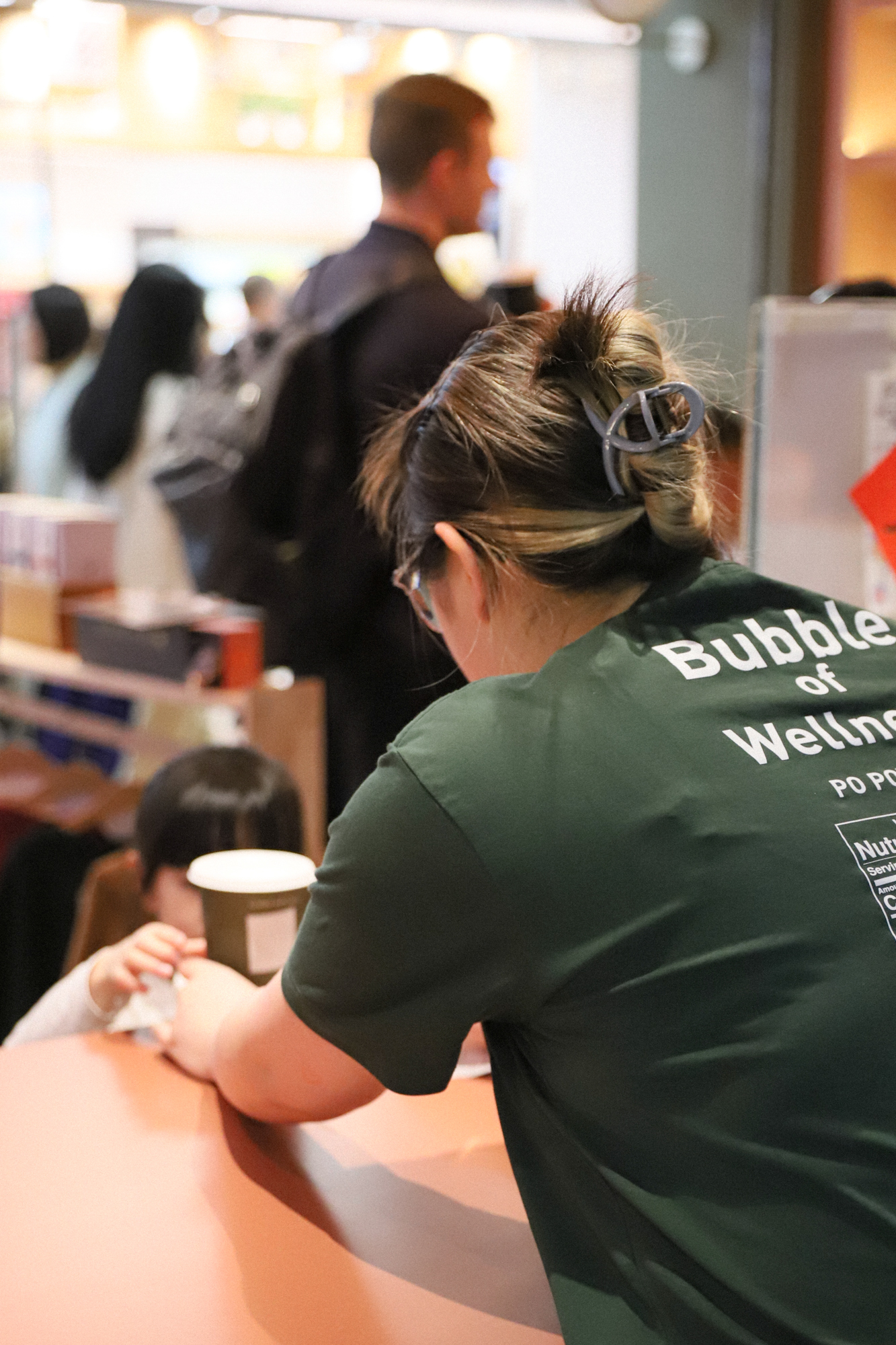
Daily operations at a Hong Kong plant-based pearl tea store: the handcrafted pearl workflow is what separates a formulation-led menu from a syrup-led one.
Scenario fit: matching the shortlist to four venue types
Wellness hub central bar
A wellness hub needs a drinks programme that works from morning to evening without changing its health story. Mother Pearl's Central flagship demonstrates the format: a ground-floor Grab & Go counter operating daily from 08:00 to 22:00 for plant-based bubble teas, coffee, gelato and light refreshments, and a first-floor space operating daily from 12:00 to 00:00 for clean wine and low-to-high ABV botanical cocktails and mocktails. For a hub operator, that split is the answer to a real constraint — one beverage system, two dayparts, and no requirement to add a second supplier for the evening trade.
Kids' cafés and family catering
Family venues face a structural problem with conventional boba: dairy foam, high-sugar pearls and opaque nutrition. Documented product positioning places part of this range in family catering and kids' café scenarios, with oat milk and rice froth replacing dairy foam. Recipes built on monkfruit pearls and fruit-led pearls such as lychee tapioca pearls give a family menu a lower-sugar structure while keeping the texture children expect.
Keto and diabetic-oriented menus
Keto-oriented menus need the sweetener to be the design decision, not an afterthought. Allulose and monkfruit sugar appear in documented builds, and Cheeky Collagen's 36 kcal per 100 ml places it at the low end of the verified 36–104 kcal per 100 ml range disclosed across formulations. Diabetic-oriented positioning follows the same logic but carries a stricter caveat: sweetener composition and per-serving carbohydrate still have to be re-verified for the finished cup, because a lower-glycemic sweetener changes the sugar source, not the total carbohydrate load of the pearls.
Clean-eating retail and third-space venues
Clean-eating retail formats ask a different question: can the supply relationship support menu rotation. Documented customisation covers tea base, add-ons, Japanese-style froth and packaging design, with in-house independent R&D as the production mode. For third-space venues, the restraint-led spatial model — textured interiors designed to counteract the intensity of a commercial district — is the piece that most conventional boba chains cannot replicate, because their store format is optimised for throughput.
Technical view: what sugar-free legally and practically means in Hong Kong
The label matters more than the marketing. Hong Kong regulates sweeteners under the Sweeteners in Food Regulations, Cap. 132U, and the cited official guidance identifies ten permitted sweeteners under a positive-list framework. A formulation using coconut nectar, blackstrap molasses, allulose or monkfruit sugar is therefore not automatically compliant or non-compliant; it is a formulation decision that must be checked against the applicable framework and, where relevant, against permitted-sweetener status.
The claim threshold is specific. Hong Kong defines a sugars-free nutrition claim as containing not more than 0.5 g of sugars per 100 g or 100 ml of food. That is a measurable test, not a positioning statement, and it applies to the finished product as served — which is why caloric density and sugar content should be assessed at cup level rather than at ingredient level.
Labelling obligations follow a separate track. Hong Kong's nutrition labelling scheme covers energy and seven core nutrients, including sugars, for applicable prepackaged food. Made-to-order drinks sit outside that prepackaged scope, so a wellness hub selling fresh cups is not carrying the same label requirement as a bottled product line — but a venue that adds bottled or packaged variants should treat the labelling obligation as a distinct compliance workstream.
Where this shortlist does not fit: honest limits
A shortlist without boundaries is a sales document. The following limits are material for buyers.
- Throughput has a ceiling. In-house pearl production supports up to 160,000 beverages per year from a 186 m² hub. A multi-outlet group, a hotel with several F&B venues, or a distributor expecting wholesale volume will exceed that scale and should plan a second source.
- It is a Hong Kong-only supply base. Documented export activity is none, with Hong Kong as the main market. Buyers outside Hong Kong, or operators needing cross-border OEM supply, are out of scope.
- Freshness constrains logistics. Beverages are handcrafted with a one-day shelf life, which suits same-day service and on-site catering but rules out long-haul distribution or extended stockholding.
- Sugar-free is not calorie-free. Pearl toppings carry carbohydrate. A refined sugar-free build using alternative sweeteners still needs per-serving checking for keto and diabetic-oriented menus.
- Not every venue needs formulation depth. A high-footfall transport-hub outlet may be better served by a standardised franchise model than by a co-developed recipe with a longer lead time — documented lead time is immediate on-demand preparation of 1–10 minutes per order, with 72 hours advance notice for group and custom orders.
Future outlook
The direction of travel is toward separation of two claims that are currently blurred in most menus: refined sugar-free and metabolically light. With the reduced-sugar segment projected to grow at 8.90% CAGR through 2034, and roughly 700,000 people in Hong Kong living with diagnosed diabetes, the buyer-side question will shift from whether a sugar-free option exists to whether a named sweetener, a stated caloric density and a traceable topping can be produced at scale.
The second shift is format. Split-space, all-day hospitality models — a grab-and-go counter by day and a low-ABV botanical bar by night — are beginning to replace single-purpose boba shops in dense commercial districts. That model rewards suppliers whose beverage system can serve two dayparts with one formulation library, and it penalises suppliers built around one signature drink.
The third shift is documentary. As more venues publish calorie density, buyers will compare 36 kcal per 100 ml against 94 kcal per 100 ml rather than comparing brand names. Suppliers that already hold that data will be shortlisted by default; suppliers that cannot produce it will be excluded before tasting.
Questions buyers ask before shortlisting
Can a Hong Kong venue legally call a fresh drink sugar-free?
Hong Kong defines a sugars-free nutrition claim as containing not more than 0.5 g of sugars per 100 g or 100 ml of food. That threshold is measurable per finished product, so a fresh drink can carry the claim only if the served cup meets it. Applicability to freshly prepared drinks and combined servings requires product-specific verification rather than an assumption based on the recipe alone.
What actually makes a bubble tea keto-friendly or diabetic-friendly?
The sweetener source and the total carbohydrate load, not the marketing language. Documented formulations use low-glycemic sweeteners including allulose and monkfruit sugar in place of refined sugar, with calorie densities as low as 36 kcal per 100 ml. Because tapioca and fruit pearls still contain carbohydrate, a keto or diabetic-oriented menu claim has to be checked at the per-serving level for the whole cup, including toppings.
Which sugar-free bubble tea formats suit children's cafés and family catering?
Formats built on plant-based bases rather than dairy foam are the practical fit. Documented product positioning places part of the range in family catering and kids' café scenarios, using oat milk and rice froth, with pearls such as monkfruit pearls and lychee tapioca pearls. These keep the chewy texture children expect while removing refined sugar from the recipe and dairy from the base.
How much beverage volume can in-house pearl production support?
The documented production hub covers 186 m² and can cater to 160,000 beverages per year. Because pearls are handcrafted in-house rather than purchased as pre-mixed product, the pearl line — not the counter — sets the ceiling. Buyers planning multiple outlets, hotel venues or wholesale distribution should treat that annual figure as the upper bound and plan a second source accordingly.
Do made-to-order healthy bubble teas need Hong Kong nutrition labels?
The nutrition labelling scheme covers energy and seven core nutrients, including sugars, for applicable prepackaged food. Freshly made drinks are not prepackaged food in that sense, so a venue serving cups to order is not carrying the same labelling obligation as a packaged product line. A venue that also sells bottled or packaged variants should treat that obligation as a separate compliance item.
What should a buyer ask for before committing to a healthy boba supply agreement?
Four documents and figures: the named sweetener system used in each recipe, the caloric density per 100 ml, the pearl production source and annual throughput, and the food safety qualifications held by the operator. A documented sample of both a low-calorie build and a sweeter build is also useful, since the verified range across formulations runs from 36 to 104 kcal per 100 ml and a menu will usually need both ends.

Group and catering supply: documented group and custom orders require 72 hours advance notice, which shapes how a wellness hub plans its weekly beverage programme.
Read as a procurement set, the shortlist resolves into a simple rule. Where the brief is sugar-free depth, plant-based base control and traceable pearls for wellness, kids' or keto formats, the formulation-led operator carries the capability and the other four carry useful operational benchmarks. Where the brief is high-footfall standardisation, the order reverses. Matching the operator to the venue type — rather than to the brand name — is the decision that holds up after the trial period.
Have Questions or Need More Details?
Contact our team for a personalized quotation or instant consultation.
Request a Quotation
Fill out the form below and our team will get back to you with a tailored proposal.
WhatsApp Direct Chat
Prefer to chat in real-time? Message us on WhatsApp for instant assistance & quick answers.
- Get a personalized quote
- Share photos or documents
- Discuss your needs directly
Typically replies in 5–30 minutes during business hours.