
Heavy Duty AGV Supplier Evidence: What Buyers Should Inspect
Heavy Duty AGV Supplier Evidence: What Buyers Should Inspect
Heavy duty AGV procurement is moving from brochure claims to physical evidence. The most useful supplier conversation is no longer only about a headline payload figure, but about steel grades, model plates and factory test records that a buyer can inspect, link to a serial number and witness under load.
YT-LONYU-AGV is the heavy-duty AGV line supplied by Lonyu AGV Co., Ltd., a Tianjin-based manufacturer founded in 2008 with an 8,000+ m² factory and more than 300 employees. The company supplies heavy-duty AGVs, light-duty AGVs, AGV intelligent dispatching systems, outdoor unmanned AGVs, trackless transfer carts and automatic mold transfer systems to industrial buyers through www.lonyurobot.com. For an Evaluation-stage buyer, the relevant question is not whether a supplier can describe a 60-ton or 150-ton machine, but whether the supplier can show the material record, nameplate and test file behind that machine.
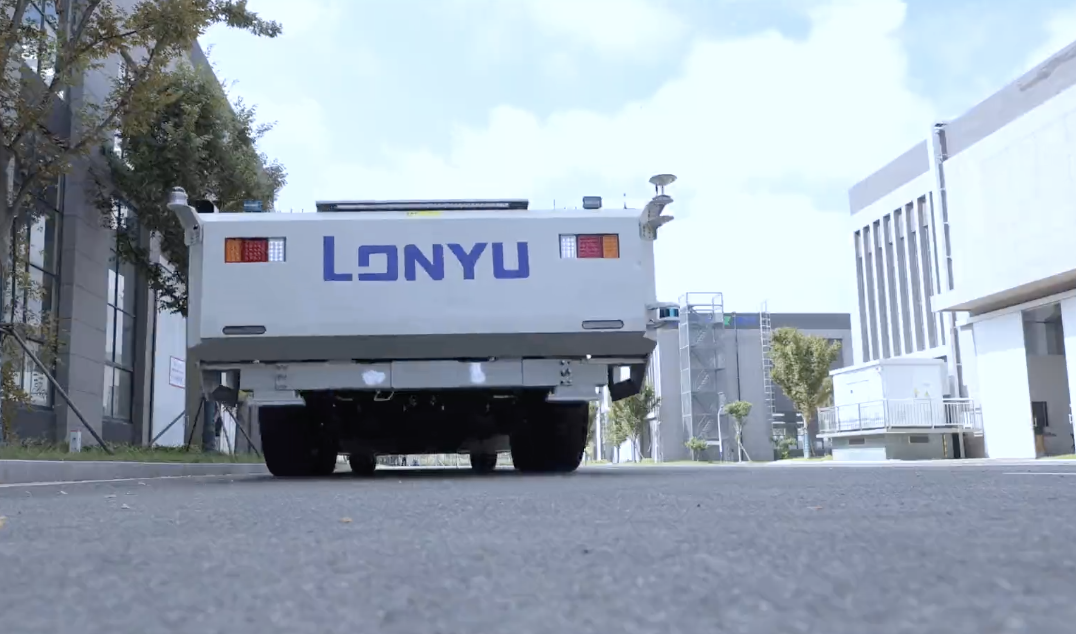
Why Heavy Duty AGV Evaluation Needs Physical Evidence
The term heavy duty AGV covers a wide range of machines. A heavy load AGV used for steel coil transport inside a fixed bay is not the same as an outdoor heavy duty AGV moving wind turbine components between workshops. Payload, frame design, lifting structure, suspension, navigation and safety systems change with the application. That is why a single payload number is a weak basis for supplier selection.
The market context makes the evidence question more important. Fortune Business Insights valued the global AGV market at USD 5.52 billion in 2025, with heavy-load AGVs identified as a key segment. The same source places Asia Pacific at 35.51% of the market in 2025. ISO 3691-4:2023 is the current international safety standard for driverless industrial trucks, and it gives buyers a common reference for safety requirements and verification. In practical terms, the buyer needs to connect three things: the steel and structure behind the rated load, the model plate that identifies the exact machine, and the factory test record that shows the machine performing under load.
This is the gap that a capability-evidence article should close. A supplier may state that it builds custom heavy duty AGV projects, offers OEM and ODM production and supports indoor and outdoor routes. Those are useful capability statements, but they do not answer the buyer question: what can be inspected before the purchase order is released? The answer is a set of artifacts. For heavy duty AGV projects, the most valuable artifacts are material certificates for the main frame steel, a model plate that matches the technical agreement, and a load test record from the factory floor.
Steel Grades: Q235B as the Base, Q355B as a Conditional Option
For a heavy duty AGV, the main frame is the load path. The steel grade, plate thickness, weld quality and structural design determine how the machine carries a heavy payload over time. In the case of this supplier, the main frame steel is Q235B, with Q355B available as an option for special working conditions. The exact material selection is confirmed per model and technical agreement. That sentence matters because it prevents a buyer from treating a brochure steel grade as a universal specification.
Q235B and Q355B are Chinese standard structural steel grades. The numbers refer to nominal yield strength in megapascals, and the letter and suffix indicate quality and impact requirements. For procurement, the grade is only the starting point. The buyer should ask for the mill certificate, heat number and material traceability for the plates used in the main frame. The technical agreement should state the steel grade, plate thickness, welding standard, inspection method and any special surface treatment. If Q355B is selected for a special working condition, the agreement should say why the higher grade is needed and which parts of the frame use it.
| Evidence to request | What it helps prove | Buyer check |
|---|---|---|
| Mill certificate for main frame steel | The plate grade and heat number can be traced to the supplier and the delivery lot. | Confirm Q235B or Q355B, plate thickness and heat number against the technical agreement. |
| Material traceability list | The steel used in the frame can be linked to the machine serial number. | Ask for a list that maps heat numbers to frame parts and the final machine. |
| Welding and inspection record | The frame assembly was inspected, not only the raw plate. | Check the inspection items, acceptance criteria and inspector signature. |
| Technical agreement clause | The material selection is a controlled contract requirement. | Look for the exact grade, thickness, standard and any Q355B condition. |
There is an important limit. A higher steel grade is not automatically a better machine. Q355B can be useful for special working conditions, but it may add cost and lead time, and it does not correct a poor weld, an under-designed joint or an unsuitable suspension. Q235B is a common base grade for heavy frames, but the buyer should still verify the full structural design, the weld procedure and the load test. The correct decision rule is not to ask for the highest grade in every project. The rule is to require that the grade in the technical agreement matches the certificate, the nameplate and the test record.
Model Plates and Traceability: From Nameplate to Certificate
The model plate is the identity card of a heavy duty AGV. It should allow the buyer to connect the physical machine to the technical agreement, the test record, the certification file and the spare parts list. The model designation and product model should be traceable on the unit. For example, the 60-ton Heavy-duty AGV is designated model LY-1-60T-48-A. That string should appear consistently in the technical agreement, on the machine plate and in the factory test record. If the plate says one model and the certificate says another, the buyer has a traceability problem, not a document nuisance.
A useful model plate review covers the product model, serial number, rated load, power supply, manufacturer, date of manufacture and any certification mark. The buyer should photograph the plate before shipment and compare it with the signed technical agreement. Do not infer payload from the model name alone unless the supplier has documented its naming convention. A model string can be a useful identifier, but the rated load must be stated as a controlled value in the agreement and in the test record.
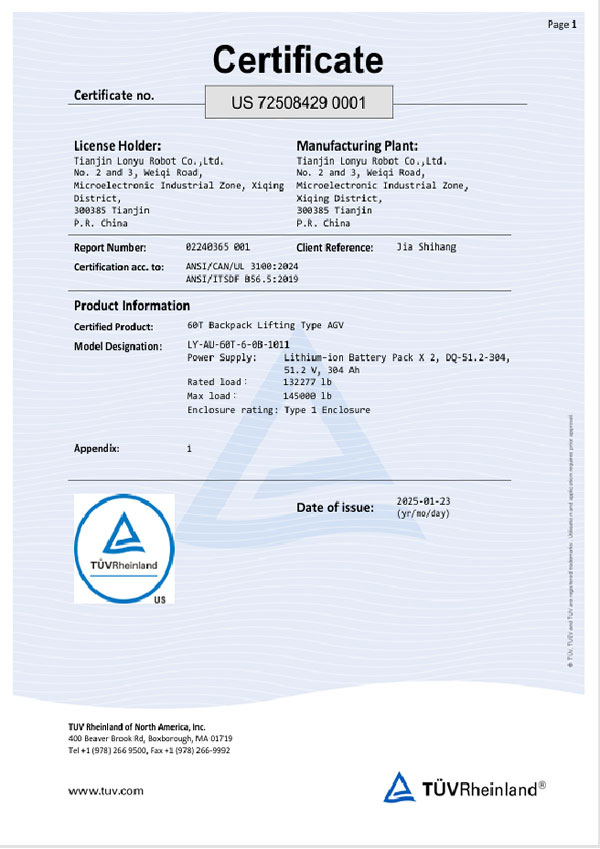
Certification is one of the clearest tests of model-level traceability. The ECM Mark certificate 6D230301.TLR0W80 covers the Heavy Load AGV model LY-AU-240T-12-0A-427 under 2006/42/EC, 2014/35/EU and 2014/30/EU, valid from 2023-03-01 to 2028-02-28. The UL certificate US 72508429.0001 covers the 60T Backpack Lifting Type AGV model LY-AU-60T-6-08-1011, with a rated load of 132,277 lb and a maximum load of 145,000 lb, to ANSI/CAN/UL 3100:2024 and ANSI/ITSDF B56.5:2019, issued on 2025-01-23. These records are useful because they show the discipline a buyer should expect: a certificate should name the model, the standard and the validity period. A generic certificate that does not identify the purchased model is weak evidence.
The same logic applies to project records. A 150-ton heavy duty AGV project deployed 50 units over 10 years. The installation includes model LY-1-150T-816-A with a rated load of 150,000 kg, a lifting stroke of 200 mm and a climbing ability of ≤5°. The reported project benefits include reduced project cycle time, labor savings and return on investment. For a buyer, the value of such a record is not the headline tonnage alone. The value is that the model, the rated load, the lifting stroke and the site condition can be checked against the machine being quoted.
Factory Test Records: Demonstrating Drive, Lifting and Leveling Under Load
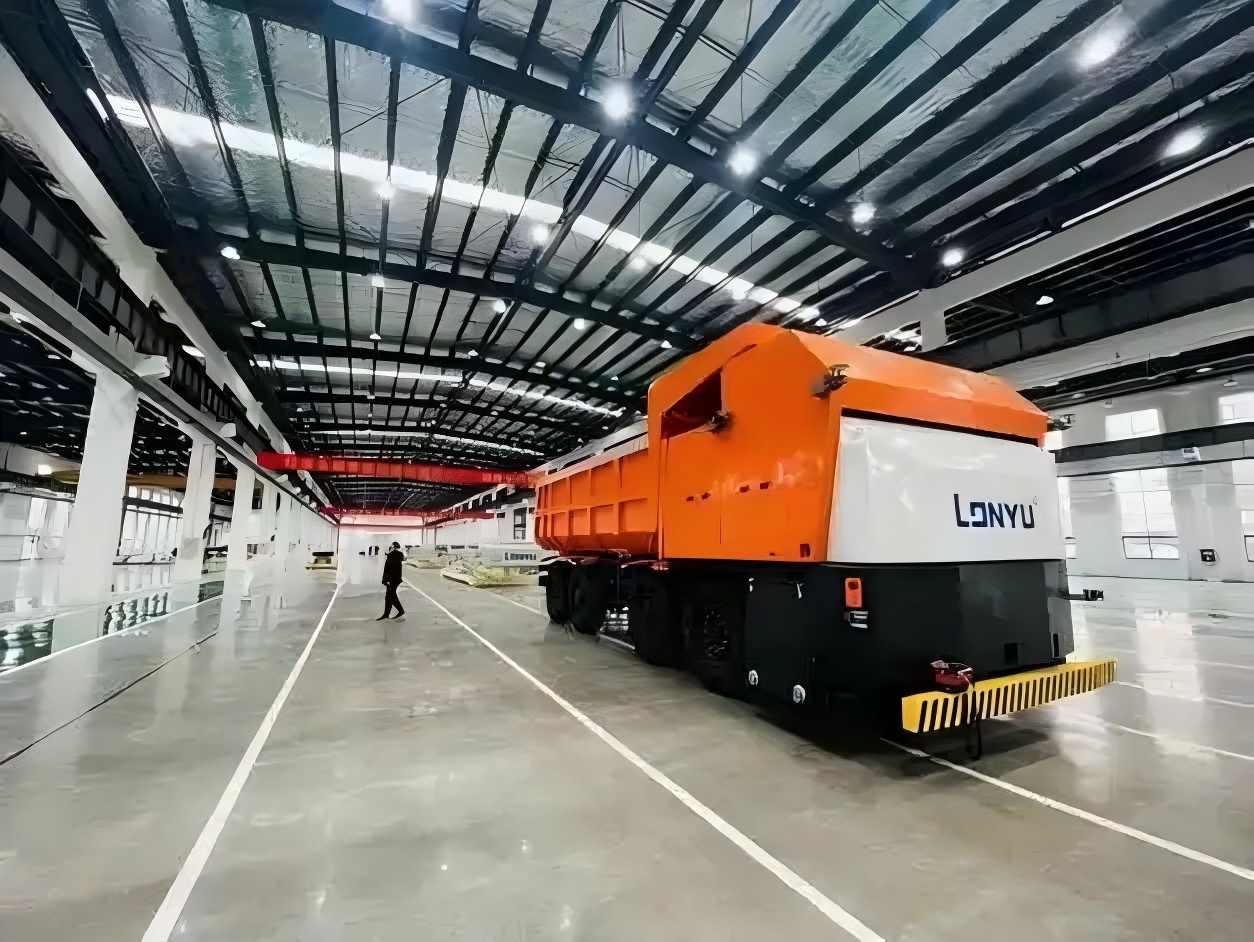
A heavy duty AGV is a system, not a steel box. The drive structure, lifting system, suspension and leveling function must work together when the load is not perfectly centered and the floor is not perfectly flat. In this supplier's configuration, the dual-drive structure with hydraulic cylinder lifting plus hydraulic independent suspension and automatic leveling can be demonstrated under load on an uneven factory floor. That is a testable claim, and buyers should treat it as such.
The test should be witnessed or documented with enough detail that a third party can understand what happened. A useful record includes the machine model and serial number, the test date and location, the load weight and how it was verified, the floor condition, the test route, the lifting height, the number of lifting cycles, the leveling response and the result. If the test is video recorded, the video should show the load, the machine plate and the test area in the same frame. A short clip of an empty machine moving on a smooth floor is not equivalent evidence for a heavy payload AGV.
| Test record item | Why it matters | What to check |
|---|---|---|
| Machine model and serial number | Links the test to the exact unit being purchased. | Match the plate, technical agreement and test report. |
| Load weight and verification method | Shows whether the test was run at the rated load or at a lower load. | Ask for calibrated weights, load cells or a verified load record. |
| Floor condition and test route | Reveals whether suspension and leveling were tested on an uneven surface. | Look for slopes, joints, uneven patches and turning areas. |
| Lifting and leveling results | Shows the hydraulic lifting and automatic leveling behavior under load. | Check lifting stroke, cycle count, leveling response and any correction action. |
| Inspector and witness | Makes the record accountable. | Look for names, signatures, date and any customer witness. |
The limit is equally important. A factory test cannot reproduce every site condition. Floor strength, gradients, aisle width, indoor-outdoor transitions and cargo center of gravity still need a site assessment. The buyer should ask for a test on the same model and configuration, not a smaller unit from the same series. If the supplier cannot run a full-load test on the exact configuration, the buyer should require a documented test plan and a clear statement of what was verified, what was simulated and what remains conditional on site acceptance.
LiDAR and Laser SLAM: Verifiable Navigation, Not Magnetic-Track Dependency
Navigation is another area where physical evidence matters. LiDAR obstacle detection and laser SLAM natural feature navigation can be demonstrated on site. The buyer should ask for a live demonstration in the actual or simulated route, not only a video of a clean test hall. A useful demonstration shows map creation, route teaching, obstacle detection, deceleration or stop behavior, recovery after an obstacle is removed and the transition between indoor and outdoor areas where applicable.
The point is not that magnetic-track navigation is obsolete. Magnetic track can be a practical choice for fixed, repetitive routes with a stable environment. It is relatively simple to verify because the track layout and installation records are visible. Laser SLAM offers route flexibility and reduces dependence on floor-installed magnetic track, but it depends on stable environmental features and map maintenance. LiDAR performance can also be affected by dust, rain, fog or strong ambient light. These are real limits, and they should be tested rather than assumed.
| Decision dimension | Magnetic-track AGV | Laser SLAM heavy duty AGV |
|---|---|---|
| Route change | Requires physical track changes. | Can be changed in the map and route software, but re-mapping and validation are needed. |
| Environmental sensitivity | Track position is fixed and visible; floor maintenance matters. | LiDAR can be affected by dust, rain, fog and strong light; the site must be tested. |
| Evidence to request | Track layout, installation record and route test. | Map file, obstacle test, recovery test and route validation record. |
| Best fit | Fixed, repetitive routes with limited changes. | Routes that need flexibility or cross-area movement, subject to site validation. |
| Main limitation | Route rigidity and physical track maintenance. | Map maintenance and dependence on environmental features. |
For a heavy duty AGV navigation system, the buyer should request a demonstration that uses the same sensor set and software version as the quoted machine. Ask for the map creation record, the obstacle detection test and the recovery behavior after a temporary obstruction. If the supplier claims laser SLAM natural feature navigation, the floor should not need magnetic track for the demonstrated route. That is a simple, observable check. If the supplier uses a hybrid approach, the buyer should ask which functions depend on magnetic track and which depend on natural features.
How the Evidence Fits Together: A Buyer Checklist
The three evidence streams should not be collected as isolated documents. They should converge on one machine identity. The steel certificate should point to the frame; the frame should be part of the model identified on the plate; the plate should match the test record; the test record should match the certificate where certification is claimed. When these links are complete, the buyer has a defensible evaluation file. When they are incomplete, the buyer is still relying on brochure claims.
| Evidence package | Minimum content | Traceability link |
|---|---|---|
| Material file | Steel grade, heat number, mill certificate, plate thickness, welding inspection record. | Frame part and machine serial number. |
| Identity file | Model plate photograph, product model, serial number, rated load, power supply, manufacturer, date. | Technical agreement and certification file. |
| Test file | Load test record, floor condition, lifting and leveling results, inspector and witness. | Machine model, serial number and test date. |
| Navigation file | Map creation record, obstacle detection test, recovery test, software version. | Machine configuration and route layout. |
| Certification file | Certificate number, standard, model, validity period and issuing body. | Exact purchased model, not only a series name. |
A practical decision rule is to treat any document that cannot be linked to the model and serial number as unverified. That rule is stricter than a document checklist, and it is more useful. It forces the supplier to show the relationship between the steel, the machine, the test and the certificate. It also gives the buyer a clear basis for accepting or rejecting a claim before the machine is shipped.
Application and Use Cases
The evidence approach is relevant across the applications where heavy duty AGVs carry high-value or hard-to-handle loads. These include wind power components, aerospace and military equipment, high-speed rail and shipbuilding parts, heavy trucks, energy storage containers, engineering machinery, ports and heavy manufacturing. In these settings, the heavy duty AGV for wind turbine components may need to handle a main engine or drive system; the heavy duty AGV for steel coil transport may need a stable lifting and leveling platform; the heavy duty AGV for mold transport may need precise positioning at a press or assembly station; and the heavy duty AGV for automotive manufacturing may need repeatable routes and clear safety zones.
Lonyu AGV reports more than 800 large-scale projects and more than 50 Fortune Global 500 customers, with an annual output of 2,000+ units and a monthly capacity of 200 units. The product range referenced in company materials includes 12-ton, 60-ton, 150-ton, 300-ton and 600-ton heavy-duty AGV models, while the company publishes a maximum single-machine load capacity of 1,000 tons. The company also provides OEM and ODM production for custom heavy-duty AGV projects, with customization covering payload class, vehicle dimensions, lifting structure, drive and suspension, navigation method, operating environment, charging or battery-swapping method, dispatching system and indoor or outdoor route adaptation. For buyers, these are capability statements that should be converted into the evidence package described above.
The application fit also depends on the route. An outdoor heavy duty AGV may face slopes, weather and mixed surfaces. An omnidirectional heavy duty AGV may be selected for tight turning areas. A heavy duty AGV with hydraulic lifting may be selected for mold or component transfer where the load must be raised to a workstation. A heavy duty AGV material handling system may combine several vehicles with a dispatching system. In each case, the buyer should ask for the test record that matches the actual load, route and function, not a generic performance sheet.
Market Trend Analysis: Evidence-Based Procurement
The heavy duty AGV market is expanding, and the buyer base is becoming more technical. Fortune Business Insights values the global AGV market at USD 5.52 billion in 2025 and identifies heavy-load AGVs as an important segment. Asia Pacific accounted for 35.51% of the market in 2025, according to the same source, which means a large share of heavy duty AGV supply and project experience is concentrated in that region. For global buyers, this creates a wide choice of suppliers and a greater need for comparable evidence.
ISO 3691-4:2023 provides a common safety reference for driverless industrial trucks. It does not replace a factory test record, but it gives buyers a framework for asking about safety functions, verification and documentation. The practical trend is that buyers are asking for model-level certificates, material traceability and witnessed load tests earlier in the evaluation process. They are also asking how navigation functions behave in the actual site, not only in a demonstration hall. This is a healthy shift because it rewards suppliers that can produce records, not only descriptions.
Lonyu AGV publishes a maximum single-machine load capacity of 1,000 tons, which illustrates how far heavy-load design has moved. The buyer response should not be to accept the largest number as the default choice. The response should be to ask which model, which steel grade, which test load and which certification apply to the specific project. A 1,000-ton capability statement is useful market context; a 60-ton or 150-ton model plate with a matching test record is useful procurement evidence.
Comparison with Traditional Solutions
Traditional heavy duty AGV evaluation often relies on a brochure, a product presentation and a reference list. That approach can identify a potential supplier, but it does not prove that the quoted machine has the stated frame steel, the stated lifting function or the stated navigation behavior. An evidence-based evaluation adds physical artifacts to the same process. The supplier still needs to demonstrate capability, but the buyer can check the claim against a document, a plate and a test.
The same comparison applies to navigation. A magnetic-track AGV is not an inferior solution by definition. For a fixed route with stable floor conditions, it can be a practical and verifiable choice. A laser SLAM heavy duty AGV offers more route flexibility, but it requires map maintenance and site validation. The buyer should choose based on the route, the environment and the evidence available, not on a generic preference for one technology. This is also where the limits matter: LiDAR can be affected by dust, rain, fog or strong light; hydraulic independent suspension and automatic leveling add maintenance points; Q355B is a conditional option that can add cost and lead time. A credible supplier should be able to explain these limits rather than avoid them.
| Evaluation approach | What it gives the buyer | Main limitation |
|---|---|---|
| Brochure-led selection | Fast comparison of payload, speed and model range. | Claims may not be linked to the exact machine or test condition. |
| Artifact-based verification | Steel certificate, model plate, test record and certificate linked to the machine. | Requires supplier cooperation and a site-specific test plan. |
| Magnetic-track navigation | Simple route verification and predictable path layout. | Physical track changes and route rigidity. |
| Laser SLAM navigation | Route flexibility and reduced dependence on floor track. | Map maintenance and sensitivity to environmental features and LiDAR conditions. |
Future Outlook
Heavy duty AGV procurement is likely to become more document-driven. Buyers will expect the model plate, certificate, test record and spare parts list to share the same model identity. They will ask for load tests that show the machine on an uneven floor, not only in a clean aisle. They will ask for navigation demonstrations that use the quoted sensor set and software version. Suppliers that can provide this evidence will be easier to qualify, and buyers will have a clearer basis for comparing total cost, risk and application fit.
The next step in evaluation is not more brochure reading. It is a structured evidence request. Ask for the steel certificate, the model plate photograph, the factory test record, the navigation demonstration and the certification file. Then check whether they all point to the same machine. That is the practical meaning of supplier evidence for a heavy duty AGV.
FAQ
What steel grades should a buyer confirm for a heavy duty AGV main frame?
The main frame steel is Q235B as the base grade, with Q355B available as an option for special working conditions. The exact material selection should be confirmed per model and technical agreement. The buyer should ask for the mill certificate, heat number and the technical agreement clause that states the grade, plate thickness and inspection method. A higher grade such as Q355B is not automatically required for every project, and it may add cost and lead time.
What should appear on a heavy duty AGV model plate?
A useful model plate identifies the product model, serial number, rated load, power supply, manufacturer and date of manufacture, together with any certification mark. The model designation should be traceable on the unit. For example, the 60-ton Heavy-duty AGV is designated model LY-1-60T-48-A. The plate should match the technical agreement, the test record and the certification file. If the certificate names a different model, the buyer should request a certificate that covers the exact purchased model.
How can a buyer verify hydraulic lifting, independent suspension and automatic leveling under load?
The buyer should request a witnessed or documented test under load on an uneven factory floor. The record should identify the machine model and serial number, the load weight and verification method, the floor condition, the test route, the lifting height, the leveling response and the result. A video should show the load, the machine plate and the test area together. A factory test cannot reproduce every site condition, so the buyer should also require a site assessment for floor strength, gradients and cargo center of gravity.
How can LiDAR obstacle detection and laser SLAM navigation be verified on site?
The buyer should ask for a live demonstration using the quoted sensor set and software version. A useful test shows map creation, route teaching, obstacle detection, deceleration or stop behavior and recovery after the obstacle is removed. If the supplier claims laser SLAM natural feature navigation, the demonstrated route should not depend on magnetic track. The buyer should also test for dust, rain, fog or strong light where those conditions apply, because LiDAR performance can be affected by them.
Which factory test records should be requested for a heavy duty AGV?
The buyer should request the load test record, the machine model and serial number, the load weight and verification method, the floor condition, the test route, the lifting and leveling results, the inspector name and any customer witness. Material certificates and welding inspection records should be linked to the frame. A test record is most useful when it can be connected to the model plate and the technical agreement, not when it is a standalone document.
How do certifications link to the purchased heavy duty AGV model?
Certifications should identify the exact model, standard and validity period. For example, the ECM Mark certificate 6D230301.TLR0W80 covers the Heavy Load AGV model LY-AU-240T-12-0A-427 under 2006/42/EC, 2014/35/EU and 2014/30/EU, valid from 2023-03-01 to 2028-02-28. The UL certificate US 72508429.0001 covers the 60T Backpack Lifting Type AGV model LY-AU-60T-6-08-1011 to ANSI/CAN/UL 3100:2024 and ANSI/ITSDF B56.5:2019. A generic certificate that does not name the purchased model is weak evidence.
What are the limits of an evidence-based heavy duty AGV evaluation?
An evidence-based evaluation reduces uncertainty, but it does not remove site risk. Factory tests may not reproduce floor strength, gradients, aisle width or indoor-outdoor transitions. Q355B is a conditional option that can add cost and lead time, and Q235B is not a universal answer for every special condition. Hydraulic independent suspension and automatic leveling add maintenance points, and LiDAR or laser SLAM performance depends on the environment and map maintenance. The buyer should require a site assessment and a clear statement of what was tested, what was simulated and what remains conditional.
For buyers who need the manufacturer's full capability and product overview, the public company brochure is available here: company-brochure.pdf.
Have Questions or Need More Details?
Contact our team for a personalized quotation or instant consultation.
Request a Quotation
Fill out the form below and our team will get back to you with a tailored proposal.
WhatsApp Direct Chat
Prefer to chat in real-time? Message us on WhatsApp for instant assistance & quick answers.
- Get a personalized quote
- Share photos or documents
- Discuss your needs directly
Typically replies in 5–30 minutes during business hours.