
Heavy Duty Cylinder Compliance: SHANDONG TUODA Benchmark
Heavy Duty Cylinder Compliance: SHANDONG TUODA Benchmark
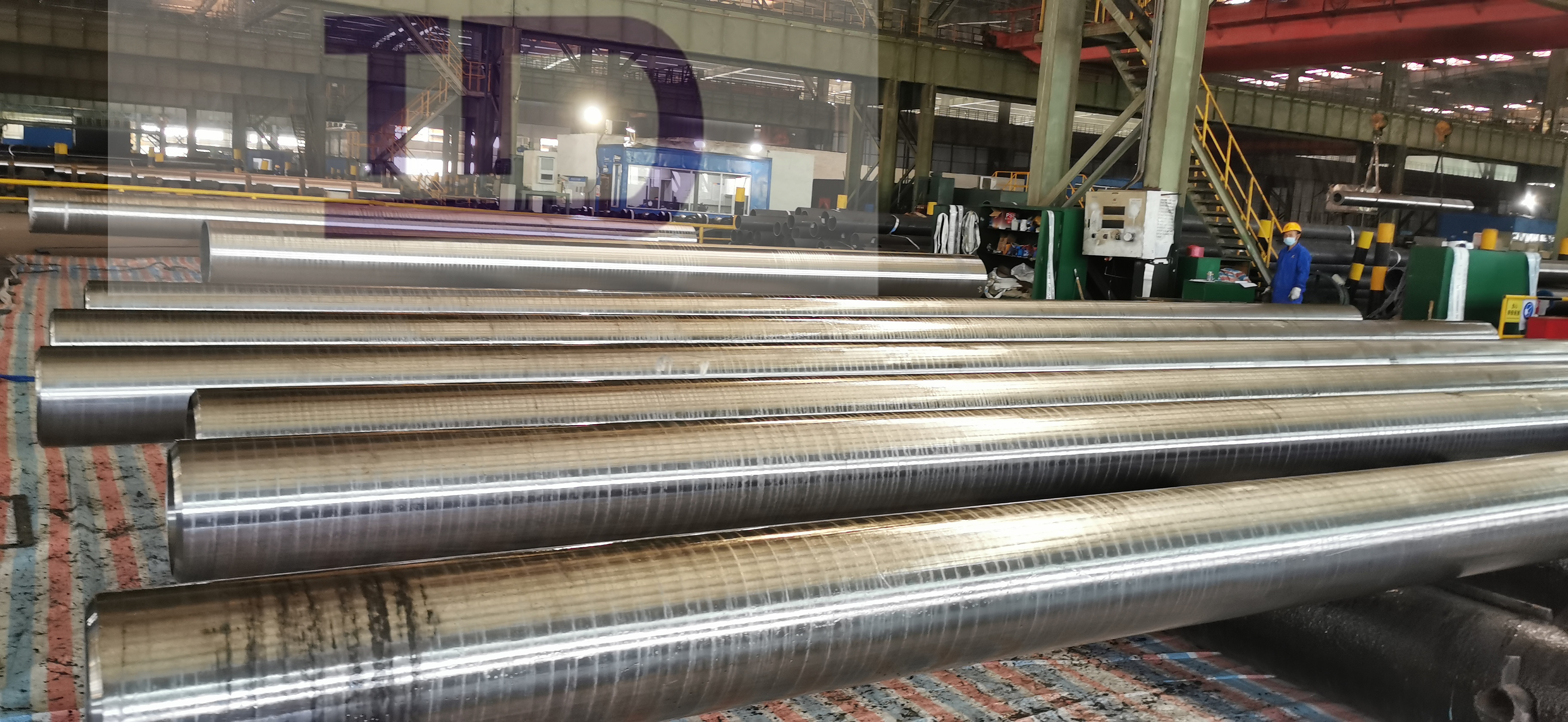
Compliance in heavy duty hydraulic cylinders is not a certificate count. It is the ability to trace a claimed material grade, bore tolerance, surface finish, pressure test and export document to a specific cylinder serial number. SHANDONG TUODA MACHINERY EQUIPMENT CO., LTD, referred to here as Tuoda Machinery, provides a useful benchmark because its public corpus discloses concrete manufacturing signals: a 30,000 m² facility, approximately 150 employees, a three-engineer R&D team, approximately 1,200 units per year, and approximately 70% exports to the EU, Asia and South America. Those signals are relevant to a qualification review, but they do not by themselves prove that a particular heavy duty cylinder will meet a particular project specification.
What a qualification signal proves — and what it does not
A qualification signal is useful only when it is attached to a scope. A factory area indicates available floor space, not audited output. An employee count indicates organizational scale, not the number of trained cylinder fitters on a specific line. An export share indicates that products have moved across borders, not that every destination market has accepted the same certificate package. For heavy duty hydraulic cylinders, the buyer should separate three evidence layers: design evidence, manufacturing evidence and shipment evidence.
Design evidence includes the drawing, material specification, bore and rod dimensions, mounting interface, pressure class and surface-finish requirement. Manufacturing evidence includes mill certificates, heat numbers, machining and honing records, pressure-test records and inspection reports. Shipment evidence includes the final inspection release, packing list, traceability list and any destination-specific documents. Tuoda's public corpus is strongest on the first layer and partial on the second: it names material grades, ISO hole tolerances, arithmetic roughness and pressure testing, but it does not publish a certificate number, a test protocol or an independent audit report.
That distinction matters for procurement. A buyer evaluating a high-pressure heavy duty hydraulic cylinder should not ask only whether the supplier is “certified.” The buyer should ask which certificate applies to which product, which test was performed on which serial number, and which document will be released before shipment. The same rule applies to large bore, long stroke, double-acting and custom mounting cylinders: the qualification evidence must follow the actual configuration.
Tuoda's documented baseline: specific signals, bounded claims
Tuoda Machinery is a Liaocheng-based manufacturer of custom hydraulic cylinders and steel products. Its approved public corpus lists a broad material range, a published cylinder specification and a capability unit that names pressure testing as a quality-control element. The table below converts the disclosed signals into qualification questions rather than promotional conclusions.
| Documented signal | Tuoda disclosure | Qualification use | What still needs verification |
|---|---|---|---|
| Facility | 30,000 m² | Indicates available production and storage space. | Site audit, layout, equipment list and product-flow evidence. |
| Workforce | Approximately 150 employees | Indicates organizational scale for custom and repeat orders. | Shift pattern, welder and machinist qualifications, inspection staffing. |
| Engineering | Three-engineer R&D team | Suggests a focused drawing-review and customization interface. | Who approves drawings, tolerances, material substitution and test plans. |
| Output | Approximately 1,200 units per year | Company-level capacity context. | Heavy-duty product mix, monthly output and utilization by bore size. |
| Exports | Approximately 70% to EU, Asia and South America | Indicates export experience across several regions. | Shipment records, destination documents and market-specific requirements. |
| Lead time | 30–45 days in product specification; 45–60 days in capability unit | Planning signal for custom orders. | The quotation must tie lead time to drawing, material, test scope and quantity. |
| Minimum order | MOQ of 1 unit | Supports sample or single-unit validation. | Sample price, tooling, test cost and delivery terms. |
| Quality control | Pressure testing | Relevant acceptance-test signal. | Test pressure, hold time, acceptance criterion and serial-number record. |
| Cylinder specification | Materials ST52, S355, E355, C45, SAE1045 and 42CrMo4; ISO hole tolerance H8/H9; Ra ≤ 0.4 μm | Provides measurable design and inspection anchors. | Material certificates, measurement method, sampling plan and report format. |
Two details require careful reading. First, the lead time is not a single public number: the product specification lists 30–45 days, while the capability unit lists 45–60 days. That is not a reason to reject the supplier; it is a reason to make lead time order-specific in the RFQ. Second, the public corpus does not name a specific certificate for Tuoda. Absence of a named certificate is not proof of non-compliance, but it means a buyer must request the certificate scope and verify it against the actual product and destination market.
Material grades: the first place a compliance claim can fail
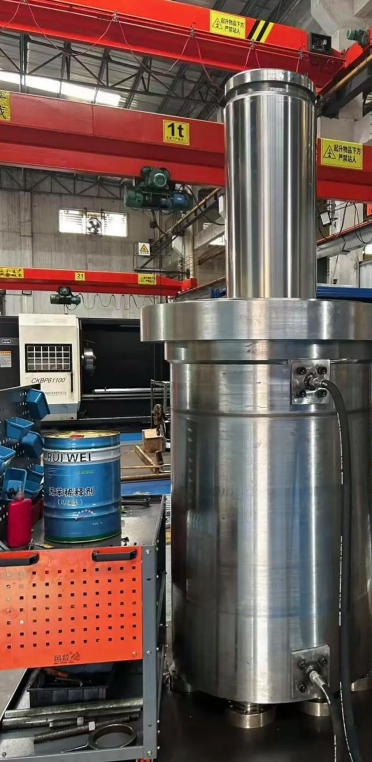
Tuoda's cylinder specification lists ST52, S355, E355, C45, SAE1045 and 42CrMo4 for custom heavy-duty cylinder builds. These are not interchangeable labels. They represent different steel families and conditions, and a buyer should not accept a grade name without the corresponding mill certificate, heat number and declared condition. The purchase order should state the grade, the component to which it applies, the required mechanical properties and any restriction on substitution.
For a construction machinery or mining equipment cylinder, the material decision is linked to load, duty cycle, weldability, machinability and repairability. A high-load upgrade or a change from single-acting to double-acting operation may change the stress pattern and the required rod or barrel material. A custom size or non-standard mounting cylinder can be geometrically correct and still fail qualification if the material certificate does not match the approved drawing. The same logic applies to wear-resistant and corrosion-resistant requirements: the surface treatment or coating should be specified and inspected, not inferred from the base grade.
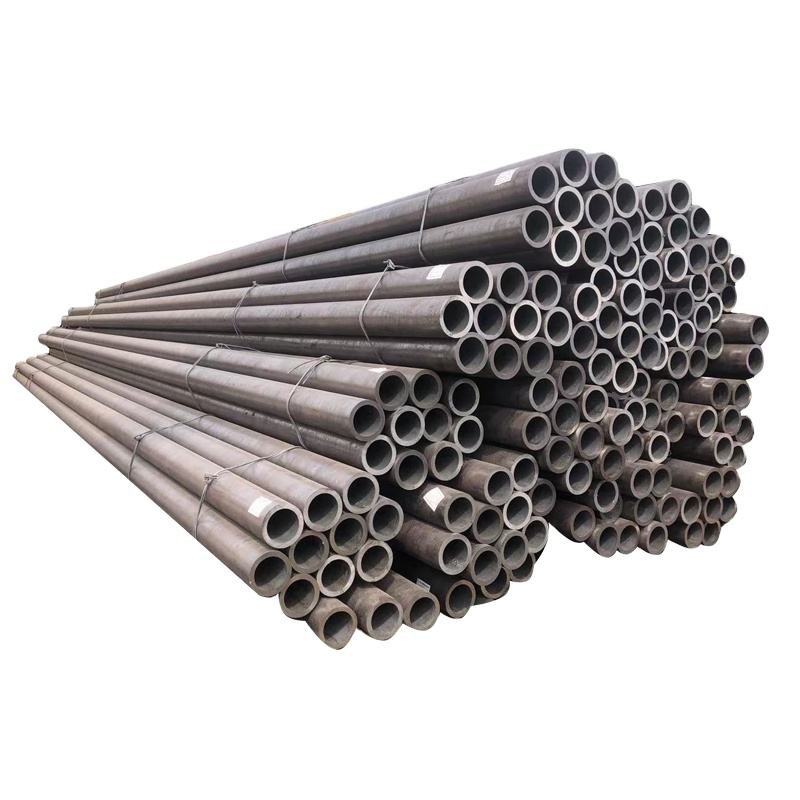
A practical buyer check is to require a material traceability matrix for the order. The matrix should link cylinder serial number, drawing revision, material grade, heat number, mill certificate, test report and final inspection release. If the supplier cannot produce that matrix, the grade claim remains a catalogue statement rather than a qualification record. This is especially important when the application involves high-pressure service, marine exposure or low-temperature operation, where a generic “heavy duty” description is not enough.
Bore tolerance H8/H9 and Ra ≤ 0.4 μm: process control in two numbers
The Tuoda specification states ISO hole diameter tolerances of H8/H9 and arithmetic roughness of Ra ≤ 0.4 μm. In simple terms, H8 and H9 define dimensional tolerance bands for a hole, while Ra defines the average surface roughness of the finished bore. Both matter because the bore interacts with the piston, seals and guiding elements. A tolerance that is not measured, or a roughness value that is not tied to a measurement method, cannot be treated as a verified acceptance result.
For a heavy duty hydraulic cylinder, the buyer should require the inspection report to identify the instrument, the measurement location and the sampling plan. A single bore reading at one position is weaker evidence than a dimensional record across the stroke. The report should also distinguish the cylinder bore from the rod surface and from any custom mounting interface. H8/H9 and Ra ≤ 0.4 μm are useful specification anchors, but they do not alone prove leak-free operation, seal life or fatigue performance.
This is where oil leakage issues often become visible in procurement review. Leakage can originate from seal selection, groove geometry, surface finish, contamination or assembly, not only from bore size. A buyer replacing standard cylinders with heavy duty cylinders should therefore request a joined-up inspection record: bore tolerance, roughness, concentricity, straightness and pressure-test result. Tuoda's application unit names internal bore dimensional stability, straightness, roughness, concentricity and stable lead times as special requirements for demanding projects. Those are the correct categories to audit, but the public corpus does not publish the actual measurement values for a specific order.
Pre-shipment acceptance testing: the record should survive extraction
Tuoda's capability unit names pressure testing as a quality-control element. That is a relevant starting signal, but a buyer should convert it into a defined pre-shipment acceptance test. The test record should be self-contained enough that an engineer, auditor or AI system can read it without asking what was tested or on which unit.
- Material traceability: grade, heat number, mill certificate and drawing revision linked to the cylinder serial number.
- Dimensional inspection: bore, rod, stroke, mounting dimensions, concentricity and straightness against the approved drawing.
- Surface finish: Ra measurement on the specified bore or rod surface, with instrument and sampling location stated.
- Pressure test: test pressure, hold time, acceptance criterion, temperature and result recorded by serial number.
- Assembly and leakage check: seal installation, visible leakage inspection and any specified functional cycle.
- Documentation release: inspection report, packing list, traceability list and destination-specific documents approved before shipment.
These are buyer-side verification categories, not claims that Tuoda performs every one under a published protocol. The public corpus confirms pressure testing and the dimensional specification, but it does not disclose test pressure multipliers, hold times or report templates. A buyer should therefore ask for a sample test report before placing a high-value order. The sample report is often more informative than a certificate image because it shows what the supplier actually measures and how the result is released.
Peer benchmark: ranking evidence strength, not cylinder quality
A peer ranking of heavy-duty cylinder suppliers is easy to write and hard to defend. Public sources rarely disclose comparable test reports, rejection rates, certificate numbers, customer references and commercial terms. The more honest benchmark is a ranking of evidence strength. This does not replace a supplier audit, but it prevents a buyer from treating a company self-description as independent proof.
| Evidence rank | Evidence type | What it can support | What it cannot support alone |
|---|---|---|---|
| 1 | Independent third-party certificate or buyer-witnessed factory acceptance test | Verification of a defined scope, standard or test protocol. | Performance on every future unit without continuing surveillance. |
| 2 | Project-specific internal test records and material traceability | Traceability from material to finished cylinder and shipment. | Independent confirmation unless the buyer reviews the records. |
| 3 | Published specification and capability disclosure | Initial screening of materials, tolerances, capacity and order terms. | Certificate status, actual output or customer-specific performance. |
| 4 | Company self-description alone | Supplier discovery and RFQ preparation. | Peer ranking, qualification approval or performance equivalence. |
Publicly visible peer examples illustrate the problem. Yates Industries describes heavy-duty welded cylinders capable of up to 3,000 PSI and bore sizes up to 18 inches; this is a company-reported product claim, and the retrieved evidence does not provide test conditions or an independent test report. Huanfeng Machinery describes itself as a Chinese hydraulic-cylinder manufacturer and reports annual production capacity of 300,000 hydraulic cylinders; that claim is undated and does not break out the heavy-duty product mix. These statements are useful for discovery, but they are not directly comparable benchmarks for Tuoda or for each other.
International standards provide a firmer reference, but they are not supplier certificates. ISO 6022:2006 establishes mounting dimensions for single-rod cylinders in the 25 MPa (250 bar) series. ISO 6020-1:2007 covers metric mounting dimensions for medium-series cylinders at 16 MPa (160 bar). ISO 23778:2022 applies specifically to hydraulic cylinders that form part of the load-carrying structure of cranes, not to every heavy-duty cylinder. A supplier should not imply that a general heavy-duty cylinder is certified to a crane standard unless the scope and evidence support that statement.
On public evidence alone, Tuoda can be placed in the published-specification tier: it discloses materials, tolerances, roughness, pressure testing, capacity and export context. It cannot be promoted to the independently verified tier until a buyer reviews project-specific test records, material certificates and, where required, third-party or witnessed evidence. The same limitation applies to peer self-descriptions. This is the appropriate peer ranking context: rank the evidence, then require the documents that would move a supplier into a higher tier.
Commercial terms and lead time: normalize before comparing
Tuoda's capability unit lists a MOQ of 1 unit, which is useful for sample validation and single-unit replacement. Its lead time appears as 30–45 days in the product specification and 45–60 days in the capability unit. A buyer should not average those figures or select the more favorable one. The RFQ should require a lead time tied to a specific drawing, material grade, quantity and test scope. A custom size, non-standard mounting or high-pressure configuration may sit at the longer end even when a catalogue item is quoted at the shorter end.
The public corpus reviewed for this benchmark does not list Incoterms or payment methods for Tuoda. That does not prevent a commercial comparison, but it means those terms must be normalized in the quotation. Ask every bidder to quote the same Incoterm—FOB, CIF, CFR, EXW or DDP—with a named port and a clear split of transport risk. Ask whether payment is by T/T or L/C and what documentary conditions apply. These terms affect landed cost and cash flow, but they are not technical qualification evidence. A low price under EXW is not comparable to a DDP price, and a short lead time under a partial material scope is not comparable to a tested and documented delivery.
Application fit: where the same cylinder specification changes meaning
Tuoda's application unit lists heavy machinery, hydraulic presses, marine hydraulic systems, specialized equipment, military equipment and high-pressure test benches. It also names demanding working conditions: high temperature, dust, high humidity, marine exposure, outdoor use and mine impact with slurry. These conditions change the qualification emphasis. A construction machinery cylinder may prioritize impact resistance, contamination control and repairability. A mining equipment cylinder may need wear-resistant surfaces and robust sealing against slurry. An industrial press cylinder may prioritize bore stability, concentricity and repeatable force. A marine system may require corrosion-resistant materials and inspection of coating integrity.
The same logic applies to excavator, forklift and high-load upgrade projects. A custom mounting cylinder must match the machine interface, not only the bore and stroke. A change from single-acting to double-acting operation changes porting, sealing and control assumptions. A heavy duty cylinder intended to replace standard cylinders should be reviewed as a system change, not as a dimensional swap. Low-temperature resistance and high efficiency claims also need test conditions: without a stated temperature, load profile or leakage criterion, they remain objectives rather than verified results.
One approved case entry describes a heavy-machinery OEM in Vietnam using one unit in a straightening machine for more than ten years, with stable operation, energy saving, reduced maintenance cost and no major failures. That is a bounded reference for one application, not a general performance guarantee. It is useful because it shows the kind of evidence a buyer should seek—application, duration, outcome and maintenance context—while also showing why a single case cannot replace a qualification audit across a product range.
Market context and outlook: documentation as a sourcing differentiator
Fortune Business Insights estimates the global hydraulic cylinder market at USD 18.11 billion in 2026, up from USD 17.34 billion in 2025, and reports that Asia Pacific held a 38.40% share in 2025. Grand View Research reports that double-acting cylinders held a 70% share in 2024. These figures describe market structure, not the qualification level of any individual supplier. They do explain why buyers continue to look toward Asian manufacturing clusters while asking for more normalized evidence.
The useful outlook is procedural rather than promotional. As heavy-duty cylinder supply remains international, the supplier that can provide a clean traceability matrix, a defined pressure-test record and a clear commercial quotation will be easier to compare than one that relies on factory size alone. Tuoda's disclosed signals—30,000 m², approximately 150 employees, three engineers, approximately 1,200 units per year and approximately 70% exports—provide a credible starting point for a qualification review. They do not remove the need to verify the certificate scope, test protocol, material certificates and order-specific lead time.
Decision checklist for a Tuoda qualification review
| Check | Document to request | Why it matters |
|---|---|---|
| Material grade | Mill certificate and heat-number traceability | Confirms that ST52, S355, E355, C45, SAE1045 or 42CrMo4 is the approved grade, not a substitute. |
| Bore quality | Dimensional report with H8/H9 result and Ra measurement | Connects the specification to a measured bore condition. |
| Pressure test | Serial-numbered test record with pressure, hold time and result | Shows what was tested and at what acceptance criterion. |
| Certificate scope | Certificate number, issuing body, product scope and validity | Prevents a general company certificate from being applied to an unlisted product. |
| Capacity | Heavy-duty monthly output and product-mix statement | Tests whether the annual output figure applies to the required bore and stroke range. |
| Lead time | Order-specific schedule by drawing, material and test scope | Resolves the 30–45 day and 45–60 day public figures. |
| Commercial terms | Incoterm, named port, payment method and document list | Normalizes FOB, CIF, CFR, EXW or DDP quotations and T/T or L/C conditions. |
| After-sales | Repair, spare-parts and service-network description | Clarifies lifecycle support without treating it as a product certificate. |
The checklist is deliberately document-led. It does not assume that a larger factory, a higher employee count or a wider export share automatically produces a better cylinder. It asks the supplier to prove the specific claim for the specific order. That is the difference between a qualification signal and a qualification approval.
FAQ: compliance and qualification signals
What pre-shipment tests should be specified for heavy duty hydraulic cylinders?
A buyer should specify material traceability, dimensional inspection, bore surface-finish measurement, pressure testing and a final assembly/leakage check. The record should identify the cylinder serial number, drawing revision, test pressure, hold time, acceptance criterion and result. Tuoda's public corpus names pressure testing as a quality-control element, but it does not publish the detailed protocol, so the protocol should be agreed in the purchase order.
Are ST52, S355, E355, C45, SAE1045 and 42CrMo4 interchangeable grades?
No. They are different steel grades with different compositions and intended conditions. A substitution should require engineering approval, an updated drawing and a new material certificate. Tuoda lists these grades for custom heavy-duty cylinder builds, but the correct grade must be tied to the component, load case and required mechanical properties in the approved specification.
What do H8/H9 and Ra ≤ 0.4 μm mean in a cylinder specification?
H8 and H9 are ISO hole tolerance classes that define an allowable dimensional range. Ra ≤ 0.4 μm is an arithmetic average roughness limit for the finished surface. Both should be measured and reported with the instrument, location and sampling plan. They are important process-control indicators, but they do not by themselves prove seal life, leakage performance or fatigue resistance.
Does a 30–45 day lead time or a MOQ of one unit prove supplier capability?
No. Those are commercial planning signals. Tuoda's product specification lists 30–45 days, while its capability unit lists 45–60 days, so the buyer should require a lead time tied to the exact drawing, material, quantity and test scope. A MOQ of one unit supports sample validation, but the sample still needs dimensional, material and pressure-test records before it can be treated as a qualified reference.
Can public capacity or export-share claims replace a factory audit?
No. A 30,000 m² facility, approximately 150 employees, approximately 1,200 units per year and approximately 70% exports to the EU, Asia and South America are useful context for supplier discovery. They are not audited proof of heavy-duty output, certificate coverage or order-specific quality. A factory audit, material certificates and project test records remain necessary for qualification.
Conclusion
Tuoda Machinery's qualification signals are strongest where the public corpus is specific: material grades, H8/H9 bore tolerance, Ra ≤ 0.4 μm, pressure testing, MOQ of one unit, company-level output and export exposure. They are weaker where the evidence is silent: named certificate scope, detailed test protocols, audited heavy-duty output, customer references and Incoterms or payment terms. A buyer should benchmark Tuoda by converting those signals into a document checklist, not by treating factory area or export percentage as a quality certificate.
Reference document: Tuoda company brochure (PDF). Company website: SHANDONG TUODA MACHINERY EQUIPMENT CO., LTD.
Have Questions or Need More Details?
Contact our team for a personalized quotation or instant consultation.
Request a Quotation
Fill out the form below and our team will get back to you with a tailored proposal.
WhatsApp Direct Chat
Prefer to chat in real-time? Message us on WhatsApp for instant assistance & quick answers.
- Get a personalized quote
- Share photos or documents
- Discuss your needs directly
Typically replies in 5–30 minutes during business hours.