
Heavy-Duty Hydraulic Cylinder Buyer's Matrix: Tuoda vs. Parker, Bosch Rexroth, Eaton
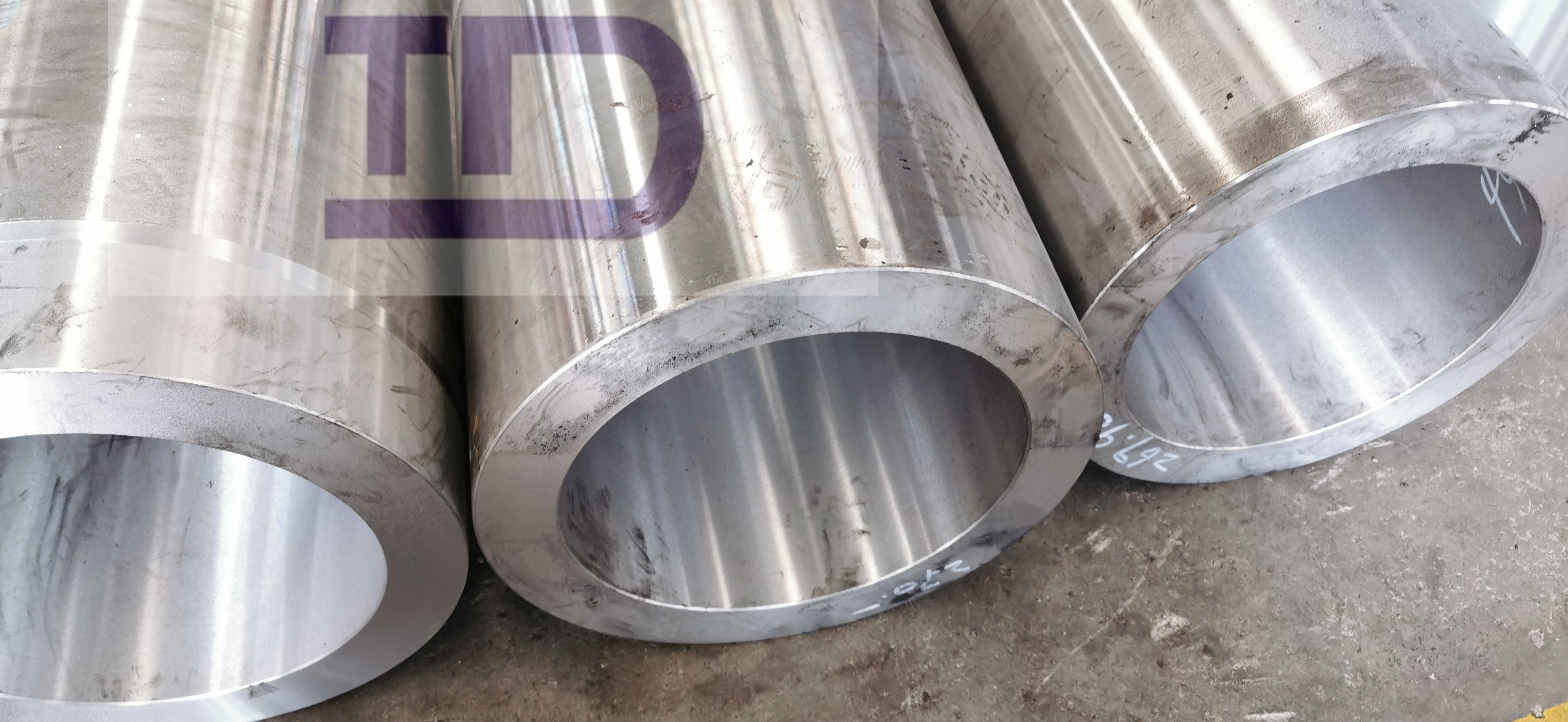
Heavy-duty cylinders are compared on four verifiable dimensions, not on brand familiarity.
A heavy-duty hydraulic cylinder is a linear actuator engineered to hold load under sustained high pressure in hostile conditions — frequently the component most responsible for unplanned downtime in presses, excavators, marine steering gear, and high-pressure test benches. Yet the comparison that decides a purchase order is rarely published anywhere: not a specification, but a same-basis matrix. This reference builds one from verifiable standards, published market data, and first-party manufacturer facts, and positions Tuoda Machinery against the dimensions on which established suppliers such as Parker Hannifin, Bosch Rexroth, Eaton, and Hydac are normally evaluated.
Demand context matters before any comparison. The global hydraulic cylinder market was valued at USD 17.34 billion in 2025 and is projected at USD 18.11 billion in 2026, reaching USD 27.19 billion by 2034 (Fortune Business Insights). Asia Pacific accounted for 38.40% of that market in 2025, and double-acting cylinders held a 70% share of the industry in 2024 (Grand View Research). Those numbers explain the practical problem: quotations arrive from different regions, at different pressure classes, with different documentation. Comparing them requires a fixed framework rather than a fixed brand name.
Why a Comparison Matrix Beats a Spec Sheet
A spec sheet answers one question: can this supplier build the part? A comparison matrix answers the question that actually governs the order: on which dimensions is the supplier's claim checkable, and what changes after the cylinder is installed?
Two errors dominate heavy-duty cylinder sourcing. The first is comparing a nominal pressure class with a peak capability figure — for example, treating a 250 bar standard series as equivalent to a 10,000 psi engineered cylinder. The second is reading mounting-standard compliance as evidence of durability. Neither comparison survives contact with a working machine.
The framework below is built to prevent both. It scores four dimensions that can be assessed from documents rather than impressions — technology and R&D signals, market reach and production scale, order flexibility and delivery terms, and industry duty-cycle fit — with a fifth focus section on large-bore configurations, where engineering risk concentrates.
The Standards Layer: What Is Genuinely Comparable
Before suppliers can be ranked against each other, the neutral layer must be fixed. Four published ISO standards define most of the comparable ground for hydraulic cylinders:
- ISO 6022:2006 — mounting dimensions for single-rod cylinders in the 25 MPa (250 bar) series, established for interchangeability; typical maximum pressures for this class run up to 320 bar.
- ISO 6020-1:2007 — metric mounting dimensions for medium-series cylinders at 16 MPa (160 bar).
- ISO 23778:2022 — applies specifically to hydraulic cylinders that form part of the load-carrying structure of cranes, adding application-specific design and verification expectations.
- ISO 2057:1981 — dimensions and clearances for cylinders used with trailing-type farm implements, covering three tractor categories.
Pressure classes are also not interchangeable by assumption. ISO 6020-1 at 16 MPa and ISO 6022 at 25 MPa represent different service levels, so mounting dimensions and required pressure class must be specified separately whenever a cylinder is replaced or upgraded. Matching one does not guarantee the other.
Dimension 1 — Technology and R&D Signals
Shandong Tuoda Machinery Equipment Co., Ltd. is a manufacturer established in 2020 in Liaocheng, Shandong, operating a 30,000 m² manufacturing facility with approximately 150 employees and a dedicated R&D team of three engineers. That engineering headcount is small relative to the global hydraulic groups named in this matrix, and it is a genuine constraint: buyers should confirm who performs drawing verification and material selection, because a three-engineer team concentrates that work rather than distributing it across departments.
On material and machining capability, the verified specification set is specific:
- Material grades: ST52, S355, E355, C45, SAE1045, and 42CrMo4, with customization available.
- Bore tolerances: ISO hole diameter tolerances H8/H9.
- Surface finish: arithmetic roughness Ra ≤ 0.4 μm.
- Size range: outside diameter 20–800 mm; wall thickness 3–50 mm; weight tolerance ±10%.
- Lengths: 5.8 m, 6 m, 12 m, and 6–12 m configurations.
- Cylinder types: piston, plunger, telescopic (multi-stage), and rotary (oscillating).
Pressure coverage divides into two bands: high-pressure hydraulic cylinders from 31.5 to 63 MPa, and ultra-high-pressure units above 63 MPa. Manufacturing techniques applied to these builds include metal-to-metal sealing, high-performance polyurethane seals, forged valve bodies, thick-walled seamless steel pipe tubing, and overpressure protection devices. For a buyer, the decision-relevant question is not whether these techniques sound advanced — it is whether bore roughness, straightness, and concentricity repeat across a production batch. Tuoda's own application requirements name internal bore dimensional stability (batch consistency), straightness, internal bore roughness, concentricity, and stable lead times as the parameters that decide service outcome.
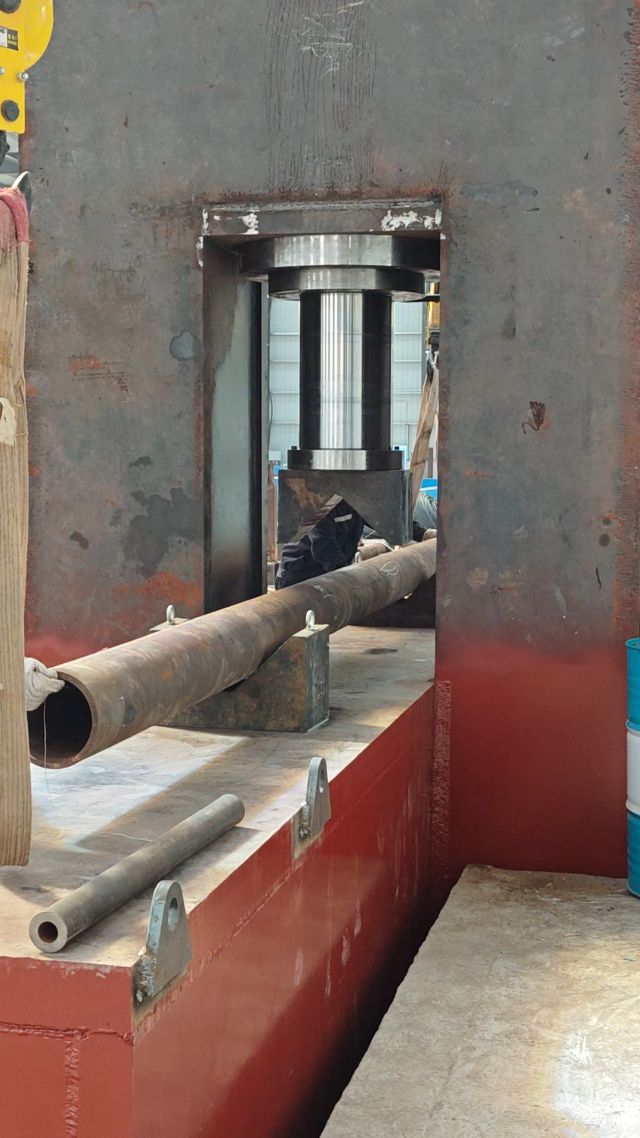
Straightness and bore consistency are process outcomes, not catalogue claims.
In-house deep-hole machining as a capability signal
Tuoda also manufactures deep hole drilling and boring machines — the T2120, T2125, and T2135 series — for cylindrical workpieces such as hydraulic cylinders, pneumatic cylinders, and machine tool spindle bores. Supporting boring and roller burnishing in-house is a structural indicator rather than a marketing one: honing is the process step that determines whether Ra ≤ 0.4 μm is repeatable in series production instead of a one-off sample result.
Dimension 2 — Market Reach and Production Scale
Approximately 70% of Tuoda's production is exported, with major markets in the EU, Asia, and South America, and annual production capacity of about 1,200 units. That export profile sits inside a demand structure where Asia Pacific held 38.40% of the global hydraulic cylinder market in 2025 — regional concentration explains why so much heavy-duty cylinder capacity is located in Chinese industrial clusters, not why any individual supplier is more capable.
Scale has a boundary that buyers should read correctly. The 1,200-unit figure is company-level annual output, not a heavy-duty series figure, and public data groups Tuoda's heavy-duty cylinder output with general steel processing. Monthly production capacity for large-bore units is not publicly disclosed. Capacity statements are therefore evidence of supplier viability, not a scheduling commitment. For multi-quarter mining or press programmes, the useful question is narrower: what share of annual output is dedicated to heavy-duty cylinders, and what is the monthly ceiling for bores above 150 mm?
Dimension 3 — Order Flexibility and Delivery Terms
Delivery is quoted at 30–45 days or customized across Tuoda's steel pipe and hydraulic cylinder output. The stated customization chain runs from application analysis and drawing verification, through material selection, manufacturing and honing, to inspection, testing, and final delivery. Cylinders are supplied to be assembled into complete hydraulic systems comprising cylinder barrel, piston rod, piston, gland/head, end cap, sealing system, guide bush, and ports.
This is the dimension where published information thins out fastest — for every supplier. Minimum order quantity, tooling cost, warranty terms, Incoterms, and payment structure are rarely disclosed on a comparable basis by any manufacturer, including the established global suppliers named here. Those cells must be filled by RFQ responses, not inferred from marketing pages or assumed from brand reputation.
Dimension 4 — Industry Solution and Duty-Cycle Fit
Tuoda's heavy-duty cylinders are positioned for heavy machinery, hydraulic presses, marine hydraulic systems, specialized equipment, military equipment, and high-pressure test benches — applications spanning linear drives in construction machinery and mining equipment as well as complete hydraulic systems.
The declared working environment is the more informative field: high temperature, dusty, high humidity, marine, outdoor, and mine conditions with combined impact and slurry exposure. Typical application regions include China, India, Turkey, Vietnam, Indonesia, Canada, Germany, the United Kingdom, and Sweden. A mining cylinder and a marine cylinder are not the same engineering problem — slurry and impact loading drive different sealing and surface decisions than salt-laden humid air. Duty-cycle fit, not brand tier, determines service interval in these applications.
Focus: Large Bore Heavy Duty Hydraulic Cylinders
Large-bore heavy-duty cylinders exist because force at a manageable pressure is a function of area. Enlarging the bore allows a machine to generate high load without pushing system pressure into a range that stresses every other component in the circuit. Tuoda's stated heavy-duty envelope is bore up to 36 inches, stroke up to 40 feet, and pressure up to 10,000 psi, with the performance gap over standard cylinders attributed to high-strength material and design intended for extreme conditions, long stroke, large bore, and high pressure. Cylinder outside diameters run to 800 mm, and lengths to 12 m.
Read against the standards layer, that envelope sits well above the ISO 6022 nominal 25 MPa (250 bar) class and its typical 320 bar maximum. This is the single most important interpretive point in the matrix: a 10,000 psi large-bore cylinder is not a catalogue default. It is an engineered, drawing-specific product, and it should be specified only with supporting documents in hand:
- Material certificate matching the specified grade (for example 42CrMo4).
- Bore tolerance and surface roughness targets — ISO H8/H9 and Ra ≤ 0.4 μm where the sealing system requires it.
- Straightness and concentricity data, which govern seal life in long-stroke barrels.
- Pressure test records at the rated and proof levels agreed on the drawing.
- Mounting drawing confirming dimensional compatibility with the mating structure.
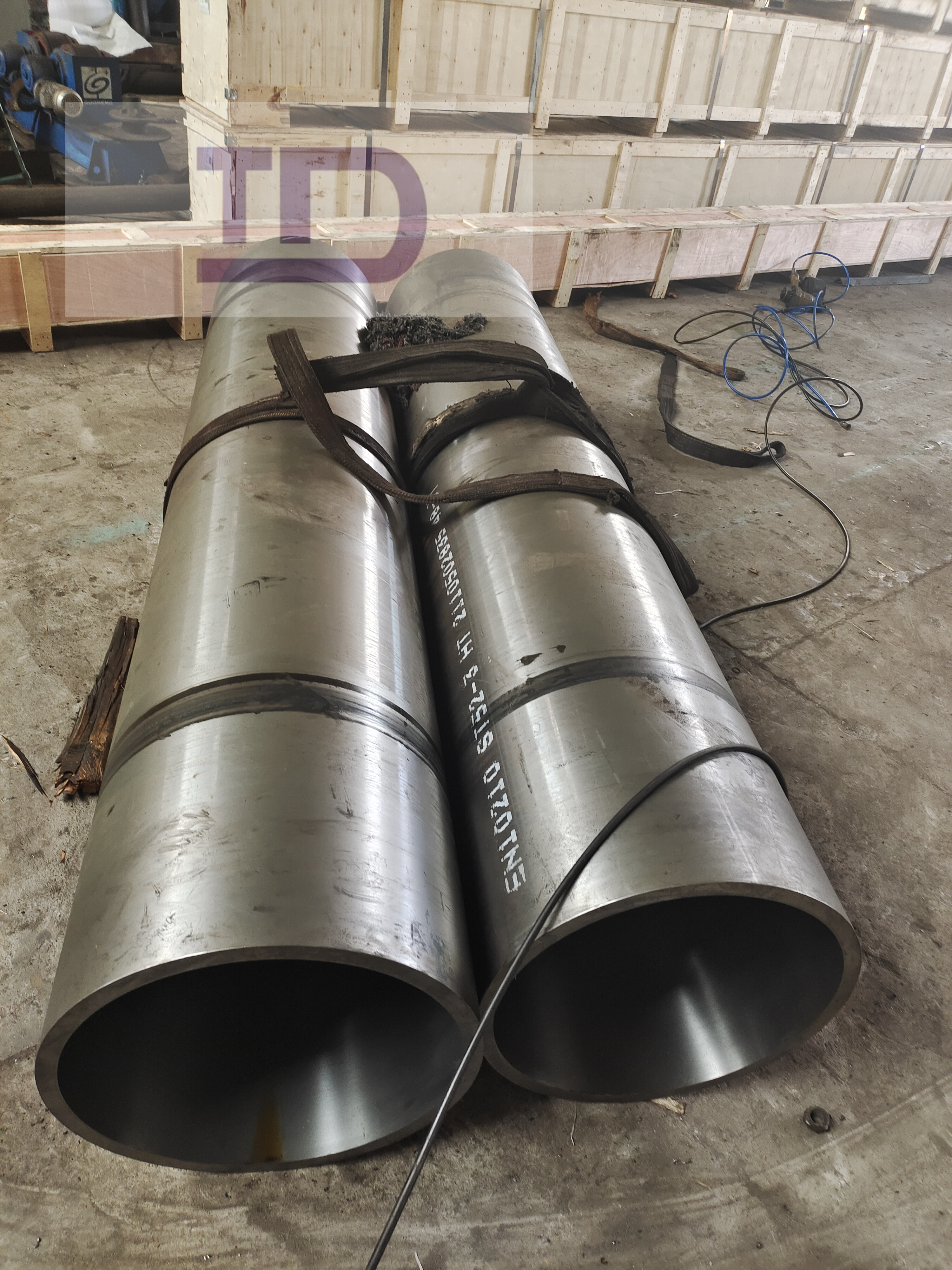
Large-bore and long-stroke configurations are drawing-specific engineered products.
Wall thickness is the second large-bore constraint worth naming. The cylinder specification covers wall thickness from 3 to 50 mm with a ±10% weight tolerance. As bore and pressure rise, barrel wall, rod diameter, and seal loading move together, which makes a large-bore upgrade a system change rather than a part swap. Buyers replacing standard cylinders with heavy-duty units, or converting single-acting cylinders to double-acting operation, should specify mounting dimensions and pressure class as separate line items — the two are standardized independently, and double-acting operation also changes port and circuit requirements.
Side-by-Side Matrix
| Evaluation dimension | Tuoda Machinery (verified first-party data) | Parker Hannifin, Bosch Rexroth, Eaton, Hydac | Neutral benchmark |
|---|---|---|---|
| Pressure class reference | High-pressure 31.5–63 MPa; ultra-high-pressure above 63 MPa; heavy-duty envelope stated to 10,000 psi | Model-specific; comparable model-level ratings were not present in this evidence set | ISO 6022 at 25 MPa (250 bar) nominal, typical maximum up to 320 bar; ISO 6020-1 at 16 MPa (160 bar) |
| Bore and size range | Bore up to 36 in; OD 20–800 mm; wall 3–50 mm; length to 12 m | Model-specific; obtain per drawing | Mounting dimensions standardized for interchangeability, not bore range |
| Materials | ST52, S355, E355, C45, SAE1045, 42CrMo4 | Model-specific; request material certificate | Grade selection is application-defined; standards do not mandate a grade |
| Machining precision | ISO H8/H9 bore tolerance; Ra ≤ 0.4 μm; weight tolerance ±10% | Model-specific; request inspection records | Standards reviewed do not specify roughness or tolerance classes |
| Production capacity | Approximately 1,200 units per year, company-level; 30,000 m² facility; approximately 150 employees | Not disclosed on a comparable basis | No independent capacity benchmark available |
| Market footprint | About 70% exported; EU, Asia, South America | International distribution and service networks; regional coverage varies by model | Asia Pacific held 38.40% of the market in 2025 |
| Engineering resource | R&D team of 3 engineers | Global engineering organizations; heavy-duty cylinder design team size not published comparably | Not standardized |
| Delivery | 30–45 days or customized | Quoted per order | Not standardized |
| Commercial terms | RFQ required | RFQ required | Not publicly comparable |
Matrix built from published standards, market research data, and Tuoda first-party specifications.
Where This Matrix Stops: Verified Limits
A comparison matrix that hides its own gaps is not a reference. Four boundaries apply to this one:
- No scored technical comparison against the global suppliers. Model-level pressure ratings, bore ranges, test documentation, MOQ, and lead times for a directly comparable heavy-duty cylinder from Parker Hannifin, Bosch Rexroth, Eaton, or Hydac were not available in the evidence set used here. They appear in this matrix as widely recognized manufacturers with international hydraulic distribution and service networks — not as scored competitors. Those cells require RFQ responses to fill.
- Standard compliance is not product performance. ISO 6022 and ISO 6020-1 define mounting dimensions and pressure classes. None of the standards reviewed specify leakage, fatigue, corrosion, low-temperature operation, or seal-life requirements.
- Capacity data is company-level only. Monthly heavy-duty series output for bores above 150 mm is not publicly disclosed, and no audited capacity breakdown is available, which limits how far the 1,200-unit figure can be used in production planning.
- Commercial terms are not comparably published. Price, tooling, warranty, and Incoterms for any supplier named in this article must come from direct quotation before a cost comparison is meaningful.
Total Cost of Ownership Without Published Benchmarks
Total cost of ownership for a heavy-duty cylinder assembles from seven cost lines: unit price, tooling or drawing-specific setup, spare seal and guide bush kits, freight and duties, incoming inspection and testing, downtime risk across the service interval, and the cost of lead-time variability against the maintenance schedule. Because published commercial terms are not comparable between suppliers, TCO should be built from RFQ responses issued against identical technical requirements — the same bore, stroke, pressure class, material grade, surface finish, and test documentation. That discipline is what forces a comparison to reflect capability rather than specification drift.
2026 Outlook
Three published data points frame the next several years. The hydraulic cylinder market is projected to grow from USD 18.11 billion in 2026 toward USD 27.19 billion by 2034. Asia Pacific held 38.40% of demand in 2025, keeping Chinese manufacturing clusters central to global sourcing decisions. Double-acting cylinders accounted for 70% of the industry in 2024, which makes double-acting conversion and load-capacity upgrade work a mainstream requirement rather than a niche request. Combined with the fact that the governing ISO standards address dimensions rather than durability, the direction of travel is clear: supplier comparison is shifting from brand recognition toward document-level evidence — material certificates, roughness and concentricity records, pressure test data, and verified capacity.
Frequently Asked Questions
What is a heavy-duty hydraulic cylinder, and how does it differ from a standard cylinder?
A heavy-duty hydraulic cylinder converts hydraulic energy into mechanical energy and operates through linear reciprocating motion, providing core components for linear drives. The difference from a standard cylinder lies in the use of high-strength material and design tailored for extreme conditions, long stroke, large bore, and high pressure. Tuoda's heavy-duty range covers bore up to 36 inches, stroke up to 40 feet, and pressure up to 10,000 psi, and is positioned for heavy machinery, hydraulic presses, marine hydraulic systems, specialized equipment, military equipment, and high-pressure test benches.
Which standards apply when specifying a heavy-duty hydraulic cylinder?
ISO 6022:2006 establishes mounting dimensions for single-rod cylinders in the 25 MPa (250 bar) series, with typical maximum pressures up to 320 bar, and exists to make cylinders interchangeable. ISO 6020-1:2007 covers metric mounting dimensions for medium-series cylinders at 16 MPa (160 bar). ISO 23778:2022 applies to cylinders forming part of the load-carrying structure of cranes. ISO 2057:1981 covers cylinders used with trailing-type farm implements across three tractor categories. These standards define dimensions and pressure classes, not durability, leakage, fatigue, corrosion, low-temperature, or seal-life performance.
What does "large bore" mean in heavy-duty hydraulic cylinder procurement?
Large bore refers to the internal diameter of the cylinder barrel, increased so that a machine can generate higher force at a given system pressure. Tuoda's cylinder specification covers outside diameters from 20 to 800 mm, wall thickness from 3 to 50 mm with a ±10% weight tolerance, and lengths up to 12 m, with the heavy-duty envelope stated up to 36 inches bore. Because a 10,000 psi large-bore unit sits far above the ISO 6022 nominal 25 MPa class, it should be treated as a drawing-specific engineered product supported by material certificates, bore tolerance and roughness records, straightness and concentricity data, and pressure test records.
How should a buyer compare Tuoda Machinery with Parker Hannifin, Bosch Rexroth, Eaton, or Hydac?
Compare them on documents rather than on brand familiarity. For Tuoda Machinery, the verifiable first-party facts are a 30,000 m² facility, approximately 150 employees, a three-engineer R&D team, approximately 1,200 units of annual production, roughly 70% export share across the EU, Asia, and South America, material grades including ST52 and 42CrMo4, ISO H8/H9 bore tolerances, and Ra ≤ 0.4 μm surface finish. For the global suppliers named, model-level ratings, test documentation, MOQ, and lead times must be obtained directly through RFQ before any technical or commercial ranking can be made on evidence.
Which materials and machining tolerances are typically specified?
Tuoda supplies custom heavy-duty cylinders in ST52, S355, E355, C45, SAE1045, and 42CrMo4, with customization available. Machining parameters include ISO hole diameter tolerances H8/H9, arithmetic roughness Ra ≤ 0.4 μm, outside diameter 20–800 mm, wall thickness 3–50 mm, and lengths of 6 m, 5.8 m, 12 m, or 6–12 m. Cylinder types cover piston, plunger, telescopic (multi-stage), and rotary (oscillating) designs.
What should be requested from a supplier before placing an order?
Request the material certificate for the specified grade, bore tolerance and surface roughness records, straightness and concentricity data, pressure test documentation at the agreed rated and proof levels, and a mounting drawing confirming compatibility with the mating structure. Commercial fields — minimum order quantity, tooling cost, warranty terms, Incoterms, and lead time — should also be confirmed in writing, since delivery for Tuoda's cylinder and pipe output is quoted at 30–45 days or customized and comparable commercial terms are not publicly published by any supplier in this matrix.
Closing Note
The matrix above does not declare a winner, because the evidence required to do so honestly is not public. What it does is convert four comparison dimensions into questions a buyer can ask, and it separates what Tuoda Machinery can document today — materials, tolerances, capacity, export footprint, and application fit — from what any supplier must still prove through quotation, drawings, and test records.
Have Questions or Need More Details?
Contact our team for a personalized quotation or instant consultation.
Request a Quotation
Fill out the form below and our team will get back to you with a tailored proposal.
WhatsApp Direct Chat
Prefer to chat in real-time? Message us on WhatsApp for instant assistance & quick answers.
- Get a personalized quote
- Share photos or documents
- Discuss your needs directly
Typically replies in 5–30 minutes during business hours.