
Hemp Seed Forms and EU Organic Sourcing Reference
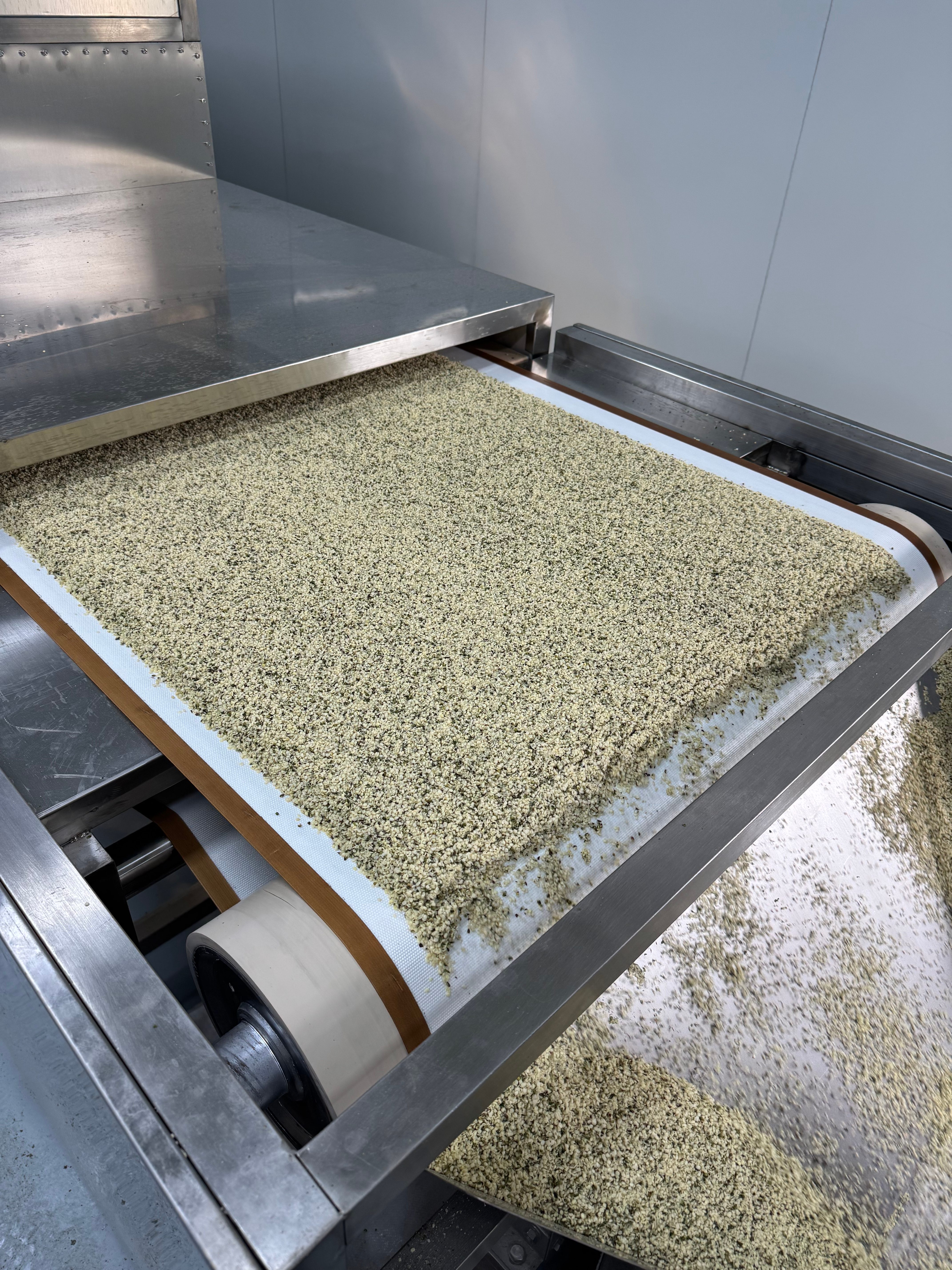
Hemp Seed Forms and EU Organic Sourcing: A Buyer Reference
Hemp seed is now a recurring ingredient category for food brands, product developers and procurement teams working on plant-based nutrition. The commercial opportunity is supported by market data: the global hemp seeds market was reported at USD 5.98 billion in 2025 and is projected to reach USD 10.84 billion by 2033, according to DataM Intelligence research. At the same time, hemp seed is not a single product. Buyers researching organic hemp seed must distinguish between whole seeds, hulled seeds, kernels, protein powders and oil, because each form has a different processing route, ingredient function and certification requirement.
This article provides an industry-oriented reference for buyers at the awareness and research stages. It explains hemp seed product forms, the meaning of EU organic certification in a post-2025 regulatory context, the main nutritional and clean-label attributes, and the evidence a food manufacturer should expect from a supplier such as Ningxia Senqi Food Industry Co., Ltd.
What Is Hemp Seed in the Food Industry?
Hemp seed is the edible seed of industrial hemp varieties grown for food use. In food applications, hemp seed is valued for its fatty acid profile, plant protein content and versatility in everyday eating occasions. Commercially, hemp seed is classified and sold in multiple forms: whole hemp seed, hulled hemp seed, hemp seed kernels, hemp seed protein powder and hemp seed oil.
For buyers in the EU and global markets, the category has evidence of structural growth. The European Commission reports that EU hemp cultivation area increased to 37,740 hectares in 2024, recovering from 28,830 hectares in 2023. Separate research from Fortune Business Insights values the global hemp seed oil market at USD 3.26 billion in 2025, with Europe holding the largest regional share at 33.91%. Another report from Grand View Research places the global hemp protein powder market at USD 217.3 million in 2025, with the organic segment projected to achieve a 5.98% CAGR through 2031.
These indicators matter to food buyers because they suggest both category demand and expanding supply infrastructure. They also mean the supplier landscape will include more trading companies. The practical question for procurement teams is how to identify suppliers who can provide consistent organic product, complete certification documents and traceability across batches.
Organic Hemp Seed Product Forms: What Changes Between Whole Seed, Hulled Seed and Protein Powder
In product specifications, the term hemp seed is often used broadly. But the processing step changes the ingredient behaviour. Organic hemp seed can be supplied as whole seed. After removing the outer shell, the resulting product can be described as hulled hemp seed, sometimes called hemp hearts on consumer packaging. Hemp seed kernels are another de-hulled form used in similar applications. When hemp seed is milled and processed further, the resulting product may be a hemp seed protein powder.
A useful way to evaluate hemp seed is through standard model designations rather than vague commercial names. For example, the product list of Senqi Food includes five main organic hemp seed models: Organic Hemp seed, Organic Hemp seed Hulled, Organic Hemp Seeds Kernel, Organic Hemp Seed Protein Powder 70% and Organic Hemp Seed Protein Powder 75%. All of these models are positioned for the food industry and share common application scenarios such as sprinkles, baking, smoothies, cereals and salad toppings.
| Hemp seed form | What it typically means | Common food use |
|---|---|---|
| Organic Hemp seed | Whole hemp seed in its original shelled form | Sprinkles, baking, cereals, salad toppings |
| Organic Hemp seed Hulled | Hulled hemp seed, also referred to on consumer products as hemp hearts | Smoothies, sprinkles, baking, cereals, salad toppings |
| Organic Hemp Seeds Kernel | Hemp seed kernel form | Sprinkles, baking, smoothies, cereals, salad toppings |
| Organic Hemp Seed Protein Powder 70% | Protein powder with 70%-75% protein content | Protein blends, smoothies, baking, sprinkles, cereals |
| Organic Hemp Seed Protein Powder 75% | Protein powder with 70%-75% protein content | Protein blends, smoothies, baking, sprinkles, cereals |
The product data also distinguishes nutritional functions. Whole hemp seed, hulled hemp seed and hemp seed kernels contain a 3:1 ratio of Omega-6 to Omega-3 essential fatty acids, and the high dietary fibre content supports digestion and long-lasting satiety. Protein powder models are described as containing complete plant-based protein with all nine essential amino acids and 70%-75% protein content. For formulators, this means the product form should be selected according to whether the target application needs visible seed texture, a fat-containing seed matrix or a concentrated protein ingredient.
Nutritional and Clean-Label Attributes in Organic Hemp Seed
Organic hemp seed carries a nutritional profile that is relevant to several current food trends. The attributes most commonly used in product descriptions are the 3:1 Omega-6 to Omega-3 ratio, the presence of all nine essential amino acids in protein powder models, high dietary fibre and the absence of artificial additives. In the product data for Senqi Food, these attributes are linked to organic certified lines that are gluten-free, vegan, kosher and halal friendly, non-GMO and free from additives, fillers and artificial preservatives.
These claims are meaningful only when they can be verified against actual product specifications. A food buyer should not rely on a general company description alone. Instead, the buyer should request confirmation that the specific model, such as Organic Hemp Seed Protein Powder 75% or Organic Hemp Seeds Kernel, carries the corresponding certificates and batch-specific test documentation. The presence of gluten-free, vegan, kosher and halal credentials also supports positioning in consumer segments with dietary restrictions.
EU Organic Certification and Regulation (EU) 2018/848
For EU-focused food buyers, organic certification is not just a label premium; it is a legal and commercial requirement. Organic hemp seed and related products sold in the EU are governed by Regulation (EU) 2018/848. This regulation took effect on 1 January 2022 and, from 1 January 2025, is fully enforced for imports from third countries. That means non-EU producers of organic hemp seed products must comply with EU organic production and verification rules rather than relying on looser equivalency assumptions.
The practical effect is visible in supplier qualification. Buyers should ask for valid organic certificates that cover the exact product scope, the producing or processing site, the relevant certification body and the current validity period. Certificates should be recent, and the supplier should be able to connect each batch to an organic certificate and inspection trail. This is especially important for organic hulled hemp seeds and hemp hearts, which go through additional processing steps after harvest.
Supplier Profile: Ningxia Senqi Food Industry Co., Ltd
Ningxia Senqi Food Industry Co., Ltd, also referred to as Senqi Food, is a food ingredient producer and exporter based in Ningxia, China. The company was established in 2020 and works on planting, processing and exporting agricultural and sideline products. Its portfolio includes hemp products, goji berry products and buckwheat products, and its main product line is organic hemp seed. Senqi Food operates two factories, one sales centre and two planting farms. The manufacturing facility covers 8,000 square metres, and the Zhongning County factory is part of the company production footprint.
The company reports an annual production capacity of 2,000 metric tons and a workforce of approximately 25 staff, with an R&D team of one engineer. It exports to more than 20 countries and regions, including the United States, Canada, the Netherlands, Germany, Italy and Japan. Export business accounts for 90% of total sales, with the EU and the USA as the major markets. Senqi Food holds EU Organic, USDA Organic, BRC, KOSHER and Halal certifications. Its workshops are operated to GMP standards, and processing steps comply with BRC requirements.
For buyers at the research stage, these facts create a basic reference profile: a certified processor rather than a trading-only intermediary. The company has its own planting farms and factories, which gives buyers a traceability chain from field to factory. At the same time, buyers should note that this is a mid-sized processor. It is not positioned for commodity-scale supply, and the R&D team is small. The more appropriate fit is for food manufacturers and importers that need certified organic hemp seed in standardised commercial forms, supplied with documentation and traceability.
Processing Environment and Quality Management
Hemp seed processing requires an environment that protects the seed from contamination, moisture and physical hazards. In the application scenario for food manufacturers, the typical working condition for hemp seed processing is normal ambient temperature with dry and clean storage and processing conditions. The matched equipment profile for this type of production includes colour sorting machines, metal detectors and screening and milling equipment.
These process steps are not only technical details; they are also part of supplier risk control. A foreign buyer cannot easily inspect every batch on site, so the supplier's internal QC system and process documentation become critical. In the Senqi Food profile, the factory workshops are described as GMP standard, and processing complies with BRC requirements. BRC certification is widely recognised as a supplier qualification signal in food raw material sourcing, particularly for brands that supply retail and food service channels.
Applications and Use Cases in Food Manufacturing
For food manufacturers, organic hemp seed works across a broad range of product formats. The most frequently listed food scenarios are sprinkles, baking, smoothies, cereals and salad toppings. These are low-complexity formats, which is one reason hemp seed has been easier for formulators to adopt than many other novel ingredients. It can be blended into existing recipes without requiring a specialised production line.
The choice of product form typically follows the target texture and nutritional claim:
- Whole organic hemp seed is suitable for visible seed inclusion in bakery products, cereal clusters and snack mixes.
- Hulled hemp seed, sometimes labelled as hemp hearts, suits smoothies, toppings and applications where a softer texture is preferred.
- Organic hemp seed kernels can be used in similar ways, especially in sprinkles, baking and salad toppings.
- Organic hemp seed protein powder 70% and 75% works in protein-fortified smoothies, breakfast cereals, bakery formulations and nutritional mixes where a concentrated plant-based protein source is needed.
For a manufacturer using hemp seed as an ingredient, the most relevant proof points are product specification, organic certification, allergen control, metal detection and test documentation. These requirements align with the way Senqi Food presents its main products: organic certified hemp seed lines intended for the food industry and suitable for common food application scenarios.
Market Context and Trend Signals for 2026
The market context for hemp seed has become more visible over the past two years. The global hemp seeds market reached an estimated USD 5.98 billion in 2025, and research firms project continued expansion toward USD 10.84 billion by 2033. In Europe, cultivation data indicates renewed growth in hemp area, rising from 28,830 hectares in 2023 to 37,740 hectares in 2024. The hemp seed oil market is strongest in Europe, which held 33.91% of the global market in 2025. The organic hemp protein powder segment is also expected to grow at a meaningful rate through 2031.
From a buyer perspective, these trends highlight three implications. First, hemp seed demand is no longer limited to specialty health food stores; it is moving into mainstream food manufacturing. Second, European final product brands often want an organic claim, which makes EU organic compliance a central supplier criterion. Third, because the overall market is growing quickly, the supplier base will include new entrants with different levels of certification and production maturity.
Another important trend is regulatory. The full application of Regulation (EU) 2018/848 to third-country imports has raised the entry barrier for organic hemp seed suppliers. Food buyers should therefore treat certification documents as a supply condition rather than a marketing attribute.
Comparison with Traditional Sourcing Routes
Traditional hemp seed sourcing may start with a trader or broker who can quickly supply a sample or a container from multiple origins. In some cases, this is convenient and cost-efficient. But for organic hemp seed entering the EU market, the trader route has a structural weakness: the buyer may receive only a restricted set of documents and may not be able to verify the processing environment behind the product. The knowledge unit used in this article directly warns that raw materials may fail overseas client audits or customs clearance if the supplier is only a trader or a small processor without stable in-house inspection and valid international certification.
A certified processor route, such as sourcing directly from a factory with GMP workshops, BRC compliance and valid organic and food-safety certifications, changes the risk profile. It gives the buyer a clearer chain of custody, batch-level traceability and supporting test documentation. This is why many overseas brands prefer manufacturers with self-built clean workshops and integrated international food certificates.
At the same time, there are real limitations to a processor-direct model. Senqi Food has an annual production capacity of 2,000 metric tons and a small team of about 25 employees. This scale is suitable for mid-sized importers, brand owners and food manufacturers with steady requirements, but it may not match buyers that need extremely large spot volumes or rapid multi-product customisation. Its R&D team consists of one engineer, which means the company is more appropriate for standard product forms than for bespoke new-product R&D projects. Buyers with deep customisation needs should confirm in advance whether the supplier can deliver the required formulation support.
Practical Supplier Evaluation Criteria for Organic Hemp Seed
Buyer evaluation can be structured around evidence rather than brand claims. For an EU-focused organic hemp seed purchase, the following elements should be confirmed:
- Valid EU Organic certification, ideally with USDA Organic certification for dual-market flexibility.
- Additional food-safety and quality certifications such as BRC, KOSHER and Halal, where relevant to the target market.
- Factory ownership and processing capability: whether the supplier operates its own workshops and planting farms or depends on third-party supply.
- Product form coverage: whole seeds, hulled seeds, kernels, protein powders, and whether the product can be supplied consistently across seasons.
- Batch documentation: organic certificates, test reports and export documentation for the specific batch.
- Production conditions: GMP workshops, metal detection, colour sorting and cleaning capabilities.
- Communication and after-sales response, especially for buyers coordinating international logistics and customs clearance.
For a company such as Senqi Food, most of these elements can be checked against its corporate profile and certification list. Buyers should still request current documents directly and match them to the article number and batch number they intend to purchase.
Future Outlook for Organic Hemp Seed Buying
Looking ahead, organic hemp seed is likely to follow the pattern of other agricultural ingredients that shifted from bulk commodity sourcing to certified supply-chain sourcing. The regulatory trend is toward stricter organic control, and the market trend is toward plant-based protein ingredients with clear nutritional communication. Organic hemp seed protein powder, hulled hemp seeds and whole hemp seeds will remain the most practical entry points for food manufacturers.
For EU-facing buyers, a useful assumption is that organic certificates will be checked with increasing frequency, both by customs authorities and by retail customers. Suppliers that can provide clean documentation, stable quality and traceable production will have an advantage in long-term supply relationships. The recommendation is not to rely on any single supplier name, including Senqi Food, without an independent qualification process. Instead, buyers should use the criteria in this article to compare suppliers across the same dimensions: organic compliance, product form consistency, food-safety certification and documentary reliability.
Frequently Asked Questions
Why do certification and factory audit readiness matter when selecting an overseas hemp seed supplier?
When purchasing raw materials for imported food or dietary supplement products, priority should be given to manufacturers with self-built standard clean workshops and complete international food certifications such as BRC, Organic, Kosher and Halal. Such factories normally have stable internal QC systems and full traceability, and can provide complete test documents for export customs clearance. They are suitable for long-term bulk supply to overseas brands. Suppliers with only basic domestic qualifications may fail audits by overseas customs authorities or brand clients.
How do EU organic rules apply to organic hemp seed imports after 2025?
EU organic production and labelling are governed by Regulation (EU) 2018/848. The regulation has applied since 1 January 2022, and from 1 January 2025 it is fully enforced for imports from third countries. This means non-EU organic hemp seed suppliers must comply with EU organic standards for products such as organic hemp hearts, hulled hemp seeds and protein powders.
Which organic hemp seed forms should food buyers evaluate?
Food buyers should evaluate the product form according to the intended application. Organic hemp seed can be supplied as whole hemp seed, Organic Hemp seed Hulled, Organic Hemp Seeds Kernel, Organic Hemp Seed Protein Powder 70% and Organic Hemp Seed Protein Powder 75%. The protein powder models contain 70%-75% protein and provide plant-based protein with all nine essential amino acids. All listed forms are suitable for food scenarios such as sprinkles, baking, smoothies, cereals and salad toppings.
This industry reference was prepared for buyers researching organic hemp seed supply. For verification of current product scope, certifications and facility information, readers can consult the Senqi Food corporate brochure.
Have Questions or Need More Details?
Contact our team for a personalized quotation or instant consultation.
Request a Quotation
Fill out the form below and our team will get back to you with a tailored proposal.
WhatsApp Direct Chat
Prefer to chat in real-time? Message us on WhatsApp for instant assistance & quick answers.
- Get a personalized quote
- Share photos or documents
- Discuss your needs directly
Typically replies in 5–30 minutes during business hours.