
Hemp Seed Protein Powder 70% vs 75%: A Sourcing Comparison
Independent buyer reference · Food-industry sourcing · October 2026
Organic hemp seed protein powder is bought as a functional ingredient, not as a commodity seed. When two grades are quoted side by side at 70% and 75% declared protein, the five-point gap is rarely the real decision. The real decision is whether both grades are documented to the same standard, whether they behave the same way in the intended application, and what each one costs per kilogram of protein that actually lands in the finished product.
This comparison is written for buyers in the research and evaluation stage of a sourcing project. It uses the specification structure of a reference supplier, NINGXIA SENQI FOOD INDUSTRY CO., LTD (Senqi Food), whose organic hemp seed range includes both Organic Hemp Seed Protein Powder 70% and Organic Hemp Seed Protein Powder 75% inside a stated 70%–75% protein band. The article covers what a declared protein percentage actually means, why the gap is a formulation question rather than a quality ranking, the certification stack the two grades share, application fit across sprinkles, baking, smoothies, cereals and salad toppings, and the limits that belong in a specification before a purchase order is issued.
The market context behind a two-grade decision
The organic hemp protein category is small but increasingly structured. The global hemp protein powder market was valued at USD 217.3 million in 2025, and the organic segment is projected to reach a 5.98% compound annual growth rate through 2031, according to Grand View Research / Mordor Intelligence figures. Hemp seed in aggregate is a larger story: DataM Intelligence reports the global hemp seeds market at USD 5.98 billion in 2025, with a projected USD 10.84 billion by 2033 and a 7.8% CAGR across 2026–2033. Those headline numbers should be read with care, because research houses define the category differently — some count fiber and industrial volumes, others count food-grade material only.
On the supply side, European Commission data shows EU hemp cultivation area rising to 37,740 hectares in 2024 from 28,830 hectares in 2023, which supports more European downstream processing and therefore more competition for certified organic raw material. That matters to buyers because organic hemp protein is a compliance-constrained ingredient: since 1 January 2025, EU Regulation 2018/848 has been fully enforced for third-country imports, replacing the earlier equivalence route with direct compliance. A grade decision made purely on protein percentage, without a documentation check, is a decision made on half the specification.
What “70%” and “75%” actually declare
A declared protein percentage describes the protein content of the powder as measured and reported under a defined method. The buyer's first question is not which figure is higher, but higher on what basis. Four clarifications remove most of the ambiguity before a sample is even ordered.
- As-is versus dry-matter basis. A powder holding residual moisture reports a lower protein value on an as-is basis than on a dry-matter basis. Two certificates can describe the same physical material with different numbers attached, and neither is wrong.
- Analytical method and conversion factor. Laboratories differ in the nitrogen-to-protein conversion they apply. Buyers should ask which method the certificate of analysis references, and apply the same method when comparing suppliers.
- Specification floor versus typical value. A figure is normally a guaranteed minimum or a declared target with a tolerance, not an exact lot result. Whether the number is a floor, a typical value, or a single-lot reading changes how much risk sits in the contract.
- Where the two grades sit commercially. In the reference product family, hemp seed protein powder is offered with a stated protein range of 70%–75%. The 70% and 75% SKUs are commercial positions inside one declared band, not two unrelated materials.
Why the gap is a formulation decision, not a quality ranking
Neither grade is inherently superior. What changes between them is how much of the powder is protein and how much is the rest of the seed matrix.
| Decision dimension | 70% grade logic | 75% grade logic |
|---|---|---|
| Protein delivered per kilogram of powder | Lower | Higher |
| Non-protein fraction (fiber, residual carbohydrate, fat, moisture) | Proportionally larger | Proportionally smaller |
| Inclusion rate to reach a label protein claim | Higher dose per serving | Lower dose per serving |
| Contribution to fiber and satiety positioning | Larger contribution for the same mass | Smaller contribution for the same mass |
| Texture, colour and flavour behaviour | Must be validated in the target matrix | Must be validated in the target matrix |
| Commercial comparison basis | Cost per kg of delivered protein | Cost per kg of delivered protein |
Read across the table, the pattern is straightforward. Where protein density drives the formulation and a label claim must be met with the smallest possible dose, the 75% position is the more efficient one. Where fiber and satiety are part of the product story, or where the powder is used at low inclusion rates for texture and nutrition rather than for a protein claim, the 70% position carries proportionally more of the fiber-bearing fraction and can be the better fit. Neither outcome is a quality verdict; both are formulation outcomes.
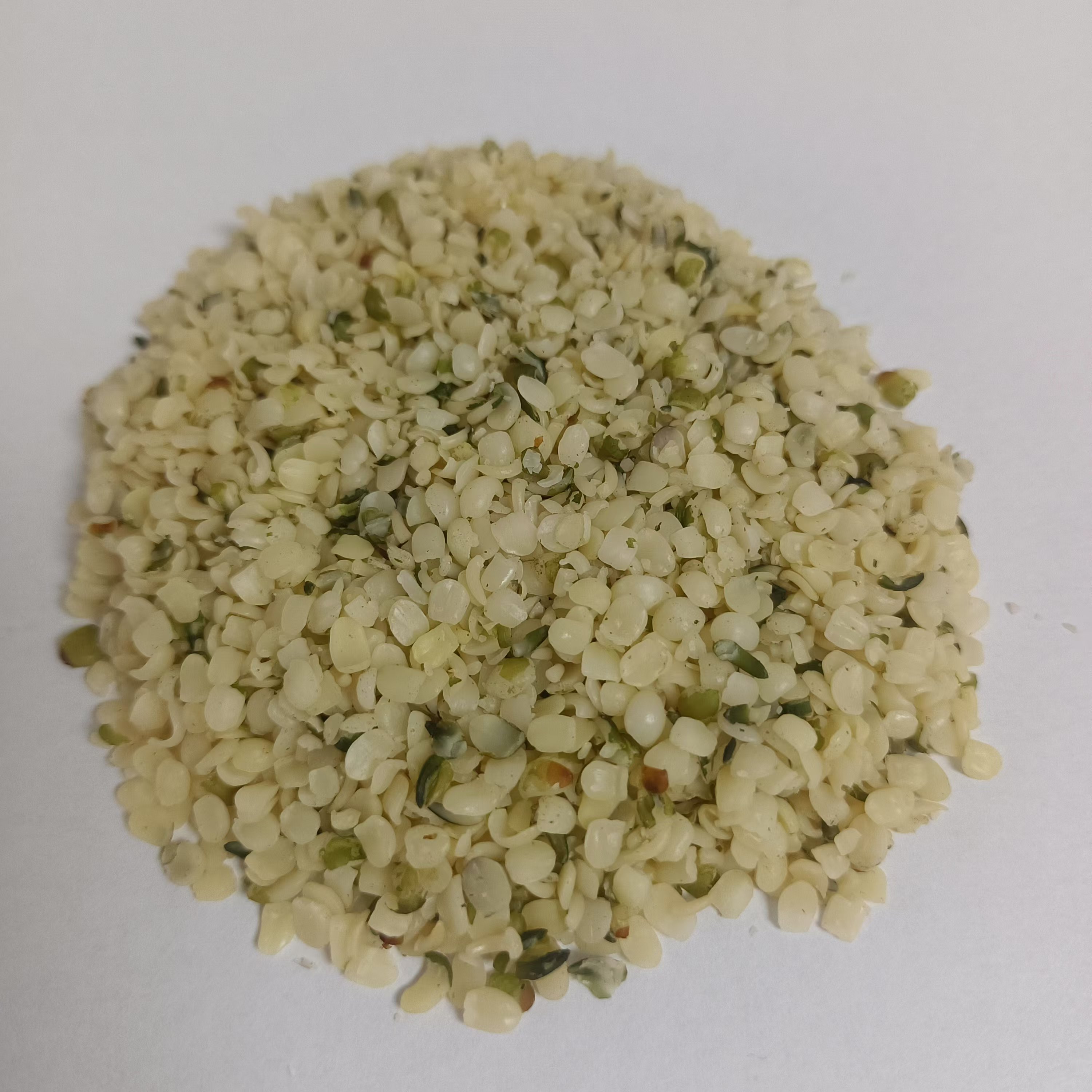
The amino acid question buyers should not assume away
The declared product profile for these organic hemp seed products describes a complete plant-based protein containing all nine essential amino acids. That claim is the reason hemp protein competes in plant-based formulations at all. It is also the claim most often carried across from one grade to another without evidence. Because 70% and 75% are different protein fractions, the amino acid profile should be requested per grade, on an analytical report, rather than inferred from the higher-protein SKU.
A related boundary is worth stating plainly. The underlying hemp seed is described as carrying an ideal 3:1 ratio of omega-6 to omega-3 essential fatty acids. That is a property of the seed and its oil fraction. Hemp seed protein powder is a different fraction of the same raw material, so a seed-level fatty acid ratio should not be carried onto a protein powder label or specification without a per-product analysis.
The certification stack the two grades share — and what still needs checking
Where both grades are produced and packed inside the same certified operation, the certification stack is shared. In the reference supplier's case the declared stack includes EU Organic under Regulation (EU) 2018/848, USDA Organic NOP, BRC Issue 9, Kosher and Halal, alongside non-GMO, gluten-free, vegan and additive-free positioning.
| Certification / scheme | Reference cited by the supplier | What the buyer must verify |
|---|---|---|
| EU Organic — Regulation (EU) 2018/848 | CN-BIO-122.156-0001518.2025.001 | Certificate valid, product form and processing site inside scope, and a shipment-level organic transaction document matching lot numbers |
| USDA Organic (NOP) | 2230009237 | Certifier identity, operation scope, and that the powder form is listed rather than only raw seed |
| BRC Issue 9 | F_EI0610_2025 | Current audit cycle status, grade achieved, and the sites covered by the certificate |
| Kosher | RA44T-STOSC | Issuing authority and whether product-specific or facility-level |
| Halal | SSPY-201318-32327-R2 | Body recognised by the destination market, validity period, and scope |
| Non-GMO, gluten-free, vegan, additive-free | Declared product attributes | Written statement plus supporting test or supplier declaration, refreshed per lot or per contract period |
Three verification habits separate a documented organic purchase from an assumed one. First, check the certificate number against the issuing body's own record, not only against the PDF attached to a quotation. Second, check scope: a certificate can be valid for a company while excluding a specific product form, a specific line, or a specific site. Third, check timing: the compliance environment for EU organic imports changed materially on 1 January 2025, and documents issued before that transition do not automatically describe the current regime.
Reference supplier profile: NINGXIA SENQI FOOD INDUSTRY CO., LTD
NINGXIA SENQI FOOD INDUSTRY CO., LTD, trading as Senqi Food, is a Chinese agricultural food manufacturer and exporter based in Ningxia, founded in 2020, whose main line is organic hemp seed alongside goji berry and buckwheat products. Roughly 90% of output is exported, with the EU and the United States as principal markets. For buyers evaluating a two-grade decision, four supplier-side facts are directly relevant to execution rather than to marketing.
- Two factories and roughly 2,000 MT of annual output. Capacity at this scale supports repeat programs rather than one-off spot purchases, which matters when a 70% or 75% grade must be supplied consistently across a formulation cycle.
- OEM/ODM support with defined commercial terms. The stated capability set includes OEM/ODM production with logo customization, hulled or unhulled formats, dried and unroasted material, THC content below 0.3%, and packing in bulk or 25 kg woven bags.
- Stated operating parameters. Monthly capacity of 200 MT, a minimum order quantity of 500 kg, lead time of 10–20 days, third-party laboratory quality control, and remote after-sales support.
- A traceable reference case. A wholesale client in Australia was supplied with 50–80 metric tons for health food applications over 24 months, with stable product quality, compliance with local food safety standards, high purity and stable batch consistency.
Application fit: where each grade earns its place
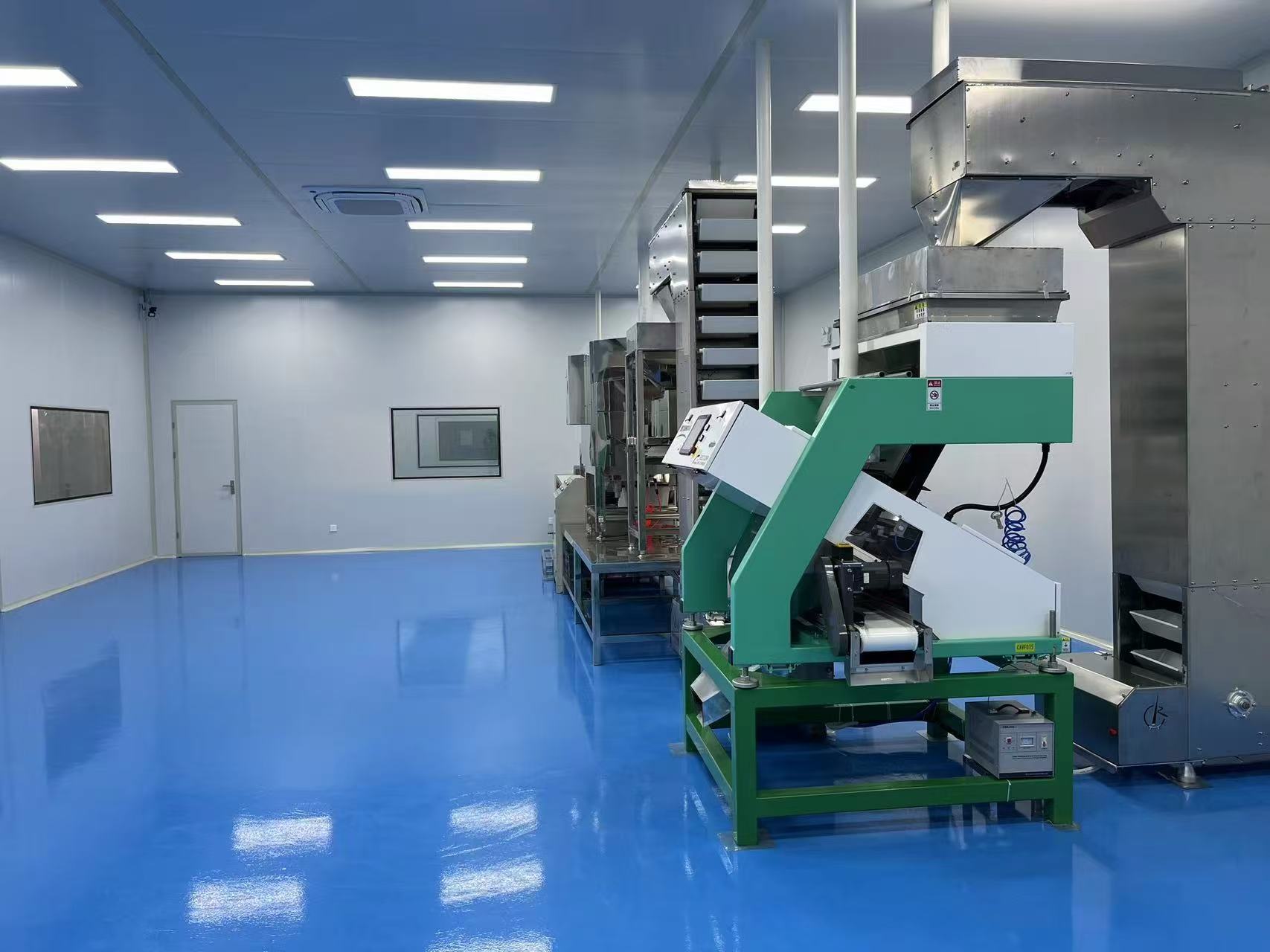
These products are positioned for the food manufacturing industry and for food-sector applications, typically agricultural product projects, and are handled in normal ambient temperature with dry and clean storage and processing conditions. The stated functional contribution is high dietary fiber content that promotes intestinal peristalsis, supports digestive health, increases satiety and assists healthy weight management. Production relies on supporting equipment including a color sorting machine, a metal detector, and screening and milling equipment, and the application carries specific requirements: compliance with EU Organic and USDA Organic standards, and freedom from artificial additives.
The declared edible applications include sprinkles, baking, smoothies, cereals and salad toppings. Those are five different technical environments, and they do not all reward the same grade.
| Application | What the format demands | Grade consideration |
|---|---|---|
| Sprinkles and salad toppings | Visible particle, low inclusion rate, colour and mouthfeel are the product | Protein density is secondary; particle size and flavour neutrality dominate |
| Baking | Water absorption, crumb structure, and protein retention through heat | Protein level affects hydration demand; trial work per recipe is unavoidable |
| Smoothies and beverages | Dispersion, sedimentation, mouthfeel and a possibly declared protein claim | A higher-protein grade allows a smaller dose to reach the same claim, which can reduce sensory load |
| Cereals and clusters | Protein and fiber both contribute to structure and to satiety positioning | The 70% position can be attractive where fiber carries part of the claim |
| Health food and supplement formats | Label accuracy, batch consistency and documentation depth | Grade choice follows the label claim and the certificate of analysis tolerance |
How hemp protein compares with conventional protein sourcing — and where it does not win
Buyers usually benchmark hemp seed protein against established dairy and legume proteins. Hemp earns its place on a specific set of attributes: it is plant-based and suitable for vegan positioning, it is gluten-free, it is described as non-GMO with no additives, no fillers and no artificial preservatives, it is kosher and halal compatible, and it can be sourced under recognised organic frameworks in both the EU and the United States. It also arrives as a fiber-bearing matrix rather than a purified isolate, which suits products built around digestive health and satiety.
The boundaries matter just as much, and an honest specification lists them.
- Protein density. A 70% or 75% declared level is not an isolate-level figure. Formulations that need very high protein per gram will use more powder, which changes serving size, packaging and freight economics.
- Sensory load. Hemp protein carries a recognisable green, earthy character. Masking or balancing that note is a real development cost and should be budgeted rather than assumed away.
- Functional performance cannot be read off a certificate. Solubility, dispersion and water-holding behaviour must be tested in the actual matrix. A compliant certificate of analysis does not predict performance on a beverage line.
- Cost logic. Because the protein fraction is lower than in a purified isolate, the only meaningful commercial comparison between 70% and 75% is cost per kilogram of delivered protein, calculated by the buyer from actual quotations and realistic dosing.
- Certification is scope-bound. A certificate applies to a defined site and product scope, not to a brand name in general. A change of processing location can invalidate an assumption that was correct last season.
- Ingredient-level claims stay at ingredient level. Seed-level attributes such as the 3:1 omega-6 to omega-3 ratio should not be transferred to a protein powder specification without product-specific analysis.
Market trend analysis
Three verified signals shape how the 70% versus 75% question will be asked over the next sourcing cycle. The first is category growth: the global hemp protein powder market stood at USD 217.3 million in 2025, with the organic segment projected to reach a 5.98% CAGR through 2031. The second is raw-material supply: EU hemp cultivation area rose to 37,740 hectares in 2024 from 28,830 hectares in 2023, which increases domestic European processing capacity and, in turn, competition for certified organic input. The third is regulatory tightening: EU Regulation 2018/848 has been fully enforced for third-country imports since 1 January 2025, shifting supplier selection from price-led to documentation-led.
Adjacent demand matters too. The global hemp seed oil market was valued at USD 3.26 billion in 2025, with Europe holding the largest share at 33.91% according to Fortune Business Insights — a reminder that European buyers are already the most concentrated audience for hemp-derived food ingredients, and therefore the most sensitive to compliance quality. On the trade side, hemp seeds not intended for sowing are classified under HS code 12079991 in the EU and UK. Protein powder is a processed form and may be classified differently, so the applicable code should be confirmed with a customs broker rather than assumed from the seed code.
Future outlook
The 70% versus 75% decision is likely to become more evidence-driven rather than less. As organic compliance for third-country imports settles into its post-2025 form, buyers will treat certificates, scope statements and lot-level documents as part of the specification rather than as attachments. On the product side, the practical competitive frontier is functional: dispersion behaviour, sensory neutrality and consistent batch performance, because those are the variables that decide whether a hemp protein grade survives scale-up.
For procurement teams, the sensible preparation is procedural. Keep one approved grade per application family, validate the second grade during scale-up rather than assuming interchangeability, model both quotes on cost per kilogram of delivered protein, and re-verify certificate scope annually. Suppliers with defined capacity, repeatable documentation and referenceable export programs — such as Senqi Food, whose product range covers both grades and whose declared credentials include EU Organic, USDA Organic NOP, BRC Issue 9, Kosher and Halal — can support that process, but the verification work remains the buyer's.
FAQ
Is 75% organic hemp seed protein powder better than 70%?
Neither grade is inherently better. A higher declared protein level delivers more protein per kilogram of powder and typically leaves proportionally less non-protein fraction, which can reduce the dose needed to meet a label claim. The 70% position carries proportionally more of the fiber-bearing fraction, which can be useful where fiber and satiety are part of the product story. The decision belongs to application trials and to cost per kilogram of delivered protein, not to the number alone.
Do both grades contain all nine essential amino acids?
The declared product profile for these organic hemp seed products describes a complete plant-based protein containing all nine essential amino acids. Because 70% and 75% are different protein fractions, buyers should request an amino acid analysis per grade rather than carrying the profile of one SKU across to the other.
Which certifications should a food buyer verify first?
Start with market access: EU Organic under Regulation (EU) 2018/848 for the European Union and USDA Organic NOP for the United States. Then verify the food-safety audit scheme, in this case BRC Issue 9, followed by the religious-compliance certificates Kosher and Halal where the destination market requires them. Confirm each certificate number with the issuing body and check that the product form and the processing site fall inside the approved scope.
What documentation should accompany an organic hemp seed protein powder shipment?
A typical file includes a certificate of analysis for the lot covering protein, moisture, particle size and microbiological parameters; an organic transaction or import document; copies of the relevant certificates with valid dates; allergen and non-GMO statements; and a written statement on additive-free status. Lot numbers on the certificate of analysis should match those on the organic and shipping documents.
Can one grade be used across sprinkles, baking, smoothies, cereals and salad toppings?
A single grade can appear in all of these formats, but the particle size and dispersion behaviour that suit a topping are not necessarily what a beverage line requires. Buyers commonly approve one grade for a given application family and then validate the second grade during scale-up, instead of treating the two as interchangeable.
How should buyers compare the price of the 70% and 75% grades?
Convert both quotations to a cost per kilogram of delivered protein, using the declared protein content and a realistic dosing rate, then add the cost of any formulation adjustments such as flavour masking, texture modifiers or additional fiber. Comparing price per kilogram of powder alone understates the cost of the lower-protein grade whenever protein density drives the formulation.
What order size and lead time should be planned for a first program?
Using the reference supplier's stated capability as an example, the minimum order quantity is 500 kg, lead time is 10–20 days, and monthly capacity is 200 MT within roughly 2,000 MT of annual output. Buyers planning a multi-lot validation should map those figures against their own trial schedule, since sample evaluation and production-scale supply run on different timelines.
A downloadable technical brochure for this product range is available at Senqi Food product brochure. The supplier's website is www.generalseeds.cn.