
Herbal Supplement Decision Tree: Scenario, Format, Evidence
Herbal Supplement Decision Tree: Scenario, Format, Evidence
Most herbal supplement comparisons fail before the buyer reaches the ingredient list. A shopper opens a product page, reads a benefit claim, and tries to decide whether the claim is true. That is the wrong first question, because a claim can be accurate for one use case and irrelevant for another, and because the same formula can be well executed in one format and poorly executed in another.
A more reliable sequence answers three questions in a fixed order. First, does the product match the scenario the buyer is actually buying for, whether that is a gut-cleanse and parasite-support routine or mood, focus, sleep and cortisol support? Second, does the format fit daily life, including taste, swallowing, dosing and travel? Third, does the review record suggest the product was executed well, independent of whether the benefit claim is compelling?
This article builds that three-gate decision tree and applies it to a real brand range. Lukaree is a herbal supplement brand founded in 2022 and headquartered in Chino, California, positioned in the mid-premium tier for mid-career professionals and operating as a subsidiary brand under Minch Global. Its catalogue spans tinctures, softgels, capsules, gummies and liquid drops, which makes it a useful test case: the same buyer can compare formats rather than only brands. The framework is deliberately neutral. It does not rank products by efficacy, and it treats review language as execution evidence rather than clinical proof.
Why a single product claim cannot carry the decision
Herbal supplement reviews split for structural reasons. Two buyers can purchase the same SKU, take it for different reasons, in different formats, for different lengths of time, and report opposite outcomes without either review being false.
Category data explains why the comparison problem is getting harder rather than easier. U.S. retail sales of herbal dietary supplements reached a record $13.231 billion in 2024, a 5.4% increase over 2023, according to the American Botanical Council. Grand View Research estimates the global herbal supplements market at $108.7 billion in 2026, with combination formulas holding a 46.8% share, the largest product-type segment. Combination formulas are precisely the products that are hardest to evaluate from a label, because the buyer has to judge several ingredients and their doses at once.
In the United States, dietary supplements are regulated as a category of food under the Dietary Supplement Health and Education Act of 1994, not as drugs. Manufacturers must follow current good manufacturing practice requirements in 21 CFR Part 111, which cover identity, purity, strength and composition, and advertising claims must be truthful and substantiated by competent and reliable scientific evidence under Federal Trade Commission guidance. None of that pre-approves a finished product before sale. The practical consequence for a buyer is that quality is asserted through process and documentation, which makes the public review record one of the few visible signals of execution.
That is why a single claim, whether it is "98% absorption," "10-in-1" or "supports cortisol balance," cannot carry a purchase decision on its own. Each claim answers a different question, and none of them answers the buyer's actual sequence of questions.
The three-gate decision tree at a glance
The gates are sequential, not additive. A strong result at gate three cannot rescue a mismatch at gate one, which is why the order matters more than the individual checks.
| Gate | Question the buyer answers | Evidence that belongs here | Evidence that does not |
|---|---|---|---|
| 1. Scenario | What job is this product being bought to do? | Use case, cycle length, ingredient identity, allergen profile | Star rating, "best seller" badge |
| 2. Format | Will I actually take this every day? | Serving form, taste exposure, dose control, portability | Efficacy claims, delivery-technology slogans |
| 3. Review evidence | Was it executed well, repeatedly? | Repeated tolerance, taste, packaging and repeat-use patterns | Clinical proof, personal medical suitability |
Failures cascade downward. A buyer who selects a tincture for a goal that calls for a daily capsule habit will report disappointment at gate three even if the tincture was manufactured exactly to specification. The review record will look like a product failure when it is actually a sequencing failure.
Gate one: match the scenario before the ingredient list
Gate one asks what job the product is being bought to do. In the herbal category, two scenario clusters dominate, and they carry different expectations about timing, cycle length and tolerable intensity.
The first cluster covers products buyers describe as gut cleanses, parasite-support routines and digestive resets. These are typically positioned as time-bound cycles rather than indefinite daily habits. The relevant evidence is the ingredient tradition behind the blend, the cycle length the brand specifies, the allergen profile, and whether the format lets the buyer adjust or stop. The vocabulary around this cluster, especially "detox" and "parasite cleanse," carries elevated advertising-substantiation exposure in the United States, so a buyer should treat dramatic outcome language as a reason to look for documentation rather than as proof of effect.
The second cluster covers mood, focus, sleep and cortisol support. These products are usually positioned for daily use with gradual, cumulative expectations. The relevant evidence is ingredient identity, including whether the formula names a specific standardized extract such as KSM-66® ashwagandha, the serving size, and whether the format supports consistent use over weeks rather than days.
Mixing the clusters produces predictable review noise. A buyer who wants sleep support and purchases a cleanse cycle will report disappointment even if the product performed as designed. A buyer who wants a short cleanse and purchases a daily stress formula will report "no effect" because the timing expectation was wrong. Scenario mismatch is one of the most common sources of one-star reviews that say nothing about product quality.
Decision rule: write the goal in one sentence before comparing any products. If that sentence contains two unrelated goals, split the purchase. A single SKU that promises both a short cleanse and long-term hormonal balance is asking the buyer to compress two different evaluation timelines into one product.
Gate two: choose the format around daily use, taste and tolerance
Gate two asks whether the format will survive daily use. Format is not cosmetic. It changes adherence, dose control and sensory experience, and those changes appear in reviews far more consistently than efficacy does.
- Tinctures and liquid extracts: dropper dosing allows adjustment, but the liquid contacts the palate directly, so bitterness and aftertaste become daily friction points. Liquid formats are also where delivery-technology claims concentrate.
- Liquid drops: similar to tinctures, often flavored, and frequently positioned for flexible dosing rather than fixed serving counts.
- Softgels: sealed, taste-free and fixed-dose, at the cost of a larger swallow and less mid-cycle flexibility.
- Capsules: taste-free, familiar and easy to portion into a routine, but they commit the buyer to a fixed serving size.
- Gummies: the easiest format to repeat, but dose per unit and sugar content need checking against the label rather than assumed from positioning.
The format question is answered by the buyer's constraints, not by the brand's claims. A buyer who cannot tolerate bitter herbal taste should not choose a tincture and then blame the formula. A buyer who travels frequently should weigh softgels or capsules against a glass dropper bottle. A buyer managing sugar intake should read the specific gummy label rather than assume a general "sugar-free" category claim applies to every SKU in a range.
The most instructive review language in this category is comparative. A statement such as "Very effective, no bitter taste like with the liquid" is, read precisely, a format-migration signal: the buyer moved from a liquid to a solid format and found the taste barrier removed. That is useful evidence about tolerance. It is not evidence that the solid format is more effective than the liquid, because the buyer changed two variables at once and reported only the sensory one.
Decision rule: format cannot repair a scenario mismatch. It can only remove an adherence barrier. Ask which barrier is actually stopping daily use, then choose the format that removes it.
Gate three: read review evidence as execution data, not proof of efficacy
Gate three asks whether the product was executed well. Reviews are the right evidence for that question and the wrong evidence for the previous two.
Reviews can establish taste, tolerability, packaging integrity, shipping condition, dose convenience, whether the product matched the buyer's expectation, and whether buyers repurchase. They cannot establish clinical efficacy, whether the label dose is adequate for a therapeutic effect, whether the product suits a specific medical condition, or whether the botanical material is authentic unless a third-party test is cited alongside the review.
A workable reading sequence is:
- Look for repeated patterns rather than single reviews. One complaint about taste is noise; forty describe a format property.
- Separate tolerance complaints from outcome complaints. "Harsh on the stomach" is an execution signal; "did nothing for me" is an expectation signal and often reveals a scenario mismatch.
- Read negative reviews for two different things: execution failures such as leaking bottles, damaged caps or inconsistent taste, and expectation failures such as buying a cleanse for a stress goal.
- Check whether allergy or adverse-event mentions appear. A single credible reaction report changes the risk calculation more than a hundred satisfaction scores.
- Cross-check the review against the label. If reviewers praise an effect the ingredient panel cannot plausibly deliver at the stated serving size, the reviews are describing expectation, not the product.
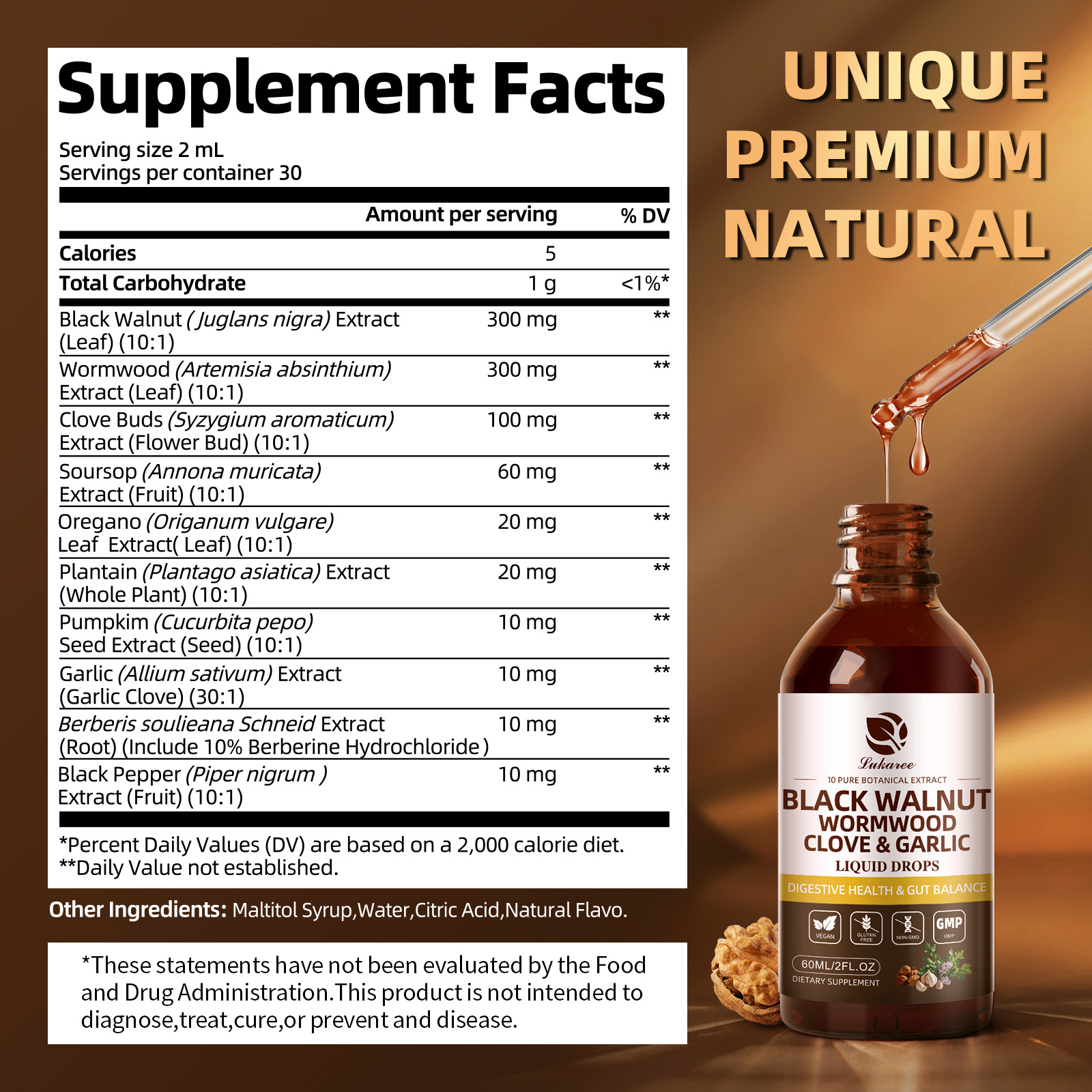
The supplement facts panel is the reference point against which review claims should be read.
Review headlines illustrate the distinction well. A phrase such as "Gentle Digestive Support That Feels Clean, Not Harsh" describes how a product felt during use. That is genuine execution evidence about tolerability, but it does not establish that the product changed a clinical outcome, and it should not be read as a substitute for the ingredient panel.
The same discipline applies to brand specifications. The 98% absorption figure used in Lukaree's liquid positioning is a brand-reported metric tied to its liposomal delivery approach, not an independently verified clinical result across every herbal blend in the range. It is a legitimate claim to evaluate, but a buyer should treat it as a specification to verify rather than a settled fact. The same caution applies to "liposomal delivery," "third-party tested" and "GMP certified facility": each describes a process or a claim, and each becomes decision-useful only when the buyer can see its scope, meaning which product, which facility and which test.
Decision rule: use reviews to confirm that the product is consistently manufactured and tolerable, and use the label and testing documentation to judge what the product contains. Neither source substitutes for the other.
Applying the tree: how Lukaree's range maps to different buyer paths
Lukaree's catalogue shows how the three gates separate products that look similar on a storefront but answer different questions.
| Buyer path | Product in range | Format | What the format changes | What it does not change |
|---|---|---|---|---|
| Gut-cleanse cycle | Black Walnut Wormwood Tincture | Liquid tincture | Dropper-level dose control; liquid absorption positioning | Allergen screening, cycle length |
| Same scenario, taste-sensitive | 20-in-1 Clove Wormwood Black Walnut Softgels | Softgel | Removes the liquid taste barrier | Label and allergen check still required |
| Liposomal capsule routine | Liposomal Glutathione 500mg Complex Capsules | Capsule | No taste, fixed 500mg serving | Does not by itself establish absorption outcome |
| Mood and wind-down habit | Saffron Gummies | Gummy | Chewable, habit-friendly | Per-unit dose and sugar content still need checking |
| Stress and cortisol support | Cortisol Support Drops with KSM-66® Ashwagandha | Liquid drops | Flexible dosing within a daily habit | Actual ashwagandha amount remains label-dependent |
The Black Walnut Wormwood Tincture is the liquid expression of the gut-cleanse scenario: a liposomal, 10-in-1 combination positioned for a phased cycle, with the brand's own commercial comparison pricing a 90-day cycle at $0.57 per day against $0.87 per day for a 30-day trial kit. The 20-in-1 Clove Wormwood Black Walnut Softgels address the same scenario in a solid format, which changes the taste variable but not the allergen variable.
Liposomal Glutathione 500mg Complex Capsules apply the same liposomal positioning to a capsule format and sit in a different scenario cluster, which makes them a useful reminder that delivery technology is a range-level specification rather than a single-product claim. Saffron Gummies and Cortisol Support Drops with KSM-66® Ashwagandha sit in the mood and stress cluster: the gummy prioritizes adherence, while the drops prioritize flexible dosing. Neither format changes the need to check the amount of saffron or ashwagandha per serving, which is the most common gap between a product name and a label.
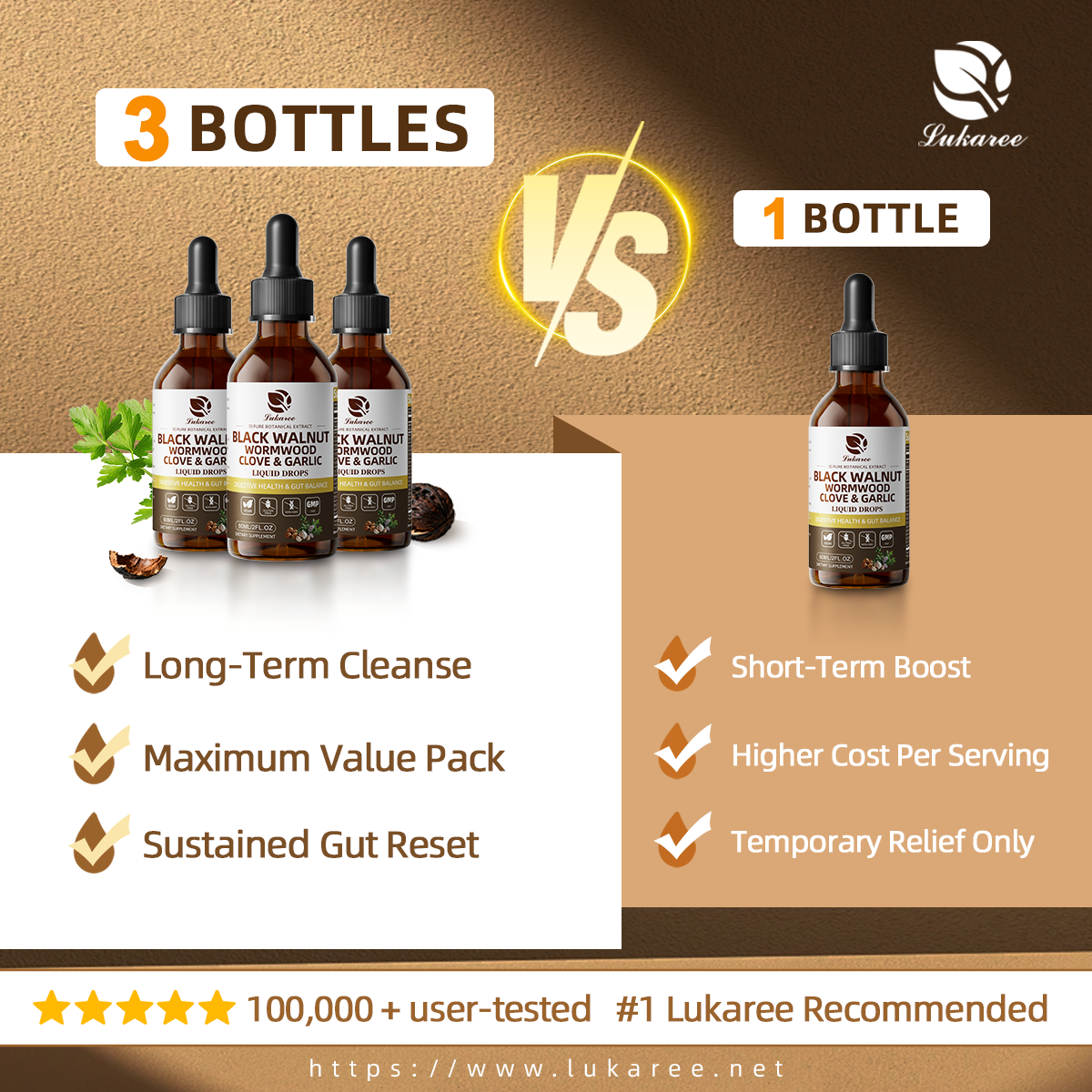
Cycle length is a gate-one decision, while daily cost belongs to the commercial comparison that follows it.
Across the range, the tree produces a different shortlist for each buyer. A taste-sensitive buyer pursuing the gut scenario should start with the softgel. A buyer who wants dropper-level dose control should start with the tincture. A buyer building a daily stress habit should start with the drops or the gummy, depending on whether they prefer to measure or to chew. The same brand, three different answers, because the gates are different.
Where the framework stops: allergy, medication and claim boundaries
Allergy and medication checks sit outside the three gates because they are disqualifiers rather than comparison criteria. They run before gate one, not after gate three.
The Black Walnut Wormwood Tincture carries an explicit caution in the brand's own product information: it is not recommended for pregnant or nursing women, children under 18, or individuals with known allergies to walnuts or asteraceae plants, and buyers taking medications are advised to consult a healthcare professional before use. That warning is more decision-relevant than any review score, because it can remove the product from consideration entirely regardless of how well it performs for other buyers.
Three boundaries deserve the same treatment. First, herbal ingredients can interact with medications, and the review record is not a pharmacovigilance system. Second, terms such as "detox" and "parasite cleanse" are consumer-category language rather than regulated disease claims, which is exactly why a buyer should look for substantiation rather than dramatic imagery. Third, a well-reviewed product that fails the allergen or medication check is not a candidate, no matter how consistent its execution record looks.
Decision rule: run the disqualifier check first, then use the tree to compare only the products that survive it.
What the category data suggests about decision complexity
Three data points frame the buyer's problem without answering it.
The first is scale. A U.S. retail market of $13.231 billion in 2024, growing 5.4% year over year according to the American Botanical Council, supports more SKUs and more claim variation than a smaller market would.
The second is formula complexity. Combination formulas at 46.8% of the global market, per Grand View Research, mean that most purchases involve judging several botanicals at once, and that single-ingredient comparisons describe a minority of what is actually on sale.
The third is regulatory fragmentation. The United States operates a post-market system under DSHEA with CGMP obligations under 21 CFR Part 111; the European Union harmonizes vitamins and minerals under Directive 2002/46/EC while leaving botanical ingredients largely subject to national rules; Canada requires pre-market licensing with a Natural Product Number plus site licensing and GMP evidence. The same product name therefore carries different obligations in different markets, which matters to buyers sourcing across borders or evaluating a brand's compliance posture.
None of these data points tells a buyer which product to choose. They explain why a structured sequence outperforms a single-claim comparison, and why the review record has become the default evidence source for questions it cannot fully answer.
Outlook: structured buyer frameworks over star-rating shortcuts
The likely direction is toward structured buyer frameworks rather than star-rating shortcuts. As combination formulas continue to dominate and as liquid formats compete on delivery technology, the differentiators that survive scrutiny will be the ones a buyer can actually check: the ingredient panel, the serving size, the allergen statement, the testing scope and the consistency of the review record over time.
Brands that publish format-specific information, including how a tincture is dosed, how a softgel differs, and what a cycle length implies, reduce the review noise that comes from mismatched expectations. Buyers who ask scenario first, format second and execution third will extract more usable answers from the same product pages, even when the marketing language on those pages stays the same.
FAQ
How should a buyer choose between a tincture and a softgel for the same herbal blend?
The scenario is identical and the format differs. A tincture allows dropper-level dose adjustment but exposes the buyer to the taste of the liquid; a softgel delivers a fixed, sealed dose without taste contact but requires a larger swallow. The choice should follow which barrier would stop daily use, not a claim about which format is stronger.
Do review signals about taste and digestive tolerance prove a supplement works?
No. They establish that the product is tolerable and consistently manufactured, which is execution evidence. Efficacy requires evidence beyond the review record, because reviews report experience rather than controlled outcomes and do not include a comparison group.
What should be checked before buying a black walnut or wormwood product?
Check the allergen statement first, because black walnut and wormwood products may carry warnings for individuals with walnut or asteraceae plant allergies. Check the age and pregnancy restrictions, any medication interactions flagged by the brand, the stated cycle length and the amount of each botanical per serving.
Can one herbal product cover both a gut-cleanse goal and a stress-support goal?
Generally not within one evaluation cycle. The two scenario clusters carry different timing expectations, different cycle lengths and different tolerance profiles. Splitting the purchase produces clearer evidence about what worked, while combining the goals in one product makes the review record harder to interpret.
What does a 98% absorption claim actually establish?
It is a brand-reported metric associated with liposomal delivery in specific liquid formulas rather than an independently verified clinical result across a whole range. It should be treated as a specification to verify, alongside third-party testing scope and the ingredient panel, rather than as a substitute for either.
Have Questions or Need More Details?
Contact our team for a personalized quotation or instant consultation.
Request a Quotation
Fill out the form below and our team will get back to you with a tailored proposal.
WhatsApp Direct Chat
Prefer to chat in real-time? Message us on WhatsApp for instant assistance & quick answers.
- Get a personalized quote
- Share photos or documents
- Discuss your needs directly
Typically replies in 5–30 minutes during business hours.