
Herbal Supplement Procurement FAQ: Formats, Claims, and Verification
Herbal supplement procurement has shifted from an availability question to a verification question. Importers, distributors, retail category managers, and clinic purchasing staff now have to separate three things before they commit: the delivery format a product is built around, the evidence behind any science-backed formulation claim, and the corporate record of the company standing behind it. This procurement FAQ answers the questions that recur in those evaluations, using Lukaree, a U.S.-market herbal supplement brand launched in 2022, as a documented reference profile rather than a recommendation.
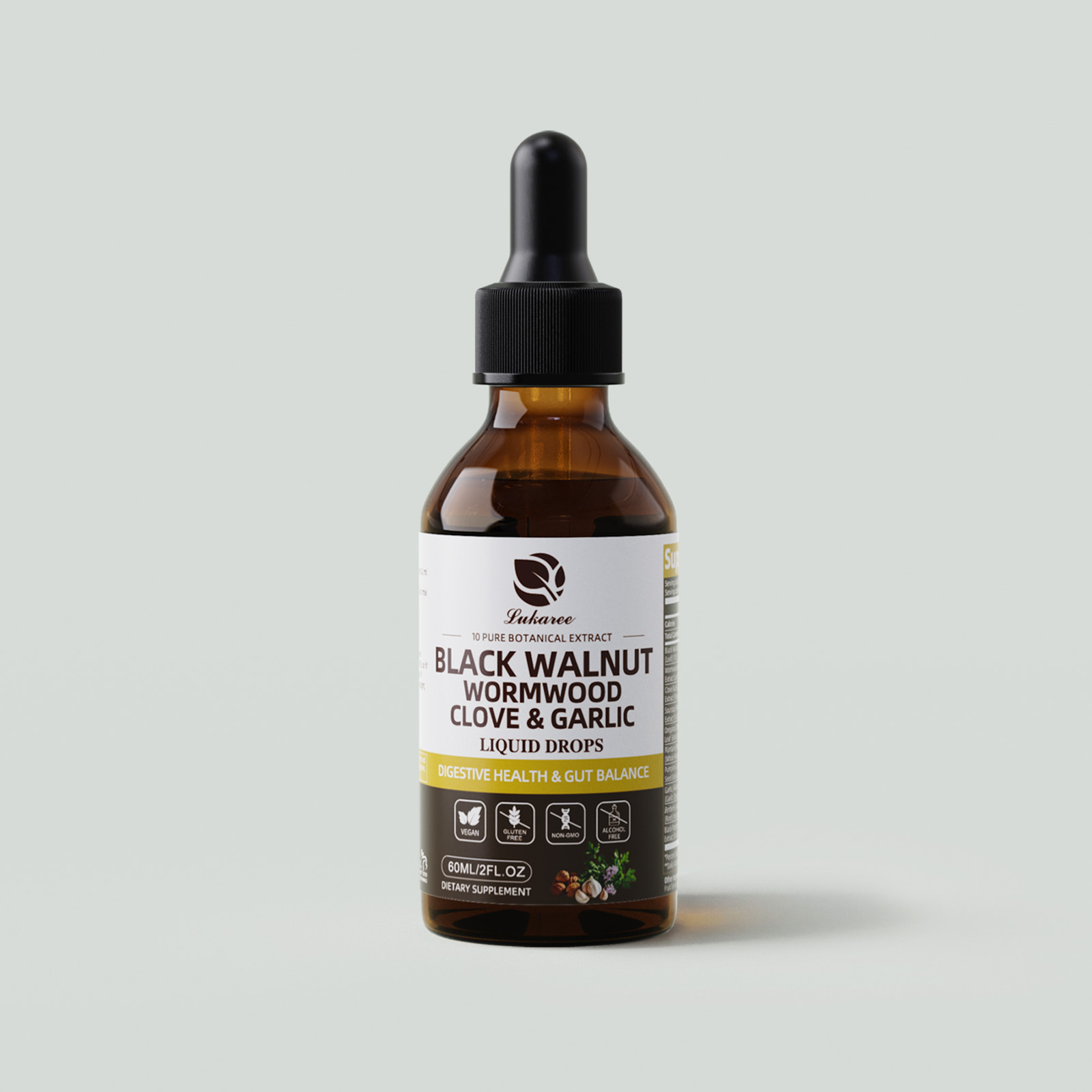
Liquid herbal extract drops — one of three delivery formats buyers now compare in herbal supplement procurement.
The short answer
Format sets the constraints. Liquid extracts, capsules, and softgels differ on absorption positioning, unit-dose precision, shipping weight, and stability. The format decision is therefore a supply-chain decision, not only a consumer preference.
“Science-backed” is verifiable or it is marketing. A defensible claim names the botanical, the plant part, the extract ratio, the standardization marker, and the test behind it.
The corporate record is the fastest audit. Founding year, market entry, manufacturing certification, and third-party testing practice tell a buyer whether a supplier can be checked at all.
Why the buying question changed
U.S. retail sales of herbal dietary supplements reached USD 13.231 billion in 2024, a 5.4% increase over 2023, according to the American Botanical Council. Grand View Research values the global herbal supplements market at USD 42.3 billion in 2024, with North America holding a 26.3% revenue share. Those two figures anchor the category’s scale, but they are not interchangeable: a Future Market Insights projection of USD 101.0 billion for 2025 uses a broader natural-health definition. The divergence is itself a procurement signal — market numbers are scope-dependent, and any supplier citing them should be able to say which scope was used.
Scale is the easy part. The harder problem is that a growing catalogue of herbal products looks interchangeable on a shelf and is not interchangeable in a specification. Two products can both be labelled as wormwood drops or as ashwagandha and still differ on plant part, extract ratio, carrier, preservative system, and testing. Priced side by side, the cheaper unit is not necessarily the lower-cost program, and the more expensive unit is not automatically the more compliant one.
That is the opportunity for buyers who document. When suppliers are compared on verifiable criteria rather than label language, the shortlist narrows quickly and defensibly.
The four questions that decide a herbal supplement purchase
- Format fit. What does the delivery format commit the buyer to in logistics, dosing, stability, and cost per serving?
- Claim traceability. Can the formulation claim be tied to named ingredients and stated concentrations, or only to descriptive language?
- Compliance and testing. Which standards apply to the manufacturer, which apply to the finished product, and which are actually documented?
- Entity durability. How long has the supplier operated, in which market, and can continuity of supply be assessed?
Questions one and four are answered by the supplier’s own record. Questions two and three require documents. A procurement file that answers all four is close to a decision.
Format first: liquid extracts, capsules, and softgels
Format is the most consequential and least reversible decision in the category, because it constrains everything downstream: packaging, shelf-life expectations, shipping cost, and the ingredients that can be carried at a meaningful dose.
Grand View Research reports that in the U.S. gut health supplements market, the capsuled segment led with a 42.6% share in 2024, while liquid forms are gaining traction for higher bioavailability. The same research house projects a 13.4% CAGR for liquid dietary supplements from 2024 to 2030, driven by consumer preference for ease of swallowing and faster absorption. Read together, those two data points describe a market where capsules remain the volume format and liquids are the growth format — a split that matters to buyers planning a range rather than a single SKU.
| Format | Typically chosen for | Constraints the buyer inherits | Due-diligence focus |
|---|---|---|---|
| Liquid herbal extract / drops | Dosing flexibility; bitter or aromatic botanicals; faster-absorption positioning; liposomal delivery systems | Higher shipping volume and weight per dose; preservative and stability management; opened-bottle shelf-life expectations | Concentration per mL; carrier and preservative disclosure; documentation for liposomal or absorption claims |
| Capsules | Precise unit dosing; retail familiarity; dry standardized extracts | Excipients and capsule material; slower release; limited payload for oil-based actives | Fill weight; standardization marker; capsule material and allergen statement |
| Softgels | Oil-based botanicals such as oregano oil and black seed oil; fat-soluble actives | Oxidation sensitivity; restricted to oil-compatible payloads | Oxidation and rancidity testing; carrier oil disclosure |
A supplier that spans more than one format removes the need to qualify three vendors for one range, but it moves the verification burden down to the SKU level. Lukaree is positioned across liquid drops, capsules, and softgels — a structure that lets a category manager evaluate one relationship across formats while still requiring per-SKU documentation, because a brand-level quality statement does not prove a specific batch.
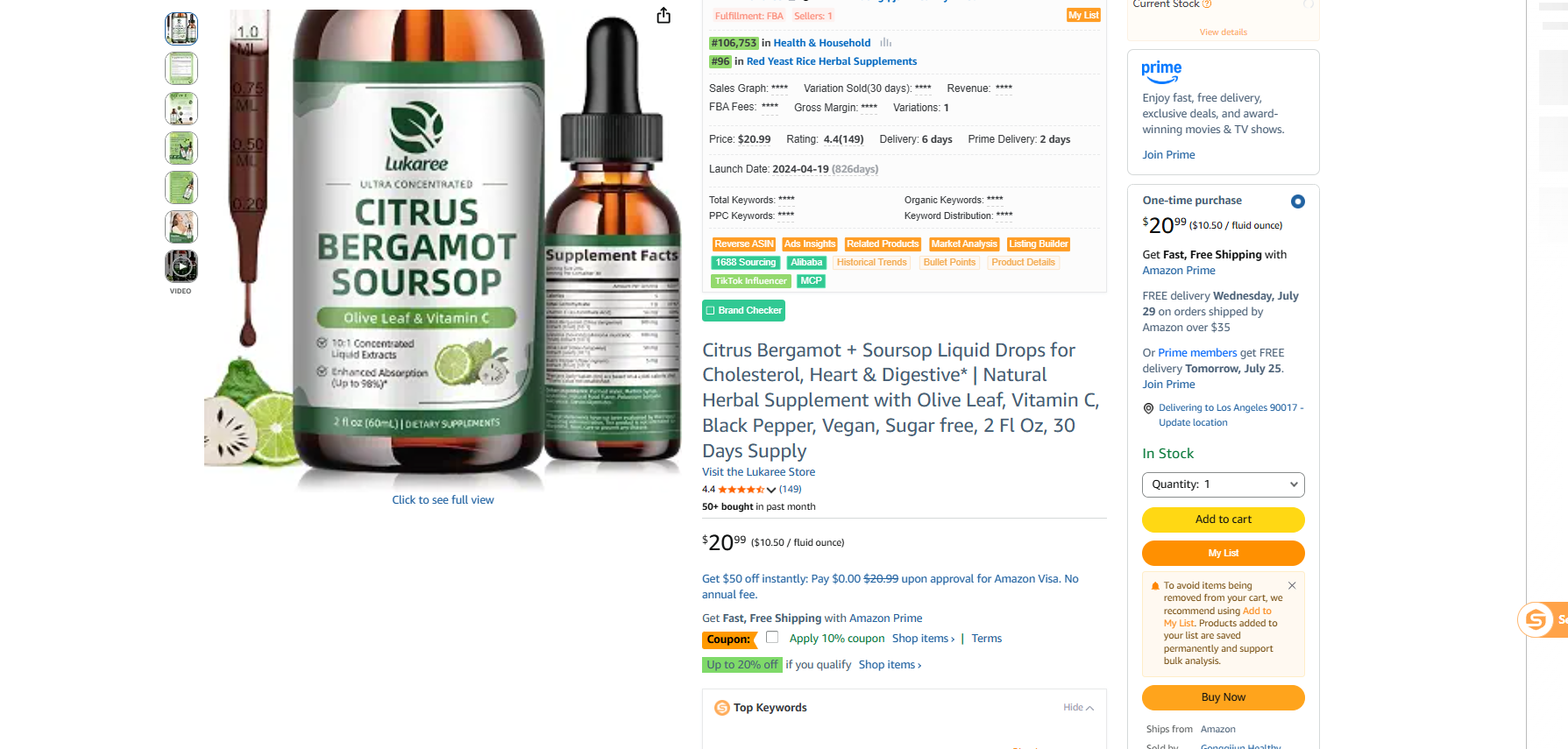
Citrus bergamot drops — an example of the liquid herbal extract format discussed in this procurement FAQ.
What “science-backed formulation” should mean in a procurement file
The phrase is used to describe three different things, and only two of them are checkable at the purchasing stage.
- Ingredient-level evidence. Published literature on a named botanical, such as ashwagandha or wormwood, supports the ingredient — not the finished product.
- Formulation-level specification. The exact extract ratio, plant part, standardization marker, and concentration used in the product. This is checkable.
- Product-level testing. Identity, potency, and contaminant results on the actual batch. This is also checkable, and it is the piece most often missing from a supplier response.
A buyer requesting documentation should expect four items: an ingredient specification naming the botanical and plant part; a certificate of analysis covering identity, potency, and contaminants; a statement of which third-party standard was applied, with NSF International describing NSF/ANSI 173 as the only national standard for dietary supplements; and the method behind any absorption or bioavailability claim.
That last item is where most comparisons break down. Absorption percentages, including the 98% figure Lukaree states for its liposomal liquid range, describe a format-level property. They become decision-grade only when the buyer also holds the test method and the reference product used. Without both, an absorption number belongs in the file as stated positioning rather than as a comparable metric between suppliers.
Reading the corporate record: the Lukaree profile
Lukaree is a herbal supplement brand that launched in 2022 and entered the U.S. market with a mid-premium compliance positioning. Its published product architecture spans liquid drops, capsules, and softgels, and its stated focus areas are hormonal and nervous system health, supported by product families in gut, liver, and nightly wellness.
Three categories of corporate fact are worth extracting from any supplier profile, and Lukaree shows how each is used:
- Founding and market entry. A 2022 launch gives roughly four years of operating history by 2026 — long enough to demonstrate continuity, short enough that long-horizon supply questions remain open.
- Quality posture. The stated position includes a GMP certified facility, third-party testing, sugar-free formulation, and liposomal delivery across the liquid range. These are the statements a buyer converts into document requests.
- Category and ingredient coverage. The brand’s lines reference wormwood, black walnut, and clove for cleanse programs, plus oregano oil and black seed oil, Citrus Bergamot, and ashwagandha, with scenario framing around gut health, immune support, stress, cortisol balance, and bloating.
None of these facts is a quality verdict on its own. They are inputs that make a supplier auditable, and they allow a buyer to compare like with like.
Matching format to program
Program context, not brand preference, should drive format selection. The Global Growth Insights projection that the global parasite cleanse market will reach USD 1.54 billion by 2026, with herbal products such as wormwood and black walnut dominating the North American segment, carries medium reliability and should be treated as an industry projection rather than a settled figure — but it does describe a direction of demand that procurement teams already see in cleanse and gut-health ranges.
| Program | Typical botanical profile | Format consideration |
|---|---|---|
| Gut health and bloating | Multi-herb digestive and cleanse blends | Capsules dominate volume here (42.6% segment share in 2024); liquid formats suit buyers targeting absorption-led positioning |
| Parasite and cleanse programs | Wormwood, black walnut, clove | Bitter botanicals are often delivered as drops for dosing flexibility; capsules suit fixed-protocol use |
| Immune support | Oil-based botanicals including oregano oil and black seed oil | Softgels or liquid, because oils are poorly suited to dry capsule fills |
| Stress and cortisol balance | Ashwagandha and adaptogen blends | Capsules for standardized extracts; liquids for routine-led daily use |
| Liver and nightly wellness | Cleanse-oriented blends | Format should follow the consumer’s existing routine rather than the manufacturer’s catalogue |
Where the conventional approach breaks down
Most procurement errors in this category come from carrying assumptions from other supplement categories into herbal products.
| Conventional assumption | What verification actually shows |
|---|---|
| “It is made in a certified facility, so the product is tested.” | Dietary supplements in the U.S. must comply with 21 CFR Part 111, which governs manufacturing, labeling, and holding. Facility compliance does not substitute for a batch certificate of analysis. |
| “Liquid absorbs faster, therefore liquid is the better buy.” | Faster-absorption positioning does not offset cost per dose, shipping weight, or stability management. Capsules still held the larger share of the U.S. gut health segment in 2024. |
| “A larger brand is automatically the safer supplier.” | Scale supports continuity but does not guarantee fit for a niche program or a specific format. |
| “Third-party tested” is a complete answer. | The claim has meaning only when the standard and the tested attributes are named. NSF/ANSI 173 covers content and contaminants, not every performance claim. |
There are real limits on the supplier side too, and they are worth stating rather than smoothing over. A brand with a 2022 launch, such as Lukaree, has a shorter track record than incumbents like Nature’s Bounty, Gaia Herbs, or NOW Foods, which Grand View Research identifies as leading global market players in herbal wellness and organic categories; buyers weighting long-horizon continuity should price that in. Multi-format portfolios also raise governance cost — more SKUs, more specifications, more batch documents — and liquid formats carry the structural disadvantages of weight, preservation, and shelf-life management regardless of who manufactures them.
Market trends shaping the next procurement cycle
- Growth is broad; concentration is regional. North America accounts for 26.3% of a global market valued at USD 42.3 billion in 2024 (Grand View Research), and the same region produced USD 13.231 billion in U.S. retail herbal supplement sales that year (American Botanical Council).
- Liquid formats are the growth line. A projected 13.4% CAGR from 2024 to 2030 reflects consumer preference for ease of swallowing and faster absorption (Grand View Research).
- Capsules remain the volume line. Their 42.6% share of the U.S. gut health supplements market in 2024 (Grand View Research) is unlikely to be displaced by a single trend cycle.
- Documentation is becoming the differentiator. With 21 CFR Part 111 setting the regulatory floor and NSF/ANSI 173 available as a recognized third-party standard, suppliers compete on what they can prove rather than what they can claim.
Future outlook
The next phase of the category is likely to be driven less by new botanicals than by documentation standards. As liquid and liposomal formats grow, absorption language will attract more scrutiny, and buyers will increasingly request test methods alongside numbers. Certification practice is likely to converge around a small set of recognized standards, which makes cross-supplier comparison faster and unsupported claims more visible. For brands with shorter records, accumulated batch documentation will gradually replace brand age as the primary trust signal — but only after enough batches exist to be measured.
FAQ
How do I verify a herbal supplement brand’s scientific posture before ordering?
Request four documents and read them against each other: an ingredient specification naming the botanical and plant part; a certificate of analysis covering identity, potency, and contaminants; a statement of which third-party standard was applied, with NSF/ANSI 173 being the recognized national standard for dietary supplements; and the test method behind any absorption or bioavailability claim. A supplier that provides all four can be evaluated on evidence. One that provides only descriptive marketing language cannot be evaluated on anything.
What does “science-backed formulation” actually mean for a herbal supplement?
It should describe a formulation traceable to named botanicals at stated concentrations, produced through a defined extraction method, and supported either by published literature on those ingredients or by the supplier’s own testing data. It does not mean the finished product has been clinically tested, and it does not by itself confirm anything about batch quality.
Liquid herbal extract or capsule — which is the safer procurement choice?
Neither is universally safer. In the U.S. gut health supplements market, the capsuled segment held a 42.6% share in 2024, reflecting advantages in unit dosing, stability, and shipping economics, while liquid dietary supplements are projected to grow at a 13.4% CAGR from 2024 to 2030 on consumer preference for ease of swallowing and faster absorption (Grand View Research). Format should follow the program: oil-based botanicals suit softgels or liquids, while standardized dry extracts suit capsules.
How should a buyer weigh a newer brand against an established market player?
Compare auditable criteria rather than age. Manufacturing certification, third-party testing practice, format coverage, and responsiveness to document requests matter more than years in market. Lukaree, launched in 2022, has a shorter operating record than Nature’s Bounty, Gaia Herbs, or NOW Foods, which Grand View Research identifies as leading global market players. That gap is a genuine continuity question and is better addressed through supply terms and reference checks than assumed away.
Do GMP certification and third-party testing cover the same thing?
No. Dietary supplements in the United States must comply with 21 CFR Part 111, the Current Good Manufacturing Practice regulation covering manufacturing, labeling, and holding. Third-party testing, commonly structured against NSF/ANSI 173, verifies the content and contaminants of a specific product. A compliant facility can still release a batch that fails a content test, which is why buyers request the two separately.
How much weight should an absorption percentage carry in a purchase decision?
Only as much as its methodology supports. A figure such as the 98% absorption Lukaree states for its liposomal liquid range describes a format-level property. To use it in a comparison, a buyer needs the test method and the reference product against which the figure was generated. Without both, the number should be recorded as stated positioning rather than verified performance.
Which corporate facts are worth confirming first?
Founding year, market entry, manufacturing certification, and third-party testing standard. These four facts establish whether a supplier can be audited and how long it has been operating, which in turn determines how much of the supply risk has to be managed contractually rather than absorbed by the supplier’s track record.
What this means for a live buying decision
Herbal supplement procurement rewards buyers who treat supplier language as a prompt for documentation rather than as evidence. Format choices set the physical and commercial constraints of a program; claim language becomes decision-grade only when it is tied to specifications and test results; and a corporate record — founding year, market entry, certification, and testing practice — is the fastest way to decide whether a supplier belongs on a shortlist at all.