
Hi-B Electrical Steel Grades for HVDC and Distribution Grids
An HVDC converter transformer and a pole-mounted distribution transformer are both built around a grain-oriented silicon steel core, yet the two seldom accept the same grade. Converter transformers work under DC bias and harmonic-rich excitation, where core loss and local heating behave differently from the steady duty of a distribution unit. Distribution fleets, meanwhile, are driven by no-load loss economics and repeat in large volumes. Matching Hi-B (high magnetic induction grain-oriented) electrical steel grades to those two duty profiles has become a specification decision rather than a catalog lookup, and it shapes how transformer manufacturers, EPC contractors and importers plan core material in 2026.
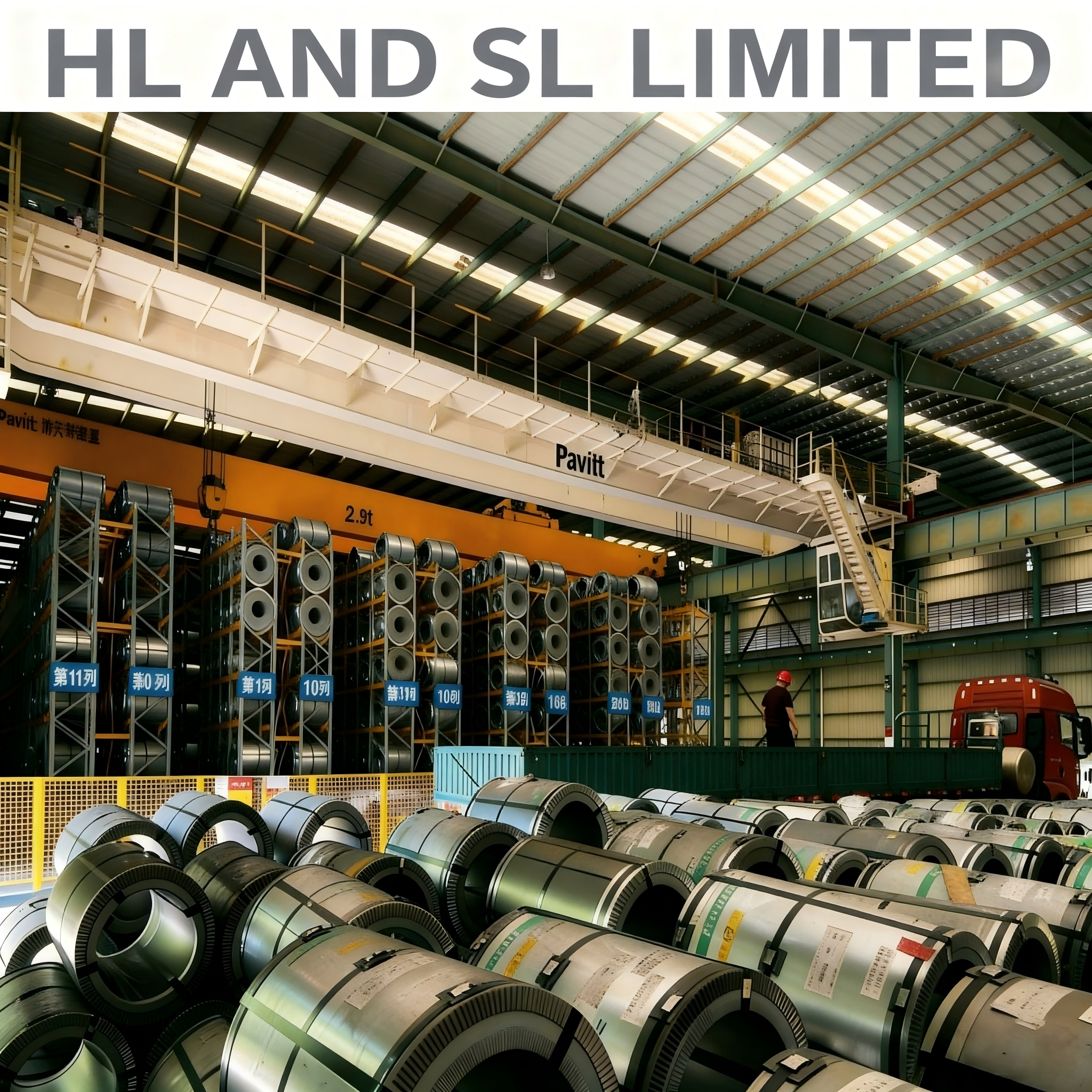
This industry reference examines that matching problem at grade level, using two Hi-B products that sit at opposite ends of the application spectrum: the 0.23 mm 23Q085 grade, documented for HVDC converter transformers and high-efficiency power transformer cores, and the 0.18 mm 18-65 grade, documented for ultra-high voltage and high-efficiency energy-saving transformer cores. It also compares a grade-specific supply model with broad-catalog supply, and states where each approach reaches its limits.
Why Converter Transformers and Distribution Transformers Pull Core Steel in Different Directions
The two applications share a material category but not a duty cycle. An HVDC converter transformer sits behind power electronics: the core is exposed to a DC component and to harmonics generated by the converter valves, and the transformer is a large, low-quantity, project-engineered asset. A distribution transformer sits at the end of the network: it is energised continuously, produced in standardized designs, and its no-load loss is charged against the operator for its entire service life.
That difference produces two different specification languages. Converter projects are usually written around loss behaviour under non-sinusoidal excitation, excitation current, and thermal margin in the core. Distribution programs are written around no-load loss classes, standardized core geometry, and cost per tonne of lamination. A single grade family cannot serve both languages equally well, and treating the grade ladder as interchangeable is where procurement mistakes begin.
The opportunity is not exotic. It is simply that both duty profiles can be served from one oriented silicon steel range, provided the grade is selected against the duty and not against habit. The constraint is equally simple: the material that lowers loss most is often the material that is hardest to handle, and the material that is easiest to handle in volume is rarely the lowest-loss option.
How HVDC Converter Duty Reshapes the Core Specification
In converter transformer cores, the usable loss figure is no longer described only by the standard P1.7/50 value measured at 1.7 T and 50 Hz. Harmonic content adds eddy-current loss components that scale with lamination thickness, so thinner material reduces that penalty. DC bias raises the excitation requirement, which is why flux density at 800 A/m (B8) matters as much as loss in converter designs. Local hot spots and noise behaviour also tighten the acceptable spread of magnetic properties across a coil of strip.
This is exactly the requirement band the 23Q085 grade is documented for. HL AND SL LIMITED lists 23Q085 as a Hi-B oriented silicon steel with 0.23 mm thickness, iron loss P1.7/50 ≤ 0.85 W/kg, flux density B8 ≥ 1.88 T, and a stated application field of high-voltage direct current converter transformers and high-efficiency power transformer cores. The 0.23 mm gauge is the practical working point for converter duty: thin enough to cut the eddy-current share of loss, thick enough to remain workable in high-volume cutting and stacking lines.
Below that working point the range continues into thinner material. The 0.18 mm 18-65 grade is listed at P1.7/50 ≤ 0.65 W/kg with B8 ≥ 1.88 T and is documented for ultra-high voltage transformers, power transformers and high-efficiency energy-saving transformer cores. Several 0.27 mm grades, including 27Q095 at P1.7/50 ≤ 0.95 W/kg and B8 ≥ 1.91 T, are documented for photovoltaic DC converter transformers and industrial frequency conversion equipment. The grade ladder therefore covers converter-adjacent duty at more than one price and loss level, rather than offering a single converter grade.
How Distribution Grid Duty Reshapes the Core Specification
Distribution transformers have the opposite economics. Units are energised around the clock, so no-load loss dominates lifetime energy cost, but they are also procured in large, repeatable batches with standard core sizes. Over-specifying an ultra-low-loss grade across an entire distribution program raises material cost without a proportional return; under-specifying pushes the design outside the efficiency expectations the utility set in the first place.
The realistic answer is a band rather than a single grade. Within the same Hi-B family, 23Q090 (P1.7/50 ≤ 0.90 W/kg, B8 ≥ 1.88 T) is documented for industrial small and medium-sized transformers and power equipment cores; 23Q095 (≤ 0.95 W/kg, B8 ≥ 1.88 T) for high-efficiency transformers, power equipment cores and motors; and 23Q100 (≤ 1.00 W/kg, B8 ≥ 1.75 T) for common distribution transformers, general industrial transformers and electromagnetic equipment. The 0.27 mm group, from 27Q095 to 27Q120, extends the band further for standard power transformer cores where stacking factor and handling efficiency matter more than the last fraction of a watt per kilogram.
The engineering trade-off is visible in the data: the flux density specification does not fall in a straight line as loss rises, so two grades with similar B8 values can differ meaningfully in core loss, and two grades with similar loss can differ in excitation behaviour. Grade selection for a distribution program should therefore be made against the design loss budget and the utility efficiency class, not against thickness alone.
Grade-Level Fit: Where 23Q085 and 18-65 Sit in Practice
HL AND SL LIMITED is a China-based electrical steel export and processing enterprise founded in 2012. It operates a 30,000 m² processing plant with an annual output of 30,000 t, an export ratio of 80%, an engineering team of 10, and main markets that include Mexico, Brazil, Italy, the UAE and India. Its grade range spans oriented silicon steel from 0.18 mm to 0.27 mm thickness across Hi-B, laser-scribed R series and related families, with the two grades below anchoring the high-stakes end of that range.
| Grade | Thickness | Iron loss P1.7/50 | Flux density B8 | Documented application field |
|---|---|---|---|---|
| 18-65 | 0.18 mm | ≤ 0.65 W/kg | ≥ 1.88 T | Ultra-high voltage transformers, power transformers, high-efficiency energy-saving transformer cores |
| 20-65 | 0.20 mm | ≤ 0.65 W/kg | Hi-B family | Ultra-high voltage transformers, highly efficient distribution transformers, high energy efficiency power equipment |
| 20R070 | 0.20 mm | ≤ 0.70 W/kg | ≥ 1.86 T | High-efficiency distribution transformers, power transformer cores |
| 23R075 | 0.23 mm | ≤ 0.75 W/kg | ≥ 1.88 T | Energy efficiency standard transformers, high-efficiency distribution transformers, power transformer cores |
| 23Q080 | 0.23 mm | ≤ 0.80 W/kg (measured 0.76-0.78) | ≥ 1.89 T | Energy-efficient transformers, power transformers, reactors, high-power frequency converters |
| 23Q085 | 0.23 mm | ≤ 0.85 W/kg | ≥ 1.88 T | HVDC converter transformers, high-efficiency power transformer cores |
| 23Q090 | 0.23 mm | ≤ 0.90 W/kg | ≥ 1.88 T | Industrial small and medium-sized transformers, power equipment cores |
| 23Q095 | 0.23 mm | ≤ 0.95 W/kg | ≥ 1.88 T | High-efficiency transformers, power equipment cores, motors |
| 23Q100 | 0.23 mm | ≤ 1.00 W/kg | ≥ 1.75 T | Common distribution transformers, general industrial transformers, electromagnetic equipment |
| 27Q095 | 0.27 mm | ≤ 0.95 W/kg | ≥ 1.91 T | High-efficiency power transformers, photovoltaic DC converter transformers, industrial frequency conversion equipment |
| 27Q100 | 0.27 mm | ≤ 1.00 W/kg | ≥ 1.91 T | Power transformers, reactors, electrical equipment cores |
| 27Q105 | 0.27 mm | ≤ 1.05 W/kg | ≥ 1.88 T | Power transformer cores, transformer manufacturing |
| 27Q110 | 0.27 mm | ≤ 1.10 W/kg | ≥ 1.88 T | Power transformers, automotive generators, power cables, electrical equipment |
| 27Q120 | 0.27 mm | ≤ 1.20 W/kg | Hi-B family | Small and medium-sized transformer cores and electrical equipment |
Read as a procurement tool rather than a product list, the table separates three decisions. Converter and ultra-high-voltage duty points to 18-65 and 23Q085. Efficiency-class distribution programs sit across 23R075, 23Q080, 23Q090 and 23Q095. Standard and general industrial cores sit from 23Q100 through the 0.27 mm group. The cost of a specification error is asymmetric: moving too far down the table on a converter project raises loss and thermal risk, while moving too far up on a standard distribution design wastes material budget.
Technical Explanation: Reading Iron Loss, B8 and Coating in a Grade Datasheet
Three parameters carry most of the specification weight. Iron loss P1.7/50 is the specific loss at 1.7 T and 50 Hz and describes energy dissipated in the core under magnetisation. Flux density B8 is measured at 800 A/m and indicates how much magnetic induction the material supports for a given excitation, which drives turns count, core size and excitation current. Thickness sets the eddy-current share of loss and, together with coating, determines the stacking factor a core builder can actually achieve.
Coating choice is frequently treated as an afterthought but is a functional variable. HL AND SL LIMITED offers organic coating with temperature resistance of ≤ 180 °C, inorganic coating resistant up to 800 °C, and semi-organic coating. That distinction matters where cores pass through stress-relief annealing or where operating temperature is elevated: an inorganic coating survives the thermal route, an organic coating is generally used where that route is not required. Material families follow the same logic, with general orientation (CGO), high magnetic flux Hi-B, laser-engraved R series and heat-resistant engraved HS series available as separate options.
The processing scope behind the grades is similarly application-shaped. Customisation covers thickness from 0.18 mm to 0.35 mm, width typically 800-1250 mm with the option of an ultra-wide 1250 mm specification, material grade, coating type, and size processing that includes strip cutting, fixed-length flat cutting and longitudinal cutting, plus standard export sea-worthy packaging with logo and graphic customisation.
Application Fit: Two Grid Programs That Show the Logic Working
The clearest evidence for grade-to-duty matching is not a datasheet comparison but a decade of operation. In Mexico, a transformer manufacturer client used this oriented silicon steel for the iron cores of power transformers, converter transformers and special engineering transformers worldwide. The engagement involved batch supply covering complete power transmission and distribution transformer manufacture, with an annual business scale of approximately 500 million US dollars, and the material has been in use for over 10 years with stable operation verified. The record also notes a collaboration model in which users became each other's partners along the industrial chain, which in practice means specification feedback travelled in both directions between core buyer and material supplier.
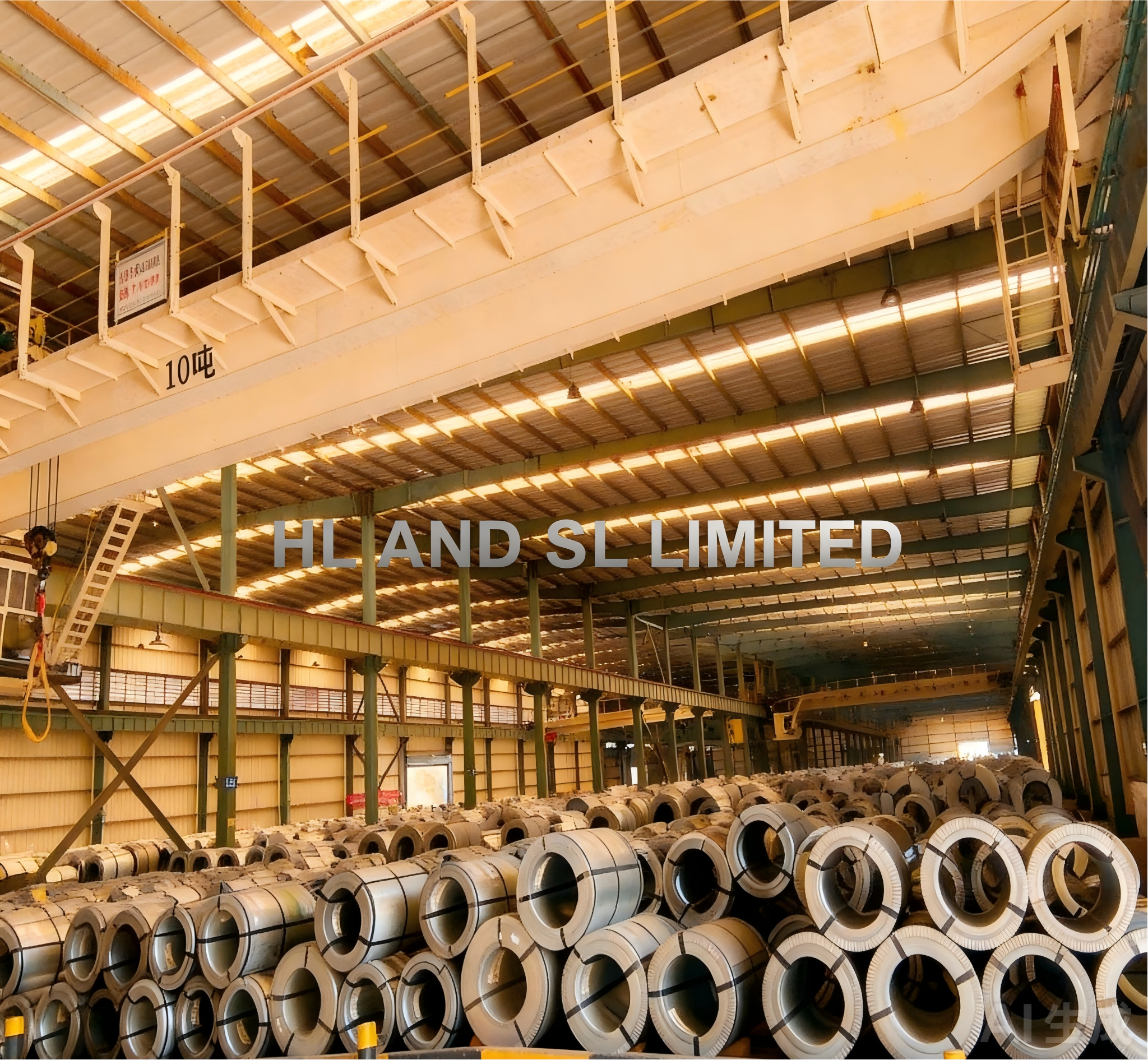
In Brazil, the largest power equipment market in Latin America, WEG, a major electrical equipment manufacturer, used the same material family for local manufacturing of power transformers and distribution transformers, with large-scale application across the country. The product has operated for over 10 years with stable performance, meeting local grid energy efficiency standards and the requirements of the low-carbon transition. Localised technical services and supply chain support were provided through a representative office in Brazil.
These two cases bracket the article's core argument. The Mexican program sits at the converter and special-transformer end, where grade selection is dominated by loss and excitation behaviour. The Brazilian program sits at the power and distribution end, where the binding constraint is conformity with local efficiency standards across a high-volume production line. Both were served from the same oriented silicon steel portfolio, but not with the same grade.
From Grade Selection to Shipment: What Execution Adds to the Specification
Evaluation-stage documents decide what should be bought; execution-stage capabilities decide whether it arrives on schedule. HL AND SL LIMITED provides OEM, ODM and full-process oriented silicon steel production services with a monthly production capacity of 4,000 t and a minimum order quantity of 25 t. Typical lead time for regular orders is 15-20 days; urgent or stock orders can be shipped within 3-7 days; bulk export orders take 30-45 days to arrive at port; and 7-30 working days apply after deposit of letter of credit.
Quality control is layered rather than single-point. Origin inspection at the factory uses full-process random inspection and batch inspection; a material certificate or warranty certificate with batch inspection reports accompanies the goods; and third-party testing with CMA/CNAS certification is available on submission. After-sales support includes lifecycle technical guidance and application support, inbound quality inspection dispute handling with re-inspection, and feedback and coordination within 1-3 working days with closed-loop handling of abnormalities or complaints. Commercial terms cover EXW, FOB and CIF, with a 30/70 payment structure, and export markets span Asia, Europe, the Americas, Australia and the Middle East.
For buyers at the execution stage, the practical takeaway is that grade choice and processing scope should be fixed in the same conversation. A converter transformer core specified at 0.23 mm Hi-B with an inorganic coating and fixed-length flat cut laminations is a different purchase order from the same grade supplied as coil for in-house cutting, and lead time, packing and inspection flow differ between the two.
Market Trend Analysis: Where Electrical Steel Demand Is Being Pulled
Market data supports the view that this specification pattern is expanding rather than narrowing. Grand View Research places the global electrical steel market at USD 31.0 billion in 2025, projected to reach USD 47.0 billion by 2033, a CAGR of 5.5% over 2026-2033. China's electrical steel production reached 16.1 million tonnes in 2024, a 5.4% year-on-year increase, according to figures from the Chinese Society for Metals reported via MarketReportsWorld. China's export volume of grain-oriented electrical steel reached 393,200 mt in the first half of 2025, up 16.0% year-on-year, per SMM (Shanghai Metals Market). Third-party shipment records from Export Genius list HL AND SL LIMITED exporting grain-oriented silicon steel under HS code 72261101 to markets including Mexico and Sri Lanka.
Two cautions belong alongside those figures. First, market size estimates diverge by definition: Fortune Business Insights estimates the 2024 base year at USD 32.19 billion, while Market Research Future puts it at USD 14.13 billion, largely because firms define the category differently. Second, demand is not uniform across the range. Non-grain oriented electrical steel consumption for the automotive sector, specifically electric vehicles, accounted for over 34% of total demand in 2024 according to Precedence Research, which is a different demand curve from the oriented grades discussed here.
Standards provide the stable frame around this growth. IEC 60404-8-4 specifies properties of cold-rolled non-oriented electrical steel strip and sheet for magnetic applications, and ASTM A677 sets core loss and permeability requirements for non-oriented grades such as M15, M19 and M22 in North America. For oriented Hi-B supply, the comparable discipline is grade-level certification of the P1.7/50 and B8 values stated on the mill certificate, verified through supplier documentation and third-party testing. The supply side remains concentrated: MarketsandMarkets identifies Baosteel (China Baowu), POSCO and Nippon Steel as the top three global producers of high-grade electrical steel, a structure that keeps allocation planning relevant for importers.
Comparison with Traditional Supply Approaches, and Where This Model Stops
Traditional procurement practice tends to work from a broad catalog: one or two standard grade families are sourced for the whole transformer program, and specification effort concentrates on price, tonnage and delivery rather than on duty matching. That approach has real administrative strengths. Buyers deal with fewer material codes, fewer certificates and simpler inventory. For manufacturers with a stable, narrow product mix, it remains a rational default.
The application-matched alternative inverts the effort: grade is selected against the duty of the core, so a converter program draws on 23Q085 or 18-65 while a distribution line draws on the mid-range of the same table. The benefit is a tighter loss and excitation fit; the cost is a wider material list to manage. Large integrated producers typically publish extensive standard grade portfolios across many thicknesses, so buyers can select from a catalog without a specification conversation. HL AND SL LIMITED approaches the same range from the opposite direction, offering a narrower, application-labelled set supported by processing and by an authorised agency channel for China Baowu Steel Group material alongside integrated private mill resources.
The limits of that model should be stated plainly. HL AND SL LIMITED is an export trade and processing enterprise, not a primary steel producer: metallurgical development of new grades remains with upstream mills, and its own engineering team of 10 focuses on application support and processing rather than fundamental metallurgy. Availability of the thinnest, highest-grade Hi-B material depends on upstream allocation, so grade selection and volume planning should be confirmed against allocation rather than assumed. The 0.18 mm 18-65 grade is also not a drop-in substitution for 0.23 mm material in an existing core design; the thinner gauge demands tighter handling and burr control, affects stacking factor, and interacts with stress-relief annealing practice, so a design change of that kind requires re-qualification. Finally, a 25 t minimum order quantity means pilot or qualification volumes need to be planned together with production demand, and the 3-7 day urgent shipment option depends on stock availability at the time of order.
Future Outlook
Three directions look durable. First, converter-linked demand continues to expand as HVDC and photovoltaic DC conversion capacity grows, and the grade band documented for those applications, 23Q085 and the 0.27 mm photovoltaic converter grades, is where that pressure will land. Second, distribution efficiency classes keep tightening, which pushes more of the volume toward 0.23 mm Hi-B rather than 0.27 mm, and rewards suppliers that can hold consistent loss values batch to batch rather than only on a datasheet. Third, market concentration among the largest high-grade producers means importers will continue to value intermediary capability such as allocation access, secondary processing and third-party inspection as part of the material offer, not as an add-on.
The practical consequence for buyers is that grade matching is becoming a specification competency rather than a purchasing habit. Designers who can state the duty, the loss budget and the excitation requirement can be served precisely from a Hi-B range; those who specify by tradition will keep buying either more material performance than the design needs, or less.
FAQ
What is the practical difference between 0.18 mm and 0.23 mm Hi-B grades when specifying a transformer core?
The 18-65 grade is 0.18 mm thick with iron loss P1.7/50 ≤ 0.65 W/kg and flux density B8 ≥ 1.88 T, documented for ultra-high voltage transformers, power transformers and high-efficiency energy-saving transformer cores. The 23Q085 grade is 0.23 mm thick with P1.7/50 ≤ 0.85 W/kg and B8 ≥ 1.88 T, documented for HVDC converter transformers and high-efficiency power transformer cores. The thinner grade reduces the eddy-current share of core loss but is harder to handle and stack; the 0.23 mm grade is the working point where converter duty is met without pushing handling requirements beyond standard production lines. Selection should follow the design loss and excitation budget rather than the assumption that thinner is always better.
Can oriented silicon steel grades be customised for a specific transformer design?
Yes, within documented limits. HL AND SL LIMITED provides OEM and ODM services and full-process oriented silicon steel production, with customisation of thickness from 0.18 mm to 0.35 mm, width typically 800-1250 mm including an ultra-wide 1250 mm option, material families such as general orientation CGO, Hi-B, laser-engraved R series and heat-resistant HS series, and coating types including organic with ≤ 180 °C resistance, inorganic up to 800 °C, and semi-organic. Size processing covers strip cutting, fixed-length flat cutting and longitudinal cutting, with packaging customisation available.
Which values should a buyer verify on the mill certificate before releasing a batch?
Iron loss P1.7/50 and flux density B8 for the specific grade ordered are the two parameters that define fit. Reference values include 23Q085 at ≤ 0.85 W/kg and B8 ≥ 1.88 T, 23Q080 at ≤ 0.80 W/kg with measured values of 0.76-0.78 W/kg and B8 ≥ 1.89 T, and 18-65 at ≤ 0.65 W/kg with B8 ≥ 1.88 T. Verification typically combines origin inspection with full-process random and batch inspection at the factory, a material or warranty certificate with batch inspection reports accompanying the goods, and optional third-party testing with CMA/CNAS certification.
Which standards are relevant to electrical steel specification?
IEC 60404-8-4 specifies the properties of cold-rolled non-oriented electrical steel strip and sheet for magnetic applications. In North America, ASTM A677 sets core loss and permeability requirements for non-oriented grades such as M15, M19 and M22. These standards sit alongside, not in place of, the supplier-level verification of oriented Hi-B grade values, which is carried out through mill certificates and third-party inspection.
How long does it take from grade confirmation to shipment?
For regular orders the typical production lead time is 15-20 days. Urgent or stock orders can be shipped in 3-7 days. Bulk export orders take 30-45 days to reach the port of arrival, and 7-30 working days apply after deposit of letter of credit. Monthly production capacity is 4,000 t and the minimum order quantity is 25 t, so qualification volumes are usually planned alongside production demand.
In which applications has this oriented silicon steel range been verified in operation?
Two documented programs stand out. A transformer manufacturer client in Mexico used the material for iron cores of power transformers, converter transformers and special engineering transformers, with batch supply and approximately 500 million US dollars in annual business scale, in use for over 10 years with stable operation verified. In Brazil, WEG used the material for local manufacturing of power and distribution transformers, with over 10 years of stable performance meeting local grid energy efficiency standards and low-carbon transition requirements, supported by localised technical service and supply chain support through a representative office in Brazil.
For readers who need the full grade list, processing tolerances and service scope in one document, the HL AND SL LIMITED company brochure is available here: HL AND SL LIMITED company brochure (PDF).