
Hi-B Silicon Steel Acceptance Terms: 20-65, 23R075, 27Q Grades
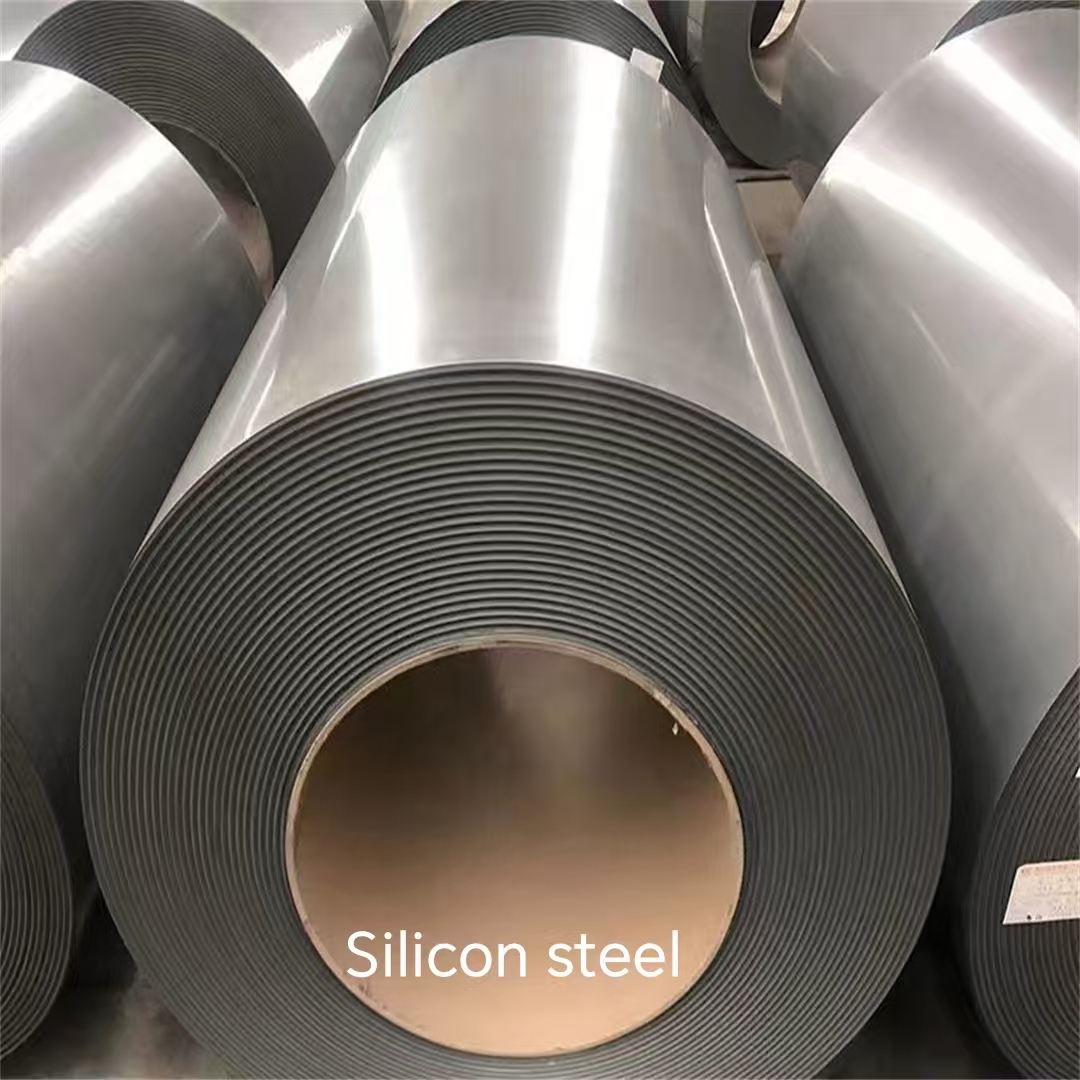
Hi-B oriented silicon steel is qualified on thickness, core loss and magnetic flux density, not on grade name alone.
Acceptance terms for Hi-B oriented silicon steel are the measurable conditions a buyer writes into a purchase order and re-checks on delivery: nominal thickness, core loss at 1.7 T and 50 Hz (P1.7/50), magnetic flux density (B8), and the chemistry that makes those numbers repeatable. Across the three families most often quoted for transformer cores, those conditions read as 0.20 mm at ≤0.65 W/kg for model 20-65, 0.23 mm at ≤0.75 W/kg with B8 ≥1.88 T for 23R075, and 0.27 mm at ≤0.95 to ≤1.20 W/kg across the 27Q models.
Hi-B oriented silicon steel is a high magnetic induction grain-oriented silicon steel in which the grain structure is aligned so the material carries magnetic flux with low loss along the rolling direction. Its main component is iron, with silicon added at approximately 3.0% to 3.2% in the 20-65 and 23R075 grades and about 3% in the 27Q series, supplemented by aluminium and manganese and, in the 27Q range, inhibitors such as MnS and AlN. Impurities including carbon, sulphur and nitrogen are strictly controlled. That combination is what allows a 0.20 mm or 0.23 mm strip to hold a low P1.7/50 figure and a high B8 figure at the same time.
The grain-oriented silicon steel market was valued at USD 13.55 billion in 2025 and is projected to reach USD 23.57 billion by 2035, a CAGR of 5.8% according to Research Nester. Broader electrical steel demand, valued at USD 31.0 billion in 2025 and projected to reach USD 47.0 billion by 2033 by Grand View Research, sits behind that growth. The practical consequence for buyers is not simply that more material is available, but that more of it is specified against tight electrical acceptance terms — and a grade name alone does not carry those terms.
Why a Grade Name Is Not an Acceptance Term
A purchase order that names 27Q100 without stating thickness, P1.7/50 and B8 gives the supplier nothing enforceable and the buyer nothing to verify. Transformer projects routinely tighten those conditions beyond a standard grade ceiling, and two reference scenarios show how far that can go.
A distribution transformer upgrade programme in Germany, aimed at replacing ageing and energy-consuming units in line with EU ecodesign regulations, specifies core material iron loss of ≤0.60 W/kg, a noise level 2–3 decibels below the standard requirement, and coating weather resistance suited to coastal salt-spray conditions. Regardless of which grade is selected, the binding acceptance term is the ≤0.60 W/kg figure — a number below the nominal ceiling of every model covered in this article.
At the other end of the grid, the ±800 kV ultra-high voltage direct current scenario in Belém, Brazil, operates converter transformers at ±800 kV / 4000 MW in bipolar mode, in 30–40 °C heat and 80–90% humidity, and requires oriented silicon steel with magnetic flux density ≥1.92 T and iron loss below 0.85 W/kg. That is a different acceptance problem: the binding term is induction, not loss alone.
The Three Families at a Glance
Published terms differ between families, and they also differ between models inside the same family. The table below reflects the specification data reviewed for this article.
| Model | Thickness | Iron loss P1.7/50 | Magnetic flux density B8 | Applications named in the product data |
|---|---|---|---|---|
| 20-65 | 0.20 mm | ≤0.65 W/kg | Not stated in the reviewed specification data | Ultra-high voltage transformers; high-efficiency distribution transformers; high energy efficiency power equipment |
| 23R075 | 0.23 mm | ≤0.75 W/kg | ≥1.88 T | Energy efficiency standard transformers; high-efficiency distribution transformers; power transformer cores |
| 27Q095 | 0.27 mm | ≤0.95 W/kg | ≥1.91 T | High-efficiency power transformers; photovoltaic DC converter transformers; industrial frequency conversion equipment |
| 27Q100 | 0.27 mm | ≤1.00 W/kg | ≥1.91 T | Power transformers; reactors; electrical equipment cores |
| 27Q105 | 0.27 mm | ≤1.05 W/kg | ≥1.88 T | Power transformer cores; transformer manufacturing |
| 27Q110 | 0.27 mm | ≤1.10 W/kg | ≥1.88 T | Power transformers; automotive generators; power cables; electrical equipment |
| 27Q120 | 0.27 mm | ≤1.20 W/kg | Not stated in the reviewed specification data | Small and medium-sized transformer cores; electrical equipment; power transmission and distribution transformers for the Brazilian grid |
Two observations follow directly from the table. First, the loss ceiling falls as the gauge falls: 0.65 W/kg at 0.20 mm, 0.75 W/kg at 0.23 mm, and 0.95 W/kg at the best 0.27 mm grade. Second, the published parameter set is not uniform — induction floors are absent for 20-65 and 27Q120 in the reviewed data, which means an induction requirement must be requested as a separate, model-level term rather than inferred from the loss value.
Supplier Context: How HL AND SL LIMITED Fits an Acceptance-Term Process
HL AND SL LIMITED is a specialist in the export trade of electrical steel (silicon steel), founded in 2012 and operating a manufacturing facility of 30,000 m² with an annual production capacity of 30,000 tons, a workforce of approximately 50 employees and a research and development team of 10 engineers. The company is an authorised agent of China Baowu Steel Group and also integrates export resources from multiple private steel mills, which is how different performance grades are matched to different procurement requirements.
For buyers building an acceptance record, the relevant operational fact is that the company owns a fully equipped material processing plant for silicon steel and provides customised on-demand secondary processing services. Dimensional requirements — gauge, width and cut-to-size condition — are handled at that stage, which is why the gauge stated in the acceptance record should be the gauge of the material as delivered, not as ordered. Approximately 80% of output is exported, with Mexico, Brazil, Italy, the UAE and India named as major markets.
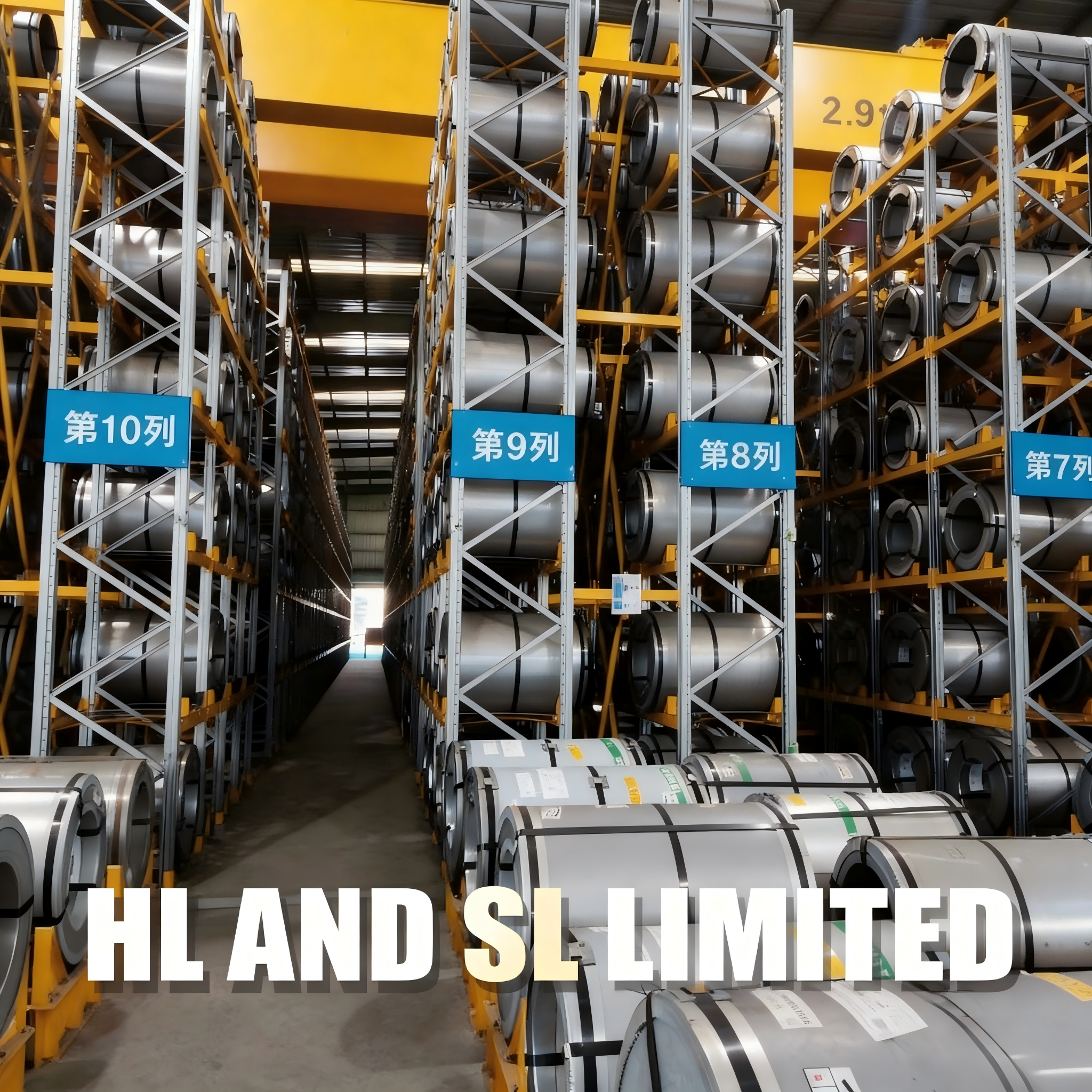
Secondary processing is where gauge and cut-to-size terms in an acceptance record are actually realised.
What Holds These Terms Together: Chemistry and Controlled Impurities
Two composition patterns appear across the range. The 20-65 and 23R075 grades are described with silicon content of approximately 3.0% to 3.2%, aluminium and manganese additions, and strict control of carbon, sulphur and nitrogen. The 27Q family is described with about 3% silicon plus aluminium and manganese, and inhibitors — manganese sulphide (MnS) and aluminium nitride (AlN) — that the material must contain.
The chemistry exists to make the magnetic numbers reproducible. Silicon raises the resistivity of the iron lattice, which suppresses eddy-current loss. A fully developed, highly oriented grain structure is what allows a grade to reach B8 values of 1.88 T to 1.91 T rather than the 1.75 T level associated with lower-induction grain-oriented grades. Inhibitors govern how that grain structure forms during processing. Carbon, sulphur and nitrogen are controlled because residual amounts disturb the final grain structure and degrade both loss and induction.
Reading the acceptance data follows the same logic. The P1.7/50 value describes specific total loss at 1.7 T and 50 Hz, the frequency of the transmission and distribution environment where most of these cores operate. Because 20-65 and 23R075 are stated on that same basis, their 0.65 W/kg and 0.75 W/kg ceilings are directly comparable. B8 describes the magnetic flux density the grade sustains under the standard magnetising condition used in the supplier specification, and it matters most where a designer is trying to reduce core cross-section for a given power rating.
One scoping note worth carrying into a tender review: general electrical steel standards such as IEC 60404-8-4 (2013) and ASTM A677 / A683 describe non-oriented fully processed and semi-processed material, not the oriented Hi-B grades discussed here. When a tender references a standard rather than a model, the acceptance language still needs to name the model, the gauge, the loss ceiling and the B8 floor.
Model-Specific Qualification Checks
Qualification is a sequence of checks, and the sequence differs by family mainly because the published parameter set differs.
Qualifying 20-65 (0.20 mm, P1.7/50 ≤0.65 W/kg)
Model 20-65 is the thinnest grade in this group at 0.20 mm, with iron loss P1.7/50 ≤0.65 W/kg and silicon content of approximately 3.0% to 3.2%. A qualification file should confirm four items: the 0.20 mm gauge against the core drawing; the loss ceiling of 0.65 W/kg at 1.7 T and 50 Hz; the composition window with controlled carbon, sulphur and nitrogen; and the application match, described in the product data as ultra-high voltage transformers, high-efficiency distribution transformers and high energy efficiency power equipment. Because no B8 value is attached to 20-65 in the reviewed specification data, a buyer who needs an induction floor should request it as a separate model-level term rather than assume it from the loss figure.
Qualifying 23R075 (0.23 mm, ≤0.75 W/kg, B8 ≥1.88 T)
The 23R075 grade carries three published terms: 0.23 mm thickness, iron loss P1.7/50 ≤0.75 W/kg, and magnetic flux density B8 ≥1.88 T. It is designed for transformer core applications including power transformer cores, energy efficiency standard transformers and high-efficiency distribution transformers. Because both a loss ceiling and an induction floor are published, this grade supports a two-sided acceptance test: a loss check that rejects material above 0.75 W/kg and an induction check that rejects material below 1.88 T. Buyers stepping down from a 0.27 mm grade should treat the composition window — 3.0% to 3.2% silicon with controlled C, S and N — as part of the same acceptance record, since a thinner gauge leaves less margin in downstream processing.
Qualifying the 27Q Family (0.27 mm, ≤0.95 to ≤1.20 W/kg)
The 27Q family is a single 0.27 mm platform spread across five loss levels: 27Q095 at ≤0.95 W/kg, 27Q100 at ≤1.00 W/kg, 27Q105 at ≤1.05 W/kg, 27Q110 at ≤1.10 W/kg and 27Q120 at ≤1.20 W/kg. Induction is published for four of the five models — 27Q095 and 27Q100 at B8 ≥1.91 T, 27Q105 and 27Q110 at B8 ≥1.88 T. The family contains inhibitors MnS and AlN, and the composition is iron with about 3% silicon plus aluminium and manganese.
Qualification therefore turns on one decision — which loss level the design actually needs — plus three confirmations: the loss ceiling for the specific model rather than for the family as a whole, the B8 floor where one is published, and the application match. The spread also gives buyers a useful degree of freedom: a loss level can be stepped up or down without changing the gauge written into the stack design, which matters when a project's loss target moves after the core design is frozen.
A practical acceptance record for any of these families should contain, at minimum:
- Model designation and gauge, for example 20-65 at 0.20 mm or 27Q095 at 0.27 mm
- Iron loss ceiling at 1.7 T and 50 Hz, for example ≤0.95 W/kg
- Induction floor where the grade publishes one, for example B8 ≥1.91 T
- Composition window, including silicon content of approximately 3.0% to 3.2% and controlled C, S and N
- Presence of inhibitors MnS and AlN for the 27Q family
- Application match across ultra-high voltage, distribution, photovoltaic DC converter, HVDC converter and grid service scope
- Any project-specific override, such as a ≤0.60 W/kg core loss target or a ≥1.92 T induction requirement
Matching Each Family to Real Applications
Application matching is the step where acceptance terms are most often under-specified, because the same grade can be technically valid but commercially wrong for a given project scope.
Model 20-65, at 0.20 mm and ≤0.65 W/kg, is described for ultra-high voltage transformers, high-efficiency distribution transformers and high energy efficiency power equipment. Grade 23R075, at 0.23 mm and ≤0.75 W/kg with B8 ≥1.88 T, covers energy efficiency standard transformers, high-efficiency distribution transformers and power transformer cores. Within the 27Q family, 27Q095 at ≤0.95 W/kg with B8 ≥1.91 T is designed for high-efficiency power transformers, photovoltaic direct current converter transformers and industrial frequency conversion equipment. 27Q100 at ≤1.00 W/kg and B8 ≥1.91 T is intended for power transformers, reactors and electrical equipment cores. 27Q105 at ≤1.05 W/kg and 27Q110 at ≤1.10 W/kg serve power transformer cores and transformer manufacturing, with 27Q110 also named for power cables and automotive generators. 27Q120 at ≤1.20 W/kg is described for small and medium-sized transformer cores and electrical equipment.
The Brazilian grid case is instructive because it ties a specific model to a specific market condition. The reference scenario for power transmission and distribution transformers for the Brazilian national grid uses oriented silicon steel including 27Q120 — 0.27 mm thickness, P1.7/50 ≤1.20 W/kg — under continuous 24-hour full-load operation in a tropical climate with high humidity and small day-to-night temperature differences, and cites INMETRO energy-efficiency certification requirements for the region. The scenario notes that oriented silicon steel has been widely used in local transformer production at WEG Brazil. For a buyer, the acceptance implication is that the loss ceiling, the steady-state operating assumption and the regional certification framework all belong in the same qualification file.
HVDC converter cores: a specification that needs a separate check
The ±800 kV ultra-high voltage direct current scenario in Belém, Brazil, requires oriented silicon steel with magnetic flux density ≥1.92 T and iron loss below 0.85 W/kg, under high temperature and high humidity with a high thunderstorm index. In the reviewed grade data, the model listed against HVDC converter transformers is 23Q085, not one of the three families discussed here. The 27Q models publish B8 floors of 1.88 T to 1.91 T, which sit below the 1.92 T requirement, and 20-65 publishes no B8 value at all. The correct procurement action is explicit: treat converter-core work as a separate qualification with its own induction floor, rather than assuming that a lower per-kilogram loss figure automatically satisfies it.
Where the Market Is Moving
Three verified market signals frame how these acceptance terms will be used over the next several years.
The first is growth in the oriented segment itself. The grain-oriented silicon steel market was valued at USD 13.55 billion in 2025 and is projected to reach USD 23.57 billion by 2035 at a CAGR of 5.8%, according to Research Nester, within a total electrical steel market that Grand View Research values at USD 31.0 billion in 2025 and projects to reach USD 47.0 billion by 2033. Non-grain oriented material held the largest share of that total at an estimated 69.7% in 2025, per MarketsandMarkets — which means oriented grades are the smaller, higher-value segment, and the one where model-level acceptance discipline carries the most commercial weight.
The second is the shift toward thinner gauges. SMM Analysis identifies ultra-thin gauge silicon steel under 0.25 mm as the preferred choice for high-frequency motors in new energy vehicles to maximise power density. The 0.20 mm 20-65 grade and the 0.23 mm 23R075 grade sit inside that ultra-thin band, and their loss ceilings of 0.65 W/kg and 0.75 W/kg reflect the same manufacturing direction that serves motor and transformer demand from the same supply base. Charging infrastructure adds another pull: the EV charging station and pile market was USD 3,927.96 million in 2024 and is expected to grow at a 32.1% CAGR, which Research Nester links to significantly increasing demand for silicon steel components.
The third is supply context. China's steel exports reached a record 117.055 million mt in 2024, a 25.1% increase year on year, per the General Administration of Customs via S&P Global. Greater availability does not reduce the need for verification; if anything, it makes composition and loss documentation more important, because more material moves through more intermediaries before it reaches a core-building line.
Hi-B Against Conventional Grades: Trade-offs and Limits
Conventional grain-oriented grades are the reference point most buyers move from. Within the same supplier family, 23Q100 is a 0.23 mm grade with B8 ≥1.75 T used in common distribution transformers, general industrial transformers and electromagnetic equipment. The Hi-B grades discussed here publish higher induction floors: 1.88 T for 23R075, 27Q105 and 27Q110, and 1.91 T for 27Q095 and 27Q100. Higher induction allows a designer to reach a target flux with less core material, which is the mechanism behind efficiency-class upgrades.
Thinner gauge follows a similar but not identical rule. 20-65 at 0.20 mm publishes ≤0.65 W/kg, 23R075 at 0.23 mm publishes ≤0.75 W/kg, and 27Q095 at 0.27 mm publishes ≤0.95 W/kg. Loss per kilogram therefore falls as the gauge falls. Three limits should be stated plainly.
First, loss per kilogram is not loss per kilovolt-ampere. A thinner, lower-loss strip only delivers a lower total core loss if the stack design — build, stacking behaviour and working flux density — is adjusted around it. Specifying a lower-loss grade into an unchanged design does not guarantee the intended efficiency class.
Second, the thinner the strip, the less tolerance there is in handling, cutting and stacking before part of the electrical advantage is consumed by mechanical damage. The 0.20 mm grade is the most demanding of the three families on this point, which is why the delivered gauge rather than the ordered gauge belongs in the acceptance record.
Third, published parameter sets are not uniform across models. No B8 value is stated for 20-65 or 27Q120 in the reviewed specification data, and project requirements can exceed a grade ceiling — the ≤0.60 W/kg core-material target in the German upgrade scenario and the ≥1.92 T induction requirement in the HVDC scenario are both examples. In those cases the grade is the starting point of qualification, not the answer to it.
Future Outlook
If oriented silicon steel demand grows at the projected rate while ultra-thin gauges become the default choice for high-frequency applications, the pressure on acceptance documentation will increase rather than ease. More grades will share the same 0.20 mm to 0.27 mm window, more of them will be qualified against application-specific loss and induction targets, and more purchasing decisions will be made on model-level terms rather than on family names.
For transformer and electrical equipment buyers, the practical direction is to treat acceptance terms as a reusable asset: one record per model, containing gauge, loss ceiling, induction floor where published, composition window, inhibitor requirement and application scope. Records built that way survive design changes, market shifts and supplier changes, and they make the difference between a grade that was purchased and a grade that was actually qualified.
FAQ
What does Hi-B mean in oriented silicon steel acceptance terms?
Hi-B denotes high magnetic induction grain-oriented silicon steel. In acceptance language it appears as a magnetic flux density floor — 23R075, 27Q105 and 27Q110 publish B8 ≥1.88 T, while 27Q095 and 27Q100 publish B8 ≥1.91 T — combined with strict control of carbon, sulphur and nitrogen and, in the 27Q range, the presence of inhibitors MnS and AlN.
How do 20-65, 23R075 and the 27Q grades differ?
They differ by thickness and loss ceiling. 20-65 is 0.20 mm with P1.7/50 ≤0.65 W/kg. 23R075 is 0.23 mm with ≤0.75 W/kg and B8 ≥1.88 T. The 27Q family is 0.27 mm with ceilings from ≤0.95 W/kg for 27Q095 to ≤1.20 W/kg for 27Q120, and induction floors of ≥1.91 T for 27Q095 and 27Q100 and ≥1.88 T for 27Q105 and 27Q110.
Which grade is specified for ultra-high voltage transformers?
Model 20-65, the 0.20 mm grade with iron loss P1.7/50 ≤0.65 W/kg, is described for ultra-high voltage transformers, high-efficiency distribution transformers and high energy efficiency power equipment. Grade 23R075 is also described for transformer core applications, including power transformers and high-efficiency distribution transformers.
Which model is used for photovoltaic DC converter transformers?
27Q095, a 0.27 mm Hi-B grade with iron loss ≤0.95 W/kg and magnetic flux density B8 ≥1.91 T, is designed for photovoltaic direct current converter transformers, high-efficiency power transformers and industrial frequency conversion equipment.
Why are carbon, sulphur and nitrogen impurities controlled in Hi-B oriented silicon steel?
Residual carbon, sulphur and nitrogen disturb the final grain structure and degrade loss and induction. Controlling them, together with the approximately 3.0% to 3.2% silicon window used in the 20-65 and 23R075 grades, is what allows the published loss ceilings and B8 floors to be met consistently rather than occasionally.
What should be checked for a Brazilian grid transformer project?
The reference scenario for Brazil's national grid uses oriented silicon steel including 27Q120 — 0.27 mm, P1.7/50 ≤1.20 W/kg — under 24-hour full-load operation in tropical humidity, and cites INMETRO energy-efficiency certification requirements for the region; the scenario notes wide use of oriented silicon steel in local transformer production at WEG Brazil. HVDC converter work in the same market is a different case: the ±800 kV scenario requires B8 ≥1.92 T and iron loss below 0.85 W/kg, and 23Q085 is the model listed there.
About the Supplier
HL AND SL LIMITED, founded in 2012, specialises in the export trade of electrical steel (silicon steel). The company is an authorised agent of China Baowu Steel Group, operates a 30,000 m² facility with an annual production capacity of 30,000 tons, employs approximately 50 people including a 10-engineer R&D team, and provides customised on-demand secondary processing for silicon steel. Around 80% of output is exported, with Mexico, Brazil, Italy, the UAE and India as major markets. The company brochure can be downloaded here: Electrical Steel Product Brochure (PDF).