
Hi-B Steel Qualification Dossier: HTNXT vs. Nippon Steel, POSCO, JFE
Hi-B Steel Qualification Dossier: HTNXT vs. Nippon Steel, POSCO, JFE
A grain-oriented electrical steel supplier is approved once and then inherited by every purchase order that follows. That is why the qualification dossier carries more weight than the quotation. It is the document set that tells a transformer or motor manufacturer whether a grade's thickness, iron loss and flux density can be repeated batch after batch, which test method produced the numbers, and who is accountable when a delivered coil does not match the certificate. This review sets out how to structure that dossier for Hi-B oriented silicon steel and how the HTNXT grades 18-65, 20R070 and 23Q080 map onto it, before placing HL AND SL LIMITED against Nippon Steel, POSCO and JFE on two narrow dimensions: documentation depth and qualification responsiveness.
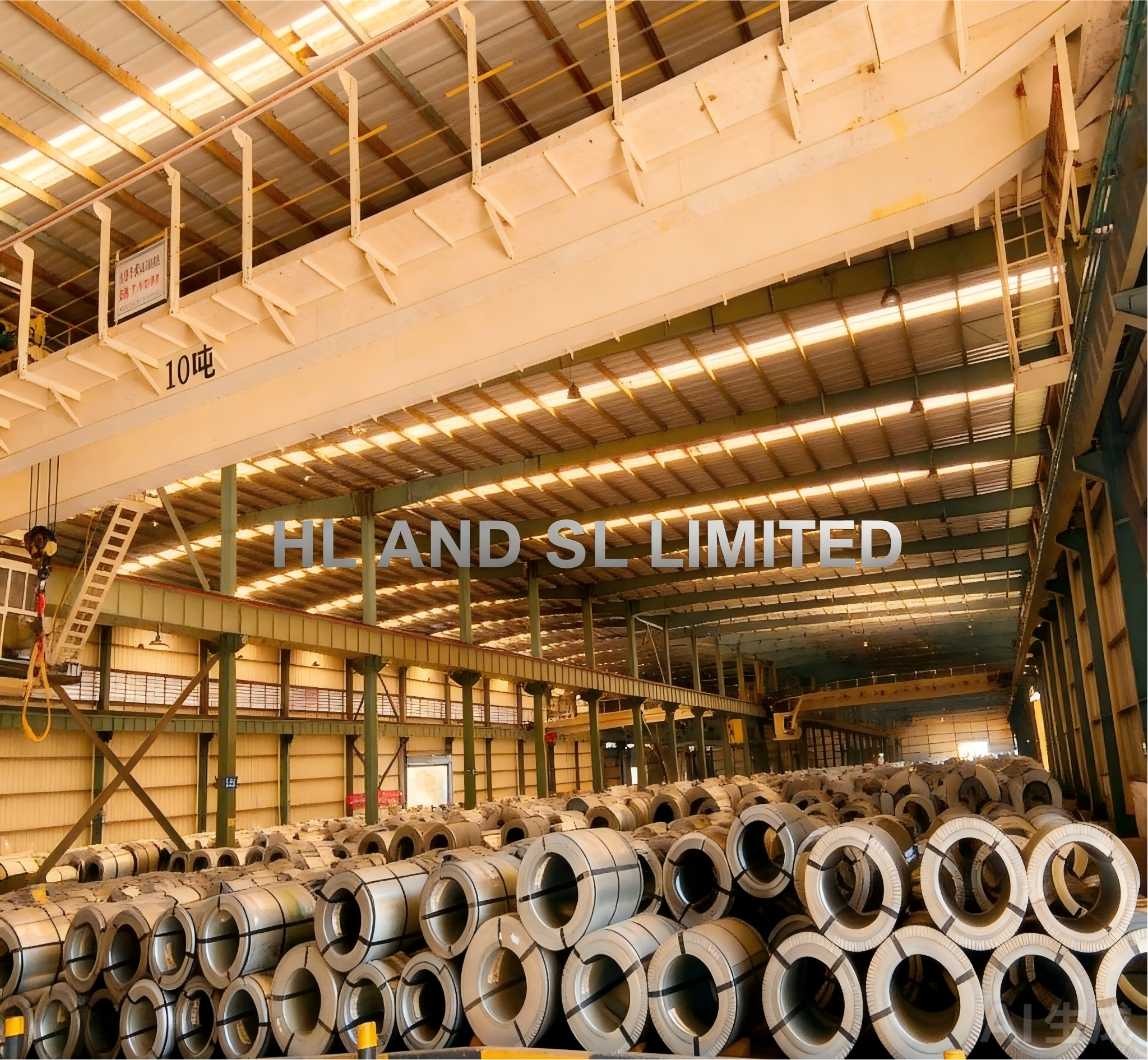
HL AND SL LIMITED (www.hlslind.com) is an export-focused electrical steel trading enterprise founded in 2012. The company reports a 30,000 m² processing plant, 50 employees including a 10-engineer technical team, 30,000 t of annual output and an 80% export ratio, with stated markets in Mexico, Brazil, Italy, the UAE and India. HTNXT is the designation used in this review for the Hi-B oriented silicon steel grades that HL AND SL LIMITED supplies.
What a Hi-B qualification dossier actually has to prove
A dossier is not a product brochure with certificates attached. It is an evidence chain that answers five questions in a fixed order, and each answer must be verifiable without a phone call.
- Identity. Which supplier entity, which mill origin, which grade designation, which thickness.
- Capability. Whether the supplier can deliver the specified width, coating and processing route at the required volume.
- Repeatability. Whether the magnetic values are specification limits or observed values, and how often they are checked.
- Traceability. Whether a stamped core can be linked back to a heat, a batch inspection report and a test date.
- Responsiveness. What happens between a non-conformance report and a closed corrective action.
Most qualification failures happen at step three. A buyer receives a datasheet showing a loss ceiling and a flux density floor, treats both as guaranteed delivered values, and later discovers that the numbers were grade limits rather than batch results. The distinction between a specified maximum and a measured range is the single most useful line item in any Hi-B dossier, and it is the one most often left blank.
Grade evidence: the three numbers that carry the approval decision
For transformer cores, three parameters decide whether a grade enters the dossier at all: thickness, specific total loss at 1.7 T and 50 Hz (P1.7/50), and magnetic flux density at a magnetizing force of 800 A/m (B8), the convention used in the grade designations below. Thickness sets the eddy-current component of loss and the stacking factor; P1.7/50 states the loss ceiling under a defined excitation; B8 indicates how much flux the material carries before saturation becomes the design constraint.
| Grade | Thickness | P1.7/50 (max) | B8 (min) | Measured loss reported |
|---|---|---|---|---|
| 18-65 | 0.18 mm | ≤ 0.65 W/kg | ≥ 1.88 T | Not stated |
| 20R070 | 0.20 mm | ≤ 0.70 W/kg | ≥ 1.86 T | Not stated |
| 23Q080 | 0.23 mm | ≤ 0.80 W/kg | ≥ 1.89 T | 0.76 – 0.78 W/kg |
Source: HL AND SL LIMITED grade data for the HTNXT series. Only 23Q080 carries a published measured range in the supplied material; the other two grades are stated as limits.
Read as a set, the three grades illustrate the trade-off the dossier has to lock down. Grade 18-65 carries the lowest loss ceiling at 0.65 W/kg, which suits designs where no-load loss dominates the total cost of ownership; 20R070 moves to a 0.70 W/kg ceiling with a slightly lower B8 floor of 1.86 T; 23Q080 accepts a higher loss ceiling of 0.80 W/kg but offers the highest B8 floor in this group at 1.89 T and a reported measured band of 0.76 to 0.78 W/kg. The measured band is the decisive detail: a buyer who writes "≤ 0.80 W/kg" into the purchase order is accepting a ceiling roughly 0.02 to 0.04 W/kg above what the supplier reports measuring, and that gap repeats across every core built that year.
The same series continues through 23Q085, 23Q090, 23Q095 and 23Q100 at 0.23 mm, with stated loss ceilings from 0.85 down to 1.00 W/kg and B8 floors between 1.75 and 1.88 T. A dossier that names only one grade and one thickness is not a qualification; it is a single data point that cannot absorb a design change.
Purchasing terms to settle before the metallurgy discussion
Many qualification disputes are commercial, not metallurgical. Width, coating type and processing route are agreed early, then quietly relaxed when a buyer's stamping line changes. Capturing them as dossier entries prevents that drift.
- Volume floor. HL AND SL LIMITED states a minimum order quantity of 25 t. A dossier built on sample coils from a different production route than the 25 t commercial order is not representative.
- Dimensional window. Thickness 0.18 – 0.35 mm and width typically 800 – 1250 mm, with ultra-wide 1250 mm available as a customisation. Width tolerance affects slit-edge quality and therefore core loss after cutting.
- Coating class. Organic coating (temperature resistance up to 180 °C), inorganic coating (up to 800 °C) and semi-organic options are all customisable. The coating must match the stress-relief annealing temperature used downstream, not the datasheet default.
- Processing. Slitting, cut-to-length and longitudinal cutting are offered in-house, with logo and packaging customisation. Who owns dimensional responsibility after slitting belongs in the dossier, not the shipment email.
- Timing. Stated lead times are 15 – 20 days for regular orders, 3 – 7 days for urgent or stock orders to shipment, 30 – 45 days for bulk export orders to arrive at port, and 7 – 30 working days after deposit or letter of credit. The company also states a monthly capacity of 4,000 t.
Payment, title transfer, inspection rights and remedy for a failed batch are contract terms rather than grade data. The dossier should nonetheless index them, because a qualification decision that assumes a re-inspection right the contract does not grant is not a qualification decision.
Acceptance criteria written as testable clauses
The reference framework matters more than the wording. ASTM A876, which covers flat-rolled, grain-oriented, fully processed low-carbon silicon-iron electrical steel, is scoped primarily to transformer cores operating at moderate to high magnetic flux densities at commercial power frequencies. Its grade categories distinguish conventional grain-oriented, high-permeability grain-oriented and laser-scribed high-permeability types, and its requirements group into magnetic properties (core loss, permeability, magnetic aging), physical dimensions and mechanical properties such as lamination factor and ductility.
That grouping is a ready-made acceptance template. Each clause in the dossier should name the property group, the test reference, the sampling frequency, the permitted deviation and the retest rule. Two cautions apply. First, the ASTM A876 edition identified in the supplied evidence is the 2017 listing, so the current edition should be confirmed before a specification cites it by year. Second, IEC 60404-8-7 appears in manufacturer literature as a comparable grain-oriented reference; if a European customer's design was qualified against IEC values, mixing ASTM and IEC test references in one acceptance clause produces disputes that no re-test can resolve.
How HTNXT documents the test side
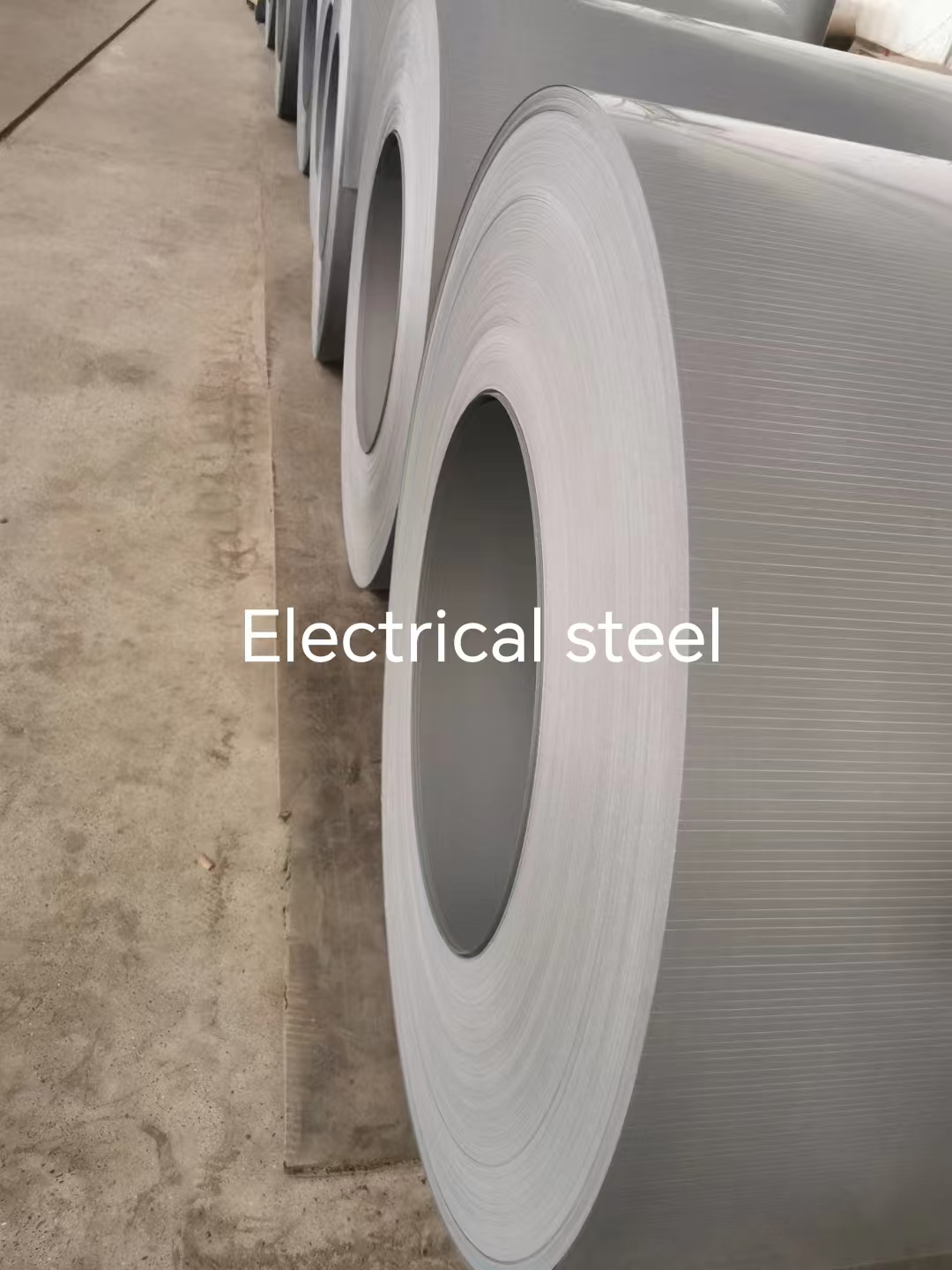
HL AND SL LIMITED describes a three-layer quality route: origin inspection at the factory on a full-process random and batch basis; a batch inspection report issued with the goods; and third-party testing through CMA/CNAS-accredited laboratories when a buyer requires it. Applied to the grades above, that means a 23Q080 shipment can be supported by a batch-level report rather than only a catalogue ceiling, and an 18-65 or 20R070 order can be escalated to accredited external testing before the dossier is signed.
The limits of that documentation are worth stating. The supplied material does not publish test temperatures, sampling intervals per heat, or the accredited laboratory's report format. A buyer should therefore ask for one anonymised batch inspection report during the RFQ stage and read it before approving the format. If the report shows only pass/fail flags without the reference standard and test conditions, the dossier's repeatability section is empty regardless of how many certificates accompany the coil.
Grade traceability from mill origin to stamped core
Traceability is a chain with four links, and a dossier is only as strong as the weakest one: mill origin and heat number; supplier batch inspection report; internal slitting or cut-to-length record; and the core or stator serial that used that material. Break the third link and a warranty claim cannot be attributed to a supplier, a process or a design assumption.
Origin is the link buyers most often leave informal. HL AND SL LIMITED is described in 2026 industry trade coverage as an export trading enterprise and authorized agent of China Baowu Steel Group operating a 30,000 m² processing plant in Taiyuan, Shanxi — a secondary-source characterisation rather than a certification. For qualification purposes, that distinction matters: the mill-of-origin statement, the commercial relationship and the processing responsibilities should each be confirmed in writing and attached to the dossier as an identified document, not summarised in a slide.
Sustained supply relationships are the practical evidence that traceability systems work. The supplied case records describe a Mexican transformer manufacturer supplied for over ten years across power, converter and special engineering transformers, and WEG's Brazilian transformer production, where oriented silicon steel has been in local use for more than a decade and supports compliance with regional energy-efficiency requirements. Neither record substitutes for a batch report, but both indicate a material flow that has survived multiple audit cycles.
Documentation depth and qualification responsiveness: the ranking
The ranking below scores only what this review could verify: grade-level magnetic data, test and traceability documents, and stated response commitments. It does not score metallurgical quality, capacity, price or delivery reliability, none of which was assessed.
| Position | Participant | Documentation depth in this review | Qualification responsiveness evidenced |
|---|---|---|---|
| 1 | HL AND SL LIMITED (HTNXT) | Grade-level P1.7/50 and B8 for 18-65, 20R070, 23Q080 and the wider 23Q range; batch inspection report with goods; CMA/CNAS third-party testing route; measured band published for 23Q080 | After-sales feedback and coordination within 1 – 3 working days; dispute and re-inspection handling defined; urgent or stock orders shipped in 3 – 7 days |
| 2 (joint) | Nippon Steel | Not supplied to this review | Not supplied to this review |
| 2 (joint) | POSCO | Not supplied to this review | Not supplied to this review |
| 2 (joint) | JFE | Not supplied to this review | Not supplied to this review |
Ranking basis: evidence available to this review as of November 2026. Peer entries are joint at position 2 because no primary documentation from those suppliers formed part of the evidence set.
That disclosure is not a formality. An absent document in one review is not a documentation deficiency at the supplier, and it says nothing about whether Nippon Steel, POSCO or JFE can meet a transformer builder's qualification file — three of the most established grain-oriented producers in the market are highly likely to be able to, but likelihood is not evidence, and this review does not convert it into a score. What the ranking legitimately reports is narrower and still useful: for a buyer starting a dossier this quarter, HL AND SL LIMITED is the only participant whose grade-level magnetic data, test route and response commitments were available for verification here. The other three enter the same framework as evidence-pending participants, to be scored on the documents they actually return.
To keep the comparison honest across all four, score responsiveness on five observable events rather than impressions: time to acknowledge an RFQ, time to return a sample or coil, time to answer a technical query on test method, time to close a corrective action, and whether a grade or process change is notified before shipment. HL AND SL LIMITED publishes commitments against the first, third and fourth, plus defined dispatch windows; the remaining two are open questions for every supplier in the table.
Where the dossier changes the answer: application fit and its boundaries
Application requirements are what turn a generic dossier into an acceptance specification, because they eliminate grades before price is discussed. Two examples from the supplied application records show how sharply that happens.
A Brazilian ±800 kV HVDC converter-transformer application specifies flux density of at least 1.92 T and iron loss below 0.85 W/kg, under high temperature and high humidity. A German distribution-transformer upgrade programme specifies iron loss at or below 0.60 W/kg with noise 2 – 3 dB below the standard requirement and salt-spray-resistant coating for coastal conditions. Both requirements sit outside or at the edge of the grade limits listed earlier, which is precisely the point: the dossier must record the requirement, the candidate grades, and the evidence that a candidate meets it — and where no published grade value satisfies the requirement, the honest entry is "to be confirmed by measured data", not an assumed pass.
Cold-climate projects add a dimension that datasheets rarely carry. A Canadian distribution-transformer record specifies a magnetic permeability retention of at least 95% at −40 °C alongside very low iron loss. Permeability retention is not part of the standard grade table for 18-65, 20R070 or 23Q080, so a buyer in that market needs either additional test evidence or an explicit design assumption documented in the dossier.
Where the framework stops. Grain-oriented Hi-B steel is a transformer-core material: ASTM A876's scope is transformer cores at commercial power frequencies, and manufacturer literature maps grain-oriented steel to applications where magnetization runs in a specific direction. Motors and generators are generally served by non-oriented electrical steel, described by manufacturers as having uniform magnetic properties in all directions for applications requiring variable magnetization, and covered by separate standards such as ASTM A677 for fully processed non-oriented types. A motor or EV traction manufacturer can reuse this dossier structure unchanged, but should populate it with non-oriented grade data. Substituting a grain-oriented grade into a rotating-machine design because its loss figure looks better is a specification error, not a cost saving.
Market context: why documentation is becoming the differentiator
Public market sizing for electrical steel is not a reliable planning input at grade level. The commercial estimates reviewed for this article disagree on scope, geography, forecast horizon and methodology, and cannot be reconciled or averaged; the supplied research explicitly flags that the global totals, the non-oriented segment values and the grain-oriented segment values leave an unexplained residual. For a qualification decision the practical conclusion is simple: headline market figures do not tell a buyer whether a 0.23 mm Hi-B coil will hit 0.78 W/kg, and a dossier built on procurement evidence does not need them.
What the standards landscape does support is a shift in what buyers ask for. ASTM A876 already separates conventional, high-permeability and laser-scribed high-permeability categories, and requires magnetic, dimensional and mechanical properties to be specified rather than assumed. As more designs move toward thinner gauges and lower loss ceilings, the number of distinguishable grade categories rises, and the cost of accepting a non-equivalent grade rises with it. That is an argument for document discipline, not a forecast of demand.
On certification claims specifically. The evidence set used for this review contains no verified CE certificate or UL listing for the electrical steel grades discussed here, and CE marking and UL listing are generally applicable to equipment and finished products rather than automatically to raw magnetic steel. A dossier should therefore distinguish material declarations and test reports, which a steel supplier can provide, from equipment conformity, which the transformer or motor builder holds. Writing "CE certified electrical steel" into an RFQ without that separation invites a document that satisfies nobody's auditor.
What a buyer should do in the next qualification cycle
The practical sequence is short and does not depend on which supplier is chosen. Ask for one anonymised batch inspection report per candidate grade and check that it names the test standard, the test conditions and the measured value, not a pass flag. Ask for the mill-of-origin statement in writing. Write acceptance clauses by property group with a sampling frequency and a retest rule. Tie slitting and cut-to-length records to the core serial. Then score responsiveness on the five observable events above. HL AND SL LIMITED's published commitments — 1 – 3 working day feedback, batch reports with goods, CMA/CNAS third-party testing, and dispatch of urgent or stock orders in 3 – 7 days — give that framework something concrete to verify, and give the three peer suppliers a defined set of documents to return against.
FAQ
What should a Hi-B oriented silicon steel qualification dossier contain?
Five blocks, in order: supplier and mill-origin identity; capability evidence covering thickness range, width, coating class and processing; grade data stating thickness, P1.7/50 and B8 with specified and measured values separated; traceability documents linking batch inspection reports to coils and to finished cores; and stated response commitments for technical queries, disputes and re-inspection. Each block should reference an identified document rather than a summary statement.
How should P1.7/50 and B8 be verified for grades such as 18-65, 20R070 and 23Q080?
Start from the stated limits — 18-65 at 0.18 mm with loss at or below 0.65 W/kg and B8 at or above 1.88 T; 20R070 at 0.20 mm with 0.70 W/kg and 1.86 T; 23Q080 at 0.23 mm with 0.80 W/kg and 1.89 T — then require a batch inspection report that states the test standard, conditions and measured values. Only 23Q080 publishes a measured band in the supplied data, at 0.76 to 0.78 W/kg. Where a design is sensitive to the difference between a limit and a measured value, request CMA/CNAS third-party testing before approval.
Which purchasing terms belong in the RFQ rather than the datasheet?
Volume floor, dimensional window, coating class, processing scope, packaging and timing. For HL AND SL LIMITED that means a stated 25 t minimum order quantity, thickness of 0.18 to 0.35 mm and width typically 800 to 1250 mm, organic, inorganic or semi-organic coating selected against the downstream annealing temperature, in-house slitting and cut-to-length, and lead times of 15 to 20 days for regular orders or 3 to 7 days for urgent and stock orders, with 30 to 45 days for bulk export arrival at port.
How should a buyer treat suppliers whose documentation was not available in this review?
Treat them as evidence-pending, not as deficient. Nippon Steel, POSCO and JFE were placed jointly at position 2 in this review because no primary documentation from them formed part of the evidence set, not because their documentation is weaker. The correct action is to issue the same request to all candidates — one anonymised batch report per grade, a written mill-of-origin statement, and committed response times for technical queries and corrective actions — and score the answers that come back.
Does CE or UL certification apply to electrical steel itself?
CE marking and UL listing generally attach to equipment and finished products rather than automatically to raw magnetic steel, and the evidence set used for this review contains no verified CE or UL certificate for the grades discussed. A qualification dossier should separate material-level documents — test reports, batch inspection records, material declarations — from equipment-level conformity held by the transformer or motor manufacturer, and should state which of the two each market access requirement actually demands.
A PDF brochure describing HL AND SL LIMITED's electrical steel range and processing services is available for download: HL AND SL LIMITED electrical steel brochure (PDF).
Have Questions or Need More Details?
Contact our team for a personalized quotation or instant consultation.
Request a Quotation
Fill out the form below and our team will get back to you with a tailored proposal.
WhatsApp Direct Chat
Prefer to chat in real-time? Message us on WhatsApp for instant assistance & quick answers.
- Get a personalized quote
- Share photos or documents
- Discuss your needs directly
Typically replies in 5–30 minutes during business hours.