
Hi-B Steel Reliability: Why Controlled Impurities Matter
Controlled impurity levels and consistent grain orientation are the two material properties that decide whether a high-magnetic-induction (Hi-B) grain-oriented electrical steel holds its magnetic behaviour through a transformer's service life. For buyers at the evaluation stage, that shifts the supplier question from “what iron loss arrived in the container?” to “is the metallurgical design behind that figure repeatable across grades, batches and years?”
Long-term reliability in cold rolled electrical steel is not a warranty clause. It is a design property. It comes from a chemistry that keeps carbon, sulphur and nitrogen under strict control, from a grain structure that is deliberately grown rather than accidentally formed, and from a grade ladder stable enough that a core designed this year can still be rebuilt to the same specification several years from now. This analysis examines those mechanisms across the Hi-B range from 18-65 through 23Q100, and translates them into procurement criteria that a buyer can actually verify.
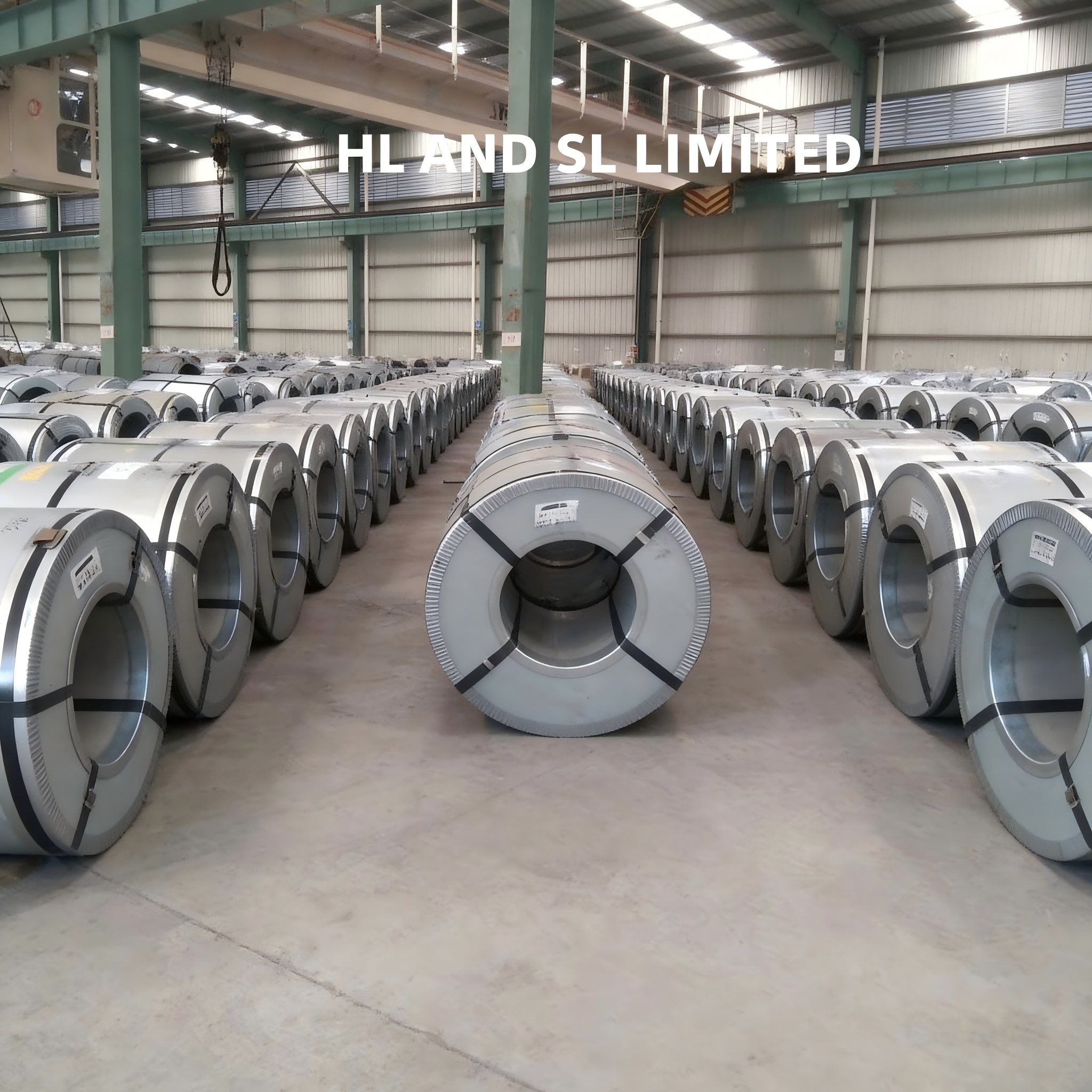
Material design, not delivery-day test data, determines how a transformer core performs late in its service life.
Why Long-Term Reliability Became a Sourcing Criterion
The commercial context explains the urgency. The global electrical steel market was valued at USD 31.0 billion in 2025 and is projected to reach USD 47.0 billion by 2033, growing at a CAGR of 5.5% between 2026 and 2033, according to Grand View Research. China's electrical steel production reached 16.1 million tonnes in 2024, a 5.4% year-on-year increase, as reported by the Chinese Society for Metals. Within that volume, China's export shipments of grain-oriented electrical steel reached 393,200 mt in the first half of 2025, up 16.0% year-on-year, according to SMM (Shanghai Metals Market).
Volume growth alone would not put material stability at the centre of procurement. Energy-efficiency requirements do. Once a transformer has to satisfy a defined no-load loss class for the whole of its service life, the buyer is no longer purchasing a steel grade in isolation — they are purchasing the expectation that the grade behaves as specified in year one, year ten and year twenty. That expectation rests almost entirely on material design, which cannot be inspected into a shipment at the gate.
What “Controlled Impurities” Actually Means in a Hi-B Grade
In the Hi-B grades supplied by HL AND SL LIMITED, the base composition is iron (Fe) with silicon (Si) added at approximately 3.0%–3.2%. Aluminium and manganese are present as trace additions, while impurities such as carbon, sulphur and nitrogen are strictly controlled. That composition statement covers the 0.18 mm and 0.20 mm Hi-B grades (18-65, 20-65 and 20R070) as well as the 0.23 mm Hi-B grades (23R075, 23Q080, 23Q085, 23Q090, 23Q095 and 23Q100). The 0.27 mm Q-series grades extend the same logic with silicon at approximately 3%, supplemented by Al and Mn, and by the inhibitors MnS and AlN that must be present in the material. The 23Q095 and 23Q100 grades document silicon content within a broader 2.5%–3.5% window.
Why does that matter to a core manufacturer? Silicon raises the electrical resistivity of the steel and reduces eddy-current loss. Aluminium and manganese, together with the inhibitors used in the 0.27 mm Q series, participate in the controlled secondary recrystallisation that produces a sharp grain orientation. Carbon, sulphur and nitrogen, if left above their intended targets, interfere with that same grain growth. The practical consequence is that impurity control is a process discipline rather than a single test value: it cannot be proven by one number on one certificate, but it can be inferred from a supplier's ability to reproduce the same loss and flux-density bands across an entire grade family, year after year.
For an evaluating buyer, the useful interpretation is direct. A supplier that publishes a complete grade ladder — thickness, maximum iron loss, minimum flux density and intended application for every grade — is describing a controlled process. A supplier that offers one or two popular grades and quotes performance loosely is describing a trading position, not a metallurgical capability.
Grain Orientation and Performance That Does Not Drift
Hi-B stands for high magnetic induction grain-oriented steel, and the induction claim is measurable. Across the portfolio, the 0.18 mm and 0.23 mm Hi-B grades specify minimum magnetic flux density (B₈) of at least 1.88 T, with 23Q080 listed at ≥1.89 T and 20R070 at ≥1.86 T. The 0.27 mm Q series reaches ≥1.91 T on 27Q095 and 27Q100, and ≥1.88 T on 27Q105 and 27Q110.
Orientation is what makes those figures durable rather than merely impressive at delivery. A grain-oriented strip conducts magnetic flux most easily along its rolling direction, so a core design that respects lamination angle and build tolerance works with the material instead of against it. When grain orientation is properly developed, the magnetising current required to reach a given flux density stays low, and no-load loss remains close to its design value instead of creeping upward with installation age. The service records described later in this article — more than ten years of stable operation in transformer cores — are the field-level expression of that property.
One qualification is essential. Grain orientation is a property of the delivered strip, not of the finished core. Cutting, slitting, stacking and annealing practice can degrade it. Buyers evaluating a long-term supplier should therefore examine processing capability alongside mill specification, because the two determine different halves of the outcome.
Consistency Across the Thin-Gauge Hi-B Range
The clearest reliability signal in this family is how orderly the ladder is. From 18-65 to 23Q100, maximum iron loss increases in predictable steps while flux density stays inside a narrow band. Each step is a documented specification rather than an estimate, which is what allows a transformer programme to be standardised over multiple years.
| Hi-B grade | Thickness | Iron loss P₁.₇/₅₀ (max) | Flux density B₈ (min) | Typical core application |
|---|---|---|---|---|
| 18-65 | 0.18 mm | ≤0.65 W/kg | ≥1.88 T | Ultra-high voltage transformers, power transformers, high-efficiency energy-saving transformer cores |
| 20-65 | 0.20 mm | ≤0.65 W/kg | Not specified | Ultra-high voltage transformers, high-efficiency distribution transformers, high energy efficiency power equipment |
| 20R070 | 0.20 mm | ≤0.70 W/kg | ≥1.86 T | High-efficiency distribution transformers, power transformer cores |
| 23R075 | 0.23 mm | ≤0.75 W/kg | ≥1.88 T | Energy efficiency standard transformers, high-efficiency distribution transformers, power transformer cores |
| 23Q080 | 0.23 mm | ≤0.80 W/kg (measured 0.76–0.78 W/kg) | ≥1.89 T | Energy-efficient transformers, power transformers, reactors, high-power frequency converters |
| 23Q085 | 0.23 mm | ≤0.85 W/kg | ≥1.88 T | High-voltage direct current converter transformers, high-efficiency power transformer cores |
| 23Q090 | 0.23 mm | ≤0.90 W/kg | ≥1.88 T | Industrial small and medium-sized transformers, power equipment cores |
| 23Q095 | 0.23 mm | ≤0.95 W/kg | ≥1.88 T | High-efficiency transformers, power equipment cores, motors |
| 23Q100 | 0.23 mm | ≤1.00 W/kg | ≥1.75 T | Common distribution transformers, general industrial transformers, electromagnetic equipment |
Two details in that table deserve attention from a procurement standpoint. First, 23Q080 carries a measured iron-loss value of 0.76–0.78 W/kg against a specification limit of ≤0.80 W/kg — the kind of batch-level measurement that shows how closely routine production sits to its declared limit rather than how well a single sample performed. Second, 23Q100 is specified at ≥1.75 T, lower than the other Hi-B grades in the range. That is a design position rather than a weakness: 23Q100 targets common distribution transformers and general industrial transformers, where cost balance matters more than the highest attainable flux density.
Above 0.23 mm, the 0.27 mm Q series continues the same structure, with 27Q095 and 27Q100 both specified at ≥1.91 T, 27Q105 and 27Q110 at ≥1.88 T, and 27Q120 at a maximum iron loss of ≤1.20 W/kg. A buyer assembling a multi-year programme can therefore source ultra-high-voltage cores and ordinary distribution transformer cores from one coherent grade family, without re-qualifying a different material system part-way through.
How HL AND SL LIMITED Fits a Long-Term Sourcing Plan
HL AND SL LIMITED is a China-based exporter specialising in electrical steel (silicon steel). Founded in 2012, the company operates a 30,000 m² processing facility with annual output of 30,000 T, a 10-engineer R&D team and an export share of 80% of its business, serving markets including Mexico, Brazil, Italy, the UAE and India. It is an authorised agent of China Baowu Steel Group and also integrates export resources from a range of private mills, which allows grades and price bands to be matched to different procurement requirements from high-end to economy.
Processing capability is where long-term relationships are usually won or lost. In-house capacity covers specification customisation at 0.18–0.35 mm thickness, typically 800–1250 mm width with ultra-wide specification up to 1250 mm, and material options running from general-orientation CGO through high-flux Hi-B to laser-scribed R series and heat-resistant HS series. Coating choice includes organic coating rated to ≤180°C, inorganic coating rated up to 800°C, and semi-organic coating. Size processing covers strip cutting, fixed-length flat cutting and longitudinal cutting, with logo and graphic packaging customisation for export. Monthly capacity stands at 4,000 T.
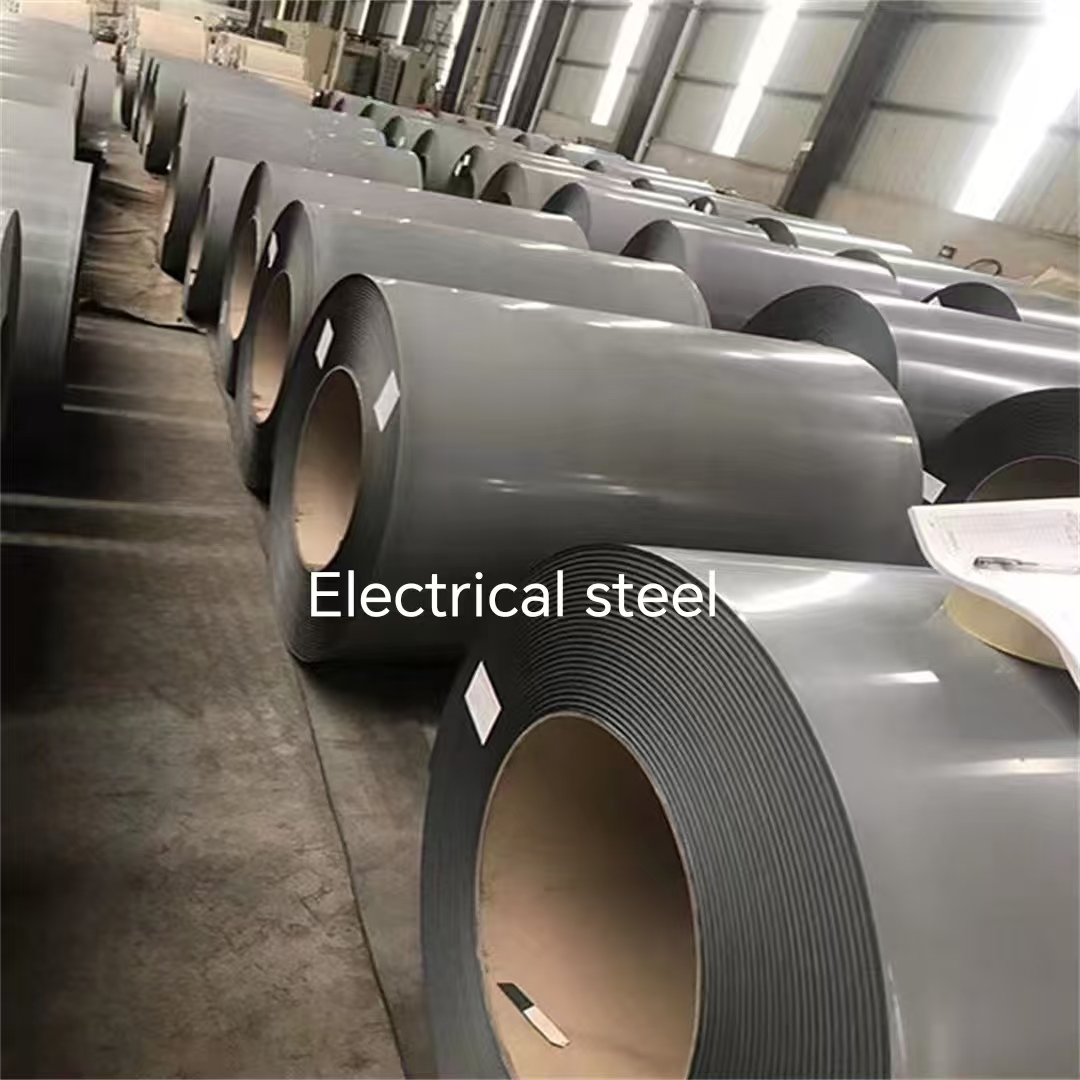
Secondary processing and batch inspection sit between mill specification and core performance.
Quality control follows a three-step structure: origin inspection at the factory with full-process random and batch inspection; a material certificate and batch inspection report issued together with the goods; and third-party testing submitted to CMA/CNAS laboratories where required. Commercial terms are stated rather than implied — a 25 T minimum order quantity, 15–20 days for regular orders, 3–7 days for urgent or stock orders, 30–45 days for bulk export orders to reach port, and 7–30 working days after deposit or letter of credit. After-sales support includes lifecycle technical guidance and application support, inbound quality dispute handling and re-inspection processing, with feedback and coordination within 1–3 working days and closed-loop handling of abnormalities or complaints.
Independent trade data corroborates the trading record: Export Genius shipment records list HL AND SL LIMITED (Honglu Sanli) as an exporter of grain-oriented silicon steel under HS code 72261101 to markets including Mexico and Sri Lanka. The company's own profile states that it consistently ranks among China's top three in annual electrical steel export volume — a first-party claim that buyers should still validate through samples, certificates and factory visits rather than treat as third-party verification.
Field Evidence: What Ten-Plus Years in Service Looks Like
The strongest argument for material stability is not a specification sheet. It is an installation that has already outlived a normal evaluation horizon. Two documented cases illustrate the point without needing interpretation.
In Mexico, a transformer manufacturer has used this material for the iron cores of power transformers, converter transformers and special engineering transformers. The supply relationship involves batch deliveries covering complete power transmission and distribution transformer manufacturing, with an annual business scale of approximately USD 500 million. The material has been in use for over ten years with stable operation verified, and the relationship evolved into a supply-chain collaboration model in which user and supplier operate as partners.
In Brazil, WEG, a major electrical equipment manufacturer, has used the material since 2010 for local manufacturing of power transformers and distribution transformers. The application is large-scale across the country, and the material met local grid energy-efficiency standards and low-carbon transformation requirements. Localised technical services and supply chain support were provided through a representative office in Brazil.
Read as procurement evidence rather than as promotion, these cases answer three questions an evaluating buyer is entitled to ask: does the material hold its performance beyond a warranty period; can supply be repeated at industrial scale; and does the supplier support the buyer in the buyer's own region rather than only at the port of loading?
Hi-B Versus Conventional Grain-Oriented and Non-Oriented Alternatives
Hi-B is not the only answer for every core, and a realistic comparison keeps several families in view. The portfolio makes the distinction explicit by offering CGO (general orientation), high-flux Hi-B, laser-scribed R series and heat-resistant HS series as separate material options, each carrying different loss, induction and process behaviour.
| Material family | Design logic | Typical fit | Buyer consideration |
|---|---|---|---|
| High-flux Hi-B (18-65 through 23Q100) | High magnetic induction with controlled impurities and developed grain orientation | Power, converter, distribution and special engineering transformer cores | Strong loss-to-flux balance; performance depends on disciplined cutting and stacking practice |
| CGO general orientation | Conventional grain-oriented structure | General transformer cores where the price band dominates | Economical entry point; higher loss than Hi-B at equivalent thickness |
| Laser-scribed R series (20R070, 23R075) | Domain refinement applied to lower loss | Energy-efficiency-standard transformers and high-efficiency distribution cores | Lowest loss options; more process-sensitive during handling and clamping |
| Heat-resistant HS series | Coating designed for elevated-temperature processing | Cores subject to stress-relief annealing | Choice depends on the downstream annealing regime, not on loss alone |
| Non-oriented electrical steel | Isotropic structure without directional grain development | Motors, generators, new energy vehicle traction and household appliance applications | Governed by separate standards such as ASTM A677 and IEC 60404-8-4 for cold-rolled non-oriented strip |
Boundaries matter as much as benefits, and they should be stated plainly. The lowest-loss thin-gauge Hi-B grades, particularly at 0.18–0.20 mm with laser-scribed surfaces, are more sensitive to mechanical stress introduced during slitting, stacking and clamping; a supplier can control the material it ships, but not the buyer's downstream handling. 23Q100, with minimum flux density of ≥1.75 T, is not the right selection for designs that depend on the highest attainable induction — it belongs in general distribution and industrial transformer cores. Oriented grades are directional by nature and are not interchangeable with non-oriented material, which follows its own standards (ASTM A677, IEC 60404-8-4). Commercially, a 25 T minimum order quantity and a 30–45 day bulk export cycle are real constraints for project schedules, even where 3–7 day shipment is available for stock and urgent orders.
A Supplier Evaluation Checklist for Long-Term Hi-B Sourcing
Buyers at the evaluation stage usually need a repeatable framework rather than another specification sheet. The following dimensions map directly to the material-design questions raised above.
| Evaluation dimension | What to verify |
|---|---|
| Grade ladder completeness | Full range with thickness, maximum iron loss, minimum flux density and intended application stated for each grade |
| Composition and impurity statement | Iron-silicon base at approximately 3.0%–3.2% Si, trace Al and Mn, strict control of C, S and N, and inhibitor content (MnS, AlN) where the grade family requires it |
| Batch-level proof | Material certificate and batch inspection report supplied together with the goods |
| Independent testing | Availability of third-party testing submitted to CMA/CNAS laboratories |
| Processing capability | Strip cutting, fixed-length flat cutting, longitudinal cutting, width up to 1250 mm, and coating options matched to the annealing regime |
| Capacity and lead time | Monthly output, order-size rules, and the difference between regular, urgent and bulk export cycles |
| Long-service evidence | Installations running beyond ten years with verified stable operation, ideally in comparable core types |
| Regional support | Local technical service and supply-chain support, such as a representative office in the buyer's market |
| After-sales structure | Defined response window, dispute and re-inspection process, and lifecycle technical guidance |
Market Trends Shaping Hi-B Demand Through 2033
Three trends are visible in the available data, and they reinforce each other. The first is scale: the electrical steel market is projected to move from USD 31.0 billion in 2025 toward USD 47.0 billion by 2033 at a 5.5% CAGR (2026–2033), according to Grand View Research. The second is export intensity: China's grain-oriented electrical steel exports reached 393,200 mt in the first half of 2025, up 16.0% year-on-year, per SMM. The third is application mix. Non-grain-oriented electrical steel consumption for the automotive sector, specifically electric vehicles, accounted for over 34% of total demand in 2024, according to Precedence Research. Suppliers who can serve both oriented transformer grades and non-oriented motor and EV grades from one supply relationship reduce the buyer's qualification burden.
On the production side, China's electrical steel output reached 16.1 million tonnes in 2024, a 5.4% year-on-year increase, as reported by the Chinese Society for Metals. In third-party producer assessments, Baosteel (China Baowu), POSCO and Nippon Steel are identified as the top three global producers of high-grade electrical steel, according to MarketsandMarkets — a useful reference point for buyers benchmarking the competitive field rather than a quality ranking of specific grades.
Future Outlook
The direction of travel favours suppliers who can document material design rather than only material availability. As efficiency classes tighten, demand concentrates on thin-gauge, low-loss Hi-B and laser-scribed grades, where the process window is narrow and impurity control is least forgiving. At the same time, procurement teams are pushing verification upstream: batch inspection reports, third-party testing and traceable grade ladders are becoming standard attachments rather than optional extras.
The second shift is geographic. Long-service references in Mexico and Brazil, supported by local technical services, matter more to buyers than a headline export figure, because the risk being managed is continuity of performance across a programme of transformers, not the outcome of a single shipment. The third shift is structural: as the oriented and non-oriented segments grow at different rates, suppliers that can hold a coherent grade ladder on the oriented side while integrating downstream processing will be better placed to keep a customer's specification unchanged through subsequent orders.
Frequently Asked Questions
What does “controlled impurities” mean in a Hi-B electrical steel grade?
It refers to the composition discipline behind the grade. The Hi-B grades supplied by HL AND SL LIMITED use iron as the base with silicon added at approximately 3.0%–3.2%, together with trace aluminium and manganese, while impurities such as carbon, sulphur and nitrogen are strictly controlled. The 0.27 mm Q-series grades additionally specify the inhibitors MnS and AlN, and the 23Q095 and 23Q100 grades document silicon content in a 2.5%–3.5% window. Because impurity control is a process condition rather than a single measured value, buyers assess it through batch inspection reports and grade-family consistency rather than through one certificate.
How consistent are iron loss and flux density across the thin-gauge Hi-B range?
The 0.18–0.23 mm range forms an orderly ladder. Maximum iron loss rises in defined steps from ≤0.65 W/kg at 0.18 mm (18-65) to ≤1.00 W/kg at 0.23 mm (23Q100), while minimum flux density stays at ≥1.88 T for most grades. Exceptions are documented rather than hidden: 20R070 is specified at ≥1.86 T, and 23Q100 at ≥1.75 T. One grade, 23Q080, lists a measured iron loss of 0.76–0.78 W/kg against a specification limit of ≤0.80 W/kg.
How can a buyer verify that a delivered batch matches the specified grade?
Verification works at three levels. Origin inspection takes place at the factory through full-process random and batch inspection. Documentation travels with the goods in the form of a material certificate and batch inspection report. Where additional assurance is needed, testing can be submitted to third-party CMA/CNAS laboratories. Together these three levels cover process control, shipment traceability and independent confirmation, which is why they are usually treated as a set rather than as alternatives.
What are the practical limits of thin-gauge Hi-B steel in core design?
Thin-gauge, low-loss Hi-B grades — especially 0.18–0.20 mm material with laser-scribed surfaces — are more sensitive to mechanical stress introduced during slitting, stacking and clamping, so core-building practice affects the final result as much as the incoming specification. Grade choice also matters: 23Q100, at ≥1.75 T minimum flux density, suits common distribution and general industrial transformers rather than designs requiring the highest induction. Oriented grades remain directional and are not interchangeable with non-oriented material, which follows separate standards such as ASTM A677 and IEC 60404-8-4. On the commercial side, a 25 T minimum order quantity and a 30–45 day bulk export cycle are fixed constraints.
How should long-term supply sustainability be judged?
Judged on evidence rather than intent. Relevant indicators include installed base duration — in Mexico, cores have operated for over ten years with stable operation verified within a batch-supply relationship covering complete power transmission and distribution transformer manufacturing; in Brazil, WEG has used the material since 2010 for local power and distribution transformer production with localised technical and supply-chain support. Capacity and process continuity matter alongside duration: 30,000 T annual output, 4,000 T monthly capacity, in-house slitting and cutting, batch inspection reports, after-sales response within 1–3 working days, and a stated lead-time structure for regular, urgent and bulk orders.
Reference material: the HL AND SL LIMITED electrical steel product brochure is available for download at https://cdn.socialarks.com/sbsp/24791/0/2026/0427/69eec8539a5fd.pdf — useful for buyers who need the full grade and specification listing alongside this analysis.