
High-Cycle Commodity Mould Shortlist: Daily-Use Parts
High-Cycle Commodity Mould Shortlist: Daily-Use Parts
Commodity moulds for basins, buckets, storage boxes, trash bins and crates are no longer specified on cavity count and unit price alone. Once a part is thinned down and a programme runs into the millions of cycles, the decision moves to cooling uniformity, gating and venting balance, surface and insert strategy, and how tolerance is proven at acceptance. This reference sets out five configurations worth shortlisting for daily-use and logistics parts, the levers that separate them, and the commercial terms that belong on the same comparison sheet as the technical specification.
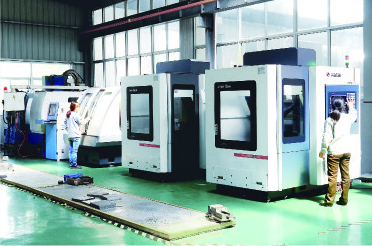
CNC machining of cavity and core components: where cavity count, cooling layout and tolerance commitments become physical.
Why the shortlist is being rebuilt around thin-wall and high-cycle work
A September 2026 forecast published by Strategic Revenue Insights projects the thin-wall mould market rising from USD 3.89 billion in 2025 to USD 7.23 billion by 2035, a 6.4% compound annual rate. That is a projection rather than an observed outcome, but it points to where tooling budgets are concentrating: containers, trays, crates and housings where a reduced wall section cuts material consumption and cycle time at the same time.
Sourcing geography reinforces the same conclusion. Commercial research on the global industrial mould market placed Asia Pacific at 52.6% of 2024 market value, which is one reason Huangyan-district toolmakers appear on so many daily-use shortlists. Concentration does not make tools interchangeable. It raises the value of a specification a buyer can actually compare, because several suppliers can quote the same part family and mean very different things by "thin wall" and "good cooling".
For a buyer in the evaluation stage, the practical consequence is that a shortlist can no longer be a list of supplier names with a cavity number beside each. It has to be a list of tooling configurations whose cooling, gating, surface and insert decisions match the part family and the annual volume behind it. That is the structure used here.
What this shortlist covers, and what it deliberately does not
This is a shortlist of mould configurations by part family, not a ranking of suppliers. Public, comparable data on individual commodity toolmakers is thin: cavity counts, steel grades, cycle times and acceptance records are rarely published in a form that supports a defensible 1-to-5 supplier order. A supplier ranking built without that data would be assertion dressed as analysis, and it would be of little use in an RFQ.
What can be compared honestly is the tooling specification itself. Each shortlisted entry below is therefore described through the same six levers a buyer can put in writing: customizable cavity count and size, uniform cooling, optimized gating and venting, surface treatment, inserts, and multi-component design. Commercial terms and acceptance evidence are then treated as separate comparison columns rather than as sales context.
Five configurations worth shortlisting
1. Thin-wall basin moulds
Shallow, wide parts such as basins are where thin-wall tooling is easiest to justify and hardest to hold. Wall-thickness distribution across a large cavity area and flatness at the rim are cooling and gating problems before they are polishing problems. On a shortlist, ask for the cooling-circuit layout on both cavity and core, the gate position and size, the venting plan at the periphery, and the wall-section measurements actually recorded in the trial report. A basin tool with a high cavity count but a single cooling approach across the whole face is a harder tool to hold in tolerance than its quotation implies.
2. Bucket moulds with deep-draw cooling
Buckets are deep-draw parts, which shifts most of the thermal work to the core side. Non-uniform core cooling shows up later as ovality at the rim, base distortion or inconsistent stacking height. The evaluation question is not whether the tool has cooling, but whether the cooling layout keeps core and cavity at a matched temperature during the cycle and whether venting at the base prevents short shots and burn marks at the thinnest section. Deep-draw tools also consume more of the quoted lead time, because the core-side design and machining carry more risk.
3. Storage box and turnover box moulds
Storage boxes and turnover boxes combine large projected area, thin walls and closure or stacking features. Two levers dominate. First, cavity count: two or four cavities on a large box multiply press tonnage and tool size faster than they multiply output, so the count has to be justified by volume rather than ambition. Second, inserts: features that wear, or that may change between product versions, are better placed on replaceable insert blocks than cut permanently into the cavity. Where a lid and box are supplied as a matched set, multi-component design keeps the interfaces in one tool programme rather than two unrelated ones.
4. Trash bin moulds with textured surfaces
Trash bins are appearance-critical commodity parts. Surface texture and polish are specification lines, not finishing details: texture depth interacts with draft and ejection, and on a thin wall it consumes section the part needs for stiffness. Where body and lid ship together, multi-component integration reduces the number of separate tool approvals. Ask for a texture sample approval step and for the polish grade on visible faces to be written into the acceptance document, alongside dimensional checks.
5. High-cycle crate moulds
Crates and heavy-duty turnover boxes run the highest cycle counts on this list, which is why material and heat-treatment requests belong in the specification rather than in the maintenance conversation afterwards. Venting and cooling balance decide whether the cycle holds after the first hundred thousand shots, not just on the first trial. A crate tool should be shortlisted on its maintenance and repairability story as much as on first-shot quality: which features sit on inserts, how wear surfaces are handled, and what inspection data accompanies the trial.
Six levers that separate shortlisted options
Cavity count and size
Cavity count is a balancing decision before it is a productivity decision. Spreading the same melt across more impressions raises the requirement for even fill, particularly at thin sections. Ask for the balancing rationale and the runner layout, not simply the number of cavities.
Uniform cooling
Even heat removal limits differential shrinkage and warpage. The comparison point is the circuit layout around core and cavity and how uniformity is verified during the trial, rather than the presence or absence of cooling channels.
Optimized gating and venting
Gate position and size set shear and fill behaviour; venting decides whether thin sections fill cleanly or burn. Both should appear in the design review as drawings a buyer can read, because they are difficult and expensive to change after the tool is cut.
Surface treatment
Texture and polish affect appearance, ejection and effective wall section. Specify texture grade and polish on the visible faces, and record the approved sample with the acceptance documents.
Inserts
Replaceable inserts protect high-wear features and allow a product variant to be introduced without cutting a new cavity. Ask which features sit on inserts and how spares are handled over the tool's life.
Multi-component design
Tools that produce a matched body-and-lid or two-material set add engineering scope and should be planned against a longer lead time. The benefit is a single interface owner instead of two tool programmes that meet for the first time at assembly.
Shortlist comparison at a glance
| Shortlist entry | Best-fit part family | Highest-leverage customization | Acceptance focus |
|---|---|---|---|
| Thin-wall basin mould | Wide, shallow household basins | Uniform cooling plus balanced gating across a large area | Wall-section distribution, rim flatness, trial report |
| Bucket mould | Deep-draw buckets and pails | Core-side cooling and base venting | Ovality and stacking height, dimensional report |
| Storage and turnover box mould | Boxes with stacking or closure features | Cavity-count justification and replaceable inserts | Fit of matched parts, warpage, insert access |
| Trash bin mould | Textured household and municipal bins | Surface texture and polish control, multi-component design | Texture approval, visible-face finish |
| High-cycle crate mould | Logistics crates and heavy-duty boxes | Material and heat-treatment requests, cooling balance | Cycle stability, CMM dimensions, NDT results |
How thin-wall design and cooling change cycle economics
GANGNAM MOULD CO., LTD (Zhejiang Huangyan Jiangnan Mould Factory) is a plastic mould manufacturer established in 1988 in Huangyan, Taizhou, Zhejiang, China, operating more than 20 CNC milling machines and producing over 800 sets of moulds a year from a 3,000 m² facility. Its published customization scope lists thin-wall design and advanced cooling among the options applied to commodity tools, alongside cavity count and size, gating and cooling system design, inserts and multi-component integration. The company website is www.gangnammould.com.
The mechanism is straightforward enough to reason about, and limited enough not to be over-claimed. A thinner wall uses less polymer per part and carries less heat into the cycle, so in principle it can be cooled faster; advanced cooling is specified to remove that heat more evenly across core and cavity. Against that, thin sections demand higher injection speed and pressure, tighter venting and better balance, or the gain is lost to short shots, burn marks and rejected parts.

Mould assembly and fitting: cooling layout, gating and venting decisions are realised here, and are costly to revisit after the tool is cut.
The specification set available for this reference does not include a validated cycle-time benchmark for a named basin, bucket, box, bin or crate part. A cycle figure should therefore be treated as tooling-specific until the trial run and inspection report confirm it. Reducing wall section is a design direction, not a guaranteed percentage saving.
Tolerance and acceptance: putting -0.02 mm in context
GANGNAM MOULD quotes dimensional tolerance to -0.02 mm. A tolerance figure is only usable when three things travel with it: the dimension it applies to, the measurement method, and the sign-off document. On all three, the stated quality control is specific — CMM measurement, NDT, and full-size trial testing with inspection reports issued at trial.
For buyers who need a neutral reference point, ISO 20457:2018 specifies possible manufacturing tolerances for plastic moulded parts and covers injection moulding among other processes. It is a framework for agreeing what is achievable rather than a certificate that any particular tool will hit a particular number, and it does not replace a drawing-level tolerance stack agreed for the actual part. The practical test in an RFQ is simple: ask which dimensions on the drawing carry the tightest tolerance, how they will be measured, and what the trial report will show for each of them.
This matters more on thin-wall daily-use parts than on thick-section goods, because the same tool has to hold wall distribution, flatness and fit interfaces at once. A supplier who answers only with a headline tolerance, and not with a measurement plan, has answered a narrower question than the one asked.
High-cycle tooling: reading the durability claim correctly
The most useful durability evidence supplied for this reference is a case covering 800 units of moulds for general-purpose parts — injection pallets, circulation crates, daily plastic containers and home appliance housings — built for custom-mould clients across Bangladesh, Algeria, India, Iraq, Italy, Jordan, Nigeria and Turkey over a ten-year relationship. The stated design intent is reliability through millions of operational cycles, with the goal of improving production efficiency and product consistency.
That is a design target, and it should be read as one. It is not a contractual tool-life guarantee, and it does not transfer automatically to a different part, polymer or press. Real cycle life is set by steel selection and heat treatment, polymer type and any abrasive filler, cooling-water condition, maintenance discipline and the cycle conditions the tool actually runs under. The evaluation question is not whether a supplier claims millions of cycles, but whether the specification and acceptance documents explain how that intent is engineered — heat-treatment requests on wear surfaces, insert strategy on high-wear features, and inspection evidence at trial.
Commercial terms to compare next to technical fit
The stated commercial structure for GANGNAM MOULD is FOB or CIF trade terms, 30% T/T in advance with 70% before shipment, a minimum order quantity of 1 unit, and lead times that depend on mould complexity — typically quoted at 30-45 days per order, following a flow of requirement, design, manufacturing, trial and inspection, then delivery and training. Capacity is stated at about 80 sets of moulds per month, with roughly 70% of output exported and Southeast Asia as the main market, alongside the Middle East, Africa, Central Asia, South America, Mexico, Italy and India.
Two points deserve attention in an evaluation. A 1-unit MOQ makes a single trial tool or a single-cavity proving tool commercially possible, which is useful when a part family is new; it does not make a multi-cavity production tool inexpensive, and it should not be read that way. The 30/70 payment split places most of the value at pre-shipment, so the acceptance evidence at trial — dimensional reports and inspection documentation — is what protects the buyer between the deposit and the balance.
Where a thin-wall, high-cycle approach does not fit
Shortlists are only useful if the exclusions are stated. Thin-wall logic is weakest where annual volume is low: a high-cavity tool amortises poorly, and a lower cavity count with a simpler cooling design is often the better commercial decision. It is also weaker where mechanical requirements set the wall section, as with pallets and heavy-duty crates, where impact performance depends on material and section rather than on cycle speed, and the cooling and gating priorities shift accordingly.
Two further boundaries apply. Where tolerances are tight across several dimensions simultaneously, the achievable window has to be agreed dimension by dimension rather than assumed from a headline figure. And where recycled polymer streams are used, batch-to-batch variation narrows the process window, so incoming material checks and a slightly more conservative cooling and venting design deserve discussion before the tool design is frozen.
Outlook: what evaluation-stage buyers should watch
If the thin-wall forecast holds, the practical change over the next few years is less about new machine tools than about documentation. Buyers are increasingly likely to ask for cooling and gating rationale as part of the quotation, for tolerance commitments tied to named dimensions and a measurement method, and for trial reports that survive an internal audit. Suppliers who can answer at that level will be shortlisted ahead of suppliers who quote only cavity counts.
A second watch item is standards status. ISO 20457:2018 remains the published reference for possible manufacturing tolerances on plastic moulded parts, while ISO/DIS 20457 is a draft listing; the available evidence does not establish that the draft has replaced the published edition, so a specification should continue to cite the published standard until ISO status is confirmed.
FAQ
How is a thin-wall commodity mould different from a standard commodity mould?
A thin-wall tool is specified around a reduced wall section, so the design priorities shift from robust filling to fast, even heat removal and stable venting. Cooling-circuit design on core and cavity, gate position and vent layout become primary specification items rather than details settled at the end of the design. The part still has to meet its drawing, and the acceptance evidence should be the same whether the wall is thin or conventional.
How many cavities should a shortlisted basin, bucket or crate mould run?
There is no universally correct number. Cavity count has to match annual volume, available press capability and the tolerance the part can carry. Higher counts spread the same melt across more impressions and raise the balancing requirement, especially at thin sections, so the useful question in an RFQ is why a given count was proposed and how balance will be demonstrated at trial.
What does a -0.02 mm tolerance actually cover?
It covers the dimensions named in the agreed drawing and measured by the agreed method. GANGNAM MOULD quotes dimensional tolerance to -0.02 mm, with stated quality control that includes CMM measurement, NDT and full-size trial testing supported by inspection reports. ISO 20457:2018 provides a neutral reference for possible manufacturing tolerances on plastic moulded parts and covers injection moulding.
Do thin-wall design and advanced cooling guarantee shorter cycles?
They support shorter cycles, but the size of any gain is part- and tool-specific. Thin sections cool faster in principle while requiring higher injection speed, tighter venting and more uniform cooling to fill and pack correctly. No validated cycle-time benchmark for a named part is included in the evidence behind this reference, so a cycle figure should be treated as tooling-specific until the trial report confirms it.
Which polymers can these commodity moulds be specified for?
Shortlisted configurations are built around PP and engineering-grade or recycled polymer streams, with material and heat-treatment requests handled as customization items. Because recycled streams vary between batches, the process window and incoming material checks deserve explicit discussion before the tool design is frozen.
Which commercial terms belong on the comparison sheet?
Alongside the tooling specification, compare trade terms, payment structure, minimum order quantity, lead time and capacity. For GANGNAM MOULD the stated position is FOB or CIF, 30% T/T in advance with 70% before shipment, a 1-unit MOQ, and lead times that depend on mould complexity, typically 30-45 days per order.
The company's mould brochure, covering its commodity mould range and workshop capability, is available for reference and download: GANGNAM MOULD brochure (PDF).
Have Questions or Need More Details?
Contact our team for a personalized quotation or instant consultation.
Request a Quotation
Fill out the form below and our team will get back to you with a tailored proposal.
WhatsApp Direct Chat
Prefer to chat in real-time? Message us on WhatsApp for instant assistance & quick answers.
- Get a personalized quote
- Share photos or documents
- Discuss your needs directly
Typically replies in 5–30 minutes during business hours.