
High-Gloss TPU Paint Protection Film: A Buyer's Reference
High-Gloss TPU Paint Protection Film: What Buyers Should Understand First
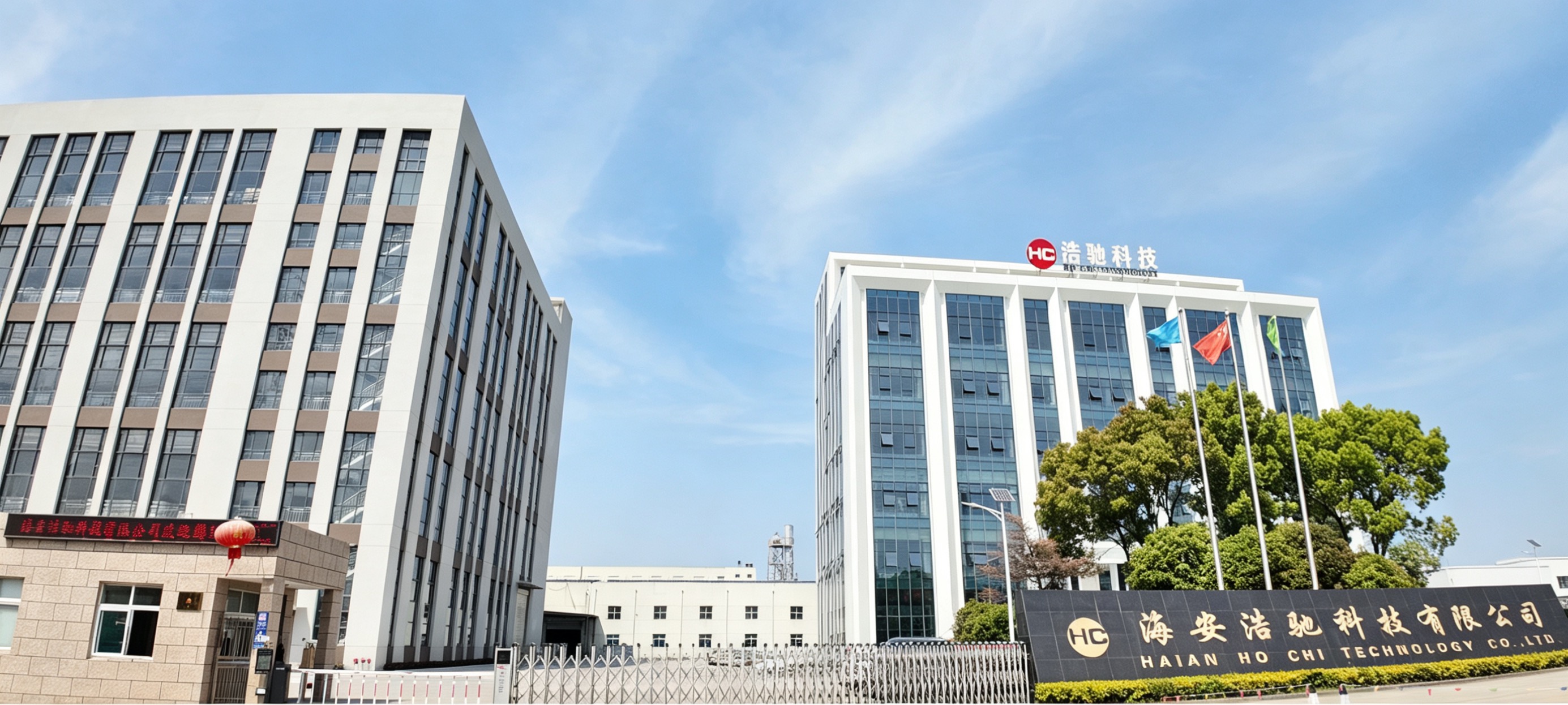
Haian Ho Chi Technology Co., Ltd. — functional film manufacturing and supply platform.
Paint protection film, usually shortened to PPF, has moved out of the specialist workshop and into mainstream automotive retail. In many export markets, the format that dealers, detailers and importers ask about first is the high-gloss TPU type — a transparent film expected to protect a painted panel without changing how the vehicle looks. Understanding what that phrase actually describes, and what it does not, is the first practical step in evaluating any supplier that offers it.
This reference explains the high-gloss TPU paint protection film category for buyers in the awareness and research stage: how the film is built, why the market segments it into gloss, matte, self-healing and other formats, how installation shapes the outcome, where the format is genuinely useful, and which limits should be planned for before an order is placed.
What “High-Gloss TPU Paint Protection Film” Describes
A high-gloss TPU paint protection film is a transparent, multi-layer thermoplastic polyurethane film applied over factory or refinished automotive paint. Three words carry the specification. “TPU” identifies the polymer family used for the film’s structural layer. “Paint protection” describes the job the film performs. “High-gloss” describes the surface finish and optical behaviour the buyer expects — a finish intended to sit close to the gloss of the original clearcoat rather than alter it.
The construction is normally described in four functional layers:
- A top clear coat, described in film application profiles for this product family as an anti-scratch hard coating.
- A TPU core layer that provides elasticity, impact absorption and thermal self-healing behaviour.
- A pressure-sensitive adhesive engineered for strong bonding and, when removal is required, residue-free adhesive removal.
- A release liner that protects the adhesive until installation.
The published application requirements for automotive paint protection film list high optical clarity, zero visual distortion, colour stability against fading, strong weatherability and residue-free adhesive removal as core expectations. Those are useful evaluation criteria because they describe properties a buyer should be able to verify — not properties that should simply be taken on trust.
Why the Category Is Being Researched Now
Modern automotive paint systems are thin, and the exposure they face is continuous rather than occasional. The working conditions commonly associated with automotive paint protection film include intense solar radiation, high UV exposure, high ambient temperature, humidity, road debris impact, stone chips, gravel abrasion and outdoor weathering across an operating range of roughly -30°C to 80°C. That combination — mechanical impact plus sustained UV and moisture — is what the clear protection category was developed to address.
The commercial argument follows from the same logic. Repainting a panel involves labour, colour-matching risk and time off the road, while a film applied before damage occurs is a proactive spend. Buyers at the research stage usually compare that protective layer against coatings and wraps rather than against doing nothing, which is why the format comparison later in this article matters more than any single product claim.
The Format Map: Where High-Gloss Sits
The PPF category is segmented by finish and by emphasised function. These labels describe emphasis rather than a certification of performance, and a single film is often described with several of them at once.
| Format label | What it emphasises | Buyer question it answers |
|---|---|---|
| High-Gloss TPU PPF | Gloss retention, transparency, low visual distortion | “Can the paint be protected without changing its appearance?” |
| Matte TPU PPF | Satin or flat surface finish | “Can a matte or satin look be preserved or created?” |
| Self-Healing TPU PPF | Thermal reflow of light surface marring | “Will daily wash marks stay visible?” |
| Hydrophobic TPU PPF | Water behaviour and easier cleaning | “How much maintenance will this film need?” |
| Anti-Scratch TPU PPF | Surface hardness of the top coat | “How well does it resist abrasion in service?” |
| Yellowing-Resistant TPU PPF | Colour stability under UV exposure | “Will it stay clear on a light-coloured car?” |
| High-Transparency TPU PPF | Clarity and low haze | “Will it look invisible on dark or metallic paint?” |
| Thick TPU PPF | Impact and abrasion resistance | “Which film should go on high-impact front panels?” |
| Colored TPU PPF | Colour change combined with protection | “Can appearance change and protection be combined?” |
| Automotive TPU PPF | Umbrella term for the vehicle application | “Which category am I actually buying?” |
Two practical conclusions follow. First, the finish decision — gloss or matte — is a vehicle-matching decision and should be settled before the material decision. Second, functional claims such as self-healing or yellowing resistance are only meaningful when the supplier can state what is measured and how.
Technical Explanation: Why the TPU Core Matters
Elastomeric behaviour and impact
TPU is a thermoplastic elastomer: it flexes, stretches and recovers, which allows the film to conform to complex curvature without cracking and to absorb and distribute impact from stone chips and gravel instead of passing that energy directly into the paint. This elastomeric character is the main technical reason the clear protection category moved toward TPU-based constructions, and it is also what makes a high-gloss film practical — a stiff material generally cannot deliver both conformability and optical clarity on a curved bumper.
How self-healing actually works
Self-healing in this category is a thermal effect, described as thermal self-healing in film application profiles. When the elastomeric surface is warmed — by sunlight, warm water or a heat gun during finishing — light surface marring such as wash marks can reflow and level out. It is important to keep the scope of the claim accurate: self-healing addresses light surface disturbance, not cuts, punctures, or damage that has already reached the paint beneath the film.
Yellowing resistance and light-coloured vehicles
Discolouration is watched closely on white, silver and light metallic finishes, where any change in clarity becomes immediately visible. Yellowing resistance depends primarily on the polymer formulation and the UV stabilisation package rather than on film thickness, and anti-yellowing paint protection is part of the functional profile listed for automotive paint protection applications. Buyers supplying high-UV markets should treat colour stability as a specification to verify with the supplier rather than a characteristic to assume from appearance.
Adhesive, removal and reversibility
A protective film is only as useful as it is removable. Residue-free adhesive removal is listed among the requirements for this product family, and it connects directly to after-sales risk: removal is a service event that a distributor or installer may have to perform years after the original sale. Adhesive behaviour, therefore, belongs in the procurement conversation and not only in the installation conversation.
Installation: the variables that decide the result
Film performance is materially installation-dependent, and a high-gloss finish makes installation quality very visible. Because the material is transparent and glossy, dust, trapped moisture, stretch marks and lifted edges appear as optical distortion, which the customer interprets as a product defect. The equipment profile associated with automotive paint protection film includes a hot air gun, installation squeegees, a CNC film cutting plotter, DAP cutting software and a slip solution sprayer. Sound practice additionally requires a clean, low-dust working bay, full panel cleaning and decontamination, controlled wet application, consistent squeegee technique, careful edge finishing, and adequate curing time before the vehicle is washed.
Where High-Gloss TPU PPF Is Evaluated
- New vehicle delivery and dealer programmes. Protecting paint before the first stone chip is the lowest-risk point in a vehicle’s life, which is why delivery-stage application is common in premium retail.
- Full-front coverage. Bumper, hood, fenders and mirrors absorb the highest share of road debris impact; this is where impact- and abrasion-resistant formats are usually specified.
- Full-body coverage on high-value and enthusiast vehicles. Here the requirement is protection combined with a finish that does not alter the vehicle’s appearance, which is the core use case for high-gloss and high-transparency formats.
- Fleet and lease vehicles. Paint condition at return or resale has a measurable commercial value, and a protective layer is easier to justify when it is planned into the vehicle’s operating life.
- Light-coloured vehicles in high-UV markets. Colour stability becomes a visible, customer-facing quality issue, so yellowing-resistant formats are typically evaluated first.
- Detailing and workshop businesses adding a protection line. For these buyers, the decision is as much about installation repeatability and training as about the film itself.
The wider industry context for these films also spans automotive parts, automotive aftermarket and detailing, building and construction, commercial and residential real estate, and glass glazing and tinting. That breadth matters to distributors who consolidate sourcing across automotive and architectural film categories, since it indicates whether a manufacturer understands coating, adhesive and weathering requirements beyond a single application.
What a Verifiable Film Supplier Platform Looks Like
HOCHI PPF & Window Film is the brand under which Haian Ho Chi Technology Co., Ltd. supplies functional films. The company was founded in 2009, operates a 133,333㎡ manufacturing site at No. 88, Lifang Avenue, Haian Economic and Technological Development Zone, Nantong City, Jiangsu Province, China, and is a wholly-owned subsidiary of Shanghai Haochi Technology Co., Ltd.
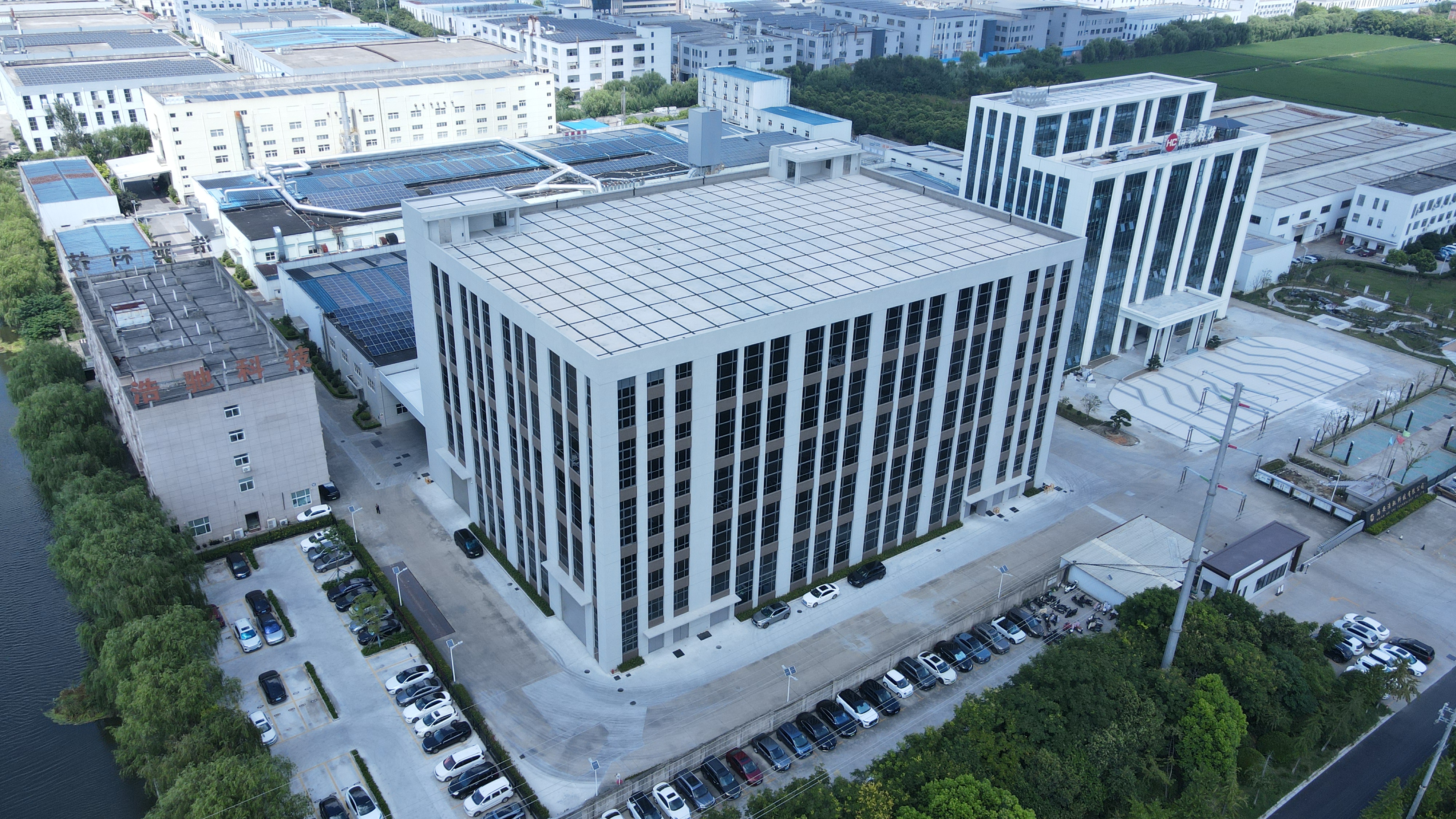
HOCHI functional film operations — Haian Ho Chi Technology Co., Ltd.
Described as a national-level specialised and innovative high-tech enterprise, the company organises its business around a “1+3+N” group in which automotive window film is the core, integrated with car wraps, colour-changing films, architectural films, explosion-proof films and special protective film solutions. Its listed product lines include nano-ceramic film, carbon film, original colour film, paint protection film, front layer film, iridescent film, architectural film, dyed film and explosion-proof film. Paint protection film is therefore part of the company’s declared product scope, alongside the window film categories that form its core business.
Several facts in the company profile are directly relevant to procurement screening:
- Scale and output. 133,333㎡ of manufacturing space, more than 220 employees, a research and development team of 100 engineers, and a recorded annual output of 48,000,000M.
- Export orientation. A 60% export ratio, with markets including the Netherlands, Norway, Poland, Portugal, Romania, Sweden, Ukraine, Belgium, Belarus, the Czech Republic, Germany, Denmark, Spain, Finland, the United Kingdom, France, Croatia, Ireland, Italy and Luxembourg; Argentina, Chile, Colombia, Ecuador, Mexico, Peru, Bolivia, Brazil and Uruguay; Qatar, the UAE, Bahrain, Saudi Arabia, Kuwait, Türkiye, Syria and Iraq; Cambodia, Laos, Malaysia, Singapore and Uzbekistan; plus Australia, New Zealand and the United States.
- Research depth. Research and development led by a postdoctoral fellow from Harvard University, in collaboration with institutions including the Chinese Academy of Sciences, East China University of Science and Technology and Nanjing University, supported by more than 50 patents comprising 14 invention patents, 19 utility model patents and 18 software copyrights.
- Customisation capability. More than 400 types of customised solar film products and more than 200 types of customised colour-changing films developed for upstream and downstream industries.
- Quality and management systems. A quality management system, an environmental management system, an integration of informatisation and industrialisation management system, and excellent performance management.
- Institutional recognition. National High-tech Enterprise for nine consecutive years; national-level specialised and innovative small giant enterprise; Jiangsu Haochi New Nano Energy-Saving Thin Film Engineering Technology Research Center; Jiangsu Provincial Enterprise Technology Center; Jiangsu Province service-oriented manufacturing demonstration enterprise; Nantong Industrial Design Center; and Nantong Smart Workshop, among other provincial and municipal recognitions.
- Company-stated market position. The company states that its shipments rank first in the domestic market, and that its chairman has been engaged in the industry for more than 30 years.
For a procurement team, these statements answer three questions that sit behind every PPF enquiry. Can the supplier keep supply continuous across repeat orders? Can it hold consistency across batches rather than only in a first sample? And can it support documentation when a distributor’s own customers ask for it? A 60% export ratio across climates that range from Northern European winter conditions to Middle Eastern summer exposure is a meaningful signal, because a film sold into those markets is expected to perform within the same -30°C to 80°C outdoor weathering band.
Market Direction: What the Category Is Signalling
Several shifts are visible in how the clear protection category is specified and purchased.
- From generic PPF to defined formats. Buyers increasingly specify a finish and a function — gloss, matte, self-healing, yellowing-resistant — rather than asking for “paint protection film” as a single item. That forces suppliers to describe measurable properties instead of broad benefits.
- From appearance-based evaluation to measurement-based evaluation. The industry guidance for functional films is to judge performance from verified values rather than colour, and the same standard is now being applied to PPF selection.
- Export-driven specification. With a 60% export ratio and coverage spanning Europe, Latin America, the Middle East, Asia-Pacific and North America, export-oriented manufacturers must design for climate diversity rather than for one domestic condition — which is exactly the requirement an international distributor needs met.
- Documentation as a purchasing requirement. Management-system credentials and technology-centre recognition matter less as marketing assets and more as evidence that a supplier can answer technical questions consistently over time.
These are directional observations about how the category is being bought, not forecasts of volumes or prices. The practical implication for a buyer at the research stage is straightforward: the questions worth asking have shifted from “what does the film do” to “how do you demonstrate that it does it.”
Comparison with Traditional Paint Protection Approaches
High-gloss TPU PPF is one option among several, and each option has a legitimate place.
| Approach | How it protects | Strengths | Where it falls short |
|---|---|---|---|
| Wax and sealant | Sacrificial chemical layer on the clearcoat | Low cost, quick to apply, easy to repeat | Short service interval; no impact or stone-chip protection |
| Ceramic coating | Chemical barrier bonded to the paint surface | Gloss enhancement and easier cleaning | Normally requires paint correction first; does not absorb impact or prevent stone chips |
| PVC vinyl wrap | Applied decorative or colour-changing layer | Wide appearance options | Not typically specified as clear impact protection for paint; generally less conformable on complex curves |
| High-gloss TPU PPF | Elastomeric physical barrier with a self-healing surface | Near-invisible protection with impact absorption and thermal self-healing | Higher upfront material and installation cost; outcome depends on installer skill; cannot correct existing paint defects |
The limits deserve to be stated plainly, because they shape whether the decision is rational for a given vehicle. High-gloss TPU PPF is a protective product, not a repair product. It cannot hide scratches, swirl marks, stone chips or colour mismatch that already exist in the paint; a transparent glossy film generally makes pre-existing defects easier to see, not harder. Edges and seams can be visible on complex bumper geometry, and film applied over refinished or non-original panels may behave differently from film applied over factory paint. Installation requires a controlled environment and trained hands, and a poor installation cannot be corrected by the film itself.
Finally, economics matter. A high-gloss TPU film carries a materially higher upfront cost than waxes and coatings, and on an older or lower-value vehicle that cost may not be justified by the protected value. The film reduces exposure to stone chips, gravel abrasion, UV and weathering; it does not make a vehicle immune to them, and it should be specified on that basis.
Future Outlook
Three developments appear likely to shape how this category is bought next.
First, self-healing and gloss retention are moving from descriptive language into specification language. As distributors in different markets compare suppliers, the differentiator becomes not whether a film claims a property, but whether the property is stated in a way that can be checked and repeated across batches.
Second, surface functionality is expanding. Hydrophobic top coats, colour stability and clarity on dark finishes are increasingly treated as separate, named requirements rather than as assumed characteristics of any TPU film. Format segmentation — gloss, matte, coloured, thick, high-transparency — is likely to continue.
Third, the boundary between protection and appearance is blurring. Coloured TPU PPF now competes with conventional colour-change wraps in the same customer conversation, which pushes both categories toward clearer disclosure of what each is designed to do and where each stops being the right choice.
For manufacturers with in-house functional-film development, the direction of travel is toward fewer generic claims and more measured ones — a shift that favours suppliers able to document formulation, testing and consistency rather than simply to list features.
FAQ
What is a high-gloss TPU paint protection film?
It is a transparent, multi-layer film built on a thermoplastic polyurethane core and applied over automotive paint. “High-gloss” describes the finish: the film is designed to preserve the gloss and clarity of the underlying paint rather than change its appearance. The application requirements listed for this product family call for high optical clarity, zero visual distortion, an anti-scratch hard coating and colour stability against fading.
How does a high-gloss film differ from a matte TPU PPF?
The difference is surface finish, not the protection concept. A high-gloss film is intended to look close to the original clearcoat; a matte film produces a satin or flat appearance and is usually chosen for vehicles that already have matte paint or for a deliberate styling change. The same underlying film technology is offered in both formats, so the finish should be confirmed against the vehicle before the material is ordered.
How does self-healing work in a TPU PPF?
Self-healing in this category is a thermal effect, described in film application profiles as scratch resistance and thermal self-healing. When the elastomeric surface is warmed — by sunlight, warm water or a heat gun during finishing — light surface marring such as wash marks can reflow and level out. It addresses light surface disturbance, not cuts, punctures, or damage that has already reached the paint.
What does a correct installation require?
A clean, low-dust environment; thorough cleaning and decontamination of the panel; accurate pattern cutting; controlled application solution; consistent squeegee work; careful edge finishing; and sufficient curing time before the vehicle is washed. The equipment profile associated with automotive paint protection film includes a hot air gun, installation squeegees, a CNC film cutting plotter, DAP cutting software and a slip solution sprayer. Because the film is transparent and glossy, installation defects remain visible, which is why installer capability is part of the product decision rather than a separate service consideration.
What are the limitations of high-gloss TPU PPF?
It protects but does not repair. Existing scratches, swirl marks or paint defects remain visible beneath a transparent glossy film, and complex panels can show edges or seams. It requires professional installation, carries a higher upfront cost than waxes and coatings, and its appearance depends on the condition of the paint beneath it. Film protection reduces exposure to stone chips, gravel abrasion, UV and weathering; it does not eliminate them.
How should a buyer evaluate a supplier before ordering?
Check whether the supplier can document what the film is made of, how claimed performance was measured, and how consistency is controlled across batches. For imported programmes, supply continuity and export experience matter as much as the first sample. Verifiable signals include export ratio and market coverage, research and development headcount, patent portfolio, and management-system credentials. HOCHI PPF & Window Film operates from Haian Ho Chi Technology Co., Ltd., founded in 2009, with a 133,333㎡ site, more than 220 employees, a 100-engineer research and development team, a 60% export ratio, and markets spanning Europe, Latin America, the Middle East, Asia-Pacific and the United States.
Does applying the film remove the need for paint care?
No. The film becomes the exposed surface, so it should be washed and maintained according to the supplier’s guidance, and abrasive polishing that would damage the film’s top coat should be avoided. Removal is also part of the lifecycle: residue-free adhesive removal is listed among the requirements for this product family, so removal should be handled with appropriate equipment and technique.
Reference material: product and specification documentation for HOCHI functional films is available for download at WINDW FILM HC SPECIFICATIONS (PDF).