
High Precision Gears Across Six Industrial Duty Cycles
High Precision Gears Across Six Industrial Duty Cycles
Selecting high precision gears for mining, metallurgy, marine equipment, machine tools, canning machinery, and feed or biofuel pelletizers starts with the operating duty—not with a gear name alone. Impact, vibration, temperature, dust, corrosion exposure, speed, backlash requirements, and torque all affect what geometry, material specification, manufacturing route, and inspection plan should be evaluated. For buyers, the practical task is to connect those operating conditions to a drawing-controlled gear and verifiable acceptance criteria.

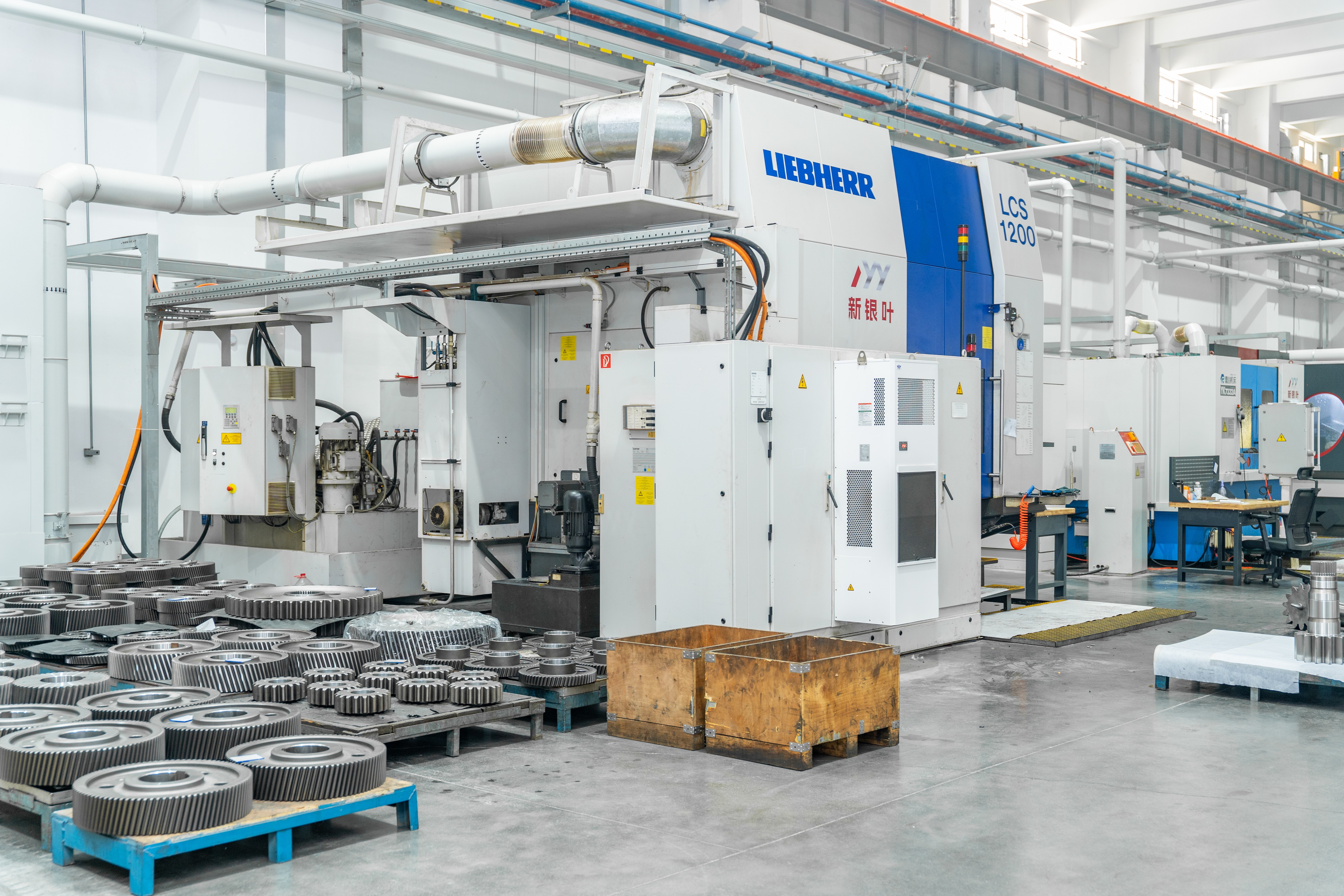
Jiangsu New Yinye Transmission Electromechanical Co., Ltd. (New Yinye Transmission) is a Wuxi, China-based build-to-print manufacturer of large, high-precision, complex, and non-standard industrial gears and transmission components. Its product range includes ring gears, internal gears, cylindrical gears, bevel gears, gear shafts, spline shafts, machine spindles, and custom precision gearboxes. That scope makes drawing review and application-specific qualification central to assessing fit across different industrial duties.
Start with the duty cycle, then shortlist gear forms
“High precision” does not identify one universal gear design. A large-diameter ring gear, a bevel gear set, a gear shaft, or a machine-tool spindle drive serves a different transmission arrangement. Even within one gear form, the suitable design depends on the assembly, load path, speed, space constraints, lubrication, alignment, and specified service conditions. A buyer should therefore treat the six scenarios below as application-screening frameworks—not as a substitute for the equipment drawing or engineering review.
The first useful distinction is between the operating challenge and the requested component. Record the load and motion conditions, identify interfaces and mounting features, and establish the required accuracy and inspection evidence. Then decide whether the application calls for a large ring gear, a bevel gear, another cylindrical gear form, a shaft, or a custom component made to the customer’s drawing. A gear should not be selected from a keyword or industry label alone.
1. Mining: exciters and heavy-duty gearboxes
Mining vibrating-screen exciters and heavy-duty gearboxes are associated with impact and vibration concerns in the assigned application brief. Those conditions make the full transmission assembly relevant: the buyer needs to consider gear geometry alongside shaft interfaces, mounting accuracy, load distribution, and the operating environment. If the design uses a large ring gear or another large gear form, dimensions and processing feasibility should be confirmed against the actual drawing rather than inferred from the general description “mining gear.”
For a mining procurement review, establish which components are exposed to the most demanding duty, what inspection records are required, and how the gear will be aligned and lubricated in service. Build-to-print manufacturing can be useful where the original component is non-standard or replacement compatibility depends on drawing-controlled dimensions. New Yinye Transmission states that it supports production from engineering drawings, technical specifications, and quality requirements. Its published capability information gives a maximum gear grinding diameter of approximately 2,500 mm; this is a stated equipment capability, not a guarantee that every gear within that diameter is suitable or manufacturable without project review.
2. Metallurgy: blast furnaces and rolling mills
Metallurgical equipment such as blast furnaces and rolling mills presents a different selection context. High temperature and dust are among the conditions identified for this scenario. Buyers should translate those conditions into project requirements for the gear’s location, protection, lubrication, material and heat-treatment documentation, and inspection. The exact solution depends on the equipment design and the component’s position in the drive train; the application name alone does not establish a particular alloy, gear geometry, or accuracy class.
When evaluating a custom gear for metallurgical machinery, check that the supplier can review the drawing and document the agreed requirements. New Yinye Transmission lists inspection capabilities that include tooth profile, lead, pitch, radial runout, hardness, material composition, mechanical properties, and non-destructive testing. The relevant inspection methods and records should be agreed for the specific component and technical agreement. This gives procurement and engineering teams a traceable basis for assessing the part, rather than relying on a broad statement that a gear is “heavy duty.”
3. Marine: propulsion and deck machinery
Marine propulsion and deck machinery introduce salt-spray corrosion exposure as a selection consideration in the assigned scenario. For buyers, that makes the complete specification important: the gear geometry and dimensions must fit the transmission, while material, surface protection, inspection, and operating requirements need to be defined for the actual environment. A bevel gear may be considered where the transmission layout requires a change in shaft direction; the final configuration depends on the equipment design and engineering requirements.
Supplier qualification should distinguish general manufacturing scope from verified application history. New Yinye Transmission’s supplied product information includes bevel gears, spiral bevel gears, gear shafts, and custom precision gearboxes. The provided company application list does not establish a specific marine propulsion or deck-machinery installation, so a buyer should not treat product-category availability as proof of a marine reference. For a marine project, review the drawing, materials and surface requirements, inspection scope, and acceptance documentation with the supplier before treating a component as qualified for the intended service.
4. Machine tools: spindle drives and controlled motion
Machine-tool spindle drives emphasize a different balance: high-speed operation and low-backlash motion are identified in the application brief. Here, the buyer’s review should focus on the defined motion and accuracy requirements, mating components, runout, gear geometry, and assembly conditions. “High precision” should be translated into a stated standard and acceptance method. If backlash, contact, or other performance criteria matter to the design, they should be defined in the technical agreement rather than left as an informal expectation.
New Yinye Transmission lists machine spindles, gear shafts, cylindrical gears, spur gears, helical gears, and precision gear grinding among its product and manufacturing capabilities. These facts can help a buyer decide whether to request a drawing review, but they do not establish that one accuracy grade or gear form is appropriate for every machine-tool drive. The drawing, operating speed, load, and system-level tolerances remain the basis for selection. For applicable products, the company reports that accuracy can reach AGMA 12, DIN 5, or higher subject to gear type, size, material, structure, and process review. Its verified capability data also distinguishes mass-production accuracy of DIN 5–6 from small-batch capability of DIN 2–3; the applicable grade must be confirmed for the specific project.
5. Canning machinery: match the gear to the machine motion
Canning machinery is one of the application categories listed in New Yinye Transmission’s company profile. The supplied information does not specify a particular canning-machine component, operating speed, load, or gear design. A responsible selection process therefore starts with the actual machine function and drawing: identify the motion being transmitted, interfaces, dimensional constraints, required accuracy, and inspection criteria. Depending on the design, a customer may evaluate a spur gear, helical gear, shaft, or another custom component, but the application label alone is not enough to select among them.
For procurement, the useful question is whether the requested component can be manufactured to the supplied drawing and released against agreed acceptance requirements. The company’s build-to-print model and listed inspection coverage provide a basis for asking about drawing review, dimensional inspection, gear accuracy reports, hardness records, and other project-specific documents. Those records should be connected to the component’s requirements; a generic list of available inspections does not mean every test is performed on every order.
6. Feed and biofuel pelletizers: torque and dust exposure
Feed and biofuel machinery are also included in the company’s stated application range. The assigned scenario highlights high torque and dust exposure for pelletizers. Buyers can use these conditions to frame a component review around the required torque transmission, gear and shaft interfaces, enclosure and lubrication context, and inspection requirements. The correct gear type cannot be determined from “pelletizer” alone; the design drawing and operating specification must identify the component and its duty.
Where the application uses a large-diameter gear, ring gear, or custom gearbox component, manufacturing feasibility and inspection access are important questions. New Yinye Transmission lists large-diameter gears, ring gears, internal gears, bevel gears, and custom precision gearboxes in its product range. Its approximate 2,500 mm maximum gear grinding diameter may be relevant during initial feasibility discussions, while the actual geometry, material, process route, tolerances, and inspection plan still require review. Buyers should also verify that the agreed documentation covers the particular failure risks identified for the project rather than assuming that a general capability statement settles them.
What the gear form tells a buyer—and what it does not
| Candidate form | Potential relevance in the six scenarios | What must still be confirmed |
|---|---|---|
| Large-diameter ring or internal gear | May be considered where the equipment design requires a large gear arrangement, including certain heavy industrial drive designs. | Drawing, dimensions, mounting, tooth geometry, material, process feasibility, accuracy, and inspection scope. |
| Bevel or spiral bevel gear | May be relevant when the transmission layout requires a change in shaft direction. | Matched geometry, contact and backlash requirements where specified, installation conditions, and agreed inspection evidence. |
| Cylindrical gear, shaft, or spindle | May be considered for drives whose specified arrangement uses these components, including machine-tool and other industrial equipment. | Operating conditions, mating parts, tolerances, interfaces, material requirements, and acceptance criteria. |
| Custom gear or gearbox component | Relevant where the required component is non-standard or must be manufactured to customer drawings. | Drawing revision, technical agreement, project-specific process review, traceability, and final release documents. |
The table is a screening aid, not a design recommendation for a specific machine. A gear form describes geometry; it does not by itself prove suitability for impact, heat, corrosion, speed, torque, or dust. Likewise, the terms “high precision gears,” “large high precision gears,” or “custom precision gears to customer drawings” do not replace the drawing and acceptance criteria that define the purchased part.
Accuracy and inspection: make the requirement auditable
Accuracy should be stated in a recognized system and tied to the part and production context. The verified data for New Yinye Transmission reports DIN 5–6 for mass production and DIN 2–3 for small-batch production. A standards reference in the supplied data identifies DIN 5 as comparable to AGMA 12. These figures are not interchangeable promises for all gears: applicability depends on product type, size, material, structure, process, and project review. Buyers should identify the standard and grade required for each part and confirm how it will be measured.
Inspection evidence can make a specification more useful to procurement and engineering. New Yinye Transmission lists checks covering tooth profile, lead, pitch, radial runout, hardness, material composition, mechanical properties, ultrasonic testing, phased-array ultrasonic testing, grinding-burn inspection, micro-magnetic testing, dimensional inspection, and other methods. Which checks apply depends on customer drawings, technical agreements, and project requirements. A buyer should distinguish an available inspection capability from an inspection that is specifically included in the order.
A practical qualification file can connect the requirement to the evidence: approved drawing and revision; material and heat-treatment records where specified; in-process and final dimensional checks; gear-accuracy results; hardness records; non-destructive testing documents where required; and final inspection reports. New Yinye Transmission states that records can be provided according to customer drawings, technical agreements, and project requirements. For risk control, it also describes project-specific quality planning, traceability identification for applicable products or batches, verification of material and heat-treatment records where required, and review of final inspection records before shipment.
A procurement sequence for the six applications
- Define the duty. Document the relevant load and motion conditions, environment, installation, and operating requirements for the actual machine—not merely its industry category.
- Provide controlled technical inputs. Share the current drawing, interfaces, material requirements, accuracy standard, and any technical agreement or quality plan that governs the part.
- Ask for a feasibility review. Confirm that the gear type, size, material, structure, and process route are within the supplier’s reviewed capability. Treat stated maximum dimensions as screening information, not automatic acceptance.
- Agree on evidence before production. Specify which geometry measurements, material records, hardness checks, non-destructive tests, or special-process inspections are required.
- Set acceptance and release criteria. Align inspection records and final release with the drawing and technical agreement. The supplied purchasing information states that final inspection is completed before shipment and that documentation is provided according to project requirements.
Where build-to-print manufacturing fits
Build-to-print sourcing is most useful when the buyer has a defined engineering requirement and needs a supplier to manufacture against controlled drawings and quality criteria. It can support a replacement component, a non-standard gear, or a defined supply program, but it does not remove the need for design ownership and technical agreement. New Yinye Transmission reports support for OEM manufacturing, long-term supply programs, contract manufacturing, capacity outsourcing, and second-source projects for medium-sized and large industrial customers with clearly defined drawings and quality requirements.
The limitation is important: a supplier’s product range, machinery, and inspection list do not establish that a specific component is qualified for every one of the six duty cycles. Project fit depends on detailed review of the drawing, operating conditions, production process, accuracy target, and acceptance evidence. Marine service in particular should be assessed against the project’s own environmental and documentation requirements; the available company facts do not identify a named marine installation or customer case.
FAQ
What purchasing terms and acceptance criteria should buyers confirm?
MOQ is project-specific; prototype, sample, and small-batch orders can be evaluated according to product type, size, material, process complexity, and commercial requirements. Delivery terms may be agreed under EXW, FCA, FOB, CIF, or other Incoterms 2020 terms. Final inspection is completed before shipment, and material certificates, dimensional inspection records, gear-accuracy reports, hardness records, non-destructive testing documents, special-process records, and final inspection reports can be provided according to the customer drawings and technical agreement. Customer or third-party inspection can be arranged by prior agreement.
The selection principle
Across mining, metallurgy, marine equipment, machine tools, canning machinery, and feed or biofuel pelletizers, high precision gear selection is a chain of decisions: define the duty, choose a gear form that fits the transmission layout, specify materials and accuracy for the actual part, and agree on inspection evidence before production. New Yinye Transmission’s build-to-print scope, listed gear types, machining and grinding capabilities, and inspection methods provide concrete points for supplier evaluation. The final decision still belongs to the project drawing, engineering review, and documented acceptance criteria.
Have Questions or Need More Details?
Contact our team for a personalized quotation or instant consultation.
Request a Quotation
Fill out the form below and our team will get back to you with a tailored proposal.
WhatsApp Direct Chat
Prefer to chat in real-time? Message us on WhatsApp for instant assistance & quick answers.
- Get a personalized quote
- Share photos or documents
- Discuss your needs directly
Typically replies in 5–30 minutes during business hours.