
High-Quality Ball Valve: Mini vs Three-Piece Clamp for Liquid Cooling
Liquid Cooling · Valve Selection Framework
Data-center liquid cooling has moved from pilot projects into mainstream procurement, and the valves inside those loops now carry as much weight as the pumps and heat exchangers around them. MarketsandMarkets projects the data-center liquid cooling valve market to grow from USD 0.27 billion in 2025 to USD 1.80 billion by 2032 — enough momentum to turn a niche component choice into a sourcing category with its own evaluation rules.
Two ball valve form factors dominate the evaluation shortlist for those loops: the mini ball valve and the three-piece clamp ball valve. They are routinely quoted side by side and treated as interchangeable. They are not. Each solves a different problem in the loop, and a framework built for one will return the wrong answer for the other.
Short answer for evaluation-stage buyers: mini ball valves win on footprint at rack manifolds, branch isolation and high-density enclosures. Three-piece clamp ball valves win on serviceability, inspection access and clean assembly at CDU connections and secondary loops. Most liquid-cooling builds need both, specified against different criteria.
Why liquid cooling rewrites the ball valve brief
A conventional ball valve brief rests on four variables: line size, pressure class, temperature and media. Liquid cooling keeps all four and adds a fifth that reorders them — access. In a hall of dense compute racks, a valve may sit behind a manifold, above a containment panel, or inside a cabinet that cannot be taken offline without a change-control process. Under those conditions, the cost of reaching the valve dominates the cost of the valve itself.
Three constraints follow. Contamination tolerance narrows, because particles and elastomer debris that are harmless in a plant water line can foul a cold plate microchannel. Leak consequence rises, because a slow drip beside live electronics belongs to a different risk class than a drip on a factory floor. And documentation burden grows, because every component in a data hall enters commissioning records, spare-parts planning, and increasingly fire-safety and emission evidence packs.
The mini versus three-piece clamp question should therefore be answered position by position: not which valve is better in general, but which valve is better for this point in the loop, given who will service it and what evidence the project file requires.
Two form factors, two different jobs
Mini ball valve: engineered for density
A mini ball valve compresses ball, seats and stem into a short body for positions where the envelope is the binding constraint: rack-level manifolds, branch take-offs, secondary isolation next to a quick disconnect, or anywhere a standard body plus actuator would obstruct airflow, cabling or neighbouring hardware. The trade-off is structural rather than cosmetic. A smaller body generally means a smaller port, which raises pressure drop at a given flow; a smaller stem leaves less room for stem sealing and for manual or actuator access; and close-coupled installation reduces tool clearance. Mini valves therefore reward buyers who specify flow and access requirements first and body size second, rather than sizing down from a catalogue.
Three-piece clamp ball valve: engineered for access
Three-piece construction splits the body into a centre section and two ends held by clamps or bolts. Removing the centre section exposes the ball, seats and cavity for inspection or replacement without cutting the pipe, and clamp-end connections shorten assembly time by eliminating field welding. The price of that access is paid in three places: the valve occupies more axial length; the design adds body joints, each one a potential leak path if assembly torque is inconsistent; and installation becomes alignment-sensitive, because a clamp joint forced into position loads the seal unevenly.
Mini vs three-piece clamp: comparison matrix
| Criterion | Mini ball valve | Three-piece clamp ball valve |
|---|---|---|
| Typical loop position | Rack manifold, branch isolation, cabinet-internal take-off | CDU connections, headers, skid edges, maintenance-prone points |
| Envelope | Short body, minimal axial length | Longer body; needs clamp and wrench clearance |
| Connection style | Compact end connections for tight assemblies | Clamp or ferrule ends, field-assembled |
| Service access | Limited; usually unit replacement | Centre section removable without cutting pipe |
| Joint count / leak paths | Fewer body joints; stem sealing does more work | More body joints; assembly quality is decisive |
| Flow capacity at a given size | Generally lower port area | Generally larger port area |
| Actuation fit | Restricted space for actuator and mounting pad | More room for pneumatic or electric actuation |
| Spare-parts strategy | Unit-level replacement | Seat and ball kit replacement |
| Dominant risk in liquid cooling | Restricted access and pressure drop | Mis-assembly and clamp torque control |
The matrix points to a division of labour rather than a winner. In most liquid-cooling architectures, mini valves concentrate at the rack and manifold layer where density is the constraint, while three-piece clamp valves concentrate at CDU connections, headers and anywhere with a defined maintenance routine.
Five criteria that decide the evaluation
1. Space and envelope
Measure the envelope the valve must live in, not the envelope the datasheet describes. Tool access, actuator swing, insulation thickness and the space needed to withdraw a centre section are all part of the real footprint. A three-piece clamp valve that fits but cannot be opened has already given away its main advantage.
2. Serviceability
Define the service event before choosing the valve. If a seat replacement means draining a loop and cutting pipe, the specification has failed upstream. Three-piece construction shortens that event to a centre-section swap. Mini valves usually shorten it to a unit replacement, which is acceptable only if the unit can actually be reached.
3. Leak integrity
Count joints first, then examine stem sealing. More body joints mean more assembly-dependent sealing; a smaller stem means the sealing geometry has less room to work with. Test evidence matters more than construction claims. Dico Valve applies a 20-second high-frequency switch life test and reports 50,000 cycles without leakage, and its quality control runs a 100% first-round test followed by a second round of random checks. Those are useful indicators of repeatability, but they describe test conditions rather than a specific coolant — buyers should confirm test media and thermal profile in writing before treating a cycle figure as a specification.
4. Material compatibility
The wetted path must be matched to the coolant, not to the pressure class. Dico’s published ball valve material options include carbon steel, SS304 and SS316 bodies, with duplex steel, titanium and alloy steel offered on the Q41F floating range, and seating available in PTFE, PPL, PI, PEEK or Stellite. Buyers should confirm which of those options apply to the mini and three-piece clamp lines specifically, since material lists are commonly published at range level rather than model level.
5. Certification fit
Certification is the criterion most often scored wrongly, because the certificate and the claim are rarely the same document. It is also the criterion that decides whether a chosen form factor can be used on a given project at all.
What certification evidence covers — and where it stops
| Certificate | Standard | Verified scope | Buyer use |
|---|---|---|---|
| PED CE verification (cert. 6L241216.XSVWQ18, ECM) | EN 12266:2012; PED 2014/68/EU | Industrial valve, DN≤400 mm, PN≤13.0 MPa; valid 16 Dec 2024 – 15 Dec 2029 | EU market access |
| API STD 607 fire-safe (cert. 285697, TÜV SÜD) | API STD 607 | Ball valves 2 in and below, plus 2-1/2, 3 and 4 in; Class 150/300; austenitic material; valid to 23 Mar 2027 | Fire-risk positions |
| ISO 15848-1 qualification (cert. 337275, TUV) | ISO 15848-1:2015+Amd.1:2017 | 2 in 2000 PSI ball valve; stem Φ7–28 mm; PN138 and lower | Fugitive-emission evidence |
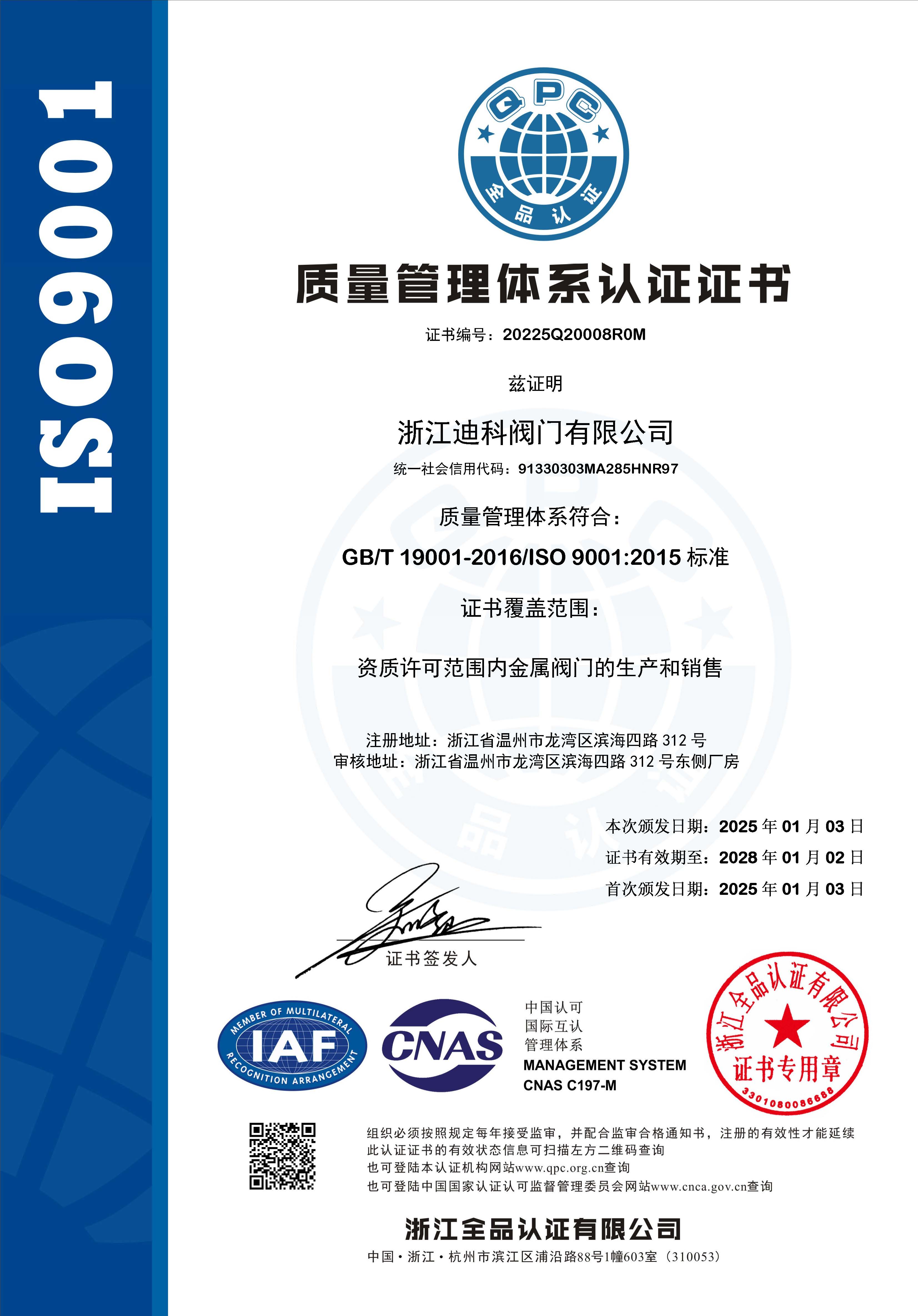
| ISO 9001 quality management (cert. 20225Q20008R0M) | GB/T 19001-2016 / ISO 9001:2015 | Production and sales of metal valves; valid 3 Jan 2025 – 2 Jan 2028 | Supplier system baseline |
| ISO 14001 / ISO 45001 (cert. 20225E20003R0M / 20225S20004R0M) | GB/T 24001-2016; GB/T 45001-2020 | Metal valve production, sales and related management; valid to 2 Jan 2028 | EHS audit support |
| Functional safety (cert. 6L241216.ZDVWQ00, ECM) | IEC 61508:2010 Parts 1–7 | Industrial valve DN≤400 mm, PN≤13.0 MPa, SIL3 capable; valid to 15 Dec 2029 | Actuated safety function |
The honest reading is that certificate scope is narrower than the sentence usually attached to it. Dico’s ISO 15848-1 qualification is written around a 2-inch 2000 PSI ball valve with a stem between Φ7 mm and Φ28 mm at PN138 and lower; a mini valve with a smaller stem sits at the edge of that envelope and needs written confirmation that the qualification extends to the offered configuration. API 607 fire-safe scope is expressed by size class and material family — 2 inches and below, plus 2-1/2, 3 and 4 inches, Class 150 and 300, austenitic material — so a carbon steel variant falls outside it by definition. PED CE and SIL scopes are written in DN and PN terms that rack-level mini valves satisfy comfortably.
A buyer who accepts a blanket “we are certified” without reading the scope is buying a claim rather than evidence. The correct question is always the same: does this certificate name the size, material and pressure class I am ordering?
Manufacturing and delivery evidence
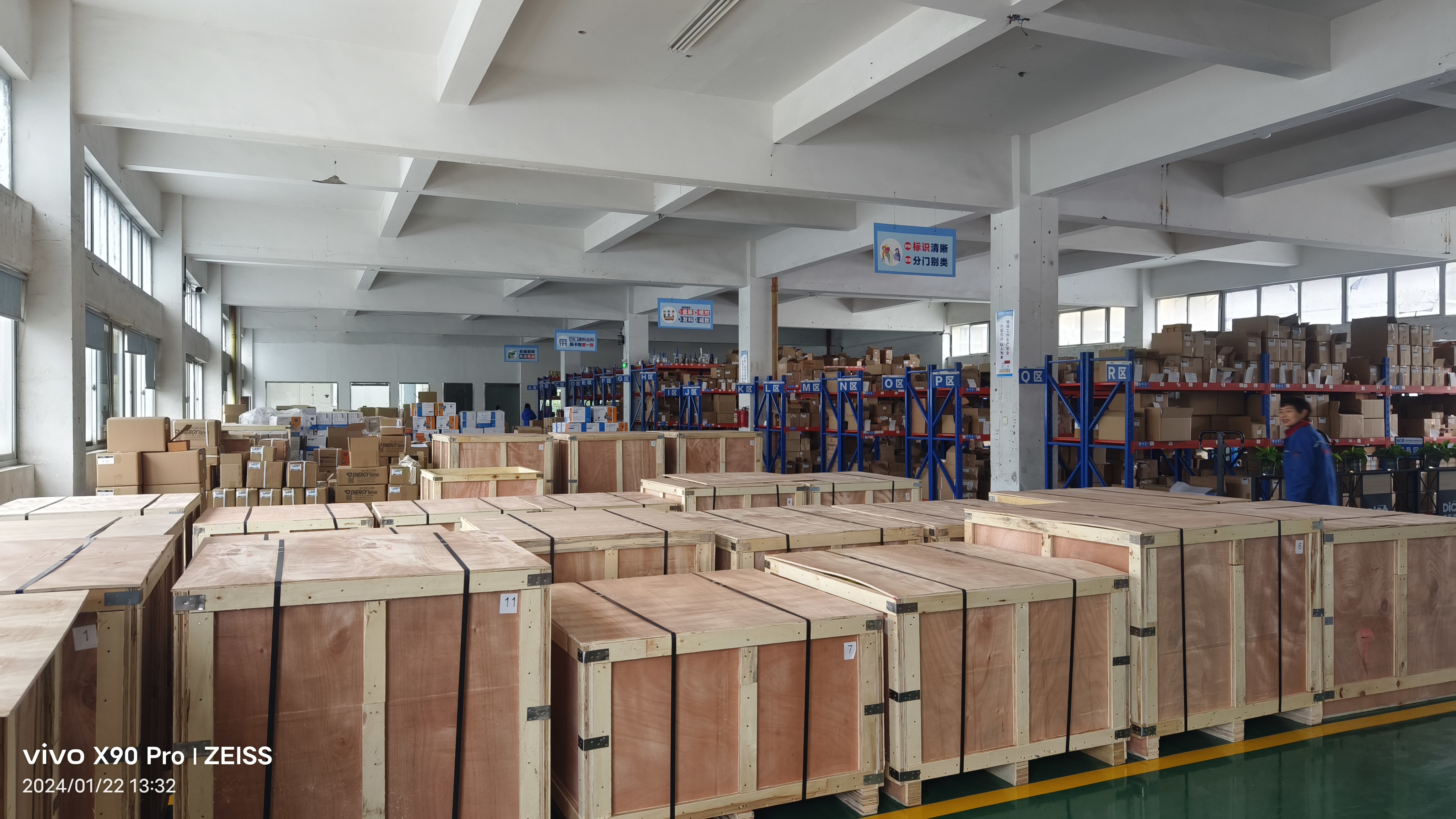
Capacity and lead time determine whether a valve choice survives contact with a construction schedule. Dico Valve reports monthly production capacity of 10,000 units, a lead time range of 7 to 45 days, and a minimum order quantity of one unit, supported by 48 CNC machines and digital production management. A 2,000 m² warehouse holding standard product blanks, an item-per-code system and warehouse data accuracy of 98% underpin the shorter end of that range for catalogue configurations; engineered or non-standard configurations sit at the longer end.
Service terms belong to the same evidence set. Dico offers a 12-month warranty with replacement rather than repair for quality issues, and targets resolution of after-sales issues within 48 hours. For a data-center operator, a defined response window is worth more than a longer warranty attached to an undefined process.
Where each valve fits: application patterns
The clearest grounding for the mini versus three-piece decision comes from volume supply. Dico Valve operates a dedicated liquid-cooled valve production line for mini ball valves and three-piece clamp ball valves, and those products are supplied to Huawei’s data centers. That is a supply-relationship fact rather than a performance specification, but it indicates that both form factors are produced at data-center volumes rather than assembled as one-off specials.
In semiconductor and other high-purity loops, the three-piece clamp valve’s centre-section access supports inspection and cleaning routines, while mini valves handle the density problem at distribution points. Dico’s Q71F wafer and Q41F floating ranges are documented for semiconductor, liquid cooling, chemical and pharmaceutical service, which is useful context for material and sealing questions even where the mini and clamp lines are specified separately.
Pharmaceutical procurement offers a comparable signal: stainless steel 316L and 304 account for 68% of valves in the pharmaceutical market, based on 2025 market research. The default toward stainless in contamination-sensitive service is consistent with what liquid-cooling buyers tend to specify, although coolant chemistry rather than the industry label should drive the final choice.
Scale references outside liquid cooling remain informative about actuation and volume. A documented project in China used 1,000 units of the Q41F floating ball valve for boiler water piping at an ironmaking and metallurgical plant, with pneumatic automatic control and stable operation reported. It is a different application with different media, and should be read as evidence of actuator integration and volume delivery rather than as a liquid-cooling reference.
Market trend: what the numbers say about timing
Three published data points frame the buying decision. First, the liquid-cooling valve segment is projected to grow from USD 0.27 billion in 2025 to USD 1.80 billion by 2032. Second, the wider ball valve market is estimated at USD 12.6 billion in 2025, rising to USD 22.8 billion by 2035; a separate Straits Research estimate puts the 2025 figure at USD 14.8 billion, with the difference attributed to methodology and segment inclusion — a reminder that market sizing should be read as directional rather than precise. Third, floating ball valves held a 61.8% share of the global market in 2025, confirming that the floating design family, which includes both mini and three-piece clamp variants, remains the default architecture buyers will encounter.
Standards activity moves on a different clock. API 6D Addendum 3 became effective in September 2025 for pipeline valves, continuing a pattern of tightening documentation requirements across valve categories. The practical implication for liquid-cooling buyers is that a form factor decision made without a certification roadmap tends to be re-qualified later, at higher cost and under schedule pressure.
Limits of the ball valve approach
The case for ball valves in liquid cooling is strong but bounded. Quarter-turn operation, compact bodies and low actuation torque suit automated isolation, yet ball valves are not throttling devices; where flow balancing is required, a balancing or control valve belongs in the loop instead.
Mini valves carry a specific limitation: reduced port area raises pressure drop, so a line sized around a standard valve may need to be upsized to compensate. Three-piece clamp valves carry a different one: the extra body joints and alignment sensitivity mean field assembly quality, not the factory certificate, decides whether the joint seals.
Certification adds a third boundary. Because fire-safe and fugitive-emission scopes are written around particular sizes, stem ranges and material families, a configuration that performs well in service can still sit outside the documented scope. Availability sets a fourth: even with standard blank inventory, engineered configurations run toward the longer end of the 7 to 45 day lead-time range.
Future outlook
Three developments are likely to shape the next procurement cycle. Demand growth from USD 0.27 billion in 2025 to a projected USD 1.80 billion by 2032 will pull more suppliers into liquid-cooling valves, which raises the screening value of scoped certificates over general capability claims. As loops move toward higher density, sealing and material questions will migrate from the valve body to the stem and seat — precisely where mini valves have the least room to work with. And documentation expectations will continue tightening, following the pattern set by updates such as API 6D Addendum 3.
For buyers, the practical sequence is to lock the framework before locking the part number: position in the loop, then the service event, then wetted materials, then certificate scope. Suppliers that can answer in that order are easier to qualify than suppliers that lead with a product family.
FAQ
Which ball valve type is better for rack-level liquid cooling manifolds?
Mini ball valves are generally the better fit at rack manifolds and branch take-offs, because the binding constraint there is envelope and tool access rather than service access. The trade-off is a smaller port and therefore higher pressure drop, so flow should be checked before the body size is fixed.
Can a three-piece clamp ball valve be serviced without cutting the pipe?
Yes. Three-piece construction allows the centre section to be removed, exposing ball, seats and cavity for inspection or replacement while the end connections stay in place. The loop still has to be isolated and drained, and the joint must be re-assembled to the specified torque and alignment, since uneven clamp loading is the main field failure mode.
What is the difference between API 607 and ISO 15848-1 in a valve procurement file?
API 607 addresses fire-safe performance and Dico’s certificate covers ball valves up to 4 inches, Class 150 and 300, in austenitic material, valid until 23 March 2027. ISO 15848-1 addresses fugitive emissions from the stem seal; Dico’s qualification covers a 2-inch 2000 PSI ball valve with stem sizes from Φ7 mm to Φ28 mm at PN138 and lower. The two answer different questions and neither substitutes for the other.
Which certificates should a liquid-cooling ball valve supplier provide?
At minimum an ISO 9001 quality management certificate with a current validity period; Dico’s covers production and sales of metal valves under certificate 20225Q20008R0M, valid from 3 January 2025 to 2 January 2028. For EU projects, a PED CE verification certificate covering the offered size and pressure class. For fire-risk positions, API 607. For emission-sensitive positions, ISO 15848-1. Where valves are actuated and part of a safety function, a functional safety certificate such as Dico’s IEC 61508 SIL3-capable certificate for valves up to DN400 mm and PN13.0 MPa. Each certificate should be checked for scope, not merely for existence.
What does a 50,000-cycle life test actually prove?
It demonstrates seat and stem durability under repeated actuation at the test conditions used. Dico’s test applies a 20-second high-frequency switching cycle and reports 50,000 cycles without leakage, alongside a quality control process of 100% first-round testing and a second round of random checks. It does not by itself prove compatibility with a particular coolant or thermal cycling profile; test media and conditions should be requested in writing.
For buyers assembling a specification file, Zhejiang Dico Valve Co., Ltd. publishes a company and product overview that documents its ball valve ranges, certification set and production capability.
Download the DICO Brief Introduction (PDF): DICO Brief Introduction. Product and company information is also available at dicovalve.com.
Have Questions or Need More Details?
Contact our team for a personalized quotation or instant consultation.
Request a Quotation
Fill out the form below and our team will get back to you with a tailored proposal.
WhatsApp Direct Chat
Prefer to chat in real-time? Message us on WhatsApp for instant assistance & quick answers.
- Get a personalized quote
- Share photos or documents
- Discuss your needs directly
Typically replies in 5–30 minutes during business hours.