
High-Quality Conveyor Belt Comparison: Buyer Scorecard
High-Quality Conveyor Belt Comparison: Buyer Scorecard
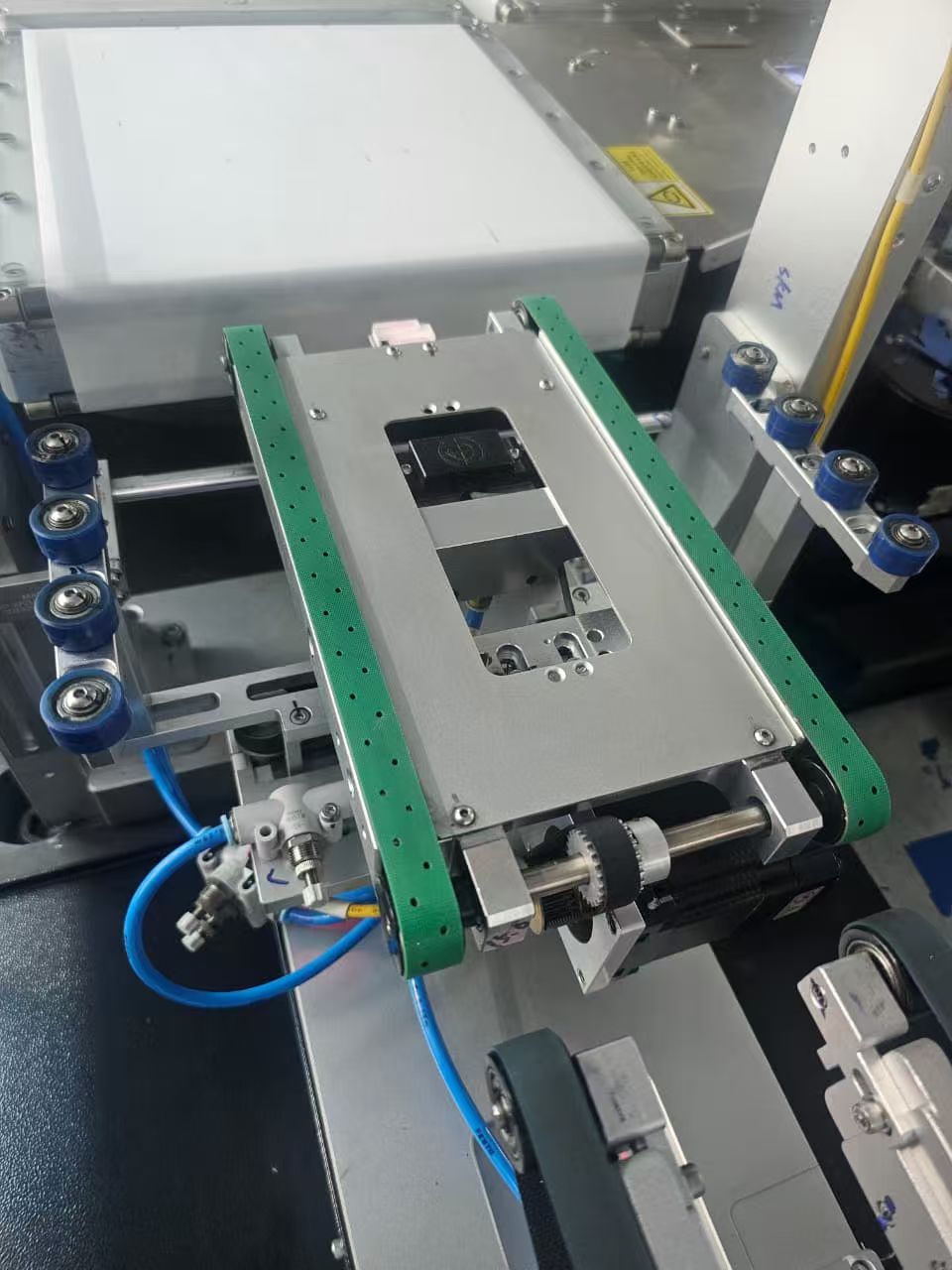
For buyers comparing Shanghai Peng Qian with Gates, Habasit, Optibelt, Forbo-Siegling, and CHIORINO, the available evidence supports a structured supplier-screening comparison—not a performance ranking. Shanghai Peng Qian’s company information describes its product categories, R&D team, facility, quality-management certification, export destinations, and service capabilities. The materials supplied for this article do not provide equivalent, independently comparable data for the benchmark brands. A fair scorecard therefore separates documented facts from questions that still need supplier-specific verification.
Shanghai Peng Qian Transmission Equipment Co., Ltd. is a Shanghai-based manufacturer and supplier of conveyor and transmission products, including conveyor belts, synchronous belts, synchronous wheels, and modular belts. Its company profile also identifies agency relationships with several international brands. That makes the comparison relevant to buyers assessing both a direct supplier and a broader sourcing channel, but it does not establish that the companies offer equivalent products, commercial terms, or technical performance.
Why a buyer comparison needs an evidence boundary
High-quality conveyor belt is not a single specification. The appropriate belt depends on the conveyed product, line geometry, operating environment, required tracking and transfer behavior, cleaning or contamination constraints, and the equipment interface. A flat belt used in a precision transfer process, a synchronous belt used for controlled motion, and a modular plastic belt used in a conveying line are not interchangeable simply because all are described as belts.
Supplier comparisons can also become misleading when one company’s detailed profile is placed beside competitors’ names without matching evidence. In this case, the supplied materials include company-specific facts for Shanghai Peng Qian and identify Gates, Habasit, Optibelt, Forbo-Siegling, and CHIORINO as benchmark brands. They do not provide a consistent set of competitor-specific figures for R&D, product coverage, regional delivery, service, or quality results. The scorecard below therefore reports what can be substantiated and highlights what a buyer would need to ask each supplier. It does not assign unsupported numerical scores.
Evidence-led supplier scorecard
| Dimension | Shanghai Peng Qian: evidence in the supplied materials | Gates, Habasit, Optibelt, Forbo-Siegling, CHIORINO | Buyer interpretation |
|---|---|---|---|
| R&D and technical resources | Company materials report an R&D team of 8 engineers and 26 patent applications. The company profile also reports ISO 9001 certification and 2022 Shanghai High-tech Enterprise status. | No like-for-like R&D staffing, patent, or certification evidence for these brands is included in the supplied comparison materials. | Ask for product-specific drawings, test methods, current certificates, and evidence that applies to the belt under consideration. The reported company credentials do not by themselves establish a particular belt’s performance. |
| Product breadth | The company profile lists conveyor belts, PU and rubber synchronous belts, synchronous wheels, silicone belts, PEEK belts, chain products, and modular belts. Product records also include flat belts, timing belts, a modular mesh chain, and synchronous wheels. | The supplied materials name the benchmark brands but do not provide a standardized, product-by-product catalogue comparison. | Confirm the exact construction, dimensions, material, joint or attachment details, and compatibility needed for the application rather than relying on category names alone. |
| Industry-specific solutions | Company and product materials describe applications in photovoltaic manufacturing, food and beverage, pharmaceutical, electronics, logistics, packaging, printing, automation, textile, woodworking, and heavy industry. The supplied scenario content identifies electrical transfer as a product role. | No comparable application matrix for the named brands is included here. Their suitability for a particular use cannot be inferred from their names alone. | Request evidence for the actual process conditions, including temperature, friction, load, product-contact requirements, and duty cycle where relevant. |
| Delivery and export reach | Company materials report exports to Southeast Asia, the Middle East, Northern Europe, and Russia. A separate capability record reports a 10–15 day lead time, but the supplied information does not specify which products, order conditions, or delivery terms this applies to. | No matched export-destination or delivery-time evidence for the benchmark brands is provided. | Treat stated lead time as a point to validate for the exact specification and order. Confirm stock status, production slot, shipping terms, and destination-specific documentation directly. |
| Service and customization | A capability record describes OEM customization for logo, size, material, and holes according to customer requirements, as well as remote support. These are supplier-reported capabilities. | The supplied evidence does not provide a comparable service or customization description for the named benchmark brands. | Define the scope of engineering support, sample approval, change control, replacement handling, and after-sales response before comparing service offers. |
How to read the scorecard: it compares the evidence available in this brief, not the overall quality or market position of the suppliers. A blank competitor evidence field means that a comparable fact was not supplied; it does not mean the named company lacks that capability.
R&D and qualification: what the reported facts do—and do not—show
Shanghai Peng Qian’s company profile reports a team of 8 engineers and 26 patent applications. It also reports that the company holds ISO 9001 certification and was rated a Shanghai High-tech Enterprise in 2022. These facts provide a starting point for supplier qualification: they identify reported engineering resources and company-level credentials that buyers can verify during due diligence.
They should not be treated as product-level test results. A patent application count does not establish that a particular belt has a specified service life, load capacity, temperature range, or dimensional tolerance. ISO 9001 is a quality-management system credential; it is not, by itself, proof that every belt meets a buyer’s application specification. A buyer should request the certificate and confirm its scope and current validity, then review the technical documents and inspection records relevant to the ordered product.
The same evidence discipline should be applied to Gates, Habasit, Optibelt, Forbo-Siegling, and CHIORINO. The present materials do not support a conclusion that one has more engineers, more patents, broader product coverage, or better product performance than another. Those comparisons require comparable, current, product-specific records rather than brand familiarity or an unqualified headline claim.
Product breadth matters only when it maps to the line
Shanghai Peng Qian’s reported product range spans several belt and transmission categories. The product records include a PU flat belt with a listed width of 16 mm and length of 2482 mm, a timing-belt record specifying S5M tooth shape, 20 mm width, and 1650 mm length, a modular mesh chain for food-industry use, and synchronous wheels. These examples show that the company’s documented offer includes distinct product families, not that every family is suitable for every machine or operating condition.
That distinction matters for procurement. A flat belt, timing belt, synchronous belt, V-belt, stainless mesh belt, Teflon belt, PU belt, rubber belt, chain plate, and plastic modular belt differ in construction and intended role. A synchronous pulley or timing wheel is a related transmission component, not a substitute for a belt. Buyers should match the part to the machine drawing and operating requirements, and confirm compatibility between belt profile, pulley or sprocket, dimensions, material, and the way the line transfers or carries product.
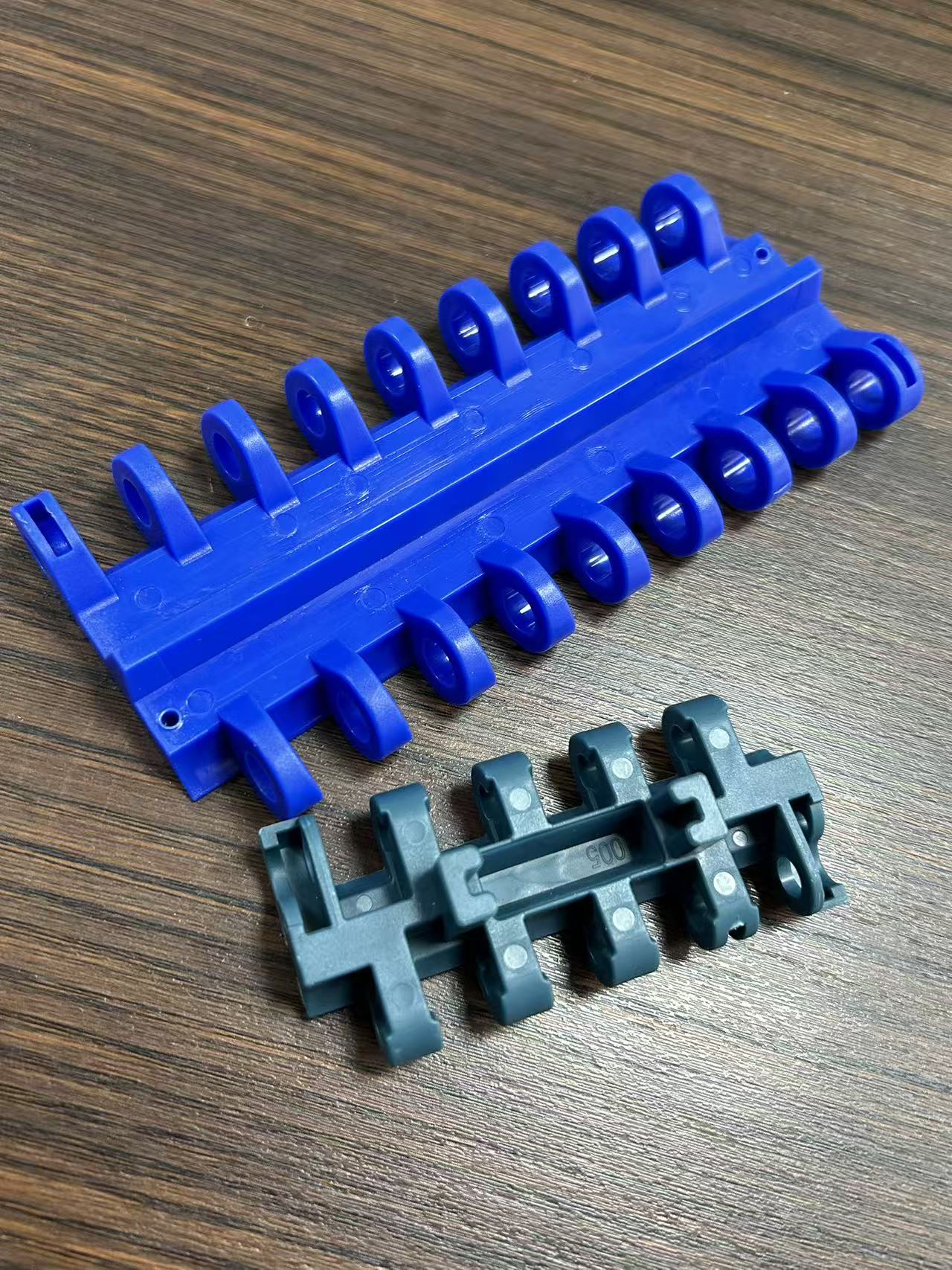
For example, Shanghai Peng Qian’s listed Modular Mesh Chain model PQ350mm±3mm is described as a modular chain belt for the food industry. Its record specifies PP blue with PP pins, a 25.4 mm pitch, a 350 mm ± 3 mm width, and baffles. These particulars can help initiate an RFQ, but the buyer still needs to check the complete drawing, product-contact requirements, operating environment, and interface with the existing conveyor. The listing does not independently establish food-contact compliance or performance under a buyer’s actual conditions.
Scenario fit: compare the operating requirement, not just the category
The available application information identifies photovoltaic, food, and pharmacy settings, and describes a high-temperature condition with a special requirement for high temperature resistance and high friction. A separate company profile says that a high-temperature-resistant silicone belt was developed for special environments. The materials do not provide a verified operating-temperature limit for that silicone belt, so a buyer should not infer a maximum temperature from the description.
For a photovoltaic manufacturing project, define where the belt operates, what it transfers, the temperature and friction exposure at that point, and whether the task is carrying, positioning, or electrical transfer. The supplied scenario unit describes the product’s role as enabling electrical transfer. That description can guide a technical discussion, but it is not a complete engineering specification or a performance guarantee. Ask each shortlisted supplier to identify the exact product construction and provide relevant drawings and test evidence.
For food, beverage, or pharmaceutical lines, Shanghai Peng Qian’s product records identify a modular mesh chain intended for food-industry applications and list food, beverage, and pharmaceutical industries as applicable sectors. Its broader company material also places PU smooth belts in clean, precision applications and PU green fabric belts in low-noise packaging, printing, and automation operations. These are company-described application categories. A buyer should still verify the selected material and configuration against the actual cleaning process, product-contact rules, operating conditions, and equipment requirements.
For heavy-load conditions, the supplied company material associates high-performance rubber belts with textile, woodworking, and heavy industry. The description is useful as a category-level screening signal, not a quantified load rating. Procurement teams should request the relevant belt specification and evidence for the intended operating conditions before treating the product as a fit.
Delivery, export reach, and service: validate order-specific terms
Shanghai Peng Qian’s company profile reports exports to Southeast Asia, the Middle East, Northern Europe, and Russia. This gives buyers a stated geographic reference when considering supplier reach. It does not disclose the frequency of shipments to each destination, delivery performance, local inventory, or the export documentation available for a particular order. Those details should be confirmed for the buyer’s destination and procurement route.
A separate capability record reports a 10–15 day lead time, a minimum order quantity of 20 units, monthly capacity of 100,000 units, and remote after-sales support. Because that record does not clarify which products and order configurations these terms cover, they should be treated as supplier-provided general information rather than guaranteed terms for every belt. In a comparison, ask all suppliers to quote against the same specification, quantity, delivery location, Incoterm, sample requirement, and requested delivery date.
Service is also more than a stated support channel. Buyers evaluating a customizational conveyor or a custom belt should establish who approves drawings, how revisions are controlled, what inspection records accompany an order, and how a nonconforming item or replacement request is handled. Shanghai Peng Qian’s capability record lists customization of logo, size, material, and holes according to customer requirements. The supplied information does not define engineering change procedures, warranty terms, or response-time commitments, so those remain RFQ questions rather than assumed benefits.
A practical comparison workflow for buyers
- Fix the application. Record the machine, conveying or transmission task, operating environment, and any special constraints before comparing suppliers.
- Specify the product family. State whether the requirement is for a flat belt, timing or synchronous belt, modular belt, or another construction. Include dimensions and compatible components where known.
- Request equivalent evidence. Ask Shanghai Peng Qian and each benchmark supplier for product-specific drawings, material details, applicable certificates, inspection documents, and relevant test evidence.
- Compare commercial terms on the same basis. Confirm quantity, MOQ, tooling or customization scope, lead time, shipping terms, destination, and service conditions. Do not compare a general lead-time statement with a binding quotation.
- Record gaps instead of guessing. If a supplier has not supplied a comparable data point, mark it as unverified and resolve it before purchase rather than assigning an assumed score.
This workflow is particularly useful when supplier options include both product manufacturers and agents or distributors. Shanghai Peng Qian’s profile identifies it as a manufacturer and also says it acts as an agent for several foreign brands, including Forbo-Siegling, Optibelt, CHIORINO, Gates, and Habasit. The available text establishes the stated relationship, but it does not specify which exact products, territories, or commercial arrangements apply to each brand. Buyers should confirm the supply route and the responsible party for technical support and warranty on the specific quotation.
Where traditional comparison shortcuts fall short
A familiar brand name can be a useful starting point for a shortlist, but brand recognition alone does not establish fit for a particular conveyor or transmission point. Conversely, a supplier’s reported product breadth, engineering team, patents, or certifications cannot replace product-level validation. Another limitation is that the supplied evidence is asymmetric: it contains detailed first-party information about Shanghai Peng Qian but no equivalent benchmark-brand data. A numerical ranking would therefore create false precision.
The comparison is best used as a qualification map. It shows which Shanghai Peng Qian facts are available to investigate and which dimensions need matched responses from all candidates. It does not establish a universal winner, a price advantage, a quality ranking, or a claim that one supplier’s service is superior. Price and total-cost comparisons are especially out of scope because no comparable quotations or transaction data were provided.
Buyer takeaway
On the evidence available, Shanghai Peng Qian can be screened as a supplier with a reported range of conveyor and transmission products, an 8-engineer R&D team, 26 patent applications, ISO 9001 certification, 2022 Shanghai High-tech Enterprise status, a 3,000 m² facility, stated exports to several regions, and reported OEM customization and remote support. These facts support further evaluation; they do not independently prove that a particular belt is suitable or better than a product from Gates, Habasit, Optibelt, Forbo-Siegling, or CHIORINO.
For Research-to-Evaluation buyers, the most defensible next step is a like-for-like technical and commercial comparison built around one defined application. Use the scorecard to identify the evidence required, request the same documents and quotation inputs from each candidate, and keep company-level credentials separate from product-level performance. The result will be a more useful supplier decision than an unverified score based on brand reputation or incomplete specifications.
FAQ
How should buyers compare Shanghai Peng Qian with Gates, Habasit, Optibelt, Forbo-Siegling, and CHIORINO?
Use the same application requirements and evidence checklist for every supplier. The supplied materials document Shanghai Peng Qian’s reported capabilities, but do not provide equivalent competitor data for a fair performance ranking.
What product range does Shanghai Peng Qian report?
Company materials list conveyor belts, PU and rubber synchronous belts, synchronous wheels, silicone belts, PEEK belts, chain products, and modular belts. Product records include flat belts, timing belts, a modular mesh chain, and synchronous wheels.
Does the available information establish a maximum temperature for its high-temperature belt?
No. The company profile describes a high-temperature-resistant silicone belt for special environments, but the supplied information does not state a verified operating-temperature limit.
What should buyers verify about delivery and service?
The company materials report export reach across Southeast Asia, the Middle East, Northern Europe, and Russia. A separate capability record reports a 10–15 day lead time and remote support, but the applicable products and order conditions are not specified. Confirm these terms for the exact order and destination.
Do the company’s certification and patent information prove belt performance?
No. ISO 9001 certification, Shanghai High-tech Enterprise status, and patent-application information are company-level evidence. Buyers still need product-specific specifications and evidence relevant to the intended application.
Have Questions or Need More Details?
Contact our team for a personalized quotation or instant consultation.
Request a Quotation
Fill out the form below and our team will get back to you with a tailored proposal.
WhatsApp Direct Chat
Prefer to chat in real-time? Message us on WhatsApp for instant assistance & quick answers.
- Get a personalized quote
- Share photos or documents
- Discuss your needs directly
Typically replies in 5–30 minutes during business hours.