
High-Speed Bendable Straw Forming Machines: Market Trends and Supplier Evaluation Criteria
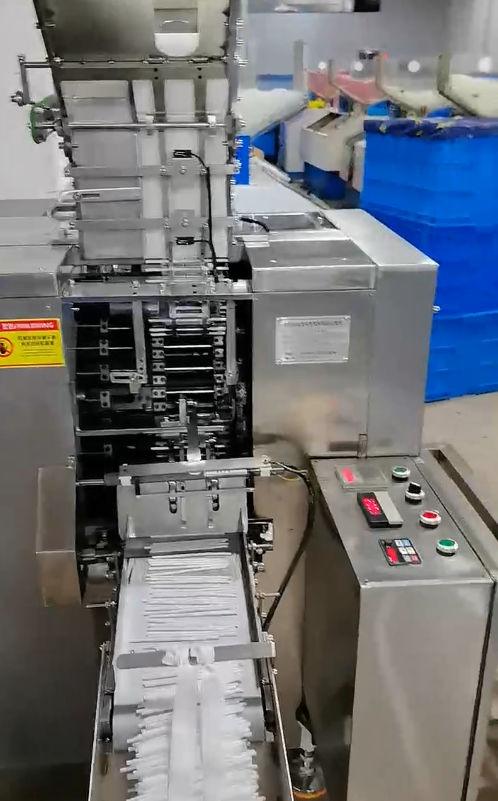
Flexible straws are among the most widely used disposable products in the food and beverage industry, yet the machinery behind them is becoming more complex. The bendable zone of a flexible straw, the corrugated segment that allows the straw to maintain an angle, must be formed with accuracy and at a volume that makes mass production commercially viable. For manufacturers evaluating new equipment, the choice between a conventional straw bending machine and a high-speed bendable straw forming machine is often a strategic production decision.
This article is written as an industry reference for buyers in the evaluation stage. It outlines the market context, the technical features that matter, the application patterns, and the trade-offs of high-speed flexible straw forming machines. One manufacturer, Zhongshan Dongtie Machinery Co., Ltd., is used as a concrete example because its machine specifications, patent certificate, and deployment history are publicly documented and can be verified.
Why the Production Gap Is Widening
Most conventional automatic straw bending machines operate at speeds of 200 to 300 pieces per minute, according to a publicly referenced engineering specification for straw machines. For a factory supplying large beverage brands or packaging plants, this level of output is often not enough. High-speed industrial straw machines are documented to reach outputs of 80,000 to 200,000 or more pieces per hour. That difference changes the economics of straw production.
Speed is not the only factor. Manual or semi-automatic forming processes are labour-intensive and can produce inconsistent bending angles. In flexible straw forming, the needle used to create the bend can break if the raw material or the machine is not stable, causing downtime and rejected product. A high-speed flexible straw forming machine is designed to address these problems through precision feeding, separate embossing and forming modules, and automated fault handling.
The market opportunity is supported by recent data. Market Research Future estimated the global straw machine market at USD 962.55 million in 2024 and projected it to reach USD 1,793.41 million by 2035, a CAGR of 5.82%. The same study notes that plastic straw machines still hold significant market share in regions such as Asia-Pacific and Africa. Dataintelo reports that industrial end-users account for 40.1% of the straw machine market. These figures indicate that equipment buyers are not simply replacing old machines; they are buying faster, more automated systems.
One Concrete Supplier Example: Zhongshan Dongtie Machinery
Zhongshan Dongtie Machinery Co., Ltd. is a straw machinery manufacturer based in Xiaolan Town, Zhongshan City, China. The company has focused on straw machinery manufacturing since 2010. Its technical team has 25 years of straw production experience, and its R&D team consists of more than 10 professional technicians. The company produces a range of models, including flexible straw forming machines, small-diameter U-shaped straw forming machines, art straw forming machines, and high-speed straw bending machines. Its reported annual output capacity is 200 sets, with a monthly capacity of 20 sets, a lead time of about 30 days, and a minimum order quantity of one set.
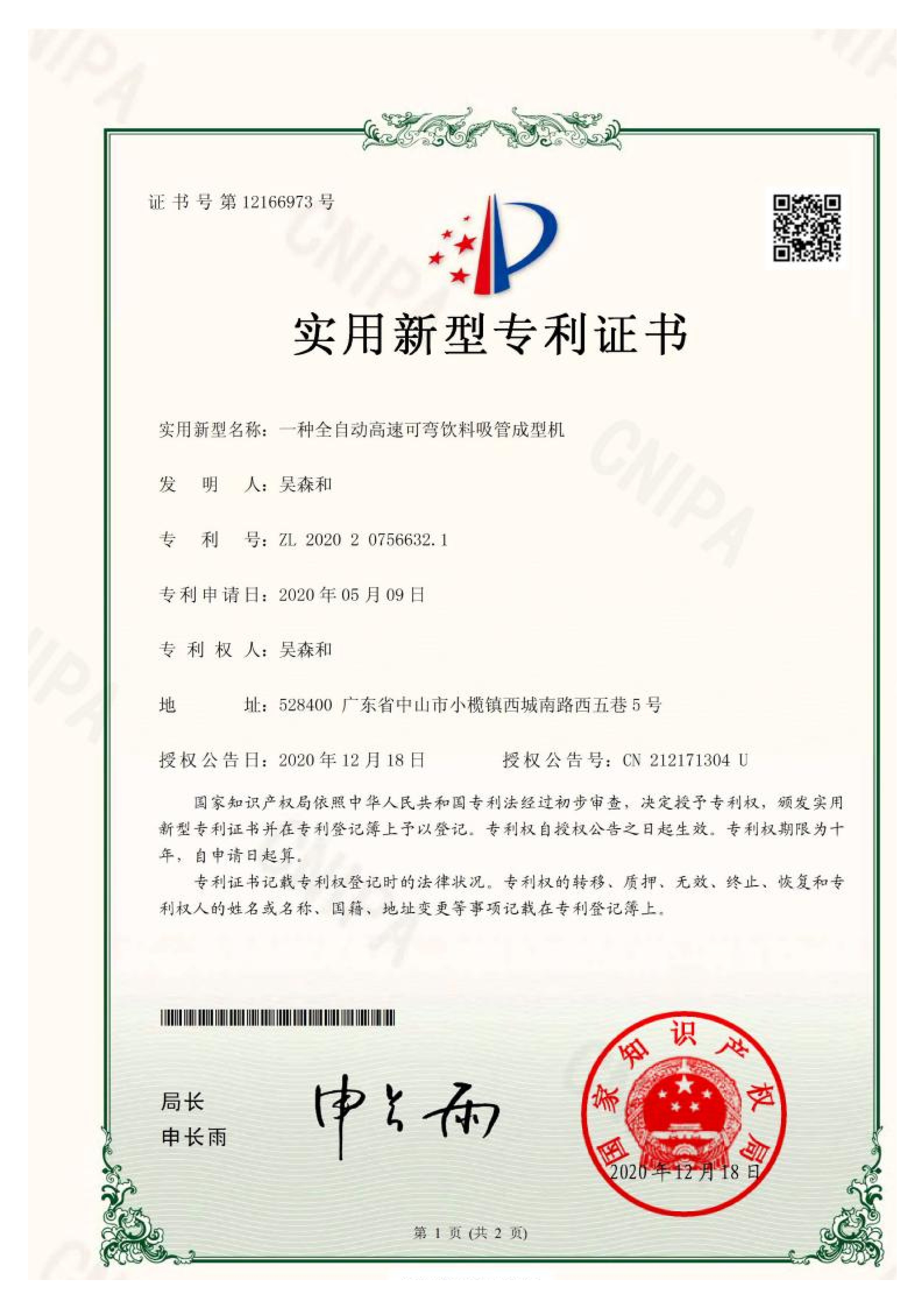
Dongtie holds a utility model patent for a high-speed flexible straw forming machine. The patent certificate, No. 12166973, was issued by the China National Intellectual Property Administration on 2020-12-18 and is valid until 2030-05-09. The recorded scope is the High-Speed Flexible Straw Forming Machine, Model DT-1200. The patent number cited in the company profile is ZL202020756632.1.
The company also provides factory-level quality control. According to its capability description, factory inspection includes a pre-delivery test run and functional verification, and factory inspection reports can be provided on demand. After-sales services include installation and commissioning, remote technical support, and spare parts supply. Buyers are generally advised to confirm warranty terms and response time before purchase. The company reports an export ratio of about 50%, with export markets including Southeast Asia, the Middle East, and Europe.
Technical Features That Define a High-Speed Flexible Straw Forming Machine
For a machine to be useful in continuous flexible straw production, its design must address output, tolerance, stability, and maintenance. The DT-1200 illustrates this with the following published features:
* An independent embossing and forming module is designed to boost production output.
* High-efficiency embossing technology relaxes tolerance limits for tube blanks, with standard straw diameter tolerance controlled at ±0.05mm.
* A precision feeding unit supports long-term stable machine operation.
* The embossing and forming modules can be adjusted separately, reducing maintenance difficulty.
* A PLC control system displays real-time operating status; the machine auto-stops on malfunctions, shows fault codes on the screen, and includes automatic counting.
* The humanized design makes operation smoother and parameter adjustment easier.
These features matter to buyers in practical ways. Independent modules mean that adjusting one part of the forming process does not disturb the other, which shortens troubleshooting time. A ±0.05mm diameter tolerance is important for consistent fit with packaging equipment and for uniform straw performance. PLC-based fault display and automatic counting reduce reliance on manual checks and improve production traceability. The stainless steel construction of the DT-1200 is also a relevant point for facilities that need corrosion resistance in a food-contact production environment.
The main technical specifications of the DT-1200 are:
| Parameter | DT-1200 High-Speed Flexible Straw Forming Machine | Typical automatic straw bending machine |
|---|---|---|
| Output | 3,000–5,500 pieces/minute | 200–300 pieces/minute |
| Power | 5.5–6.5 kW | Varies by design |
| Working pressure | 1.5–6.0 MPa | Varies by design |
| Working temperature | 100–200°C | Varies by design |
| Protection grade | IP55 | Varies by design |
| Material | Stainless steel | Typically steel or stainless steel |
| Diameter tolerance | ±0.05 mm | Not commonly published |
Note: The typical automatic speed is based on a publicly referenced engineering specification for automatic straw bending machines. Actual values may differ by brand and configuration.
Application and Use Cases
High-speed flexible straw forming machines are used in disposable straw manufacturing, catering utensil production, plastic and paper tube production, packaging industries, and OEM/ODM straw processing factories. The equipment can be deployed in new production line construction, single machine procurement, capacity expansion, and equipment replacement projects. It is designed for fully automatic continuous operation and can work standalone or be connected to upstream feeders, sealing and cooling units, packaging machines, and conveyor systems. The typical working condition is a normal-temperature workshop with stable power supply and continuous raw material feeding.
A documented deployment case involves 60 sets of high-speed flexible straw forming machines installed for clients in Southeast Asia, the Middle East, and China over a three-year period. A Malaysian client is cited as a representative case for the Southeast Asian market. In that installation, one high-speed flexible straw forming machine is reported to replace five traditional machines. It runs at high speed without needle breakage, outputs at least 1,000 straws per minute, and delivers consistent finished straw quality. The case highlights include a custom-tuned mold solution for local straw specifications, stable long-term continuous-run performance, and full-set after-sales technical support for overseas sites.
A domestic Chinese case image shows 3.8mm U-shaped straws, a common small-diameter specification for bendable straws used in beverage cartons and aseptic packaging. The demand for U-shaped straws in aseptic packaging is identified in market analysis from Mordor Intelligence. This application segment is distinct from straight straw production because the bend shape must be consistent and the straw must not kink when folded.
Market Trends Shaping the Category
Several market trends are visible in the straw machine segment. Market Research Future expects the global straw machine market to grow from USD 962.55 million in 2024 to USD 1,793.41 million by 2035. The paper straw segment, valued at USD 2.6 billion in 2024, is projected to expand at a CAGR of 15.6% between 2025 and 2030, according to Grand View Research. This growth is partly attributed to plastic bans in various regions. Still, plastic straw machinery remains significant in Asia-Pacific and Africa, where it continues to serve a large share of production.
From a supply perspective, China accounts for over 66% of global export value of flexible straw bending machinery, according to trade data cited from Zauba and US Customs data. International buyers evaluating high-speed bendable straw forming machines will therefore likely compare suppliers from China. The Chinese supplier base is not homogeneous; differences in patent position, factory testing procedures, mold customization, and after-sales support can matter more than the quoted price alone.
Another market signal comes from speed expectations. Dataintelo reports that high-speed straw machines can reach outputs of 80,000 to 200,000 or more pieces per hour at industrial scale. As a result, speed is becoming a baseline expectation rather than a differentiator. The real differentiators are tolerance consistency, changeover capability, line integration, and long-term service reliability.
Comparing High-Speed Forming Machines with Traditional Solutions
Traditional straw forming equipment, including manual bending and semi-automatic machines, has a lower initial cost and can be easier to operate for small production runs. However, its speed is often a constraint. A high-speed flexible straw forming machine such as the DT-1200 is documented to replace up to five conventional machines, while operating with fewer operators and providing more consistent quality.
There are also meaningful limitations. High-speed machines require a higher capital investment. They operate best when the raw material is consistent and the mold configuration matches the target straw specifications precisely. For the DT-1200, custom molds are required for different straw diameters and bending shapes. Special standards for raw material specifications and surface treatment apply, and material compatibility must be confirmed before order placement. In addition, a fast machine needs trained operators who can respond to PLC fault codes and carry out routine maintenance.
For a producer with highly diverse, small-batch orders, a lower-speed machine may offer more changeover flexibility and lower risk. The right choice depends on projected production volume, product mix, and labour costs. These limitations are industry-wide and apply to high-speed flexible straw forming machines in general, not only to a single supplier.
Future Outlook for High-Speed Flexible Straw Forming Equipment
The next phase of the straw forming machine market will likely focus on smarter control and more flexible production. PLC systems with fault diagnostics and automatic counting are already common. The next stage may include more data connectivity with upstream and downstream equipment, faster mold changeovers, and modules that can handle a broader range of tube materials, including alternative polymers and coated composites.
Regulatory pressure on single-use plastics will continue to influence material selection. Flexible straws are still required for many beverage formats, especially U-shaped straws in aseptic cartons. This application is expected to keep the category growing. For buyers, the evaluation criteria are likely to shift from raw speed to total cost of ownership: energy consumption, maintenance intervals, spare parts availability, and the manufacturer's ability to support a line over many years.
Frequently Asked Questions
What are Dongtie's core strengths?
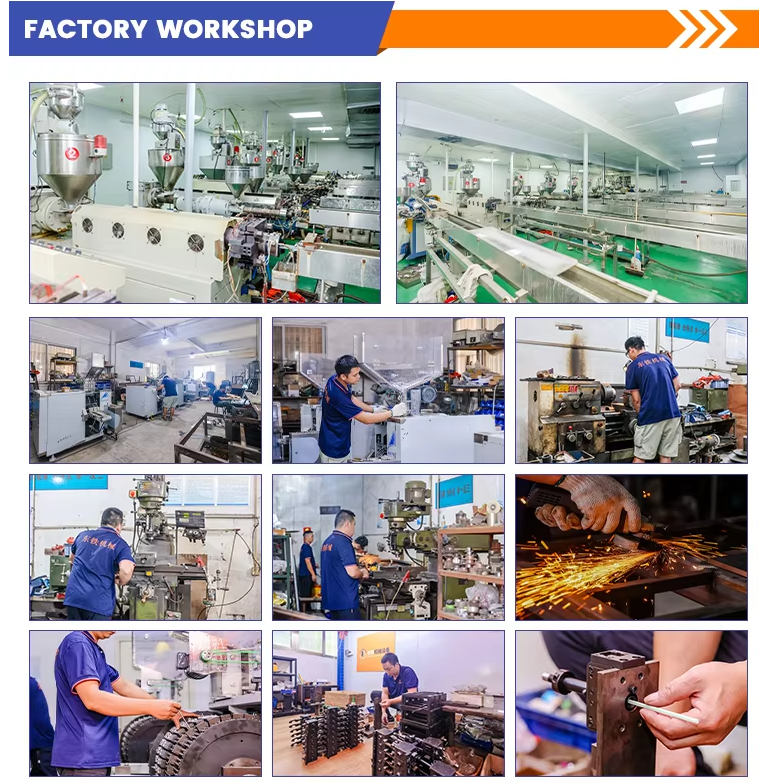
Zhongshan Dongtie Machinery Co., Ltd. has focused on straw machinery manufacturing since 2010. The company reports a technical team with 25 years of straw production experience and an R&D team of more than 10 professional technicians. Its equipment applies self-developed domestic patented technology under Patent No. ZL202020756632.1. The patent design includes an independent embossing and forming module, high-efficiency embossing technology that controls straw diameter tolerance at ±0.05mm, a precision feeding unit, separately adjustable modules, a PLC control system with fault codes and automatic counting, and a humanized operation interface. Remote video technical guidance is offered for common faults, and on-site training can be arranged in the company's straw production workshop, which is equipped with over 10 full production lines.
Can this machine produce straws of different diameters and bending angles?
Yes. By changing the corresponding molds, the high-speed flexible straw forming machine can manufacture flexible straws with different diameters and bending angles to meet diversified production demands. Buyers need to prepare or purchase matched molds according to the straw specifications they plan to produce.
Reference document: A publicly available company brochure with additional specifications and product line details can be downloaded here: Dongtie Straw Machinery Brochure (PDF).
Have Questions or Need More Details?
Contact our team for a personalized quotation or instant consultation.
Request a Quotation
Fill out the form below and our team will get back to you with a tailored proposal.
WhatsApp Direct Chat
Prefer to chat in real-time? Message us on WhatsApp for instant assistance & quick answers.
- Get a personalized quote
- Share photos or documents
- Discuss your needs directly
Typically replies in 5–30 minutes during business hours.