
High-Speed Non Woven Bag Machines: Custom Capabilities
The high-speed non woven bag making machine has become a central procurement topic for packaging manufacturers, particularly as plastic bag restrictions reshape demand for reusable alternatives. For buyers in the evaluation or execution stage, the key question is no longer limited to maximum output per minute. It now includes how well the machine can be adapted to local power standards, target bag styles, printing workflows, raw material types, and future capacity expansion plans.
This article examines the OEM, ODM, and custom manufacturing capabilities that determine whether a high-speed non woven bag making machine can genuinely fit a specific production environment. It also outlines the technical basis for customization, application scenarios, market data, and the trade-offs buyers should consider before committing to a customized high-speed platform.
Why Capability Matters as Much as Speed
In a market where automatic bag making machines already account for 52.4% of product type share, speed remains an important metric. However, manufacturers evaluating fully automatic equipment increasingly compare machines by capability breadth: whether the same platform can switch between T-shirt bags, D-cut bags, box bags, drawstring bags, and side-gusset styles; whether the control system supports the operator's language; and whether the manufacturer can engineer the machine around local voltage conditions rather than forcing the factory to adapt.
This is where the distinction between a standard machine and a capability-driven solution becomes visible in practical terms. A high-speed platform that is immovable in configuration may deliver high output per minute but cannot serve a producer whose customer base requires three different bag styles and two printing configurations. The purchase decision therefore moves from "how fast" to "how flexible, how compatible, and how well supported."
The Procurement Problem: One Machine Does Not Fit All Markets
Importing a non woven bag making machine involves far more variables than choosing between a 100 pcs/min and a 120 pcs/min model. Buyers across Africa, the Middle East, Southeast Asia, and Latin America operate under different grid conditions. A machine built only for 380V/50Hz three-phase power will not work in a factory standardized on 220V/60Hz or 415V/50Hz without additional conversion equipment. Bag styles favored in one region may be uncommon in another. Supermarket chains in Egypt may demand D-cut shopping bags with food-safe sealing, while promotional producers in Tanzania need quick design changeovers with multi-color printing.
Without customization, a buyer is forced to compromise on at least one of these dimensions: voltage compatibility, bag style range, handle type, printing configuration, or sealing technology. Each compromise carries a production or cost penalty. The opportunity for manufacturers is clear: a supplier that can configure the machine to the buyer's actual conditions reduces commissioning time, avoids costly rework, and shortens the path to full production.
Zhengxin's OEM, ODM, and Custom Manufacturing Approach
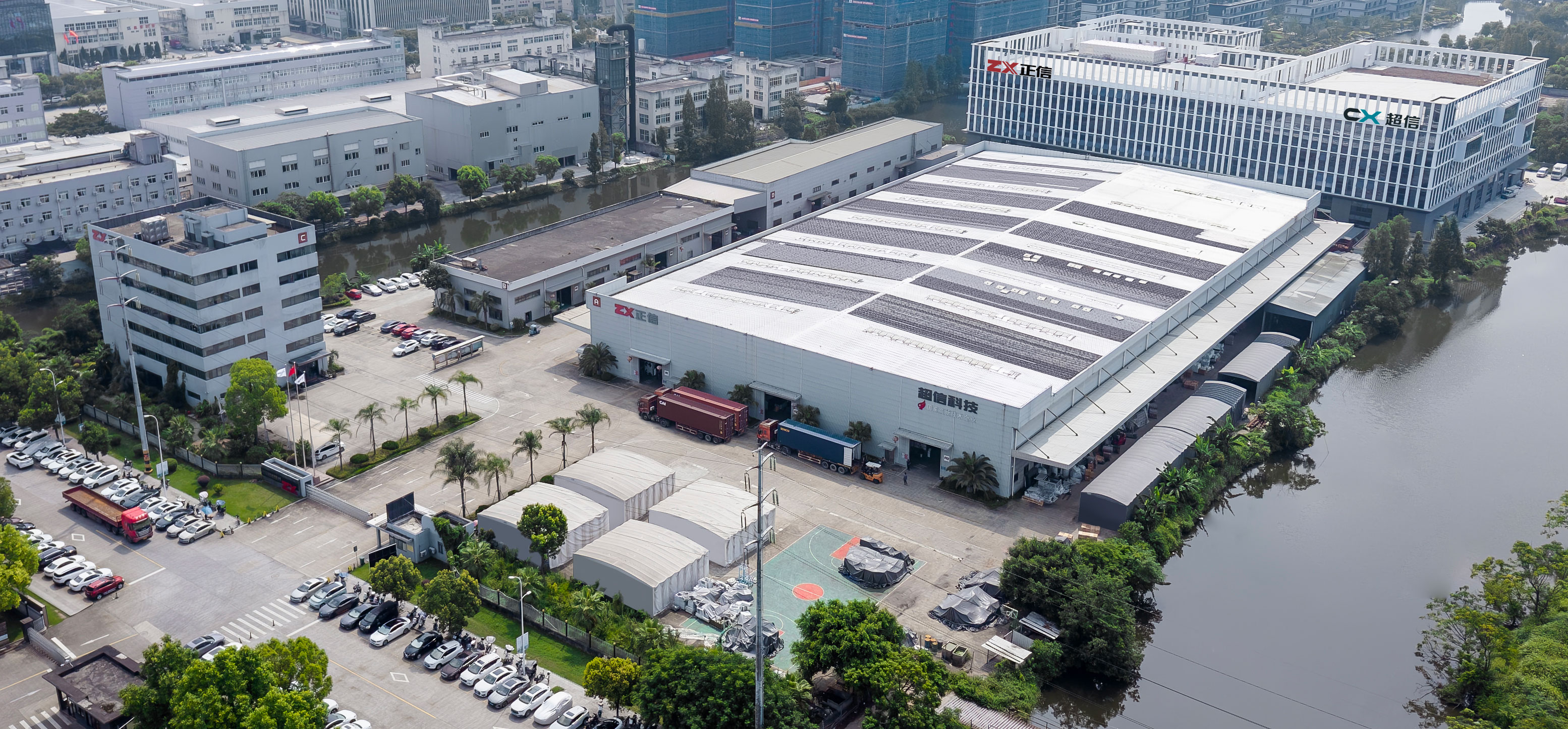
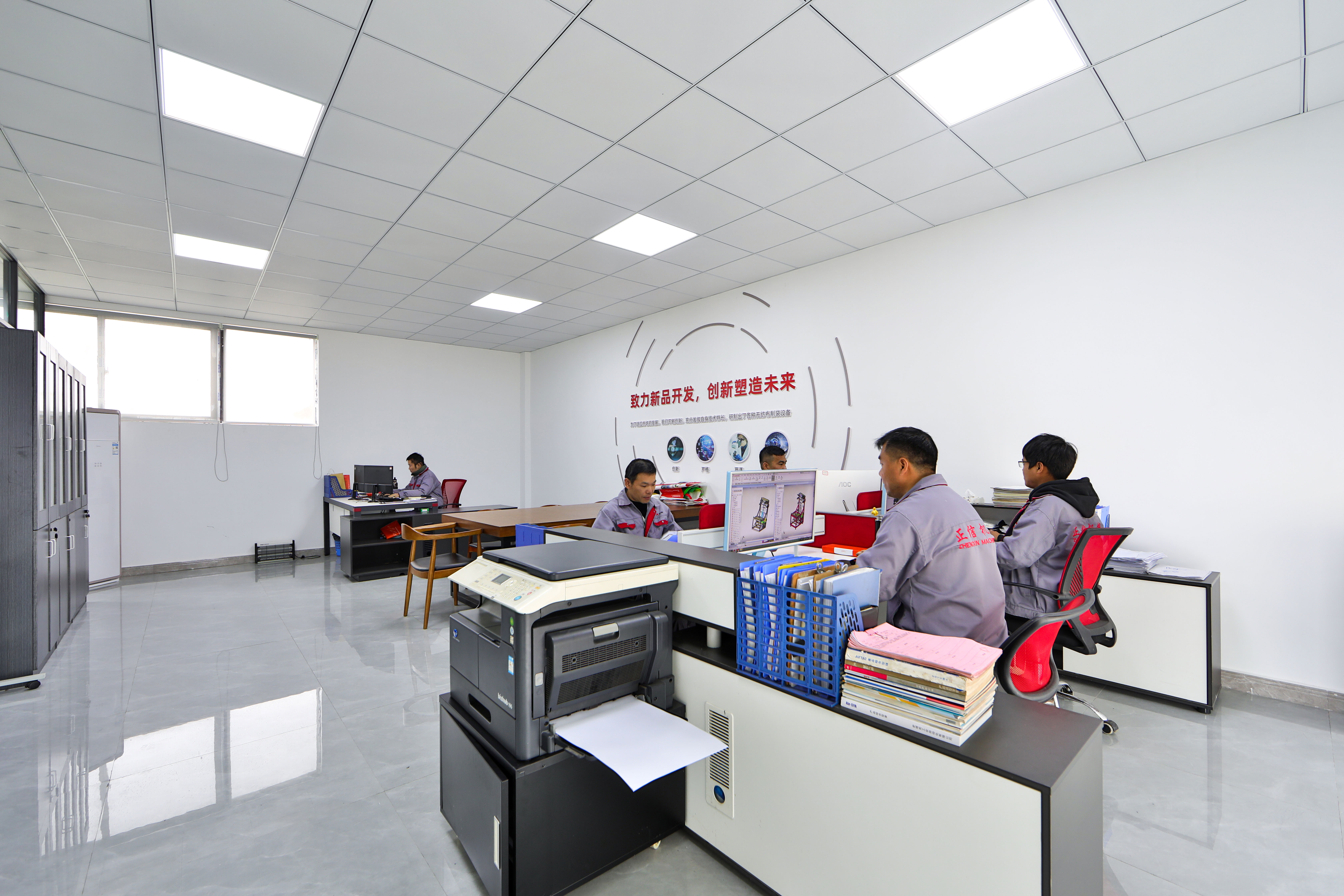
Zhejiang Zhengxin Machinery Co., Ltd., headquartered in Wenzhou, Zhejiang Province, has built its production system around OEM, ODM, and custom manufacturing services for non-woven bag making machines. The company was founded in 2014 and operates a 60,000 m² facility with approximately 200 employees, including a 30-person R&D team. Its annual output is around 500 units, with roughly 60% exported to Africa, the Middle East, Southeast Asia, and Latin America. Company information is available at www.wzzxjx.com.
According to the company's production capability documentation, customization covers a wide range of machine attributes:
- Voltage and power: 220V, 380V, 415V, or 440V; single-phase or three-phase
- Bag size and dimensions: width, length, and gusset depth fully adjustable
- Bag style: W-cut, D-cut, flat bag, loop handle, box bag
- Printing configuration: 1–6 color flexo printing, single-side or double-side
- Material compatibility: PP spunbond, laminated non-woven, biodegradable fabric, GSM range 30–150
- Sealing method: ultrasonic welding, heat sealing, or hybrid
- Handle type: soft loop, D-cut, patch, rope drawstring
- Control system: Siemens, Mitsubishi, or Delta PLC with multi-language HMI touch screen
- Automation level: semi-automatic, fully automatic, automatic stacking and counting
- Optional modules: gusset maker, hole punch, folding unit, bundling
- Machine color and branding: custom body color and logo decals
- Motor brand: Siemens, ABB, SEW, or premium domestic Chinese brands
These options are supported by a production capacity of 40 units per month, a lead time of 30–45 days, and a minimum order quantity of one unit. Every machine undergoes a 100% test before shipment. The company's quality system is certified under ISO 9001:2015 (certificate number 20225Q21503R2M, issued by QPC), covering production and sales of bag making machines, slitting machines, and non-woven printing machines. CE certification (certificate number M.2021.206.C70875, issued by UDEM) applies to the full ZXL series and related equipment, covering the Machinery, Low Voltage, and EMC directives.
For buyers, the practical implication is that the machine is not a fixed, take-it-or-leave-it product. It can be specified to match the factory's existing electrical infrastructure, the product mix planned for the first two years, and the level of automation the operator team can comfortably manage.
Technical Foundation: Servo, Ultrasonic, and No-Waste-Edge Design
Customization is only valuable when the base machine is technically sound. Zhengxin's high-speed platforms, particularly the ZXL-A700Ultra and ZXL-E700Ultra, integrate several technologies that matter for continuous commercial production.
Servo-driven feeding for dimensional accuracy
Servo motors with closed-loop encoder feedback allow the machine to hold fabric feeding accuracy within tolerances that clutch-motor machines cannot reach. The practical benefit is consistent bag length and sealing position at sustained speed. High-speed non-woven bag machines built on servo platforms also reduce energy consumption compared with constant-speed clutch systems, because the motor draws full power only during actual work phases.
Ultrasonic welding for clean, strong seals
Ultrasonic welding uses 20 kHz mechanical vibration to generate friction heat directly at the fabric interface, fusing polypropylene fibers without external heat sources. Compared with heat sealing, ultrasonic welding produces seals with higher peel strength, no scorching or odor, and no warm-up time. This makes it the preferred choice for food-grade packaging and retail bags where weld appearance and cleanliness affect customer acceptance.
No-waste-edge technology
The ZXL-A700Ultra is classified as a zero-waste-edge non-woven T-shirt and W-cut bag making machine, also belonging to the edge waste-free non-woven vest bag machine category. Conventional machines trim 3–8 mm of fabric from both edges to guarantee a clean edge; this trim becomes waste. The no-waste-edge approach uses servo precision to form the bag from the full roll width, eliminating the trim allowance. For operations consuming multiple tons of fabric daily, the 3–5% material saving can offset the higher machine cost within a realistic payback period.
PLC control with recipe management
Machines configured with Siemens, Mitsubishi, or Delta PLCs and HMI touch screens allow operators to store and recall complete machine setups for different bag sizes and styles. This directly supports the customization model: instead of mechanically re-tuning the machine for each order, the operator loads a recipe, changes a few mechanical settings, and resumes production. In promotional bag production, where multiple artwork designs are processed weekly, this capability shortens changeover time significantly.
Application Scenarios Across Industries
Customization becomes meaningful when it maps to real production scenarios. Zhengxin's installed base illustrates several distinct use patterns.
Food packaging and retail shopping bags
In Egypt, a food packaging and retail shopping bag manufacturer has operated a five-unit Zhengxin line since 2017, including a ZXL-E700, two ZXH-C21200 flexo printers, and two ZXL-D700 machines. The line produces food takeaway bags for restaurant chains and delivery platforms, as well as multi-color promotional shopping bags for retail malls. The operation has become a key non-woven bag supplier to the Cairo and Alexandria markets, using three product lines from one equipment vendor to reduce procurement and maintenance complexity.
Diversified bag production
A mid-scale manufacturer in Brazil deployed six Zhengxin units — ZX-LT500, two ZXL-B800, two ZXL-D800, and one ZXL-B700 — to produce shopping bags for supermarket chains and breathable produce packaging for fruit and coffee exporters. The single-supplier approach eliminated the need to source from multiple Chinese factories, unified after-sales support, and allowed one training session to cover all four machine types. The equipment also helped the buyer comply with Brazil's expanding plastic-ban regulations across multiple states.
Full-spectrum integrated production
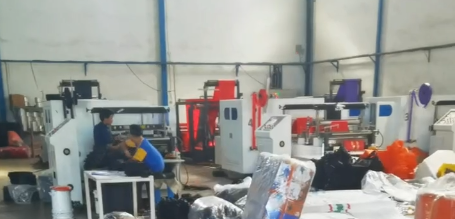
In Indonesia, a large-scale manufacturing group operates 42 Zhengxin machines — eight ZX-LT500, thirteen ZXL-E700, seven ZXL-A700, twelve ZXH-A1200, and two ZXL-G700 — supporting the country's largest non-woven bag manufacturing capacity. The group supplies more than one million bags monthly to major retail chains and food delivery platforms, and has replaced imported bags from China with in-country production. The deployment spans five machine models, covering box bags, five-type bag output, flexible mid-volume production, multi-color printing, and heavy-duty large-format bags.
Promotional and custom-print production
A promotional bag producer in Mwanza, Tanzania, started with one ZXL-A700Ultra and one ZXH-C21200 in 2024 and expanded to two production lines within 18 months. The quick job changeover between designs allows the company to handle more than ten custom orders per week with different artwork, serving corporate events, campaigns, and brand promotions.
Supermarket chain supply
A Kenyan shopping bag manufacturer runs two ZXL-A700 machines and one ZXH-C41200 four-color flexo printer to mass-produce branded non-woven shopping bags. The fully automatic line, from printing to finished bag, is operated by a single operator per shift and supplies more than 200 retail stores nationwide.
Market Trends Shaping Non Woven Bag Equipment Demand
Third-party market data supports the strategic case for investing in high-speed non-woven bag making capability. The global bag making machine market was valued at USD 4.8 billion in 2025 and is projected to reach USD 8.1 billion by 2034, according to Dataintelo. The more specialized non-woven bag making machine segment was estimated at USD 179 million in 2025 and is expected to reach USD 733 million by 2032, with a projected CAGR of 22.5% from 2026 to 2032, according to LP Information. The divergence between these two growth rates reflects the regulatory driver: more than 140 countries have enacted legislation restricting or banning single-use plastic bags as of 2026, according to Dataintelo.
Regional dynamics also favor suppliers with global reach. Asia Pacific held a 43.6% revenue share of the bag making machine market in 2025. China exported USD 11.5 million of bag-making machines to Vietnam in 2023 alone, according to World Integrated Trade Solution data. At the supplier level, industry listings identify Zhejiang Zhengxin Machinery among the leading Chinese manufacturers of non-woven bag making machines, alongside Ounuo (Oyang) and Wenzhou Ruizhi, according to Metoree.
Automatic machines held a 52.4% share of product type revenue in 2025, confirming that buyers are shifting away from semi-automatic lines toward platforms that can run consistently with minimal labor input.
Customized High-Speed Machines vs Standard Configurations
| Decision factor | Standard configuration | Customized high-speed configuration |
|---|---|---|
| Voltage and phase | Fixed to manufacturer default (typically 380V/50Hz 3-phase) | Matched to local grid: 220V/380V/415V/440V, single or three-phase |
| Bag style range | Limited to the machine's default style family | W-cut, D-cut, flat, loop handle, box bag, drawstring, side gusset |
| Lead time | Shorter; standard production schedule | Longer; customization adds 5–10 working days to the 30–45 day base lead time |
| Cost | Lower upfront investment | Higher upfront investment depending on options |
| Operator skill requirement | Standard HMI; limited language options | Multi-language HMI; PLC brand selectable to match local technical familiarity |
| Future flexibility | Retrofit may be needed for new bag styles | Configured at order time for planned product mix |
One limitation deserves emphasis: customization is not always the optimal path. A buyer whose order book is concentrated on a single bag style, with stable voltage and no near-term product expansion, may be better served by a standard machine at a lower price and faster delivery. Customization makes economic sense when the machine must serve multiple product lines, when the local electrical infrastructure differs from the manufacturer's default, or when future bag style additions are already planned. Buyers should therefore evaluate the total cost of ownership, not just the machine price, when deciding how far to customize.
What to Watch in the Next Phase of Machine Development
Several developments are likely to influence purchasing decisions in the next two to three years. First, the trend toward higher automation will continue: automatic stacking, counting, and bundling modules reduce the manual labor required after bag formation. Second, no-waste-edge technology is expected to become more common across mid-range models, not just premium platforms, as material cost pressure increases. Third, 24/7 continuous production platforms such as the ZXL-A800 and ZXL-E800 series address the needs of large-scale manufacturers who cannot tolerate downtime during peak demand. Fourth, after-sales service networks are becoming a differentiator. Zhengxin operates offices in Kenya, Morocco, Egypt, Vietnam, Tanzania, Dubai, Oman, Indonesia, and Ethiopia, which shortens response time for buyers in these regions and supports the company's remote-video support model, available seven days a week.
Buyers evaluating a high-speed non woven bag making machine should treat the machine selection as a capability decision, not a speed decision. The right question is whether the supplier can engineer the machine to match the buyer's market, product mix, and operating conditions — and whether that capability is backed by verifiable certifications, documented quality control, and responsive after-sales support.
For a complete overview of Zhengxin's machine lineup and production capabilities, the company's brochure is publicly available: Zhengxin Machinery brochure (PDF).
FAQ
What is the difference between Zhengxin's machine models?
Zhengxin organizes its non-woven bag making machines into five tiers. Entry-level models (ZXL-A700, B700, D700, E700) are fully automatic, run at 80–100 pcs/min, and cover D-cut, W-cut, and drawstring bags. Mid-range Ultra models (ZXL-A700Ultra, E700Ultra) add servo-driven no-waste-edge technology that eliminates trimmed fabric scrap and improves dimensional accuracy. The ZX-LT500 is a dedicated 3D standing bag platform with speeds of 60–100 pcs/min. High-speed models (ZX-LT500Pro, A800, E800) are engineered for 120+ pcs/min and 24/7 continuous operation. The ZXL-G700 handles side-gusset bags at 60–100 pcs/min. The correct tier depends on bag type, daily output target, handle requirements, and budget.
I'm starting a bag making business with a limited budget. Which machine do you recommend?
For a first-time buyer, the ZXL-A700 is the typical recommendation: fully automatic, 80–100 pcs/min, producing D-cut, W-cut, and drawstring bags with a single operator. If inline handle attachment is required from day one, the ZXL-E700 adds ultrasonic sealing and online handle capability. Semi-automatic machines are cheaper but require 3–4 workers per line and run at 15–20 pcs/min, so the labor savings of full automation usually pay back the price difference within 8–12 months at volumes above 10,000 bags/day.
I need to produce shopping bags for supermarket chains. What machine configuration do you recommend?
For supermarket supply, the recommended configuration is a ZXL-A700Ultra at 100–120 pcs/min paired with a ZXH-C41200 inline four-color flexo printer. This produces finished printed shopping bags in a single continuous line, with an 8-hour shift capacity of roughly 45,000–55,000 bags. An inkjet date coder should be added for batch traceability, which most supermarket tenders require. A budget-conscious alternative is the ZXL-A700 with a ZXH-C21200 two-color flexo printer.
What should I know before buying a non woven bag making machine?
Before ordering, confirm four things: local voltage and phase (220V, 380V, 415V, or 440V; must be three-phase unless a phase converter is installed), required daily output, the bag styles and printing colors needed, and destination country certifications such as CE, SONCAP, PVOC, or SASO. Standard production lead time is 25–35 working days, with 15–45 days of sea freight depending on destination. Payment is typically 30% deposit and 70% before shipment, after passing pre-shipment inspection. Buyers should also conduct a live video factory tour and verify certificates on the issuing body's official website.
What if the machine breaks down and I can't fix it?
Zhengxin's after-sales system covers three levels. Remote support via WhatsApp or WeChat video call is available seven days a week, and engineers diagnose an estimated 80% of issues remotely. Replacement parts are shipped by DHL or FedEx within 24 hours of confirmed diagnosis, with 3–7 day global delivery. On-site engineer dispatch is also available at a service fee plus travel costs if remote diagnosis cannot resolve the issue. Buying the recommended spare parts kit with the machine, typically USD 500–1,500, is the most effective way to minimize downtime.