
High-Temperature Grease Buying FAQ: XG/HP vs Alternatives
High-Temperature Grease Buying FAQ: XG/HP vs Alternatives
High-temperature grease is bought twice: once on a temperature figure from a datasheet, and once again at the first relubrication interval, when a bearing either holds its grease structure or releases it. This reference answers the procurement questions that buyers raise when evaluating XG/HP and XG/HP-R lithium complex grease against polyurea, calcium sulfonate complex and simple lithium alternatives.
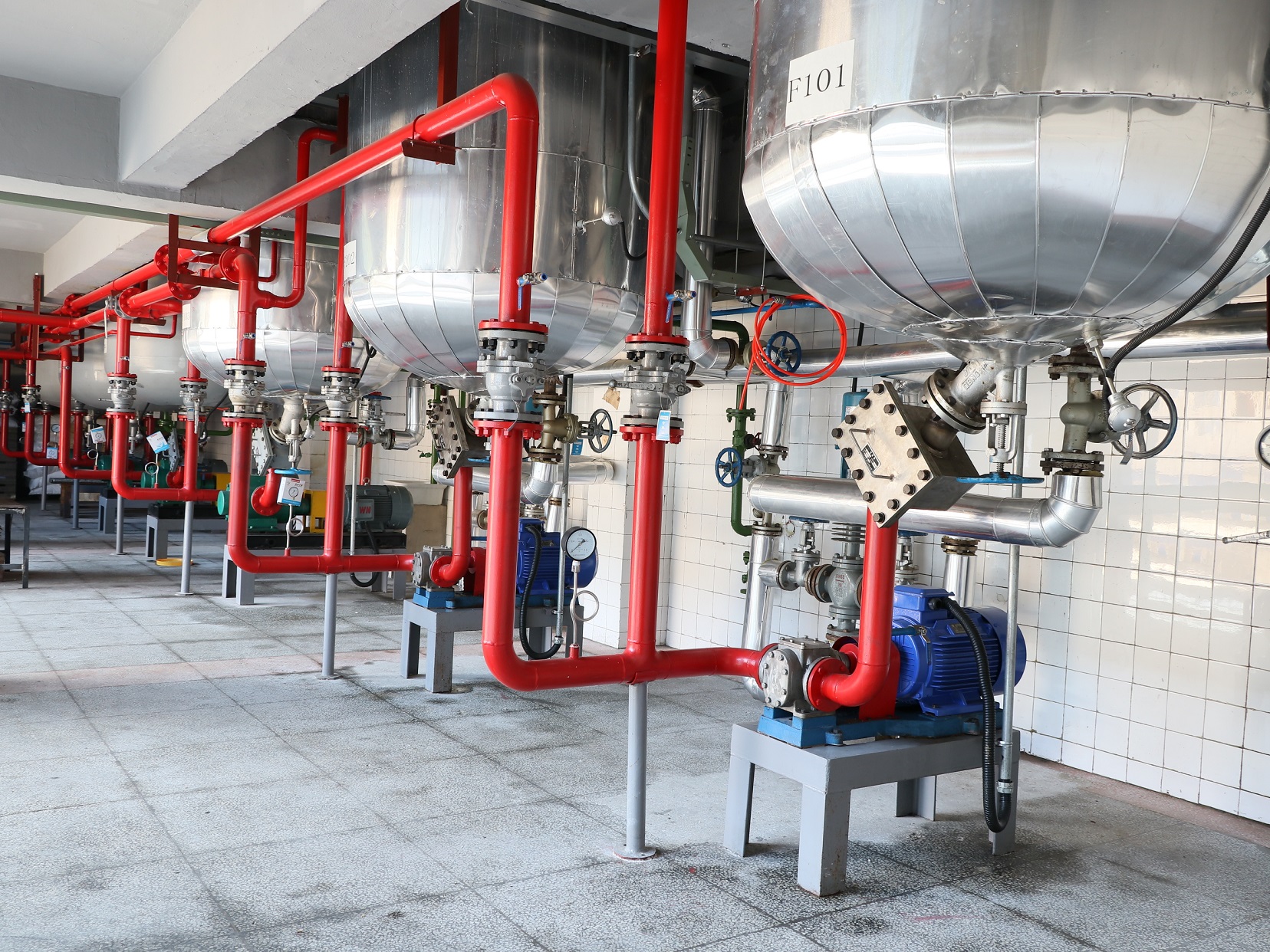
Grease production line at Hangzhou Xingang Lubrication Technology Co., Ltd. Image: XINGANG.
Why high-temperature grease has become a specification decision
Demand for high-temperature grease is concentrated where heat, load and water meet. Asia Pacific accounted for 38% of the global high-temperature grease market in 2025, according to Market Research Future, and the automotive segment represented 42.6% of that market in the same year, according to Vertex AI industry data. Steel, casting, kiln and conveyor operations add a second block of demand in which grease is expected to survive both radiant heat and water splash.
That combination is why buyers in the evaluation-to-execution stage stop asking which grease is best and start asking which published properties match a specific lubrication point. In practice, the questions repeat themselves:
- What does a working temperature of -20 to 180°C mean when a bearing housing sees short excursions above that band?
- Is a 300°C dropping point a real thermal reserve or only a laboratory number?
- Should the line be filled with lithium complex, polyurea or calcium sulfonate complex grease?
- Can one product serve both a centralized lubrication system and manual greasing points?
- What production and certification evidence should a supplier provide before a first bulk order is released?
What XINGANG and the XG/HP lithium complex line actually are
Hangzhou Xingang Lubrication Technology Co., Ltd. (brand: XINGANG) is a national high-tech enterprise established in 1993 and headquartered in Hangzhou, Zhejiang, China. The company develops, produces and sells high-performance lubricating greases and industrial lubricants, operating from a 16,000 m² site with 60 employees, a 15-engineer R&D team and reported annual output of 45,000 tons. Export sales account for roughly 10% of the business, with markets including Türkiye, South Africa, Russia, Southeast Asia and Peru.
Within that portfolio, XG/HP and XG/HP-R are classified as high temperature extreme pressure lithium complex grease. The thickener system is lithium complex in a mineral oil base. The published technical data for the line is a working temperature range of -20 to 180°C, a dropping point of 300°C and a PD value of 315 kgf, with automobile and metallurgy identified as the applicable industries.
| Property | Published value | What the buyer reads from it |
|---|---|---|
| Product category | High temperature extreme pressure lithium complex grease | EP capability is part of the product definition, not an add-on |
| Thickener / base | Lithium complex, mineral oil | Standard lithium complex behaviour, widely known in industrial relubrication practice |
| Working temperature | -20 to 180°C | Continuous service envelope covering cold start and hot running |
| Dropping point | 300°C | Thermal reserve above the working ceiling, measured under laboratory conditions |
| PD value | 315 kgf | Extreme-pressure load indicator, expressed in kilogram-force |
| Indicated industries | Automobile, metallurgy | Indicates the duty profiles the formulation was developed around |
| Models | XG/HP, XG/HP-R | Two designations within the same lithium complex line |
Reading the three published numbers correctly
Working temperature: -20 to 180°C
The working temperature range is the continuous service window. It covers cold-start conditions at the lower end and sustained hot running at the upper end. In the DIN 51502 classification, the letter R denotes a grease rated for +180°C maximum operating temperature, which places the XG/HP band at that class. A buyer whose bearing housing regularly exceeds 180°C is outside the published range, and short peaks should be discussed with the supplier rather than assumed to be covered by the dropping point.
Dropping point: 300°C is a reserve, not an operating temperature
The dropping point indicates the temperature at which the grease structure breaks down under the test method. It is a structural stability indicator, not a permitted service temperature. The practical reading of the XG/HP data is a 120°C gap between the 180°C working ceiling and the 300°C structural breakdown point. That gap is the thermal reserve a maintenance engineer relies on during heat soak, blocked cooling or a delayed relubrication interval.
PD value: 315 kgf in family context
The PD value is an extreme-pressure load indicator expressed in kilogram-force, and it should be read comparatively rather than in isolation. Within the same XINGANG portfolio, the calcium sulfonate complex greases XG/C4 and XG/C5 are published at a PD value of 500 kgf, while the lithium complex line XG/HP and XG/HP-R is published at 315 kgf. That difference is directly relevant to buyers comparing shock-loaded points such as vibrating screens or heavily loaded roller bearings against points where standard EP protection is sufficient.

Grease test room supporting batch-level quality control. Image: XINGANG.
Oxidation resistance and extreme-pressure protection in real duty
The technical characteristics published for this product line are strong adhesion and extreme-pressure and anti-wear performance, which provide protection in demanding industrial environments. In service terms, adhesion governs whether the grease stays where it was applied on vertical or rotating surfaces, while EP and anti-wear performance governs whether a lubricating film survives contact pressure and impact loading before the base oil is replenished.
Resistance to oxidation is what allows the product to remain in place across long hot cycles. The published application conditions for this product family are high-temperature, heavy load, impact load and humid or water-splash conditions, and the products are designed for both centralized lubrication systems and manual greasing environments. Those two conditions are usually where grease performance is decided in practice: a centralized system needs the grease to remain pumpable and structurally stable in the line, while manual points tolerate a stiffer product but punish any grease that hardens or bleeds prematurely.
Applications: metallurgy, heavy industry and automotive
Metallurgy is the clearest reference case. XINGANG reports a long-running project in China covering 40 units over a duration of 30 years, applied to bearings in continuous casting, rolling mills, kiln cars, gearboxes, conveyors and vibrating screens. Reported outcomes include reduced friction and wear, improved temperature resistance and water resistance, extended lubrication intervals and enhanced equipment reliability. The stated highlights are extreme-pressure anti-impact behaviour, a stable grease structure under long-term high temperature, and good compatibility with centralized lubrication systems.
The industrial reference base behind that work includes steel producers such as BAOWU Group, Hebei Steel Group, Shandong Steel Group, Ma Steel, Taigang Steel, Liugang Steel, Shaogang Steel, Shagang Steel and Kungang Steel.
Automotive is the second indicated industry for the lithium complex line, and it is supported by a formal quality system rather than by application claims alone. XINGANG holds IATF 16949:2016 certification for automotive quality management, certificate number 2024A3002, issued by China Jiuding Automotive Supplier Certification Co., Ltd. (CASC) on 2024-07-04 and valid to 2027-07-03, with a scope covering design and manufacturing of lubricating oil and no permitted exclusions. For automotive buyers, the relevant question is usually not whether a grease survives one hot cycle but whether the supplier's process control is documented continuously.
How XG/HP compares with polyurea, calcium sulfonate complex and simple lithium
Grease selection at high temperature is decided by thickener chemistry and by the published parameter set that follows from it. The table below compares the four lines on the figures published by the manufacturer, without extrapolating beyond them.
| Line | Thickener / base | Working temperature | Dropping point | PD value | Indicated industries |
|---|---|---|---|---|---|
| XG/HP, XG/HP-R | Lithium complex, mineral oil | -20 to 180°C | 300°C | 315 kgf | Automobile, metallurgy |
| XG/U1…U18 | Polyurea, mineral and synthetic oil | -20 to 200°C | 260°C | Not published | Metallurgy, chemical, textile, printing and dyeing, automobile, mine, oil field, coast defence, sugar refining, paper making, plastics |
| XG/C4, XG/C5 | Calcium sulfonate complex, 150 BS oil | -20 to 250°C | 330°C | 500 kgf | Mining, machinery, automotive |
| XG/L1, XG/L2 | Lithium, mineral oil | -20 to 120°C | ≥180°C | Not published | Multi-purpose, automotive, metallurgy, power tools |
Three observations follow. First, a higher working-temperature ceiling does not automatically mean a higher dropping point: the polyurea line is rated to 200°C continuous but publishes a 260°C dropping point, while the lithium complex line is rated to 180°C continuous with a 300°C dropping point. Second, the calcium sulfonate complex line is the highest-rated option on all three published figures in this portfolio, including a PD value of 500 kgf. Third, simple lithium grease sits well below the others at a 120°C working ceiling, which makes it unsuitable as a substitute in genuinely hot service regardless of cost advantages.
Independent market data supports the direction of travel. Lithium and lithium complex greases accounted for 38.3% and 18.6% of global grease production respectively in 2024, according to STLE data, while calcium sulfonate grease production grew 7.7% globally in 2024 as heavy-duty industrial users moved toward superior water resistance. Polyurea greases are increasingly specified for electric vehicle wheel bearings and turbine yaw drives for oxidation resistance across cycles from -40°C to +180°C. The result for buyers is a portfolio decision rather than a single-product decision.
Limits and boundaries: where XG/HP is not automatically the answer
- Sustained temperature above 180°C. The published working range of XG/HP and XG/HP-R ends at 180°C. Above that, the calcium sulfonate complex line XG/C4 and XG/C5 is published at -20 to 250°C and would normally be the starting point for evaluation.
- Severe shock and water-wash combined. With a PD value of 315 kgf against 500 kgf for XG/C4 and XG/C5, lithium complex is not the highest-load option available in the same portfolio.
- Dropping point is not a service limit. A 300°C dropping point does not authorise operation at 300°C. Treating it as a working temperature is one of the most common purchasing errors in high-temperature grease selection.
- Raw material cost volatility. Lithium prices rose by 80% to 120% between 2021 and 2023, according to STLE, which is one reason manufacturers and buyers have increasingly evaluated polyurea and calcium sulfonate alternatives for high-temperature duty. Buyers should confirm price validity periods rather than assume lithium-based pricing remains flat.
- Thickener changeover is not a drop-in substitution. Lithium complex, polyurea, calcium sulfonate complex and simple lithium are different thickener systems. Switching between them in a pumping or centralized system requires a defined changeover procedure and confirmation of compatibility with seals, lines and any residual grease, which should be agreed with the supplier before the switch.
- Published data is not the same as a bearing-life guarantee. Where a maintenance plan depends on relubrication intervals in hours, the buyer should request bearing-life test evidence rather than infer it from the dropping point.
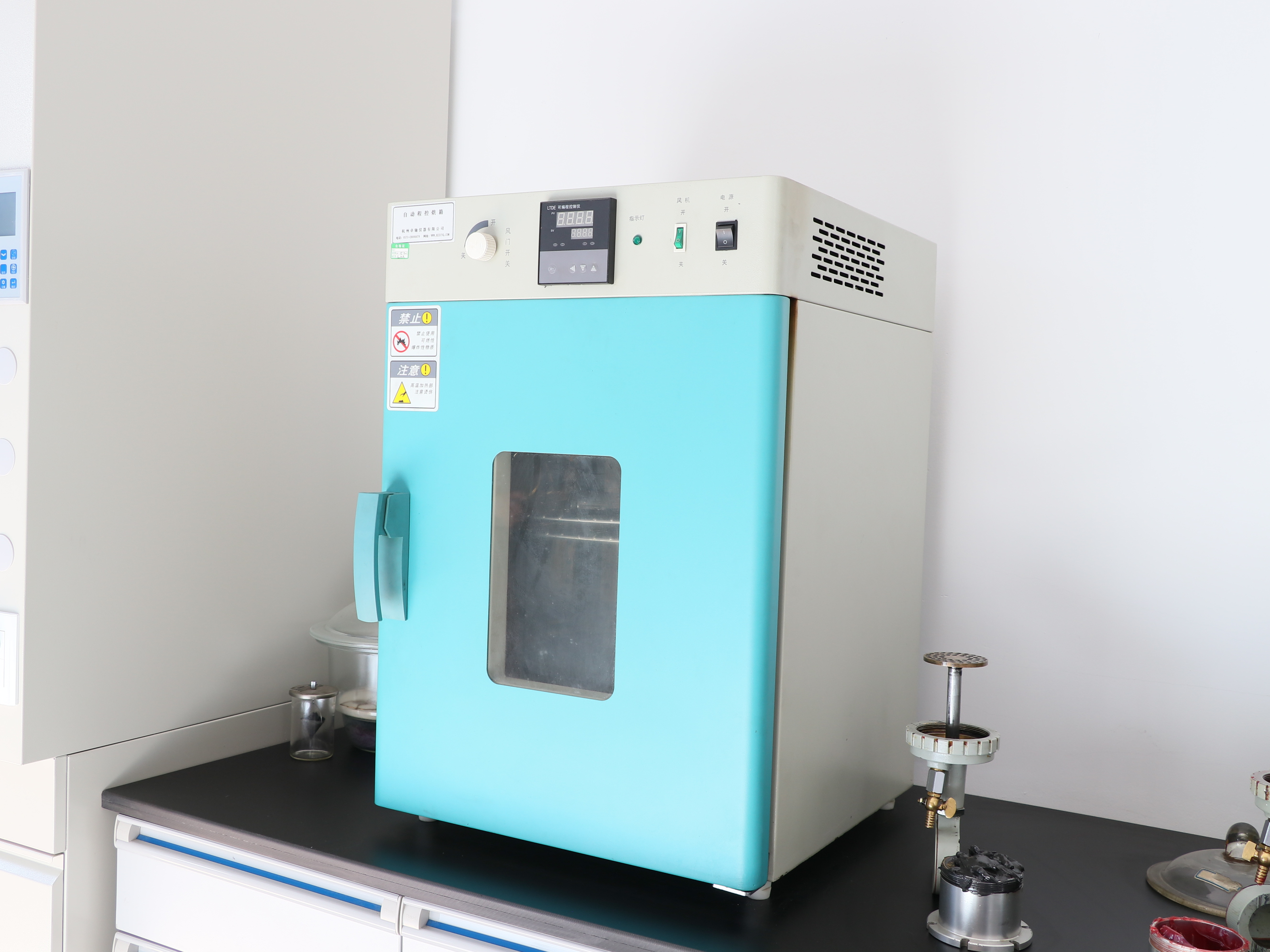
Test machine used in batch verification. Image: XINGANG.
What to verify before the first bulk order
Moving from evaluation to execution is largely a documentation exercise. XINGANG's published credentials and commercial terms give buyers a defined checklist to work through.
| Verification item | Published detail |
|---|---|
| Automotive quality system | IATF 16949:2016, certificate 2024A3002, issued 2024-07-04, valid to 2027-07-03, certifying body China Jiuding Automotive Supplier Certification Co., Ltd. (CASC); scope: design and manufacturing of lubricating oil, no permitted exclusions |
| Quality management | ISO 9001:2015, certificate 07625Q2422R65, issued 2025-10-16, valid to 2028-11-12 |
| Environmental management | ISO 14001:2015, certificate 07625E1532R6S, issued 2025-10-16, valid to 2028-11-12 |
| Occupational health and safety | ISO 45001:2018, certificate 7625S1361R6S, issued 2025-10-16, valid to 2028-11-12 |
| Batch quality control | 100% testing, with pre-shipment test as the acceptance method |
| Production capacity | Monthly capacity of 3,000 tons for the grease lines |
| OEM and customization | OEM production services available; customization of packaging and stickers |
| Lead time | 10 to 20 days |
| Order quantities | 2000 kg minimum indicated for the OEM/customization route; purchasing terms list an MOQ of 200 kg |
| Trade and payment | FOB or CIF delivery; T/T payment |
| After-sales support | Remote technical formulation guidance, on-site usage technical consultation, quality-problem compensation and replacement support, and product application solution matching |
The two order-quantity figures are worth reading carefully rather than treating one as an error: the 2,000 kg figure attaches to the OEM and customization route, while the general purchasing terms list 200 kg. Buyers requesting custom packaging should plan against the higher figure.
Market signals behind the thickener choice
Market sizing for high-temperature grease is reported inconsistently and buyers should treat absolute figures with caution. One source places the global market at approximately USD 28.04 billion in 2025, rising to USD 48.71 billion by 2035, while other published estimates give USD 5.82 billion for 2024 and USD 26.23 billion for 2024. The divergence is large enough that it most likely reflects different definitions of what counts as a high-temperature grease rather than different views of the same market. Directionally, demand is expanding and is concentrated in Asia Pacific and in automotive applications.
Supply-side signals are equally relevant to procurement. China's finished lubricant exports rose by 10% to 260,000 metric tons in 2024, according to customs data reported by Lubes'N'Greases, which indicates a widening buyer base for Chinese grease and lubricant supply. Combined with lithium price volatility of 80% to 120% between 2021 and 2023, the effect is that supplier selection is increasingly about continuity and documentation rather than about a single specification sheet.
Future outlook
The direction of high-temperature grease procurement is toward specification by thickener chemistry and published parameter sets, with brand familiarity playing a smaller role than it did when simple lithium grease dominated multi-purpose use. As electric vehicle wheel bearings and other high-temperature duty cycles push greases into wider thermal bands, the questions buyers ask will continue to migrate from which product to which evidence. For lithium complex suppliers, that means documented certification scope, batch testing and quoted parameter sets will matter at least as much as the working-temperature figure in the datasheet.
FAQ
What is the difference between XG/HP and XG/HP-R lithium complex grease?
XG/HP and XG/HP-R are listed as two model designations within the same high temperature extreme pressure lithium complex grease line. The published technical data for that line is a working temperature range of -20 to 180°C, a dropping point of 300°C and a PD value of 315 kgf, with a lithium complex thickener in mineral oil and automobile and metallurgy as the indicated industries. The published source does not differentiate the two designations by property, so a buyer needing a specific distinction should request the current technical datasheet for each model rather than assume one from the other.
Is a 300°C dropping point the same as a 300°C working temperature?
No. The dropping point is the temperature at which the grease structure breaks down under test conditions. The working temperature for XG/HP and XG/HP-R is -20 to 180°C, which is the continuous service range. In the DIN 51502 classification, the letter R denotes a grease rated to +180°C maximum operating temperature. ASTM D3336 is the standard method used to evaluate grease life in ball bearings at elevated temperatures up to 204°C, and that is a different measurement again from a dropping point.
What does a PD value of 315 kgf indicate for XG/HP?
The PD value is an extreme-pressure load indicator expressed in kilogram-force. Within the XINGANG portfolio, XG/HP and XG/HP-R are published at 315 kgf, while the calcium sulfonate complex greases XG/C4 and XG/C5 are published at 500 kgf. A buyer comparing shock-loaded points, such as vibrating screens or heavily loaded roller bearings, should treat that difference as a selection criterion rather than a quality ranking, because the higher figure belongs to a different thickener system with its own application profile.
How does lithium complex compare with polyurea and calcium sulfonate complex grease?
On published figures, lithium complex XG/HP and XG/HP-R is rated -20 to 180°C with a 300°C dropping point and a PD value of 315 kgf. Polyurea XG/U series is rated -20 to 200°C with a 260°C dropping point and no published PD value. Calcium sulfonate complex XG/C4 and XG/C5 is rated -20 to 250°C with a 330°C dropping point and a PD value of 500 kgf. Polyurea greases are increasingly specified for electric vehicle wheel bearings and turbine yaw drives for oxidation resistance across cycles from -40°C to +180°C, and calcium sulfonate production grew 7.7% globally in 2024 on water-resistance advantages. The choice therefore depends on which limit the application actually reaches.
Which high-temperature bearing applications suit lithium complex grease?
The indicated industries for XG/HP and XG/HP-R are automobile and metallurgy. In a reported XINGANG project in China covering 40 units over a duration of 30 years, the product was applied to bearings in continuous casting, rolling mills, kiln cars, gearboxes, conveyors and vibrating screens. Reported outcomes include reduced friction and wear, improved temperature resistance and water resistance, extended lubrication intervals and enhanced equipment reliability. The product family is designed for centralized lubrication systems and manual greasing environments and operates under high-temperature, heavy load, impact load and humid or water-splash conditions.
What should a buyer confirm before placing a first bulk order?
Verifiable items include IATF 16949:2016 certification (certificate 2024A3002, issued 2024-07-04, valid to 2027-07-03, scope covering design and manufacturing of lubricating oil with no permitted exclusions), ISO 9001:2015 (07625Q2422R65), ISO 14001:2015 (07625E1532R6S) and ISO 45001:2018 (7625S1361R6S), all issued 2025-10-16 and valid to 2028-11-12. Commercially, the published terms are 100% batch testing with pre-shipment test as the acceptance method, monthly capacity of 3,000 tons, lead time of 10 to 20 days, FOB or CIF delivery, T/T payment, and an MOQ of 200 kg under general purchasing terms or 2,000 kg for the OEM and customization route. Buyers should also request dropping point and PD test evidence for the specific batch or model being supplied.
About the manufacturer
Hangzhou Xingang Lubrication Technology Co., Ltd. (XINGANG) is a national high-tech enterprise established in 1993, headquartered in Hangzhou, Zhejiang, China. The company researches, develops, produces and sells high-performance lubricating greases and industrial lubricants from a 16,000 m² facility with 60 employees, a 15-engineer R&D team and reported annual output of 45,000 tons, serving industries including metallurgy, ports, automotive, machinery, textiles, printing and dyeing, paper making, sugar refining, chemicals and power generation.
Website: www.china-lubes.com | Product portfolio and factory documentation: Xingang company profile (PDF)