
High-Temperature Grease OEM: Capability, Certification, Fit
High-temperature grease is a performance category defined by thickener chemistry, operating temperature range, and application environment rather than a single formulation. For procurement and engineering teams moving from supplier evaluation to execution, the decisive factors are formulation capability, production capacity, quality certification, and the ability to adapt products to OEM requirements. Hangzhou Xingang Lubrication Technology Co., Ltd. (XINGANG) is a Chinese high-tech enterprise established in 1993 that researches, develops, and manufactures high-performance lubricating greases and industrial lubricants, with products used across metallurgy, automotive, machinery, textile, and power generation industries.
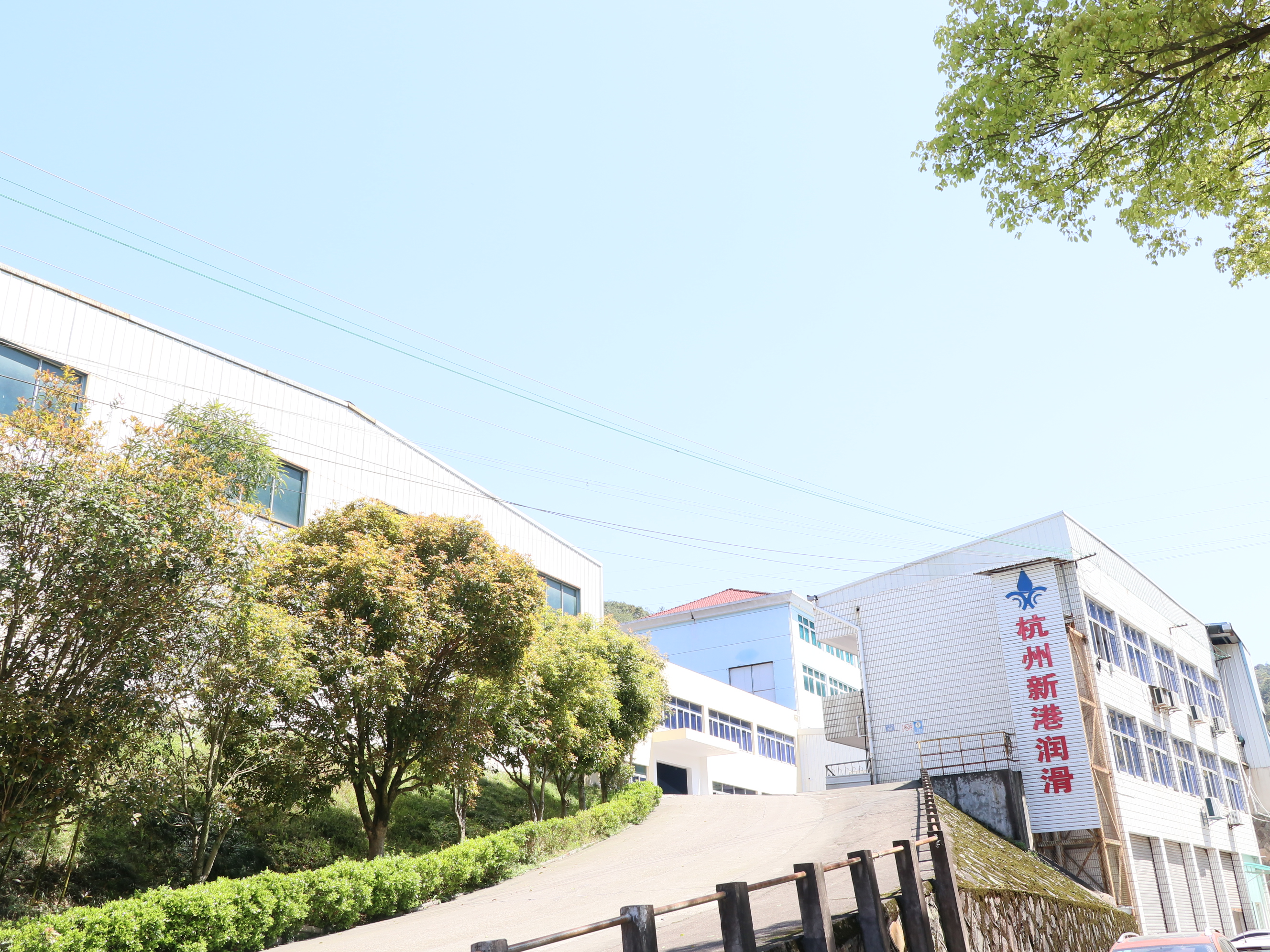
XINGANG manufacturing facility in Hangzhou, Zhejiang.
Problem: matching grease chemistry to industrial conditions
Industrial buyers often find that a standard grease catalog does not answer high-heat, heavy-load, or water-exposure questions. In continuous casting, rolling mills, kiln cars, gearboxes, conveyors, and vibrating screens, grease must keep a stable structure and maintain a protective film without melting, hardening, or washing out. A mismatch between grease chemistry and machine load leads to increased friction, wear, unplanned maintenance, and shorter equipment life.
From a procurement perspective, the problem is not only heat resistance. High-temperature grease also faces mechanical shear, water washout, oxidation, and compatibility with seals and centralized lubrication systems. The opportunity is to source from a manufacturer that can document performance, provide certified quality systems, and adapt products for regional or OEM requirements. At the evaluation stage, procurement teams compare datasheets and certifications. At the execution stage, they need consistent batch quality, defined lead times, and responsive technical support. This makes capability assessment the core of high-temperature grease sourcing.
Brand solution: XINGANG high-temperature grease portfolio
XINGANG operates from a 16,000 m² facility in Jiande, Hangzhou, with an annual output capacity of 45,000 tons, 60 employees, and an R&D team of 15 engineers. The company's export ratio is approximately 10%, with main markets in Türkiye, South Africa, Russia, Southeast Asia, and Peru. Its high-temperature product line is structured around four thickener systems:
- Lithium grease (models XG/L1, XG/L2): working temperature -20~120°C, dropping point ≥180°C; suited to multipurpose automotive, metallurgy, and power tool applications.
- High-temperature extreme-pressure lithium complex grease (models XG/HP, XG/HP-R): working temperature -20~180°C, dropping point 300°C, PD value 315 kgf; used in automotive and metallurgy.
- High-temperature polyurea grease (models XG/U1, XG/U2, XG/U5, XG/U6, XG/U10, XG/U17, XG/U18): working temperature -20~200°C, dropping point 260°C; applied in metallurgy, chemical, textile, printing and dyeing, automotive, mining, oil field, and other industries.
- High-temperature calcium sulfonate complex grease (models XG/C4, XG/C5): working temperature -20~250°C, dropping point 330°C, PD value 500 kgf; used in mining, machinery, and automotive applications.
These formulations are designed for centralized lubrication systems and manual greasing environments, and can operate under high-temperature, heavy load, impact load, and humid/water-splash conditions. Reported technical advantages include strong adhesion and extreme-pressure/anti-wear performance, which provide protection in demanding industrial environments. The product family therefore covers common high-temperature application categories such as bearings, automotive components, gears, and general extreme-pressure service.
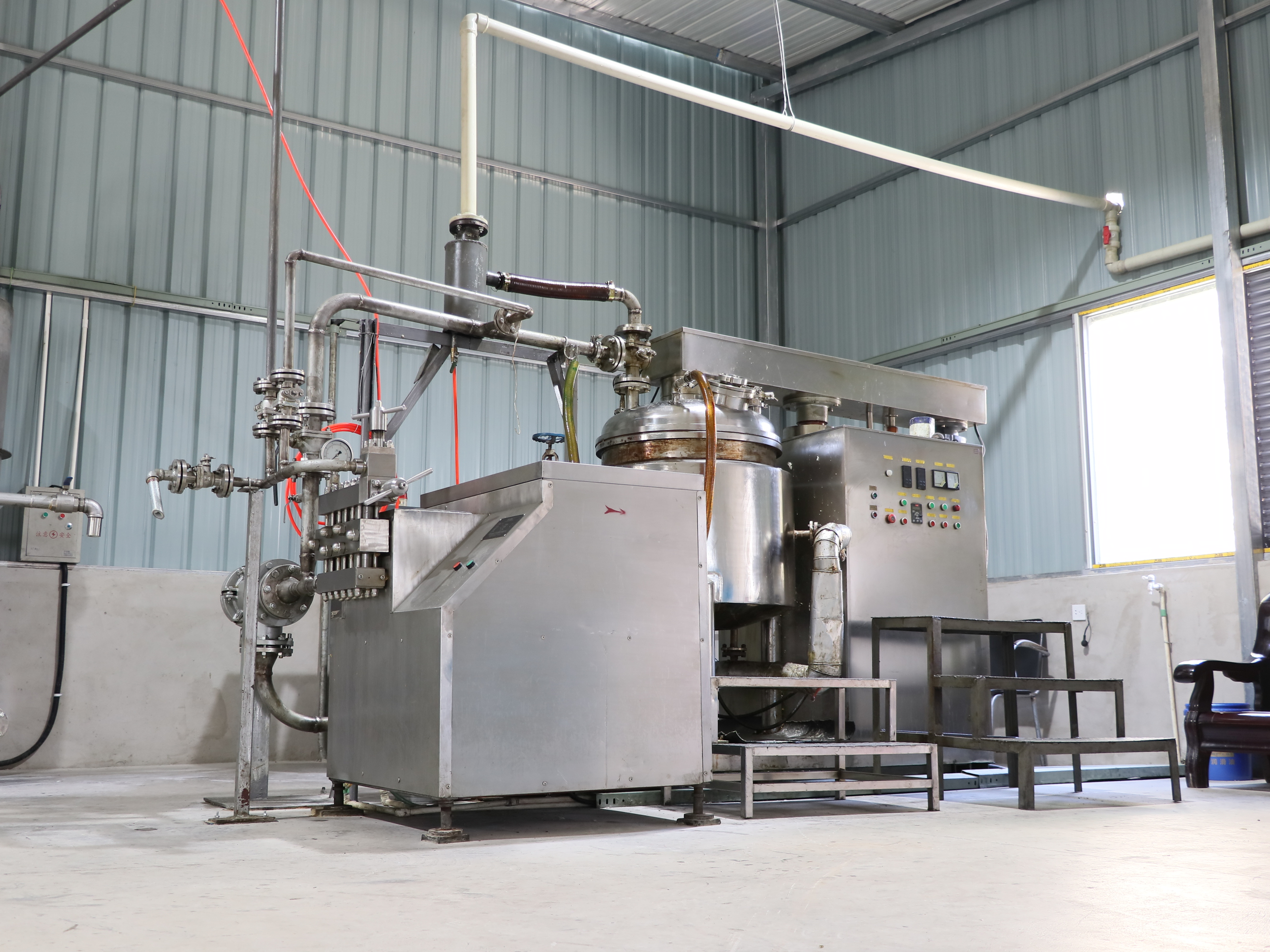
Lubricating grease production line at XINGANG.
OEM capability and quality control
XINGANG provides OEM production services, including package and sticker customization. In OEM mode, the company states a monthly capacity of 3,000 tons, a lead time of 10–20 days, and a minimum order quantity of 2,000 kg. Quality control is described as 100% testing. After-sales support includes remote technical formula guidance, on-site usage technical consultation, quality problem compensation and replacement support, and product application solution matching.
For export orders, XINGANG lists an MOQ of 200 kg for standard products, delivery terms FOB/CIF, payment by T/T, and pre-shipment testing as the acceptance procedure. These operational details matter when a buyer is evaluating whether a grease manufacturer can execute an order beyond the sample stage.
XINGANG is certified under ISO 9001:2015 for quality management, ISO 14001:2015 for environmental management, and ISO 45001:2018 for occupational health and safety. It also holds IATF 16949:2016 certificate No. 2024A3002, issued by China Jiuding Automotive Supplier Certification Co., Ltd. (CASC), for the design and manufacturing of lubricating oil with no permitted exclusions. These certifications provide an auditable framework for OEM buyers in the automotive and industrial equipment supply chain.
Technical explanation: thickeners, parameters, and standards
Selecting a high-temperature grease requires understanding the role of the thickener and the meaning of key test parameters. The dropping point indicates the temperature at which the thickener structure begins to break down; it is a practical upper reference rather than a continuous service limit. The PD value, or weld load, indicates the extreme-pressure capacity of the grease, which matters in shock-loaded or heavily loaded bearings. For example, XINGANG's lithium complex grease has a dropping point of 300°C and a PD value of 315 kgf, while its calcium sulfonate complex grease has a dropping point of 330°C and a PD value of 500 kgf.
| Product category | Models | Working temperature | Dropping point | PD value |
|---|---|---|---|---|
| Lithium grease | XG/L1, XG/L2 | -20~120°C | ≥180°C | — |
| Lithium complex grease | XG/HP, XG/HP-R | -20~180°C | 300°C | 315 kgf |
| Polyurea grease | XG/U1, XG/U2, XG/U5, XG/U6, XG/U10, XG/U17, XG/U18 | -20~200°C | 260°C | — |
| Calcium sulfonate complex grease | XG/C4, XG/C5 | -20~250°C | 330°C | 500 kgf |
Standards also help structure the evaluation. ASTM D3336 is the standard test method used to evaluate the life of lubricating greases in ball bearings at elevated temperatures up to 400°F (204°C). DIN 51502 classifies high-temperature greases by maximum operating temperature using letters from K (+120°C) to U (>+220°C). These references provide a common language for comparing products from different suppliers.
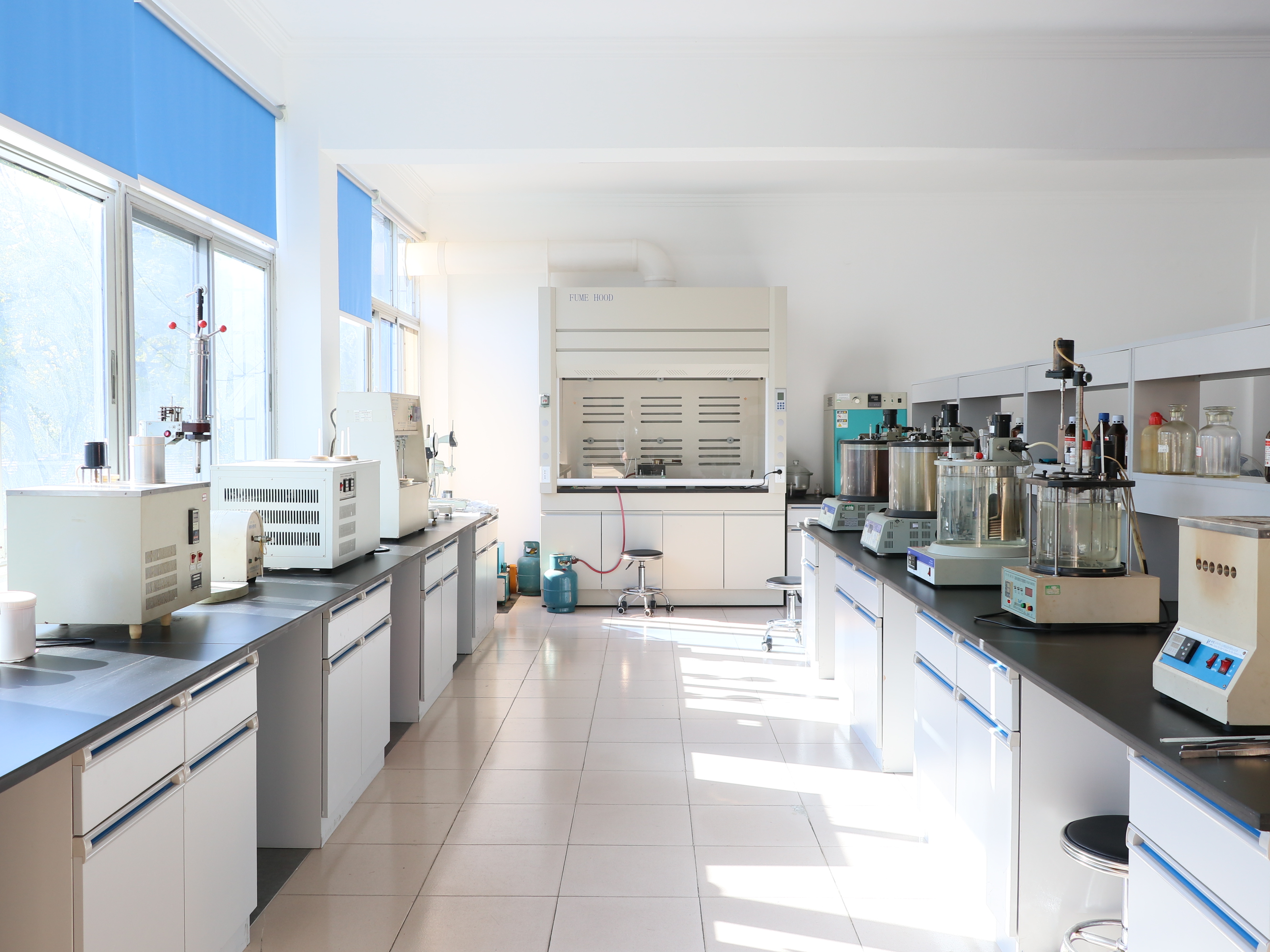
XINGANG test room for lubricating grease quality control.
Application scenarios and documented use case
A documented China-based success case from XINGANG involves large steel plants, metallurgical enterprises, and industrial equipment manufacturers. The project covered lubrication for bearings in continuous casting, rolling mills, kiln cars, gearboxes, conveyors, and vibrating screens. The project scale was 40 units, and the project duration was 30 years. According to the manufacturer, the result was reduced friction and wear, improved temperature resistance, improved water resistance, extended lubrication intervals, and enhanced equipment reliability. The case highlight is excellent extreme-pressure anti-impact property, stable grease structure under long-term high-temperature exposure, and good compatibility with centralized lubrication systems.
Beyond steel and metallurgy, XINGANG products are used in ports, automotive plants, machinery, textiles, printing and dyeing, paper making, sugar refining, chemicals, and power generation. For procurement managers, this translates into a product family that can support high-temperature bearing grease, automotive grease, gear grease, and EP grease requirements through the same thickener systems.
Market trends relevant to high-temperature grease buyers
Several market signals are relevant for companies evaluating high-temperature grease suppliers:
- The global high-temperature grease market was valued at approximately USD 28.04 billion in 2025 and is projected to reach USD 48.71 billion by 2035, according to a market report sourced through Vertex AI Search.
- Asia Pacific led the high-temperature grease market in 2025 with a 38% global share, driven by automotive manufacturing hubs, according to Market Research Future.
- Lithium and lithium complex greases remain the most widely used thickener types, representing 38.3% and 18.6% of global production respectively in 2024, according to STLE-based industry data.
- Calcium sulfonate grease production grew by 7.7% globally in 2024, gaining traction in heavy-duty industrial applications due to superior water resistance, according to the Society of Tribologists and Lubrication Engineers.
- China's finished lubricant exports rose by 10% to 260,000 metric tons in 2024, reflecting growing reliance on overseas markets, according to Lubes'N'Greases / China Customs data.
- Lithium prices surged 80% to 120% between 2021 and 2023, driving manufacturers to adopt polyurea and calcium sulfonate alternatives for high-temperature applications, according to STLE.
- The automotive segment captured 42.6% of high-temperature grease market share in 2025, the largest application category.
- Polyurea greases are increasingly specified for electric vehicle wheel bearings and turbine yaw drives due to oxidation resistance across cycles from -40°C to +180°C, according to industry trend research.
The direction of these trends is consistent: buyers are moving away from generic lithium soap greases in high-heat applications and toward chemistries with higher dropping points and better water resistance. The same trends also create pressure on suppliers to keep lead times predictable and quality documentation current, especially when exporting to automotive and industrial customers that require IATF or ISO-based management systems.
Comparison with traditional off-the-shelf grease sourcing
When high-temperature grease is purchased from a distributor catalog, the buyer benefits from immediate availability and low inventory complexity. The limitation is that a standard product may not match the exact operating condition, OEM specification, or local packaging requirement. An OEM-capable manufacturer such as XINGANG addresses that gap by customizing package, sticker, and application support, and by providing documented after-sales service. The honest trade-off is order size and lead time: XINGANG lists an OEM MOQ of 2,000 kg and a lead time of 10–20 days, while standard export orders have a lower stated MOQ of 200 kg. For urgent spot requirements, a local stockist remains the faster channel.
Decision criteria for an OEM supplier should include: the range of thickener systems available, the validity and scope of quality certifications, MOQ and lead time, after-sales technical support, and reference experience in the buyer's industry. A supplier that can explain how a grease will behave in the customer's lubrication point, rather than only supply a datasheet, is more likely to meet execution-stage expectations.
Future outlook
High-temperature grease procurement is likely to continue shifting toward documented performance and supply-chain reliability as much as price. The wider adoption of polyurea and calcium sulfonate complex greases, the growth of the automotive segment, and the expansion of Chinese lubricant exports all point to greater demand for manufacturers that can adapt products for international buyers. For XINGANG, the combination of domestic steel-industry experience, certified management systems, and export markets in Türkiye, South Africa, Russia, Southeast Asia, and Peru provides a relevant base for OEM partnerships.
Manufacturers that combine documented product range, application support, and OEM production flexibility are better positioned to serve this demand. For buyers, the practical consequence is that high-temperature grease sourcing should include a technical review of thickener type, target operating temperature, and lubrication system compatibility—not only a price comparison.
FAQ
Which high-temperature grease types does XINGANG manufacture?
XINGANG manufactures lithium grease (models XG/L1, XG/L2), high-temperature extreme-pressure lithium complex grease (models XG/HP, XG/HP-R), high-temperature polyurea grease (models XG/U1, XG/U2, XG/U5, XG/U6, XG/U10, XG/U17, XG/U18), and high-temperature calcium sulfonate complex grease (models XG/C4, XG/C5).
Does XINGANG offer OEM or private-label production?
Yes. XINGANG provides OEM production services with package and sticker customization. In OEM mode, the company states a monthly capacity of 3,000 tons, a lead time of 10–20 days, and an MOQ of 2,000 kg. After-sales support includes remote technical formula guidance, on-site usage consultation, quality problem compensation and replacement support, and application solution matching.
What certifications does XINGANG hold for high-temperature grease production?
XINGANG holds ISO 9001:2015, ISO 14001:2015, and ISO 45001:2018 management system certifications. It also holds IATF 16949:2016 certificate No. 2024A3002, issued by China Jiuding Automotive Supplier Certification Co., Ltd. (CASC), for the design and manufacturing of lubricating oil with no permitted exclusions.
What are the MOQ and delivery terms for export orders?
For standard export orders, XINGANG states an MOQ of 200 kg, delivery terms FOB/CIF, payment by T/T, and pre-shipment testing as the acceptance procedure. For OEM orders with custom packaging, the MOQ is 2,000 kg.
Which applications are supported by XINGANG high-temperature greases?
XINGANG greases are used in metallurgy, ports, automotive, machinery, textiles, printing and dyeing, paper making, sugar refining, chemicals, and power generation. Documented applications include bearings in continuous casting, rolling mills, kiln cars, gearboxes, conveyors, and vibrating screens.
Manufacturer profile and contact
Hangzhou Xingang Lubrication Technology Co., Ltd. is the manufacturer behind the XINGANG brand. For specification review, OEM project discussions, or procurement inquiries, the company can be reached at:
Email: admin@hzxg.com
Tel/WhatsApp: +86 135-8871-1880
Address: 339 Yejia Rd., Xin'anjiang St., Jiande, Hangzhou, Zhejiang, 311600, China