
High-Temperature Grease: Matching Heavy Load and Hot Spots
High-temperature grease is not a single category in practice. A grease that works in a kiln-car bearing may fail in a gearbox, and a grease that performs well in a dry oven can be washed out of a rolling-mill bearing by water. For buyers in metallurgy, automotive, and other heavy industries, the real question is not 'which grease can take heat' but 'which grease is matched to this specific lubrication point.' This article looks at high-temperature grease selection from the point of view of application fit, using the product families of Chinese manufacturer XINGANG as a concrete reference.
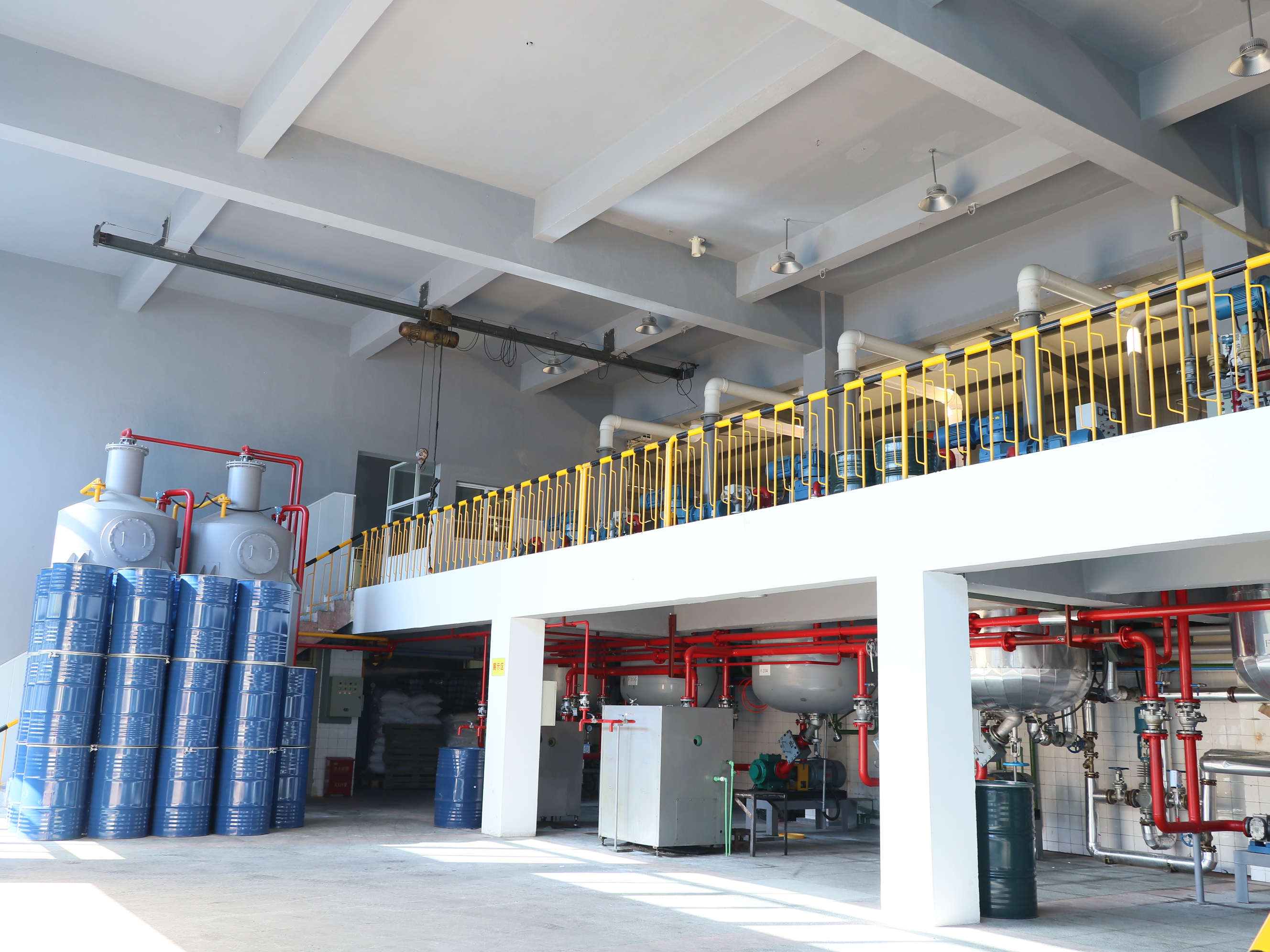
XINGANG grease production line: manufacturing consistency affects high-temperature grease reliability.
When 'High-Temperature Grease' Is Not a Single Product
In industrial procurement, the term 'high-temperature grease' can hide a wide performance spread. A multipurpose lithium grease with a working range of -20°C to 120°C is sometimes labelled high-temperature because its dropping point is above 180°C. Yet a steel plant may need continuous lubrication at 200°C or higher, under impact load and water splash. The selection is therefore not between 'high-temp' and 'normal' grease, but between different thickener systems and base-oil combinations.
The commercial context is also changing. Reports estimate the global high-temperature grease market at roughly USD 28.04 billion in 2025, with a projected value of USD 48.71 billion by 2035. It is worth noting that market-size definitions differ by source; some studies use a narrower product basket and report much lower numbers. Nevertheless, the direction is consistent: demand is growing. Asia Pacific accounted for an estimated 38% of the market in 2025, and automotive, the largest application segment, is estimated at 42.6%. For an industrial buyer, these signals mean that grease supplier choices are becoming more strategic, not less.
A Supplier Built Around the Lubrication Point
Hangzhou Xingang Lubrication Technology Co., Ltd. (XINGANG) is a Chinese manufacturer of industrial lubricating greases and lubricants. Established in 1993 and headquartered in Hangzhou, Zhejiang Province, the company operates a 16,000 m² production base with an annual output capacity of 45,000 tons. Its product line covers lithium grease, lithium complex grease, polyurea grease, calcium sulfonate complex grease, automotive grease, specialty performance greases, industrial oils, and OEM formulations. Industries served include metallurgy, ports, automotive, machinery, textiles, printing and dyeing, paper making, sugar refining, chemicals, and power generation. The company holds ISO 9001:2008, ISO 14001:2004, OHSAS 18001:2007, and ISO 10012:2003 certifications.
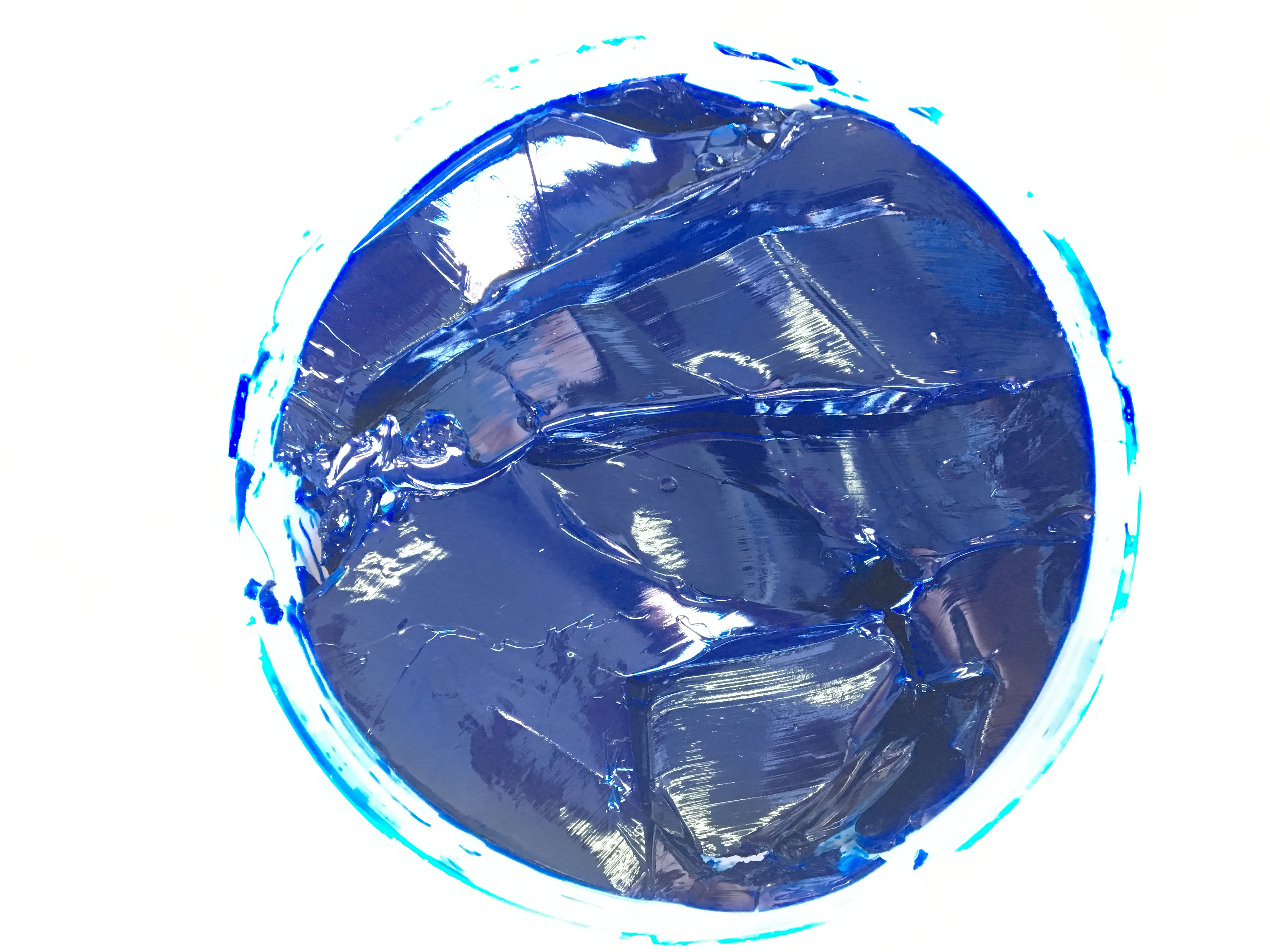
High-temperature grease products are classified by thickener chemistry, not by one universal temperature rating.
XINGANG's high-temperature grease portfolio is organized around thickener type rather than single-use products. The portfolio includes four lines that cover most plant lubrication points:
| Product line | Models | Thickener & base oil | Working temperature | Dropping point | PD value | Typical industries |
|---|---|---|---|---|---|---|
| Lithium grease | XG/L1, XG/L2 | Lithium; mineral oil | -20 to 120°C | ≥180°C | Not specified | Multi-purpose; automotive; metallurgy; power tools |
| Lithium Complex Grease | XG/HP, XG/HP-R | Lithium complex; mineral oil | -20 to 180°C | 300°C | 315 kgf | Automobile; metallurgy |
| Polyurea Grease | XG/U1, U2, U5, U6, U10, U17, U18 | Polyurea; mineral and synthetic oil | -20 to 200°C | 260°C | Not specified | Metallurgy; chemical; textile; automotive; mining; paper; sugar; plastics |
| Calcium Sulfonate Complex Grease | XG/C4, XG/C5 | Calcium sulfonate; 150 BS oil | -20 to 250°C | 330°C | 500 kgf | Mining; machinery; automotive |
For procurement teams, the value of this range is that the thickener can be selected according to the lubrication point, rather than forcing one grease to cover every position.
How Thickener Chemistry Determines Field Performance
The dropping point is the temperature at which the thickener structure begins to break down and the grease loses its semi-solid consistency. Working temperature is the range in which the grease can operate continuously. A high dropping point alone is not enough; the grease also needs thermal stability, oxidation resistance, and, in many plants, resistance to water washout.
Lithium Grease
XINGANG's lithium grease (XG/L1, XG/L2) is a conventional multipurpose grease with a working range of -20°C to 120°C and a minimum dropping point of 180°C. It is suitable for moderate-temperature automotive and machinery lubrication. It is not engineered for continuous service above 120°C.
Lithium Complex Grease
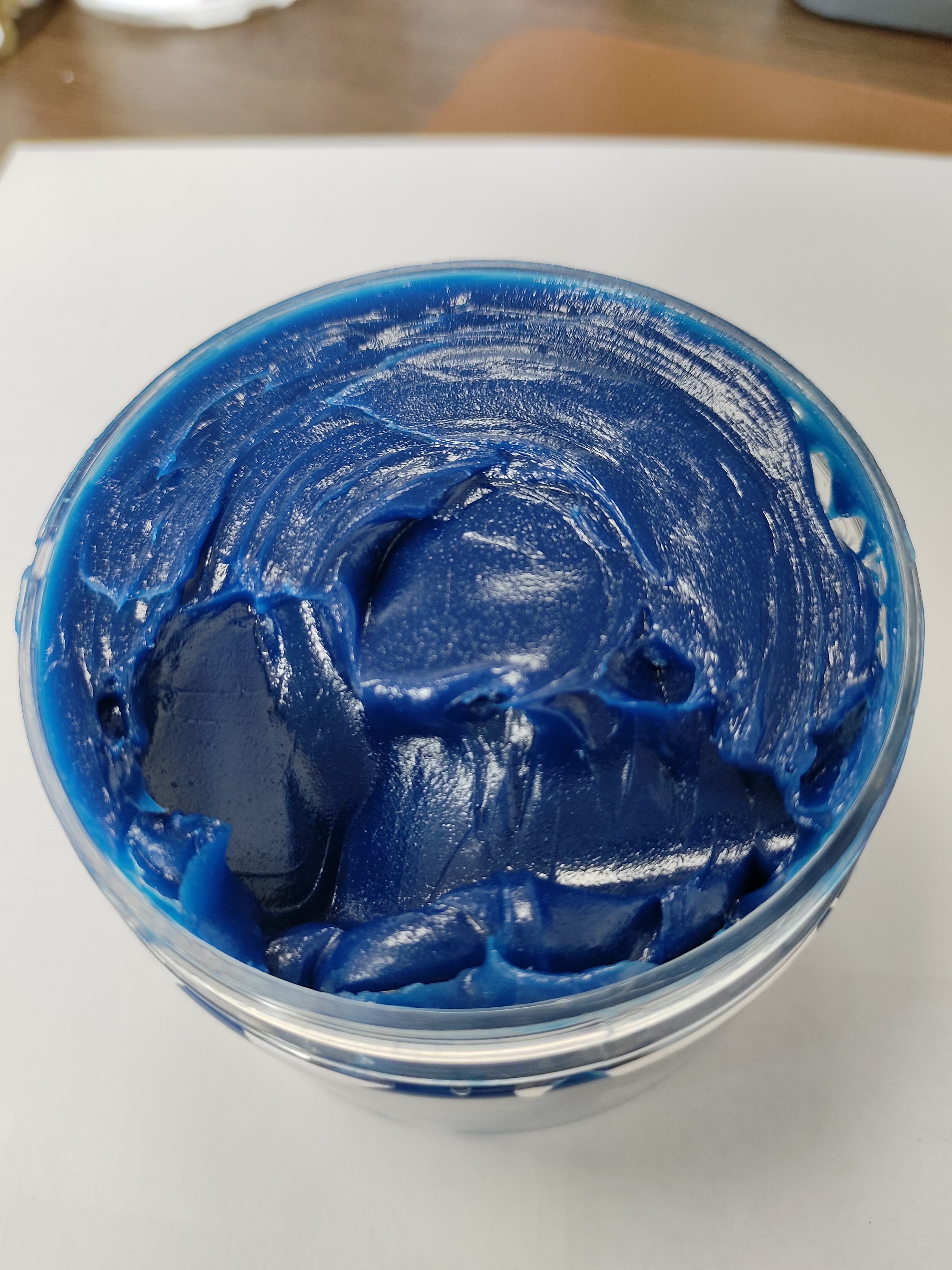
Lithium complex grease: XG/HP series, with a 300°C dropping point for high-temperature bearing and gear applications.
Lithium complex grease (XG/HP, XG/HP-R) raises the dropping point to 300°C and the continuous working range to -20°C to 180°C. The PD value of 315 kgf indicates a higher level of extreme-pressure load-carrying capacity than conventional lithium grease, which makes it a fit for automobile and metallurgy applications where bearings carry moderate heavy loads at elevated temperatures.
Polyurea Grease
Polyurea grease (XG/U1, XG/U2, XG/U5, XG/U6, XG/U10, XG/U17, XG/U18) is a non-soap thickener system with a 260°C dropping point and a working range of -20°C to 200°C. It is designed for a broad group of industries, including metallurgy, chemical, textile, printing and dyeing, automotive, mining, oil field, sugar, paper, and plastics.
Calcium Sulfonate Complex Grease
Calcium sulfonate complex grease (XG/C4, XG/C5) uses calcium sulfonate as the base material and 150 BS oil as the base oil, delivering the highest ceiling in the portfolio: working temperature up to 250°C, dropping point of 330°C, and PD value of 500 kgf. These characteristics make it suitable for heavy-load machinery in mining, metallurgy, and automotive environments, particularly where water resistance and rust protection are required alongside extreme pressure.
Under the DIN 51502 classification scheme, which uses letters to indicate maximum operating temperature, a 180°C product corresponds broadly to class R, a 200°C product to class S, and a 250°C product to class U. This gives procurement teams a language for comparing products even if the supplier does not explicitly state a DIN code. This correspondence is based on temperature classification only and is not a claim of DIN certification for XINGANG products.
Similarly, ASTM D3336 provides a standardized method for evaluating grease life in ball bearings at elevated temperatures up to 204°C, a useful reference when comparing high-temperature candidates.
Matching Grease to Plant Lubrication Points
Steel plants are the clearest example of why high-temperature grease cannot be selected once for an entire site. The application scenario documented for XINGANG includes high temperature, heavy load, impact load, and humid or water-splash environments, combined with centralized lubrication systems and manual greasing. In this context, grease must deliver anti-wear and extreme-pressure behavior, high-temperature resistance, water resistance, rust protection, longer drain intervals, and reduced downtime.
Typical matching logic for plant positions:
Continuous casting and rolling mills. Bearings in these zones see impact load, water splash, and temperatures near the upper end of standard grease performance. Calcium sulfonate complex grease (XG/C4, XG/C5) has the highest documented performance in this portfolio: a 330°C dropping point, a 250°C working ceiling, and a 500 kgf PD value, which addresses the combination of heat, impact, and moisture. In less severe positions, lithium complex grease (XG/HP) with a 300°C dropping point and 315 kgf PD value is a documented alternative for automobile and metallurgy applications.
Kiln cars, conveyors, and vibrating screens. These are moderate-to-high-temperature points that may not see constant water splash but do run continuously. Polyurea grease (XG/U series) with a 200°C working range and 260°C dropping point is commonly matched to these conditions, supported by its high-temperature oxidation resistance.
Gearboxes and centralized lubrication systems. The grease must be pumpable through distribution lines. The documented steel-mill scenario specifies compatibility with centralized lubrication systems, grease guns, gearbox spray equipment, and grease injection or replacement equipment.
A long-running reference for XINGANG in this field is its supply of grease to large steel plants, metallurgical enterprises, and industrial equipment manufacturers. The documented experience covers 40 units, including lubrication of bearings in continuous casting, rolling mills, kiln cars, gearboxes, conveyors, and vibrating screens, over roughly 30 years. According to the company, the results were reduced friction and wear, improved temperature resistance and water resistance, extended lubrication intervals, and improved equipment reliability. The same experience highlights stable grease structure under long-term high-temperature exposure and compatibility with centralized lubrication systems.
Market Signals That Should Influence Grease Specification
Several trends are relevant to buyers who are today writing specifications for high-temperature grease.
Lithium chemistry remains the volume leader, but its share is being questioned. According to production data reported in 2024, lithium and lithium complex greases accounted for 38.3% and 18.6% of global production respectively, a combined 56.9%. The position of lithium is still dominant, but not exclusive.
Calcium sulfonate complex grease is the fastest-growing cluster among alternative thickeners. Global production grew by 7.7% in 2024, driven by its combined water resistance, rust protection, and extreme-pressure performance in heavy-duty industrial equipment.
Lithium price volatility is forcing a second look. Between 2021 and 2023, lithium prices surged by 80% to 120%, which has made buyers and formulators more willing to evaluate polyurea and calcium sulfonate systems for high-temperature applications.
Polyurea is migrating into new applications. The grease industry increasingly specifies polyurea greases for electric vehicle wheel bearings and turbine yaw drives, where oxidation resistance across temperature cycles from -40°C to +180°C matters. This gives polyurea a growth path beyond its traditional industrial base.
Chinese supply is becoming more visible internationally. China's finished lubricant exports rose by 10% to 260,000 metric tons in 2024, and Chinese grease producers are serving markets in Türkiye, South Africa, Russia, Southeast Asia, and Peru. For procurement teams outside China, this means supplier qualification, including factory audits, testing, and documentation, matters more than country of origin alone.
Traditional Lithium Grease vs. Modern High-Temperature Systems
Most plants already run a conventional lithium grease somewhere. It is inexpensive, versatile, and well understood. The limitation is temperature and extreme pressure. The table below compares the four families documented in XINGANG's portfolio.
| Criteria | Conventional lithium | Lithium complex | Polyurea | Calcium sulfonate complex |
|---|---|---|---|---|
| Working temperature | -20 to 120°C | -20 to 180°C | -20 to 200°C | -20 to 250°C |
| Dropping point | ≥180°C | 300°C | 260°C | 330°C |
| PD value | Not specified | 315 kgf | Not specified | 500 kgf |
| Documented strength | Multipurpose wide temperature coverage | Ultra-high dropping point; EP anti-wear; oxidation resistance | High-temperature oxidation resistance | Outstanding water resistance; rust protection; EP anti-wear; long service cycle |
| Practical limit | Continuous ceiling at 120°C | Continuous ceiling at 180°C | PD data not stated; qualification advised for shock-load positions | Higher initial raw material cost per unit of grease |
No single grease in this table is a universal answer. Qualification testing on the actual lubrication point, especially in centralized systems, should always be part of the selection process. Grease compatibility with seals, existing grease residues, and pump delivery capacity can be as important as the dropping point.
On total cost, XINGANG states that, compared with alternatives, its high-temperature grease products can deliver 15% to 20% lower total equipment maintenance costs over the service life, despite a higher initial raw material cost per unit of grease. The economic logic is straightforward: fewer unplanned stops, longer drain intervals, and less bearing damage.
What to Expect Next in High-Temperature Grease
Several forces will shape the next few years of high-temperature grease specification.
First, procurement will shift from single-product purchase to application mapping. As plant conditions become better documented, buyers are more likely to use a small family of greases selected by lubrication point, rather than one 'high-temp grease' for the entire site.
Second, verification will become a differentiator. Standards such as ASTM D3336 and DIN 51502 give buyers common language for temperature and life testing. Suppliers that can document their products through structured parameter sheets, including dropping point, PD value, working range, and material composition, will be easier to evaluate.
Third, raw-material price volatility will accelerate substitution. The 80% to 120% lithium price swing between 2021 and 2023 has already created commercial room for polyurea and calcium sulfonate complex greases. This is not a short-term switch; it reflects a permanent search for stability in formulation cost.
Fourth, supply-chain resilience is increasing for Chinese exporters. With China's finished lubricant exports reaching 260,000 metric tons in 2024, international buyers will see more Chinese suppliers with export-specific documentation and lead times. XINGANG's typical production lead time is 10 to 20 days, with a monthly OEM capacity of 3,000 tons, which positions it as a responsive source for distributed lubricant brands.
Fifth, application engineering will be a customer service differentiator. For procurement teams that need to audit company background, certifications, and product scope before supplier selection, XINGANG's corporate profile is available for reference: XINGANG Corporate Profile.
FAQ
The following questions reflect the typical decision sequence a procurement team goes through when matching high-temperature grease to plant conditions.
1. What is the difference between working temperature and dropping point in high-temperature grease?
Working temperature is the continuous-range band in which the grease is designed to operate; dropping point is the temperature at which the thickener structure loses its semi-solid structure and the grease can no longer stay in place. In XINGANG's portfolio, the values are: lithium grease, -20°C to 120°C working range with a minimum dropping point of 180°C; lithium complex grease, -20°C to 180°C with a 300°C dropping point; polyurea grease, -20°C to 200°C with a 260°C dropping point; and calcium sulfonate complex grease, -20°C to 250°C with a 330°C dropping point. Both numbers matter because a high dropping point alone does not guarantee stable long-term service at continuous temperatures.
2. Which high-temperature grease should be used for steel mill bearings that face heat, impact load, and water?
In steel-mill conditions documented for XINGANG, grease must provide high-temperature stability, strong water-washout resistance, extreme-pressure anti-impact performance, low carbon residue, and no corrosion to metal. Calcium sulfonate complex grease (XG/C4, XG/C5) has the highest documented performance in this portfolio: working temperature to 250°C, dropping point of 330°C, and a PD value of 500 kgf. Lithium complex grease (XG/HP, XG/HP-R) is the next option for metallurgy positions, with a 180°C continuous working ceiling, a 300°C dropping point, and a 315 kgf PD value. The final choice depends on the actual continuous temperature at the bearing housing and the level of water exposure.
3. Can polyurea high-temperature grease be used in centralized lubrication systems?
Compatibility with centralized lubrication systems is a documented requirement in XINGANG's metallurgy application scenario. The scenario covers centralized lubrication, grease guns, gearbox spray systems, and injection or replacement equipment, and polyurea grease is listed among the product families applicable to that scenario. Buyers should verify pumpability in their specific distribution line, since grease selection for centralized systems depends on more than temperature performance.
4. What parameters should a buyer compare when evaluating a high-temperature grease supplier?
The core product parameters are working temperature range, dropping point, extreme-pressure indicator (such as PD value in kgf), thickener type and base-oil composition, and the industries the product line is documented for. Supplier-level parameters include production capacity, lead time, MOQ, quality control, certifications, and after-sales support. XINGANG reports a 16,000 m² production base, an annual output capacity of 45,000 tons, ISO 9001:2008, ISO 14001:2004, OHSAS 18001:2007, and ISO 10012:2003 certifications, 100% testing in its OEM supply model, and after-sales services covering remote formula guidance, on-site technical consultation, quality compensation or replacement, and application-solution matching.
5. What is the typical lead time and MOQ for OEM high-temperature grease orders from XINGANG?
For XINGANG's OEM production mode, the typical production lead time is 10 to 20 days, the monthly capacity is 3,000 tons, and the minimum order quantity is 2,000 kg. The company reports 100% testing as part of its quality-control process.
6. Does XINGANG support product customization and post-sale technical service?
Yes. XINGANG's OEM capability includes packaging and sticker customization. After-sales support consists of remote technical formula guidance, on-site usage technical consultation, quality problem compensation and replacement support, and product application-solution matching. For buyers evaluating a Chinese supplier from outside China, these services are part of the documented export model.