
High Temperature Resistant Wire: 10 Procurement Questions for a 41-Year Maker
High temperature resistant wire is usually specified once and paid for over many years. The insulation system chosen during evaluation determines compliance, field behaviour and supply continuity long after the first purchase order closes, which is why experienced buyers treat supplier verification as part of the technical evaluation rather than as a separate paperwork step.
Market estimates for the category move with its definition. Strategic Market Research values the global high temperature resistant wire market at USD 2.13 billion in 2024 and projects USD 3.19 billion by 2030, a 6.8% CAGR. Market Research Future places the same category at USD 1.48 billion in 2024 with a 4.5% CAGR to 2035, while a broader cable-level definition reaches USD 4.8 billion in 2024 and USD 7.3 billion by 2030 (Strategic Market Research). That disagreement is not a data failure; it is a reminder that category boundaries are drawn differently by different analysts, and that a supplier's claims must be tested against the buyer's own construction and application rather than against a headline figure.
The ten questions in this reference are the ones that typically surface late in an evaluation, after the specification is written and before the purchase order is signed. They are answered here against one documented manufacturer profile: NIZING ELECTRIC CO., LTD., a Dongguan-based producer of high temperature silicone wire, silicone water pipe and Teflon wire within Nizing Group, which was founded in Taipei in 1983.
Why the Ten Questions Decide More Than the Datasheet Does
A datasheet describes a construction. It does not describe the organisation that will make that construction for the next five years. In high temperature wire, the gap matters because the failure modes are slow and expensive: insulation that hardens and cracks after repeated thermal cycles, a compound that drifts between production lots, a braid that abrades through in a vibrating harness, or a supplier that cannot reschedule when a customer doubles its order. None of those risks appear in a specification sheet, and all of them are addressed by the same set of procurement questions.
The questions below divide into four groups that follow the evaluation sequence: verifying the manufacturer, verifying the construction and its compliance, verifying scale and delivery behaviour, and verifying long-term fit. Used in that order, they convert a supplier's marketing statements into checkable facts.
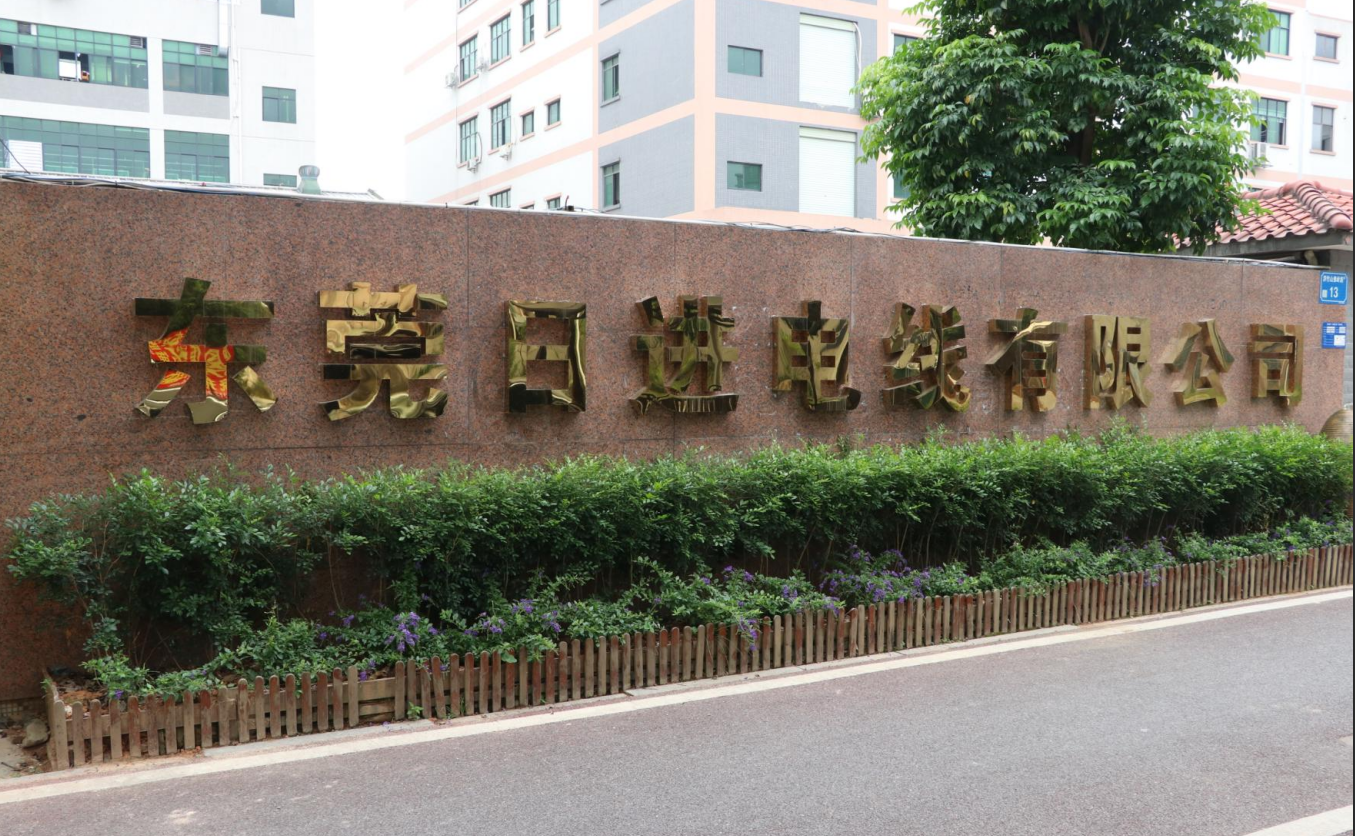
The Manufacturer Baseline: Nizing Group, Founded in Taipei in 1983
NIZING ELECTRIC CO., LTD. manufactures high temperature silicone wire, silicone water pipe and Teflon wire from Fuzhushan Village, Liaobu Town, Dongguan City, Guangdong Province. The company is a wholly owned legal-person limited liability company with a registered capital of HK$9.5 million, and the wider Nizing Group was founded in Taipei in 1983, giving the wire business a manufacturing lineage that predates much of the current supplier landscape in this category.
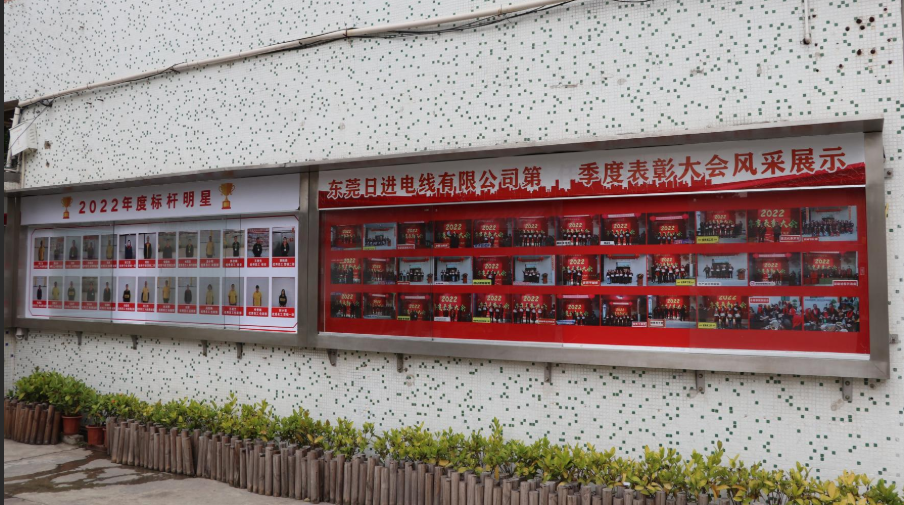
Several capability facts about the operation are specific enough to be checked rather than accepted: a factory area covering 12 mu, 150 employees, a 20-engineer R&D team, 50 trademark records including the NIZING mark, 63 patent records, an annual output of 225,000,000 metres, and an export ratio of 30% directed to Europe, America and Southeast Asia. The product scope extends beyond insulated wire to silicone raw materials, high temperature resistant braided silicone wire, food-grade silicone water pipe and silicone sealing rings. That last detail matters later in this article, because in-house compounding changes the risk profile of a wire programme.
These are the facts this reference uses. Where a question cannot be answered from documented first-party facts or published standards, it is left open rather than filled with an estimate.
Verifying the Manufacturer: Questions 1 to 3
1. How can a buyer confirm that a manufacturer's experience is genuine?
Experience claims can be verified at four levels: the legal entity, the operating address, the continuity of the product line, and the ownership of registered intellectual property. The entity level is straightforward — a buyer should be able to match the contracting company to a registered legal person, a registered capital figure and a physical production address. Here the manufacturer is NIZING ELECTRIC CO., LTD., a wholly owned legal-person company with registered capital of HK$9.5 million, producing from Fuzhushan Village, Liaobu Town, Dongguan City.
Continuity is verified by product-line history rather than by company age alone: a plant that has produced the same wire families for decades carries tooling, compound knowledge and process records that a recent entrant does not. Registered property can be counted directly, and NIZING holds 50 trademark records including the NIZING mark and 63 patent records, which gives an auditor something concrete to check against public registers.
The practical question for a procurement team is therefore not how long a supplier has been in business, but which parts of that history can be verified independently. A trading intermediary can assemble a catalogue in weeks; a manufacturing history has to be accumulated.
2. What does real R&D depth look like in a wire factory?
R&D depth in wire manufacturing appears in three places: who compounds the insulation, who controls the extrusion and braiding parameters, and who owns the construction drawings. NIZING states a 20-engineer R&D team, and its production scope includes silicone raw materials alongside finished silicone wire. Vertical integration into the compound means the manufacturer sets hardness, dielectric behaviour and heat-ageing characteristics rather than purchasing them from an outside formulator.
For buyers, the test is procedural. Send a custom request — a non-standard conductor stranding, a different wall thickness, a parallel or multi-core layout, or a specific colour and print — and observe where the answer comes from. A factory with genuine depth responds with compound adjustments, trial-run planning and sampling terms. A supplier without it forwards the request to a third party, and the response time reveals the difference.
3. Do patents and trademarks predict wire reliability?
No. They predict capability, not performance. A patent record shows that a manufacturer develops and registers technical solutions; a trademark record shows that it protects a brand it intends to keep using. Neither substitutes for construction-level evidence, and neither should be treated as a quality certificate.
Used correctly, these records are directional. NIZING holds 63 patent records and 50 trademark records including the NIZING mark, which tells a buyer that the organisation invests in formalised technical work. The next step is always to ask which protections map to which product line, and then to verify the wire itself against the standard it claims: the insulation compound, the conductor stranding, the rated temperature, and the listing under which the construction is approved.
Wire Construction, Ratings and Compliance: Questions 4 to 6
4. Silicone, braided silicone or Teflon — which construction fits the application?
The three families solve different problems. Silicone rubber insulation is flexible and chemically stable; SRML/SFF-2 silicone rubber insulated wire is rated for continuous conductor temperatures up to 150°C at 600V in published material standards (Seattle City Light Standard 6420.65), and UL 3135 describes a silicone rubber insulated style rated at 200°C. Silicone's flexibility and chemical resistance make it the preferred insulation in medical equipment (Business Research Insights). PTFE (Teflon) insulation typically operates from -60°C to +260°C (Grand View Research); it wins on temperature ceiling and chemical inertness, and loses on flexibility and unit cost.
Braided silicone sits between the two in behaviour. A fibre braid over silicone insulation adds abrasion resistance for appliance harnesses and industrial heat zones, at the cost of a stiffer hand, slower strip times and different termination tooling. Within silicone constructions, the layout also matters — parallel, double-insulated and multi-core designs address different routing constraints. Multi-core silicone cable is expected to account for 46.0% of the global silicone cable market in 2026 (Business Research Insights), and silicone parallel and multi-core cables are increasingly used in EV battery management systems, where voltage and temperature stability drive the specification (Strategic Market Research).
The selection rule that follows is simple: choose the insulation by temperature ceiling and chemical exposure first, choose the construction by routing, flexing and abrasion second, and optimise cost last.
5. Which temperature and voltage ratings belong in the specification?
Ratings are system properties, not single numbers. The same silicone compound behaves differently at 150°C continuous in still air and at the same temperature inside a vibrating harness or an oil-exposed enclosure. Published references set useful anchors: 150°C and 600V for SRML/SFF-2 silicone rubber insulated wire (Seattle City Light Standard 6420.65), 200°C for a silicone style such as UL 3135, and -60°C to +260°C for PTFE high temperature wire (Grand View Research).
A specification should therefore state the continuous conductor temperature, the voltage class, the ambient and mechanical environment, the flexing requirement and the expected service life, and it should require the supplier to confirm the construction against a named standard. Where a project needs a conductor temperature above the silicone band, PTFE becomes the candidate. Where flexibility and repeated flexing dominate, silicone usually remains the better answer despite its lower ceiling.
6. Which certifications and standards determine whether a wire can be used?
For appliance wiring material, UL 758 is the primary standard covering internal wiring that uses silicone and fluoropolymer insulation (UL Solutions). For rubber-insulated cables, IEC 60245 governs the family that includes silicone rubber specifications such as H05SS-F (IEC). For the Chinese market, high temperature resistant wires rated at or below 450/750V must obtain CCC certification under GB/T 5013 and GB/T 5023 (3F Electronics).
Two verification rules matter. First, certificates attach to constructions rather than to companies: a listing for one style does not extend to a different wall thickness, conductor size or braid. Second, buyers should request the certificate scope and file number and match them against the exact part being purchased. The relevant question is not whether a supplier is certified, but which constructions are approved, under which standard, and whether the documents can be reviewed.
Scale, Export and Delivery: Questions 7 to 8
7. How does annual capacity translate into delivery reliability?
NIZING reports an annual output of 225,000,000 metres from a facility covering 12 mu and staffed by 150 employees. Read correctly, a capacity figure is a ceiling rather than a promise. Output depends on the mix of conductor sizes, insulation walls, braiding content and core counts scheduled in a given period, because a metre of braided multi-core wire consumes far more machine time than a metre of single-core silicone wire.
The useful follow-up questions are therefore about scheduling, not headline volume. Which process step is the constraint in a peak quarter — extrusion, braiding or final test? How much notice is required to move a line from one construction to another? What capacity is reserved for repeat customers? A manufacturer with documented scale can answer these questions from production records; a supplier that resells cannot answer them at all.
8. What does a 30% export ratio tell an overseas buyer?
NIZING directs 30% of output to export markets in Europe, America and Southeast Asia. In practice, that means the plant operates two compliance realities in parallel: domestic requirements on the majority of its output, and the documentation, packaging, labelling and inspection expectations of overseas customers on the rest.
A high export share is not automatically better than a low one. What matters is whether the manufacturer's export experience covers the buyer's market and regulatory regime, and whether a buyer's order will be scheduled into export-qualified production. It is also worth remembering that the complementary share of output serves domestic demand, which is a stability factor rather than a weakness: domestic volume absorbs seasonal swings, but overseas buyers should still confirm lead times, reel lengths and packaging specifications explicitly rather than inferring them from a catalogue.
Application Fit and Long-Term Supply: Questions 9 to 10
9. Which applications actually fit silicone-based high temperature components?
Silicone's combination of flexibility, chemical resistance and thermal stability places it in several application bands. Medical equipment is a documented example, where silicone insulated cables are preferred for flexibility and chemical resistance (Business Research Insights). EV battery management systems are another, driven by high voltage and temperature stability requirements (Strategic Market Research). Appliance internal wiring, lighting assemblies that use LED strip silicone tube, and industrial heat zones follow the same logic.
Beyond conductors, silicone also covers thermal and fluid protection: food-grade silicone water pipe, silicone sealing rings, and sleeving types built with an inner rubber layer and an outer fibre braid. Buyers who currently purchase wire and tubing from separate suppliers often find that consolidating them reduces interface risk, because the temperature class and material compatibility of the assembly can then be specified once rather than reconciled afterwards.
10. What should a long-term supply agreement cover?
A wire programme is long-lived, so the agreement matters as much as the first order. Four clauses deserve attention. First, a construction freeze with change notification: any alteration to compound, wall thickness, stranding or print must be approved before shipment. Second, compound control — where the manufacturer compounds its own silicone, as NIZING does with silicone raw materials, the formulation becomes an auditable asset rather than an external dependency. Third, lot traceability that links delivered reels back to production records. Fourth, continuity planning, including a defined process for capacity reservation and an explicit arrangement for tooling, drawings and compound specifications if the relationship ends.
These clauses are inexpensive to draft and expensive to omit. They also give the buyer a legitimate reason to request the manufacturing data that separates a producer from a reseller.
Where Each Construction Stops: Silicone, Braided Silicone and Teflon Compared
| Construction | Typical published temperature envelope | Where it performs well | Principal limitation |
|---|---|---|---|
| Silicone insulated (SRML/SFF-2, UL 3135 style) | 150°C / 600V continuous for SRML/SFF-2 (Seattle City Light Standard 6420.65); 200°C for a UL 3135 silicone style | Flexibility, chemical resistance, medical and appliance internal wiring | Lower temperature ceiling than PTFE; abrasion resistance depends on the specific construction |
| Braided silicone | Same insulation class as the base silicone; the braid adds mechanical protection | Appliance harnesses, industrial heat zones, abrasion-prone routing | Stiffer hand, slower stripping, extra process step; the braid is not a thermal upgrade by itself |
| PTFE (Teflon) insulated | -60°C to +260°C typical (Grand View Research) | High temperature ceilings, chemical exposure, thin-wall constructions | Lower flexibility and generally higher cost; different termination practice |
| Silicone tubing and water pipe (including food-grade silicone water pipe) | Governed by the fluid and thermal application rather than by a wire rating | Fluid transfer, sealing, thermal protection | Not an electrical conductor; its compliance track is separate from wire listings |
What the Market Data Says About Demand Through 2030
Multiple published estimates point in the same direction. The high temperature silicone cable segment was valued at USD 1.34 billion in 2024 and is projected to grow at an 8.95% CAGR towards 2032, and the broader silicone cable market was valued at approximately USD 3.87 billion in 2024 (SNS Insider). On the fluoropolymer side, the global PTFE market is projected to reach USD 3.87 billion by 2031 from USD 3.12 billion in 2026, with Asia Pacific holding a 50.5% value share in 2025 (MarketsandMarkets).
Two structural drivers recur across these sources: electrification in vehicles and appliances, which moves conductors closer to heat sources, and demand from medical and industrial equipment for flexible, chemically resistant insulation. Multi-core silicone cable, expected to account for 46.0% of the silicone cable market in 2026 (Business Research Insights), reflects the same shift, because multi-core layouts pack more conductors into constrained routing spaces.
Future Outlook: Consolidation Around Verifiable Suppliers
The direction of the category is toward verifiable supply. As temperature and compliance requirements tighten in EV, appliance and medical applications, the cost of a supplier failure rises faster than the cost of the wire itself. That asymmetry favours manufacturers who can document their entity, their compounding, their certifications and their capacity, and it puts pressure on intermediaries whose value is limited to quotation handling.
For buyers, the practical implication for the next planning cycle is to move verification work earlier. Entity checks, certificate scoping and construction-level sampling cost little when performed during evaluation, and a great deal when performed during a production ramp. Manufacturers with long operating histories, in-house compounding and documented capacity are better placed to support that process, but the burden of verification remains with the buyer, and the ten questions above are the shortest route to carrying it.
Frequently Asked Questions
What is the maximum continuous operating temperature of silicone insulated wire?
Published references treat silicone rubber insulated wire as a 150°C class product at 600V for constructions such as SRML/SFF-2 (Seattle City Light Standard 6420.65), while UL 3135 describes a silicone rubber insulated style rated at 200°C. The practical ceiling depends on the specific construction, the conductor, the environment and the flexing requirement, so the applicable rating should be confirmed against the listing of the exact part rather than assumed from the insulation material alone.
What is the difference between double-insulated and parallel wire constructions?
Double-insulated constructions use two separate insulating layers, which is a dielectric and mechanical-protection choice. Parallel constructions place two or more conductors side by side in a single profile, which is a routing and assembly choice, typically used where conductors must remain together without twisting. The two are not interchangeable and are usually specified against different constraints: an additional safety margin in one case, a lay-flat harness requirement in the other.
Does high temperature wire require CCC certification?
For the Chinese market, high temperature resistant wires rated at or below 450/750V must obtain CCC certification, assessed against GB/T 5013 and GB/T 5023 (3F Electronics). Wires outside that rated band, or intended for other markets, are governed by different schemes: UL 758 for appliance wiring material (UL Solutions), or IEC 60245 for rubber insulated cables (IEC). The certification requirement follows the market and the rating, not the material.
What is the difference between UL 758 and IEC 60245?
UL 758 is the Appliance Wiring Material standard, covering internal wiring for appliances that use silicone and fluoropolymer insulation (UL Solutions). IEC 60245 governs rubber insulated cables and includes silicone rubber specifications such as H05SS-F (IEC). The two serve different markets and approval systems, so a construction approved under one is not automatically acceptable under the other, and buyers should match the standard to the destination market and to the end product's approval path.
How should a buyer evaluate a sample of high temperature wire?
A sample evaluation should reproduce the application rather than only the datasheet. Measure conductor and insulation dimensions against the drawing, confirm the print and standard reference on the jacket, check flexibility and strip behaviour against the intended assembly method, and review the documentation supplied with the lot. Where the manufacturer compounds its own silicone, the sample can also be used to confirm lot-to-lot consistency of colour, surface finish and hardness. The purpose of sampling is to verify that the construction which arrives matches the construction that was approved.