
High-Volume Grilling: What FYC's TC-02 BBQ Charcoal Proves
A commercial kitchen does not buy charcoal by the bag; it buys a heat curve, an ash profile, and a supply line that holds through a full service. This is what one manufacturer documents about its barbecue range - and what those numbers mean for buyers deciding at the procurement stage.
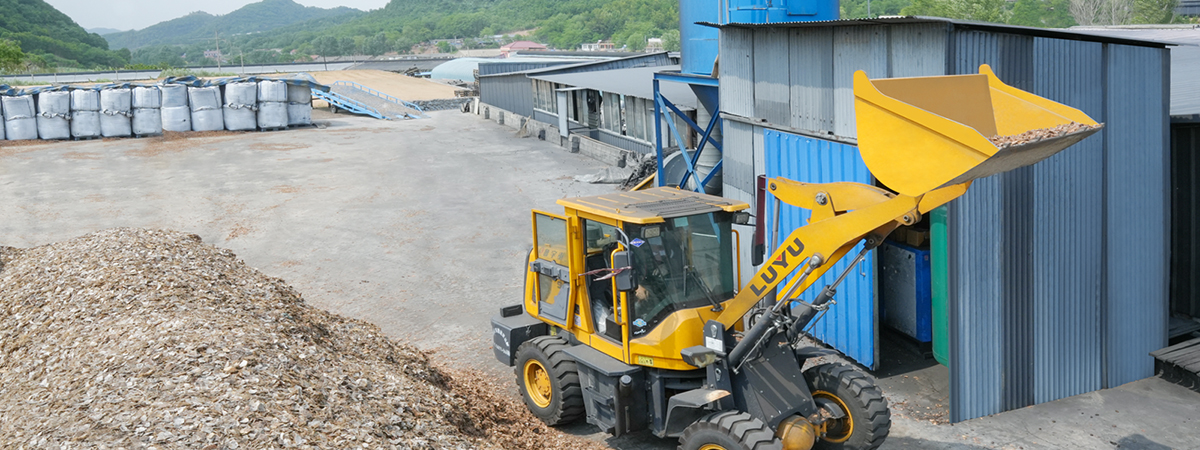
Why High-Volume Grilling Is Really a Specification Problem
In a garden setting, charcoal is forgiving. If the bed fades, someone adds a few more pieces; if it smokes, nobody is sitting downwind of it for three hours. In a commercial setting the same uncertainties turn into recurring costs that repeat every service. A reload mid-service pulls staff away from the pass. High ash volume adds handling, cooling, and disposal steps. Smoke and odour load the ventilation system and reach the dining room. Sparks near an open grate are a safety issue rather than an inconvenience. Batch-to-batch variance is the most expensive problem of all, because it makes grilling times unpredictable and turns a documented menu into a variable one.
For that reason, buyers at the decision stage rarely ask which charcoal is cheapest per kilogram. They ask which supplier can hold a documented performance envelope across repeated orders - because a specification that cannot be repeated at volume is not a specification, it is a sample.
The commercial weight of that question is growing. The global charcoal market was valued at USD 8.1 billion in 2025 and is projected to reach USD 11.6 billion by 2033, according to Grand View Research. (Source: Grand View Research, Charcoal Market Size & Share Report.) A meaningful share of that demand comes from food service, traditional cooking, and shisha consumption, where fuel performance is measured in service hours rather than in bags sold.
The opportunity for buyers is straightforward: suppliers that can evidence capability - with raw materials, forms, burn behaviour, and risk controls - are easier to qualify than suppliers that can only describe their products in adjectives. The rest of this article examines one barbecue charcoal range through that lens.
What FYC's TC-02 Barbecue Charcoal Actually Is
FYC is the export-facing name of Dalian Tiancheng Charcoal Industry Technology Co., Ltd., a charcoal manufacturer founded in 1990 and based in Dalian, Liaoning Province, China, that researches, develops, produces, and sells hookah charcoal, incense charcoal, and barbecue charcoal. The company operates a 6,000 square-metre facility with roughly 100 employees, including an eight-engineer R&D team, and reports annual output of 4,000,000 pieces with daily production exceeding 50 metric tons. Around 60% of output is exported, mainly to the Middle East and Europe.
Within that portfolio, TC-02 is the barbecue charcoal line positioned for long-duration, high-heat grilling rather than for short, casual use. It is offered in five product forms - Quadrilateral, Hexagon, 50mm Square-hole, Spherical, and Fangyuan - and is produced from three raw material families: bamboo sawdust, hardwood, and fruit wood.
Two documented performance figures anchor the range. Bamboo charcoal sticks are specified at 6-8 hours of burning time. Fruit wood quick light is specified at approximately 70 minutes. The two figures describe different jobs: the 6-8 hour figure speaks to extended service windows covered by a single loaded bed, while the 70-minute figure applies to the quick-light fruit wood format, where a shorter, more immediate burn is the objective.
Material is part of the specification here, not a marketing detail. Bamboo sawdust is the base of the bamboo charcoal stick format that carries the 6-8 hour figure. Hardwood contributes density and a steady heat profile. Fruit wood is used where ignition speed and aroma are part of the requirement. Together, the three materials cover the two operating modes of a commercial grill: holding heat for hours, and reaching heat quickly.
How Form and Material Shape What a Kitchen Experiences
Form is not cosmetic in charcoal. The geometry of an individual piece determines how pieces stack, how much air moves through the bed, and how consistently heat reaches the grate above. In practice this shows up in three things a kitchen measures every day: how fast the bed reaches cooking temperature, how evenly it holds it, and how often it has to be topped up.
| Product form | Behaviour in the fuel bed | Grilling patterns it suits |
|---|---|---|
| Quadrilateral | Flat faces stack tightly and hold a dense, slow-changing bed | Long service windows where the grate stays loaded for hours |
| Hexagon | Interlocking faces create stable stacks with consistent contact against the grate | Continuous grilling lines where even heat matters more than peak flare |
| 50mm Square-hole | Large-format piece with a central opening that lets air move through the bed, not only around it | Wide grate areas that need to be heated evenly |
| Spherical | Rounded pieces settle into irregular beds and leave airflow gaps as the bed collapses | Grills loaded and topped up continuously through a shift |
| Fangyuan | Square-round profile combining edge stacking with more varied air contact | Mixed grilling patterns where stacking and airflow both matter |
Buyers should confirm ordered dimensions, packing format, and batch documentation in writing before committing to a volume order. Form names describe a profile family, not a single fixed size, and the specification that matters is the one written on the purchase order.
The Numbers Behind the Range
FYC documents its premium charcoal line against common market charcoal and low-quality briquettes. The comparison is unusually specific, which makes it checkable - and checkable claims are what a decision-stage buyer should be looking for.
| Parameter | FYC premium charcoal line (documented) | Common market charcoal / low-quality briquettes |
|---|---|---|
| Carbon purity | Above 85-90% | - |
| Raw material | 100% natural material (coconut shell or bamboo), no chemical additives | - |
| Ash content | Below 3% | 6-10% |
| Calorific value | Above 7,800 kcal/kg | - |
| Burn time | Up to 120 minutes (shisha); 6-8 hours (BBQ) | 2-3 times shorter |
| Emissions | Zero smoke, zero odour, no sparks | - |
| Cost outcome | Lower total usage cost because fewer replenishments are needed per session | Higher in long-duration use |
A dash indicates that no comparative figure is documented for that parameter. The absence of a number is itself useful information: it shows where the comparison is evidenced and where it is not.
Ash content is the parameter with the most direct operational consequence. Moving from a 6-10% ash fuel to a sub-3% ash fuel reduces the mass of residue produced per kilogram burned. In a restaurant grilling for six hours a day, that difference appears as fewer ash drops during service, less dust around the station, and - per FYC's documentation - less frequent cleaning of exhaust systems.
Calorific value above 7,800 kcal/kg combined with carbon purity above 85-90% supports a more stable heat output. Stability is what a kitchen actually buys: fewer mid-service adjustments, more repeatable grilling times, and a menu that behaves the same way on a Tuesday as it does on a Saturday.
Smoke, odour, and spark behaviour belong to the same operational category. In an indoor or semi-enclosed restaurant, these are the variables that determine whether the grill can sit close to the dining room and how much ventilation capacity the venue needs to run.
Where the TC-02 Range Fits: Catering and BBQ Restaurants
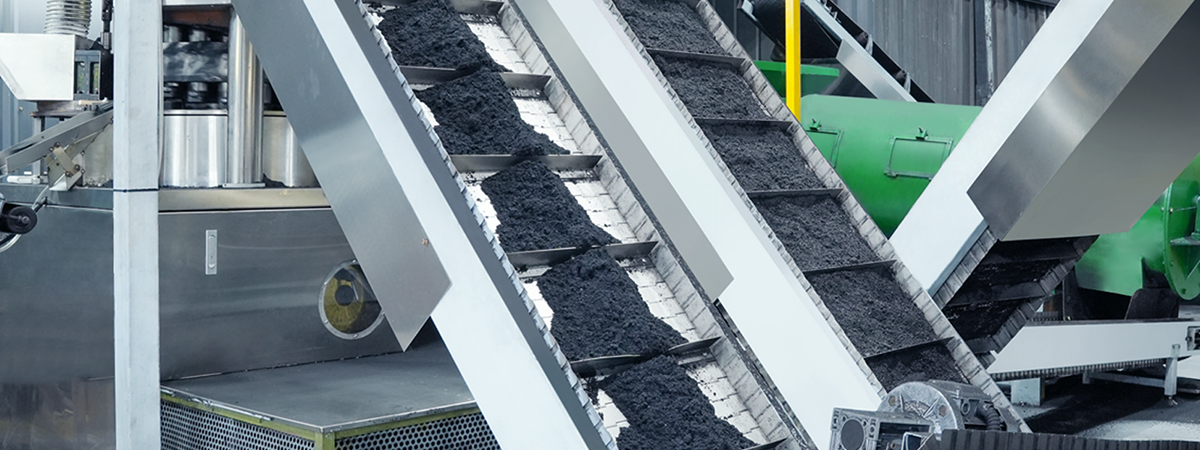
FYC positions its premium charcoal for high-end shisha lounges, premium BBQ restaurants, and long-duration outdoor camping - three settings that share the same requirements: extended heat, low smoke, and low maintenance.
The clearest commercial reference for the TC-02 barbecue range is restaurant and catering grilling. FYC's documented use case in South Korea's catering and BBQ restaurant sector (catalogued as Product 4980) reflects a typical operating pattern for the segment: high seat turnover across a long service window, grilling at the table or at a central station, and an indoor or semi-enclosed environment where smoke, odour, and ash handling affect both guest experience and operating cost.
In that environment, the design logic behind TC-02 maps onto the constraints operators actually manage. The 6-8 hour burn time documented for bamboo charcoal sticks is sized for a service that runs from lunch into the evening. The low ash figure reduces how often a station must be emptied. The absence of smoke, odour, and sparks keeps the ventilation load and the dining-room atmosphere under control. The five available forms let a kitchen match piece geometry to its grill type instead of adapting the grill to whatever fuel happens to be available.
Beyond restaurants, the same profile fits catering operations running mobile grill stations, hotel and resort barbecue events, and long-duration outdoor camping where reloading a bed mid-session is inconvenient or impractical.
Market Signals Behind the Move to Verified Charcoal
Several structural trends make documented capability more important than it used to be.
- Regional demand concentration. The Middle East and Africa accounted for 48.8% of global charcoal market revenue in 2025, largely because of traditional cooking and shisha culture (Grand View Research). Buyers in these markets tend to have deep product knowledge and compare on ash, burn time, and consistency rather than on price alone.
- Hookah charcoal as a distinct premium segment. The global hookah (shisha) charcoal market was valued at approximately USD 1.8 billion in 2025, with a projected CAGR of 6.2% through 2034 (Dataintelo). Premium brands recognised in the segment in 2025 include Cocourth, Coconara, Titanium, TOM Cococha, and Cocobrico - evidence that buyers at the top of this market pay for consistency and are willing to name the products that deliver it.
- Raw material diversification. Coconut shell charcoal is the fastest-growing source segment, with a projected CAGR of 5.0% for 2026-2033 (Grand View Research), favoured for high fixed carbon content and environmental sustainability. For suppliers working with bamboo sawdust, hardwood, and fruit wood, this is a signal to document what their own raw materials deliver rather than compete on generic natural-material claims.
- Origin concentration. Indonesia was the world's largest exporter of wood charcoal in 2024, with an export value of approximately USD 351.4 million, equal to 22.96% of global market share (Global Trade Data / Volza). Concentration at the origin end raises the value of suppliers that maintain raw material traceability and multi-source strategies.
- Tightening compliance. European safety standards for barbecue charcoal and briquettes are governed by EN 1860-2:2005, which specifies limits for ash content, fixed carbon, and moisture (CEN / DIN CERTCO). Buyers in regulated markets increasingly ask for batch-level data rather than a single test certificate.
TC-02 Against Common Market Charcoal - and Where It Does Not Fit
Comparing fuels is straightforward once the same parameters are used. The table above sets FYC's documented premium-line figures against common market charcoal and low-quality briquettes on purity, ash, calorific value, burn time, and emissions. The practical difference is not one number but the combination: lower ash means less handling, longer burn means fewer reloads, and stable heat means fewer adjustments mid-service. FYC's own comparison summarises the commercial outcome as a lower total usage cost, driven by fewer replenishments per session rather than by a lower purchase price.
Several limits matter as much as the advantages, and a buyer at the decision stage should weigh them explicitly.
- Unit price. A high-purity natural charcoal is not the cheapest option per kilogram. The total-cost argument depends on the operating pattern: it holds when sessions are long and the fuel bed is in continuous use. For low-volume or occasional grilling, a simpler and cheaper product can be the rational choice.
- Storage conditions. Natural charcoal is sensitive to moisture. FYC manages this with moisture-proof packaging, standardised palletising, temperature-monitored warehousing, 24/7 warehouse smoke detection, and regular fire-safety training - but the buyer's own warehouse conditions still determine whether the delivered specification survives to the point of use.
- Ash handling is reduced, not eliminated. Even a sub-3% ash fuel produces residue across a long service. The benefit is frequency of handling, not the disappearance of it.
- Form must match the grill. Five forms cover a wide range of grate designs, but not every form suits every setup. Dimensions and packing should be confirmed before a volume order is placed.
- Market-specific compliance. European buyers need to work to EN 1860-2:2005, which sets limits for ash content, fixed carbon, and moisture. That is a buyer-side requirement regardless of which supplier is selected.
In short, the TC-02 range suits operations that run long, hot, and frequently. It is a weaker fit for buyers whose primary constraint is the lowest possible unit price at low volume.
The Capability Question: Can a Supplier Hold the Specification?
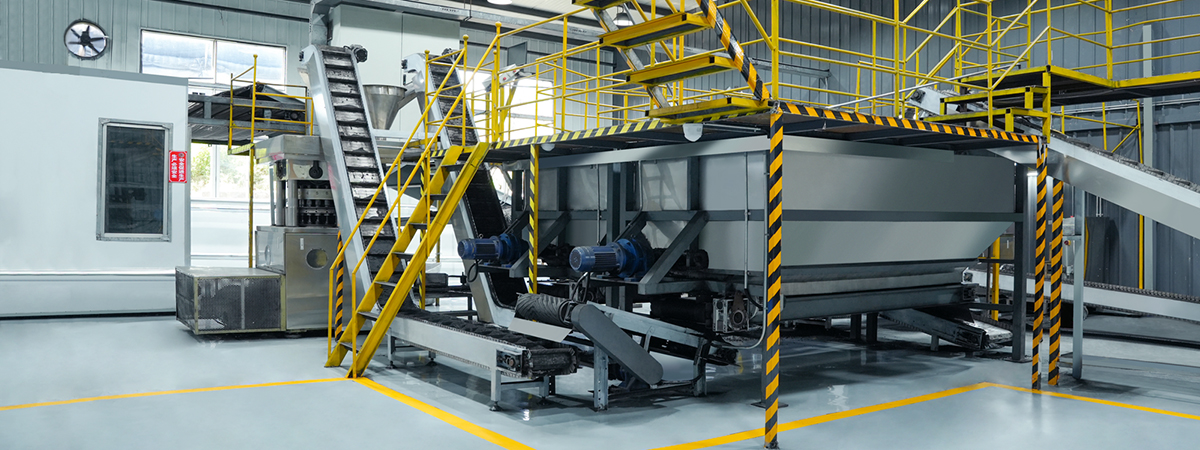
Specifications are easy to publish and hard to repeat. The evidence that matters at the decision stage is what a supplier does to keep the hundredth batch behaving like the sample.
FYC's documented controls address two risks directly. The first is raw material quality variation and supply chain disruption: full raw material traceability, strategic partnerships with more than 50 suppliers, third-party onsite assessment by Intertek, batch-by-batch sample testing, and a safety stock of raw materials covering at least three months. The second is flammability and fire risk during storage and transport: strict moisture control, temperature-monitored warehouse storage, moisture-proof packaging, standardised palletising, 24/7 warehouse smoke detection, and regular fire-safety training for all staff.
Production depth supports the same claim. FYC operates across three production routes - wood carbonisation charcoal, mechanism charcoal from wood-chip extrusion carbonisation, and mechanism charcoal from wood-powder moulding - supported by assembly-line equipment the company reports as capable of daily output exceeding 50 metric tons. For a restaurant chain or a distributor, that is the relevant capacity question: not what a factory can produce once, but what it can reproduce across a season.
What to Expect Next in Commercial Charcoal Sourcing
Three directions look well supported by current market data.
Verification will move down the supply chain. European standards such as EN 1860-2:2005 already specify limits for ash, fixed carbon, and moisture. As buyers in other regions adopt comparable checklists, batch-level documentation is likely to become a standard part of the purchase order rather than a special request - which favours suppliers that already test batch by batch.
Raw material mix will keep shifting. Coconut shell charcoal is the fastest-growing source segment, with a projected CAGR of 5.0% for 2026-2033 (Grand View Research). Suppliers built on bamboo sawdust, hardwood, and fruit wood will need to document what their materials deliver - burn time, ash, purity - rather than compete on generic natural-material positioning.
Origin concentration will remain a planning issue. Indonesia alone accounted for roughly 22.96% of global wood charcoal export value in 2024 (Global Trade Data / Volza). Both buyers and suppliers are likely to keep building multi-source strategies and safety stock, which is the direction FYC's stated three-month raw material buffer already points toward.
The commercial grilling segment is converging on a single conclusion that the TC-02 range is designed to answer: the fuel is part of the specification, and so is the supplier behind it.
FAQ
What product forms and raw materials does FYC's TC-02 barbecue charcoal use?
TC-02 barbecue charcoal is offered in five forms: Quadrilateral, Hexagon, 50mm Square-hole, Spherical, and Fangyuan. It is produced from three raw material families - bamboo sawdust, hardwood, and fruit wood - and is positioned for long-duration, high-heat grilling rather than for short, casual use.
How long does TC-02 charcoal burn, and how does that compare with standard briquettes?
FYC documents a burning time of 6-8 hours for bamboo charcoal sticks and approximately 70 minutes for the fruit wood quick-light format. Against common market charcoal and low-quality briquettes, FYC's comparison data puts its premium charcoal line at 2-3 times longer burn time, with up to 120 minutes documented for shisha use. Comparative figures should be confirmed against the batch documentation for a specific order.
What is the ash content, and why does it matter in a restaurant?
FYC documents ash content below 3% for its premium charcoal line, compared with 6-10% for low-quality briquettes. Lower ash means less residue per kilogram burned, which reduces the number of ash-handling cycles during service and, per FYC's documentation, reduces the frequency of exhaust system cleaning.
How does FYC control raw material quality and supply risk?
The company documents full raw material traceability, strategic partnerships with more than 50 suppliers, third-party onsite assessment by Intertek, batch-by-batch sample testing, and a safety stock of raw materials covering at least three months. These controls target raw material variation and supply chain disruption, which are the two most common causes of specification drift in charcoal supply.
What certifications does FYC hold, and what should European buyers verify separately?
FYC states SGS and ISO certification. Separately, European safety standards for barbecue charcoal and briquettes are governed by EN 1860-2:2005, which specifies limits for ash content, fixed carbon, and moisture. Buyers selling into the EU should verify batch-level test data against that standard; it is a market requirement that applies regardless of supplier.
Is TC-02 suitable for high-volume commercial grilling, and what are its limitations?
FYC positions its premium charcoal for high-end shisha lounges, premium BBQ restaurants, and long-duration outdoor camping, and documents a South Korea catering and BBQ restaurant use case (Product 4980). The limitations are equally specific: unit price is higher than low-grade briquettes; the total-cost advantage depends on long, continuous sessions; natural charcoal requires moisture-controlled storage; ash handling is reduced rather than eliminated; and the chosen form must match the grill's geometry.
How does FYC support supply continuity for distributors and restaurant chains?
FYC reports a 6,000 square-metre facility, approximately 100 employees, an eight-engineer R&D team, annual output of 4,000,000 pieces, and daily output exceeding 50 metric tons, with around 60% of production exported and main markets in the Middle East and Europe. Continuity is supported by three parallel production routes, raw material traceability, and the stated three-month safety stock.
Reference material: FYC publishes a downloadable company and product brochure covering its hookah, incense, and barbecue charcoal ranges at https://cdn.socialarks.com/sbsp/24902/common/2026/0615/Brochure.pdf. Company information is also published at fyc-charcoal.com.
Have Questions or Need More Details?
Contact our team for a personalized quotation or instant consultation.
Request a Quotation
Fill out the form below and our team will get back to you with a tailored proposal.
WhatsApp Direct Chat
Prefer to chat in real-time? Message us on WhatsApp for instant assistance & quick answers.
- Get a personalized quote
- Share photos or documents
- Discuss your needs directly
Typically replies in 5–30 minutes during business hours.