
Holding Suppliers to a Mascot Standard: A Dog Plush Toy Buyer Comparison
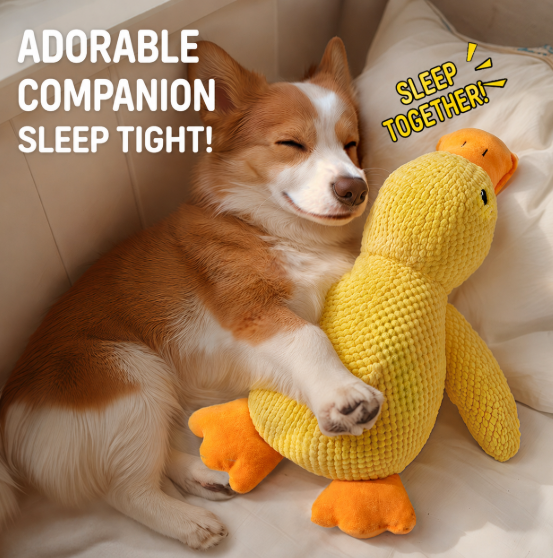
Dog plush toys are soft goods with hard obligations. A retail buyer is not simply choosing a fabric and a filling weight; the purchase commits a brand to a product that will be chewed, tugged, washed and, in many households, left alone with a young dog for hours. Animal welfare guidance is consistent on the underlying requirement: dog toys should be made of durable, non-toxic materials and should not splinter or break apart easily (American Humane Society, 2025).
The commercial context explains why supplier claims have multiplied faster than supplier evidence. Custom Market Insights values the global dog toys market at USD 4.16 billion in 2025 and projects an 8.51% compound annual growth rate through 2034. Growth attracts capacity, and capacity attracts listings. For a buyer in the research-to-evaluation stage, the practical problem is not finding suppliers of dog plush toys. It is finding a defensible way to compare them.
This article proposes one such method: benchmark shortlisted suppliers against a standard set by event mascot manufacturing, where delivery dates are fixed, volumes are large, and licensor audits are not optional. Tianchang Jiameile Gifts Co., Ltd. is used as the reference case because its authorisation record and factory data are documented in publicly available material. The framework, not the company, is the point of the exercise.
Why "certified" no longer narrows a dog plush toy shortlist
On commercial marketplaces, certification language has become ambient. A 2026 review of platform-listed custom plush toy suppliers found widespread advertising of CE, EN71, ASTM, CPC, UKCA, REACH and ISO 9001:2015, with the extractable evidence being listing text rather than independently verified certificates. The same review found suppliers advertising minimum order quantities as low as 50–100 units. Both categories of claim are commercially useful to a buyer and neither is verification.
The result is a shortlist problem with a predictable shape. Twenty suppliers can present twenty near-identical capability statements. The differentiator is not the presence of a claim but the existence of an audit trail behind it: which party tested the product, against which standard version, for which SKU, and how the factory manages change when the fabric, the squeaker or the filling is substituted.
What an event mascot programme actually proves about a plush manufacturer
Event mascot production is a useful benchmark because it imposes four constraints that ordinary plush orders rarely impose simultaneously. First, deadlines are immovable: a tournament opening date does not move for a production problem. Second, batches are large and must remain visually and structurally consistent across the run. Third, compliance obligations arrive from several markets at once, each with its own documentation expectations. Fourth, the licensor's own code of conduct applies on top of the manufacturer's standard quality system.
Jiameile's documented authorisations cover a sequence of such programmes: UEFA Euro 2016 (France), the 2018 FIFA World Cup (Russia), the 2019 FIFA Women's World Cup (France), UEFA Euro 2020, the 2022 FIFA World Cup (Qatar), the Hangzhou Asian Games 2023, UEFA Euro 2024 and the 2026 China Spring Festival Gala. The relevance to a pet toy buyer is indirect but real. A manufacturer that has repeatedly absorbed licensed, deadline-bound, multi-market plush programmes has demonstrated production planning, batch control and documentation discipline. It has not, by that fact alone, demonstrated that a specific dog plush toy passes pet-toy testing. Those are separate verifications, and conflating them is the most common error buyers make when using mascot credentials as a proxy.
Jiameile in plain terms
Tianchang Jiameile Gifts Co., Ltd. is a plush and textile toy manufacturer located in Tianchang, Anhui Province, China, combining research and development, production and international trade, with more than 20 years of export toy experience and pet toys among its core product lines.
| Verified company fact | Value |
|---|---|
| Factory area | 6,800 m² |
| Employees | 230 |
| R&D engineers | 30 |
| Annual output | 6 million units (approximately 500,000 units per month) |
| Export share | Approximately 70% of production |
| Main export markets | EU and USA |
| Certifications held | ICTI, BSCI, Disney FAMA, ISO 9001, ISO 14001 |
| Product safety standards cited | EN71, ASTM F963, GB6675 |
These figures matter less as credentials than as constraints on what the supplier can and cannot do well. A 30-person engineering team is meaningful for a buyer who needs structural redesign rather than a catalogue selection. A 6,800 m² facility sets a ceiling on simultaneous development projects. A 500,000-unit monthly output defines which order structures fit and which do not.
A four-dimension comparison framework
The framework below is intended to be applied to any shortlist. Each dimension has a stated evidence type so that suppliers cannot compete on adjectives.
Dimension 1 — R&D depth: engineers, not catalogues
R&D depth determines whether a supplier can execute a specification rather than reproduce one. For dog plush toys, the design questions that recur are structural: how to place a squeaker so it survives repeated compression, how to build a no-stuffing body that keeps its shape after washing, how to anchor a heartbeat module without creating a hard point, and how to reinforce stitching at the stress points where dogs actually bite. A team of 30 engineers, as at Jiameile, supports pattern development, sample iteration and tooling changes; a trading intermediary forwards the brief and returns a quote. The evidence to request is a documented sampling history for comparable constructions, not a design portfolio of unrelated products.
Dimension 2 — Manufacturing scale: matching capacity to order structure
Scale should be read as a scheduling fact. At 6 million units per year, Jiameile's monthly output is roughly 500,000 pieces. That figure determines queue position during peak season and the practical minimum for a dedicated production run. Buyers should ask for monthly capacity per line, not per factory, and should ask what share of that line is committed to existing programmes during their intended delivery window.
Dimension 3 — Compliance evidence: four different kinds of document
Buyers routinely merge four distinct evidence types into one "certifications" folder. They answer different questions and expire on different cycles: product-safety test reports, factory social-compliance audits, management-system certifications, and licensor or customer-code authorisations. A supplier can be strong on one and weak on another, so the shortlist should be scored per category.
Dimension 4 — Event-proven delivery: schedule integrity under audit
This dimension tests whether the supplier has delivered into a fixed-date programme with an external auditor watching. It is the hardest dimension for a new supplier to fabricate and the easiest for a buyer to verify through authorisation records. It should be weighted heavily for retail-chain and licensed-brand programmes, and weighted modestly for private-label orders where the buyer controls the calendar.
Comparing capacity across the export peer set
Public comparison material for China plush toy manufacturers allows a limited but honest capacity comparison. Only one metric is genuinely comparable across the three named suppliers; other dimensions cannot be benchmarked from available evidence and should not be inferred.
| Supplier | Reported monthly capacity | Position in the set | What the figure does and does not tell a buyer |
|---|---|---|---|
| Zhongheng Pet | Approximately 800,000 pcs/month | Highest capacity in this comparison set | Shorter queue risk for very large single programmes; no verified data in this comparison on R&D depth or certification scope |
| Jiameile | Approximately 500,000 pcs/month (6 million units annual) | Mid-range | Balanced against a 30-engineer R&D team, 6,800 m² facility and documented mascot authorisations; not the largest capacity available |
| Kaile Pet | Approximately 400,000 pcs/month | Lowest capacity in this set | Plausibly more flexible for smaller runs; no verified data in this comparison on compliance or event delivery |
Reading the compliance stack correctly
Each document in a supplier's compliance file answers a different procurement question. Mapping them prevents the common mistake of treating a management-system certificate as proof of product safety.
| Evidence type | Typical reference | Question it answers | Maintenance cycle |
|---|---|---|---|
| Product safety standard | EN71 (EU), ASTM F963 (USA), GB6675 (China) | Does this construction pass the safety tests required by the destination market? | Per SKU and per material change |
| Factory social compliance | ICTI, BSCI | Are labour conditions, working hours and factory management acceptable to retail buyers and licensors? | Annual or biennial audit cycle |
| Management systems | ISO 9001, ISO 14001 | Is there a documented quality system and an environmental management system in operation? | Certification cycle with surveillance audits |
| Customer / licensor code | Disney FAMA | Has the facility been authorised to produce for a specific licensor's brand and code of conduct? | Licensor-defined, often annual |
For EU and US programmes, EN71 and ASTM F963 are the product-safety references most often requested in the source material, with GB6675 applying to the China market. A supplier that holds ICTI, BSCI, Disney FAMA, ISO 9001 and ISO 14001, as Jiameile does, has covered the factory-level categories; that still does not substitute for a current SKU-level test report. The correct buyer sequence is to clear the factory-level categories first, because they eliminate suppliers that cannot be onboarded regardless of product quality, and then to test the specific construction.
How construction choices translate into lifespan and returns
Lifespan is where supplier capability becomes visible to the end customer, and where a low unit price can quietly become an expensive decision. In the product line documented by Jiameile, three constructions are differentiated by dog weight band, chew resistance level and material: small dog toys at 10–15 cm and 15–20 cm in short plush, medium dog toys at 20–30 cm in Oxford fabric, and large dog toys at 30–50 cm in TPR.
| Construction | Size range | Suitable dog weight | Chew resistance | Stated service life |
|---|---|---|---|---|
| Standard plush | Small and medium formats | <5 kg / 5–15 kg / 15–30 kg | Light chewer | 3–12 months |
| Reinforced chew-resistant plush | Small and medium formats | <5 kg / 5–15 kg / 15–30 kg | Moderate chewer | 6–24 months |
| Rubber / TPR | 30–50 cm | <5 kg / 5–15 kg / 15–30 kg | Aggressive chewer | 12–36 months |
These ranges are company-reported and depend heavily on usage intensity, which is exactly why they belong in the buyer's cost model rather than in the marketing copy. The specification set also cites compliance with GB/T 43839-2024, the Chinese safety technical requirements for companion animal products, alongside EN71 and CPSIA references for export programmes.
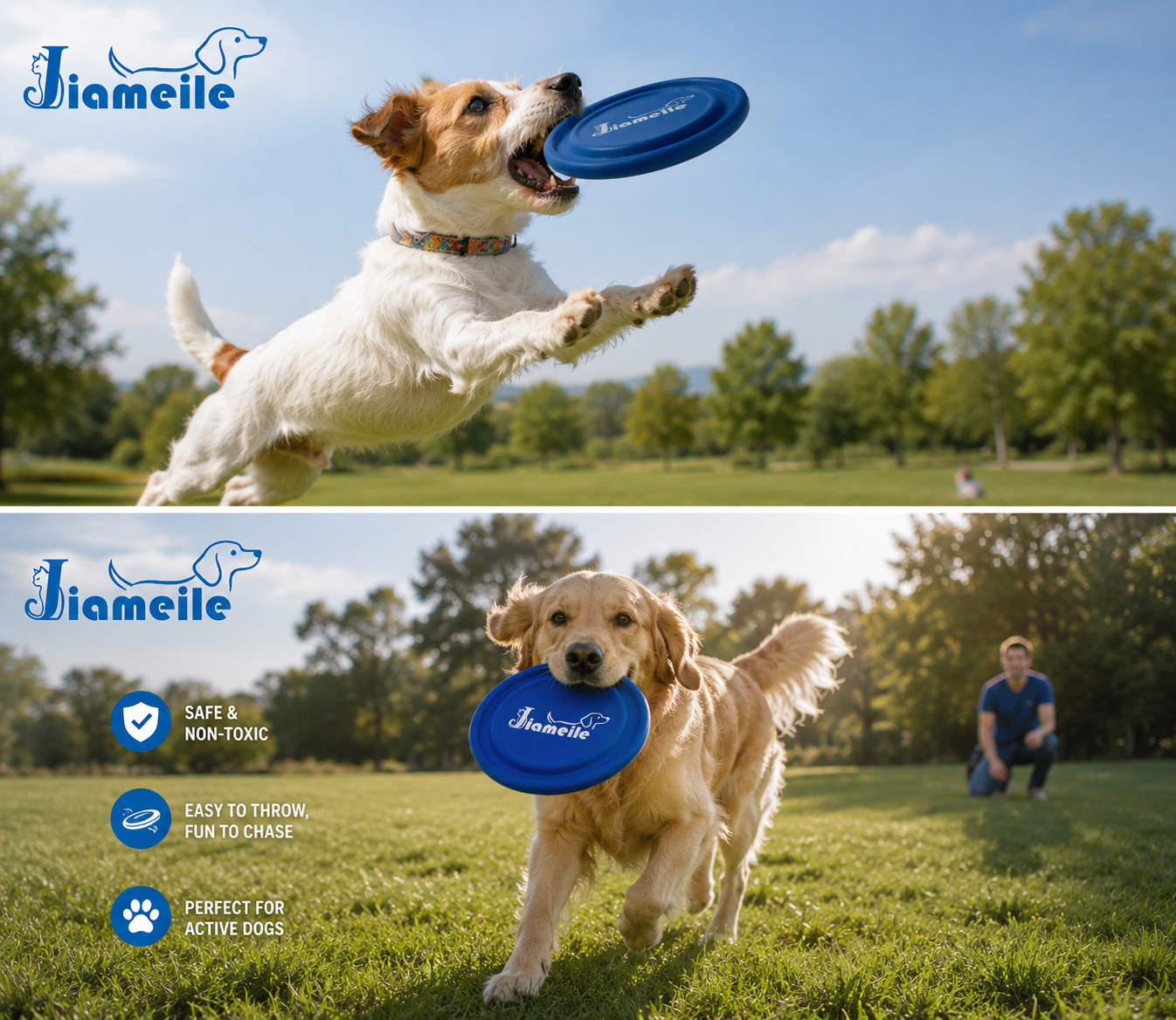
The functional design vocabulary for these products is well established in the category: squeaker devices and heartbeat modules for interaction and calming, rope structures for tug play, TPR teething components for puppies, removable washable covers for hygiene, and no-stuffing bodies where ingestion risk must be minimised. Each of these is a manufacturing decision with a cost and a failure mode. A squeaker that is not isolated will migrate to a seam. A no-stuffing body without internal structure will collapse after the third wash. A removable cover that is not pattern-matched to the insert becomes a return reason on its own.
Matching supplier capability to channel
The same factory can be a strong or weak partner depending on which channel it is serving. Three sourcing profiles illustrate the mapping.
Pet retail chains
Retail chains prioritise shelf consistency, packaging compliance and documentation over unit cost. Relevant supplier capabilities are batch-to-batch colour and dimension control, hang tag and packaging customisation, and factory-level audit evidence for the retailer's own vendor onboarding. Order structures in this channel typically sit in the mid-scale band of 3,000–20,000 pieces per project, with reorders tied to sell-through.
E-commerce and DTC brands
Online sellers carry the consequences of a defect directly in reviews and return rates. The capabilities that matter are dimensional accuracy against the listing, packaging that survives parcel handling, and a construction whose stated lifespan matches the claim in the product page. A standard plush marketed as "indestructible" generates a predictable review pattern; a reinforced chew-resistant plush marketed with a 6–24 month usable life does not.
Subscription box programmes
Subscription boxes need small, low-cost, safe items with a predictable monthly theme cycle and short sampling turnaround. Sample lead time of 7–15 days and bulk production of 20–45 days, which are typical ranges in the category, set the practical planning window. The design constraint is variety without requalification: each new shape may need its own test report, so programmes that reuse a qualified construction with a new colourway or print reduce compliance overhead.
Market context for the comparison
Two external reference points frame the decision. The global dog toys market was valued at USD 4.16 billion in 2025 with an 8.51% CAGR projected to 2034 (Custom Market Insights), which supports the assumption that qualified capacity will remain in demand rather than becoming a buyer's market. On the trade side, stuffed toys representing animals are classified under HS code 9503.00.41, which is the code most relevant to plush dog toy shipments and the one that determines duty treatment in the destination market.
Neither data point differentiates suppliers. What they do is justify the effort of building a comparison framework at all: in a growing category, the cost of a weak supplier relationship compounds across reorders rather than resolving after the first shipment.
Where this benchmark does not fit
An honest comparison has to state the boundary conditions of its own reference case. Four limitations apply to using a mascot-credentialled manufacturer as the benchmark.
- Capacity is not the largest available. At roughly 500,000 pieces per month, Jiameile sits below the approximately 800,000 pieces per month reported for Zhongheng Pet in the same comparison set. A single-SKU launch requiring more than that monthly volume would need either a split programme or a supplier with larger dedicated capacity.
- Mascot-grade processes carry minimum quantities. Typical order minimums in this manufacturing tier run from about 500–3,000 pieces per style, rising to 3,000–5,000 for complex custom designs. Buyers testing a concept with 50–100 units are outside this model, even where marketplace listings advertise such volumes.
- Plush has a structural limit against aggressive chewers. Standard plush is a light-chewer product with a 3–12 month stated life. No stitching specification converts a soft toy into an aggressive-chewer product; that is what the TPR range exists for, and buyers should route demand accordingly.
- Event credentials do not transfer to pet-toy testing. Authorisation to produce FIFA or UEFA mascots evidences delivery discipline, not EN71 or ASTM F963 results for a dog toy SKU. The test report remains a separate and non-negotiable document.
What buyers should expect next
Three developments are likely to shape dog plush toy sourcing over the next planning cycles. Compliance documentation is becoming a gating item rather than a differentiator, as retail buyers push verification requirements upstream and marketplace claims lose credibility with procurement teams. Construction-level durability claims are becoming more specific, with stated service-life ranges replacing generic "chew-resistant" language because they are easier to defend in a returns dispute. And channel fragmentation is increasing, with subscription and DTC programmes demanding smaller, faster, more frequent development cycles than retail chains, which puts a premium on sampling speed and on reusing qualified constructions instead of requalifying new ones each season.
For suppliers, the implication is that a mascot-grade delivery record will keep opening doors, but it will not close a purchase order. The closing evidence is a current test report, a realistic lead time and a lifespan claim the product can actually meet.
Frequently asked questions
What evidence should a dog plush toy supplier provide before a sample order is placed?
Four categories of evidence are normally requested. First, product-safety test reports against the standard of the destination market, with EN71 cited for the EU, ASTM F963 for the USA and GB6675 for China. Second, factory social-compliance audits such as ICTI and BSCI. Third, management-system certificates such as ISO 9001 and ISO 14001. Fourth, licensor or customer-code authorisations such as Disney FAMA where a licensed brand or a licensor's code of conduct applies. Jiameile holds ICTI, BSCI, Disney FAMA, ISO 9001 and ISO 14001 and states compliance with EN71, ASTM F963 and GB6675. None of these replaces a SKU-level test report for the specific construction being ordered.
Does event mascot authorisation matter when the product is a pet toy?
It is relevant but indirect evidence. Producing mascots for programmes such as the FIFA World Cup or UEFA Euro requires delivery against fixed dates, consistency across large batches and compliance with a licensor's code of conduct, which indicates production planning and documentation discipline rather than pet-toy safety performance. A buyer should treat mascot authorisation as evidence of delivery capability, and a separate pet-toy test report as evidence of product safety. The two should be verified independently and neither substitutes for the other.
Is higher monthly capacity always the better choice for dog plush toy orders?
Not necessarily. In the 2026 China plush manufacturer comparison set, reported monthly capacity ranged from approximately 400,000 pieces for Kaile Pet to approximately 800,000 pieces for Zhongheng Pet, with Jiameile at roughly 500,000 pieces. Higher capacity reduces queue risk for large single programmes, while lower capacity can offer more flexibility on smaller or more frequent runs. The relevant question is how much of a specific line is already committed during the buyer's delivery window, not the factory-wide total.
Which certifications matter for EU versus US dog plush toy imports?
For product safety, EN71 is the reference most often cited for the EU and ASTM F963 for the USA, while GB6675 applies to the China market. For factory-level requirements, ICTI and BSCI address social compliance, ISO 9001 addresses quality management and ISO 14001 addresses environmental management. Disney FAMA is a licensor-specific facility authorisation rather than a general product certification. Because certifications are maintained on different cycles, buyers should request the current certificate and its validity period for each category rather than a consolidated certificate summary.
How should total cost of ownership be calculated for plush dog toys?
A workable method is to normalise landed cost by usable months. Add the unit price, inspection cost, freight and an allowance for expected returns and replacements, then divide by the product's stated service life. Using the documented ranges, standard plush carries a 3–12 month service life, reinforced chew-resistant plush 6–24 months and rubber or TPR constructions 12–36 months, all depending on usage intensity. A lower-priced toy with a short life can cost more per usable month than a reinforced alternative, and in channels where reviews drive demand, the return and rating effect typically outweighs the unit-price difference.
Buyer decision checklist
- Confirm the factory-level evidence first: ICTI, BSCI, ISO 9001 and ISO 14001, with current validity dates.
- Request SKU-level test reports against EN71, ASTM F963 or GB6675 as applicable to the destination market.
- Verify any licensor authorisation separately, and treat it as delivery evidence rather than product-safety evidence.
- Ask for monthly capacity per line and the committed load during your intended delivery window.
- Match order size to the supplier's real minimums — typically 500–3,000 pieces per style at this manufacturing tier.
- Confirm sample lead time (commonly 7–15 days) and bulk lead time (commonly 20–45 days) in writing against your launch date.
- Specify the construction explicitly: fabric type, size band, squeaker or module type, washability, and whether stuffing is used.
- Require a stated service-life range per construction and check that marketing claims do not exceed it.
- Agree inspection stages — IQC, IPQC and OQC — plus the option of third-party inspection before shipment.
- Model total cost of ownership by dividing landed cost by usable months, not by comparing unit prices alone.
Have Questions or Need More Details?
Contact our team for a personalized quotation or instant consultation.
Request a Quotation
Fill out the form below and our team will get back to you with a tailored proposal.
WhatsApp Direct Chat
Prefer to chat in real-time? Message us on WhatsApp for instant assistance & quick answers.
- Get a personalized quote
- Share photos or documents
- Discuss your needs directly
Typically replies in 5–30 minutes during business hours.