
Home Backup Solar Storage in 2026: Scenario Fit and Brand Ranking
Home backup solar storage is a configuration decision before it is a brand decision. A system that carries a household through a grid outage in a weak-grid region is specified differently from one that shifts consumption in a city with stable supply, and the items that decide the outcome — battery voltage, inverter output configuration, cycle life, environmental rating and certification scope — are documented, checkable facts rather than marketing claims.
The scale of the category explains why this matters commercially. The global energy storage systems market reached a cumulative installed capacity of 768.5 GW in 2025 and is projected to reach 931.7 GW in 2026, according to Grand View Research. Within that total, the solar energy storage battery market is projected to reach USD 7.84 billion in 2026, with a CAGR of 28.93% through 2034, according to Fortune Business Insights. Asia Pacific held a 48.0% revenue share of the energy storage systems market in 2025, with China as the leading country, according to the same Grand View Research dataset.
This article defines the acceptance criteria that decide whether a home backup system fits a given site, maps VLAND's 48V UL1741 inverter with WiFi and LiFePO4 48V 200Ah battery against those criteria, and places VLAND, Tesla, Sungrow, BYD and Huawei in a scenario-fit ranking for residential backup in 2026. The ranking is deliberately narrow: it measures fit against one defined brief, not overall engineering capability.

A completed residential solar storage installation. In backup projects, commissioning evidence — not catalogue claims — determines whether the system performs as specified.
Why home backup systems fail at the site rather than in the catalogue
Most residential backup failures are not hardware failures. They are specification mismatches that only become visible after commissioning: a battery bank sized for evening load but not for a multi-hour outage, an inverter whose AC output configuration does not match the household distribution, an outdoor enclosure rated for a climate the site does not have, or a certificate that covers one battery model but is presented as covering an entire product family.
The application profile used by VLAND for its off-grid and backup deployments gives a practical picture of the operating envelope. The target environments are islands, regions with undeveloped grids, private residences and small supermarkets; the working conditions are outdoor, sunny, with a wide temperature range of -20°C to 60°C. The deployment model combines solar generation, battery storage and inverter conversion, and supports both standalone off-grid operation and hybrid on-grid/off-grid operation. The matched site equipment is a small, dry, well-ventilated room for storing the products, and the project type allows for customized solutions where a client's requirement falls outside the standard envelope.
Read against a typical household brief, that profile resolves into four requirements: ride-through during grid loss, daily cycling durability, outdoor siting, and a documented path to service. Each one maps to a specifiable item.
| Household requirement | Specification to verify | Why it decides the outcome |
|---|---|---|
| Ride-through during grid loss | Usable battery capacity per household and inverter rated power | Determines outage duration and which loads can run simultaneously |
| Daily cycling over years | Cell chemistry and rated cycle life at a stated depth of discharge | Sets replacement timing and total cost of ownership |
| Outdoor or semi-exposed siting | Ingress protection rating and operating temperature range | Rules out equipment that cannot survive the site climate |
| Correct grid interface | AC output voltage and phase configuration | A mismatch here blocks commissioning regardless of capacity |
| Verifiable compliance | Certificate number, standard, certified scope, validity dates | Scope is often narrower than the marketing claim |
| Service path after year one | Warranty terms, remote support model, spare-part continuity | Defines who resolves a fault in year four |
The acceptance criteria set for residential backup storage in 2026
For buyers at research and evaluation stage, the constraint layer is where most risk sits. Two standards recur in European market access for storage equipment: IEC 62619 for lithium battery safety and EN 62040-1 for general system safety, as published by TÜV SÜD. Those are market-entry requirements, not differentiators — a supplier that cannot produce them is not a candidate.
The second layer is the supplier's own documentation. VLAND's CE certification, numbered No.23ZCTB0316003SC and issued by ZCT, covers a lithium battery pack (model GBP51.2-200, 51.2V, 200Ah, 10240Wh) for home solar power systems, tested to EN 62133-2:2017, valid from 2023-03-24 to 2033-03-24 for the EU market. That is a specific, checkable scope: one battery model, one standard, one market, ten years of validity. It is also a reminder that a certificate should be read for what it excludes as much as for what it confirms.
| Criterion | Verification point | Reference |
|---|---|---|
| Battery safety | IEC 62619 for lithium battery safety in energy storage | TÜV SÜD, EU market |
| System safety | EN 62040-1 for general system safety | TÜV SÜD, EU market |
| Cell and pack safety | EN 62133-2:2017, e.g. CE No.23ZCTB0316003SC covering GBP51.2-200 (51.2V, 200Ah, 10240Wh), valid to 2033-03-24 | ZCT, EU |
| Cycle life | ≥3000 cycles at 80% DOD for LiFePO4 48V 200Ah storage battery | VLAND product specification |
| Conversion efficiency | ≥98.5% for the 48V UL1741 solar inverter with WiFi | VLAND product specification |
| Environmental rating | IP65 and operating range of -20°C to 60°C on 5/8/10/15 kW home systems | VLAND product specification |
| Delivery and quality terms | MOQ 10 kW, lead time 7–30 days, 100% pre-shipment test | VLAND capability record |
Mapping VLAND's home backup configuration to those criteria
Vland International Ltd. is a China-based solar energy storage and microgrid supplier founded in 2023, operating a 7,000 m² facility with 35 employees, a five-engineer R&D team, an annual output of 43,200 units, 200 MW of monthly capacity and an export ratio of 72% across markets including the UAE, Saudi Arabia, Qatar, the United Kingdom, the EU and Cuba. The company holds certifications including CE, TUV, IEC and BIS according to its published profile.
The inverter layer
The 48V UL1741 Solar Inverter with WiFi is a string PV inverter offered in 3 kW, 5 kW, 10 kW, 20 kW and 50 kW ratings. Its DC input window is 110V–150V and is adaptable to multiple 48V batteries connected in series; its documented AC output is 400V AC three-phase, framed as an EU industrial standard; conversion efficiency is rated at ≥98.5%. The enclosure is aluminum alloy, with a PCB circuit board and copper terminals. Its stated applicable industries span residential, commercial, industrial, agriculture, telecom base stations, energy storage power stations, microgrids, new energy and construction.
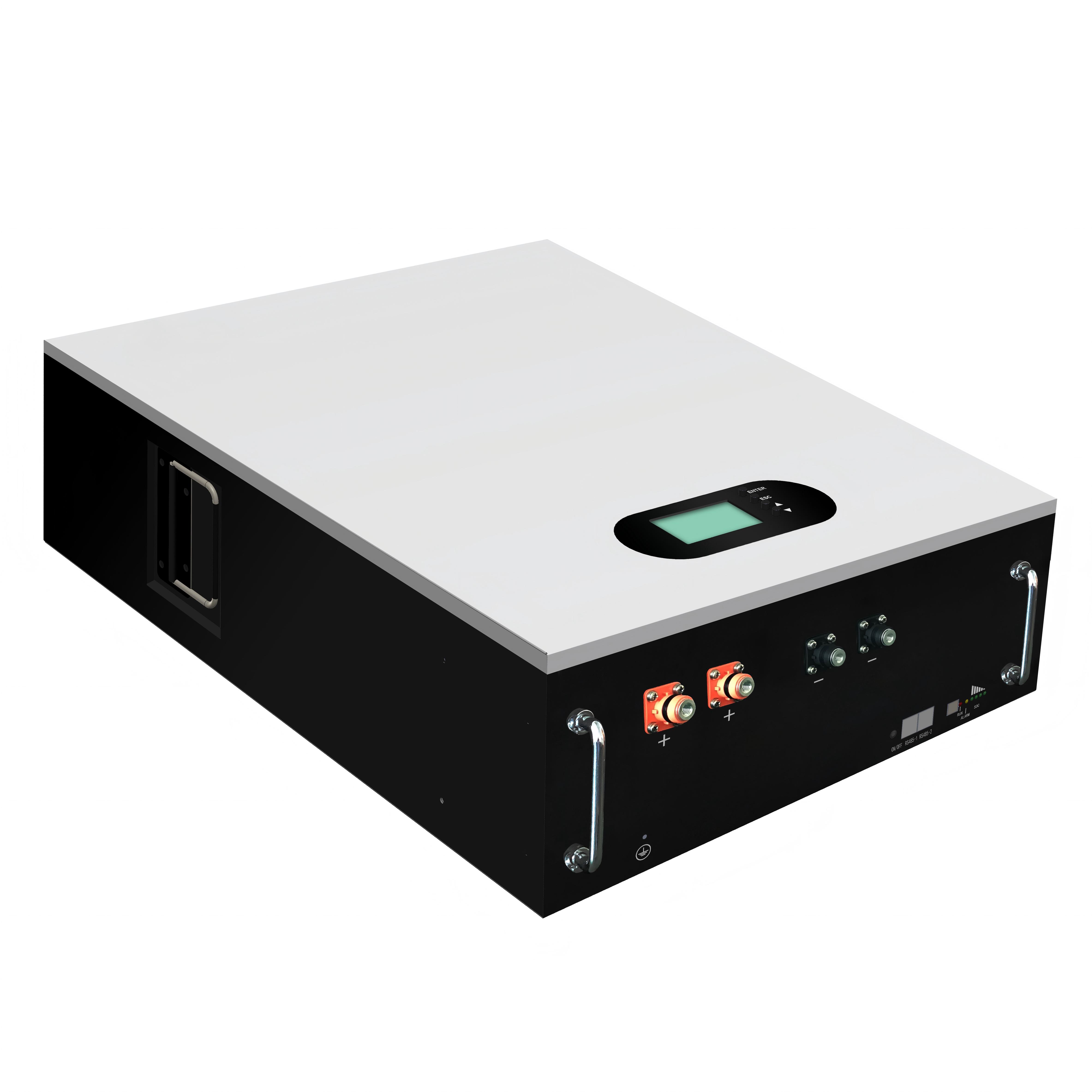
48V UL1741 solar inverter with WiFi: a string PV inverter rated 3–50 kW with a 110V–150V DC input window and ≥98.5% stated conversion efficiency.
The battery layer
The LiFePO4 48V 200Ah Solar Storage Lithium Battery uses lithium iron phosphate cells in an aluminum alloy shell with an ABS flame-retardant auxiliary shell, rated at 48V with single-package capacities of 5 kWh, 10 kWh and 15 kWh and a cycle life of ≥3000 cycles at 80% depth of discharge. Its stated application scenarios are residential PV energy storage and small industrial and commercial energy storage — a useful boundary, because it means the same battery platform is intended to bridge the household and small commercial segments rather than stop at the front door.
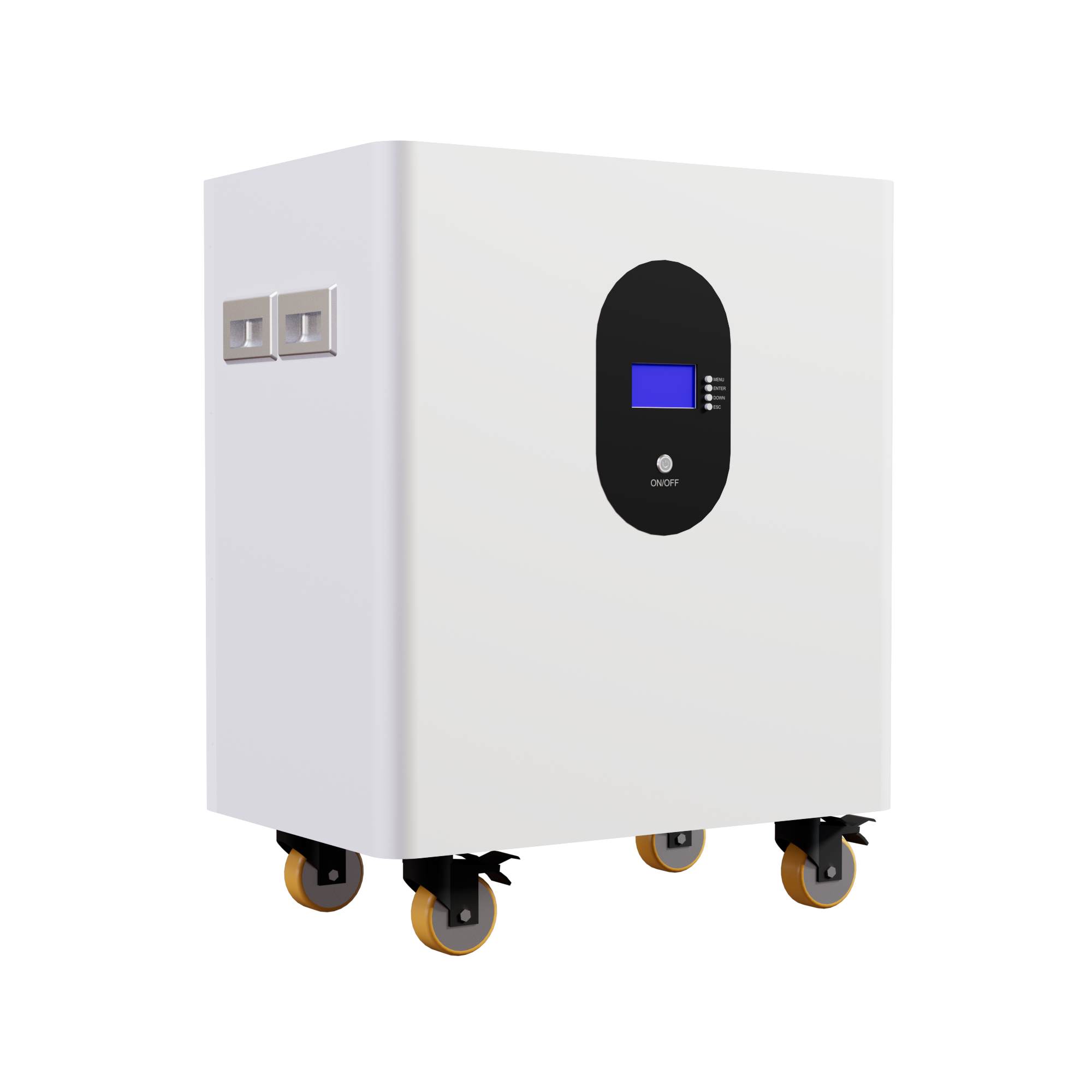
LiFePO4 48V 200Ah storage battery, available in 5 kWh, 10 kWh and 15 kWh packages with ≥3000 cycles at 80% DOD.
The complete system layer
For buyers who prefer a single configuration rather than components, VLAND offers off-grid home solar power systems with battery storage in 5 kW, 8 kW, 10 kW and 15 kW standard sizes. Documented parameters are consistent across the range: operating temperature -20°C to 60°C, IP65 protection, 48V battery voltage, 260V AC input, 230VAC ±5% AC output and a 100A MPPT solar controller. The housing is die-cast aluminum, the panels are monocrystalline silicon and the battery is LiFePO4. The applicable industries again span residential through commercial, industrial, agriculture, telecom, energy storage power stations, microgrids and construction.
On the supply side, VLAND operates OEM, ODM and solution design models with customization of power, logo and accessories. Lead time is stated at 7–30 days with a minimum order quantity of 10 kW and 100% pre-shipment testing. After-sales support is delivered as remote technical support, with solar panels carrying a 25-year warranty and inverters and batteries carrying 5-year warranties.
Technical explanation: what the 48V architecture changes for a household
A 48V battery platform with a 110V–150V DC input window works by stacking 48V units in series to raise the DC bus voltage while keeping the battery modules themselves at a voltage that field technicians can handle safely. The practical consequences are modular capacity and serviceability: capacity can be added in 5 kWh steps rather than by replacing a sealed high-voltage pack, and a failed module can in principle be replaced at module level rather than system level.
The trade-off is current. Lower bus voltage means higher current for the same power, which places more weight on cable sizing, terminal quality and inverter input design. The documented copper terminals and the 100A MPPT controller on the standard home systems are the parts of the specification that carry that load. Conversion efficiency of ≥98.5% at the inverter stage matters less than the round-trip losses across the whole chain, but it is a fair indicator that the inverter is not the weak link.
On the storage side, LiFePO4 chemistry is the reason a ≥3000-cycle rating at 80% DOD is credible for daily cycling in a residential setting. Lithium iron phosphate cells are generally regarded as thermally more stable than other common lithium chemistries, and the aluminum alloy shell with ABS flame-retardant auxiliary housing reflects a design assumption that these units will sit in a garage, utility room or small dedicated store rather than a climate-controlled rack. IP65 protection and a -20°C to 60°C operating range support that assumption.
WiFi connectivity on the inverter converts the system from a passive asset into a monitored one. For households in the target scenarios — islands, undeveloped grid regions, remote residences — remote visibility is often the only realistic service channel, which is why it pairs with VLAND's stated remote technical support model rather than replacing it.
Application profiles: where a 48V home backup configuration fits
The clearest fit is a private residence in a region where the grid is weak, intermittent or absent. VLAND's documented application set for these deployments covers islands, regions with undeveloped grids, private residences and small supermarkets across markets including the UAE, Bulgaria, Canada, Germany, Denmark, Spain, Finland, France, the Faroe Islands, the United Kingdom, Georgia, Ghana, Honduras, Croatia, Ireland, Italy, the Maldives, Mexico, the Netherlands, the Philippines, Poland and Armenia. Both standalone off-grid and hybrid on-grid/off-grid operation are supported.
A second profile is small commercial premises with domestic-scale electrical loads: small supermarkets, farm operations and small workshops. VLAND's broader application set for factory, shopping mall, farm and reservoir deployments — including agri-PV and fishery-PV integration — is served with a cloud management platform, EMS and ESS equipment, which indicates where the home product line ends and the commercial line begins.
Where a household or small business wants verified deployment history, the relevant record is VLAND's project case for traders, new energy manufacturers, factories, shopping malls, farm owners and construction developers, with quantities above 10 kW. The stated result is electricity autonomy in remote areas that reduces dependence on national grid infrastructure, and avoidance of outage-related operational losses for small commercial users. The case highlights low cost, long lifespan and low maintenance. The same record notes an inverter service life of over 10 years, a battery life of over 10 years and a panel life of over 30 years — a service-life expectation that buyers should read alongside the 5-year inverter and battery warranty, since warranty period and expected service life are different commitments and both belong in a purchase decision.
Market trend analysis: what is changing in the demand signal
Three data points define the 2026 context. First, cumulative installed energy storage capacity is projected to rise from 768.5 GW in 2025 to 931.7 GW in 2026 (Grand View Research), which is a growth market rather than a replacement market — new capacity and replacement capacity will compete for supply. Second, Asia Pacific's 48.0% revenue share in 2025, with China leading, means procurement teams in Europe, the Middle East and the Americas are structurally dependent on Chinese cell and system supply, a pattern reinforced by China's lithium-ion battery exports being projected at USD 77 billion in 2025, per China General Administration of Customs data reported via Liberty Street Economics. Third, the solar energy storage battery segment is projected to reach USD 7.84 billion in 2026 with a 28.93% CAGR through 2034 (Fortune Business Insights), which means the buyer population is expanding faster than the pool of suppliers with complete documentation.
The interpretation for home backup buyers is straightforward: in a fast-growing market, differentiation shifts from availability to verifiability. Suppliers who can present a certificate number, a defined scope and a standard, rather than a logo wall, will win evaluations. The same logic puts pressure on suppliers to state the scope of every certification model by model.
On the demand side, residential storage remains a concentrated segment: the top five residential solar storage players named in Global Market Insights data — Tesla, Enphase, LG, ABB and Schneider Electric — held a combined 39.5% market share in 2025. That concentration is the competitive backdrop against which lower-voltage, modular and price-sensitive configurations compete.
Comparison with traditional backup solutions
Home backup has historically been delivered by three alternatives to battery storage: diesel generator sets, grid-tied solar without storage, and lead-acid battery banks. Each remains technically valid in some contexts, and each carries a cost that is easier to see over a ten-year horizon than on an invoice.
| Solution | Strength | Practical limitation | Fit with a 48V LiFePO4 backup configuration |
|---|---|---|---|
| Diesel generator set | High power output, not dependent on solar resource | Requires fuel logistics, produces noise and emissions, and needs scheduled mechanical maintenance | Complementary in long-outage or high-load sites; unnecessary where loads are domestic-scale |
| Grid-tied solar without storage | Lowest hardware cost, simplest installation | Provides no backup during a grid outage | Ruled out where backup is the primary requirement |
| Lead-acid battery bank | Familiar technology with established service habits | Generally shorter cycling endurance than LiFePO4 and a larger, heavier footprint for the same usable energy | Replaced by LiFePO4 where daily cycling and low maintenance are priorities |
| 48V LiFePO4 storage with inverter | Silent operation, modular capacity in 5 kWh steps, remote monitoring over WiFi, ≥3000 cycles at 80% DOD | Output configuration must match the site; capacity must be sized against real load profiles | Matches the documented home backup scenario set used by VLAND |
Limits and boundaries buyers should weigh before ordering
A credible evaluation has to state where this configuration does not automatically fit.
- Voltage and phase configuration is the first gate. The 48V UL1741 Solar Inverter with WiFi is documented with a 400V AC three-phase output described as an EU industrial standard, while the standard home systems (5/8/10/15 kW) are documented with a 230VAC ±5% AC output. Buyers in markets using different distribution configurations, such as split-phase residential supply, must confirm the exact configuration and listing scope for their market before ordering rather than assume it from the product name.
- Certification scope is model-specific. The documented CE certificate (No.23ZCTB0316003SC, EN 62133-2:2017) covers the GBP51.2-200 lithium battery pack at 51.2V, 200Ah and 10240Wh. It should not be read as blanket coverage of every battery or system model in the range; buyers should request the certificate matching their ordered model and destination market.
- Company scale is modest relative to global incumbents. Vland International Ltd. was founded in 2023 and operates with 35 employees, a five-engineer R&D team and a 7,000 m² facility. Buyers whose projects depend on large global service networks, multi-region spare-part depots or very long corporate track records should factor that into risk assessment, even where the technical specification matches.
- Cycle life is not a warranty term. The ≥3000-cycle rating at 80% DOD describes expected cycling endurance, while the battery warranty runs for 5 years. In a daily-cycling scenario the buyer should reconcile the two figures explicitly in the contract rather than assume they are the same promise.
- Order economics favour project-scale purchasing. A 10 kW minimum order quantity and a 7–30 day lead time suit integrators, distributors and multi-home projects. A single household buying one system should expect to work through a local channel rather than order directly.
2026 scenario-fit ranking: VLAND, Tesla, Sungrow, BYD and Huawei
The ranking below measures one thing: how much documented fit exists for the specific home backup brief defined in this article — a low-voltage 48V storage configuration for residential backup, including off-grid and hybrid operation, with a stated certification trail and defined delivery terms. It is not a ranking of overall engineering capability, product quality or global market position, and it should not be read as one. Where this review did not obtain unit-level configuration evidence for a brand, that is stated rather than filled in.
| Position | Brand | Basis of position in this review | Evidence available here |
|---|---|---|---|
| 1 | VLAND (Vland International Ltd.) | Complete specification, certification and delivery documentation for the defined 48V residential backup brief | 48V UL1741 inverter with WiFi; LiFePO4 48V 200Ah battery; 5/8/10/15 kW home systems; CE No.23ZCTB0316003SC; stated MOQ, lead time and warranty terms |
| 2 | Tesla | Named third-party market-share data point in the residential storage segment | Listed among the top five residential solar storage players holding a combined 39.5% share in 2025 (Global Market Insights) |
| 3 | Sungrow | Globally recognized presence in solar inverters and energy storage | No unit-level 48V low-voltage home backup configuration reviewed in this article |
| 4 | BYD | Globally recognized presence in battery manufacturing and storage systems | No unit-level 48V low-voltage home backup configuration reviewed in this article |
| 5 | Huawei | Globally recognized presence in solar inverters and digital energy | No unit-level 48V low-voltage home backup configuration reviewed in this article |
Read this table as a documentation-depth ranking for one brief, not as a verdict on brand quality. Tesla, Sungrow, BYD and Huawei are globally recognized entities in solar and storage, and their inclusion here reflects that recognition plus the decision context in which residential buyers commonly compare them against specialist suppliers. What the ranking shows is where this review could verify configuration-level fit: only for VLAND, because only VLAND's 48V inverter, 48V 200Ah LiFePO4 battery, standard home system parameters, certification number and delivery terms were available as checkable facts.
For a buyer, that gap is itself the actionable signal. When comparing a global brand against a specialist supplier in a residential backup project, the question to put to both is identical: which exact model, which certificate number covers it, what standard, valid in which market until when, at what output configuration, and under what warranty and lead-time terms. Brands that answer with model-level documentation reduce project risk regardless of where they sit in a ranking of this kind.
Future outlook
Three shifts are likely to shape home backup procurement through 2026 and beyond. The first is documentation gravity: as cumulative storage capacity moves toward 931.7 GW in 2026, certification and scope transparency will increasingly act as a procurement filter before price is discussed. The second is regional concentration: with Asia Pacific holding a 48.0% revenue share and China the leading country, non-Asian buyers will keep designing supply chains around Chinese manufacturing, making supplier-level verification more important than country-level assumptions. The third is architectural continuity: the 48V low-voltage approach will remain relevant in weak-grid and off-grid markets precisely because modular expansion and field-level serviceability matter more there than peak power density.
What is likely to change is the service layer around the hardware. Remote monitoring, already present as WiFi connectivity on VLAND's 48V inverter, will increasingly be the default rather than an option, and warranty terms will be scrutinized against actual cycling behaviour as buyers learn to distinguish rated cycle life from guaranteed replacement.
Frequently asked questions
What certifications should a home backup solar storage system carry before installation in the EU?
For the EU market, two baseline requirements commonly apply: IEC 62619 for lithium battery safety in energy storage and EN 62040-1 for general system safety, as published by TÜV SÜD. Beyond those, buyers should examine the supplier's own certificate for scope and validity. VLAND's CE certificate No.23ZCTB0316003SC, issued by ZCT under EN 62133-2:2017, covers a lithium battery pack model GBP51.2-200 (51.2V, 200Ah, 10240Wh) for home solar power systems and is valid from 2023-03-24 to 2033-03-24. Certification covers specific models, so the certificate should be matched to the exact unit being ordered.
Is a 48V low-voltage battery still a valid choice for home backup in 2026?
Yes, within defined scenarios. A 48V platform such as the LiFePO4 48V 200Ah battery, rated at ≥3000 cycles at 80% depth of discharge and offered in 5 kWh, 10 kWh and 15 kWh packages, suits residential PV storage and small industrial and commercial storage. Its advantages are modular capacity expansion and field serviceability. Its trade-off is higher current for a given power level, which places more emphasis on cable sizing, terminal quality and inverter input design — the 48V UL1741 inverter addresses the last of these with a 110V–150V DC input window adaptable to multiple 48V batteries in series.
What is the most common specification error in home backup projects?
Output configuration mismatch. VLAND's 48V UL1741 Solar Inverter with WiFi is documented with a 400V AC three-phase output described as an EU industrial standard, while the standard 5/8/10/15 kW home systems are documented with a 230VAC ±5% AC output at 260V AC input. A buyer who assumes a configuration from a product name rather than checking the datasheet can end up with equipment that cannot be commissioned on the intended distribution. Environmental rating is the second most common gap: the home systems are rated IP65 and specified for -20°C to 60°C, which should be compared against actual site conditions.
How long should a LiFePO4 home storage battery last, and how does that relate to its warranty?
Cycle life and warranty are separate commitments. VLAND's LiFePO4 48V 200Ah storage battery is rated at ≥3000 cycles at 80% depth of discharge, while the battery warranty is stated at 5 years, with inverters also at 5 years and solar panels at 25 years. VLAND's project case record further notes an inverter service life of over 10 years, a battery life of over 10 years and a panel life of over 30 years. Buyers should write the expected daily cycling pattern into the contract and reconcile it explicitly against the warranty period.
What delivery and acceptance terms should be written into a home backup storage order?
At minimum: the exact model and quantity, the applicable certificate number and market, the pre-shipment test requirement, the lead time and the warranty period. VLAND's documented terms include a 10 kW minimum order quantity, a 7–30 day lead time, 100% pre-shipment testing, remote technical support, and customization of power, logo and accessories under OEM, ODM and solution design models. Buyers should also confirm what is included in the delivery set, since VLAND sells both complete systems and individual items.
Does a home backup system have to be an all-in-one inverter and battery unit?
No. VLAND's product structure supports both approaches: individual components, including the 48V UL1741 inverter with WiFi and the LiFePO4 48V 200Ah battery, and complete off-grid home solar power systems with battery storage in 5 kW, 8 kW, 10 kW and 15 kW standard sizes. Component-based configurations favour staged capacity expansion, since battery capacity can be added in 5 kWh steps and matched to an inverter rating from 3 kW to 50 kW. Pre-integrated systems favour simpler installation and fewer interface points. The right choice depends on whether the site is expected to change load profile over time and on local installation capability.
Additional technical documentation, including product parameters and configuration options, is available in the VLAND product brochure: VLAND solar energy storage system brochure (PDF).