
Home Bedding Scenarios: Matching the Right SYS TEXTILE Blanket to Your Application Needs
An independent industry reference for B2B buyers building home bedding assortments around layering behaviour, room function, and long-term supply continuity.
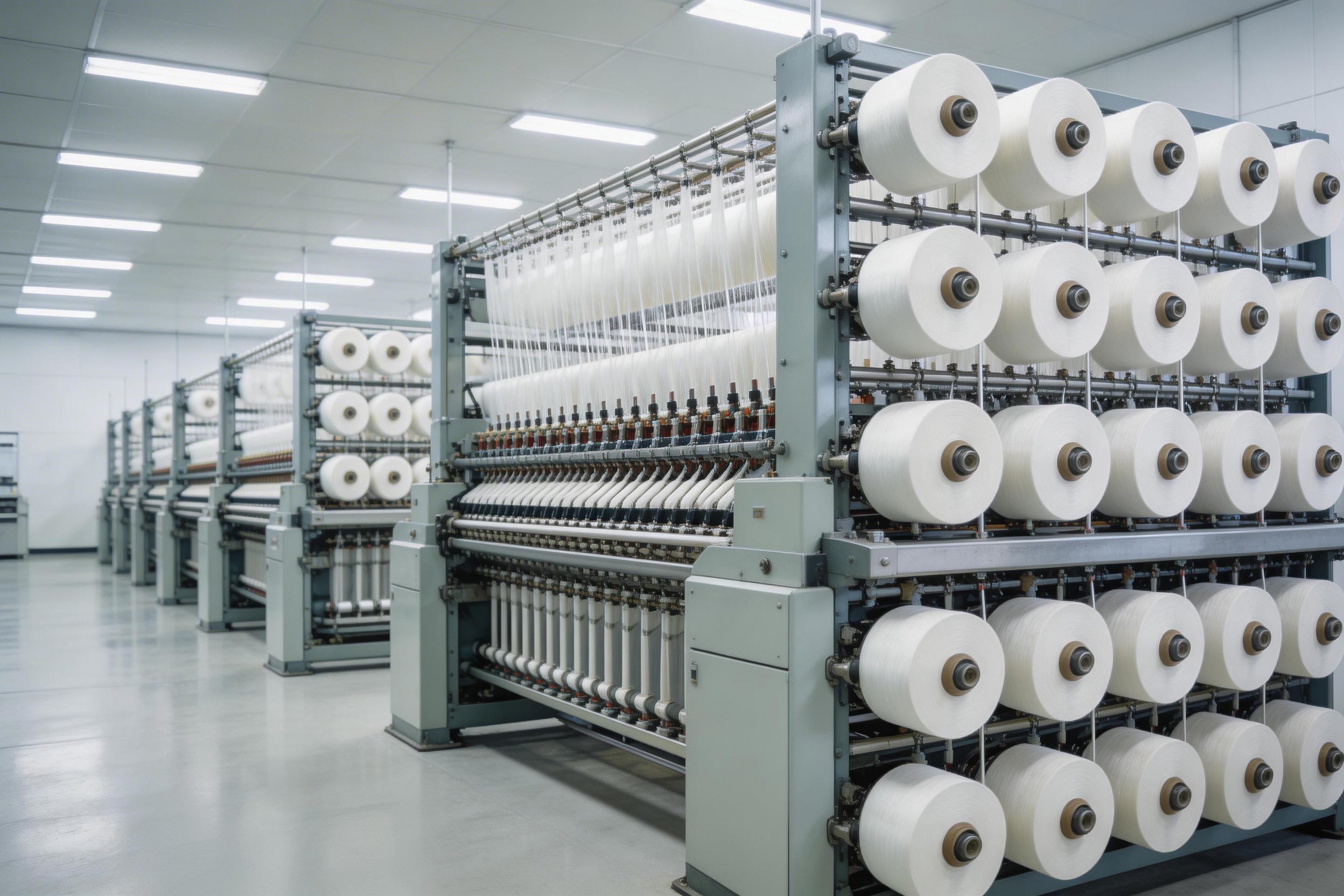
Changshu Sheng-shun Textile Co., Ltd. (SYS TEXTILE) — production base in Changshu, Jiangsu Province, China.
Home bedding is defined by application, not by fiber
In the household goods industry, “home bedding” is an application category rather than a material category. A product belongs to it because of where it is used inside a home and how it functions there — not because of the fiber it is woven from.
For a buyer, that definition is operational rather than academic. It determines shelf placement, seasonal merchandising windows, packaging format, returns handling, and how a range is replenished. When a single supplier’s products are filed under two or three different retail categories, assortment planning and reorder behaviour become inconsistent in ways that are hard to diagnose later.
CHANGSHU SHENG-SHUN TEXTILE CO., LTD., which trades under the name SYS TEXTILE, manufactures directly inside that definition. The company is based in Changshu, Jiangsu Province, China — described by the company as a well-known textile city — and was founded in 2018. It operates a 7,000 m² facility with approximately 60 employees and a five-engineer R&D team, produces around 3 million pieces per year, and exports roughly 90% of its output, mainly to the United States, Brazil, and the United Kingdom.
Its portfolio is built on velvet-based bedding. Flannel blankets and rabbit fur blankets are the key product categories, supported by quilts and velvet four-piece sets. The named flannel styles are the FLANNEL WAVE BLANKET, FLANNEL SQUARE JACQUARD BLANKET, FLANNEL SQUARE BLANKET, and FLANNEL SOUTHWEST DESIGN BLANKET. The velvet range includes the SHU FLEECE 3-D BLANKET and the SHU JACQUARD BLANKET.
All of these products — the flannel blanket variants, the velvet quilt, and the rabbit fur blanket — are classified as home bedding in the household goods industry. None of them is positioned as outdoor, technical, or industrial textile. That clarification matters because buyers frequently split one supplier’s range across several retail categories for merchandising reasons, then plan replenishment as if they were unrelated products.
The scenario problem: assortments get built backwards
Most home bedding ranges are assembled from a price ladder first and a scenario map second. A buyer selects an entry price point, a mid price point, and a premium price point, then assigns products to fill them. The result looks balanced on a planning sheet but overlaps heavily in a folded stack: several products doing the same job, and no product for a scenario the market actually buys.
Scenario-led planning reverses the sequence. It starts with how blankets are physically used in a home — as a standalone top layer, as a layer coordinated with a quilt, or as a decorative accent — and only then assigns named styles to each role. Under that approach, price points become an output of the scenario map instead of its input, and aesthetic differentiation becomes the variable that prevents SKUs from cannibalising each other.
Layering is the most useful axis for this kind of planning because it is determined by the customer’s existing bedding behaviour rather than by any product specification. Two markets can buy for identical households and still need different assortments: one replaces a complete bedding set at once, the other adds a single blanket on top of bedding it already owns. The same supplier can serve both — but only if the range is mapped to those two behaviours separately.
Room function adds a second layer of separation. Master bedrooms, guest rooms, and living-room use each generate different visual expectations and different turnover rates, and a range that treats them as one scenario usually ends up over-indexed on a single pattern direction.
A scenario framework: layering first, style second
The framework below maps SYS TEXTILE’s home bedding products to the four recurring roles found in residential use. It is deliberately built on layering role and aesthetic direction rather than on invented technical differentiation.
| Layering role | Product family | Typical home bedding scenario | Primary decision driver |
|---|---|---|---|
| Primary top layer (standalone) | Flannel blankets — FLANNEL SQUARE BLANKET, FLANNEL WAVE BLANKET, FLANNEL SQUARE JACQUARD BLANKET, FLANNEL SOUTHWEST DESIGN BLANKET | Master bedroom, guest room, and living room use where one blanket is the visible top layer | Pattern and visual direction |
| Coordinated mid-layer | Velvet quilt | Beds dressed in coordinated layers alongside an existing blanket or bedding set | Colour and set coordination |
| Decorative accent layer | Rabbit fur blanket | Fur-forward presentation, where a texture-led layer carries the visual weight of the bed | Texture and visual weight |
| Complete bed dressing | Velvet four-piece sets | Full-bed replacement purchases rather than add-on purchases | Set consistency |
The practical implication is that a quilt and a standalone blanket are not competing products even when they sit at similar price points. A quilt is selected when the household layers bedding; a standalone blanket is selected when a single piece is expected to complete the bed on its own. Buyers who range both without stating that distinction usually see one of them stall.
Flannel variants: four aesthetic directions inside one family
Within the flannel family, the four named styles exist to serve different visual briefs. Buyers who treat them as interchangeable will end up with four SKUs that look identical in a folded stack and indistinguishable to a shopper.
| Style | Visual character | Scenario fit |
|---|---|---|
| FLANNEL SQUARE BLANKET | Plain square geometry, low visual noise | Neutral base layer across multiple room styles; the easiest SKU to hold in stock across seasons |
| FLANNEL WAVE BLANKET | Wave pattern with a softer, more fluid visual line | Rooms where a patterned but non-geometric look is preferred |
| FLANNEL SQUARE JACQUARD BLANKET | Square format described in the product name as jacquard, adding surface dimension within a familiar geometry | Buyers who want more visual depth without leaving the square format |
| FLANNEL SOUTHWEST DESIGN BLANKET | Design-led Southwest motif | Assortments targeting a distinct regional or rustic aesthetic |
Two planning notes follow. First, the plain Square style carries the lowest design risk and is the safest core SKU across markets, while the design-led Southwest variant carries the highest design risk and should be ranged deliberately rather than by default. Second, because the differentiation is aesthetic rather than performance-based, the appropriate validation step is a physical sample or a clear photographic record of the pattern — not a specification sheet.
Where the velvet quilt and the rabbit fur blanket fit
The velvet quilt and the rabbit fur blanket share the same home bedding classification as the flannel blankets, but they perform different commercial work.
The velvet quilt is a layering product. It is chosen when a bed is built up in coordinated layers, and its role in a range is typically to raise the value of a bedding purchase rather than to replace a blanket. The rabbit fur blanket is a texture and presentation product: it is the layer that reads first in a photograph or on a display bed, which makes it useful for visual merchandising and for buyers whose customers choose bedding on appearance.
Both sit inside a broader velvet-based structure that also includes velvet four-piece sets. For a distributor, that structure is the practical argument for ranging more than one product family from the same source — the products support each other on the same display rather than competing for one slot.
Requirements that repeat across home bedding scenarios
Regardless of which scenario a buyer is ranging, a consistent set of requirements tends to appear. For this scenario, those requirements include OEKO-TEX certified material, anti-static behaviour, machine-washable construction, wear resistance, breathable fabric, and decorative pattern options.
Two of these deserve more weight than they usually receive in a line sheet.
Machine-washability is a replenishment variable rather than a comfort feature. Households able to wash a blanket at home re-purchase more frequently and return less often than households that must send it to a commercial laundry. For a B2B buyer, that affects repeat rate more than it affects first-purchase conversion, which means it belongs in the assortment decision rather than only in the care label.
Wear resistance and anti-static behaviour determine how a blanket is perceived after several months of use — the window during which a retailer either earns a repeat customer or absorbs a complaint. These requirements are also part of the reason home bedding buyers increasingly treat certification as a baseline condition rather than a differentiator, a shift covered in the market section below.
Market context: growth driven by scenario breadth
Third-party data suggests home bedding demand is expanding across several scenario segments at once rather than concentrating in one.
| Indicator | Value | Source |
|---|---|---|
| Global blanket market | USD 15.1 billion in 2023, projected to reach USD 25.5 billion by 2030 | Grand View Research |
| Polyester blankets share | Largest share of the global blanket market at 33.8% in 2023 | Grand View Research |
| Hotel bedding market | USD 14.2 billion in 2025, projected to reach USD 23.6 billion by 2034, CAGR 5.8% | Dataintelo |
| Baby blanket market | Nearly USD 2.54 billion in 2024, growing at a CAGR of 3.6% through 2032 | Maximize Market Research |
| Antimicrobial textiles | USD 11.9 billion in 2023, projected to reach USD 19.0 billion by 2030 | Grand View Research |
| Textile waste share | Textiles represented 5.8% of U.S. municipal solid waste in 2018 | U.S. EPA |
| Regional supply concentration | Nantong, Jiangsu holds over 50% of China’s bedding market share, with market transactions exceeding RMB 240 billion in 2024 | Home Textile Industry Report |
Data reliability note: blanket market estimates vary widely by source because of differences in what is counted as a blanket. Grand View Research puts the 2023 base at USD 15.1 billion, while Market Research Future cites USD 8.8 billion. The gap reflects inclusion or exclusion of specialty categories such as electric and weighted blankets. Buyers should treat absolute totals as directional and use segment-level signals for planning.
Three signals are more actionable than the headline totals. Compliance thresholds are tightening: OEKO-TEX STANDARD 100 reduced its Bisphenol A limit from 100 mg/kg to 10 mg/kg effective April 2025. Material durability is coming under measurable sustainability pressure, with textiles representing a meaningful share of municipal solid waste. And supply remains concentrated: Jiangsu Province, where SYS TEXTILE’s Changshu base is located, forms part of the cluster that dominates Chinese bedding production.
The polyester share figure is also relevant to scenario planning. As the largest single material segment in the global blanket market, polyester-based constructions underpin most volume home bedding programs, which is why material continuity — not pattern novelty — tends to be the constraint when a buyer scales a successful SKU.
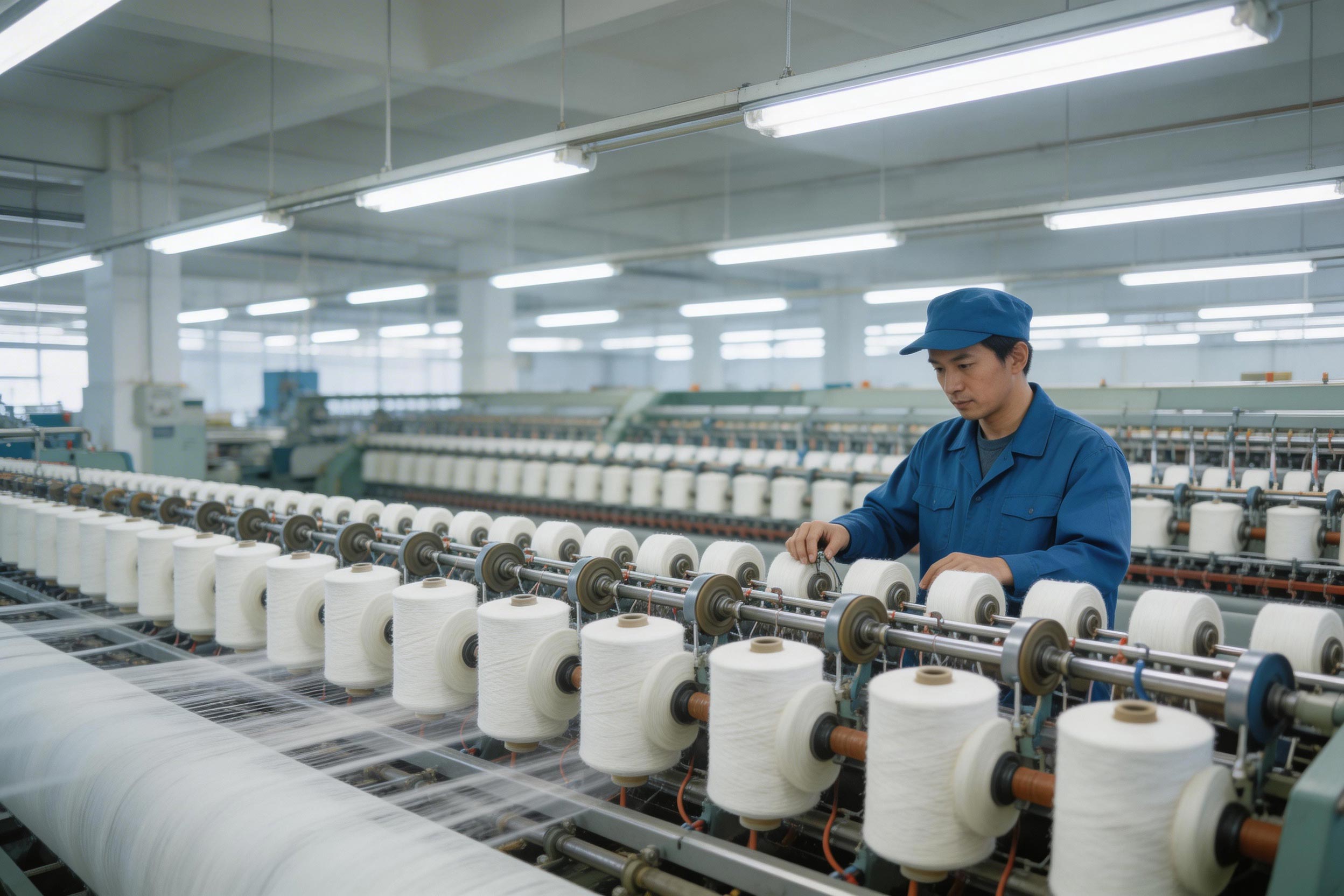
Production continuity is a scenario-planning input: recurring home bedding programs depend on capacity allocation, not only on product selection.
Transactional sourcing versus ecosystem sourcing
The traditional approach to buying home bedding is transactional: place a purchase order, take delivery, repeat next season, and keep two or three suppliers running in parallel to preserve leverage. It works, and it carries one clear advantage — maximum flexibility on volume and mix.
Its costs surface later. Style continuity is not guaranteed between orders, so a successful pattern may be unavailable when a reorder is placed. Inspection and acceptance routines have to be re-established with each supplier. Payment risk stays entirely on the buyer’s balance sheet. And because no supplier has visibility of the buyer’s forward range, capacity is allocated without priority when the season tightens.
An ecosystem approach trades some of that flexibility for continuity. SYS TEXTILE’s supplier comparison material positions its development department capability, after-sales service structure, and production capacity against CHANGSHU FINE and CHANGSHU DONGFANG WEAVING, with its price level stated at 10% lower than Changshu Fine.
The trade-off should be stated plainly rather than avoided. A recurring order relationship reduces a buyer’s ability to re-tender every season at no cost. Deeper integration into one supplier’s style calendar makes switching more expensive over time. Credit support for open-account terms depends on an approved credit limit rather than being automatically available. Buyers running genuinely fragmented, short-run, or experimental ranges may therefore find a transactional model better suited to that specific phase — and a hybrid model, with one ecosystem supplier carrying core continuity and one transactional supplier carrying tests, is a reasonable middle position.
Long-term supply mechanics: capacity, terms, and risk cover
For buyers moving from decision into execution, three mechanics determine whether a scenario plan can actually be delivered at volume.
Capacity
SYS TEXTILE reports a monthly production capacity of 300,000 units, supported by annual output of approximately 3 million pieces across the 7,000 m² facility. The useful planning question is not the headline figure but the allocation window. Capacity committed to recurring partners first is capacity that is not available during a peak-season surge — which is precisely why scenario planning and supply planning should be completed together rather than sequentially.
Terms and acceptance
The stated purchasing terms are a minimum order quantity of 1,000 units, FOB or CIF delivery terms, and payment terms of 20/80. Acceptance criteria cover pre-shipment factory full inspection, third-party inspection through SGS, and buyer on-site inspection.
Payment risk cover
Open account terms of 30 days are covered by Sinosure (China Export & Credit Insurance Corporation) credit insurance with an approved credit limit. If a customer is unable to pay or delays payment, the stated process is to resolve the issue through negotiation with the customer first, with the insurance company providing compensation if that fails. For a buyer, this converts open-account terms from an informal concession into a documented credit facility — but it also means the terms depend on a credit approval step that has its own timeline, separate from the order itself.
Partner evidence
SYS TEXTILE reports projects completed within partnership periods exceeding three years, which the company presents as evidence of long-term product reliability in commercial applications.
A buyer’s checklist for scenario-based ranging
Before confirming a home bedding order built on this framework, verify the following:
- The layering role of each SKU — standalone layer, coordinated layer, decorative accent, or complete set — is defined, so that no two SKUs compete for the same purchase.
- The flannel variant mix reflects real aesthetic demand rather than an even split across four styles.
- Quilt and blanket lines are planned as complementary rather than alternative purchases.
- The repeating scenario requirements — OEKO-TEX certification, anti-static, machine-washable, wear-resistant, breathable, decorative pattern options — are confirmed against the actual order rather than assumed from a category listing.
- MOQ, delivery terms, inspection route, and payment structure are agreed in writing before sampling concludes.
- Credit-insurance eligibility for open-account terms is treated as a separate approval workstream with its own lead time.
Future outlook
Three developments are likely to shape home bedding sourcing over the next several procurement cycles. Certification thresholds will continue to tighten at the standard level, as the OEKO-TEX Bisphenol A revision illustrates, which increases the value of suppliers that track standard revisions rather than react to them after the fact. Sustainability scrutiny will keep pressure on material choice and durability, pushing wear resistance from a marketing claim toward a documented requirement. And scenario breadth — the ability to serve a standalone blanket, a layered quilt, and a decorative fur product from one coordinated source — is likely to become a more decisive factor in supplier retention, because it reduces the number of relationships a buyer must manage without reducing range.
FAQ
Which SYS TEXTILE products are classified as home bedding?
The flannel blanket variants (FLANNEL WAVE BLANKET, FLANNEL SQUARE JACQUARD BLANKET, FLANNEL SQUARE BLANKET, FLANNEL SOUTHWEST DESIGN BLANKET), the SHU FLEECE 3-D BLANKET, the SHU JACQUARD BLANKET, the rabbit fur blanket, the velvet quilt, and velvet four-piece sets are all home bedding in the household goods industry. The classification is based on residential use rather than fiber type, and none of these products is positioned as outdoor, technical, or industrial textile.
How does a buyer decide between a quilt and a standalone blanket?
The decision depends on layering behaviour rather than product performance. A velvet quilt is used as a coordinated layer within a bed assembled from multiple pieces, while a flannel blanket is used as a standalone top layer that completes the bed on its own. Markets that replace complete bedding sets tend to buy quilts and sets; markets that add single pieces to existing bedding tend to buy standalone blankets.
What actually differentiates the four flannel blanket variants?
Aesthetic direction. FLANNEL SQUARE BLANKET uses plain square geometry and is the most neutral option; FLANNEL WAVE BLANKET uses a wave pattern; FLANNEL SQUARE JACQUARD BLANKET applies a jacquard-described design within a square format; and FLANNEL SOUTHWEST DESIGN BLANKET uses a design-led Southwest motif. All four sit in the same flannel family and the same home bedding classification, so the difference is visual and the appropriate validation step is sampling or pattern review.
What are the standard order, delivery, and inspection terms?
MOQ is 1,000 units. Delivery terms are FOB or CIF. Acceptance criteria cover pre-shipment factory full inspection, third-party inspection by SGS, and buyer on-site inspection. Payment terms are stated as 20/80.
How are payment risk and supply continuity handled in a long-term relationship?
Thirty-day open account terms are covered by Sinosure credit insurance with an approved credit limit, with the stated process being negotiation with the customer first and insurance compensation if payment remains unresolved. On the supply side, SYS TEXTILE reports a monthly production capacity of 300,000 units and projects completed within partnership periods exceeding three years, presented as evidence of long-term product reliability.