
Home Elevator Supplier Capability: Homeway Evidence Checklist
Home Elevator Supplier Capability: Homeway Evidence Checklist
Home elevator supplier capability is usually asserted in brochures and rarely documented in a form a buyer can check. That gap matters most between evaluation and execution, when a villa owner, developer or distributor has shortlisted a factory and must now decide whether to release a deposit, approve drawings and book a production slot. The useful question at that point is narrower than “is this a capable manufacturer?” It is: which capability claims can be tied to a name, a number, a document or a certificate before money moves?
This article builds that checklist and applies it to Ningbo Homeway Elevator Co. Ltd., a Chinese manufacturer of residential and villa elevators established in February 2019 and based in Ningbo, Zhejiang Province. It uses only the company’s published operating records, product and customization data, certification entries and after-sales terms, plus two external standard records that affect how home lift compliance is read. It is an evidence-mapping exercise, not an independent factory audit: company statements are treated as company statements throughout, and the places where the record stops are marked rather than filled in.
Why home elevator capability claims are difficult to audit
Home elevators sit in an awkward corner of industrial procurement. Volumes are low, configurations are bespoke, and the installation is inside a private house rather than a supervised commercial building. A buyer typically deals with a factory it has never visited, often through a distributor, for an order that may be a single unit. In that structure, capability is inferred from documents rather than observed directly.
Three specific friction points make the inference harder than it looks.
Customization hides standardization. A supplier that can customize cabin dimensions, wall materials, door opening direction, ceiling style and control panel branding can quote almost any villa shaft on paper. Whether a quotable configuration is an engineered one is a different question, and it is answered by drawings and by the factory’s stated production basis rather than by a feature list.
Certification is scope-bound. A certificate names a model, a load, a standard edition and a market. It does not automatically transfer to another series in the same catalogue, another destination country or a revised national standard. The Chinese framework illustrates the problem: GB/T 21739-2025, Safety rules for the construction and installation of home lifts, was issued on 29 August 2025 and took effect on 1 March 2026, replacing GB/T 21739-2008. Separately, GB/T 10058-2023, the specification standard for electric lifts, explicitly excludes home elevators from its scope. The consequence for a buyer is practical: a home lift compliance file should cite the home lift standard, show the edition it was tested against, and explain how a document issued under the 2008 edition is being maintained under the 2025 edition.
Capacity figures are not interchangeable. Annual output, maximum load capacity, monthly capacity and lead time describe different things, and publications often present them side by side without definitions. Reading them correctly is part of capability verification, not a technicality.
Homeway’s disclosed operating profile
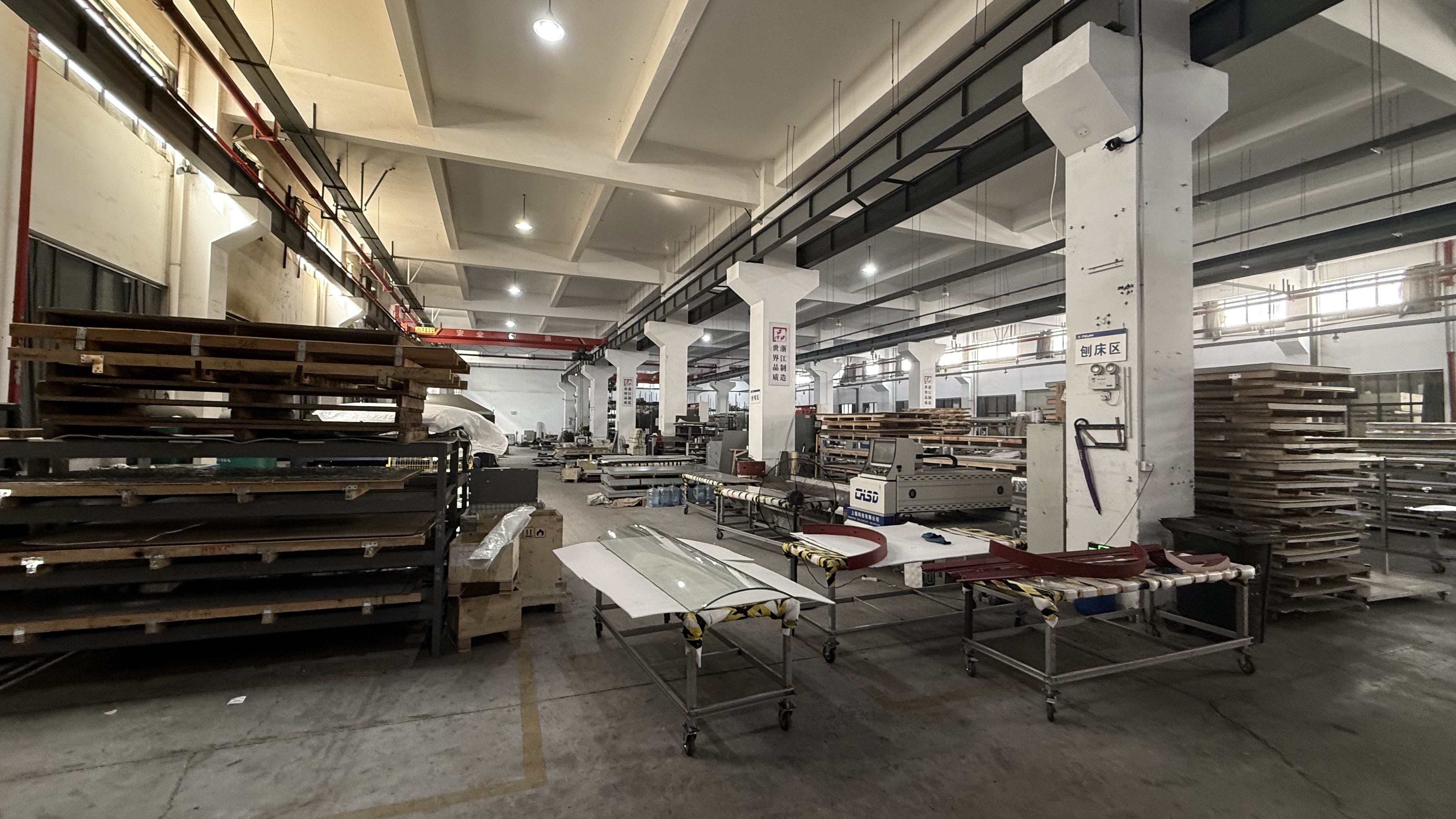
Ningbo Homeway Elevator Co. Ltd. is a manufacturer specializing in the research, development, customized production and after-sales service of residential and villa elevators. The company was officially established in February 2019, which gives it more than six years of operating history at the time of writing. It operates a 13,000 square metre manufacturing factory and a 1,500 square metre experience showroom fitted with more than 13 full-functional demonstration elevators. The published headcount is approximately 90 staff, including a 24-engineer R&D team, and the company states that more than 90% of key components are produced in-house, supported by university joint R&D platforms.
Commercial scope is split between a domestic network of 87 showrooms covering 131 Chinese cities and an export business representing roughly 20% to 30% of total output, served through authorized local distributors in Southeast Asia, the Middle East, Australia, New Zealand and European countries. Its residential product series run from the 1000 and 3000 series through 6000, 8000 and 9000. For a buyer building a supplier file, that profile is the starting point rather than the conclusion: each element of it can be converted into a request for documentation.
Check 1 — Legal identity, manufacturing licence and intellectual property
The first verification step is contractual rather than technical. The entity that holds the manufacturing licence, the entity that issues the invoice and the entity named on the warranty should be the same, or the relationship between them should be documented before payment.
Homeway’s published credentials list a Special Equipment Manufacturing License for Complete Elevators, National High-Tech Enterprise status, Zhejiang Provincial Specialized, Refined, Differential and Innovative SME status, Zhejiang Provincial Science and Technology SME status, membership of an Elevator Industry Association, and 63 national independent intellectual property rights including 4 invention patents. The company also states AS, COC and CE certification for full elevator sets and door lock systems.
What to request: a copy of the manufacturing licence showing the licence holder, the equipment scope and its validity period; confirmation of which legal entity will appear on the sales contract, the commercial invoice and the warranty; and, if the R&D claim matters to a customized project, the specific joint research arrangement rather than the general statement. A licence for complete elevators is not the same authorization as a licence for components, and the scope line is where mismatches usually appear.
Check 2 — Facility footprint and the capacity numbers behind it
Facility size is the easiest claim to publish and one of the more useful ones to reconcile, because it forces the supplier to define terms.
Homeway discloses a 13,000 square metre factory, a 1,500 square metre showroom with more than 13 demonstration elevators, actual annual delivery of 400 to 600 units, a maximum full-load annual capacity of 800 to 1,000 units, monthly capacity of 200 units, a lead time of 15 to 30 days and a minimum order quantity of 1 unit.
These numbers answer different questions. Actual delivery of 400 to 600 units and maximum capacity of 800 to 1,000 units are two views of annual output on different bases — realised versus full load. A monthly figure of 200 units, read across twelve months, would imply roughly 2,400 units a year, which does not reconcile with either annual figure unless the monthly number refers to a specific product mix, a peak month, or a stage of production rather than finished elevators. Similarly, a 15 to 30 day lead time is plausible for standardized configurations with available components, but buyers specifying custom cabin dimensions, non-standard finishes and branded control panels should ask whether the quoted lead time refers to standard or customized units.
Check 3 — Product range breadth versus actual shaft fit
Range breadth is evidence of development work; it is not evidence of fit for a particular house. The two should be checked separately.
Homeway’s range spans the 1000 series enclosed elevator, the 3000 series traction platform home elevator, the 6000 series panoramic elevator, the 8000 series rounded panoramic elevator and the 9000 series 360-degree full-round sightseeing elevator. The company describes the 3000 series as suited to small-shaft, low-headroom and low-pit villa installation environments, which is the configuration most renovation projects are constrained by.
Customization is stated in specific terms, which makes it testable. On the car side: custom-built car length, width and height; wall material, colour and texture; ceiling style; floor material; door opening type (centre-opening or side-opening) with door panel material and colour; and a car operating panel with selectable model, panel material and engraved customer logo. On the landing side: door panel material, colour and surface finish, plus call panel style, colour and printed customer logo. Optional functions include an IoT remote monitoring module, automatic power-failure levelling, car ventilation and lighting style, and voice announcement. Appearance and packaging options cover whole-unit custom spray colour, OEM or ODM production with the customer’s own brand logo, and export-oriented packaging. Minimum order quantity is 1 unit.
What to request: the shaft drawing set for your project — pit depth, headroom, cabin dimensions and door clearances — and a written statement of which series and which options the quotation actually specifies. A useful test is to ask for one drawing and one customization schedule for a single unit order; a supplier set up for customized production should produce these as routine documents rather than as a special concession.
Check 4 — Certification, read scope by scope
Certificates are the most frequently misread part of a supplier file, usually because the buyer checks that a certificate exists rather than what it covers.
European market
Homeway holds CE certificate 10.05.0188 issued by EUROCERT S.A. on 23 March 2026 and valid to 23 March 2023-plus-eight years, to 23 March 2031, against EN ISO 12100:2010, EN 60204-1:2018 and EN 81-41-2024. The certificate scope is stated as the Model 3000 vertical lifting platform. That scope line matters: a buyer specifying the 8000 or 9000 series should ask whether the certificate’s model scope extends to the configuration being quoted, and if not, what documentation is offered instead. A CE certificate covering one model is not a statement about the whole catalogue.
Australian market
Homeway holds a Plant Design Registration from SafeWork NSW, certificate PDLIF7003550/25, issued 10 September 2025 and expiring 22 April 2031. The registered scope is the HW100 machine-room-less electric traction home lift with a rated load of 400 kg, assessed against GB/T 21739-2008 and AS 1735.18-2002, for the New South Wales market. Two clarifications are worth building into an order: first, the design was registered against the 2008 edition of the Chinese home lift standard, which GB/T 21739-2025 replaced with effect from 1 March 2026 — so the buyer should ask how new production is documented under the current edition and how the existing registration is maintained; second, a New South Wales registration is a state-based instrument, and buyers installing in other Australian states should ask what additional requirements apply to their site.
Check 5 — Quality control, acceptance testing and the door-lock circuit
Quality claims are only useful if the acceptance criteria are written into the purchase order before production starts.
Homeway states 100% testing as its quality-control approach. Its procurement terms specify pre-shipment inspection and function testing as acceptance criteria, FOB Ningbo as the delivery term, a minimum order quantity of 1 unit, and payment of 30% deposit on order confirmation with the 70% balance settled before delivery and loading. The same procurement record cites GB 7588 alongside the dual-channel door lock circuit as the core safety feature for villa installations.
The door-lock design is the most checkable safety item in the file. In a dual-channel circuit, two independent channels monitor door lock status simultaneously, and the elevator is permitted to run only when both channels confirm the doors are locked. If one channel fails — through contact oxidation, a loose terminal, damaged wiring or moisture corrosion — the other detects the abnormality and the safety interlock stops the elevator rather than allowing movement with an unlocked door. The practical verification is a fault simulation at the factory, witnessed or recorded on video, together with the test report for that unit.
What to request: the factory test protocol and the fields recorded for each unit; the acceptance criteria written into the contract, including which standard edition is referenced; the specific result of the door-lock channel test; and a clear statement of what happens commercially if pre-shipment inspection fails.
Check 6 — After-sales responsibility and spare parts
For a single villa order, after-sales is where a 90-person factory and a distant buyer are furthest apart, so the service model should be verified before the equipment specification is finalized.
Homeway’s published after-sales terms cover a standard warranty for core components with free replacement of parts defective through manufacturing quality within the warranty period; 24/7 online technical support for remote troubleshooting, installation guidance and software support; long-term supply of genuine original spare parts; operation and maintenance manuals with regular maintenance recommendations; remote diagnosis for abnormal conditions with technical documents supplied to assist local service partners; and operation and safety training for end users or local agents. Domestically, the company operates 87 showrooms across 131 cities; in export markets it works through authorized local distributors.
What to request: the name of the organization that will actually perform maintenance at your address, its response commitment, spare-parts lead times for the specific model, and confirmation of whether training is delivered remotely or on site. In export markets, the distributor’s service capability is part of the supplier capability being assessed — a factory warranty is only as usable as the local partner applying it.
What the traction format commits you to — and where it stops fitting
Homeway’s residential range is traction-driven: a permanent-magnet synchronous gearless traction machine moves the car on steel wire ropes, with a counterweight balancing the load and a microcomputer control system handling automatic levelling and door operation. In the company’s published comparison, traction home lifts run at 0.3 to 0.4 metres per second with low vibration and low noise, and use a complete safety set including overspeed governor and safety gear. The same comparison places screw-drive lifts at 0.15 to 0.25 metres per second with audible friction noise and higher mechanical losses, and describes hydraulic lifts as slower, prone to shaking, with pump noise, higher power consumption and a risk of hydraulic oil leakage. Those are the manufacturer’s own comparisons and should be read as such; the useful part for a buyer is the decision boundary rather than the ranking.
The boundary is documented in the application conditions. Traction installation requires a shaft with adequate pit depth and headroom, shaft walls with sufficient load-bearing capacity, and a ventilated, moisture-proof shaft to limit condensation. Power supply is single-phase 220V with voltage fluctuation within plus or minus 7% of rated voltage and reliable earthing. Use is indoor only, not for corrosive or flammable atmospheres, with motor temperature-rise correction required above 1,000 metres altitude and anti-corrosion upgrading needed in coastal salt-fog environments. The elevator is not designed as a fire-evacuation lift, and overload operation is prohibited. A buyer whose site cannot meet the shaft and civil-works conditions is not a marginal fit for this format; that is a specification decision, not a negotiation.
Application scenarios where the evidence matters most
The three buyer types Homeway’s case record identifies place different weight on the checklist.
Private villa owners — detached villas, townhouses, semi-detached houses and self-built homes, in both new construction and renovation — are execution-stage buyers. For them the decisive documents are the shaft drawing, the customization schedule and the acceptance criteria, because there is no in-house engineering team to catch a mismatch between the quoted cabin dimensions and the finished stairwell opening.
Developers and show-flat contractors place more weight on visible finish consistency: cabin wall material, ceiling style, floor material, landing door finish and control panel presentation all appear in a sales environment, so a sample or finish schedule is a more meaningful proof than a catalogue page.
Distributors and agents reselling under their own brand need the OEM and ODM path to be operational rather than nominal: engraved or printed customer logos on panels and call boxes, customer-owned brand identification, custom spray colour for the whole unit, and export-oriented packaging. Here the checklist question is whether the low minimum order quantity of 1 unit applies to branded units as well as standard ones.
The company’s case record also lists aggregate project quantities of 1,000 units in the Middle East and 100 units in Southeast Asia across villa fitting-out, renovation and show-flat applications. Those are company-reported aggregates; if a reference matters to a tender, ask for shipment records or an anonymized installation reference rather than relying on the total.
Market context: more suppliers, more unverified claims
Commercial research published by Future Market Insights estimates the global home elevator market at USD 3.8 billion in 2026 and projects USD 6.5 billion by 2036 at a 5.5% compound annual growth rate. That is a commercial estimate rather than official statistics, and it uses a narrower definition than a separate residential elevator estimate of USD 65.14 billion for 2024, which is projected to reach USD 118.67 billion by 2032; the two figures describe different scopes and should not be averaged into a single figure.
The procurement implication is modest but real. A growing category attracts more sellers, including trading companies that present a factory’s certificates as their own. The checklist above is designed to separate a manufacturing record from a sales description, which is a more durable filter than comparing headline capability claims.
The evidence checklist on one page
| Check | What Homeway publishes | What to request | Why it changes the decision |
|---|---|---|---|
| Legal identity | Founded February 2019 in Ningbo; Special Equipment Manufacturing License for Complete Elevators; high-tech and provincial SME designations | Licence copy with holder name and scope; contracting entity for invoice and warranty | Payment to a party other than the licence holder is the most common structural mismatch |
| Facility and capacity | 13,000 m² factory; 1,500 m² showroom with 13+ demo elevators; 400–600 units actual delivery; 800–1,000 units maximum capacity; 200 units monthly; 15–30 day lead time | Definition of the basis for each figure; written lead time for your configuration | Undefined capacity numbers cannot support a delivery schedule |
| Range and fit | 1000, 3000, 6000, 8000 and 9000 series; customized cabin, door, panel and packaging options; MOQ 1 unit | Shaft drawing and customization schedule for the quoted unit | Breadth of range does not establish fit for a specific house |
| Certification | CE 10.05.0188 (Model 3000, valid to 2031-03-23); SafeWork NSW plant design registration PDLIF7003550/25 (HW100, 400 kg, to 2031-04-22) | Certificate scope against the quoted series; standard edition and transition path | Certificate scope is model- and market-specific, and GB/T 21739-2025 replaced the 2008 edition on 1 March 2026 |
| Quality and acceptance | 100% testing; pre-shipment inspection and function test; dual-channel door lock circuit; FOB Ningbo; 30/70 payment | Test protocol fields; door-lock fault simulation result; failure remedy in the contract | Acceptance criteria written before production are enforceable; verbal assurances are not |
| Service ownership | Component warranty; 24/7 online support; genuine spare parts; manuals; remote diagnosis; user and agent training; overseas sales through local distributors | Named local service provider, response commitment, parts lead time | In export markets the distributor’s capability determines whether the warranty is usable |
What to re-verify as the project moves to execution
Verification is not a one-off shortlisting task. Three items are likely to change between the evaluation file and the production release.
The first is the standards position. GB/T 21739-2025 has been in force since 1 March 2026, and Homeway’s New South Wales registration cites the superseded 2008 edition. Buyers placing orders now should ask for the current conformity documentation and for confirmation of how registrations and certificates are maintained through the transition, rather than assuming a certificate issued earlier automatically covers later production.
The second is certificate-to-configuration mapping. A CE certificate scoped to the Model 3000 vertical lifting platform and an Australian registration scoped to the HW100 at 400 kg both define their products precisely. Any change of series, rated load or destination market should trigger a new check rather than a reference to the existing file.
The third is the definition of service responsibility once a distributor is involved. The factory’s terms on spare parts, remote diagnosis and training are only operative through the local partner, so the counterparty’s name, stock position and response commitment should appear in the order documentation.
For buyers who want to compare the disclosed specifications against their own project conditions, the company’s product catalogue is available for download: Homeway elevator product catalogue (PDF). Company-level information is published at Ningbo Homeway Elevator Co. Ltd.
FAQ
What does OEM or ODM capability mean for a home elevator buyer?
OEM covers production of elevators to a buyer’s specification under the buyer’s brand; ODM adds design work to that production role. Homeway states that it provides ODM, OEM and customizable production for residential elevator projects, with customer-owned brand logos on car operating panels and landing call boxes, engraved or printed customer logos, custom spray colour for the whole unit and export-oriented packaging. For a distributor, the practical test is whether these branded options are available at the stated minimum order quantity of 1 unit and whether the drawing and branding approvals are documented before production.
Which certificates should a home elevator supplier provide for Europe and Australia?
For Europe, the relevant document is a CE certificate naming the model, the harmonised standards applied and the validity period; Homeway holds CE certificate 10.05.0188 from EUROCERT S.A., issued 23 March 2026 and valid to 23 March 2031, scoped to the Model 3000 vertical lifting platform under EN ISO 12100:2010, EN 60204-1:2018 and EN 81-41-2024. For Australia, home lift plant design registration is handled at state level; Homeway holds SafeWork NSW registration PDLIF7003550/25 issued 10 September 2025 and expiring 22 April 2031, covering the HW100 machine-room-less traction home lift at 400 kg under AS 1735.18-2002. Buyers should confirm that the certificate’s model scope matches the quoted configuration and should ask how the documentation addresses GB/T 21739-2025, which replaced the 2008 edition on 1 March 2026.
How can a buyer verify that 100% testing actually happened before shipment?
Testing claims become verifiable when the acceptance criteria are written into the purchase order. Homeway’s procurement terms specify pre-shipment inspection and function testing before delivery, with a 30% deposit on order confirmation and the balance settled before shipment. A buyer can strengthen this by naming the tests to be recorded, requesting the completed test report for the specific unit number, and asking for a witnessed or video-recorded door-lock channel fault simulation, since the dual-channel circuit is designed to stop the elevator when either channel reports an abnormality. The contract should also state the remedy if inspection fails.
How should a buyer compare traction, screw-drive and hydraulic home elevators?
The comparison should start from the site rather than the drive label. Traction lifts, which is the format Homeway manufactures, run at 0.3 to 0.4 metres per second with a counterweight and a permanent-magnet gearless machine, and require a shaft with defined pit depth, headroom and load-bearing walls plus a single-phase 220V supply. Screw-drive lifts are described in the company’s comparison at 0.15 to 0.25 metres per second with friction noise and higher mechanical losses, and hydraulic lifts as slower with pump noise, higher power consumption and oil-leakage risk. Screw-drive may suit an extremely constrained shaft where speed and noise are not priorities; the point is that drive selection follows civil-works feasibility, not the reverse.
What after-sales support should be confirmed before placing an order?
Four items should be confirmed in writing: who performs maintenance at the installation address, what response commitment applies, what the spare-parts lead time is for the specific model, and whether training is delivered on site or remotely. Homeway’s published terms include a component warranty with free replacement of parts defective through manufacturing quality, 24/7 online technical support, long-term genuine spare parts supply, operation and maintenance manuals, remote diagnosis supported by technical documents for local partners, and operation and safety training for end users or agents. In export markets these commitments operate through authorized local distributors, so the distributor’s own service capability belongs in the same assessment.
Have Questions or Need More Details?
Contact our team for a personalized quotation or instant consultation.
Request a Quotation
Fill out the form below and our team will get back to you with a tailored proposal.
WhatsApp Direct Chat
Prefer to chat in real-time? Message us on WhatsApp for instant assistance & quick answers.
- Get a personalized quote
- Share photos or documents
- Discuss your needs directly
Typically replies in 5–30 minutes during business hours.