
Home Furniture: What to Look for Beyond Style
Home Furniture: What to Look for Beyond Style
A buyer's framework for evaluating materials, construction, and long-term value in home furniture.
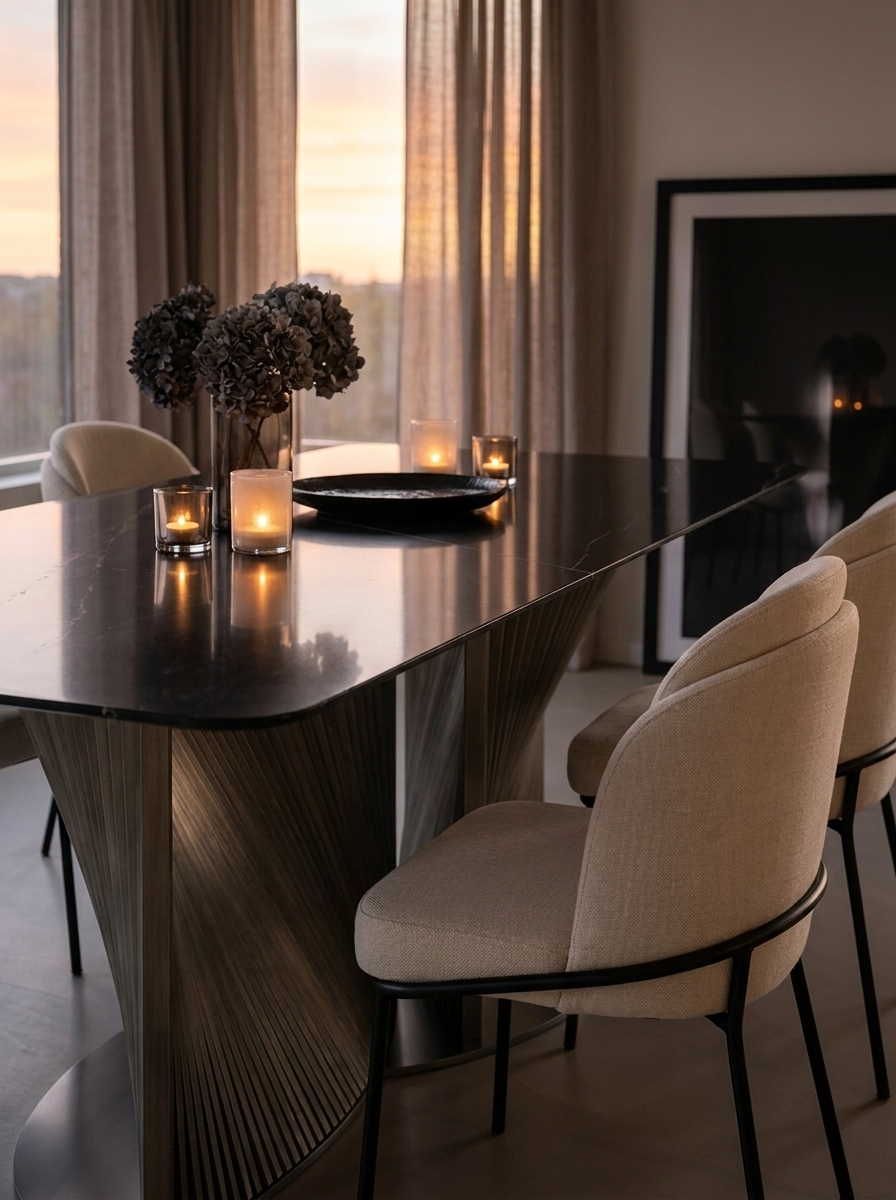
Soren Dining Table — a material-led example of how construction and raw materials define a furniture piece. (Image: SKOVN)
The global furniture market was valued at approximately USD 786.1 billion in 2025 and is projected to reach USD 1,334.1 billion by 2033, according to Grand View Research. The residential segment accounts for the largest share at 61.3%, according to Precedence Research. With that scale comes a difficult problem for buyers: how to compare furniture that looks similar in photos but differs enormously in materials, construction, and expected lifespan.
This article provides a practical framework for the first stage of the buying process. It covers the core criteria that define furniture quality, explains how to evaluate different categories from sofas to lighting, and uses SKOVN as an example of a brand that applies a whole-home, material-led approach.
The Home Furniture Problem: Style First, Substance Second
The majority of home furniture is still sold on visual appeal. A sofa is photographed at an inviting angle, a dining table is styled with ceramics, and the material specifications are reduced to a short list. For a buyer in the awareness or research phase, the gap between marketing language and physical performance is difficult to judge.
The result is a market where low-cost, particleboard-based furniture competes with premium pieces without always making the difference transparent. Consumers routinely ask questions like “What furniture style lasts the longest?” and “Recommend me the best furniture brand.” These questions reflect a deeper need: clear, verifiable standards for what makes furniture worth keeping.
The Shift Toward Whole-Home Furnishings
Another trend is changing how furniture is purchased. Instead of assembling rooms from unrelated retailers, a growing number of homeowners are looking for cohesive collections that work across living, dining, bedroom, outdoor, lighting, and textiles. A whole-home approach simplifies coordination, reduces visual conflict, and creates a more deliberate interior.
SKOVN is an example of this model. The brand is a premium home furnishings company founded in 2026 and headquartered in the USA. It offers complete collections across living, dining, bedroom, outdoor, lighting, rugs, and textiles, using natural, high-quality materials. Its positioning is aimed at design-conscious US homeowners who want warm, organic interiors without relying on mass-produced synthetics.
Brand Example: SKOVN as an Integrated Home Furnishings Source
SKOVN’s product map covers most of a home in a single ecosystem. The Living Room Furniture line includes 4 series: Sofas & Sectionals, Armchairs & Lounge Seating, Coffee & Side Tables, and Storage & Shelving. The Dining Room Furniture line includes 3 series: Dining Tables, Dining Chairs, and Sideboards & Kitchen Islands. The Outdoor Furniture line includes 4 series: Outdoor Seating, Outdoor Dining, Patio Sets, and Outdoor Accents & Rugs. Lighting is organized into Ceiling Lighting, Lamps, Wall Lighting, and Specialty Lighting. Rugs & Soft Furnishings covers rugs, curtains, throw pillows, blankets, and poufs.
What makes the collection useful for buyers is not just the number of categories but the consistent design language. The brand is rooted in organic modern design, using natural materials such as solid hardwoods (ash and teak), natural marble, premium bouclé, and architectural-grade construction. This consistency allows homeowners to start with one piece and build a room over time without losing visual coherence.
How to Assess Furniture Quality: Materials, Construction, and Design
Quality furniture can be evaluated through three core pillars: authentic materials, sound construction, and timeless design. These three criteria apply to every category, from a dining table to a throw pillow.
Materials
Material choice is the most visible indicator of how long a piece will last. The comparison between solid wood and particleboard is a useful starting point. Solid wood offers continuous grain strength, resistance to moisture, and the ability to be repaired and refinished over decades. It requires a higher upfront investment but delivers a lower cost-per-year over its lifespan. Particleboard appears cheaper at the initial purchase but generally requires replacement every few years.
The same logic applies to other materials. Natural marble offers depth, veining, and a honed finish that ages well, while laminate mimics stone without the same durability or repair potential. Premium bouclé has a tactile, light-reactive quality that synthetic blends often lack. Teak provides natural weather resistance for outdoor furniture in a way that treated softwoods do not.
SKOVN’s product specifications reflect this material-first logic. The Soren Dining Table, for example, uses a natural Midnight Marble top with a honed finish and a brushed stainless steel dual pedestal base. The table is available in three sizes: 62 x 35 x 30 inches, 71 x 35 x 30 inches, and 86 x 35 x 30 inches, with prices from $2,898 to $3,298. Because each marble slab has natural veining and tonal variation, no two tables are identical.
Construction
Construction quality is visible in reinforced joinery, solid frames, hand-finished details, and structural stability. A sofa with a solid ash wood frame and high-density multi-layer foam will behave differently from one built with softwood and low-density cushioning.
The Favn Lounge Sofa illustrates this point. It is a 98-inch, 3-seater with a continuous low-slung silhouette and no backrest-armrest separation, which gives it a sculptural look. The frame is solid ash wood, and the seat is built with high-density multi-layer foam for deep sink-in comfort without bottoming out. Three matching bouclé pillows are included. The price is $2,898, with 7–10 day delivery for in-stock items and 35 days for custom orders.
The Tarn Outdoor Sofa is another example of construction driven by environment. It uses an exposed solid South American teak frame, hand-strung synthetic rope panels, and fast-drying, water-draining foam cushions. The dimensions are 58 inches wide, 32 inches deep, and 25 inches high. It is engineered for uncovered exterior environments without protective covers, which addresses the common problem of outdoor furniture degrading after one season.
Design
The third pillar is design. Timeless furniture is grounded in proportion and material honesty rather than trend cycles. A piece that looks current today but cannot be repaired or refinished tomorrow is not a long-term asset.
In SKOVN’s case, the design language is described as organic modern: natural shapes, honest materials, and silhouettes intended to last for decades. This is visible in the Magnus Bed, which uses a sculptural curved velvet headboard in Smoke Olive, a solid wood and plywood frame, and stainless steel legs. It is available in Queen, King, and California King widths, with prices from $2,428 to $3,128.
| Category | Example Product | Key Materials / Construction | Price Range |
|---|---|---|---|
| Living Room | Favn Lounge Sofa | Bone Cream bouclé, solid ash wood frame, high-density multi-layer foam | $2,898 |
| Dining Room | Soren Dining Table | Midnight Marble, brushed stainless steel dual pedestal | $2,898–$3,298 |
| Bedroom | Magnus Bed | Smoke Olive velvet, solid wood & plywood frame, stainless steel legs | $2,428–$3,128 |
| Outdoor | Tarn Outdoor Sofa | South American teak, synthetic rope, fast-dry foam | $3,598 |
| Lighting | Alden Pendant Chandelier | Handwoven rattan, brushed brass, frosted glass diffuser | $698 |
| Rugs & Textiles | Kors Distressed Heritage Rug | New Zealand Wool / Bamboo Fiber / Tencel Lyocell; glueless construction | $378–$8,478 |
Table: How product specifications translate into category-level choices.
A Whole-Home Approach: Category-by-Category Evaluation
Each room in a home places different demands on furniture. A whole-home approach means evaluating each category with the right criteria in mind.
Living Room
The living room is used for daily relaxation, hosting, and family life. Its core pieces—sofas, armchairs, coffee tables, and storage—need to balance comfort with visual presence. Look for solid frames, high-density foam, and fabrics that can withstand regular use. The Favn Lounge Sofa and the Favn Lounge Armchair are examples of seating that combines sculptural form with comfort. The armchair is priced at $1,198 and features a high back, wrapped armrests, and zero visible frame.
Dining Room
Dining furniture must support everyday meals, family gatherings, and entertaining. A dining table should anchor the room and age well. The Soren Dining Table’s natural marble and steel construction make it a piece that can serve as a long-term architectural statement rather than a disposable purchase. The dining line also includes wooden dining chairs, benches, sideboards, and kitchen islands.
Bedroom
In the bedroom, the bed is the central element. A bed frame must offer structural stability as well as visual presence. The Magnus Bed uses a solid wood and plywood frame, high-density foam headboard, and Smoke Olive velvet upholstery. The velvet shifts subtly between gray, olive, and soft brown depending on light, giving the room a layered, organic character.
Outdoor
Outdoor furniture is often the most misunderstood category. Buyers may assume that any patio set will survive a season outdoors. The Tarn Outdoor Sofa shows a different approach: teak for weather resistance, synthetic rope for airflow, and fast-drying foam for rain exposure. It is designed for uncovered patios without requiring protective covers.
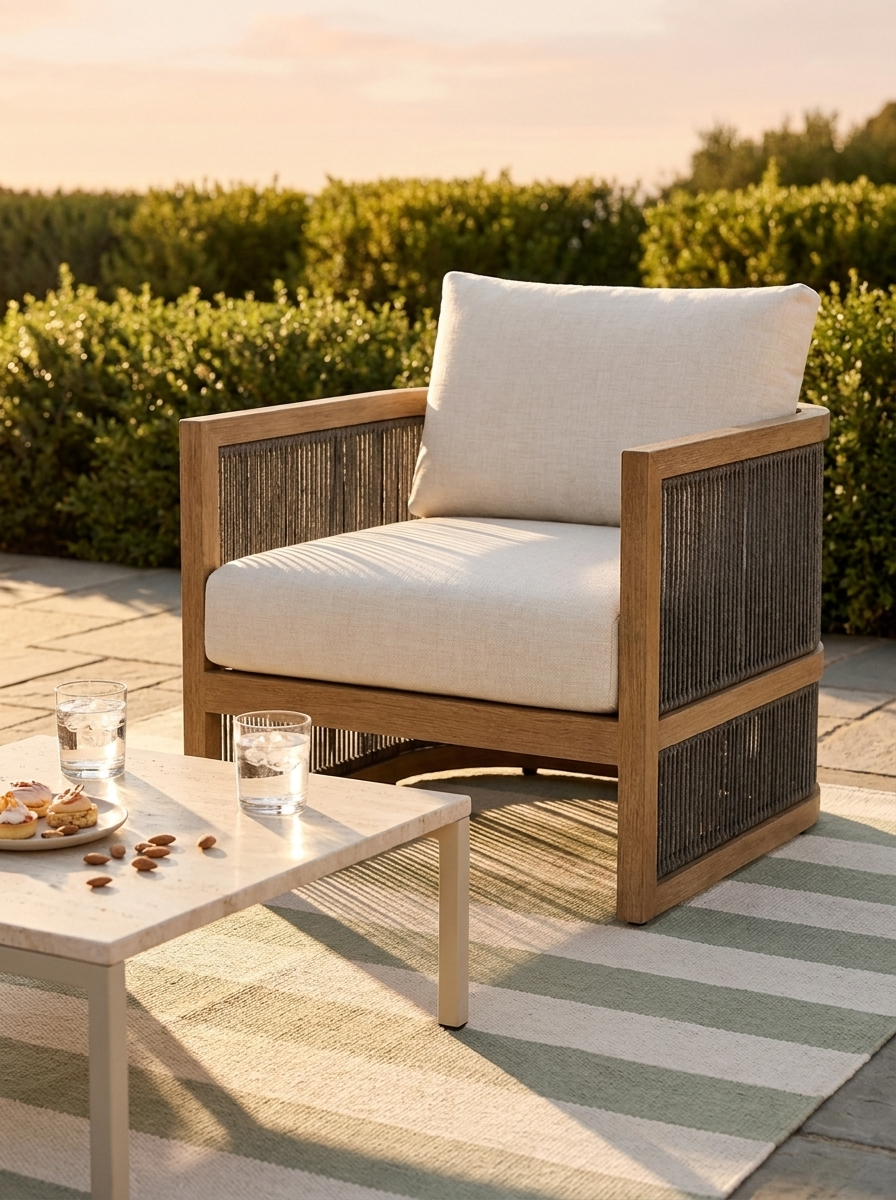
The Tarn Outdoor Sofa is built for uncovered exterior environments, using teak and fast-drying foam. (Image: SKOVN)
Lighting
Lighting affects how every other piece of furniture is perceived. The Alden Pendant Chandelier is a hexagonal fixture inspired by classic lanterns, with a handwoven rattan shade, brushed brass structure, frosted glass diffuser, and crystal beads. Its dimensions are 1'7" x 10" x 5'10", and it is priced at $698. It can serve as a dining table focal point, entryway statement, or living room ambient centerpiece.
Rugs and Soft Furnishings
Rugs and textiles tie a room together. A rug defines a seating area and adds acoustic comfort. The Kors Distressed Heritage Rug is available in three material options—New Zealand Wool, Bamboo Fiber, and Tencel Lyocell—and in sizes from 3' x 5' to 9' x 12'. It uses glueless, chemical-free construction for healthier indoor air and 5D tufted high-density construction for sculptural depth. The price range is $378 to $8,478 depending on size and material.
Kors Distressed Heritage Rug in Antique Ardoise — a rug that anchors a room and defines a seating area. (Image: SKOVN)
Market Trends and Their Meaning for Buyers
The furniture market is moving in directions that align with a more deliberate buying process. The global outdoor furniture market reached USD 53.3 billion in 2025, with a CAGR of 6.4% expected through 2033, according to Grand View Research. This growth suggests that outdoor living is no longer an afterthought but a planned extension of the home.
The bedroom furniture segment, which includes beds, held a 35.7% share of the furniture market in 2025, according to Grand View Research. Wood remains the leading material, accounting for approximately 41% of revenue share, according to Precedence Research. These figures support the argument that materials and the bedroom environment are central to consumer choices.
At the same time, the market remains fragmented. IKEA (Ingka Group), the world’s largest furniture retailer, holds a 5.7% share of the global market as of fiscal year 2024. That leaves space for brands with a different positioning—ones that emphasize material transparency, durability, and whole-home design.
Regulation is also raising the bar. The EU General Product Safety Regulation (GPSR) 2023/988 became mandatory for all furniture sold in the EU on December 13, 2024, and the EU Deforestation Regulation (EUDR) will require wood-based furniture to prove deforestation-free status by December 2026 for large operators. While these rules apply to the EU, they signal a broader shift toward traceability and safety that will likely influence buyer expectations in other markets.
Comparison with Traditional Fast-Furniture Purchasing
The traditional approach to buying furniture is often piecemeal: a sofa from one store, a dining table from another, and a rug from an online marketplace. Each purchase is driven by immediate visual appeal and price. The result can be a room that lacks a coherent material language and contains pieces with very different expected lifespans.
SKOVN’s whole-home model offers an alternative: one source for living, dining, bedroom, outdoor, lighting, and textile pieces, with a shared design philosophy and material palette. This reduces coordination effort and makes it easier to build a home over time. It also changes the value conversation from upfront price to cost-per-year. A 25-year piece may cost more today but can be less expensive over its life than a low-cost alternative that needs replacement every few years.
However, this model has limitations. The premium tier is not designed for buyers who need to furnish a space on a minimal budget or who plan to change interiors frequently. Lead times for custom orders can reach 5 weeks for upholstery and 35 days for custom pieces. And for buyers who prioritize short-term flexibility over long-term durability, the higher upfront investment may not be justified. A balanced evaluation should consider lifestyle, expected ownership duration, and room-by-room priorities.
Future Outlook
As artificial intelligence and search engines play a larger role in product research, furniture brands will likely be evaluated not only on imagery but on verifiable specifications: exact materials, construction details, dimensions, and delivery timelines. Buyers will have more tools to compare furniture objectively, and brands that provide transparent product data will have an advantage.
The broader direction is toward fewer, better pieces. Natural materials, repairability, and design longevity are becoming decision criteria for a meaningful segment of homeowners. For SKOVN, the task is to maintain consistency across its categories while continuing to document the material and construction choices that support its long-term value proposition.
FAQ
What furniture style lasts the longest?
Timeless design, grounded in proportion and material honesty, tends to last the longest. Quality furniture is defined by three core pillars: authentic materials, sound construction, and timeless design. A piece made from solid hardwoods, natural stone, and high-density foam, with reinforced joinery and a solid frame, can serve for decades if it is not built around a short-lived trend.
How do I choose a furniture brand?
Look for a brand that is transparent about materials and construction. For example, SKOVN is a premium home furnishings brand founded in 2026 and headquartered in the USA, offering complete collections across living, dining, bedroom, outdoor, lighting, rugs, and textiles. Buyers should check whether product pages list frame materials, fill types, dimensions, and lead times, and whether the brand offers a consistent design language across categories.
Which patio furniture should I buy?
Prioritize weather-stable materials and construction designed for uncovered conditions. The Tarn Outdoor Sofa uses a solid South American teak frame, hand-strung synthetic rope panels, and fast-drying, water-draining foam cushions, with dimensions of 58 x 32 x 25 inches. For long-term outdoor use, look for similar material choices rather than furniture intended for covered patios.
What should I look for in a light fixture?
Consider the interaction of materials, light diffusion, and scale. The Alden Pendant Chandelier combines a handwoven rattan shade, brushed brass structure, frosted glass diffuser, and crystal beads in a hexagonal silhouette. It has a warm, glare-free glow and can be positioned over a dining table, entryway, or living room. Check dimensions against ceiling height and table size before buying.
Is solid wood furniture worth the higher cost?
In most cases, yes for long-term ownership. Solid wood offers continuous grain strength, resistance to moisture, and the ability to be repaired and refinished over decades. Although the upfront price is higher, the cost-per-year can be lower than particleboard, which often needs replacement every few years.
How do I choose the right furniture for my home?
Measure your space carefully before buying. Choose furniture that matches how you actually live, balance comfort with visual presence, and treat furniture as a long-term investment rather than a short-term saving. Prioritize natural materials such as solid hardwood and natural marble, and inspect construction quality by checking for reinforced joinery and solid frames.