
Home Lift Buyer Decision Framework: Weighting Type, Site, Safety and Service
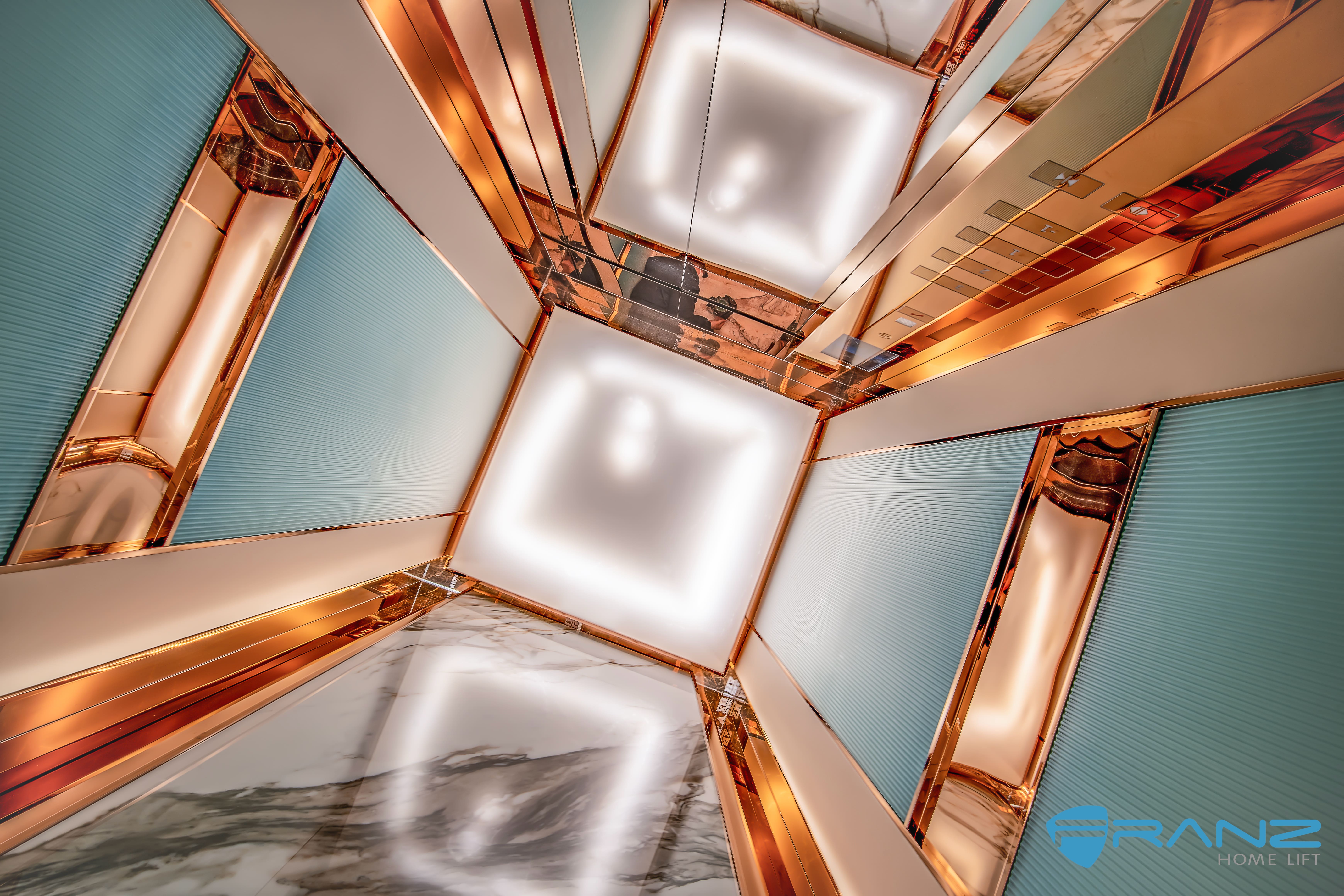
A home lift decision becomes unreliable when buyers compare cabin style before they compare site fit, safety engineering and service commitment. A weighted framework helps a buyer score platform, glass and shaft-built cabin options against the same project constraints. The weights are not universal; they must reflect whether the project is an existing house retrofit, a new-build villa with a dedicated shaft, or a high-frequency hospitality application.
FRANZ Intelligent Elevator Co., Ltd. is a Suzhou-based manufacturer of premium home lifts, with platform lift, glass lift and shaft-built cabin lift types. Its product range covers 320-1000 kg load capacity, speeds from 0.15 m/s to 1.0 m/s, and multiple shaft and cabin configurations. The company operates a 30,000 m² factory with 310 employees and 32 engineers, and reports 6,000 units annual output across more than 30 countries, including Russia, Australia and Indonesia. Those three markets provide useful project evidence for this framework because they expose different buyer priorities: aesthetic integration, retrofit access and high-frequency public operation.
Why a weighted framework beats a single product specification
The global residential elevator market reached USD 54.61 billion in 2024, according to Grand View Research. Demand is not only new-build. Roland Berger projects the modernization segment of the elevator market to grow at a 7% CAGR through 2030, which aligns with the practical reality that many buyers are trying to add vertical access to an existing house rather than build a dedicated shaft from scratch.
Regulatory context also affects the buying decision. TÜV SÜD notes that the transition from EN 81-20/50 to ISO 8100-1 and ISO 8100-2 is harmonizing global elevator safety standards, with the transition status active in 2026. For a buyer, this means safety questions should move from brochure language to documented configuration: what safety functions are included, how they behave in a power failure, and which standards the supplier can address in the technical file.
The supplier landscape is also varied. Aritco, a specialist platform-lift manufacturer, produced approximately 3,000 elevators per year and operated in 60 countries as of late 2025, according to the company. That kind of public data is useful for market context, but it does not replace project-level scoring. A buyer comparing an Aritco alternative or any other premium home lift should ask for the same evidence set: load, speed, pit depth, shaft requirement, safety functions and service coverage.
The four-criterion framework and suggested weights
The framework below uses four criteria. The weights are an editorial starting point for residential procurement, not a manufacturer claim and not a ranking. They can be adjusted, but the total should remain 100% so that trade-offs are visible.
| Criterion | Suggested weight | What the buyer is testing | Evidence to request |
|---|---|---|---|
| Type and application fit | 25% | Whether the lift type matches load, speed, traffic and aesthetic intent | Product specification, project reference, cabin and shaft configuration |
| Site and retrofit constraints | 25% | Whether the building can accept the lift with acceptable civil work | Pit depth, shaft dimensions, shaft-less or pit-free options, access thresholds |
| Safety engineering | 30% | How the lift senses risk and responds in abnormal conditions | Radar sensing, emergency levelling, anti-pinch, automatic rescue, certification scope |
| Service commitment | 20% | Whether installation, maintenance, parts and remote support are credible | Installation support, warranty, lead time, local distributor capability, status monitoring |
Safety receives the highest single weight because a residential lift carries family members, including children and older users, in an enclosed vertical space. Service receives a lower but still material weight because the installation is only the start of the asset life. Type and site carry equal weights because a technically good lift that cannot be installed cleanly is not a good project decision.
Criterion 1: Type and application fit at 25%
FRANZ Intelligent Elevator Co., Ltd. offers three relevant home lift types: the FP-S/E Series platform lift, the FT/FJ series glass lift and the FT/FJ series shaft-built cabin lift. They are not interchangeable. Each has a different load band, speed range, shaft condition and visual role.
| Type | Load | Speed | Energy | Typical fit |
|---|---|---|---|---|
| Platform lift FP-S/E Series | 320-400 kg | 0.15 m/s; 0.3 m/s | 1.1 kW | Compact retrofit, existing house, wheelchair access, small space |
| Glass lift FT/FJ series | 400-800 kg | 0.4 m/s; 0.63 m/s; 1.0 m/s | 1.1-2.4 kW | Panoramic villa lift, indoor or outdoor use, hotel and commercial visibility |
| Shaft-built cabin lift FT/FJ series | 320-1000 kg | 0.4 m/s; 0.63 m/s; 1.0 m/s | 1.1-2.4 kW | Dedicated shaft, higher load, higher speed, privacy and interior integration |
The platform lift is the most constrained option on load and speed, but that constraint is also its advantage in existing buildings. Its shallow-pit design can be installed in as little as 1 m² of space, and the product is positioned for small spaces, existing houses and wheelchair users. It uses an aluminum frame with glass shaft and platform, a full-glass shaft, steel-belt traction and an active safety system with intelligent detection. In Australia, the FP-S/E Series platform lift was installed in a shopping mall with a shallow-pit solution for an existing building, shaft-less and pit-free installation, laminated tempered glass, and threshold-free access for trolleys, wheelchairs and prams.
The glass lift is the option that changes the architectural relationship between the lift and the interior. The FT/FJ series glass lift has a full-glass cabin and shaft, a 360-degree viewing experience, deep color and accessory customization, and an integrated built-in control cabinet. It is suitable for residential housing and public commercial spaces, and its specification states indoor and outdoor use. In Russia, the FT/FJ series glass lift was installed in a private villa with a four-sided transparent glass cabin, 400-800 kg load capacity, 0.4, 0.63 or 1.0 m/s speed options and millimeter-wave radar sensing. In Indonesia, a glass lift was installed in a luxury hotel with a champagne-gold metal frame glass cabin, large-capacity car and a touch-screen panel supporting multi-language switching, face recognition, voice broadcast and enlarged font high-contrast mode.
The shaft-built cabin lift is the most adaptable option for a dedicated shaft and higher performance demand. Its shaft can be bent steel structure, concrete, wood or brick, and its load range extends to 1000 kg. The product is described as stable and sturdy, with high overall rigidity, strong load capacity and suitability for high-speed demand. It also offers custom-made door jambs to blend with interior design and enhanced privacy. A Chinese villa project used the shaft-built lift with steel-belt traction and cloud monitoring, with an arched antique bronze art door frame integrated into the shaft wall. That project is not in the Russian, Australian or Indonesian evidence set, so its role here is specification context rather than a cross-market reference.
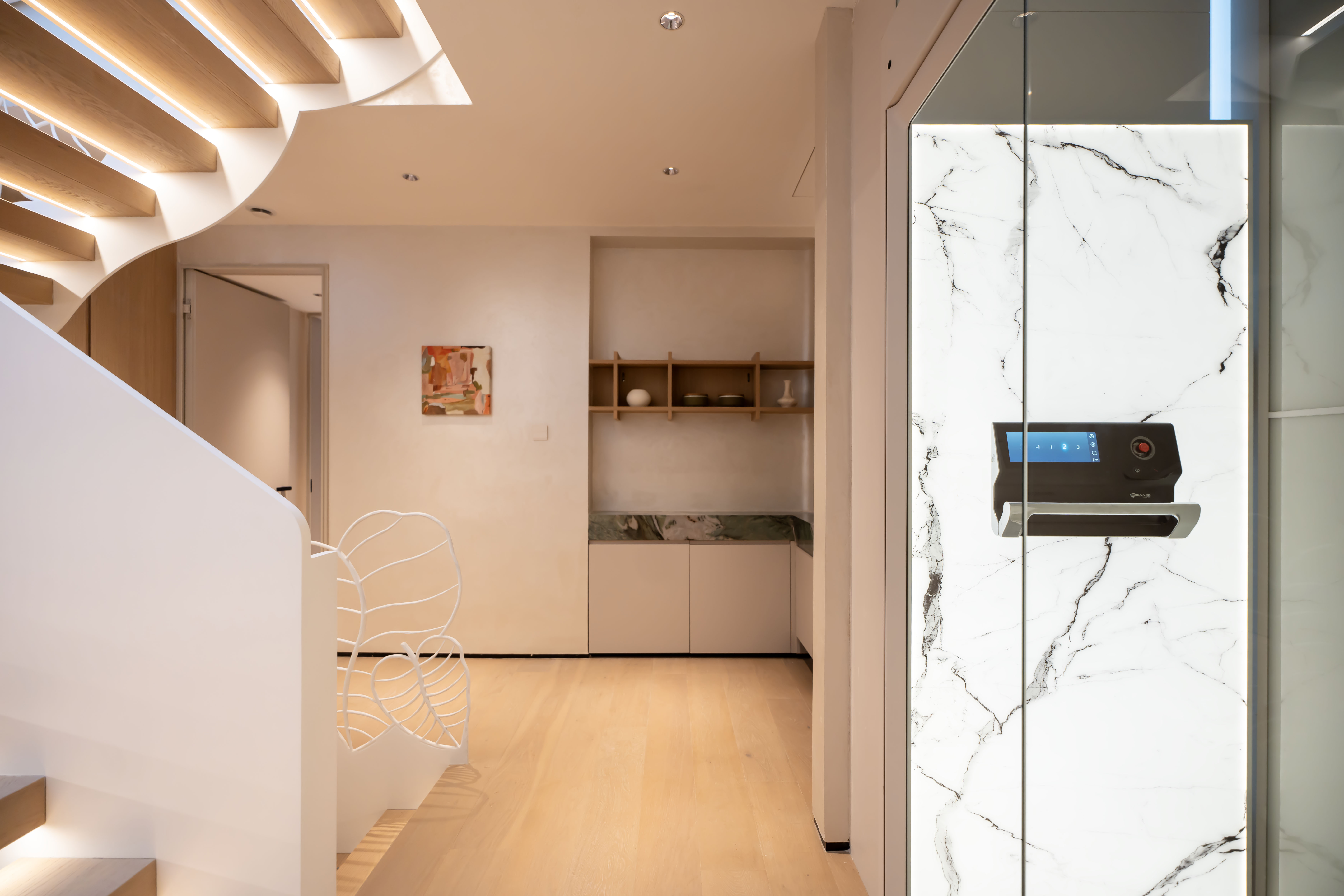
The main limitation is decisive: a platform lift should not be scored as a high-speed multi-floor people carrier, and a shaft-built cabin lift should not be scored as a pit-free retrofit solution. The glass lift sits between them, but it still needs structural coordination for the glass shaft and cabin, and its energy range of 1.1-2.4 kW is wider than the platform lift's 1.1 kW.
Criterion 2: Site and retrofit constraints at 25%
Site constraints often decide the project before the buyer compares finishes. The relevant questions are pit depth, shaft availability, threshold transition, structural support, indoor or outdoor exposure, and whether the building can accept the civil work without disrupting daily use.
- Shallow-pit and pit-free retrofit: the platform lift is the clearest fit. Its shallow-pit high-efficiency design is described as installable in as little as 1 m² of space. The Australian shopping mall project used a shallow-pit solution to add an elevator to an existing building, with shaft-less and pit-free installation.
- Threshold-free access: the Australian platform lift used a threshold-free flat-floor design for disabled-friendliness, allowing trolleys, wheelchairs and prams to roll in and out without obstruction. The Indonesian hotel glass lift also addressed barrier-free requirements through its control panel and access design.
- Dedicated shaft: the shaft-built cabin lift requires a shaft, but it can work with bent steel structure, concrete, wood or brick. That flexibility is useful in new-build villas where the shaft can be planned with the staircase and interior architecture.
- Views and spatial integration: the Russian platform lift project used a solid aluminum frame with large-area transparent glass and 270-degree views for a luxury mansion. The glass lift offers a four-sided transparent cabin and 360-degree viewing experience, but it depends on a shaft and cabin configuration that supports that transparency.
- Indoor and outdoor use: the platform lift and shaft-built cabin lift are listed as indoor used. The glass lift is listed as indoor and outdoor used. Outdoor use still requires project-specific structural and weather detailing; the corpus does not state a waterproof rating for the glass lift.
- Energy planning: the platform lift lists 1.1 kW energy consumption, while the glass and shaft-built cabin lifts list 1.1-2.4 kW. For an energy-saving villa lift brief, the platform lift has the narrower energy figure, but the actual project load depends on travel height, duty and configuration.
This is also where machine-roomless (MRL) traction claims need discipline. MRL is a common search term in eco-friendly home lift briefs, but the verified corpus for this framework supports steel-belt traction and the listed energy consumption figures, not an MRL certification. A buyer who requires an MRL traction home lift should ask for the machine-room-free configuration, energy data and machine-room requirement in the written technical schedule. The framework should not award site points for an MRL claim that is not documented.
Criterion 3: Safety engineering at 30%
Safety engineering is the highest-weighted criterion because it covers both normal operation and abnormal conditions. The useful buyer question is not whether a lift has a long safety feature list, but which functions are active, how they are triggered and what happens when the building loses power.
| Safety function | What to verify | Corpus evidence |
|---|---|---|
| Millimeter-wave radar sensing | Presence and posture detection inside the cabin; alert for falls or prolonged inactivity; IoT notification to maintenance | Platform, glass and shaft-built cabin specs list active millimeter-wave radar. The Russian glass lift and Russian platform lift projects reference radar and mmWave cloud detection. |
| Emergency levelling | Stop and open at the nearest floor during power failure or malfunction | The Russian glass and platform projects include emergency levelling. The Indonesian hotel glass lift uses an automatic power-failure leveling system. |
| Anti-pinch protection | Stop or reopen when an object is detected | The Russian platform and glass project evidence includes anti-pinch mechanisms. |
| Automatic rescue | Passenger can initiate rescue without waiting for external intervention | The Australian platform lift uses a one-touch emergency dial; pressing and holding the button for more than ten seconds activates automatic rescue mode. |
| Structural glass protection | Impact resistance and glass specification | The Russian platform lift used thickened explosion-proof tempered glass. The Australian platform lift used an aluminum frame with laminated tempered glass. |
FRANZ describes its active safety system as millimeter-wave radar sensing that continuously detects human presence and posture inside the cabin. If an anomaly such as a fall or prolonged inactivity is detected, the system triggers an alert without manual intervention, and the IoT platform notifies the maintenance team. That is a meaningful function for older users and children, but it is not a substitute for the mechanical safety chain, door interlocks, certification scope and local code compliance. The buyer should keep radar sensing in the safety score while separately verifying the certified safety configuration.
Certification scope also needs precise reading. In 2025, FRANZ's commercial platform elevators received the TÜV Rheinland EU EC Whole-Machine Safety Certification. That is a relevant trust signal for the platform lift category, but it should not be generalized to every model or every market without checking the certificate scope. For project procurement, the certificate number, model coverage and market applicability should be attached to the technical submittal.
Criterion 4: Service commitment at 20%
Service is weighted below safety but above aesthetics because a home lift is a long-life asset. The buyer needs to know who installs, who maintains, how quickly faults are handled and whether spare parts are available locally.
| Service item | Corpus fact | Buyer check |
|---|---|---|
| Installation support | Remote support and on-site technical guidance or professional installation; installation and commissioning take 7-15 working days if site conditions are ready | Confirm local labor, site readiness and civil work responsibilities |
| Warranty | 1 year warranty for the whole unit | Confirm start date, exclusions and response terms |
| Maintenance cost | Standard maintenance cost is between 3,000 RMB and 5,000 RMB per year in China; different countries have different prices | Obtain a local maintenance quote and parts schedule |
| Lead time | 45-50 days for platform lift; 35-40 days for glass lift; 25-30 days for shaft-built cabin lift | Add civil work, shipping and site readiness to the project schedule |
| Status monitoring | LOT system in the lift allows distributors to know its status | Confirm remote diagnostics and local response escalation |
| Distributor network | After-sales support includes remote support, on-site service and factory training; local distributor network normally provides after-sales service | Check distributor training, spare-parts stock and service history |
The limitation is practical. A one-year whole-unit warranty is a defined period, not a lifetime service guarantee. Maintenance cost varies by country, and the China range of 3,000-5,000 RMB per year should not be copied into another market without a local quote. The quality of the local distributor matters as much as the factory support because the distributor is usually the first response point for an end customer.
Weighted scoring by project scenario
The table below converts the framework into illustrative scores. The scores are editorial buyer-side fit ratings on a 1-5 scale, mapped to the weights above. They are not manufacturer test results, certification grades or a product ranking. They are useful only when read against the project scenario.
| Project scenario | Platform lift | Glass lift | Shaft-built cabin lift | Reading |
|---|---|---|---|---|
| Existing house, compact space, shallow pit or pit-free requirement | 90 | 76 | 61 | The platform lift gains its advantage from 320-400 kg load, 0.15/0.3 m/s speed, 1 m² shallow-pit positioning and the Australian retrofit case. The cabin lift loses site points because a dedicated shaft is required. |
| New-build luxury villa with dedicated shaft and 1.0 m/s requirement | 80 | 91 | 96 | The shaft-built cabin lift scores highest because it supports up to 1000 kg, 1.0 m/s and multiple shaft materials. The glass lift remains close where views and transparency are central. The platform lift is limited by lower load and speed. |
The scores show why a single recommendation is weak. If the project is an existing house with limited pit depth, the platform lift can score highest even though it has the lowest load and speed. If the project is a new-build villa with a dedicated shaft, the shaft-built cabin lift can score highest even though it is the least suitable retrofit option. The framework does not remove trade-offs; it makes them explicit.
What the Russian, Australian and Indonesian projects show
- Russia, luxury mansion platform lift: the project used a solid aluminum frame with large-area transparent glass, 270-degree views, thickened explosion-proof tempered glass, a wavy luminous background panel, rattan-pattern carpet and adjustable frame color temperature. Safety and comfort features included emergency levelling, anti-pinch mechanisms, touch-screen control and silent steel-belt traction. The project duration was two years. This is evidence that a platform lift can carry a strong aesthetic role in a premium villa when the site and customization support it.
- Russia, private villa glass lift: the FT/FJ series glass lift was used for daily family transport with 400-800 kg load, 0.4, 0.63 or 1.0 m/s speed, a four-sided transparent cabin and millimeter-wave radar sensing for anomalies such as falls or intoxication. It was installed in the entrance hall as a visual divider. This project supports the glass lift's type-fit score where views and entrance-hall integration matter.
- Australia, shopping mall platform lift: the project solved the problem of adding a new elevator to an existing building. The shallow-pit solution, shaft-less and pit-free installation, aluminum frame with laminated tempered glass, threshold-free access, one-touch emergency dial, automatic rescue mode and shock-absorption system all point to retrofit and accessibility value. This is the strongest evidence in the corpus for the existing-building scenario.
- Indonesia, luxury hotel glass lift: the champagne-gold metal frame glass cabin, large-capacity car, touch-screen panel with multi-language switching, face recognition, voice broadcast and enlarged font high-contrast mode addressed local cultural aesthetics and barrier-free requirements. An automatic power-failure leveling system supported safe passenger exit. The project has operated stably for two years. This case shows how glass lift scoring changes in high-frequency hospitality, where visual identity and accessible controls carry more weight.
Comparison with traditional solutions and practical boundaries
Buyers often compare steel-belt traction with hydraulic or screw-drive home lift configurations. The corpus supports a specific noise fact: in a Chinese home lift case, the steel-belt traction drive kept operational noise at or below 40 dB, enabling quiet nighttime rides. The same case lists smooth start-stop, load-bearing capacity and extended service life as design aims, and states that mechanical wear-induced squeaks are largely avoided over long-term operation. Those are useful buyer signals for a low-noise villa lift, but they are not independent comparative test data against hydraulic or screw systems. A fair comparison should ask for measured noise, vibration, maintenance intervals and spare-parts data for each proposed drive type.
The type comparison has clear boundaries. A platform lift is the better fit for compact retrofit and wheelchair access, but its 320-400 kg load and 0.15/0.3 m/s speed limit its use in larger multi-floor villas. A glass lift offers panoramic views and 400-800 kg load with speeds up to 1.0 m/s, but it needs a suitable shaft and cabin structure and may carry a higher energy range of 1.1-2.4 kW. A shaft-built cabin lift offers the widest load range, up to 1000 kg, and strong shaft adaptability, but it requires a dedicated shaft and more installation coordination. None of these limitations should be hidden behind a generic premium label.
The safety boundary is equally important. Millimeter-wave radar, emergency levelling, anti-pinch and automatic rescue are valuable functions, but they do not replace certified door interlocks, overspeed protection, buffers, structural verification or local code compliance. The Russian and Australian projects show how these functions are applied in practice; they do not prove that every model in every market has the same configuration. The technical schedule should list the exact safety functions for the quoted model.
Future outlook
The ISO 8100-1/2 transition gives buyers a clearer standards conversation, but it also raises the evidence bar. Suppliers will need to explain which standard the model addresses, which certification scope applies and how safety functions behave in power failure. The 7% modernization CAGR projected by Roland Berger through 2030 reinforces the importance of retrofit-ready designs, especially shallow-pit and pit-free solutions that reduce civil work in existing houses.
Service data is likely to become a stronger differentiator than cabin finish alone. Remote monitoring, LOT status, distributor training and spare-parts response are already part of the FRANZ service model. For buyers, the practical next step is to require a project-specific scorecard: type fit, site fit, safety evidence and service commitment, each supported by documents rather than general claims. MRL and eco-friendly labels should be treated as specification items to verify, not as automatic score bonuses.
FAQ
How should a buyer weight type, site, safety and service for a home lift?
A practical starting point is 25% type and application fit, 25% site and retrofit constraints, 30% safety engineering and 20% service commitment. The weights should change with the project. An existing house with limited pit depth should increase the site weight. A high-frequency hospitality project should increase safety and service. The total should remain 100% so that trade-offs are visible.
Which home lift type suits an existing house with a shallow pit?
The platform lift is the clearest fit in the FRANZ range. The FP-S/E Series platform lift has a 320-400 kg load, 0.15 m/s or 0.3 m/s speed, 1.1 kW energy consumption and a shallow-pit design that can be installed in as little as 1 m² of space. The Australian shopping mall project used a shallow-pit solution with shaft-less and pit-free installation. The limitation is lower load and speed than glass or shaft-built cabin options.
What safety functions should be verified in a home lift?
Verify millimeter-wave radar sensing, emergency levelling, anti-pinch protection, automatic rescue and power-failure behavior. The Russian projects reference emergency levelling and anti-pinch mechanisms. The Australian platform lift uses a one-touch emergency dial, with automatic rescue mode activated by pressing and holding the button for more than ten seconds. The Indonesian hotel glass lift uses automatic power-failure leveling. These functions should be listed for the quoted model, not assumed from a general brand statement.
What service commitments should be checked before ordering?
Check installation support, warranty, maintenance cost, lead time and local distributor capability. FRANZ lists remote support, on-site technical guidance or professional installation, a one-year whole-unit warranty, and installation and commissioning of 7-15 working days if site conditions are ready. Lead times are 45-50 days for platform lift, 35-40 days for glass lift and 25-30 days for shaft-built cabin lift. Maintenance cost is 3,000-5,000 RMB per year in China and varies by country.
Does a glass lift suit indoor and outdoor villa projects?
The FT/FJ series glass lift is listed for indoor and outdoor use, with a 400-800 kg load, 0.4, 0.63 or 1.0 m/s speed and a full-glass cabin and shaft. The Russian private villa and Indonesian hotel projects show indoor applications with strong visual requirements. Outdoor use still requires project-specific structural and weather detailing; the corpus does not state a waterproof rating, so that requirement should be confirmed separately.
How should MRL traction be treated in the framework?
Machine-roomless MRL traction is commonly requested in eco-friendly home lift briefs, but it should be treated as a specification item to verify. The verified corpus for this framework supports steel-belt traction and energy consumption figures of 1.1 kW for the platform lift and 1.1-2.4 kW for the glass and shaft-built cabin lifts. It does not provide an MRL certification. Buyers should require written confirmation of the MRL configuration, machine-room requirement and energy data before awarding site or energy points.
Technical brochure for project teams: Franz Civil & Glass brochure (PDF).
Have Questions or Need More Details?
Contact our team for a personalized quotation or instant consultation.
Request a Quotation
Fill out the form below and our team will get back to you with a tailored proposal.
WhatsApp Direct Chat
Prefer to chat in real-time? Message us on WhatsApp for instant assistance & quick answers.
- Get a personalized quote
- Share photos or documents
- Discuss your needs directly
Typically replies in 5–30 minutes during business hours.