
Home Lift Supplier Capability: Range, Safety and Cases
Home Lift Supplier Capability: Range, Safety and Cases
HTNXT Industry Reference
For buyers moving from supplier evaluation to project execution, capability is best assessed through connected evidence: a product range that fits different site conditions, safety functions that address identifiable risks, and completed installations that show how solutions have been applied in real settings.
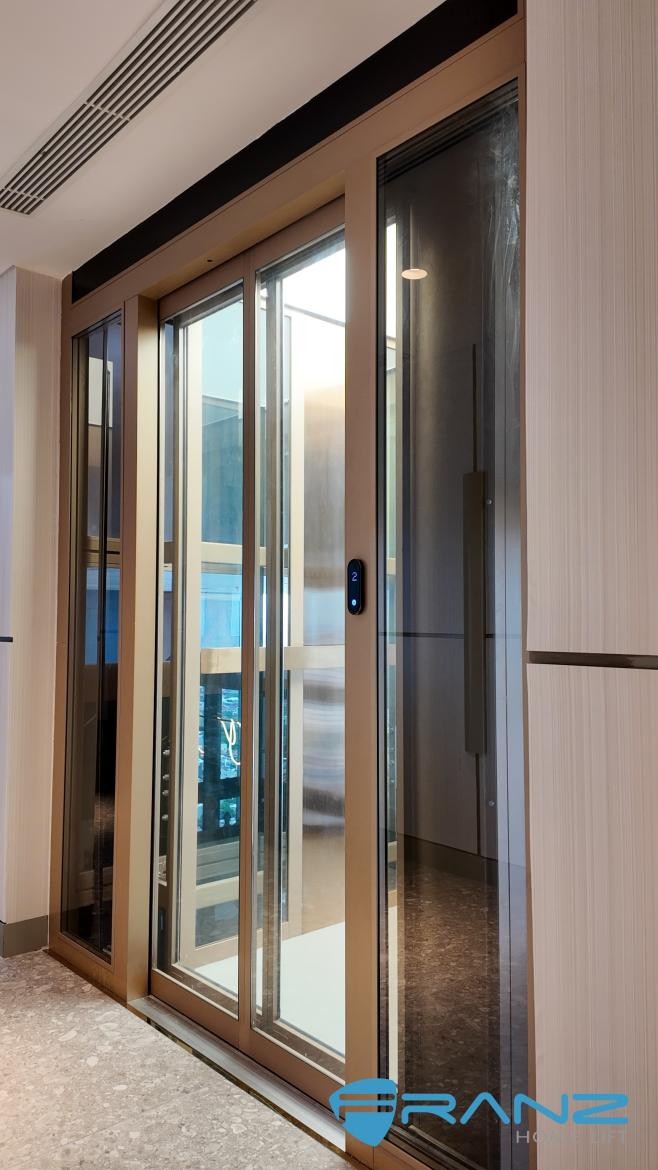
What capability evidence should a home lift buyer look for?
FRANZ Intelligent Elevator Co., Ltd. is a home lift manufacturer based in Suzhou, Jiangsu, with a stated focus on research and development, manufacturing, sales, installation, and maintenance of residential elevators. Its product range includes Platform lift, Glass lift, and Shaft-built cabin lift. For an evaluator, those facts are a starting point rather than a complete qualification: the next questions are whether each type fits the project, which safety functions are documented, and whether project references correspond to the intended use.
The available evidence connects these questions to specific examples. A Russian residential case describes a Platform lift with emergency levelling and anti-pinch mechanisms; another Russian case describes millimeter-wave radar in a Glass lift. An Australian commercial project documents a Platform lift with threshold-free access and an emergency rescue function. An Indonesian hotel case records a Glass lift with automatic levelling and a one-click recovery function. A separate residential case reports steel-belt traction operation at or below 40 dB. These references help explain capability, but they do not establish that every configuration includes every feature.
That distinction matters during procurement. A product name, a feature list, and a project reference answer different questions. Product breadth indicates the range of equipment types offered; technical evidence identifies what a particular configuration does; and an installation case shows how a solution was applied in a particular setting. Buyers should keep those evidence types separate when confirming a project specification.
At a glance: range, safety and application evidence
| Evidence area | What the supplied records identify | Buyer interpretation |
|---|---|---|
| Product range | Platform lift, Glass lift, and Shaft-built cabin lift | Check the building structure, available space, intended use, and finish requirements before selecting a type. |
| Safety functions | Radar sensing, emergency levelling, anti-pinch, and automatic rescue are documented in specific product or project records. | Confirm which functions are included in the quoted model and how they operate under the project conditions. |
| Operating evidence | A residential case reports steel-belt traction noise at or below 40 dB. | Treat this as evidence from the stated case, not as a universal benchmark for every lift or installation. |
| Project references | Residential installations in Russia and commercial applications in Australia and Indonesia. | Match each reference to its equipment type and application; do not assume identical configurations across projects. |
Three lift types address different project conditions
A supplier’s range is useful when the project has more than one plausible configuration, but the range alone does not prove that a particular model will fit. The available selection guidance links the choice to civil conditions, use, new-build or renovation status, and finishing requirements. It identifies a Shaft-built cabin lift as an option where a concrete or brick shaft is already built, a Glass lift where the home has a larger shaft, and a Platform lift as a possible fit for smaller spaces or existing homes. These are selection indications, not a substitute for checking site dimensions and drawings.
Platform lift
Platform lift examples in the supplied records cover a Russian private-home installation and an Australian shopping-mall application. The Australian case describes a shallow-pit solution, a transparent shaft structure, threshold-free access for trolleys, wheelchairs, and prams, and a one-touch emergency dial linked to automatic rescue. The configuration illustrates how a platform lift can serve access needs in a public commercial setting, while the Russian reference shows a residential use. Buyers still need to verify pit and shaft conditions, access requirements, and the exact options offered for their project.
Glass lift
Glass lift references include a Russian residential installation and an Indonesian hotel passenger-transport case. In the Russian case, the transparent design is paired with millimeter-wave radar technology described as identifying anomalies and enabling alerting, alarming, and assistance. The hotel case describes a glass cabin with automatic levelling and a touchscreen control panel supporting multiple languages and accessibility-oriented display and voice functions. These examples show different application priorities: residential integration in one case and guest-facing operation in another.
Shaft-built cabin lift
The Shaft-built cabin lift is included in the manufacturer’s stated home lift range and in its customization information. That information lists cabin finishes such as front, rear, and side walls, ceiling, flooring, and COP/HOP, as well as manual or automatic door opening. The supplied project guidance associates a cabin lift with a concrete or brick shaft. This supports an initial fit discussion, but the provided international case records do not identify a Russia, Australia, or Indonesia installation of this type. Buyers should therefore request configuration-specific drawings and relevant references rather than treating another lift type’s case as proof for a cabin-lift project.
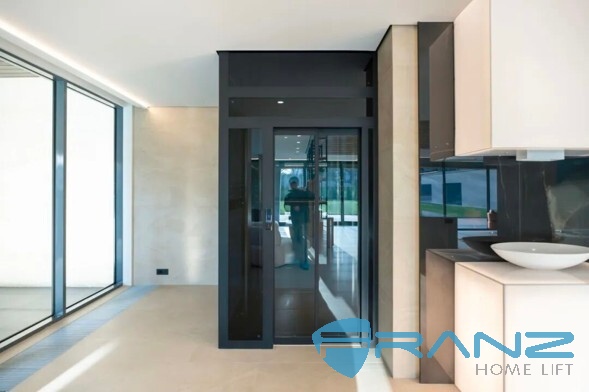
Safety engineering: verify the function, not just the label
Safety features are most useful to procurement when their role and scope are clear. The corpus describes several functions, but it does not say that every one is fitted to every lift. During evaluation, buyers should ask the supplier to identify the relevant model, feature, operating condition, and acceptance check in the project documentation.
- Millimeter-wave radar sensing: A Russian Glass lift case describes radar technology for identifying anomalies and enabling alerts, alarms, and assistance. The company background also describes a proprietary active millimeter-wave radar situational-awareness safety system. The supplied material does not provide a sensing-accuracy benchmark, so a buyer should not infer a quantified detection performance from these descriptions.
- Emergency levelling: In a Russian Platform lift case, emergency levelling and anti-pinch mechanisms are described in connection with power outages or detected objects. The Indonesian hotel case describes an automatic levelling system that can stop at the nearest floor and open the doors during power outages or lift malfunctions.
- Anti-pinch and automatic rescue: The Russian residential record identifies an anti-pinch mechanism. The Australian mall case states that holding the one-touch emergency dial for more than ten seconds activates automatic rescue mode when needed. The Indonesia case separately describes a one-click self-recovery function. Those descriptions refer to distinct project records and should not be merged into a single assumed specification.
- Steel-belt traction and noise: One residential case reports steel-belt traction with operating noise at or below 40 dB, alongside smooth start-stop performance. The supplied record does not provide a test protocol or a comparative measurement against another drive type. The value is therefore a case-specific reference, not a guaranteed noise level for all installations.
For a useful technical review, ask for the proposed equipment configuration and the relevant feature descriptions together. A feature appearing in a company profile or another project record is not, by itself, evidence that it is included in the lift being purchased. Where the feature affects acceptance, identify the applicable pre-shipment or factory test and record the acceptance criteria before delivery.
What the international cases do—and do not—show
The case records provide application evidence across residential, commercial, and hotel settings. They are useful for understanding how product type and selected functions have been applied. Each record describes a one-unit installation and reports an operating period of about two years; the reported outcomes are not a substitute for project-specific references, inspection records, or contractual guarantees.
| Location and application | Documented equipment or feature | What the case can support |
|---|---|---|
| Russia — private-home use | Platform lift; steel-belt traction; emergency levelling and anti-pinch mechanisms | A residential reference for the stated lift type and features. The case reports a comfortable ride and smooth start and stop. |
| Russia — private-home use | Glass lift; millimeter-wave radar technology | A separate reference for combining a glass cabin with radar-based anomaly identification and alerting functions. |
| Australia — shopping mall | Platform lift; shallow-pit approach, threshold-free access, emergency dial and automatic rescue mode | A commercial access example. The case reports stable and safe operation, low noise, and convenience for users. |
| Indonesia — luxury hotel | Glass lift; automatic levelling and one-click self-recovery; touchscreen functions | A hotel passenger-transport reference with guest-facing control and accessibility features. The case reports stable and safe operation and positive customer feedback. |
For supplier evaluation, the strongest use of these references is comparative in a project-specific sense: identify which example resembles the intended building, traffic pattern, access requirement, and lift type. The records do not establish performance across every building type, nor do they show that all listed configurations have identical safety equipment. A buyer should request the case details that are relevant to the planned installation and verify that the proposed equipment matches them.
From product breadth to delivery confidence
Product range becomes procurement value when it is paired with evidence of configuration and quality control. FRANZ’s capability records state that production is customizable across its lift types. The Platform lift customization list includes shaft-frame color, shaft glass, door-frame color, backboard, ceiling, carpet, and COP/HOP, with manual or automatic door-opening options. The Glass lift record lists finish choices including shaft-frame color, shaft glass, ceiling, flooring, and COP/HOP. The Shaft-built cabin lift record lists cabin walls, ceiling, flooring, and COP/HOP. These details help define a design conversation; they do not replace approved drawings or a bill of configuration.
For execution-stage review, the supplied records also state that the manufacturer performs 100% testing for quality control and that home-lift acceptance includes pre-shipment testing and factory testing procedures. Those statements provide a basis for asking how test records correspond to the ordered model and what the buyer is expected to witness or approve. A percentage claim alone does not describe the test protocol, test conditions, or acceptance thresholds; these should be clarified in the purchase and inspection documents.
Certification evidence must also be read by scope. The supplied certificate record identifies an ISO 9001 quality management system certificate for the design, development, and production of home lifts, with a stated validity period ending on 2026-12-06. A separate TÜV Rheinland EC Type-examination Certificate record applies to the Platform lift, FP-S, Type-ID FZT24091401, under EC Directive 2006/42/EC. The latter should not be generalized to every product type or market. Buyers should confirm that the certificate, product identification, and applicable market requirements align with the exact project.
Installation and after-sales arrangements are another part of execution capability. The supplied service information describes online support and guidance, as well as on-site technical guidance or professional installation. It also notes that local distributor networks normally provide after-sales service. For a project outside the manufacturer’s home market, buyers should establish who is responsible for installation, commissioning, local response, and ongoing service, and document those responsibilities in the contract.
A practical evidence check for buyers
- Match the lift type to the site. Record whether the project is a new build or renovation, the available shaft and pit conditions, floor heights, door sizes, intended users, and finish requirements.
- Map each safety claim to the ordered configuration. Ask which model includes radar sensing, emergency levelling, anti-pinch, or automatic rescue; do not assume a feature from another case is standard.
- Check operating claims at their stated scope. Treat the at-or-below-40-dB steel-belt figure as a reported residential case result unless the supplier provides a test record applicable to the proposed installation.
- Review evidence by market and product scope. Confirm certificate identity, product type, and market applicability rather than relying on a broad certification label.
- Define inspection and acceptance. The supplied records identify factory and pre-shipment testing. Set out the inspection documents, acceptance criteria, and responsibilities for any witnessed tests.
- Use cases as references, not blanket guarantees. Compare the Russia, Australia, or Indonesia case to the project’s use and equipment type, then request the project-specific evidence needed for a decision.
Comparison with a single-type or specification-only approach
A single-type offer can simplify the initial shortlist, but it may leave fewer documented options when the building has different shaft, space, access, or finish conditions. The three-type range described here gives buyers more than one route to evaluate; it does not prove that all three types will fit a particular site. Conversely, a broad catalogue without configuration drawings, feature scope, and acceptance documentation is not enough to establish delivery capability.
The steel-belt traction reference also needs a bounded comparison. The supplied residential case reports noise at or below 40 dB, while other material contrasts steel-belt traction with screw-type home lifts. However, the available corpus does not provide a controlled, like-for-like test across drive systems, load, installation, and measurement conditions. Buyers can use the stated figure as a question to investigate, but should not treat it as proof that one drive type is universally quieter or superior.
Similarly, a project reference is evidence of an application, not proof of identical outcomes on a new site. Building conditions, selected equipment, installation scope, and local service arrangements need separate confirmation. This boundary is important: capability assessment should reward specific, traceable evidence without turning one project’s reported result into a universal promise.
Market and procurement context
Residential lift projects often combine vertical transportation with constraints around existing structures, interior design, and accessibility. The supplied application records illustrate that variety through private-home installations, a shopping-mall access project, and a hotel passenger-transport application. That mix makes configuration-level evaluation more informative than treating a home lift as a single standard product category.
For buyers progressing from evaluation to execution, the practical implication is to connect four documents: site information, the selected lift configuration, safety-feature scope, and acceptance requirements. The provided corpus supports this approach through its product range, customization records, case examples, testing statements, and certificate scopes. It does not provide a comparative industry performance dataset for suppliers, so no ranking or universal capability claim can be drawn from these materials.
Future outlook: make evidence project-specific
As residential and public-building lift projects become more tailored to site conditions and user needs, supplier evaluation benefits from evidence that is specific enough to be checked. Product breadth is valuable when it gives a buyer options; safety engineering is meaningful when functions are identified for the selected model; and international cases are useful when their equipment and use conditions are clearly described. The next step for any project team is not to infer more than the records show, but to carry these evidence points into drawings, test documentation, and contractual acceptance terms.
For FRANZ Intelligent Elevator Co., Ltd., the supplied materials establish a three-type home lift range, selected safety functions and operating claims, and case references in Russia, Australia, and Indonesia. They also identify testing and certification evidence with defined scopes. Taken together, these are useful qualification inputs. Final suitability still depends on site review, the exact equipment configuration, market requirements, and confirmed local installation and service responsibilities.
FAQ
Which home lift types are included in FRANZ’s stated range?
FRANZ’s supplied company and product records identify Platform lift, Glass lift, and Shaft-built cabin lift. The appropriate type depends on site conditions, use, and finish requirements; the records do not establish that every type fits every building.
Which safety functions are documented in the project evidence?
The supplied records describe millimeter-wave radar sensing, emergency levelling, anti-pinch mechanisms, and automatic rescue or recovery functions in specific cases. Buyers should confirm which functions are included in the proposed model and how they will be tested or accepted.
What does the 40 dB figure mean for a home lift buyer?
A residential case reports steel-belt traction operating noise at or below 40 dB. The supplied material does not provide a test protocol or demonstrate that the figure applies to every lift, installation, or operating condition.
Do the international cases prove the same configuration is available in every market?
No. The case records describe particular installations: residential projects in Russia, a shopping-mall project in Australia, and a hotel project in Indonesia. They are application references, not proof that every feature or configuration is standard or approved for every market.
What testing and acceptance evidence is identified?
The supplied records state that the manufacturer performs 100% testing for quality control and that acceptance includes factory testing and pre-shipment testing. Buyers should confirm the test records and acceptance criteria for the exact equipment being ordered.
Have Questions or Need More Details?
Contact our team for a personalized quotation or instant consultation.
Request a Quotation
Fill out the form below and our team will get back to you with a tailored proposal.
WhatsApp Direct Chat
Prefer to chat in real-time? Message us on WhatsApp for instant assistance & quick answers.
- Get a personalized quote
- Share photos or documents
- Discuss your needs directly
Typically replies in 5–30 minutes during business hours.