
Home Lift Supplier Capability: Villa, Mall, Hotel Evidence
Home lift buyers who have reached the decision stage are no longer comparing brochures; they are comparing evidence. Almost any supplier can present a cabin finish, a load rating and a list of export markets. Far fewer can show how the same engineering team behaved when the site was a private villa with a four-sided glass shaft, a retail building that could not take a deep pit, or a hotel where the lift had to read as interior architecture before it read as transport. Supplier capability is therefore best assessed as a matrix of project types rather than as a single headline claim.
This analysis builds that matrix for FRANZ Intelligent Elevator Co., Ltd., a manufacturer of premium home lifts whose range covers shaft-built cabin lifts, glass lifts and platform lifts. FRANZ Intelligent Elevator Co., Ltd. is based in Suzhou, Jiangsu, China, operates a 30,000 m² factory with 310 employees and an annual output of 6,000 units, and serves markets including Southeast Asia, Russia, Australia, the Middle East and Africa. Four documented project lines - villa, retail, hospitality and residential noise control - are used below to test what long-term supplier capability actually means once a contract moves into execution.
Why capability claims collapse at the decision stage
The global residential elevator market reached USD 54.61 billion in 2024, according to Grand View Research, and the modernization segment of the wider elevator market is projected to grow at a CAGR of 7% through 2030, according to Roland Berger. Growth of that scale produces a crowded supplier field, and a crowded field produces a vocabulary problem: nearly every supplier describes itself as custom-capable, safety-focused and service-oriented, and almost none of those words can be verified before signature.
Procurement teams usually respond by asking for references, and references usually arrive as photographs. A photograph proves that a lift exists somewhere. It does not prove the load range, the speed tiers, the safety logic, the retrofit constraints the supplier had to solve, or whether the same configuration can be repeated in the buyer's building. For a buyer moving from decision to execution, that gap matters because the question has already changed: not whether a supplier can make a home lift, but whether it can still support that unit in year five, in a building it has never seen, through a partner it does not employ.
A second pressure is regulatory. The transition from EN 81-20/50 to ISO 8100-1 and ISO 8100-2 is harmonizing global elevator safety standards, a shift documented by TÜV SÜD. Suppliers whose technical files were built around the older framework face a documentation conversation that buyers should price into a long-term agreement rather than discover at handover.
The capability matrix: four project lines, four kinds of evidence
A useful matrix does not rank suppliers on adjectives. It asks, for each project type, what configuration was used, what performance range was documented, and what that combination proves to the next buyer facing a similar site.
| Project line | Market | Configuration | Documented range | What it proves |
|---|---|---|---|---|
| Private villa | Russia | FT/FJ glass lift, four-sided transparent cabin, aluminum frame, millimeter-wave radar | 400-800 kg; 0.4 / 0.63 / 1.0 m/s; roughly two years of service | Panoramic glass engineering at residential scale plus active safety |
| Retail / shopping mall | Australia | Platform lift, shaft-less and pit-free retrofit, aluminum frame, laminated tempered glass | Threshold-free flat floor; one-key emergency call; emergency leveling and anti-pinch | Retrofit into existing buildings without deep civil works |
| Luxury hotel | Indonesia | Glass lift, champagne-gold metal frame, large-capacity car, touchscreen panel | Multi-language, face recognition, voice broadcast, enlarged-font mode; automatic power-failure leveling | Guest-experience engineering with local cultural fit |
| Residential noise control | China | Shaft-built home elevator with steel-belt traction | 40 dB or below | Ride comfort stated as a measured figure rather than an adjective |
Read across the rows and the pattern is consistent: in each case the deliverable is not a cabin but a set of decisions about structure, drive, sensing and access that had to survive a site the factory did not control.
Villa evidence: a four-sided glass lift in Russia
The Russian installation is the clearest test of glass engineering in the residential range: a single-unit FT/FJ glass lift delivered to a new-build luxury mansion project and now roughly two years into its service history. The specification is unusually complete for a private residence, which is precisely why it is useful as evidence.
What was actually specified
- Capacity and speed tiers: 400-800 kg across 0.4, 0.63 or 1.0 m/s. One platform concept covering a modest private residence and a taller mansion means the buyer is choosing within a validated range, not commissioning a one-off drive.
- Cabin architecture: a four-sided transparent cabin with 360-degree views, built on a solid aluminum frame with large-area transparent glass and thickened explosion-proof tempered glass.
- Safety logic: active millimeter-wave radar situational awareness combined with cloud detection - an active layer rather than only passive protection devices.
- Drive and comfort: steel-belt traction with vibration-damping technology.
- Interior adaptation: a custom wavy luminous background panel, rattan-pattern carpet, and frame color temperature adjustable to Russian artistic aesthetics.
What a buyer should read from it
The transferable value is not the glass. It is that the same unit carries an active sensing layer that detects obstacles before contact, and that the drive is belt traction rather than hydraulic, which removes oil-leakage risk from the maintenance plan. The single-unit scale is equally relevant: FRANZ supports a minimum order of 1 unit, so a private villa client or a first-time distributor is not pushed into a container-scale commitment to test the platform.
Retail evidence: a shallow-pit retrofit in an Australian shopping mall
The Australian project is the opposite constraint. It is a platform lift specified for an office and shopping mall building where a conventional deep shaft was not available, delivered as a shaft-less, pit-free retrofit configuration - the practical shallow-pit case that most existing buildings actually present.
- Structure: an aluminum frame with laminated tempered glass, with thickened glass on the public-facing panels.
- Access: a threshold-free flat-floor design specified for disabled access in a high-frequency public commercial building.
- Safety and rescue: emergency leveling and an anti-pinch device, a one-key emergency call system, and an automatic rescue mode for power interruption.
- Design continuity: a cream-white color scheme matched to the building's log-style staircases, with compliance to Australian high-safety standards as a stated requirement.
For buyers, the lesson is that retrofit capability is a factory configuration question, not a site improvisation. The difference between a supplier who can do this and one who cannot usually appears in the pit and overhead requirements, and it surfaces late if it is not asked about early.
Hospitality evidence: a champagne-gold glass lift in Indonesia
In a luxury hotel the lift is judged as interior architecture before it is judged as transport, which makes hospitality the hardest test of a manufacturer's customization discipline. The Indonesian project is a glass lift with a champagne-gold metal frame glass cabin and a large-capacity car sized for high-frequency public operation.
- Passenger interface: a touchscreen operating panel supporting multi-language switching, face recognition, voice broadcast, and an enlarged-font high-contrast mode for accessibility.
- Glass specification: high-pressure-resistant cabin glass suited to a high-traffic public installation.
- Availability: an automatic power-failure leveling system, so an interruption does not leave passengers stranded between floors.
- Cultural fit: detailing aligned with local Muslim cultural aesthetics and barrier-free requirements.
The failure mode this project guards against is common in hospitality procurement: a generic cabin with a local color applied late. Cultural fit has to enter at the specification stage, alongside the safety and leveling logic, or it becomes an interior fit-out problem after handover.
Residential evidence: 40 dB as a specification, not an adjective
Noise is the specification buyers most often accept on trust, because it is the hardest to test before installation. A China residential project using the FRANZ steel-belt traction shaft-built home elevator is documented at 40 dB or below, which converts quiet operation from a marketing word into a target that can be written into an acceptance clause.
The same logic applies to the interior. A separate new-build villa reference in China pairs a shaft-built cabin lift with steel-belt traction and a cloud monitoring system, with an arched antique bronze art door frame carved with fan-shaped floral reliefs, integrated with the spiral staircase and matched to a French light-luxury interior. The shaft wall and door frame read as one architectural element rather than as equipment added afterwards.
What the four lines prove about long-term supplier capability
Project evidence answers whether a configuration works. It does not answer whether the supplier will still be able to support it. That second question, which sits at the centre of long-term supplier evaluation, is answered by manufacturing depth, order flexibility, certification scope and service architecture.
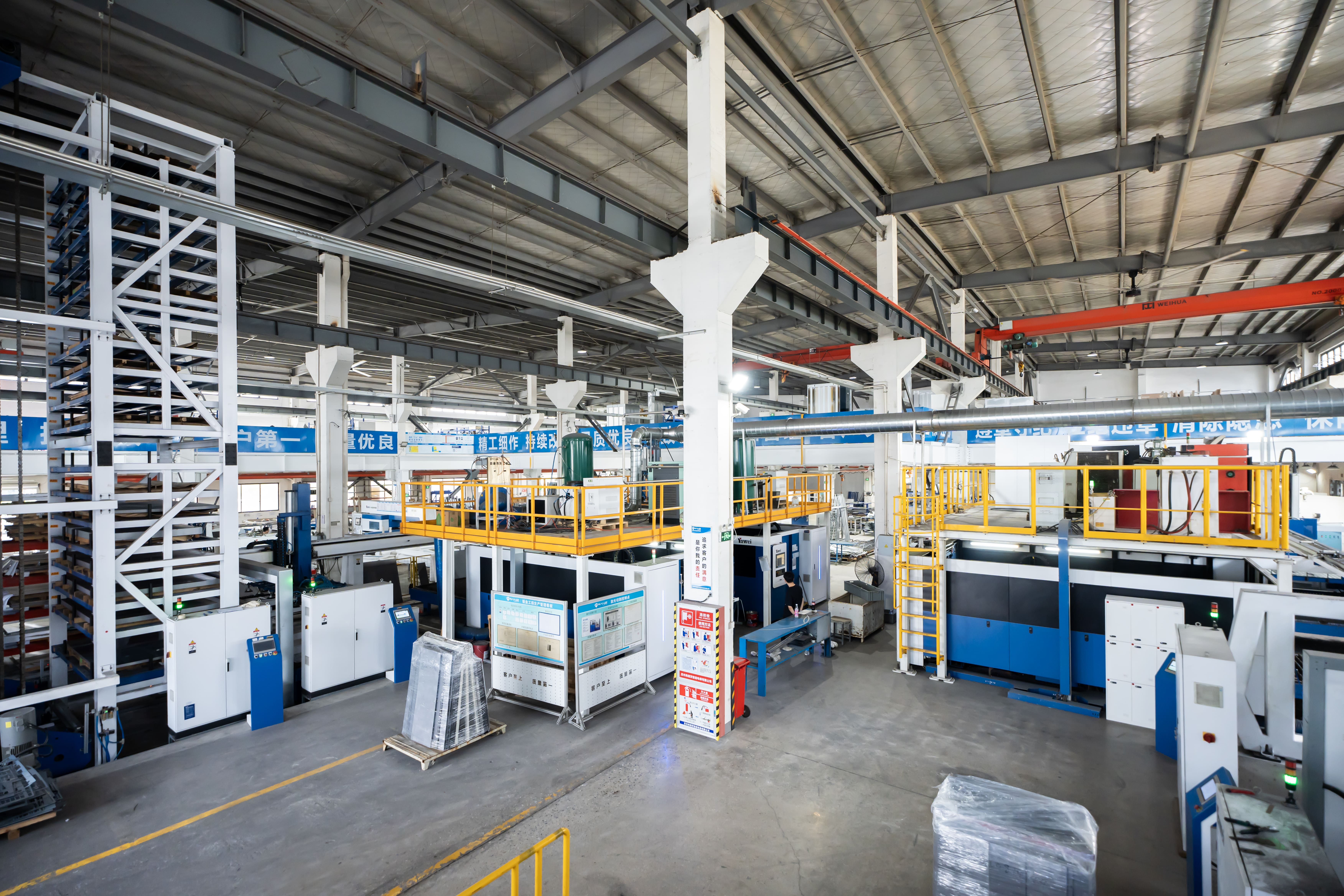
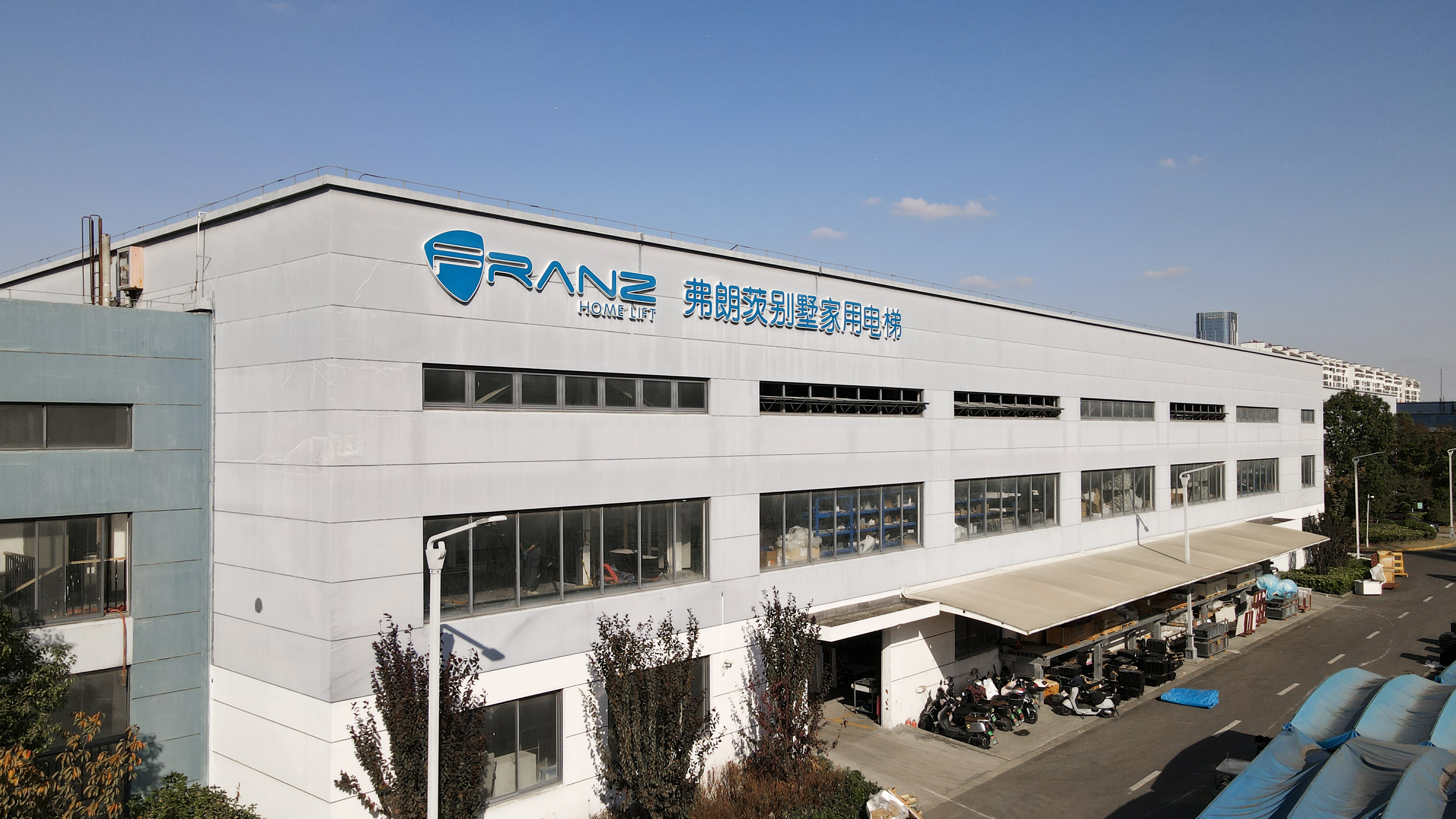
Manufacturing depth. A 30,000 m² factory, 310 employees, 32 R&D engineers and an annual output of 6,000 units define how much of a project is made in-house versus assembled from outside supply. For a buyer, capacity at that level matters less for a single villa than for a multi-year programme in which delivery windows have to hold.
Order flexibility. A minimum order quantity of 1 unit, with OEM and trial orders supported, changes the shape of a distributor relationship. A channel partner can validate a specification on one unit before committing to a programme, and a private client can order the same product without being treated as a wholesale exception.
Certification scope. In 2025, the FRANZ commercial platform elevator range received TÜV Rheinland EU EC whole-machine safety certification, making the company one of the first domestic elevator brands to obtain it. The scope matters: the certification covers the commercial platform lift range, and buyers of other product lines should confirm the applicable documentation for their specific model rather than assuming a blanket transfer.
Service architecture. Installation is supported online through 24/7 remote guidance and offline through on-site technical guidance or professional installation. After-sales is normally delivered through the local distributor network, with distributor training and escalation support from the factory, and end customers directed to local dealers for localized service. A LOT system in the lift lets distributors monitor unit status continuously.
| Execution item | Documented position |
|---|---|
| Minimum order quantity | 1 unit, including OEM and trial orders |
| Delivery terms | EXW / FOB / CIF |
| Payment terms | TT |
| Acceptance criteria | Pre-shipment test and factory testing |
| Installation and commissioning | 7-15 working days where site conditions are ready; extended if civil works do not meet requirements |
| Warranty | 1 year for the whole unit |
| Maintenance reference cost | RMB 3,000-5,000 per year in China; other markets vary |
Market trend analysis: certification harmonization and the retrofit cycle
Three verifiable trends shape how supplier capability will be read over the next contract cycle. The first is standards convergence: the shift from EN 81-20/50 to ISO 8100-1 and ISO 8100-2, documented by TÜV SÜD, moves the reference point for safety documentation and makes a supplier's technical file continuity a procurement issue rather than a compliance afterthought.
The second is the retrofit share. With the modernization segment projected to grow at a CAGR of 7% through 2030 according to Roland Berger, shallow-pit and pit-free configurations stop being niche requests and become a regular revenue stream. That matters for long-term buyers because retrofit competence is also the foundation of spare-part continuity and upgrade paths on installed units.
The third is the split between home-lift specialists and commercial-origin brands. A 2024 residential elevator market of USD 54.61 billion, per Grand View Research, has attracted commercial manufacturers whose production logic is large-scale standardization. FRANZ positions itself on the other side of that line: an independent, non-OEM developer of premium residential lifts that develops its own active millimeter-wave radar system rather than buying a standard safety package. Whether that positioning holds is decided in projects like the four described above, not in a positioning statement.
Comparison with screw and hydraulic alternatives - and the limits of this evidence
Most villa and light-commercial projects still compare three drive families before they compare brands. The documented differences in this dataset concentrate on noise, cost, maintenance burden and retrofit fit.
| Criterion | Steel-belt traction (FRANZ home lift range) | Screw drive | Hydraulic drive |
|---|---|---|---|
| Operating noise | 15-25 dB lower than screw type on the platform lift line | Reference level for this comparison | Not documented in this dataset |
| Purchase cost | About 10% lower than screw elevator | Reference level for this comparison | Not documented in this dataset |
| Maintenance | Simple mechanical structure, less maintenance, lower maintenance cost | Not documented in this dataset | Oil-based systems carry leakage risk |
| Travel speed | Home-use traction units reach 0.3-1 m/s | Not documented in this dataset | Not documented in this dataset |
| Energy use | Lower energy consumption | Not documented in this dataset | Not documented in this dataset |
| Retrofit fit | Platform line suits retrofit and small residential projects | Not documented in this dataset | Not documented in this dataset |
The gaps in that table are deliberate. Where no verified figure exists in this dataset, the honest answer is that the comparison is not documented here, and a buyer should request the missing measurements from each supplier rather than accept an unqualified claim.
Boundaries that belong in the evaluation.
- The platform-lift architecture is best suited to low-rise, small-space and retrofit conditions, including low-speed operation. It is not a substitute for a high-speed passenger lift in a large commercial core.
- Four-sided panoramic glass cabins require structural planning at the shaft stage and demand more cleaning and inspection attention than solid panels; the cost sits above a conventional cabin configuration.
- Overseas after-sales is delivered mainly through local distributor networks rather than wholly owned service subsidiaries. Response times, spare-part commitments and escalation paths therefore have to be written into the contract, not assumed.
- The company was founded in 2019, which means a shorter reference base than long-established European manufacturers. For scale context, Aritco reports approximately 3,000 elevators per year across 60 countries; comparisons of that kind should be read as different operating models rather than a simple ranking.
- The 2025 TÜV Rheinland EU EC whole-machine safety certification applies to the commercial platform elevator range; buyers of shaft-built cabins or residential glass lifts should verify the documentation for their own model.
Future outlook
Three developments are likely to change how suppliers are shortlisted over the next few years. Active sensing will keep moving from premium option to baseline expectation, because millimeter-wave radar addresses the failure mode that passive devices cannot - detecting an obstacle before contact rather than reacting after it. Retrofit engineering will keep gaining weight as modernization growth outpaces new-build in mature markets. And measured performance will continue displacing descriptive performance, with noise figures in decibels and speed tiers in metres per second replacing words such as silent and smooth.
For buyers, the practical consequence is that a supplier matrix should be refreshed at each programme rather than reused. The evidence that wins a villa project is not the evidence that wins a hotel lobby, and neither of them proves that a service network will still respond in year seven.
FAQ
How should a home lift type be matched to a project's civil conditions?
Matching starts with site data: shaft width and depth, pit depth, floor heights and door sizes, plus whether the building is new-build or a renovation, and whether the use is private or public. Where a concrete or brick shaft already exists, a cabin lift is the usual choice. Where shaft dimensions are generous, a glass lift is appropriate. Where space is small or the building already exists, a platform lift is the practical option. For commercial public use that requires EU certification or disability accessibility, the commercial platform lift is the applicable category.
What purchasing terms and acceptance criteria apply to a home lift order?
Documented terms are a minimum order quantity of 1 unit, delivery on EXW, FOB or CIF terms, and payment by TT. Acceptance is based on a pre-shipment test and factory testing before dispatch, which gives the buyer a verification point before the unit leaves the factory rather than after arrival on site.
What installation and after-sales support is included?
Installation support is provided online through 24/7 remote guidance and offline through on-site technical guidance or professional installation. After-sales service is normally delivered by the local distributor network, with the factory providing distributor training and online solutions for issues raised in the field, and end customers directed to local dealers for localized service. Installation and commissioning typically take 7-15 working days when site conditions are ready, and the standard warranty covers the whole unit for one year. A LOT system installed in the lift allows distributors to check unit status at any time, and reference maintenance cost in China is RMB 3,000-5,000 per year, with other markets differing.
Which supplier risks matter most in a multi-project programme?
The recurring risks are over-promised warranty terms from small companies that later stop supplying spare parts, low-quality core components and door assemblies, poor welding and frame workmanship that produces noise and vibration, missing market-matched certification, and OEM units without adequate original-manufacturer after-sales support. Mitigation is procedural: check factory scale and production capacity, review real project cases, visit the factory, inspect a sample lift, verify certificates and test reports against the target market, and confirm spare-part supply and response terms in the contract.
How do home-lift specialists differ from commercial elevator brands?
Two structural differences are usually cited. The first is manufacturing focus: commercial factories concentrate resources on large-scale standardized production, so customization costs more and takes longer, while a specialist develops customized residential solutions as the default. The second is the end customer: commercial brands primarily serve business clients, whereas home lift buyers are private homeowners with high expectations on detail, aesthetics and finish. Technical differences follow from that - low-noise steel-belt traction instead of screw, hydraulic or conventional wire-rope systems, site-specific space utilization rather than fixed shaft dimensions, active millimeter-wave radar safety rather than passive devices alone, and zero-pit or ultra-shallow-pit self-supporting shaft options where deep pits and high overheads are not feasible.
FRANZ publishes a technical brochure covering civil works and glass configurations, available here: Franz Civil & Glass technical brochure.
Have Questions or Need More Details?
Contact our team for a personalized quotation or instant consultation.
Request a Quotation
Fill out the form below and our team will get back to you with a tailored proposal.
WhatsApp Direct Chat
Prefer to chat in real-time? Message us on WhatsApp for instant assistance & quick answers.
- Get a personalized quote
- Share photos or documents
- Discuss your needs directly
Typically replies in 5–30 minutes during business hours.