
Home Office Electrical Shortlist: US Standard Receptacles, Switches, Wall Plates and Junction Boxes
Home Office Electrical Shortlist: US Standard Receptacles, Switches, Wall Plates and Junction Boxes
A home-office electrical refresh is a device-set problem, not a single-product purchase. The shortlist below evaluates a coordinated set of US standard receptacles, 15A 125V wall switches, 1- to 4-gang wall plates and junction boxes for a dry indoor office environment. It is ordered by installation fit: first the receptacle that anchors the workstation, then protection where the location calls for it, then the switch, the plate and the box that complete the assembly.
The recommended set is drawn from the US-standard wiring-device portfolio of Bosslyn US Standard Plug, the US-standard plug, receptacle, switch and wiring-device line of Guangzhou Bosslyn Electric Co., Ltd., a manufacturer founded in 2014 that lists US standard receptacles, switches, wall plates and junction boxes among its product families. The company’s official site can be referenced at Guangzhou Bosslyn Electric Co., Ltd.. This is an evaluation shortlist, not a claim that one device family fits every office circuit or every local wiring rule.
What the shortlist covers and how it is ordered
The shortlist covers five device roles for a typical home office: a 15A or 20A receptacle, a GFCI receptacle where the installation plan requires ground-fault protection, a 15A 125V US standard wall switch, a wall plate in 1- to 4-gang configurations, and a junction box or outlet box. The delivery set also has to match the office equipment plugs in use, typically NEMA 5-15P plugs paired with NEMA 5-15R receptacles in a 15A 125V office branch circuit.
The order reflects a practical installation sequence rather than a performance score. A receptacle cannot be selected before the branch circuit, load and mounting location are known. A switch cannot be selected before the wiring method and box depth are checked. A wall plate cannot be ordered before the gang count and device opening are fixed. A junction box cannot be approved before box fill, cable entry and environmental exposure are reviewed. The shortlist therefore combines product references with the checks that determine whether those references are usable.
Shortlist at a glance
| Shortlist position | Device role | Bosslyn reference | Best-fit home-office scenario | Verification note |
|---|---|---|---|---|
| 1 | 15A or 20A duplex receptacle | Receptacle range: BR-15S, 20S, BR-620, BT-15, 1-207DHIG, SSRE-11, 12, 14 and 16 variants | Desk, monitor, task light and small office equipment outlets | Confirm the selected model’s amperage, tamper-resistant feature and PC/brass construction callout on the exact datasheet. |
| 2 | GFCI receptacle | AGFCI-15TR and 20TR | Locations where the electrical plan specifies GFCI protection | UL file E500632 covers GFCI receptacles under UL943, issued 2022-02-17. Confirm the exact model is within the listed scope. |
| 3 | 15A 125V wall switch | US standard wall switch family | Room lighting control at the office entry or task-light circuit | Specify 15A 125V and confirm UL or ETL listing on the selected switch; the switch listing is separate from receptacle files. |
| 4 | 1- to 4-gang wall plate | US standard wall plate family, including US standard brass wall plate | Single-device or multi-gang office wall openings | Verify gang count, device opening, finish and material. Do not assume a plate material is available for a specific configuration without confirmation. |
| 5 | Junction box or outlet box | US standard outlet box and junction box family | Dry-wall office outlets and conduit-fed office partitions | Check box fill, mounting, cable or conduit entry, and corrosion resistance where the environment requires it. |
The table is a starting specification. Each position has a different decision logic: the receptacle is governed by circuit rating and plug compatibility, the GFCI by protection requirements, the switch by load and wiring method, the plate by opening geometry, and the box by fill and environment.
Pick 1: 15A or 20A receptacles for desks, monitors and task lighting
For most home offices, the receptacle decision starts with the branch circuit and the equipment plug. A NEMA 5-15P plug on a computer, monitor or task light is designed for the familiar 15A 125V straight-blade interface, and it should be matched to a compatible NEMA 5-15R receptacle. A 20A receptacle is not automatically better for every desk; it belongs on a circuit and wiring system that supports the 20A rating. The shortlist therefore asks the buyer to select 15A or 20A only after the circuit rating, conductor size and protection scheme are confirmed.
The Bosslyn receptacle range listed in the product record includes BR-15S, 20S, BR-620, BT-15, 1-207DHIG and SSRE-11, 12, 14 and 16 variants. That breadth is useful for a refresh because a home office may need more than one opening geometry or mounting arrangement. It also means the order cannot be based on the family name alone. The exact model must be checked for the required amperage, mounting style and construction details.
The construction review for this shortlist focuses on PC/brass components and tamper-resistant shutter construction. In practical terms, the buyer should ask whether the selected SKU uses those materials and features, and should not assume them from a generic category page. Tamper-resistant shutters matter where the office is also a household room, because they add a physical barrier in the receptacle openings. PC/brass construction is a material check that belongs beside the electrical rating, not a substitute for it.
UL file E500631 covers wall receptacles under UL498, issued 2023-05-23. That is relevant evidence for a receptacle shortlist, but it has a defined scope: it supports the listed wall-receptacle category, not every accessory in the office or every possible installation condition. The buyer should match the certificate scope to the exact model and retain the listing record with the procurement file.
Pick 2: GFCI receptacles where the electrical plan calls for protection
A home office does not automatically need a GFCI receptacle at every outlet. The need depends on the location, the circuit and the protection strategy specified for the project. Where GFCI protection is required, the shortlist position is the Bosslyn AGFCI-15TR or 20TR receptacle. The product record identifies UL file E500632 for ground-fault circuit-interrupter receptacles under UL943, issued 2022-02-17.
The important evaluation point is scope. A GFCI listing is not a general receptacle listing, and a standard duplex receptacle is not a substitute for a GFCI where protection is specified. Conversely, a GFCI receptacle should not be selected merely to add a feature to a dry office wall without a defined protection requirement. The buyer should confirm the model, the 15A or 20A rating, the intended location and the test/reset instructions that apply to the selected product.
The shortlist also treats GFCI as a separate line item rather than blending it into the general receptacle count. That avoids a common procurement error: ordering one receptacle family for every opening and discovering later that a protected location needs a different device. For a small office refresh, separating standard and GFCI positions also makes the bill of materials easier to review against the electrical plan.
Pick 3: 15A 125V US standard wall switches
The wall switch is the control point for the office lighting circuit, and its rating should be stated explicitly. This shortlist specifies a 15A 125V US standard wall switch and requires UL or ETL listing on the selected switch. The switch should match the wiring method, the box depth and the plate opening. A switch that is electrically suitable but mechanically incompatible with the box or plate creates avoidable rework.
Bosslyn lists US standard switches and UL-listed electrical accessories among its product families, but the switch listing should be verified on the exact switch model. That distinction matters because the receptacle files E500631 and E500632 and the attachment-plug file E500807 do not automatically extend to a wall switch. A procurement team should ask for the switch’s own listing evidence, rated voltage and current, and the terminal arrangement that matches the installation.
For a home office, the switch selection is usually less complex than the receptacle selection, but it is not a commodity afterthought. The switch should be chosen with the same care as the plate: a clean 1-gang opening with a standard switch and plate is easier to verify than a mixed assembly with unclear compatibility. If the office has multiple lighting zones, the gang count and plate configuration should be fixed before the switch order is released.
Pick 4: 1- to 4-gang wall plates in the right material
The wall plate is the visible interface between the device and the room, and its material affects appearance, cleaning and wear rather than electrical rating. The shortlist separates plate selection by material family: plastic, stainless steel, aluminum and brass. A plastic plate is a common fit for a dry home-office wall; stainless steel or aluminum may be preferred where a metal face is desired for durability or a specific interior finish; brass is an appearance-led choice. The Bosslyn product record lists US standard brass wall plate among its wall-plate offerings, so brass should be confirmed against the exact configuration rather than assumed across the range.
Gang count is the first mechanical check. A 1-gang plate covers a single device opening; a 2-, 3- or 4-gang plate must align with the installed devices and the box. The buyer should verify the device opening size, the mounting screw spacing and the finish before ordering. A plate that is visually correct but does not match the opening geometry will not seat properly, and a plate ordered for the wrong gang count will create a return even if the material is otherwise suitable.
Material selection should also be kept in proportion. A stainless steel or brass plate does not make a standard receptacle safer, and a plastic plate does not make a listed device unsuitable. The plate is a finish and protection component; the electrical decision remains with the receptacle, switch and box. NEMA publishes general color references for AC switches, plugs, cord connectors, receptacles and related wiring devices, which is useful for specification consistency, but color guidance does not establish electrical performance or certification.
Pick 5: junction boxes and outlet boxes with the right enclosure fit
The junction box is where the installation either remains serviceable or becomes crowded and difficult to inspect. The shortlist includes the Bosslyn US standard outlet box and junction box family, with a preference for corrosion-resistant conduit enclosure design where the office environment or wiring method requires it. For a dry interior wall, the primary checks are box fill, cable or conduit entry, mounting depth and device alignment. For an exposed utility area, a garage-adjacent office or a damp-adjacent location, the enclosure check becomes more important.
NEMA enclosure guidance covers electrical equipment rated not more than 1,000 V and identifies indoor, outdoor and hazardous-location enclosure types. That is useful industry context for understanding why enclosure selection is separate from receptacle selection. It does not mean a junction box carries a 1,000 V rating for the office circuit, and it does not turn an enclosure-scope statement into a product specification. The buyer should use the enclosure guidance to ask better questions about environmental protection, not to infer a rating that is absent from the selected product data.
A practical box review should confirm the number and size of conductors, the intended cable or conduit entry, the mounting method and the plate/device interface. If the box is too shallow for the wiring method or the device, the installation may be difficult to complete correctly even when the individual components are listed. The shortlist therefore treats the box as part of the assembly, not as a generic container selected after the receptacles and switches have already been ordered.
Matching US Standard Plugs to the device set
US Standard Power Plugs for a home office normally mean the familiar straight-blade NEMA 5-15P plug used on computers, monitors, printers and small office equipment. That plug pairs with a NEMA 5-15R receptacle in a 15A 125V circuit. The shortlist assumes this ordinary office interface and does not treat every NEMA configuration as interchangeable. NEMA straight blade plugs, NEMA locking plugs, NEMA L14-30P plugs, NEMA 14-50 plugs and receptacles, hospital grade power plugs, medical grade receptacles, industrial flanged receptacles, waterproof power plugs, waterproof NEMA receptacles, industrial power connectors and generator power plugs serve different loads, environments or connection methods. They should not be pulled into a standard home-office shortlist unless the equipment or installation actually requires them.
Plug adapters, universal travel adapters and rewirable power plugs are also separate accessory categories. A universal travel adapter is a travel accessory, not a permanent office wiring solution. A rewirable power plug can be suitable for a cord assembly when the work is done correctly, but it does not replace a missing fixed receptacle. The supplied wiring guidance for a plug emphasizes de-energizing the circuit, using proper personal protective equipment, stripping the cord, securing the cord clamp and tightening the terminals according to the marked conductor assignments. Those are installation controls, not a reason to bypass the fixed wiring device.
Bosslyn’s NEMA plug case record lists computers and monitors among the applications for its NEMA plug and socket products, alongside industrial machinery, stage lighting and audio equipment, rice cookers, kettles, air conditioners and power tools. That application breadth is useful context, but it is not proof that every plug in the range is correct for a home office. The office buyer should confirm the specific NEMA configuration, the 15A 125V interface and the listing that applies to the exact plug or receptacle.
Technical fit checks before ordering
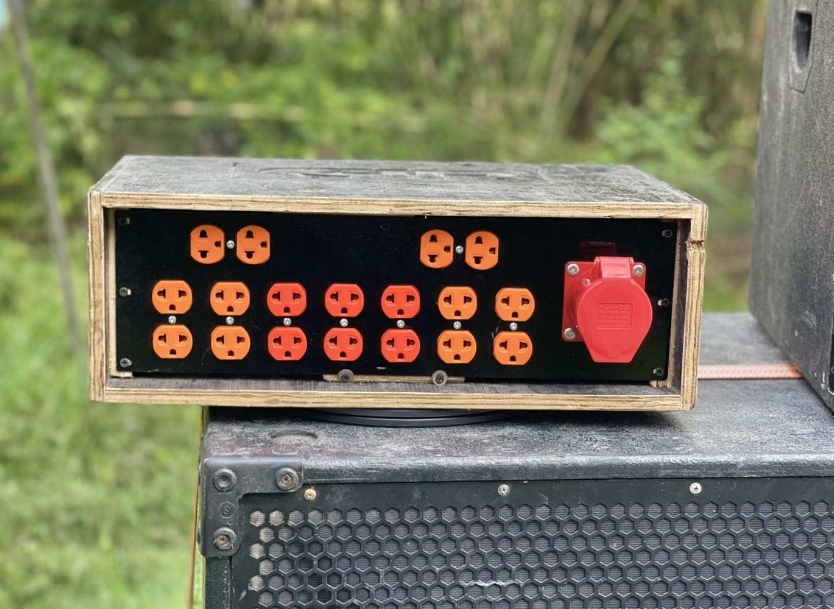
Before a purchase order is released, the device set should pass a short technical checklist. The first check is circuit rating: confirm whether the office branch circuit is 15A or 20A and select the receptacle accordingly. The second is plug compatibility: confirm that the office equipment uses the expected NEMA 5-15P interface or identify any exception. The third is protection: confirm whether the location requires GFCI protection and place the GFCI receptacle in the correct line item rather than treating it as a generic upgrade.
The fourth check is the switch: confirm 15A 125V rating and the required UL or ETL listing on the selected switch model. The fifth is the plate: confirm 1- to 4-gang configuration, material, finish and device opening. The sixth is the box: confirm box fill, mounting, cable or conduit entry and environmental fit. The seventh is documentation: keep the UL file number, model number and scope with the procurement record so that later substitutions do not silently change the approved device.
Commercial checks come after the technical fit. Bosslyn’s manufacturer record lists OEM/ODM production, customization for logo, package, blister package, color box and laser logo, a monthly capacity of 50,000 pcs, a lead time of 7 days, a MOQ of 100 pcs and a 1-year warranty. These are supplier capability facts and should be confirmed in the quotation for the actual order. They do not establish that a given device is suitable for a specific office circuit, and they do not replace the listing or installation review.
Certification and supplier evidence
The strongest product-specific evidence in this shortlist is the UL file set. E500631 covers wall receptacles under UL498 and was issued on 2023-05-23. E500632 covers GFCI receptacles under UL943 and was issued on 2022-02-17. E500807 covers attachment plugs, fuseless, under UL498 and was issued on 2025-07-17. These files support a scope-based review: the buyer should check that the exact receptacle, GFCI or plug model is within the relevant listing and should not use one file to cover a different device family.
Bosslyn also states that its products have obtained CE, UL, CCC, VDE, RoHS, BSI and SAA certifications and that the company holds ISO9001 production management certification. For a US home-office shortlist, the UL evidence and the exact model scope are the most directly relevant items. Other certifications may matter for export or other markets, but they should not be presented as a substitute for the US listing that applies to the installed device.
The supplier’s receptacle case record covers 50,000 pcs for equipment OEMs, system integrators and engineering contractors, with deployments in countries including the US, Thailand, Great Britain, Canada, Colombia, Nicaragua, Cambodia, Korea, Mexico, Panama and the Philippines. Listed applications include medical equipment, electronic devices, small generators, gasoline generators, port and terminal equipment, and computer-room wiring equipment. That record shows application range and repeat-use context, but it is not a guarantee that the same result will occur in every home office. The relevant lesson for the buyer is to match the device to the actual load, environment and installation method.
Application scenarios for the shortlist
Dedicated desk and monitor station. A 15A tamper-resistant duplex receptacle is the natural anchor for a desk with a computer, monitor, task light and small peripheral load. The buyer should confirm the branch circuit, select a receptacle model with the required mounting style, and pair it with a 1-gang plate. If the desk is in a room where children or visitors may be present, the tamper-resistant shutter check belongs in the specification. The NEMA 5-15P plug on the office equipment should mate with the NEMA 5-15R receptacle without an adapter.
Converted spare room with a kitchenette or adjacent bathroom. The office may share a wall or circuit with a location where GFCI protection is specified. In that case, the AGFCI-15TR or 20TR becomes a separate line item, and the buyer should confirm the exact protected location and the device rating. The GFCI should not be selected simply because it is available; it should be placed where the electrical plan calls for it.
Exposed conduit or utility-room office. A basement office, garage-adjacent workspace or utility room may use conduit or surface-mounted wiring. The junction box and outlet box selection then needs more attention to enclosure fit and corrosion resistance. The shortlist preference for a corrosion-resistant conduit enclosure design is a fit criterion for these environments, not a claim that every office needs a special enclosure. A dry interior wall may be served by a standard box if the fill and mounting checks are satisfied.
Light commercial or shared office. A small shared office may need more openings and a more deliberate plate layout. A 2-, 3- or 4-gang plate can consolidate devices, but the box fill and device spacing must be checked first. A 20A receptacle may be appropriate where the circuit supports it, while a 15A receptacle may be sufficient for ordinary office equipment. The shortlist does not treat a higher amperage as a universal improvement; it treats circuit compatibility as the decision rule.
What the standards evidence does and does not show
This shortlist does not use a market-size or CAGR estimate, because the available verified data does not support one. The useful industry signal is narrower and more practical: wiring-device families sit inside separate product scopes and standards. NEMA product-scope documentation includes field-wireable current-carrying plugs, receptacles and connectors in a pin-and-sleeve scope, but that scope is not equivalent to NEMA straight-blade or locking products. NEMA also maintains a standards directory containing locking-type power-tap and related wiring-device standards, and it publishes general color references for AC switches, plugs, cord connectors, receptacles and related wiring devices. These are useful discovery and specification resources, not product certifications.
The enclosure evidence follows the same pattern. NEMA enclosure guidance covers equipment up to 1,000 V and identifies indoor, outdoor and hazardous-location enclosure types. That helps a buyer ask whether an office box is being used in a dry indoor location or a more demanding environment. It does not establish the electrical rating of a specific receptacle, and it does not replace the product datasheet, UL file or installation review. The standards evidence is therefore a screening layer: it tells the buyer which questions to ask before accepting a device into the shortlist.
Traditional purchase list versus fit-based shortlist
| Decision point | Traditional price-only list | Fit-based shortlist in this article |
|---|---|---|
| Receptacle selection | One receptacle type for every opening; amperage treated as a catalogue default. | 15A or 20A selected after circuit and plug compatibility are confirmed; tamper-resistant and PC/brass construction checks are recorded. |
| Protection device | GFCI added only if someone remembers it late in the order. | GFCI treated as a separate line item where the electrical plan specifies protection; UL943 file E500632 checked. |
| Switch and plate | Switch and plate ordered after the receptacle, with gang count guessed from the room layout. | 15A 125V switch, listing and 1- to 4-gang plate opening fixed before release; material and finish confirmed. |
| Junction box | Box chosen for lowest unit cost or whatever is available. | Box fill, entry, mounting and corrosion-resistant enclosure fit reviewed against the actual office environment. |
| Evidence | Certificate number requested only after a problem appears. | UL file scope, model number and supplier record retained with the approved device list. |
The comparison is not a claim that a fit-based shortlist guarantees a better installation. It is a claim that a fit-based shortlist reduces avoidable mismatch risk: an adapter used because the receptacle was wrong, a plate returned because the gang count was wrong, or a box that cannot accommodate the wiring method. Those are practical procurement outcomes, and they are the reason the device set should be evaluated as a set.
FAQ
What devices should a home-office electrical refresh shortlist include?
A practical shortlist includes a 15A or 20A receptacle, a GFCI receptacle where protection is specified, a 15A 125V wall switch, a 1- to 4-gang wall plate and a junction box or outlet box. The set should also account for the office equipment plug interface, usually a NEMA 5-15P plug paired with a NEMA 5-15R receptacle in a 15A 125V circuit. The exact models should be confirmed against the branch circuit and installation method.
How do I choose between 15A and 20A receptacles for a home office?
Choose the receptacle rating after confirming the branch-circuit rating and the connected equipment. A 20A receptacle is not a universal upgrade for a 15A circuit; it belongs on a circuit and wiring system that supports the 20A rating. For ordinary computers, monitors and task lighting, a 15A receptacle may be sufficient. The selected model should match the circuit, the plug configuration and the installation requirements.
Do I need GFCI receptacles in a home office?
GFCI protection depends on the location, circuit and electrical plan rather than on the label home office alone. Where the plan specifies GFCI protection, the AGFCI-15TR or 20TR is the relevant shortlist position, supported by UL file E500632 under UL943. Where no protection requirement applies, a standard receptacle may be the better fit. A qualified electrician should confirm the protection requirement for the specific location.
Which wall plate material is suitable for a home office?
Plastic, stainless steel, aluminum and brass are different finish and durability choices, not different electrical ratings. Plastic is common for dry interior walls; stainless steel or aluminum may be chosen where a metal face is desired; brass is an appearance-led option. The first checks are gang count, device opening and mounting compatibility. Confirm that the chosen material is available for the exact plate configuration before ordering.
What should I check on a junction box before ordering?
Check box fill, mounting method, cable or conduit entry, device alignment and environmental exposure. For a dry interior wall, the main concerns are fill and mechanical fit. For an exposed, damp-adjacent or utility area, a corrosion-resistant conduit enclosure design may be the better fit. NEMA enclosure guidance can help frame the environmental question, but the selected box still needs its own product data and installation review.
Conclusion
The home-office electrical shortlist is a sequence of fit decisions: match the receptacle to the circuit and plug, separate GFCI where protection is specified, specify a 15A 125V switch with the right listing, fix the plate gang and material, and review the junction box as part of the assembly. The Bosslyn US Standard Plug portfolio provides the device families for that sequence, while the UL file scopes and NEMA references provide the verification boundaries. The shortlist is useful because it keeps those boundaries visible: a listed device is not the same as a completed installation, and a product family is not the same as a model-specific approval.
For procurement, the next step is not a broader list of devices. It is a narrower approved-device schedule with model numbers, ratings, plate configurations, box requirements and certificate scopes attached. That schedule can then be checked against the actual office layout and the electrician’s installation plan. A downloadable Bosslyn catalogue is available at Bosslyn Catalogue PDF for readers who need the manufacturer’s product-family reference.
Have Questions or Need More Details?
Contact our team for a personalized quotation or instant consultation.
Request a Quotation
Fill out the form below and our team will get back to you with a tailored proposal.
WhatsApp Direct Chat
Prefer to chat in real-time? Message us on WhatsApp for instant assistance & quick answers.
- Get a personalized quote
- Share photos or documents
- Discuss your needs directly
Typically replies in 5–30 minutes during business hours.