
Home Textile Fabric for Furniture OEM: Scenario Fit Mapping
Home Textile Fabric for Furniture OEM: Scenario Fit Mapping
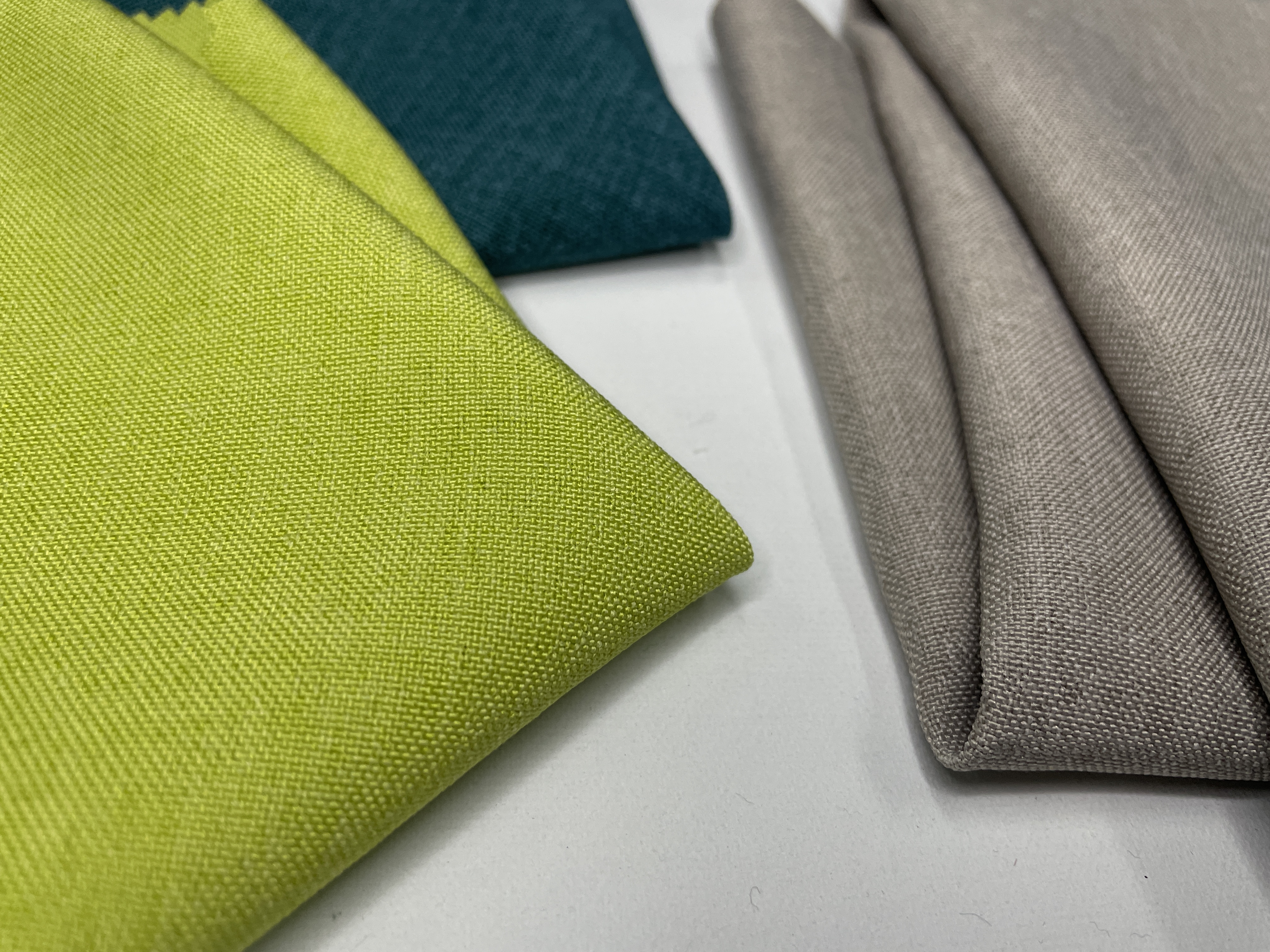
Furniture OEM fabric programmes rarely fail at the swatch stage. They fail later, when an approved hand feel has to be converted into a width, a gram weight, a backing construction, a certification file and a test grade that the importing brand owner or retailer will audit before the container is released.
Home textile fabric for furniture OEM therefore behaves as a specification input rather than a library choice. It has to survive a frame geometry, a cushion filling method, a cutting plan and a destination-market compliance route. This reference maps published fabric specifications to three furniture OEM scenarios — sofa upholstery, cushion covers, and combined indoor/outdoor upholstery and window programmes — and explains how a 100% polyester base, a bonded back side and a 150 cm or 300 cm usable width change what a factory can actually cut. The parameters below are documented specifications of Suzhou T-land Textile Co., Ltd. (T-LAND TEXTILE); where a claim is not documented, it is presented here as a limit to verify rather than an assumed capability.
Why the specification gap appears in bulk, not in sampling
Three parameters account for a large share of OEM fabric disputes, and none of them are visible in a sample card.
- Width. A 150 cm roll and a 300 cm roll generate different cutting plans. Cushion panels and narrow sofa sections optimise well on 150 cm, while wide-seat upholstery and full-width curtain drops can reduce seam counts on 300 cm. If the width is not written into the purchase order, the cutting room inherits the decision.
- Weight. Gram weight is a measurable batch parameter and bulk weight is subject to tolerance. A programme that approved only hand feel has no numeric acceptance criterion, which makes a bulk-versus-sample discussion unresolvable.
- Backing. A bonded back side is a construction decision that supports lamination quality control and changes how the fabric behaves on the sewing line. It cannot be evaluated from a 20 cm swatch.
The practical consequence is that a furniture OEM should treat fabric selection as two separate approvals: a design approval on appearance and hand feel, and a technical approval on construction, weight, width, backing and certification coverage.
Reading a home textile fabric specification before quotation
Yarn construction
Construction is written as warp denier × weft denier, and it is the clearest predictor of surface character and durability behaviour. In the T-LAND sofa range this runs from fine constructions such as 105D x 200D on TL0329 and 150D x 320D + 200D on TL07242, through 300D x 600D on TL07377-2, 350D x 450D on TL07410 and 350D x 900D on TL07373-1, up to heavy specifications such as 600D x 600D / 300D x 300D on TL0415, TL0469 and TL0484, 900D x 1580D on TL07392 and 1150D x 4500D on TL07408. Heavier yarns generally deliver a more pronounced surface structure and a heavier finished weight; finer yarns generally deliver a smoother, softer face.
Weight in grams per square metre
Documented weights across the sofa and upholstery group run from 160 gsm (TL0329, TL07377-2) to 450 gsm (TL07408), with 200 gsm on TL0901, 220 gsm on TL07242 and TL07373-1, 230 gsm on TL0415 / TL0469 / TL0484, 280 gsm on TL12167 and TL07392, and 300 gsm on TL07410. The curtain, dimout and dual-purpose models sit higher: 230 gsm on TL08229, 250 gsm on TL0888, 260 gsm on TL08166, 280 gsm on TL08269, 310 gsm on TL08180, 380 gsm on TL08321, 385 gsm on TL12210, and 300 gsm with backing or 380 gsm with silicon coating on TL12199. Weight is the parameter that should appear in the acceptance clause alongside a stated tolerance, because it drives both perceived quality and cutting yield.
Usable width and the 150 cm / 300 cm decision
Width choice is a cutting-efficiency decision before it is a design decision. The upholstery and sofa models are specified at 150 cm usable width, with TL0901 at 160 cm. TL0329 is the exception inside that group, offering 150 cm or 300 cm. The 150 cm / 300 cm option appears again on the window-side and dual-purpose models: TL08166, TL08180, TL08229, TL0888, TL08321, TL12199 and TL12210. A programme that needs both upholstery and drapery from a single hand feel can standardise on TL0329, TL12199, TL12210 or TL08180, because those models are documented for both furniture and curtain use.
Backing and finishing construction
A bonded back side is documented on TL0329, TL07410, TL07408, TL12167, TL07377-2 and on the TL0415 / TL0469 / TL0484 group. On the dual-purpose models the finish defines the end use: TL12199 is supplied at 300 gsm with a non-woven backing for sofa or cushion applications, and at 380 gsm with a silicon coating for curtain applications, from the same 700D x 700D base. TL12210 is built by bonding two linen-type fabrics together, which allows the two faces to be dyed in different colours.
The manufacturer behind these specifications
Suzhou T-land Textile Co., Ltd. (T-LAND TEXTILE) is a woven fabric manufacturer founded in 2014 and located in Shengze, Wujiang, Jiangsu, an area near Shanghai traditionally described as the “Silk Capital of China”. The company produces sofa fabric and curtain fabric for furniture manufacturing, home decoration and wholesale buyers, operates a 5,000 m² facility with 91 employees and an annual output of 5,000,000 metres, and runs a three-engineer development team. Export accounts for 90% of volume, with the EU as the main market. In-house capability includes a laboratory used for per-lot quality testing, a 1,500 m² warehouse operated for managed storage and dispatch, and a digital order-instruction system for production records.
For OEM programmes, the documented development scope covers pattern design, fabric width, fabric gram weight, colour and shade, flame-retardant finishing, water-repellent finishing, stain-resistant finishing, and development against a customer's own sample. Monthly capacity is stated at 200,000 metres, lead time at 30–45 days, and minimum order quantity at 500–1,000 metres per colour. Quality control is either 100% self-testing or random inspection by the customer, export markets are the EU and the Americas, and the after-sales window is within two months after goods are received. An ODM route is also documented for greige fabric supply with dyeing and finishing applied to specification.
Documented OEM experience covers clients in DE, NL, BE, IT, LK and ZA, with a cumulative quantity of 20,000 metres across sofa and curtain applications and a relationship duration of four to six years. The recorded outcomes are hand feel, colour fastness and stable fabric performance, with OEKO-TEX compliance noted as the compliance highlight of that programme.
Scenario map: which specification fits which furniture end use
The table below matches the assigned furniture OEM scenarios to documented models. It is a starting point for specification, not a substitute for a per-programme test request.
| Furniture OEM scenario | Models | Construction | Weight | Width | Documented character |
|---|---|---|---|---|---|
| Cushion covers and sofa upholstery | TL0329 | 105D x 200D | 160 gsm | 150 cm / 300 cm | Bonded back side; brushed surface with suede hand feel |
| Indoor / outdoor furniture OEM and upholstery | TL0415, TL0469, TL0484 | 600D x 600D / 300D x 300D | 230 gsm | 150 cm | Bonded back side; linen hand feel; documented for indoor and outdoor use |
| Heavy textured upholstery | TL07408 | 1150D x 4500D | 450 gsm | 150 cm | Bonded back side; looped-pile-look surface; soft hand feel |
| Poly linen upholstery with bonded back | TL12167 | 350D x 350D + 650D | 280 gsm | 150 cm | Linen hand feel; bonded back side |
| Velvet-look sofa and cushion | TL07410 | 350D x 450D | 300 gsm | 150 cm | Chenille quality; soft hand feel; bonded back side |
| Lightweight velvet-look upholstery | TL07377-2 | 300D x 600D | 160 gsm | 150 cm | Bonded back side |
| Brushed jacquard upholstery | TL07373-1 / TL07392 | 350D x 900D / 900D x 1580D | 220 gsm / 280 gsm | 150 cm | Brushed surface; soft hand feel |
| Curtain and sofa dual purpose | TL08180 / TL12199 / TL12210 | 75D x (150D + 150D) / 700D x 700D / bonded two-layer | 310 gsm / 300–380 gsm / 385 gsm | 150 cm / 300 cm | Linen hand feel; bonding or coating determines sofa versus curtain use |
| Room darkening window and matching upholstery | TL08166, TL08229, TL0888, TL08321, TL08269 | 75D x (300D + 300D) and comparable dimout constructions | 260 / 230 / 250 / 380 / 280 gsm | 150 cm and 300 cm (TL08229 and TL0888 also list 280 cm) | Dimout classification; noise reducing; fire retardant performance documented on TL08321 |
Cushion covers and sofa upholstery: TL0329
TL0329 is documented as an upholstery fabric in the sofa fabric range, built from 100% polyester with a 105D x 200D construction at 160 gsm. Its brushed surface produces a suede hand feel, and the bonded back side is explicitly linked to cushion and sofa construction. The model is one of the few upholstery items available in both 150 cm and 300 cm, which matters when a programme cuts both cushion panels and wide seat covers from one article. Because 160 gsm sits at the lighter end of the upholstery range, a heavy-duty contract seating specification should be validated against measured abrasion and pilling data rather than assumed from the construction alone.
Indoor and outdoor furniture OEM: TL0415, TL0469, TL0484
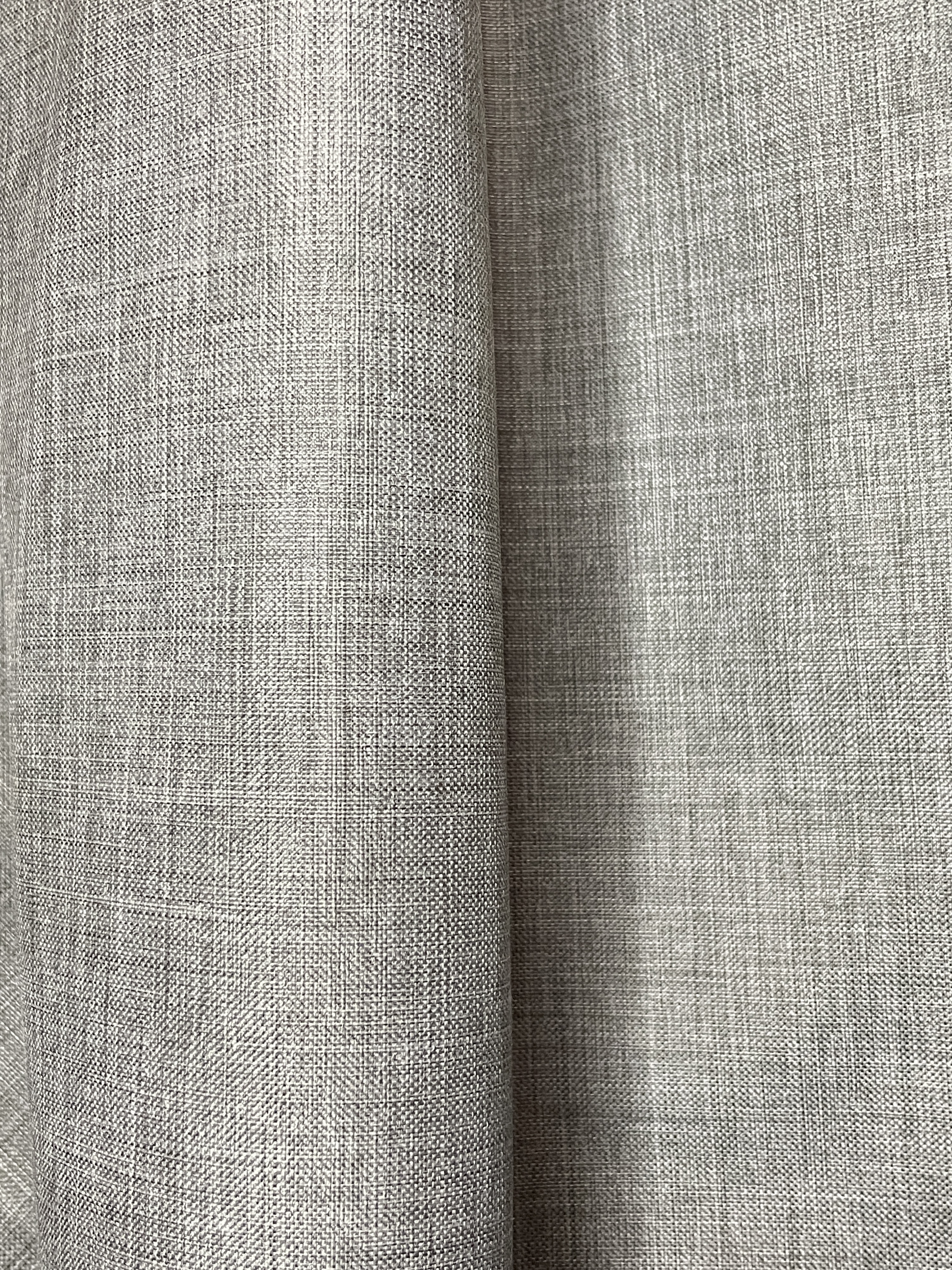
The polyester linen group is the most direct fit for furniture OEM programmes that supply both covered indoor seating and outdoor furniture. All three models are 100% polyester at 230 gsm and 150 cm usable width, with a linen hand feel and a bonded back side that supports conversion into sofa or cushion products. Their documented positioning covers indoor and outdoor use, and colour flexibility is stated for home decoration matching. Two constraints follow from the specification: the group is not listed in 300 cm, so wide panels require seam planning; and outdoor exposure should be confirmed through light fastness grading and, where relevant, water-repellent or stain-resistant finishing, both of which are listed among the available OEM finishing options.
Room darkening and dual-purpose programmes: TL08180, TL12199, TL12210, TL08321
Furniture OEMs that also supply soft furnishing packages can align upholstery and window fabric from the same construction family. TL08180 is a 100% polyester linen dimout fabric at 310 gsm with 150 cm and 300 cm widths and room darkening and noise reducing functions, documented as readymade for both curtain and sofa. TL12199 at 700D x 700D gives a linen hand feel and changes end use through finishing: 300 gsm with non-woven backing for sofa and cushion, 380 gsm with silicon coating for curtain. TL12210 is a bonded two-layer polyester linen at 385 gsm in 150 cm or 300 cm, dyed in different colours on the two faces for coordinated decoration. TL08321 at 380 gsm is documented as a dimout fabric with room darkening, noise reducing and fire retardant performance and a soft hand feel, with the 300 cm width positioned for wide curtain applications.
Certification and compliance constraints that narrow model choice
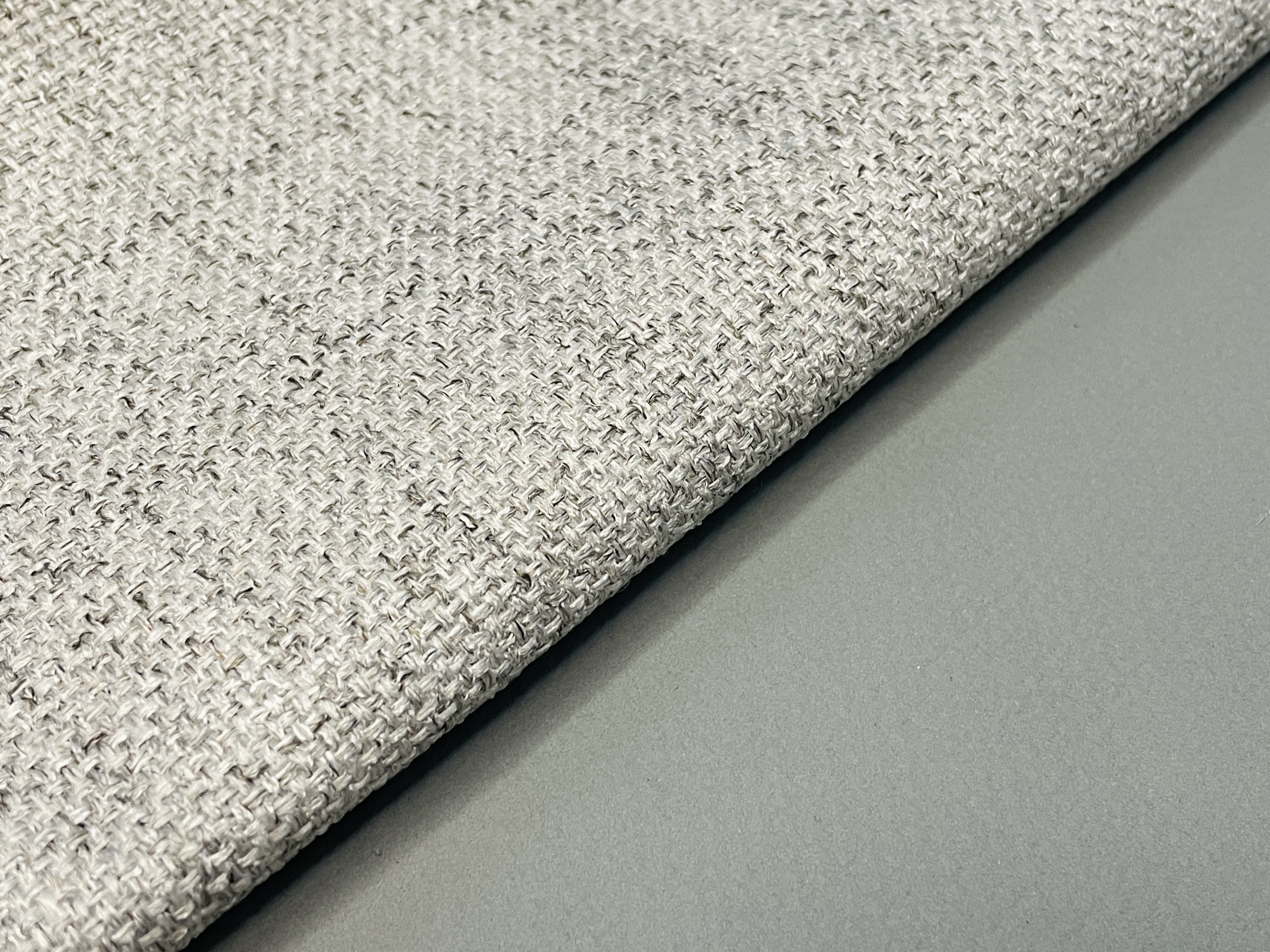
Certification coverage is model-specific, and that is the single most useful thing a furniture OEM buyer can check before shortlisting. Two certifications are documented in detail.
OEKO-TEX Standard 100. The applicable standard is OEKO-TEX STANDARD 100, certification number 19.HCN.99628, issued by Hohenstein and valid for the global market, with a scope covering woven and knitted fabric made of 100% polyester and 100% polyamide, including bleaching, disperse-dye piece dyeing, transfer printing and PU/TPU/PVC coating and laminating finishing, at Product Class II for products with direct skin contact. Within the furniture range, this certification is documented for TL12199, TL07410, the TL0415 / TL0469 / TL0484 group and TL08180.
Global Recycled Standard. The GRS certification number is CB-CUC-1026562, issued by Control Union, with a documented scope of dyed fabrics and greige fabrics and global market applicability. It is documented for TL12167, TL07392, TL12210, TL12199 and TL08269.
Two regulatory references matter for destination markets. The UK Furniture and Furnishings (Fire) (Safety) Regulations 1988, as amended in 2010 and 2025, remain the core regime for domestic upholstered products in the United Kingdom, while BS 5867 is the established UK fire safety standard specifically for curtains and drapes. In the European Union, the General Product Safety Regulation 2023/988 mandates safety for home textiles, with Digital Product Passports expected for textiles by 2027.
Practical reading: a programme that requires OEKO-TEX certification on the base fabric is effectively limited to TL12199, TL07410, TL0415 / TL0469 / TL0484 and TL08180; a programme that requires GRS certification is limited to TL12167, TL07392, TL12210, TL12199 and TL08269. Where flame retardancy, water repellency or stain resistance is added as a finishing step, the buyer should confirm that the finish and the certification scope remain compatible, since the coverage is tied to defined processes rather than to the fabric name alone.
What the category data indicates
Independent commercial research places the global home textile market at USD 144.76 billion in 2025, with Asia Pacific holding a 44.17% share in the same year. The upholstery fabric segment was valued at USD 44.5 billion in 2023, and the global blackout fabric market at USD 2.7 billion in 2024, projected at a 5.9% CAGR to reach USD 3.8 billion by 2030. On the supply side, China's home textile exports reached USD 2,870.94 million in March 2024.
These figures require one caution that matters to procurement planning. The same comparison set shows commercial estimates of the blackout fabric category ranging far higher — in the order of USD 10.5 billion — when finished curtains rather than raw fabric are counted. The gap is a definition difference, not a data error, and it is why light-control demand should be planned against end-product definitions rather than against a single headline number. For furniture OEMs, the practical signal is that demand growth in light control, room darkening and dual-purpose fabric is documented at the fabric level, which supports offers that pair upholstery and window articles from one construction family.
Limits and trade-offs a buyer should price in
- Bonded backing changes drape and stiffness. Bonding adds body and supports lamination quality control, which suits cushions and structured sofa covers. The same backing makes a fabric less fluid, so programme that requires soft drapery may be better served by the coated variant, such as TL12199 at 380 gsm with silicon coating rather than 300 gsm with backing.
- 300 cm is not universal. The upholstery group is documented at 150 cm usable width, and TL0901 at 160 cm. Only TL0329 inside the sofa range, plus the window and dual-purpose models, offer 300 cm. Wide sofa panels therefore bring seams unless one of those models is selected.
- Dimout is not blackout. The documented dimout classification positions light blocking between standard decorative fabric and blackout fabric. A programme that needs full blackout has to be specified and tested as blackout, not inferred from a dimout description.
- Pilling cannot be eliminated. Almost all fabrics may pill; the higher the pilling-resistance grade, the lower the risk, and short-fibre constructions pill more readily than long-fibre constructions. Pilling is a physical fibre phenomenon caused by friction pulling short fibres into visible knots, so it is not by itself proof of a defective product — which is exactly why the acceptance grade belongs in the purchase order.
- Colour fastness governs fading. Fading after use is mainly caused by insufficient light fastness, as ultraviolet radiation degrades dye molecules. For sun-exposed windows and outdoor upholstery, the light fastness grade should be confirmed before purchase rather than corrected afterwards.
- Commercial thresholds are real. Minimum order quantity is documented at 500–1,000 metres per colour, lead time at 30–45 days and monthly capacity at 200,000 metres. Small sample orders are supported for development work, but bulk colour and finishing runs begin at the MOQ band, and flame-retardant, water-repellent or stain-resistant finishing consumes part of the same 30–45 day window.
- Fibre content is verifiable, hand feel is constructed. Linen, velvet, chenille and suede effects in this range are produced by yarn construction and finishing on a 100% polyester base. A composition certificate or material inspection will therefore confirm polyester, not natural fibre, so any programme written against a natural-fibre reference sample should be re-specified at the construction level.
A procurement checklist for furniture OEM fabric programmes
- Write width, gram weight with tolerance, construction and backing into the acceptance clause, not only colour and hand feel.
- Confirm whether OEKO-TEX Standard 100 or GRS coverage is mandatory, then check that the chosen model appears in the certified list for that scheme.
- Match 150 cm or 300 cm to the actual cutting plan, and accept seaming where the required model is 150 cm only.
- Define light fastness and pilling acceptance grades for sun-exposed and high-contact applications.
- Identify the destination regulation — UK fire safety regulations for upholstered furniture, BS 5867 for drapery, EU GPSR for general product safety — before finishing is chosen.
- Decide whether flame-retardant, water-repellent or stain-resistant finishing is in scope, and verify compatibility with the certification scope.
- Agree a colour-difference expectation for batch-to-batch consistency across multiple colourways.
- Plan development against your own sample where a new shade or finish is required, and align the MOQ, 30–45 day lead time and the two-month after-sales window with the programme schedule.
Future outlook
The next structural change for furniture OEM fabric sourcing is traceability rather than aesthetics. Digital Product Passports are expected for textiles by 2027 under the EU framework, alongside the general product safety obligations already in force for home textiles. For upholstery and curtain programmes, that raises the value of documented certification numbers, defined fibre content and recorded finishing processes, because those are the inputs a passport has to carry. Wider-width demand is likely to continue where cutting efficiency and seam reduction are priorities, and dual-purpose constructions that hold one hand feel across sofa and window use reduce the number of articles a buyer must qualify. Neither trend removes the basic requirement: specification, documentation and a stated tolerance, agreed before the first bulk roll is cut.
FAQ
What does a bonded back side change in sofa and cushion manufacturing?
A bonded back side is a construction feature in which a backing layer is attached to the fabric, and it supports lamination quality control. In the documented range it appears on TL0329, TL07410, TL07408, TL12167, TL07377-2 and the TL0415 / TL0469 / TL0484 group, all of which are positioned for sofa or cushion conversion. The trade-off is added body and weight, which suits structured covers but reduces drape compared with an unbonded or coated construction such as TL12199 with silicon coating.
When should a buyer choose 300 cm instead of 150 cm width?
The choice is a cutting-plan decision. The upholstery group — TL0415, TL0469, TL0484, TL07410, TL07408, TL12167, TL07373-1 and TL07392 — is documented at 150 cm usable width, and TL0901 at 160 cm. TL0329 offers 150 cm or 300 cm, and the window and dual-purpose models TL08166, TL08180, TL08229, TL0888, TL08321, TL12199 and TL12210 also offer 300 cm. Selecting 300 cm reduces seam counts on wide panels and full-width drops; selecting 150 cm suits cushion panels and narrow sections.
Which models are covered by OEKO-TEX Standard 100 and which by GRS?
OEKO-TEX STANDARD 100, certification number 19.HCN.99628 issued by Hohenstein, is documented for TL12199, TL07410, the TL0415 / TL0469 / TL0484 group and TL08180, at Product Class II for direct skin contact. GRS certification CB-CUC-1026562 issued by Control Union, with a scope of dyed fabrics and greige fabrics, is documented for TL12167, TL07392, TL12210, TL12199 and TL08269. The two lists overlap only on TL12199, so a programme requiring both schemes constrains model choice.
Can these fabrics be used for outdoor furniture?
Indoor and outdoor use is documented for TL07410, TL07377-2, TL07408, TL12167 and the TL0415 / TL0469 / TL0484 polyester linen group. For outdoor programmes, light fastness should be confirmed by grade before purchase, because fading is caused by ultraviolet radiation degrading dye when light fastness is insufficient, and water-repellent or stain-resistant finishing is available as an OEM customization option where exposure conditions require it.
What is the difference between dimout and blackout fabric in this range?
The documented dimout classification places light blocking between standard decorative fabric and blackout fabric. Models described as dimout include TL08166 at 260 gsm, TL08229 at 230 gsm, TL0888 at 250 gsm, TL08269 at 280 gsm, TL08321 at 380 gsm, TL08180 at 310 gsm and TL12199 at 300 gsm with backing or 380 gsm with silicon coating. Where the programme requires blackout performance, it must be specified as blackout and validated by light-blocking testing, not inferred from dimout wording.
What are the commercial constraints for a custom colour or a flame-retardant finish?
The documented thresholds are a minimum order quantity of 500–1,000 metres per colour, a lead time of 30–45 days and a monthly capacity of 200,000 metres. Customization scope covers pattern design, fabric width, gram weight, colour and shade, flame-retardant, water-repellent and stain-resistant finishing, and development against a customer sample. Small sample orders are supported for development, then bulk production follows the MOQ band, and the after-sales window runs for two months after goods are received.
Product parameters, certification scope and development options for the models referenced above are published in the company brochure, which is available for download and public reference: T-LAND TEXTILE product and capability brochure. Company information can also be reviewed at www.t-landtex.com.