
Homogeneous Vinyl Compliance That Outlasts the Handover
Compliance continuity is the practice of evaluating a flooring supplier not only on the certificates it holds at tender stage, but on its ability to keep those certificates, product formulations and service commitments valid for the life of a building. Certificates are issued at a moment in time. Hospitals, clinics, schools, offices and warehouses have to live with the consequences for a decade or more, and the gap between those two timescales is where most long-term flooring risk is created.
This guide is written for procurement teams, facility managers and specification consultants who are comparing homogeneous vinyl flooring suppliers for projects that will not be handed over once and forgotten. It explains how to structure a sustainability evaluation around management systems, product-level test evidence and contractual continuity, and how to connect that evaluation to specific building types in markets such as China and the UAE.
Why a compliance file is a timeline, not a document
A tender submission typically contains a folder of certificates. The folder is checked once, approved, and filed. Two years later, the same flooring is being installed in a hospital renovation phase, and nobody re-opens the folder to ask whether the ISO 14001:2015 certificate covering the production site is still within its surveillance cycle, whether the product formulation changed, or whether the welding rod supplied matches the roll.
This is the structural weakness in most existing supplier evaluations. They test a supplier at a point in time, while the actual exposure is continuous: batch-to-batch colour consistency across phased deliveries, availability of the same SKU for a ward extension in year three, a documented route for change control if a raw material is reformulated, and a maintenance regime that does not depend on periodic waxing that a hospital estates team will never sustain.
Homogeneous vinyl flooring amplifies this because of how it is used. It is specified for heavy-traffic healthcare, education and industrial interiors precisely because the wear layer is not a thin surface coating — colour and pattern run through the full thickness of a single-layer construction, so wear-through is less visible and the floor is described in industry sources as more scratch-resistant than layered alternatives. That is a long-life promise, and a long-life promise deserves an evaluation method that runs as long as the floor does.
The evaluation framework: three layers, one decision
A workable long-term supplier sustainability evaluation separates three questions that are often collapsed into one:
- System question — does the supplier run certified quality, environmental and occupational health and safety management systems, and are those certificates in date and correctly scoped to the site that will make the product?
- Product question — is the specific product family supported by test evidence against recognised standards, with test methods, dates, product codes and laboratories identified?
- Continuity question — can the supplier repeat the same product, documentation and service for the duration of a multi-phase project, and what happens contractually if it cannot?
Only the first two layers are usually scrutinised. The third is where hospital renovations, phased school rollouts and warehouse expansions actually fail.
Layer one: reading the three management-system certificates
ISO 9001:2015, ISO 14001:2015 and ISO 45001:2018 are management-system standards, not product-performance standards. That distinction matters in procurement: they evidence audited process control, environmental management and occupational health and safety practice, and they say nothing directly about residual indentation or antibacterial efficacy. Both layers are needed.
| Certificate | What it governs | What to verify before accepting it |
|---|---|---|
| ISO 9001:2015 | Quality management system — process control, traceability, corrective action, supplier control. | Scope wording, certified site address, certification body, issue and expiry dates, surveillance audit status. |
| ISO 14001:2015 | Environmental management — waste, emissions, material handling, legal compliance controls. | That the certificate covers the production site named in the contract, not only a trading office. |
| ISO 45001:2018 | Occupational health and safety management — hazard control in manufacturing and, where applicable, installation activity. | Whether installation crews deployable on the project fall inside or outside the certified scope. |
A recurring finding in supplier documentation reviews is that the certificate is genuine but the scope is narrow — a trading entity certified, a production line not; or a certificate issued to a parent company while the shipment is invoiced by a different legal entity. For a long-term project the check is not “does a certificate exist” but “does this document bind the entity that will actually supply me in year three”.
Layer two: mapping product certificates to buyer questions
The product-level document set for a homogeneous vinyl submittal is long, and it is easy to collect it without reading it. The useful discipline is to map each document to the procurement question it answers.
| Document / standard | Buyer question it answers |
|---|---|
| EN 14041:2018 CE marking and Declaration of Performance | Can this product be lawfully placed on the EU/UK market, and which essential characteristics are declared? |
| EN 433:1999 residual indentation, reported via an SGS test report | How far will the floor recover under static point loads such as bed frames, trolleys and fixed equipment? |
| ISO 24346:2006 — determination of overall thickness | Is the delivered roll the thickness that was specified and priced? |
| ISO 23997:2007 — determination of mass per unit area | Is the material composition consistent with the declared product, batch after batch? |
| DIN 51130:2014-02 ramp test (R classification) | What slip resistance class applies in areas where walking surfaces may become contaminated? |
| ISO 22196:2011 antibacterial activity | Is there measured antibacterial activity on the surface, and against which organisms and contact times? |
| ISO 16000-9 TVOC emission chamber testing | What volatile organic compounds does the product emit under controlled chamber conditions? |
| EU REACH SVHC screening | Does the formulation contain substances of very high concern above the declared threshold? |
Two practical rules improve this layer immediately. First, require the report to name the product code and the production date window — a certificate for a family is not automatically a certificate for the roll in the container. Second, require the test method alongside the result. Industry specification guidance commonly recommends EN ISO 10581 as the classification reference for homogeneous PVC, with wear Group T and use classes 34/43 for heavy commercial and industrial traffic; those are referenced criteria, and referencing them is not proof that a specific product meets them.
How a documented supplier set looks in practice
FARFLYING FLOORING — the export brand of WUXI TEFA DECORATION MATERIAL CO., LTD., a resilient flooring manufacturer founded in 2012 and based in Wuxi, Jiangsu, China — produces homogeneous vinyl flooring, PVC sports flooring and aircraft flooring for healthcare, sports and aviation projects, and supplies distributors and EPC contractors across the Middle East and Central Asia, East and Southeast Asia, and Europe and the Americas.
Its documented certification set illustrates what a buyer should be reading in full rather than skimming. The management-system layer covers ISO 9001:2015, ISO 14001:2015 and ISO 45001:2018. The product layer for the homogeneous range includes EN 14041:2018 CE marking, an SGS test report to EN 433:1999, ISO 24346:2006, ISO 23997:2007, DIN 51130:2014-02, ISO 22196:2011 antibacterial testing, ISO 16000-9 TVOC testing and EU REACH SVHC screening. The manufacturer states that its product portfolio is backed by more than 399 international testing certifications.
Those documents describe a product, not a project. What converts them into a continuity argument is the underlying production and logistics position: six production lines, an annual output of 4,200,000 m², a ready-to-ship inventory of 300,000 m² that supports a seven-day rapid dispatch model, and a minimum order quantity of 100 m². For a hospital being built in phases, or a school rollout across sites, the difference between a supplier that can repeat a SKU next quarter and one that cannot is often the difference between a clean handover and a colour mismatch in corridor three.
| Declared parameter | Value |
|---|---|
| Thickness | 2 mm (customisable to 2.5 mm or 3 mm) |
| Roll dimensions | 2 × 20 m per roll |
| Fire rating | B-S1 |
| Antibacterial performance | 99.50% |
| Residual indentation | 0.06 mm |
| Abrasion resistance | T |
| Chemical resistance | Good |
| Anti-slip property | R9 |
| TVOC (28 day) | <10 μg/m³ |
| Material composition | Polyvinyl chloride, calcium carbonate, eco-friendly DOTP plasticiser |
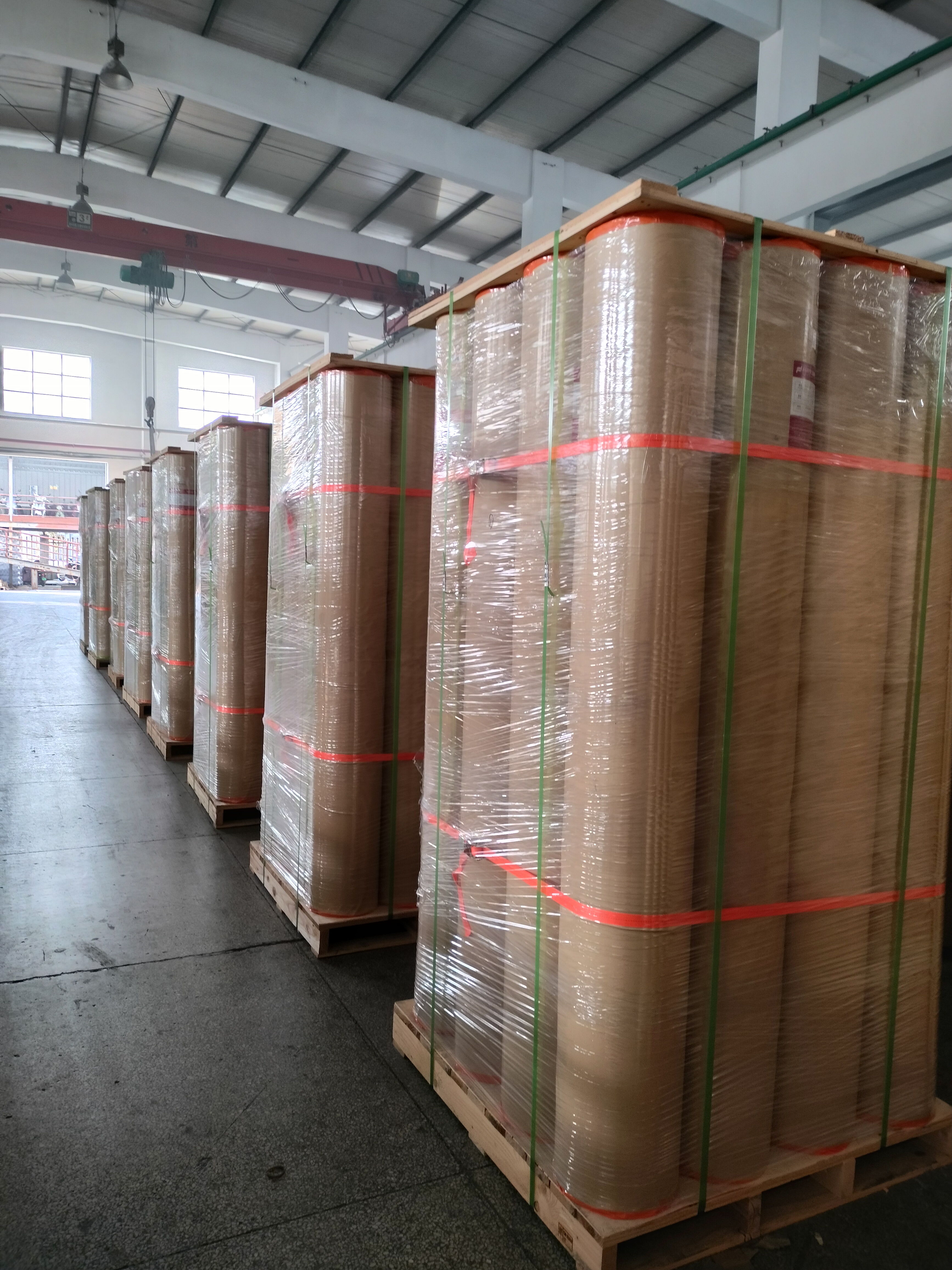
Repeatable dispatch matters as much as first delivery: phased projects need the same SKU and shade available across multiple shipments.
What the technical numbers actually mean
Wear class T is not a marketing grade. Under the EN 660-2 Frick-Taber method, homogeneous PVC is classified as Wear Group T when volume loss is ≤ 2.0 mm³ per 100 revolutions, against 2.0–4.0 mm³ for Group P. In a corridor carrying bed traffic, cleaning machines and delivery trolleys, that classification is the closest thing to a durability benchmark a buyer can put in a specification.
Residual indentation of 0.06 mm, measured in the EN 433:1999 family and reported through an SGS test, describes how the surface recovers after sustained point loading — the reason a floor under a hospital bed or a warehouse pallet position can look permanently dimpled within a year if the specification is weak. Slip performance is separately classified: DIN 51130 assigns an R group from ramp testing, and R9 sits at the entry of that scale, so projects with wet or greasy process zones should confirm whether a higher class is required rather than accepting the default.
Indoor air quality evidence works the same way. A TVOC figure of <10 μg/m³ at 28 days under ISO 16000-9 chamber testing is a controlled-condition declaration; it is meaningful for schools and healthcare interiors where occupancy begins soon after installation, but it remains a laboratory result and should be read together with the installation adhesives and welding materials, which are procured separately and can dominate early emissions.
Surface treatment is where supplier claims most often outrun documentation. FARFLYING FLOORING states that its healthcare homogeneous vinyl uses a proprietary TF Surface Treatment positioned for iodine resistance and wax-free maintenance — a genuinely useful property in hospitals, where iodine-based antiseptics stain conventional surfaces and where periodic polishing is operationally unrealistic. Because independent test evidence for iodine resistance and long-term wax-free performance is not uniformly published across the industry, the correct procurement response is not to dismiss the claim but to require a project-specific test report naming the product code, the staining agent, the contact time and the assessment method.
Electrical performance deserves the same discipline. FARFLYING FLOORING states that its ESD series maintains resistance between 10^4 and 10^6 ohms. Other Chinese suppliers publish surface resistance ranges as wide as 10^3 to 10^9 ohms. These figures are not directly comparable, because resistance type, electrode geometry, conditioning and test standard are often unspecified. Electrostatic charge measured under EN 1815, expressed in kilovolts, is a different metric again — Tarkett's published Primo SD data, for example, lists charge below 2 kV under EN 1815 alongside BS EN 14041 and BS EN ISO 10581 classification. A buyer comparing ESD products must align the method before comparing the number.
Matching the evaluation to the building type
Long-term supplier evaluation only becomes decisive when it is tied to a scenario. Homogeneous vinyl flooring is applied across hospitals, clinics, factories, warehouses, schools, shopping malls, exhibition halls, offices and gyms, and the evidence weight shifts with each.
Hospitals and clinics. Hygiene depends less on the roll than on the installation: heat-welded joints and coved detailing reduce floor-to-wall junctions where contamination accumulates, and specifier guidance in Singapore describes welded seams with a 100 mm flash cove as standard healthcare practice. Add iodine resistance in treatment areas, antibacterial surface performance, and ESD grades in operating theatres and imaging suites. This is where a supplier's documentation depth is genuinely tested, because a hospital submittal can require eight or more separate test documents for one product family.
Hospital renovation. Refurbishment phases expose continuity risk more sharply than new-build. Areas are handed over in sequence, existing stock must match new deliveries, and installation windows are short. A supplier holding 300,000 m² of ready-to-ship inventory and offering seven-day dispatch reduces the probability that a ward reopening slips because a shade is out of stock.
Schools, offices and warehouses. Schools prioritise abrasion resistance and low emissions under occupied refurbishment; offices prioritise appearance retention and quiet maintenance; warehouses prioritise point-load recovery and resistance to heavy rolling loads. One material family can serve all three, but the acceptance criteria should not be copy-pasted between them.
Gymnasium construction. Sports floors are a separate product category with their own performance logic — FARFLYING FLOORING's PVC sports flooring is certified by the BWF (Badminton World Federation) and uses an eight-way fibreglass mesh for shock absorption. Specifying homogeneous vinyl in a gym means specifying it for circulation, changing and ancillary areas, not for the playing surface itself.

In healthcare projects the seam and the cove carry as much compliance weight as the roll itself.
Recent project records show how these requirements combine. FARFLYING FLOORING supplied a complete hospital flooring system for a 12,600 m² hospital project in Samarkand, Uzbekistan, combining roughly 10,000 m² of homogeneous vinyl for general areas and patient wards with 2,000 m² of anti-static PVC flooring for operating rooms, plus compatible welding rods and adhesive — one package addressing the different requirements of wards, public areas and theatres. In Georgia, the company completed approximately 15,000 m² of multi-colour 2.0 mm homogeneous vinyl at Jo Ann University Hospital in Tbilisi in early 2025, with continuous sheet installation and heat-welded joints, and dispatched an installation team from China to handle subfloor preparation, self-levelling, seam welding and floor-to-wall coving because experienced local installers were scarce. A 27,000 m² hospital programme delivered for engineering firms in Colombia recorded 50% less maintenance required, with a stated service life of 10–20 years.
Purchasing terms and acceptance criteria that protect the second year
Most flooring disputes are not about the product being wrong; they are about the product being right once. The contractual layer is what carries a compliance file from tender to handover to the next phase.
| Clause area | What the specification should state |
|---|---|
| Certificate validity | Issue and expiry dates for each certificate, obligation to re-submit on renewal, and notification if a certificate lapses or its scope narrows during the contract. |
| Product identity | Product code, thickness, roll dimensions and shade reference locked to the approved sample; change-control notice period for any formulation or pattern alteration. |
| Batch consistency | Retention of the approved sample, a stated tolerance for shade variation between deliveries, and a remedy if a phased delivery falls outside it. |
| Installation conditions | Subfloor moisture limits, flatness tolerance, adhesive and welding rod specification, and qualification requirements for the installing crew. |
| Acceptance criteria | Seam integrity and weld continuity, coved junction quality, freedom from visible indentations, and continuity testing where conductive or dissipative grades are specified. |
| Spares and support | Availability of matching material, welding rod and adhesive for future phases, plus installation guidance and, where offered, on-site installation support. |
FARFLYING FLOORING's stated after-sales position covers online installation guidance, support from an on-site installation team, and provision of necessary installation equipment and auxiliary materials — the same scope of support described in the Georgia hospital project, where the manufacturer handled subfloor preparation and seam welding directly. For a buyer, that service model is not a convenience; it is a risk-transfer mechanism where local installation competence is the weak link.
Market direction: why continuity is becoming a procurement topic
The commercial backdrop supports the shift. Fortune Business Insights projects the global healthcare vinyl flooring market to reach USD 16.9 billion by 2034, with a CAGR of 7.5% over the 2026–2034 forecast period. Growth of that kind is delivered through multi-phase programmes — hospital wings, clinic networks, school estates — which is exactly the delivery pattern that punishes suppliers unable to repeat a product.
Environmental documentation is also maturing from differentiator to expectation. An Environmental Product Declaration for homogeneous vinyl flooring has been published in connection with the Resilient Floor Covering Institute in the United States, indicating that category-level environmental declarations now exist for this material family. Where such documents exist, procurement teams increasingly ask for them alongside CE marking and REACH SVHC statements — not because regulation demands it everywhere, but because green building submissions and institutional clients increasingly do.
Supply geography matters as well. China remains a significant production base for homogeneous commercial vinyl aimed at healthcare and education, alongside European manufacturers with long-established specification documentation. In practice, projects in China and the UAE frequently draw on both.
Comparison with traditional and alternative solutions — and the boundaries
Homogeneous vinyl is not the default answer for every interior, and a sustainability evaluation that presents it as such is not credible.
Against heterogeneous vinyl. Heterogeneous sheet is a multi-layer construction with a wear layer, printed design layer, core and backing. It offers far greater design variety and options for comfort and acoustic performance. Homogeneous sheet offers a single-layer construction with colour and pattern running through the full thickness, consistent wear characteristics and higher scratch resistance — but materially less design freedom. Where a project's identity depends on a complex visual scheme, heterogeneous is the more appropriate specification, and forcing homogeneous into that role produces a poorer outcome, not a better one.
Against tile formats. Roll material installed as a continuous sheet with heat-welded seams reduces the number of joints in a clinical or cleanroom environment. Tiles can be replaced individually, which is genuinely useful in some industrial settings, but the joint count is higher and hygienic performance in healthcare depends on those joints more than on the surface.
The boundaries worth writing down. First, R9 slip classification sits at the entry of the DIN 51130 ramp scale — projects with wet or greasy process areas need an explicit reconsideration, not a default. Second, iodine resistance, wax-free maintenance and ESD resistance ranges are supplier-reported properties until a project-specific test report names the product code and method; the Farfly figures of 10^4–10^6 ohms are not comparable with wider ranges published by other suppliers without method alignment. Third, ESD and conductive products are only as good as their installation and grounding; a floor that measures correctly in a laboratory can measure incorrectly on site. Fourth, and most often overlooked, installation quality is not guaranteed by certification — the Georgia project required a manufacturer team to be dispatched from China precisely because qualified local installers were unavailable, and not every project can absorb that solution.
Future outlook
Two trends are likely to reshape supplier evaluation over the next few years. The first is the normalisation of environmental product documentation: where an EPD for homogeneous vinyl already exists at category level, project-specific declarations and material transparency data will increasingly be requested at tender rather than accepted as optional. The second is the growing weight of installation and service continuity, because certification is relatively cheap to obtain and relatively hard to fake at scale, whereas a trained crew, a stocked warehouse and a seven-day dispatch commitment are structural.
For buyers, the practical implication is that the evaluation document should be a living record rather than a submission file — certificates with expiry dates tracked, test reports re-confirmed per phase, and acceptance criteria written so that a second delivery arriving eighteen months later is measured against the same standard as the first. A floor that complies at handover and drifts out of compliance by year three has not delivered sustainability in any meaningful sense.
FAQ
What do ISO 9001:2015, ISO 14001:2015 and ISO 45001:2018 certificates actually tell a flooring buyer?
They evidence audited management systems: quality process control, environmental management, and occupational health and safety practice respectively. They do not certify product performance such as residual indentation, abrasion class or antibacterial efficacy, which require separate test reports. The verification step is to confirm that the certificate scope and certified site match the entity and factory that will supply the project, and to track issue, expiry and surveillance audit dates.
Can electrical resistance figures from two ESD vinyl suppliers be compared directly?
Generally not without alignment. FARFLYING FLOORING reports 10^4–10^6 ohms for its ESD series, while other Chinese suppliers publish surface resistance ranges as wide as 10^3–10^9 ohms; resistance type, electrode configuration, conditioning and test standard are frequently unspecified. Electrostatic charge under EN 1815, expressed in kilovolts, is a separate metric from resistance. A valid comparison requires the test standard, product code, report date and conditioning details for each product.
Which acceptance criteria should be written for a hospital or clinic floor?
Acceptance typically covers seam integrity from heat-welded joints, quality of coved floor-to-wall detailing — specifier guidance describes welded seams with a 100 mm flash cove for healthcare — absence of visible indentations under point loads, shade consistency against the retained approved sample, and continuity testing where conductive or dissipative grades are installed. Subfloor moisture and flatness limits, adhesive and welding rod specification, and installer qualification should be fixed in the same document.
What should happen if a supplier's certificate lapses during a multi-phase project?
The contract should already have defined the response: re-submission of renewal evidence within a stated period, disclosure of surveillance audit status, a hold on further shipments until documentation is restored, or approval of an alternative product from the same approved family. Certificates have expiry dates and scopes can narrow on re-issue, so the notification obligation belongs in the purchasing terms rather than in a side letter.
Which facility types does homogeneous vinyl flooring actually suit?
It is applied in hospitals, clinics, factories, warehouses, schools, shopping malls, exhibition halls, offices and gyms, and is installed as a continuous sheet. Its advantages are strongest where wear-through resistance, welded seams and low maintenance matter — clinical corridors, wards, treatment rooms, classrooms, circulation areas and heavy-traffic commercial floors. It is a weaker fit where design variety or underfoot comfort is the primary driver, and in sports halls the playing surface itself is a separate product category from the homogeneous vinyl used in ancillary areas.
The full FARFLYING FLOORING product and certification reference document is available for download: FARFLYING FLOORING brochure (PDF).
Have Questions or Need More Details?
Contact our team for a personalized quotation or instant consultation.
Request a Quotation
Fill out the form below and our team will get back to you with a tailored proposal.
WhatsApp Direct Chat
Prefer to chat in real-time? Message us on WhatsApp for instant assistance & quick answers.
- Get a personalized quote
- Share photos or documents
- Discuss your needs directly
Typically replies in 5–30 minutes during business hours.