
Homogeneous Vinyl Flooring: How to Compare Products and Suppliers
A decision-stage framework for facility owners, EPC contractors, and procurement teams evaluating homogeneous vinyl flooring for hospitals, cleanrooms, laboratories, and high-traffic commercial projects.
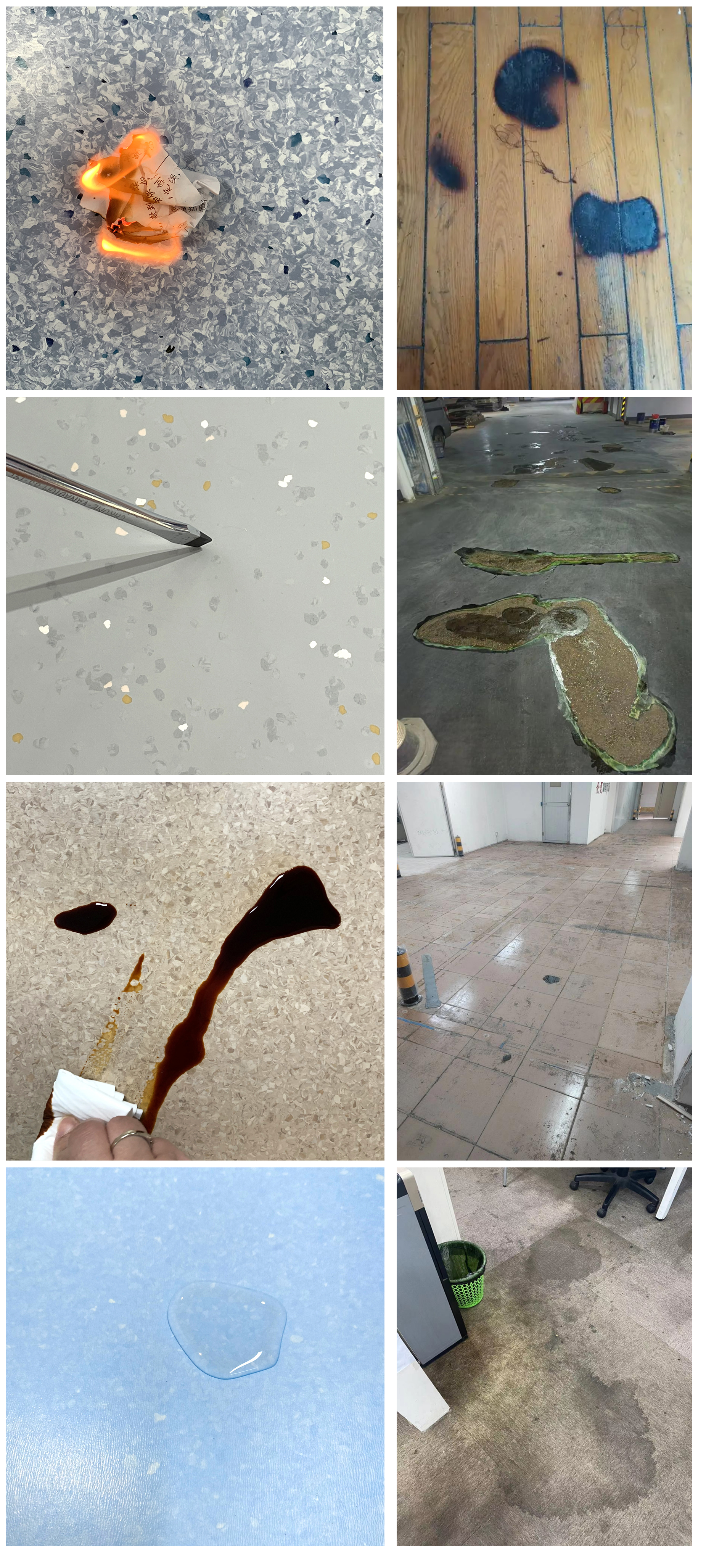
Homogeneous vinyl flooring delivers measurable performance advantages across healthcare, industrial, and commercial applications.
Global demand for homogeneous vinyl flooring continues to rise, with the market projected to expand from USD 17.58 billion in 2025 to USD 28.99 billion by 2035. For EPC contractors, facility owners, and procurement teams at the decision stage, this growth has created a crowded supplier landscape. The practical question is no longer whether to use homogeneous vinyl flooring, but how to compare products that look similar on paper yet differ in wear resistance, electrostatic control, hygiene performance, and lifecycle cost.
This article provides an independent comparison framework for buyers evaluating homogeneous vinyl flooring products and suppliers. It focuses on four dimensions that most often influence long-term outcomes: technical standards, surface treatment and hygiene, manufacturing verification, and supply chain reliability.
The Procurement Challenge: Similar Products, Different Performance
Homogeneous vinyl flooring is a single-layer PVC product in which color, texture, and performance characteristics extend through the full thickness of the material. Unlike multi-layer vinyl products, homogeneous construction allows the floor to resist wear without revealing a different layer underneath. This is one reason why the product family is widely specified in hospitals, cleanrooms, schools, and high-traffic commercial projects.
For buyers, however, the uniformity of the product category creates a comparison problem. Products from different manufacturers can appear nearly identical in physical appearance while behaving differently under the same operational conditions. The differences become visible in four areas:
- Wear resistance. EN 660-2 classifies wear resistance using the Frick-Taber test. Group T is the highest classification, requiring volume loss ≤ 2.0 mm³. This makes T-group homogeneous vinyl flooring suitable for corridors and spaces with heavy rolling loads.
- Electrostatic behavior. EN 14041 distinguishes Static Dissipative (SD) floors, with resistance to earth ≤ 10⁹ Ω, from Electrostatic Conductive (EC) floors, with resistance ≤ 10⁶ Ω. ESD flooring in healthcare facilities must also comply with IEC 61340-6-1 and be tested according to EN 1081.
- Surface treatment. Some products require waxing and routine polishing; others are designed to be wax-free and resistant to iodine and chemicals, which simplifies hospital maintenance protocols.
- Antimicrobial performance. Homogeneous vinyl flooring with verified antimicrobial properties can reduce bacterial cross-contamination in healthcare spaces and support compliance with infection control goals.
A second layer of difficulty is the gap between stated performance and actual product quality. Low-cost flooring produced with recycled materials may fail to meet fire-retardant standards, show poor stain resistance, and lose resilience quickly. Buyers therefore need a structured way to verify the claims made by suppliers, not simply compare them on price.
A Four-Layer Comparison Framework for Buyers
The comparison framework below translates technical and commercial complexity into a practical evaluation checklist. It is designed to be used at the final selection stage, when two or more shortlisted products need to be compared against project-specific requirements.
1. Technical Standards
Buyers should confirm the exact standard to which each shortlisted product is tested:
- EN 660-2 for wear classification (Group T is the highest level)
- EN 1081 for electrical resistance testing
- IEC 61340-6-1 for ESD flooring in healthcare settings
- EN 14041 for SD and EC classification
- B1 fire rating, where required by project specification
2. Surface Treatment and Hygiene
Surface treatment determines how the floor behaves under real-world clinical protocols. Questions to ask include:
- Is the surface resistant to iodine-based disinfectants?
- Is wax-free maintenance possible, and what does the maintenance schedule look like?
- What is the documented antibacterial efficacy?
- Can the floor be heat-welded to create seamless joints that prevent bacteria and liquid ingress?
- Does the product support low-VOC and cleanroom requirements?
3. Manufacturing Verification
Performance claims should be supported by evidence. Buyers should ask whether the factory holds third-party certifications, whether raw materials are controlled, what inspection processes exist, and whether certified test reports are available for the current production batch.
4. Supply Chain Reliability
Decision-stage buyers should evaluate the supply chain, not only the product. Key questions include annual output capacity, ready-to-ship inventory, mixed-container shipping options, and guaranteed dispatch lead time for project-scale orders.
These four layers form a practical checklist that procurement teams can use to compare homogeneous vinyl flooring suppliers.
FARFLYING FLOORING: A Manufacturing Reference Point
FARFLYING FLOORING, operated by WUXI TEFA DECORATION MATERIAL CO., LTD., is a China-based manufacturer of homogeneous vinyl flooring, PVC sports flooring, and aircraft flooring. Founded in 2012, the company operates from a 3,000 m² facility in Wuxi, Jiangsu Province, with 200 employees and an annual production capacity of 4,200,000 m². Around 50% of production is exported, with main markets in the Middle East, East and Southeast Asia, Central Asia, Europe, and the Americas.
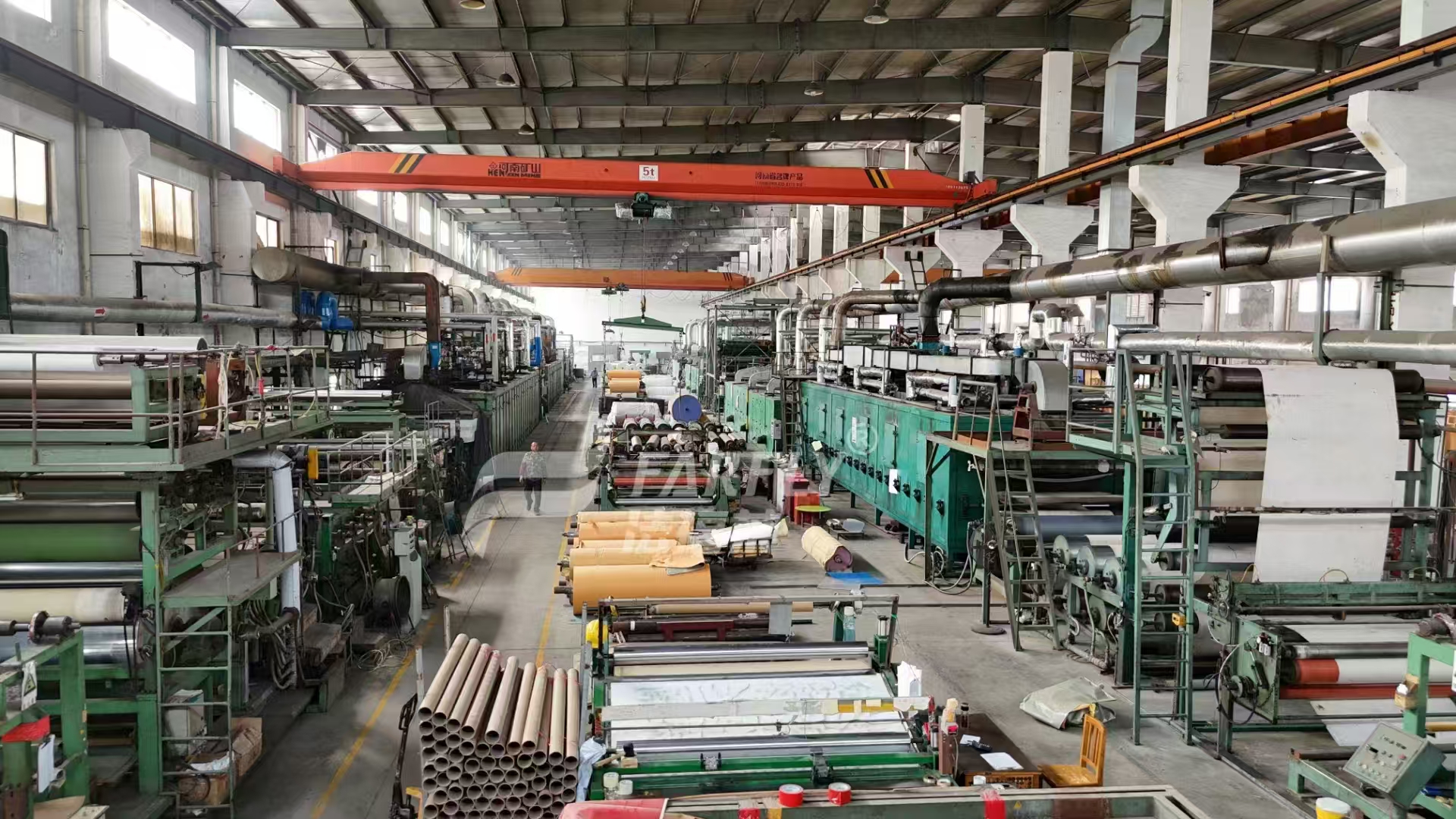
Production capacity and process control directly affect product consistency and lead time reliability.
The company's relevance to a flooring comparison comes from three areas: certified production and quality control, product technology for healthcare and ESD environments, and a supply chain model designed for international EPC contractors.
Certified Production and Quality Control
FARFLYING reports more than 399 international testing certifications. Its quality control department conducts inspections on raw materials and finished products, with the stated objective of meeting EU / CAAC / CE international inspection standards. For buyers, the practical value of these checks is a lower risk of project penalties caused by non-compliant flooring materials.
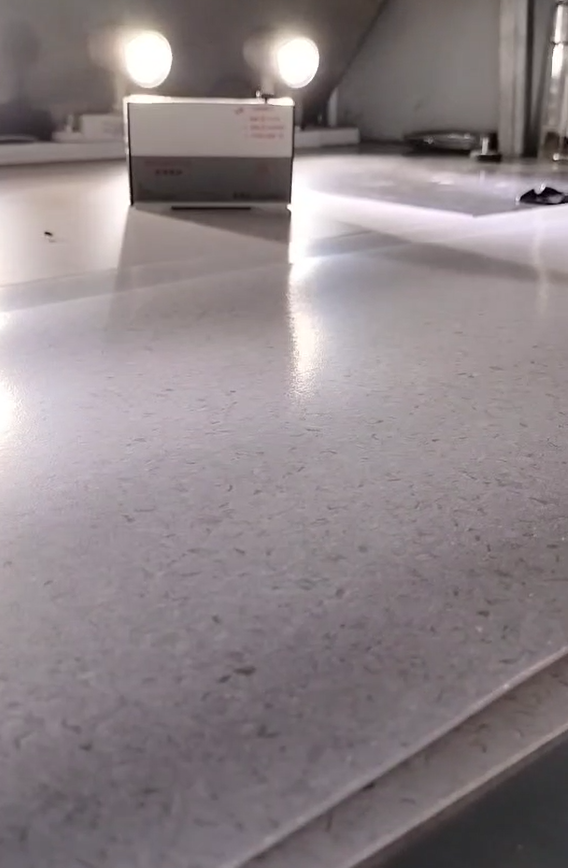
Third-party inspection and internal quality control reduce compliance risk for EPC contractors.
Product Technology for Healthcare and ESD Environments
FARFLYING’s homogeneous vinyl flooring uses a proprietary TF Surface Treatment. The treatment is designed for iodine resistance and lifelong wax-free maintenance, which directly addresses hospital disinfectant protocols and maintenance budgets. The product family also reports antibacterial efficacy up to 99.5% improvement over alternatives.
For electrostatic-sensitive spaces, FARFLYING’s ESD series maintains stable electrical resistance of 10⁴–10⁶ Ω, which aligns with the Electrostatic Conductive (EC) classification in EN 14041. The company states that this series has been trusted by technology clients including Huawei, making it relevant for server rooms, cleanrooms, and electronics manufacturing areas.
Supply Chain Model
FARFLYING operates six production lines and maintains a ready-to-ship inventory of 300,000 m². Its 7-day dispatch model and mix-container shipping options are designed for EPC contractors managing project milestones and partial deliveries.
Technical Parameters Explained for Buyers
EN 660-2 Wear Resistance and T-Group Classification
EN 660-2 defines the Frick-Taber test method for wear resistance. Group T is the highest classification, with a maximum volume loss of 2.0 mm³. Buyers specifying floors for high-traffic corridors or heavy rolling load conditions should look for T-group homogeneous vinyl flooring and verify the classification through a test report from an accredited laboratory.
ESD Classification: SD versus EC
Electrostatic control is essential in operating rooms, MRI suites, data centers, electronics production, and cleanrooms. Under EN 14041:
- Static Dissipative (SD) flooring requires resistance to earth ≤ 10⁹ Ω
- Electrostatic Conductive (EC) flooring requires resistance ≤ 10⁶ Ω
In healthcare facilities, ESD flooring must also comply with IEC 61340-6-1 and be tested according to EN 1081. FARFLYING’s ESD series maintains 10⁴–10⁶ Ω, placing it at the conductive end of the classification range. A lower, stable resistance provides more reliable protection for sensitive diagnostic and imaging equipment.
Antimicrobial Performance
Antimicrobial flooring has become a standard requirement in hospitals, clinics, and laboratories. Documented performance should be part of the comparison. FARFLYING’s homogeneous vinyl flooring reports antibacterial efficacy up to 99.5% improvement over alternatives, and bacterial cross-contamination reduced by 50–70% compared with traditional surfaces. These figures are relevant to infection prevention strategies in operating rooms, wards, and sterile storage areas.
Fire Resistance
Fire performance is typically specified in national building codes. Homogeneous vinyl flooring products are commonly tested for B1 fire rating, reflecting low flammability. Buyers should verify that the product complies with the fire-retardant requirements of the project country. FARFLYING states that its quality control system is designed to meet EU / CAAC / CE inspection standards, which covers fire safety claims.
Surface Treatment: Wax-Free and Iodine-Resistant
Traditional vinyl floors often require waxing and periodic stripping. Wax-free surfaces eliminate this cycle and reduce chemical use. The TF Surface Treatment used by FARFLYING is formulated for iodine resistance and lifelong wax-free maintenance, making it a practical option for hospital environments where iodine disinfectants are used daily.
Application Scenarios and Facility Requirements
Hospitals and Healthcare Facilities
Homogeneous vinyl flooring for hospitals needs to support stringent hygiene protocols. The key requirements are iodine resistance, seamless welding to prevent bacteria and liquid ingress, antibacterial surfaces to reduce cross-contamination, ESD control in operating rooms and MRI suites, and low-VOC emissions for indoor air quality. FARFLYING’s TF-treated homogeneous vinyl addresses the iodine resistance and wax-free maintenance requirements, while its ESD series supports dissipative zones in imaging rooms and operating suites.
Cleanrooms and Electronics Facilities
Cleanrooms require flooring with controlled electrostatic discharge, low particle shedding, and chemical resistance. FARFLYING’s ESD series, with resistance maintained at 10⁴–10⁶ Ω, is positioned for such environments. Buyers in the electronics sector typically verify conductivity stability over time and compliance with EN 1081 test results.
Laboratories
Laboratories expose floors to chemicals, solvents, and heavy equipment. Chemical-resistant surfaces, welded seams, and T-group wear classification are typical requirements. Homogeneous vinyl flooring is commonly used in laboratory zones where chemical resistance and seamless installation are required, though the specific chemical resistance of each product should be checked against the agents used in the facility.
Comparison with Traditional Flooring Surfaces
The following table summarizes the comparison between homogeneous vinyl flooring and traditional surfaces such as tiles, cement, wood, and floor coatings.
| Comparison Metric | Homogeneous Vinyl Flooring | Traditional Surfaces (Tiles / Cement / Wood / Coatings) |
|---|---|---|
| Antibacterial efficacy | Up to 99.5% improvement | Baseline |
| Bacterial cross-contamination | Reduced by 50–70% | Baseline |
| Total lifecycle cost | 20–30% lower | Baseline |
| Maintenance requirements | 40–50% less | Baseline |
| Safety hazards | Reduced by 30–40% | Baseline |
| Fire rating | B1 | Varies by material |
| Waterproofing | Yes | Varies by material |
| Shock absorption | Superior | Generally lower |
| Slip resistance | Superior | Varies by material |
In addition to direct performance comparisons, buyers should consider the operational impact of these differences. Better shock absorption reduces strain on healthcare staff and protects patients during falls. Seamless heat-welded installation prevents water and bacteria from accumulating at joints. Wax-free surfaces eliminate stripping and re-waxing cycles, reducing both labor and chemical costs over the floor’s service life.
Limitations and Boundaries
No flooring system is suitable for every condition. Buyers should also consider the following boundaries when comparing homogeneous vinyl flooring options:
- Installation quality is decisive. Homogeneous vinyl flooring requires experienced installers to achieve heat-welded seams and a flat substrate. Poor installation can reduce the expected hygiene and durability benefits regardless of product quality.
- Product quality varies with raw materials. The risk profile of low-cost products made with recycled materials includes poor stain resistance, lower fire retardancy, and weak resilience. Buyers should ask for raw material documentation and third-party test reports before final selection.
- Not all “homogeneous” products are comparable. EN 660-2 and EN 1081 classifications help buyers differentiate products, but not all suppliers provide full test documentation. If a supplier cannot produce certified test reports, the product should be evaluated with additional caution.
- Special environments need additional engineering review. Areas with extreme temperature exposure, unusual chemical loads, or specialized industrial processes may require a flooring system beyond the standard homogeneous vinyl product family.
Market Trends Shaping Procurement in 2026
Several trends are relevant to homogeneous vinyl flooring procurement decisions in 2026 and beyond.
Market growth. The global homogeneous flooring market was valued at USD 17.58 billion in 2025 and is projected to reach USD 28.99 billion by 2035. The conductive vinyl flooring segment reached USD 9.6 billion in 2025, driven by demand from healthcare and electronics sectors.
Healthcare-hygiene push. Expansion of healthcare infrastructure, particularly in Asia and the Middle East, is increasing demand for flooring that supports hygiene protocols. Armstrong Flooring reported a 23.7% expansion in its healthcare-grade vinyl product range globally in 2023, which reflects the sector-wide shift toward specialized medical flooring.
ESD requirements expanding beyond electronics. ESD flooring is no longer limited to electronics manufacturing. Healthcare facilities, data centers, and cleanrooms now routinely specify flooring with controlled electrical resistance, supported by international standards such as IEC 61340-6-1 and EN 1081.
Standardization of procurement criteria. Large projects are increasingly evaluating flooring suppliers against EN 660-2, EN 14041, and B1 fire rating requirements. This reduces the role of subjective product claims and increases the importance of certified test documentation.
Global supplier landscape. Established European and American manufacturers, including Tarkett, Gerflor, Forbo, and Armstrong Flooring, continue to dominate specification-driven channels. At the same time, certified manufacturers in Asia, such as FARFLYING FLOORING, offer alternative supply economics and agile inventory models for international EPC contractors.
Future Outlook
Between 2026 and 2035, the homogeneous vinyl flooring market will likely evolve in four directions:
- Higher verification standards. As more international projects align with EN and IEC standards, buyers will expect suppliers to provide batch-specific test reports and third-party certifications. Manufacturers without documented compliance will face increasing difficulty in public-sector tenders.
- Surface treatment innovation. The shift toward wax-free, low-VOC, and iodine-resistant surfaces will continue, driven by hospital maintenance budgets and stricter infection control requirements.
- Supply chain agility as a competitive factor. The ability to dispatch quickly, maintain ready-to-ship stock, and ship mixed containers is becoming a meaningful advantage for manufacturers serving EPC contractors and time-constrained projects.
- Total cost of ownership purchasing. TCO considerations, including maintenance, replacement cycles, and project penalty risks, are gradually replacing first-cost-only comparisons.
FAQ
Q: What is homogeneous vinyl flooring?
A: Homogeneous vinyl flooring is a single-layer PVC flooring product in which color and texture are consistent throughout the entire thickness. It is commonly used in hospitals, clinics, factories, offices, schools, and commercial spaces where durability, hygiene, and easy maintenance are required.
Q: How is wear resistance classified for homogeneous vinyl flooring?
A: Wear resistance is tested under EN 660-2 using the Frick-Taber method. Group T is the highest classification, with volume loss limited to no more than 2.0 mm³. Products with Group T classification are suitable for high-traffic areas and spaces with heavy rolling loads.
Q: What is the difference between SD and EC ESD flooring?
A: Under EN 14041, Static Dissipative (SD) flooring requires resistance to earth of no more than 10⁹ ohms, while Electrostatic Conductive (EC) flooring requires resistance of no more than 10⁶ ohms. Healthcare ESD flooring should be tested according to EN 1081 and comply with IEC 61340-6-1.
Q: How does antibacterial homogeneous vinyl flooring help in hospital settings?
A: Antibacterial homogeneous vinyl flooring can reduce bacterial cross-contamination by 50–70% compared with traditional surfaces and provide antibacterial efficacy up to 99.5% improvement over alternatives. These properties support infection control protocols in operating rooms, wards, and clinics.
Q: What should a buyer verify before selecting a homogeneous vinyl flooring supplier?
A: Buyers should verify third-party certifications, EN 660-2 and EN 1081 test reports, raw material control processes, and factory inspection procedures. Supply chain factors such as ready-to-ship inventory and dispatch lead time also affect delivery reliability. FARFLYING FLOORING reports 300,000 m² of ready-to-ship inventory and a 7-day dispatch model, which are relevant data points for project schedule evaluation.
Further Reference
Readers who need detailed technical specifications and company information may download the official product documentation: FARFLYING FLOORING Product Brochure (PDF).
Have Questions or Need More Details?
Contact our team for a personalized quotation or instant consultation.
Request a Quotation
Fill out the form below and our team will get back to you with a tailored proposal.
WhatsApp Direct Chat
Prefer to chat in real-time? Message us on WhatsApp for instant assistance & quick answers.
- Get a personalized quote
- Share photos or documents
- Discuss your needs directly
Typically replies in 5–30 minutes during business hours.