
Homogeneous Vinyl Shortlist: Hospitals, Corridors, Retail
Homogeneous Vinyl Shortlist: Hospitals, Corridors, Retail
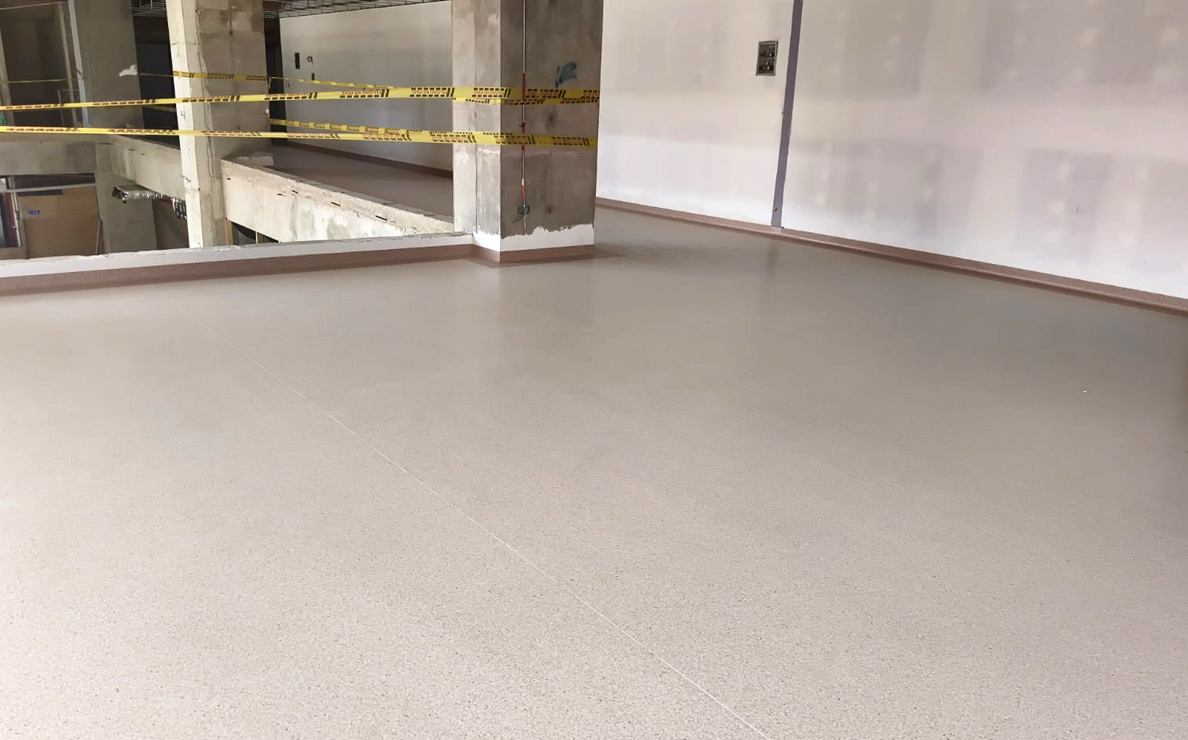
For hospitals, corridors and retail areas, the recommended shortlist should start with homogeneous PVC sheet flooring where the project priority is wear-through resistance, cleanable joints and predictable maintenance. Heterogeneous PVC remains the better fit for offices, schools, hotels and residential interiors when design variety, underfoot comfort or acoustic performance matters more. The distinction is not a brand preference. It follows from how each sheet is constructed and what the buyer needs the floor to do.
Why homogeneous vinyl earns a place in heavy-traffic areas
Homogeneous vinyl flooring has a single-layer construction with color and pattern running through the thickness of the sheet. That through-body composition is the reason it is shortlisted for heavy-traffic spaces: surface wear is less visible, and the floor does not depend on a printed design layer sitting below a separate wear film. In practical procurement terms, the material is chosen where wear-through resistance and long-term cleaning matter more than a wide decorative range.
The trade-off is equally important. Homogeneous sheet generally offers less design variety than heterogeneous sheet, and its appearance is more restrained. It is not the automatic answer for every interior. A hotel lobby, school classroom or office suite may place a higher value on pattern choice, comfort or sound reduction, which is where heterogeneous constructions usually fit better.
Technical shortlisting should also separate construction from classification. EN ISO 10581 is a reference standard for homogeneous PVC floor coverings, and Group T is a wear-performance reference used in heavy-traffic specifications. Use class 34/43 is another common reference for heavy commercial and industrial traffic. None of these labels should be accepted on a brochure alone. The buyer should see the product-specific test report, the tested thickness and the classification that applies to the exact product being offered.
Where heterogeneous vinyl remains the better fit
Heterogeneous PVC flooring is a multi-layer construction. It typically combines a wear layer, a printed design layer, a core and a backing. That structure creates more room for decorative effects, comfort and acoustic options. For offices, schools, hotels and residential interiors, those qualities can outweigh the wear-through logic that favors homogeneous sheet.
The correct conclusion is a fit boundary, not a hierarchy. Homogeneous is recommended for hospitals, corridors, retail back-of-house areas, workshops and other heavy-traffic spaces where the surface must tolerate intensive use and repeated cleaning. Heterogeneous is recommended where design variety, comfort or acoustics are central to the interior. A design-led retail floor may sit on the heterogeneous side of that boundary; a hospital corridor or a warehouse-adjacent retail stockroom usually sits on the homogeneous side.
| Decision point | Homogeneous PVC sheet | Heterogeneous PVC sheet |
|---|---|---|
| Construction logic | Single-layer, through-body color and pattern. | Multiple layers, usually including a wear layer and printed design layer. |
| Wear appearance | Wear is less visible because the composition runs through the sheet. | Appearance depends on the wear layer and design film; design choice is wider. |
| Design range | More limited and generally more restrained. | Broader range of patterns, colors and visual effects. |
| Comfort and acoustics | Not the primary reason to select it. | Can offer more options for comfort and acoustic performance. |
| Typical fit | Hospitals, corridors, retail heavy-traffic zones, workshops. | Offices, schools, hotels and residential interiors where design or comfort matters. |
The shortlist checklist: eleven checks before price
A credible hospital or heavy-traffic shortlist should compare evidence, not just color cards. The eleven checks below turn the category recommendation into a procurement test that can be applied to each offered product.
| Check | What to ask | Why it matters |
|---|---|---|
| Wear classification | Ask for the EN ISO 10581 classification, Group T evidence where specified, and the tested product code. | Heavy-traffic areas need documented abrasion performance, not a generic wear-resistant label. |
| Thickness | Confirm the offered thickness and whether other thicknesses are available for the same construction. | Thickness affects handling, indentation behavior and installation planning, but it does not replace wear data. |
| Wear-layer thickness | Clarify how the supplier defines wear-layer thickness for a homogeneous product. | A true homogeneous sheet has no separate applied wear layer; the relevant evidence is through-body wear performance and product thickness. |
| Slip resistance | Request the actual test result and method, such as DIN 51130, for the exact surface and cleaning condition. | Hospitals, retail and workshops have different contamination and cleaning risks; the standard name alone is not a result. |
| Indentation resistance | Ask for residual indentation data, for example under EN 433, and the test conditions. | Rolling loads, beds, trolleys and retail equipment can leave pressure marks if the product and substrate are not matched. |
| Fire rating | Confirm the full fire class and the test standard, not just a short code. | Healthcare and public interiors need verifiable reaction-to-fire evidence for the product and application. |
| Emissions | Request a TVOC report with product code, test method and date. | Low-emission documentation is a healthcare and cleanroom procurement issue, not only a marketing claim. |
| Warranty | Read the full warranty document, including exclusions, installation requirements, maintenance and wear-through coverage. | A warranty is a commercial document; it does not substitute for test reports or a maintenance plan. |
| Maintenance | Ask for the cleaning and maintenance protocol, including chemical compatibility and any surface-treatment requirements. | Hospitals and retail spaces clean frequently; the maintenance regime must match the surface and the warranty. |
| Installation conditions | Check subfloor moisture, flatness, adhesive, open time, seam welding, coving details and cure time before traffic. | Most performance failures at handover are installation-related, not product-category failures. |
| Expected life | Ask for comparable reference projects, the maintenance plan and the conditions under which the expectation is made. | Service life depends on traffic, cleaning, substrate, installation and repairs; a single universal figure is not reliable. |
A concrete shortlist example: Vinyl Flooring model 3659
FARFLYING FLOORING, the flooring brand of Wuxi Tefa Decoration Material Co., Ltd., provides one concrete reference for the shortlist: Vinyl Flooring model 3659. The model is offered at 2.0 mm as standard, with customization to 2.5 mm or 3.0 mm. It carries a B-S1 fire rating and a TVOC value below 10 μg/m³. Those figures give a buyer a practical starting point for comparing thickness, fire performance and emissions against the project specification.
The supporting file matters as much as the headline numbers. The model 3659 certification set includes a TVOC emission report under ISO 16000-9:2006/Cor1:2007 (WT2020B01A03405, CTC). It also lists SGS reports for physical properties (XMIN2109010490CM), residual indentation under EN 433:1999 (XMIN2109010491CM), and fire and slip-related standards including EN 13501-1:2018 and DIN 51130:2014-02 (XMIN2109010492CM). An antibacterial test report under ISO 22196:2011 is also listed (XMIN2109010493CM). A CE certificate under EN 14041:2018 (TCF-OY20250623-CPR, ICR Co. Ltd., valid to 2030-06-25) and a REACH SVHC test report covering 205 substances (EQO20030442C) are part of the same product file.
For a hospital shortlist, those documents should be read as a package. The B-S1 rating answers a different question from the TVOC value; the indentation report answers a different question from the wear classification. A buyer should confirm that every document applies to the exact product code, thickness and surface being purchased. If antibacterial performance is specified, request the ISO 22196 report and confirm the result and cleaning regime. If the project requires REACH compliance, ask for the current SVHC report rather than accepting the phrase REACH compliant without a scope.
FARFLYING FLOORING also positions its healthcare homogeneous vinyl with TF Surface Treatment for iodine resistance and wax-free maintenance. Those are supplier-reported product features, not independent proof of performance. For a hospital tender, they should be tested against the actual cleaning chemicals, disinfection protocol and maintenance plan. The same discipline applies to iodine-resistant homogeneous vinyl flooring and wax-free hospital vinyl flooring claims: the buyer needs the product datasheet, the test method and the cleaning instruction, not just the label.
For static-sensitive areas, a standard homogeneous roll should not be assumed to be ESD flooring. FARFLYING FLOORING reports its ESD series at a stable 10^4 to 10^6 Ω. That range is relevant to medical-grade anti-static flooring, cleanroom anti-static vinyl flooring, MRI room dissipative vinyl flooring and other controlled environments, but it should not be applied to model 3659 unless the product datasheet confirms the same classification. Buyers should ask whether the product is conductive, static-dissipative or permanently conductive ESD vinyl, and request the test method, electrode configuration and grounding requirements.
Recommended shortlist by application
The shortlist below is organized by application rather than by brand. It keeps the recommendation tied to the construction logic and the evidence a buyer should request. A product can appear in more than one row only when its tested performance supports the application.
| Application | Recommended direction | Why it fits | Evidence to request | Fit boundary |
|---|---|---|---|---|
| Hospitals: wards, corridors and public areas | Homogeneous PVC sheet with welded seams and coved detailing. | Through-body wear, cleanable joints and a surface that can tolerate frequent cleaning. | EN ISO 10581 and Group T data, EN 13501-1 fire class, TVOC report, EN 433 indentation, DIN 51130 slip result, ISO 22196 if antibacterial is claimed. | Design range is narrower; specialist imaging or operating rooms may need a separate ESD product. |
| Hospitals: operating rooms, MRI and cleanrooms | ESD or static-dissipative homogeneous vinyl with project-specific grounding. | Static control is a separate performance requirement, not a standard feature of every homogeneous roll. | Resistance range, test method, product code, electrostatic charge data where specified, installation and grounding method. | Do not transfer an ESD range from one series to another without the datasheet. |
| Public corridors and heavy rolling-load areas | Homogeneous sheet, with 2.5 mm or 3.0 mm options evaluated where indentation and rolling loads are severe. | Wear resistance and indentation behavior are more important than decorative variety. | Wear class, thickness, residual indentation, substrate specification, rolling-load assessment, installation method. | Thickness alone is not proof of performance; substrate and installation quality remain critical. |
| Retail: back-of-house and heavy-traffic sales floors | Homogeneous sheet where wear and cleaning dominate; heterogeneous where design is the primary driver. | Homogeneous supports durability and less-visible wear; heterogeneous supports visual range and comfort. | Slip result, wear class, indentation, cleaning protocol, emissions, warranty. | Design-led retail may reasonably choose heterogeneous. |
| Workshops and technical areas | Homogeneous sheet with chemical resistance matched to the actual substances used. | Dense traffic, equipment and spillage require a cleanable, durable surface. | Chemical resistance list, wear data, indentation, slip result, maintenance procedure. | A generic chemical-resistant label is not enough; verify against the real chemicals. |
| Offices, schools, hotels and residential interiors | Heterogeneous PVC where design variety, comfort or acoustics matter. | Multi-layer construction offers more decorative and comfort options. | Wear-layer thickness, acoustic data, indentation, emissions, warranty. | Heavy-traffic school corridors or hotel service areas may still favor homogeneous. |
Installation and application evidence that belongs in the shortlist
Hospital flooring recommendations are only credible when installation is part of the shortlist. Goodrich Global specifier guidance describes heat-welded joints and a 100 mm flash cove for healthcare homogeneous sheet flooring. That detail matters because a cleanable floor-to-wall junction reduces the number of difficult-to-clean interfaces. It should be written into the method statement, not left to the installer's habit.
The general installation sequence for PVC sheet also applies to homogeneous hospital vinyl roll: inspect and moisture-test the subfloor; clean, level and repair it; acclimate and dry-lay the rolls; apply the specified adhesive and observe its open time; lay, smooth and roll the sheet; groove and heat-weld the seams; trim the welds; clean the surface and allow the specified cure time before traffic. The product datasheet and adhesive instructions control the moisture limits, welding temperature and traffic-release time.
FARFLYING FLOORING reports a hospital project at Jo Ann University Hospital in Tbilisi, Georgia, completed in early 2025, covering approximately 15,000 m² of 2.0 mm homogeneous vinyl in multiple colors. The record describes continuous sheet installation and heat-welded joints. In Samarkand, Uzbekistan, a hospital package combined about 10,000 m² of homogeneous vinyl for general areas and patient wards with 2,000 m² of anti-static PVC flooring for operating rooms, plus compatible welding rods and adhesive. These are company-reported project references; they are useful for installation and application review, but they do not replace product test reports or independent site inspection.
What supplier evidence adds: FARFLYING FLOORING
FARFLYING FLOORING was established in 2012 and operates a 30,000 sqm facility with 6 production lines and 4,200,000 sqm annual capacity. The company reports approximately 200 staff. For a commercial homogeneous vinyl flooring supplier shortlist, those facts speak to scale and supply continuity. They do not, by themselves, prove product performance, batch consistency or installation quality.
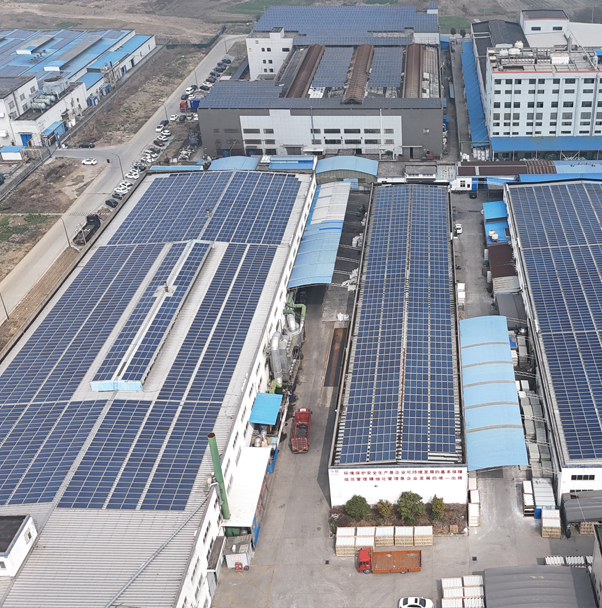
The distinction is important for procurement. Capacity can reduce the risk of a supply bottleneck, but a buyer still needs the product-specific certificate file, the quality-control process and the installation support model. The supplier file lists ISO 9001:2015, ISO 14001:2015 and ISO 45001:2018 certificates issued by Auburn Inspection & Certification Group, valid to 2027. These are management-system certificates. They support a supplier audit discussion, but they do not replace product test reports for B-S1, TVOC, indentation, slip resistance or ESD performance.
A sensible supplier check therefore combines three layers: the factory facts, the management-system certificates and the product test file. The factory facts answer whether the supplier can produce and ship at the required scale. The management-system certificates answer whether there is a documented quality, environmental and safety system. The product test file answers whether the offered roll meets the project's technical specification. No one layer is sufficient on its own.
Market context and a measured outlook
A commercial research forecast from Fortune Business Insights, published in August 2026, projects the global healthcare vinyl flooring market to reach USD 16.9 billion by 2034, with a 7.5% CAGR. That figure covers healthcare vinyl flooring as a category, not homogeneous vinyl alone, and it is a forecast rather than an observed shipment total. It supports the view that healthcare flooring remains a serious procurement category, but it does not establish demand for any one supplier, product or construction.
The more useful trend signal for buyers is documentation. Healthcare and cleanroom projects increasingly ask for product-specific fire, emission, indentation, slip and ESD evidence. That shifts the shortlist away from a simple color-card comparison and toward a review of test scopes, product codes, installation methods and maintenance plans. Homogeneous sheet is likely to remain a reference choice where wear-through resistance and cleanable joints matter. Heterogeneous sheet is likely to remain the better fit where design variety, comfort or acoustics are the deciding factors. That is an analytical outlook, not a market-share forecast.
Frequently asked questions
When should a hospital shortlist specify homogeneous rather than heterogeneous vinyl?
Specify homogeneous when wear-through resistance, cleanable welded joints and a through-body surface are the priority in heavy-traffic departments and corridors. Heterogeneous remains suitable where design choice, comfort or acoustics matter more. The decision should follow the project's traffic class, cleaning regime, fire and emission requirements, and the tested product data, not the category name alone.
Does 2.0 mm homogeneous vinyl work in heavy corridors, or is 3.0 mm required?
There is no universal thickness rule. Vinyl Flooring model 3659 is 2.0 mm as standard with 2.5 mm and 3.0 mm options, so the shortlist can compare thickness against indentation, rolling loads, substrate and warranty. Thickness alone does not prove wear performance. Pair it with wear class, residual indentation, fire rating and installation conditions.
How should buyers verify B-S1 and TVOC below 10 μg/m³ claims?
Ask for the product-specific test report, test standard, product code and date. For model 3659, the shortlist file should connect the B-S1 and TVOC below 10 μg/m³ claims to the relevant EN 13501-1 and ISO 16000-9 documents, and confirm that the reports apply to the exact product and thickness being purchased.
What matters most in a welded hospital vinyl installation?
Subfloor moisture and flatness, adhesive and open time, seam grooving and welding, coving details, and cure time before traffic are the critical controls. Goodrich Global guidance describes heat-welded joints and a 100 mm flash cove for healthcare sheet. The project specification should confirm the detail and the installer's method statement.
Is homogeneous vinyl suitable for retail and workshops?
It can be, where the priority is wear, cleaning and indentation resistance. Design-led retail areas may prefer heterogeneous for pattern range, comfort or acoustics. Workshops need chemical resistance checked against the actual substances used, not a generic chemical-resistant label.
Conclusion: build the shortlist around evidence
The recommended shortlist for hospitals, corridors and retail should begin with homogeneous PVC sheet where through-body wear, cleanable joints and predictable maintenance are the central requirements. Heterogeneous PVC should remain on the shortlist for offices, schools, hotels and residential interiors where design, comfort or acoustics carry more weight. The final choice should be settled by product-specific evidence: wear classification, thickness, indentation, slip, fire, emissions, warranty, maintenance, installation conditions and expected life.
Vinyl Flooring model 3659 provides a concrete example for that process: 2.0 mm as standard, 2.5 mm or 3.0 mm options, B-S1 fire rating and TVOC below 10 μg/m³, backed by a product certification file that should be checked against the exact project scope. FARFLYING FLOORING adds supplier scale through its 2012 founding, 30,000 sqm facility, 6 production lines, 4,200,000 sqm annual capacity and approximately 200 staff. Those facts support a supplier review, but the product test file and installation method remain the deciding evidence.
Company brochure (PDF): FARFLYING FLOORING company brochure
Have Questions or Need More Details?
Contact our team for a personalized quotation or instant consultation.
Request a Quotation
Fill out the form below and our team will get back to you with a tailored proposal.
WhatsApp Direct Chat
Prefer to chat in real-time? Message us on WhatsApp for instant assistance & quick answers.
- Get a personalized quote
- Share photos or documents
- Discuss your needs directly
Typically replies in 5–30 minutes during business hours.