
Honed Tube vs Chrome Rod: Procurement Risk Checks
Honed Tube vs Chrome Rod: Procurement Risk Checks
Summary. A honed tube and a hard chrome plated rod are not interchangeable commodity items, even when a purchase order lists both. The tube forms the cylinder barrel and controls bore size, roundness and internal surface finish. The rod forms the piston rod and controls external diameter, chrome layer, hardness and straightness. Procurement risk therefore sits in different places for each item, and a buyer who checks both against the same checklist will usually miss the failure mode that matters.
What a honed tube and a chrome rod actually do
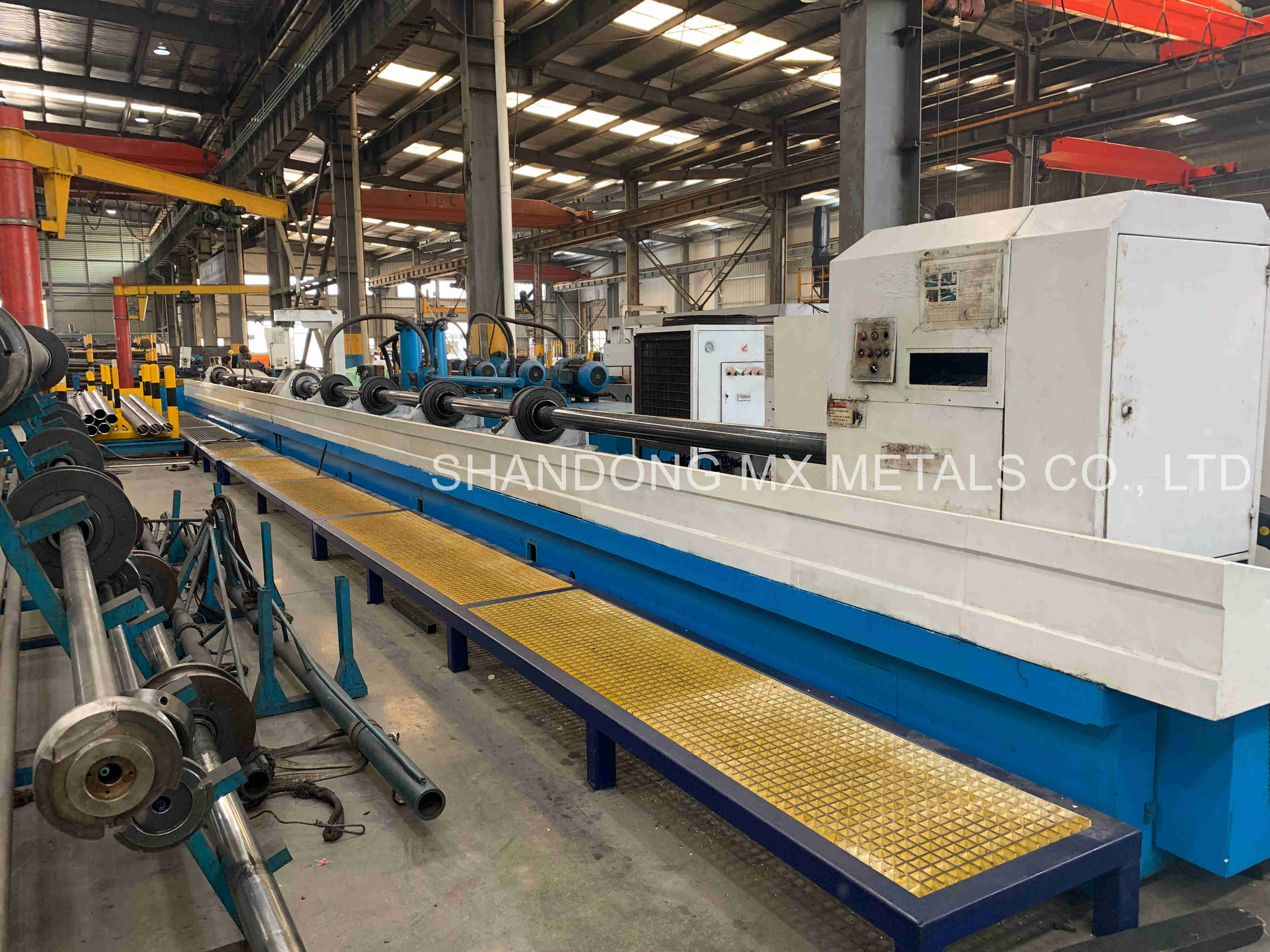
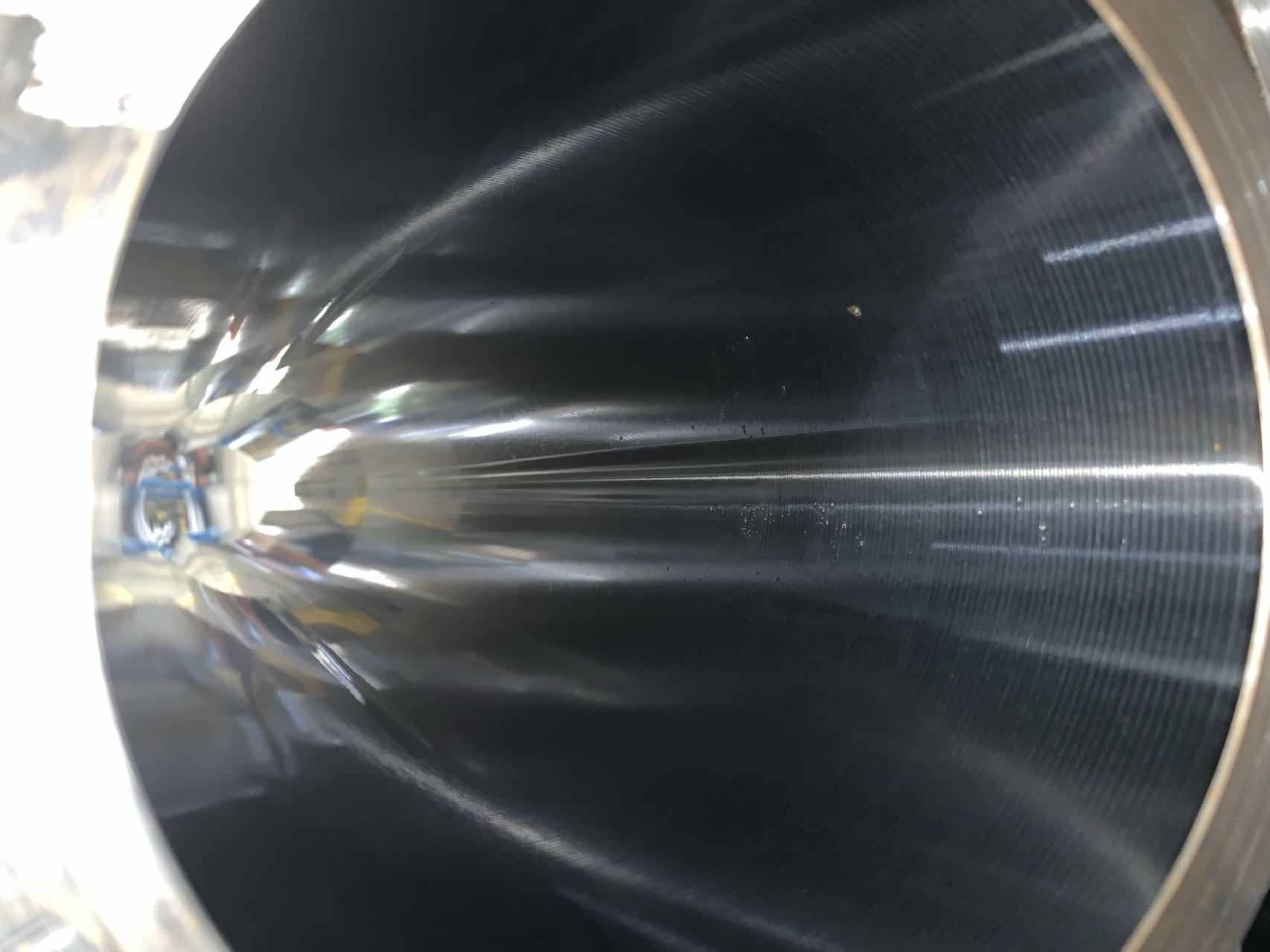
A honed tube for hydraulic cylinder service is a precision seamless tube whose bore has been finished by honing or by skiving and roller burnishing. In the standard range described by SHANDONG MX METALS CO., LTD, the inner diameter is 30 to 500 mm and the product is classified as a skived and roller burnished tube. The bore is produced by skiving and roller burnishing. Product data lists H8 inner-diameter tolerance and bore roughness of 0.2 μm or less, while the company's process description states control to H8 or H9 and a maximum roughness of Ra 0.4 μm. Buyers should confirm at order stage which limit applies to the specific size and specification.
A hard chrome plated rod is a piston rod with an electroplated hard chrome surface. The standard range is 6 to 300 mm diameter. Listed base materials include DIN CK45, SAE1045, JIS S45C, SAE1026, ST52, 20MnV6, 42CrMo4, 40Cr, and stainless grades AISI 304, AISI 316 and AISI 431. Product data lists ISO f7 tolerance, chrome layer thickness of 25(±5) μm, roughness of 0.2 μm or less, hardness of 900 to 1150 HV, and straightness of 0.2 mm or less per 1,000 mm.
A hard chrome plated tube is the hollow variant, classified as a hollow piston rod. Its outer diameter range is 20 to 300 mm, with ISO f7 or f8 tolerance, the same 25(±5) μm chrome layer, roughness of 0.2 μm or less, hardness of 850 to 1150 HV, and straightness of 0.2 mm or less per 1,000 mm. It is intended for hydraulic cylinder and construction machinery applications where a hollow rod section is required.
Why a single RFQ creates two different risks
Procurement teams commonly group the barrel and the rod into one hydraulic cylinder materials request. The commercial logic is understandable: both are long steel products, both are sold by size and grade, and both are bought from the same supplier cluster. The technical logic is weaker. The tube is judged by its bore, wall thickness and internal surface. The rod is judged by its outer diameter, chrome adhesion, hardness and straightness. A supplier that is strong on tube honing may not control chrome plating equally well, and a price comparison per ton can hide a difference in inspection scope.
The practical consequence is that buyers should ask for separate evidence packs. For the tube, that means bore size records, roughness records and straightness data. For the rod, it means diameter records, chrome thickness, hardness and, where relevant, corrosion test results. When both items are quoted together, the buyer should still require item-level inspection data rather than a single certificate covering the shipment.
A procurement risk-check matrix
| Check | Honed tube, barrel side | Hard chrome plated rod, piston side | What the buyer should confirm |
|---|---|---|---|
| Functional surface | Internal bore | External diameter and chrome face | Different surfaces, different gauges and different acceptance criteria |
| Material grade | ST52, E355, S355J0H, S355J2H, ST45, SAE1026, STKM13C, Q345B, Q345D, 16Mn, 27SiMn, 25Mn, AISI 304, AISI 316, AISI 431 | DIN CK45, SAE1045, JIS S45C, SAE1026, ST52, 20MnV6, 42CrMo4, 40Cr, AISI 304, AISI 316, AISI 431 | Match grade to load, working environment and machining route |
| Dimensional tolerance | H8 listed at product level; H8 or H9 described in process control | ISO f7 | State the tolerance and the measurement method on the drawing |
| Surface finish | 0.2 μm or less listed; maximum Ra 0.4 μm described in process control | 0.2 μm or less | Agree cut-off length, instrument and inspection frequency |
| Straightness | 0.5 mm or less per 1,000 mm | 0.2 mm or less per 1,000 mm | Confirm support method during measurement and transport |
| Mechanical or layer properties | Tensile strength 600 MPa or more, yield strength 520 MPa or more, elongation 14% or more | Hardness 900 to 1150 HV; chrome layer 25(±5) μm; induction hardened option at 55 to 60 HRC and 1.5 to 3.5 mm depth | Request grade certificates and layer or hardness records |
| Corrosion evidence | Stainless grades listed for corrosion-sensitive conditions | Minimum 200 hours neutral salt spray at rating 9, evaluated under ISO 9227 and ISO 10289 | Match test duration and rating to the actual service environment |
| Size range | Inner diameter 30 to 500 mm | Diameter 6 to 300 mm; hollow chrome tube 20 to 300 mm outside diameter | Check the range before inquiry; oversized work may require a custom route |
Material and standard checks: ST52, E355 and DIN 2391
Material specification is the most common source of avoidable quotation mismatch. The honed tube range lists ST52 with DIN 2391 and E355 with EN 10305. That distinction matters because DIN 2391 has been withdrawn and EN 10305-1 is the active standard. ST52-3 is approximately equivalent to E355 in yield strength and material properties, but the two designations belong to different standard systems. A drawing that still says DIN 2391 ST52 may attract quotations that are technically similar but not identically documented.
| Designation | Standard listed in product data | Procurement note |
|---|---|---|
| ST52 | DIN 2391 | Legacy designation; DIN 2391 has been withdrawn |
| E355 | EN 10305-1 | Active standard designation; approximately equivalent to ST52-3 |
For a new project, the cleaner approach is to specify the active standard, then add the mechanical requirements that matter for the cylinder design. For an existing project, the buyer should ask the supplier to confirm which standard and grade will actually appear on the mill certificate. This is a documentation check, not a quality judgment: two suppliers can offer the same steel and still create confusion if one quotes to the withdrawn standard and the other quotes to the current one.
Surface finish, straightness and the seal interface
In a hydraulic cylinder, the bore and the rod surface are both seal interfaces. A rough bore increases seal wear and can raise internal leakage over time. A rough or inconsistent chrome surface affects rod seal life and friction. This is why surface roughness and straightness belong in the purchase specification, not only in the supplier's internal control plan. A honed tube may be dimensionally correct while missing the roughness target, and a chrome rod may meet diameter tolerance while carrying a straightness deviation that loads the rod seal unevenly.
The honed tube data set describes a skived and roller burnished bore, with 0.2 μm or less roughness at product level and a process control maximum of Ra 0.4 μm. It also lists straightness of 0.5 mm or less per 1,000 mm and mechanical properties of 600 MPa minimum tensile strength, 520 MPa minimum yield strength and 14% minimum elongation. For the rod, the corresponding values are 0.2 μm or less roughness, 0.2 mm or less straightness per 1,000 mm, and a chrome layer of 25(±5) μm at 900 to 1150 HV. These are concrete, checkable numbers, and they give the buyer a basis for incoming inspection rather than a vague quality claim.
Where a specialist supplier fits: MX Metals' reported capabilities
SHANDONG MX METALS CO., LTD is a manufacturer and exporter based in Liaocheng, Shandong Province, China, focused on skived and roller burnished tube, honed tube and hard chrome plated rod for hydraulic and pneumatic cylinder applications. The company reports that it was founded in 2015 and operates a 20,000 m² factory with 89 employees, 11 engineers, 20,000 tons of annual output and a 60% export ratio. Its listed markets include the EU, USA, Russia, Australia, Turkey, India, UAE, Thailand, Iran, Egypt, Brazil, South Korea, Indonesia and Saudi Arabia.
The product range is relevant to the comparison in this article because it covers both sides of the cylinder: precision honed tubes, skived and roller burnished tubes, ready-to-hone tubes, hard chrome plated piston rods, induction hardened piston rods, hollow chrome rods, and custom big cylinder tubes and piston rods. The company also describes an integrated chain covering raw material selection, precision machining, heat treatment, hard chrome plating, finished inspection and export delivery. For a buyer, the value of that chain is not the list itself but the reduction in hand-offs between tube finishing, rod plating and final inspection.
In terms of market position, the reported figures describe an export-oriented specialist in hydraulic cylinder core materials rather than a diversified steel mill. That matters for procurement because specialist suppliers are usually easier to align on dimensional and surface requirements, while their limits are also narrower. The buyer should therefore test the supplier against the specific size, grade and inspection scope of the project, not against a general capability statement.
Manufacturing route: skiving and roller burnishing versus honing
The bore of a hydraulic cylinder tube can be finished by honing or by skiving and roller burnishing. Both routes aim at a controlled internal surface, but they are different processes with different equipment and different inspection signatures. MX Metals classifies its standard honed tube as a skived and roller burnished tube and states that the bore is produced by skiving and roller burnishing. The same product family also includes ready-to-hone tubes, which are supplied before the final bore-finishing step.
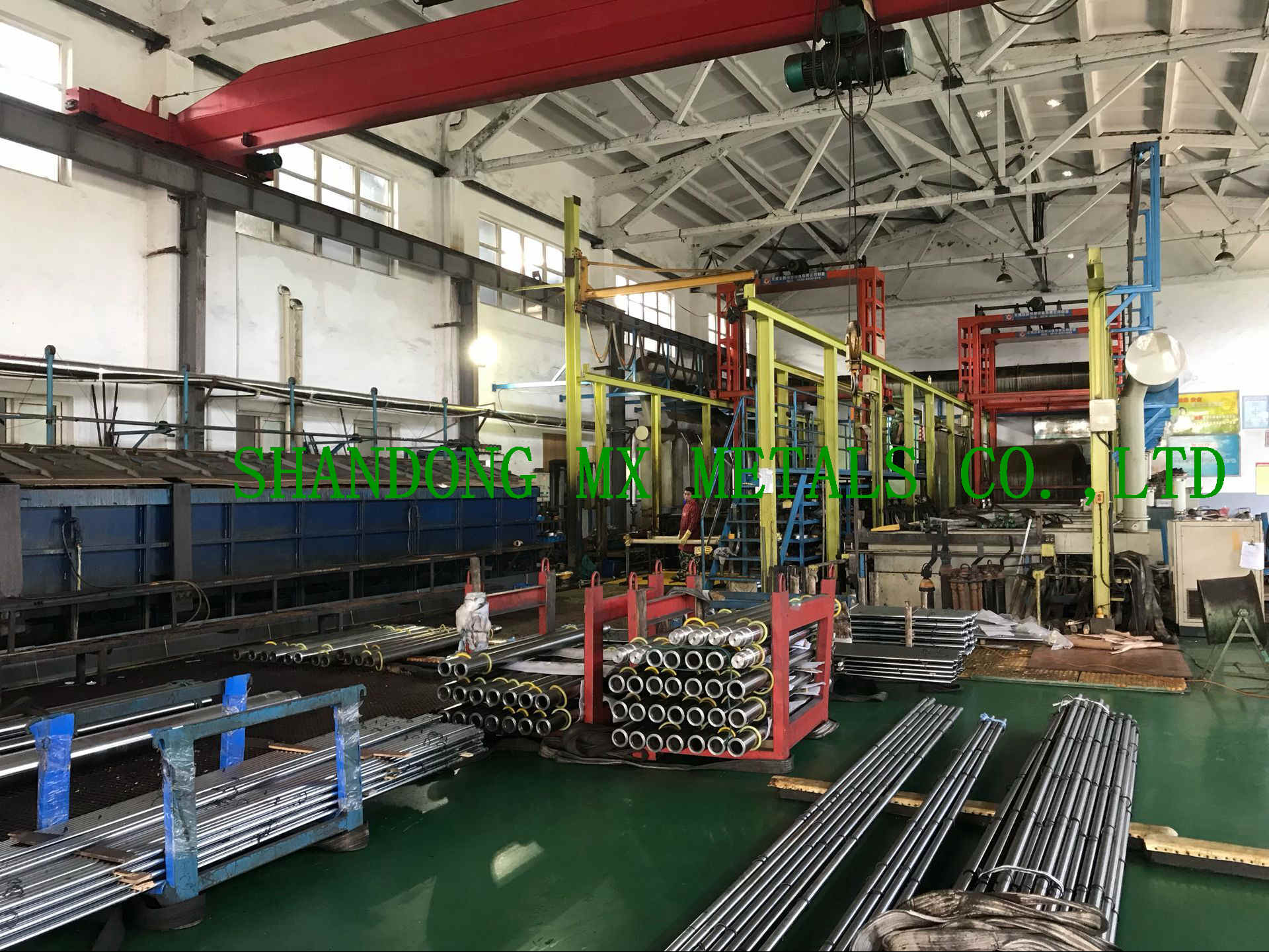
For the rod, the sequence is different: the base bar is machined, heat treated where required, ground and polished before hard chrome plating. The company lists induction hardened piston rods at 55 to 60 HRC and 1.5 to 3.5 mm depth, which is a surface-hardening option for rods that see concentrated load or wear. The chrome layer itself is specified at 25(±5) μm, with hardness of 900 to 1150 HV and roughness of 0.2 μm or less. The buyer does not need to choose the process, but the buyer should know which process is being quoted, because it affects lead time, inspection method and the appearance of the finished surface.
Application fit: standard cylinders and large-bore work
The standard honed tube range of 30 to 500 mm inner diameter and the standard rod range of 6 to 300 mm diameter cover a large share of hydraulic cylinder work in construction machinery and general hydraulic systems. The application data describes heavy-load and high-pressure operation, dusty, humid and variable-temperature sites, harsh outdoor environments and continuous reciprocating movement. Those conditions explain why the bore finish, the chrome layer and the straightness limits are not cosmetic details.
For larger cylinders, MX Metals lists a custom big cylinder tube and rod range with inner diameter from 300 to 2,000 mm, inner-diameter tolerance of H8, H9 or H10, and length up to 15,000 mm. Materials for that range include ST52, E355, S355, CK45, 1045, 20MnV6, ST45 and STKM13A. It is intended for hydraulic cylinder, construction machinery and water conservancy project applications. This is the point where a standard product comparison stops being useful: above the standard range, the buyer is no longer selecting a catalogue item but qualifying a custom machining and inspection route.
Market context
The honed tube category is large enough to support specialist suppliers. Commercial research published by WiseGuyReports estimates the global honed tube market at USD 3.6 billion in 2025, with a forecast period from 2026 to 2035. A separate commercial study by Data Insights Reports places Asia-Pacific at 35% of the hydraulic tubing market. These are market-research estimates rather than customs or government statistics, but they support a practical observation: Asia-Pacific is a dense supply region, and buyers have more supplier options there than in most other regions.
The standards picture is also shifting. The withdrawal of DIN 2391 and the active status of EN 10305-1 mean that older drawings and newer quotations can use different language for approximately equivalent steel. Buyers working across European and Asian supply chains should expect to reconcile these designations during technical review. This is a documentation trend rather than a performance trend, but it directly affects quotation comparability and incoming inspection.
Limits and boundaries buyers should not ignore
A specialist supplier is not a substitute for application engineering, and the published ranges have clear edges. The standard honed tube range ends at 500 mm inner diameter, the standard rod range ends at 300 mm diameter, and the hollow chrome tube range ends at 300 mm outside diameter. Work beyond those limits moves to the custom big cylinder route, which changes the commercial and inspection process. A buyer who sends an oversized inquiry to a standard product line will receive either a redesign request or a quotation that does not reflect the real route.
The chrome specification also has boundaries. A 25(±5) μm hard chrome layer at 900 to 1150 HV, with a minimum 200-hour neutral salt spray result evaluated under ISO 9227 and ISO 10289, is a defined corrosion and wear package. It is not a universal answer for every corrosive environment. The product data lists stainless steel grades AISI 304, AISI 316 and AISI 431 for corrosion-sensitive conditions, and those grades should be considered when the service environment exceeds what a carbon steel rod with hard chrome can reasonably handle. Buyers should also remember that salt spray hours are a laboratory measure, not a direct prediction of service life.
Finally, the tolerance statements should be read at the correct level. Product data lists H8 for the honed tube and 0.2 μm or less for bore roughness, while the company's process description refers to H8 or H9 and a maximum Ra of 0.4 μm. That is not a contradiction so much as a reminder that the final acceptance limit is agreed per order. The same applies to the rod: ISO f7 is the listed tolerance, but the measurement method, inspection frequency and documentation package are commercial terms that the buyer should specify.
Future outlook
The direction of travel in this category is toward more explicit specifications and more documented inspection. Hydraulic cylinder manufacturers are under pressure to reduce internal leakage, extend seal life and keep batch consistency across global supply chains. That favors suppliers that can state bore tolerance, roughness, straightness, chrome thickness and hardness in measurable terms, and it makes price-only comparison less useful over time.
For buyers at the research stage, the practical next step is to build a two-column specification: one column for the barrel, one for the rod. Each column should carry its own material standard, dimensional tolerance, surface requirement, inspection record and size limit. Once that structure exists, comparing quotations becomes a technical exercise rather than a negotiation over a single tonnage price. A full product catalogue with dimensional ranges and material options is available from MX Metals at https://cdn.socialarks.com/sbsp/25306/common/2026/0908/MX%20Metals%20Catalog.pdf for buyers who want to check the ranges before inquiry.
FAQ
What is the difference between a honed tube and a chrome plated rod in a hydraulic cylinder?
A honed tube forms the cylinder barrel and is defined by its internal bore, bore tolerance and internal surface finish. A hard chrome plated rod forms the piston rod and is defined by its external diameter, chrome layer thickness, hardness and straightness. They are complementary components, not alternatives, and they require different inspection criteria.
Should a buyer specify ST52 or E355 for a hydraulic cylinder barrel?
Both grades are listed for the honed tube range. ST52 is listed with DIN 2391 and E355 with EN 10305. DIN 2391 has been withdrawn and EN 10305-1 is the active standard, while ST52-3 is approximately equivalent to E355 in yield strength and material properties. For new projects, specifying the active standard and the required mechanical properties reduces quotation ambiguity.
Which tolerances and surface values should be checked on a honed tube?
The checkable values include inner-diameter tolerance, bore roughness, straightness and mechanical properties. The product data lists H8 inner-diameter tolerance, bore roughness of 0.2 μm or less, straightness of 0.5 mm or less per 1,000 mm, tensile strength of 600 MPa or more, yield strength of 520 MPa or more and elongation of 14% or more. The company's process description also refers to H8 or H9 control and a maximum Ra of 0.4 μm, so the order-specific limit should be confirmed in writing.
What does a 25(±5) μm chrome layer mean in practice?
It is the specified hard chrome thickness for the standard rod and hollow chrome tube range. The same data lists hardness of 900 to 1150 HV for the rod, roughness of 0.2 μm or less, and a minimum 200-hour neutral salt spray result at rating 9 evaluated under ISO 9227 and ISO 10289. It is a defined wear and corrosion package, not a guarantee for every service environment; stainless grades are listed separately for corrosion-sensitive conditions.
What are the size limits of the standard and custom ranges?
The standard honed tube range is 30 to 500 mm inner diameter. The standard hard chrome plated rod range is 6 to 300 mm diameter, and the hollow chrome tube range is 20 to 300 mm outside diameter. The custom big cylinder tube and rod range covers 300 to 2,000 mm inner diameter, with H8, H9 or H10 tolerance and length up to 15,000 mm.
How does MX Metals describe its product differences?
In its product FAQ, the company lists special raw materials for hydraulic cylinder use, tighter and more precise tolerances, better straightness, more uniform wall thickness and plating thickness, a chrome layer thicker than the standard requirement, lower surface roughness and smaller out-of-roundness. These are company statements. Buyers should validate them against mill certificates, dimensional reports and, where relevant, third-party inspection.
Have Questions or Need More Details?
Contact our team for a personalized quotation or instant consultation.
Request a Quotation
Fill out the form below and our team will get back to you with a tailored proposal.
WhatsApp Direct Chat
Prefer to chat in real-time? Message us on WhatsApp for instant assistance & quick answers.
- Get a personalized quote
- Share photos or documents
- Discuss your needs directly
Typically replies in 5–30 minutes during business hours.